
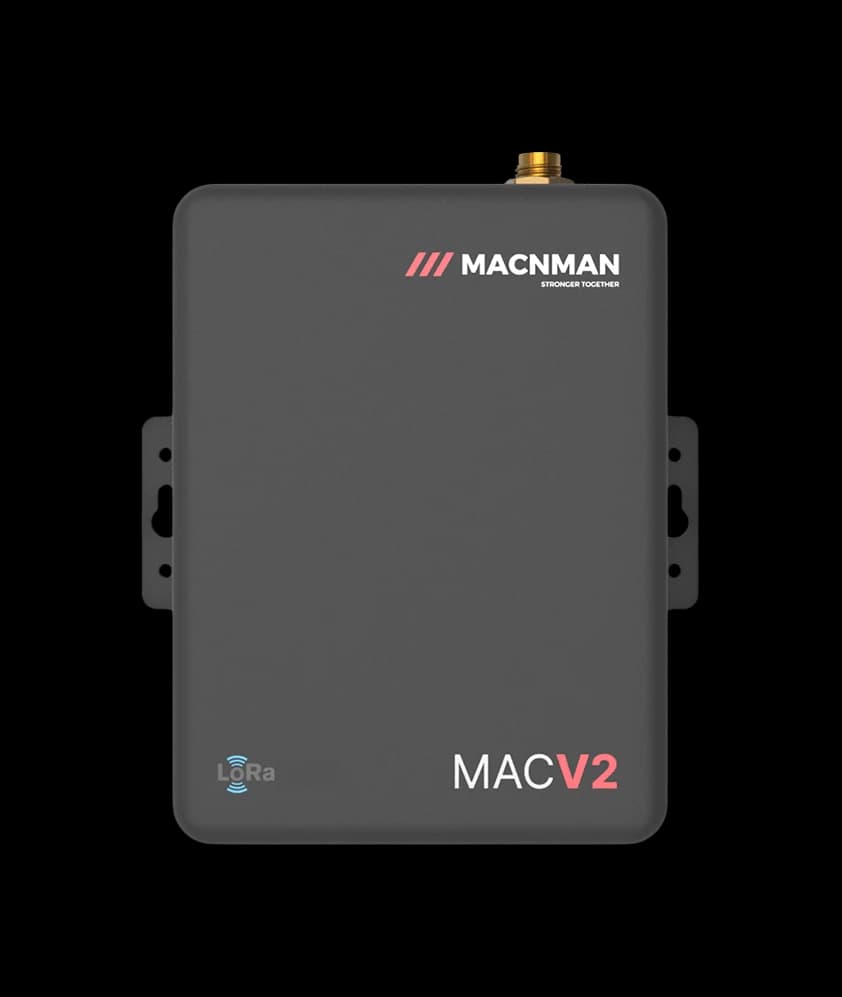
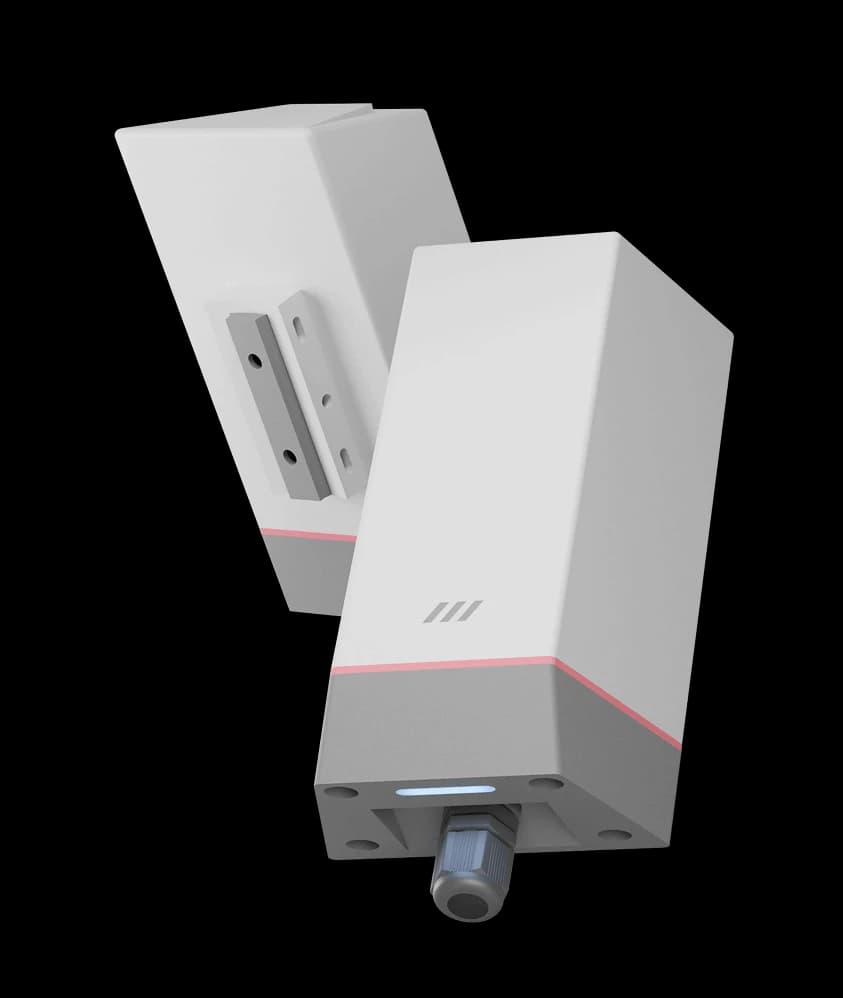

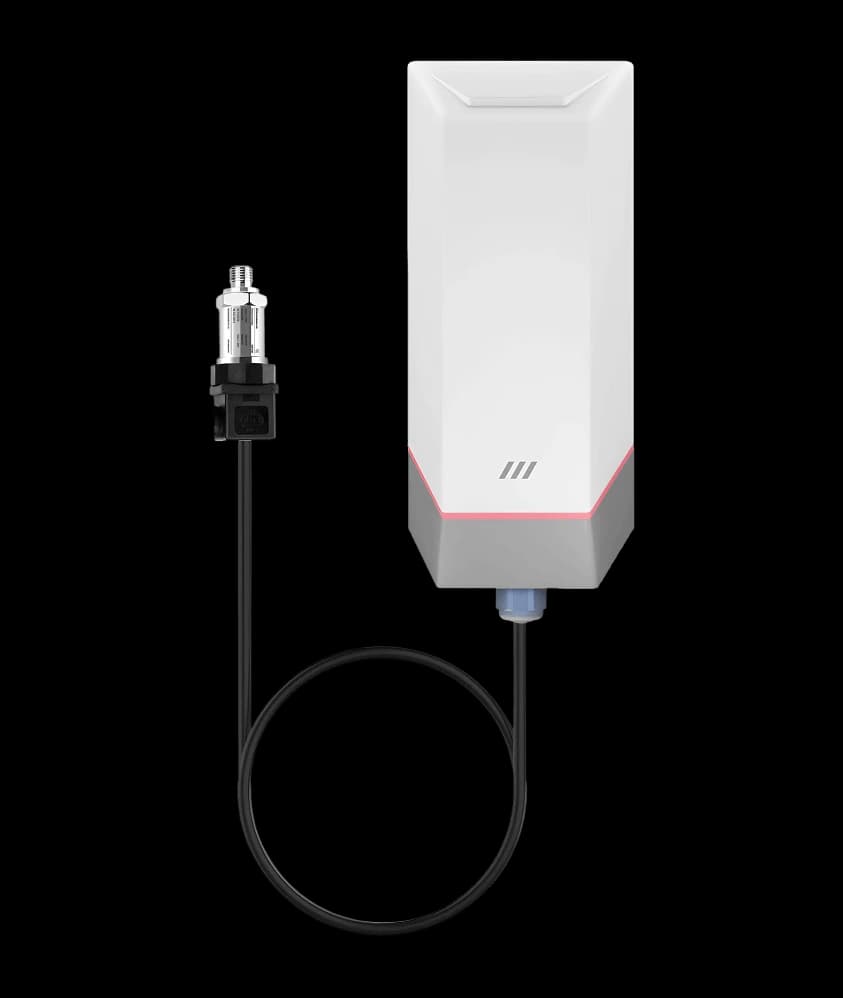
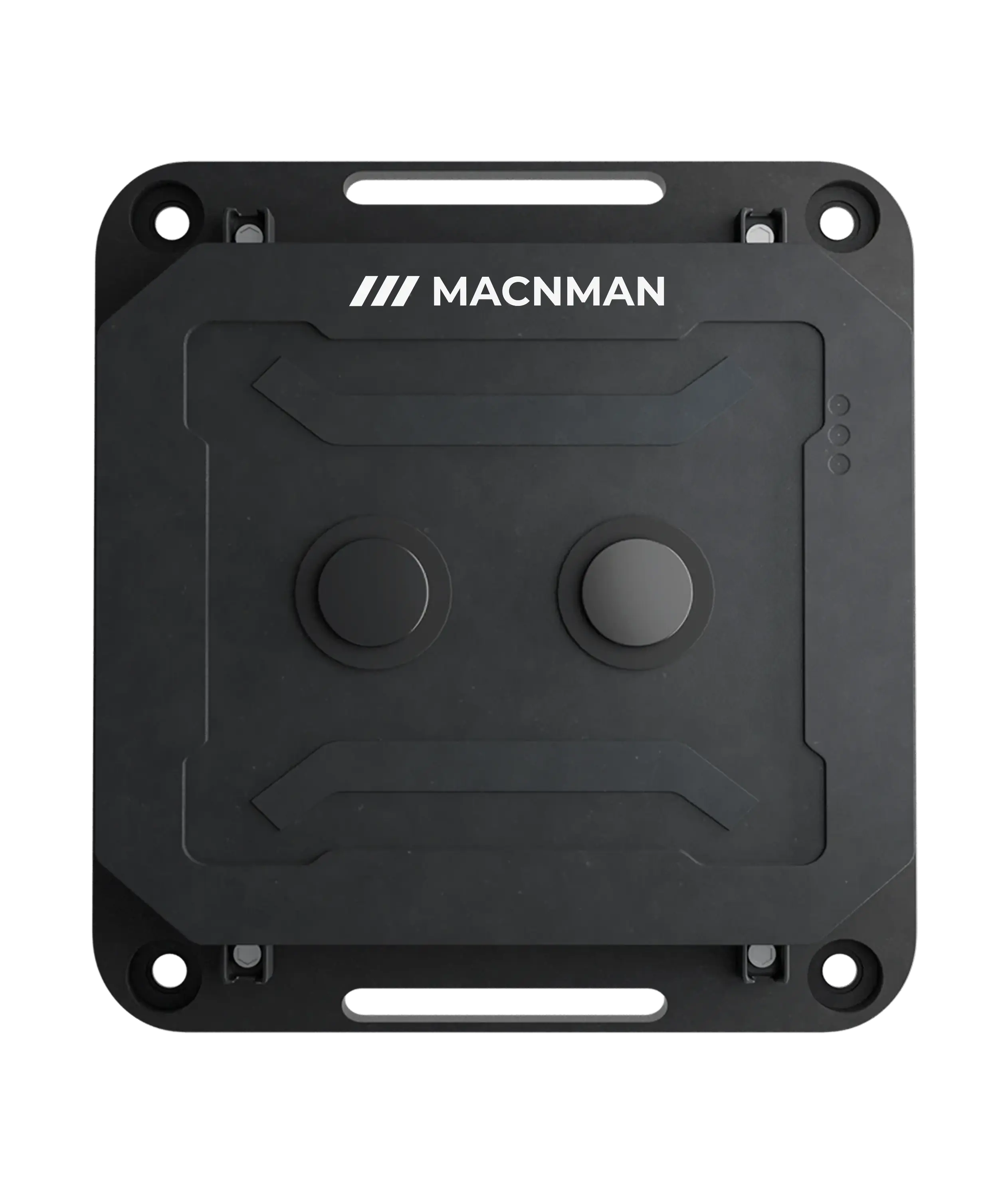

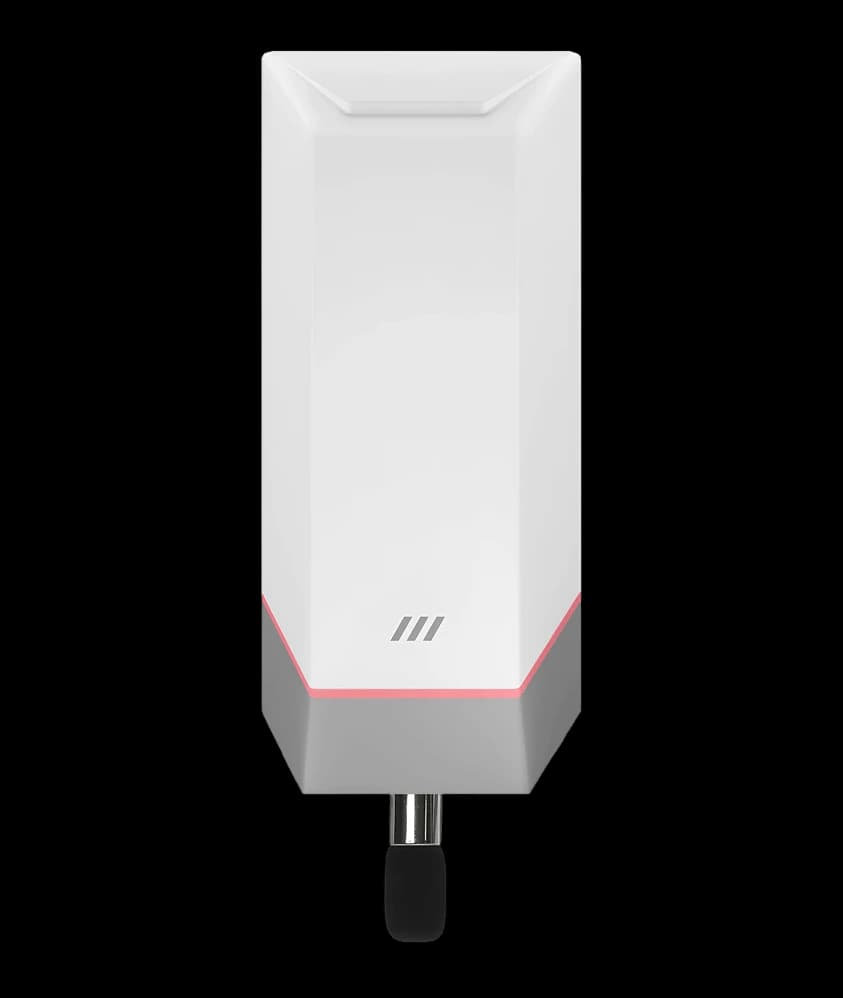
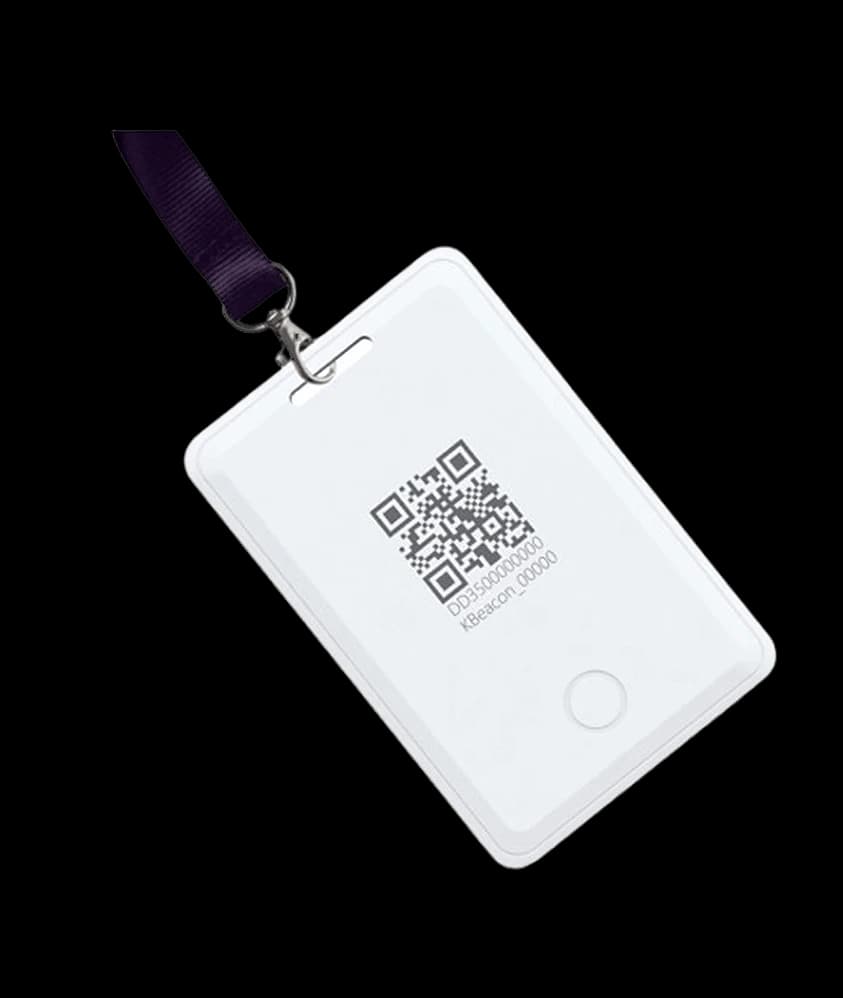
01 · METER
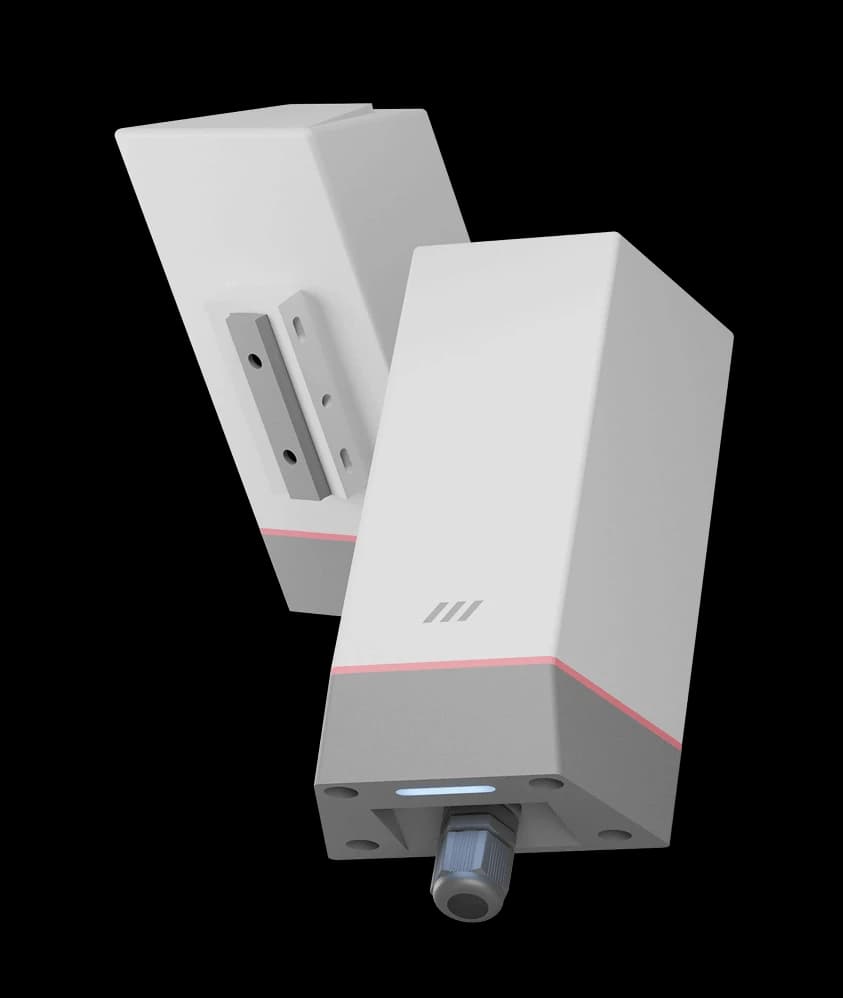
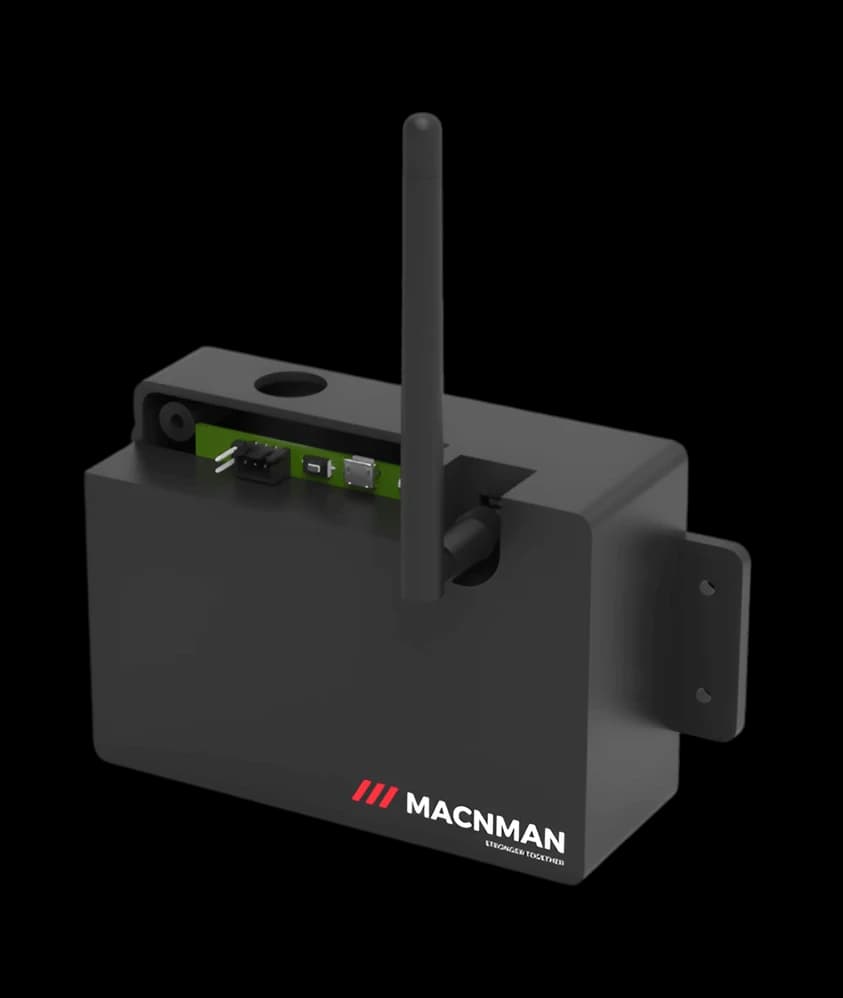
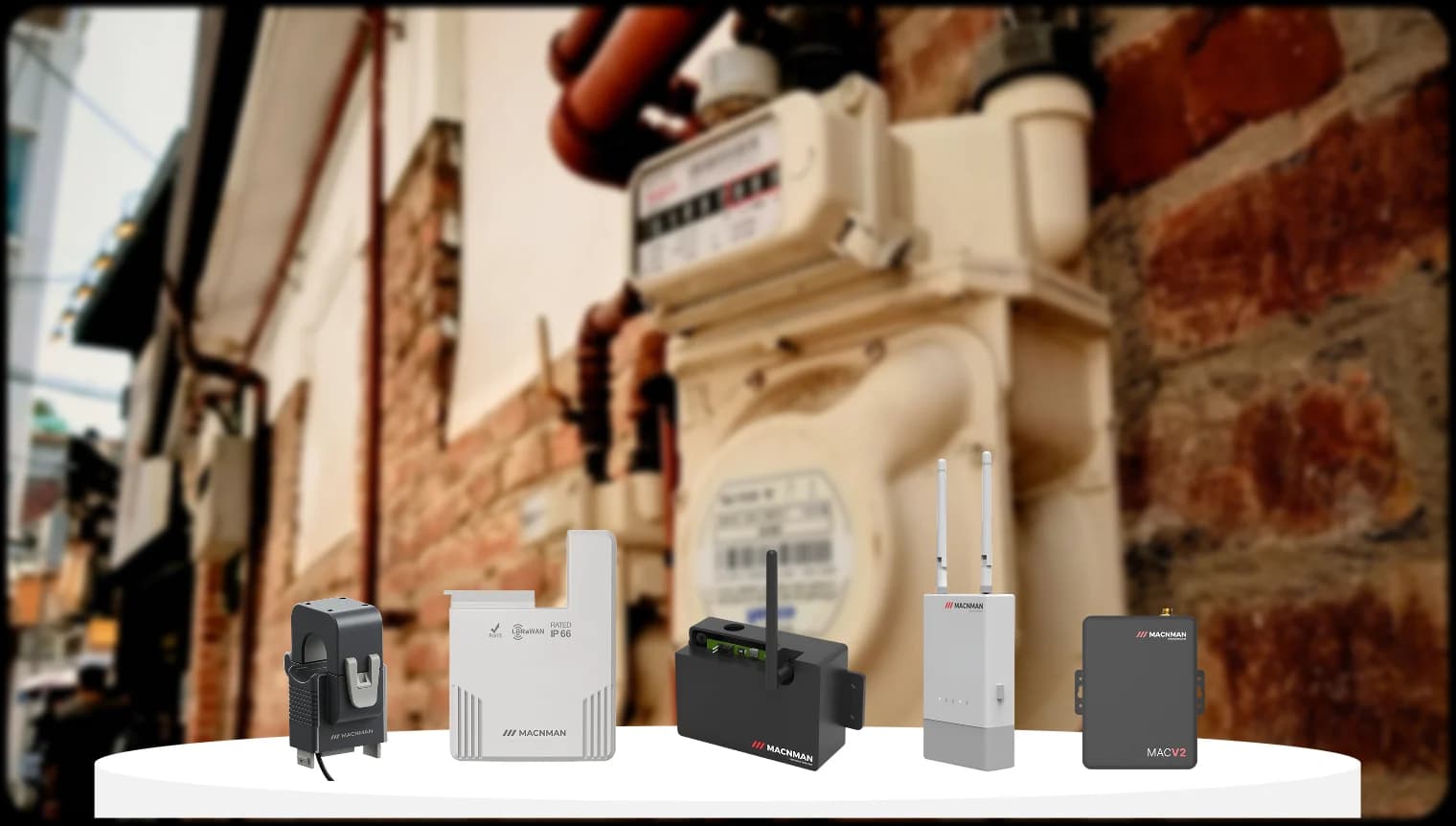
MacSync converters
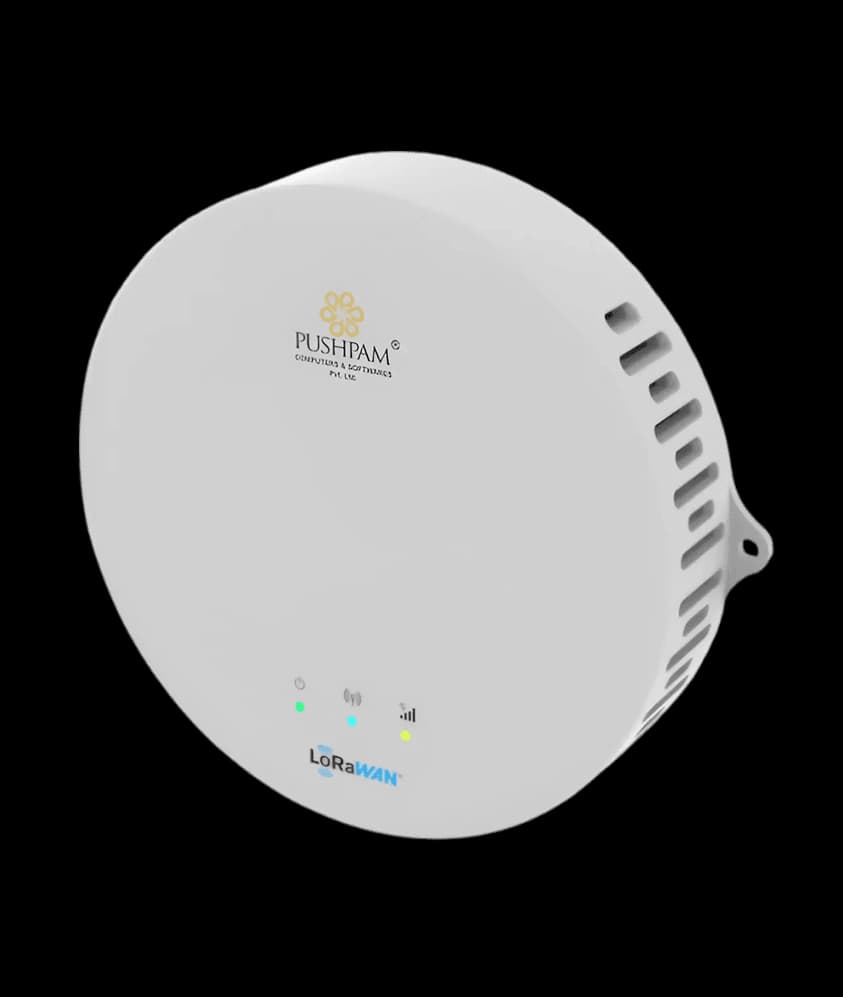
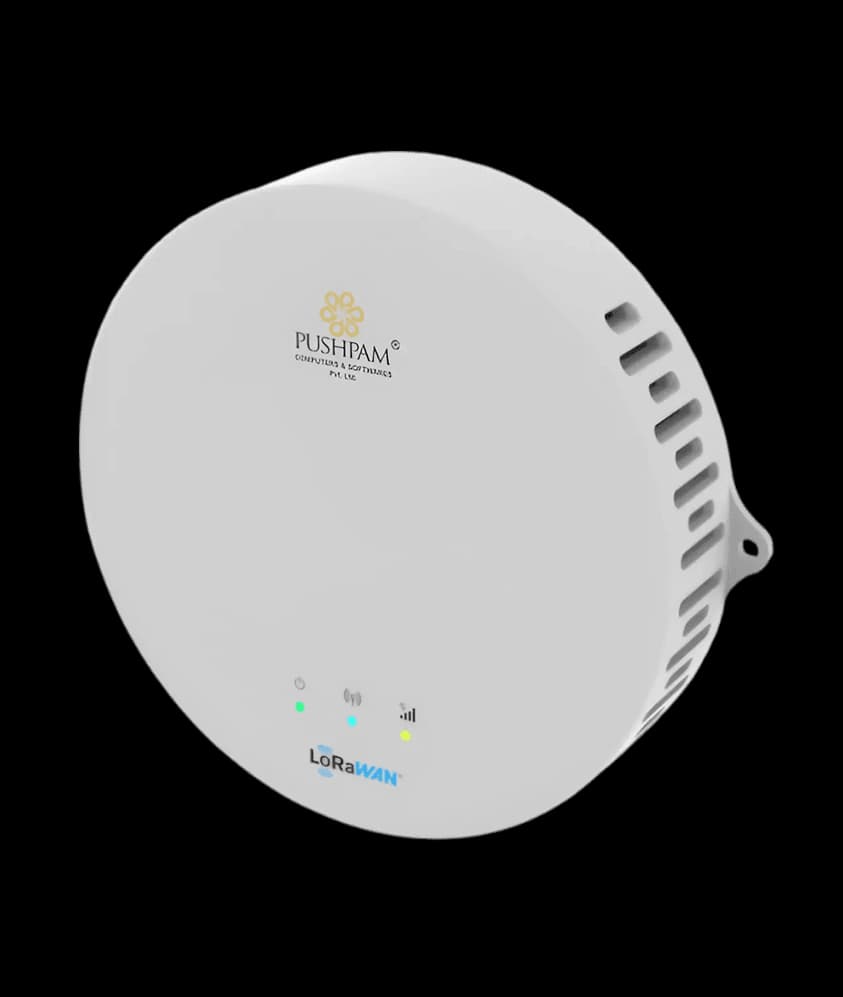
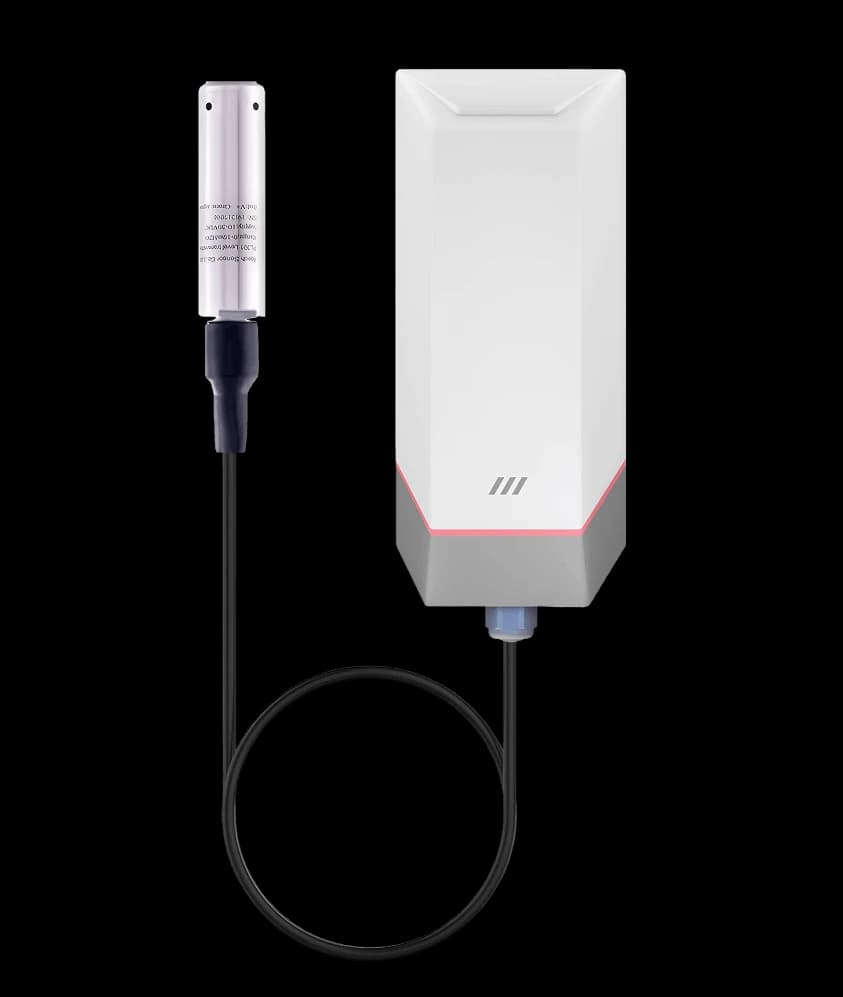
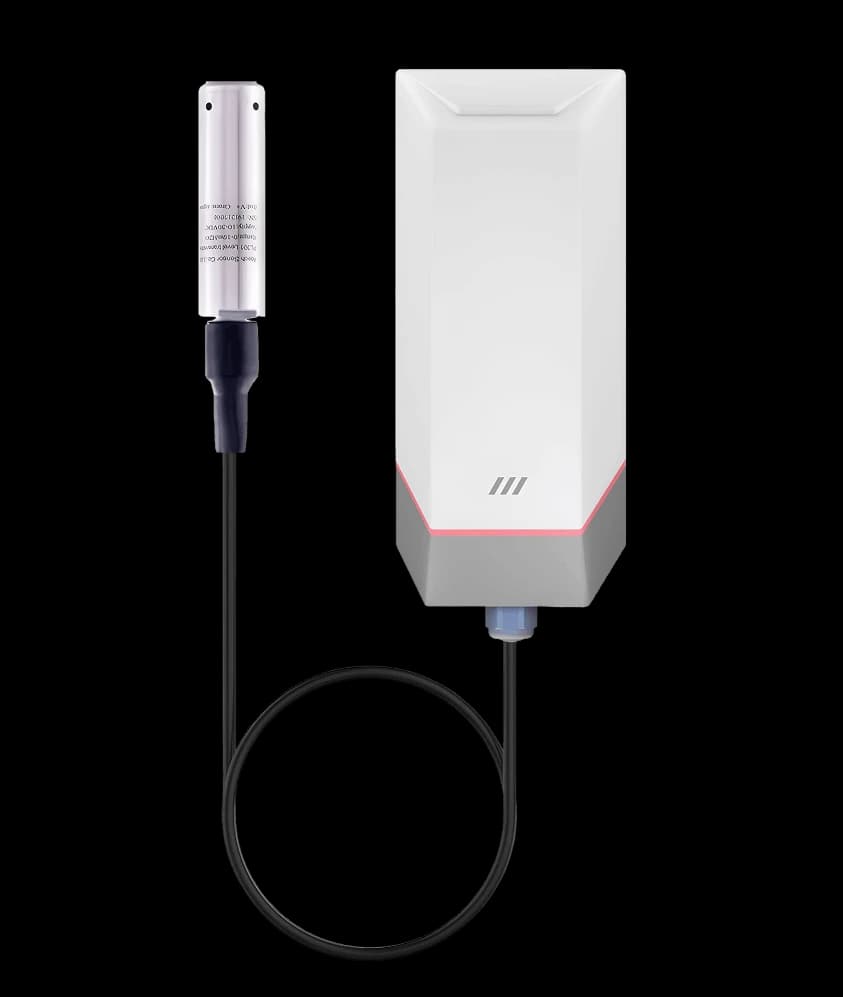
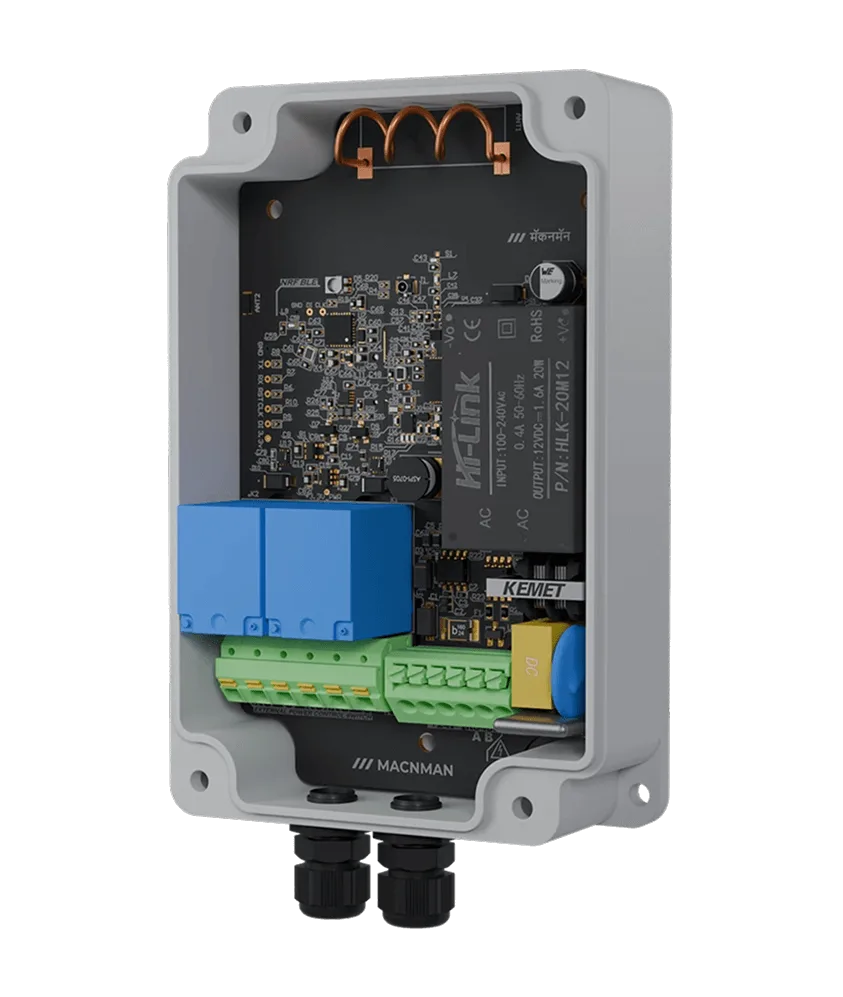
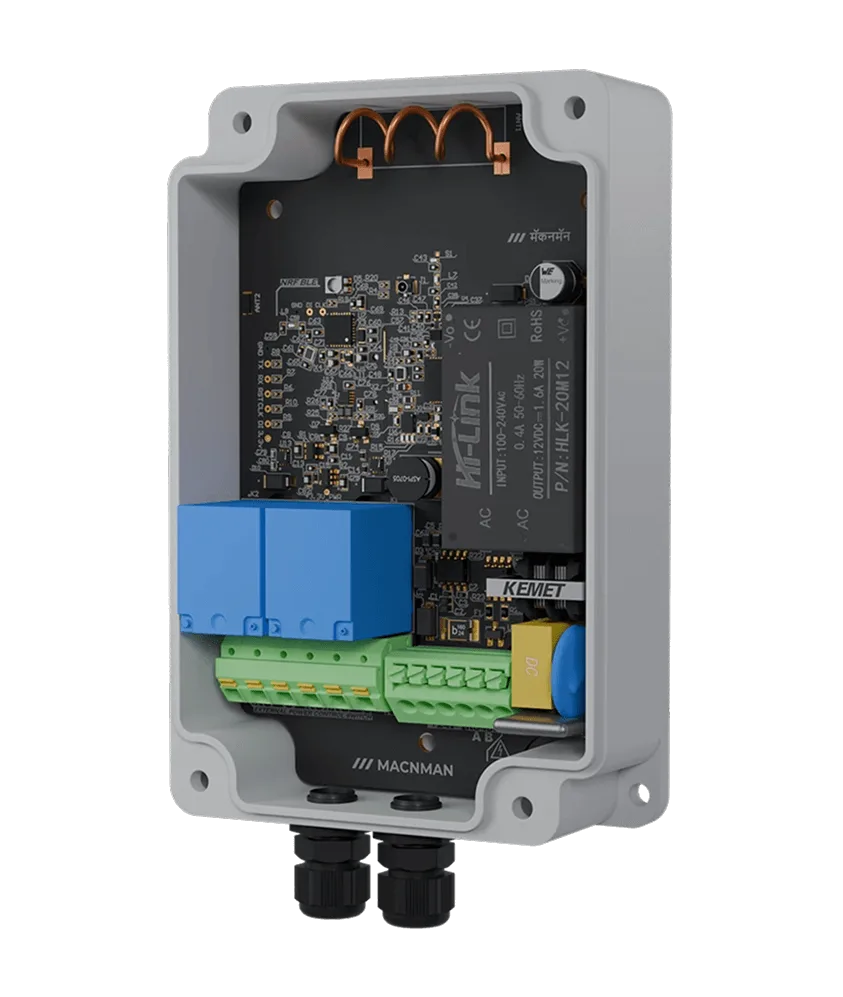
Read the energy, water, steam and gas meters already on site. One converter takes RS485 Modbus, 4–20 mA and 0–10 V signals and sends them over LoRaWAN, Wi-Fi or 4G.
- RS485 Modbus RTU
- 4–20 mA · 0–10 V
- Battery or 9–36 V DC

Designed and manufactured in India on open standards: LoRaWAN, Modbus and MQTT, with your data on your own platform
Designed and manufactured in India on open standards:
LoRaWAN, Modbus and MQTT, with your data on your own platform
In plain terms
An industrial IoT (IIoT) solution connects the equipment in a factory or plant — meters, machines, tanks, pipelines and cold rooms — to software, so that readings arrive automatically instead of being walked to and written down.
Macnman builds the hardware for it: sensors, converters, controllers and gateways on open standards, so the data goes to the platform you choose.
Your plant
Temperature, level, pressure, gas
Modbus, 4–20 mA, 0–10 V
Pumps, valves, alarms
LoRaWAN, Wi-Fi, 4G
MQTT, HTTPS, your server
Five steps from the machine to the screen. Macnman makes the hardware for the first four; the fifth is the software you already use or choose.
The problem
Downtime found after the fact, an energy bill with no breakdown, readings on a clipboard, tools that go missing, gas that builds up between rounds, and a wired system that turns every new point into a project. Each one is a measurement that is not being taken, or that arrives too late to act on.

Unplanned Machine Downtime

High Energy Consumption

Limited Operational Visibility

Asset Tracking & Inventory

Industrial Safety Risks

Legacy Infrastructure Limits
Get a quote
Tell us what you monitor, how many points and where the site is. A product engineer replies within one working day with the right sensors, converters and gateway.
The jobs plants start with, and the hardware behind each
01 / 10
DG Set & Diesel Tank Monitoring
Tank Level Monitoring
Cold Room Temperature Monitoring
Gas Safety & Air Quality
Effluent, ETP & STP Monitoring
Remote Pump Controller
Boundary Noise Monitoring
Asset & Tool Tracking
Machine Temperature & Condition Monitoring
Tell us what you need to measure — we will specify the hardware.
Application map
Start from the job, not the catalogue. Each row is a remote monitoring or control task found in most plants, with the Macnman device that does it and the network it runs on.
Factory energy monitoring and sub-metering
kWh, kW, voltage, current and power factor from Modbus energy meters; water, steam and gas flow meters
Macnman device
Network
LoRaWAN · Wi-Fi · 4G
4–20 mA and 0–10 V process instruments
Any 4–20 mA or 0–10 V output: flow, level and pressure transmitters, analysers
Macnman device
Network
LoRaWAN · Wi-Fi
DG set and diesel tank level
Fuel level in DG set day tanks and bulk storage, refills and drops
Macnman device
Network
LoRaWAN
Water tanks, sumps and silos
Level by distance to the surface, without contact
Macnman device
Network
LoRaWAN
Line and hydrant pressure
Pipeline, process and fire hydrant pressure
Macnman device
Network
LoRaWAN
Machine, process and surface temperature
PT100 probes on pipelines, ovens and motors; non-contact infrared on hot or moving surfaces
Macnman device
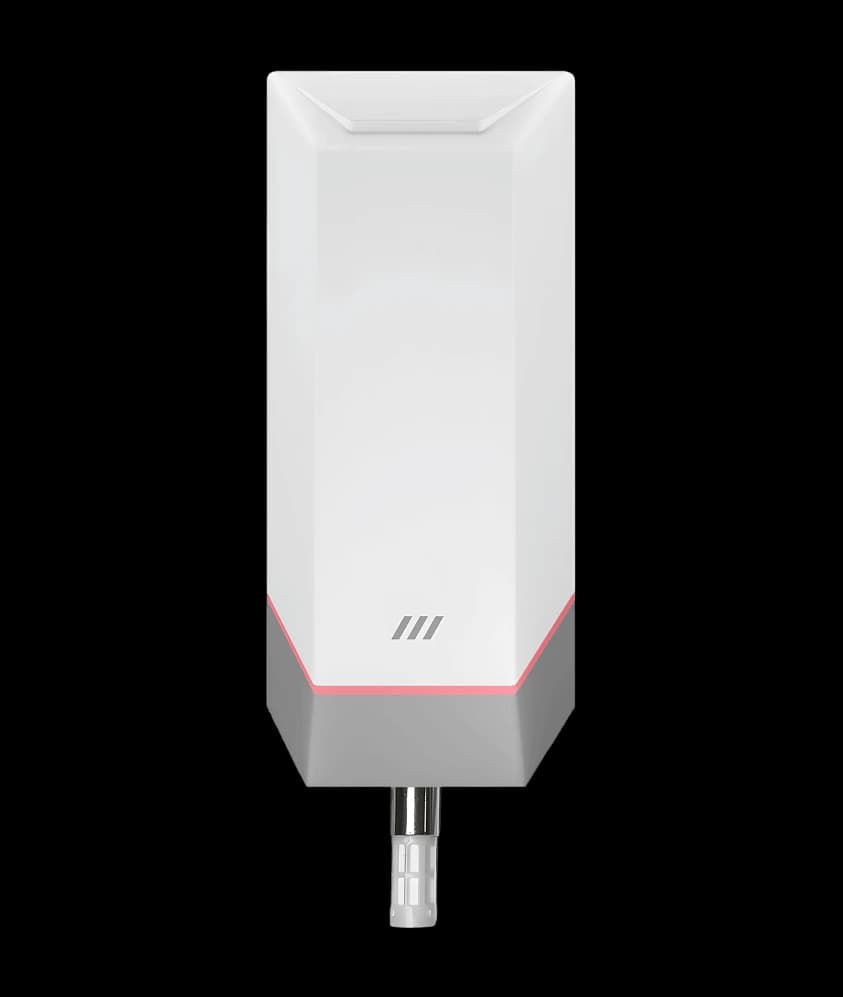 MacSync LRTD RTD temperature sensor
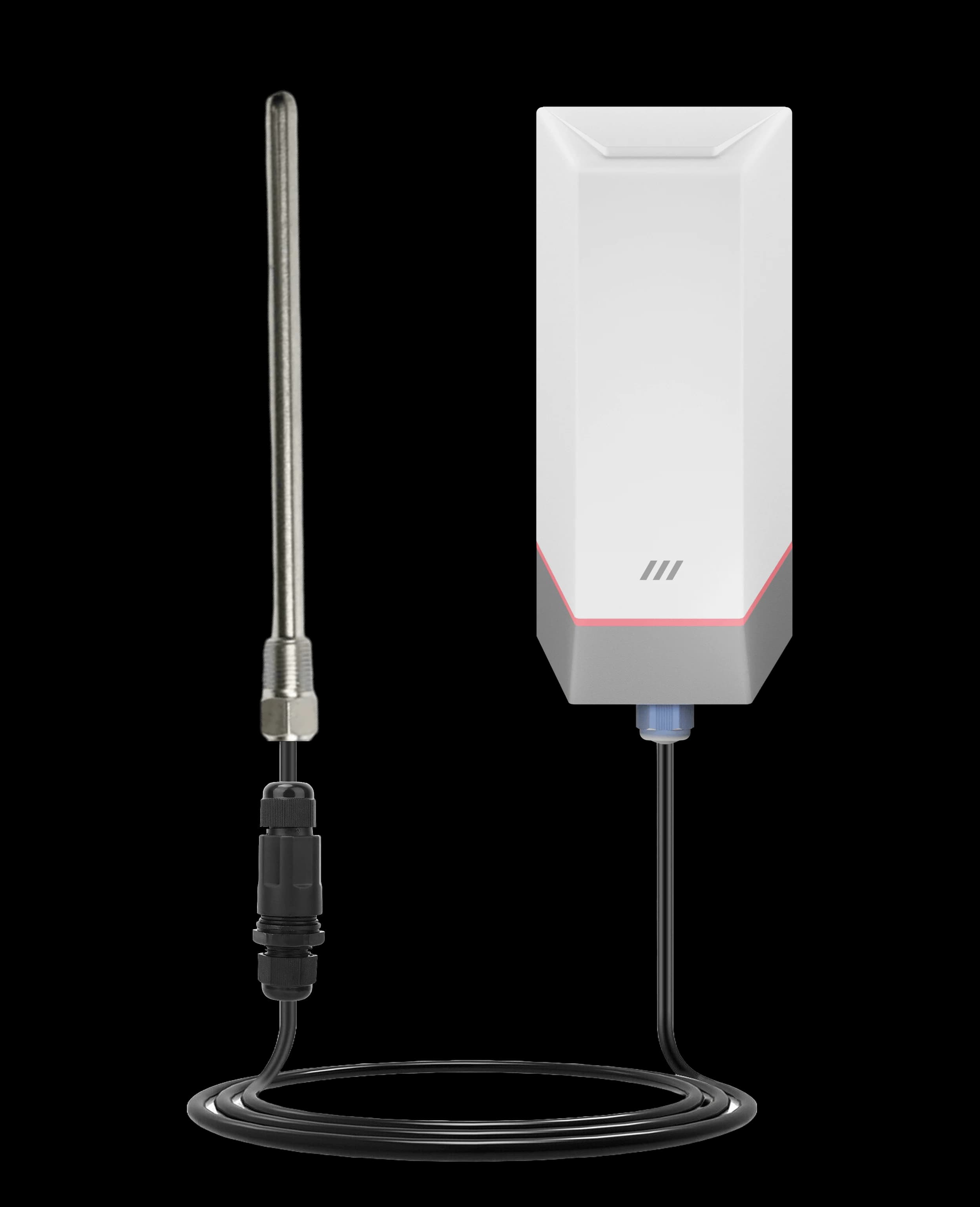 MacSync W RTD Wi-Fi PT100 sensor
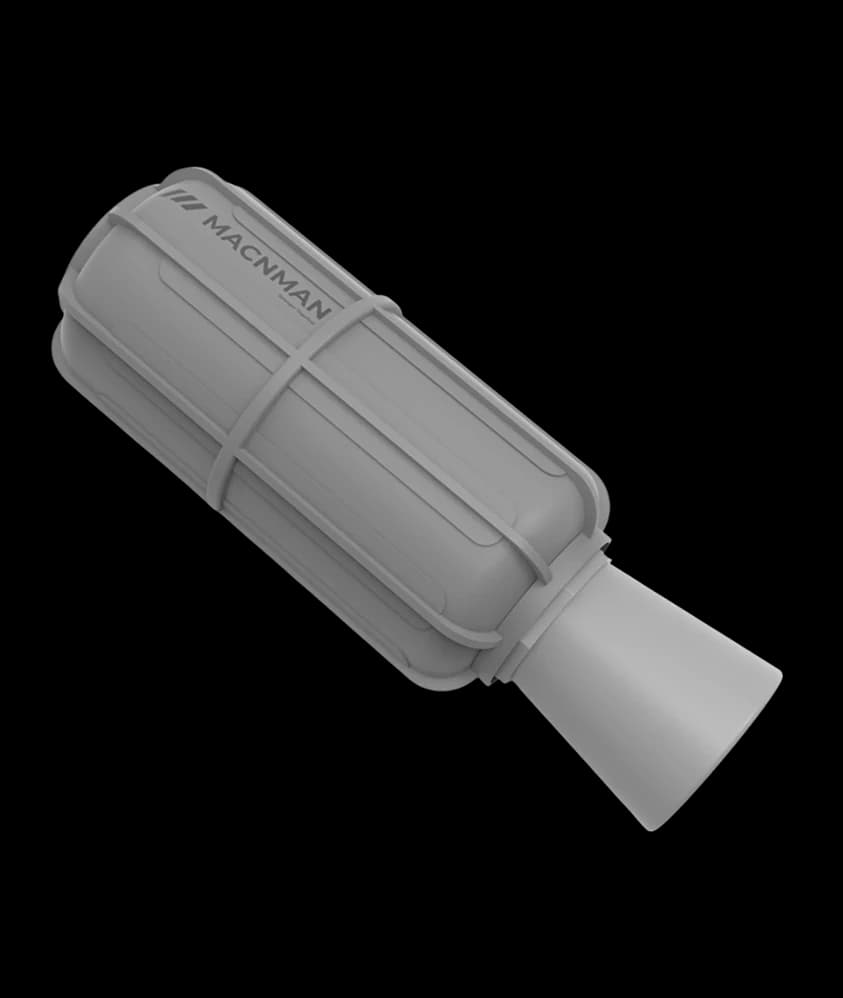 MacSync LNCT infrared temperature sensor
Network
LoRaWAN · Wi-Fi
Cold rooms, stores and clean areas
Temperature and humidity, CO₂, door open and close events
Macnman device
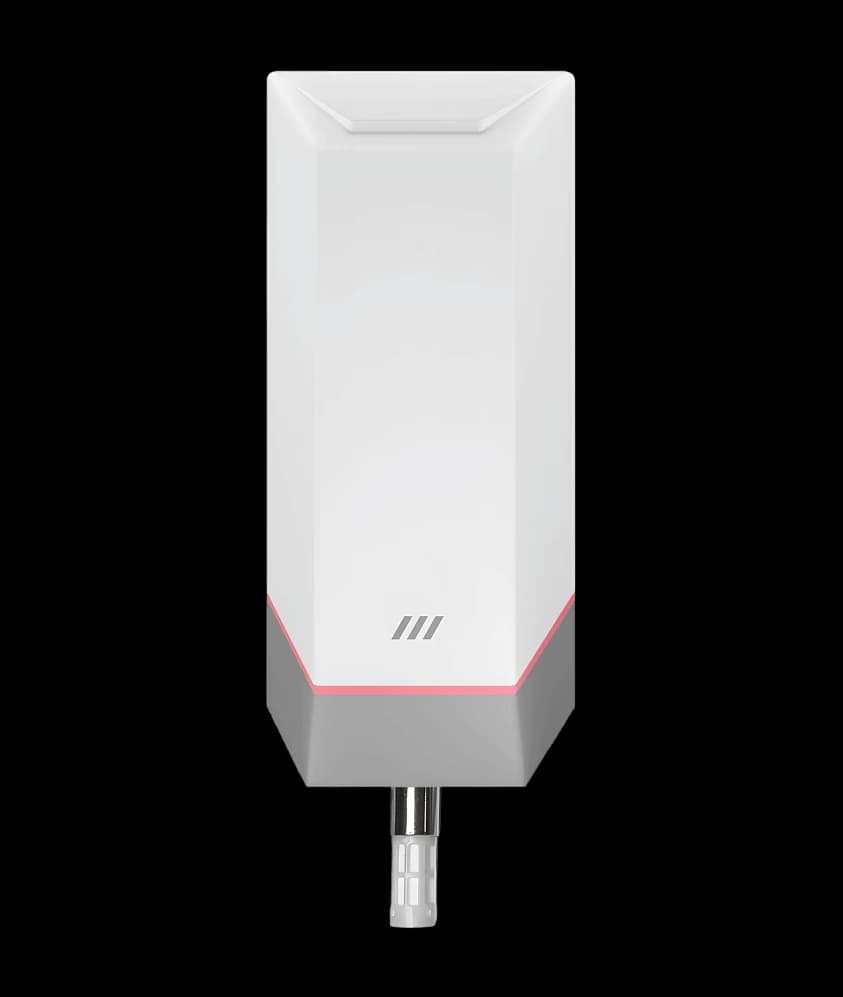 LoRaWAN temperature and humidity sensor
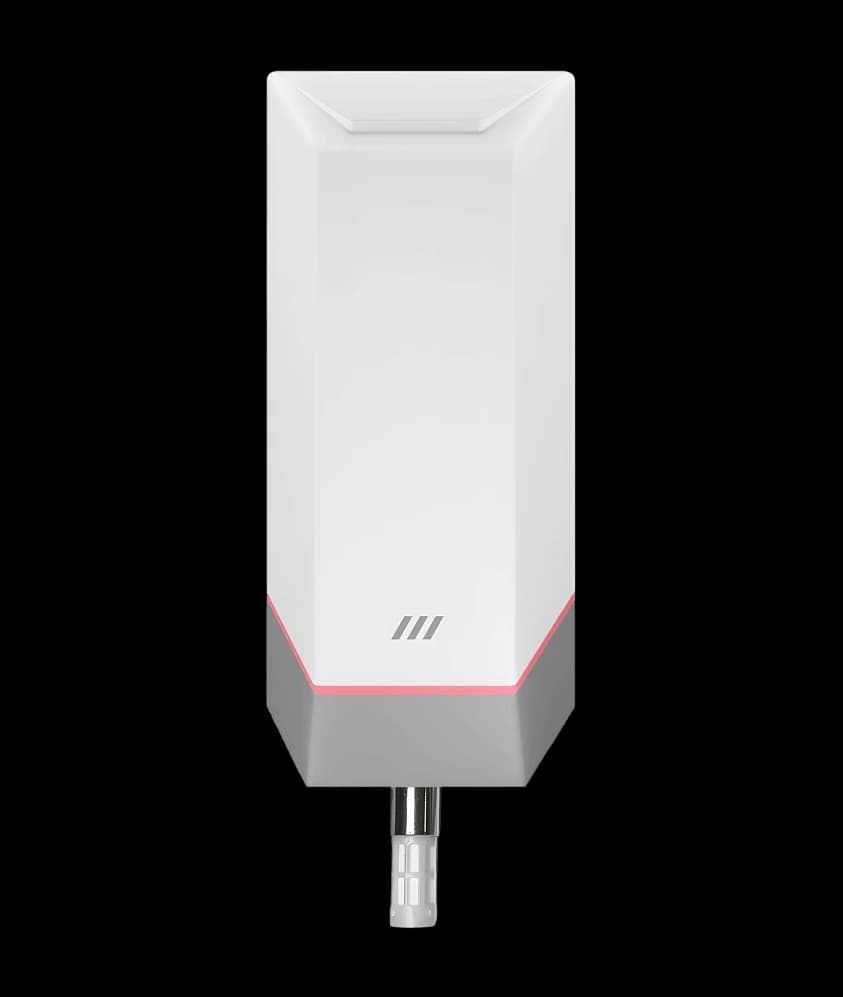 Wi-Fi temperature and humidity sensor
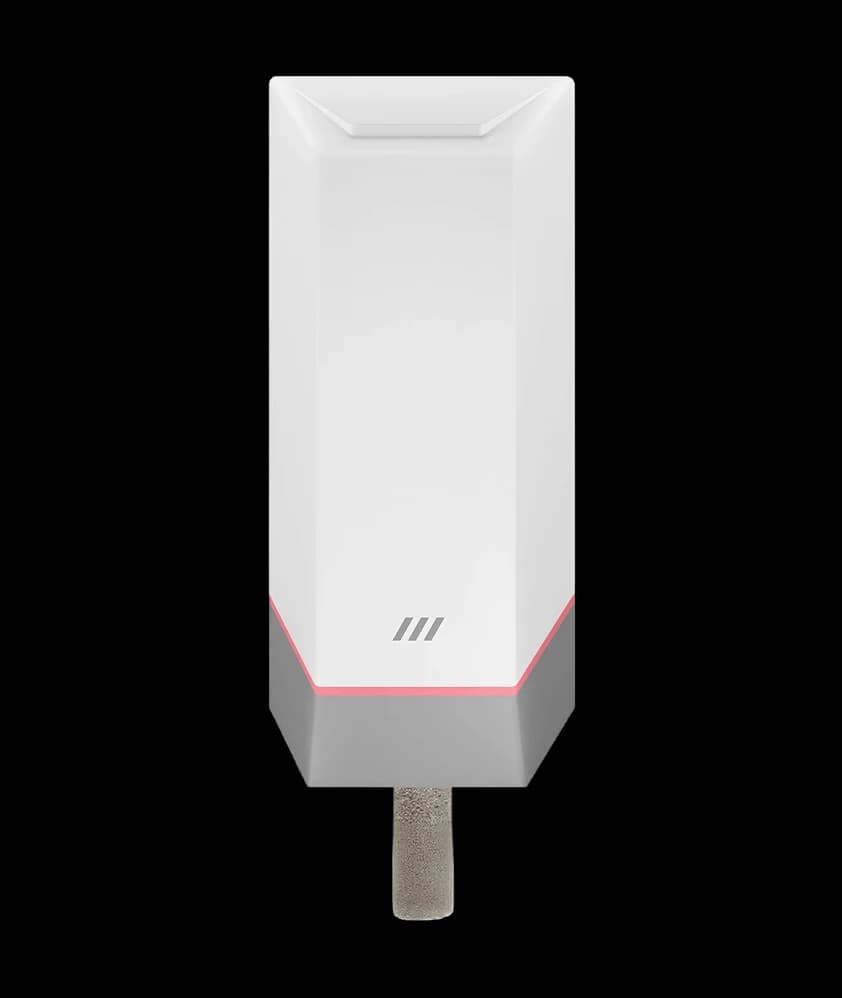 LoRaWAN CO₂ sensor
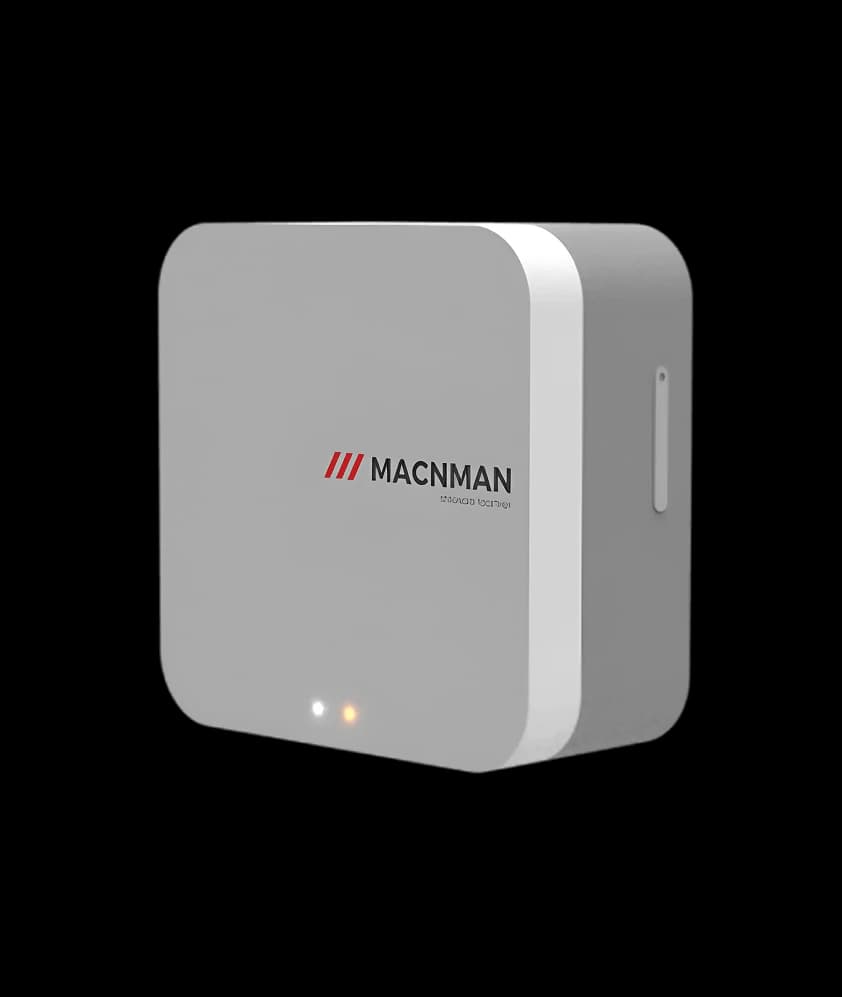 MacSync LDSS door status sensor
Network
LoRaWAN · Wi-Fi
Gas safety
Hydrogen sulphide, oxygen and ammonia concentration
Macnman device
Network
LoRaWAN
Effluent and process water
pH and electrical conductivity, measured online
Macnman device
Network
LoRaWAN
Boundary noise
Sound level in dBA, continuously
Macnman device
Network
LoRaWAN
Remote pump, valve and motor control
Remote switching, schedules, threshold rules and run status
Macnman device
 MacSet LX1 LoRaWAN controller
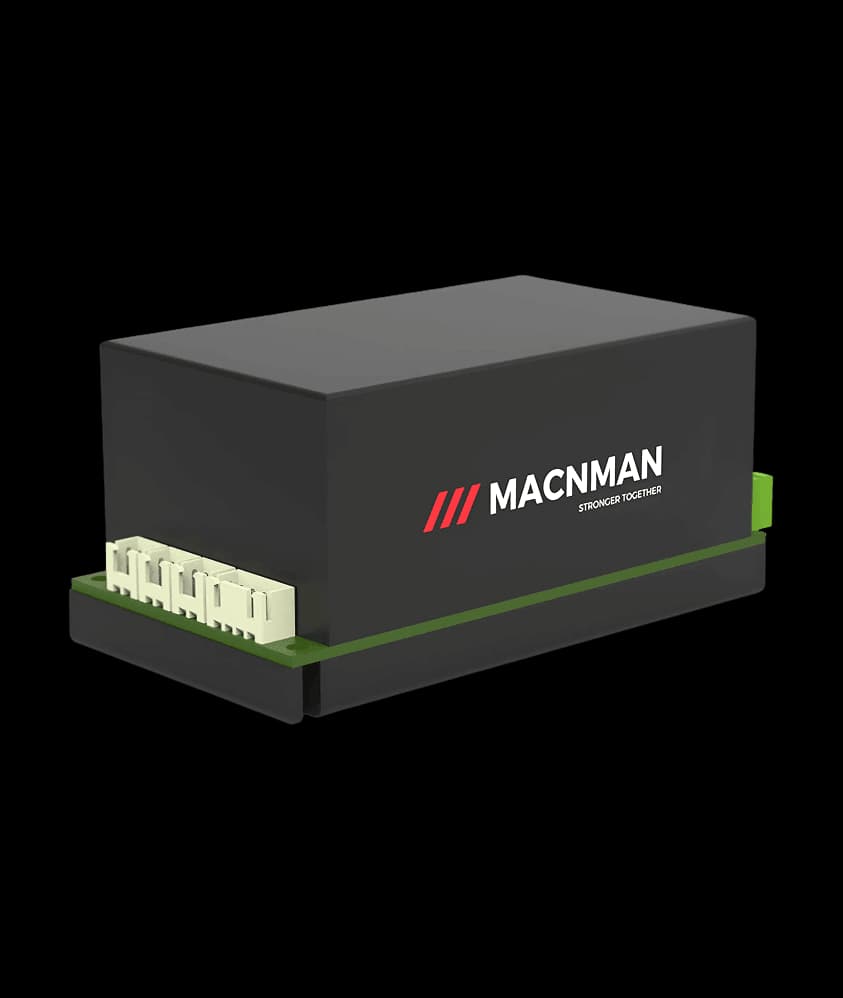
 MacSet LX2 eight-output controller
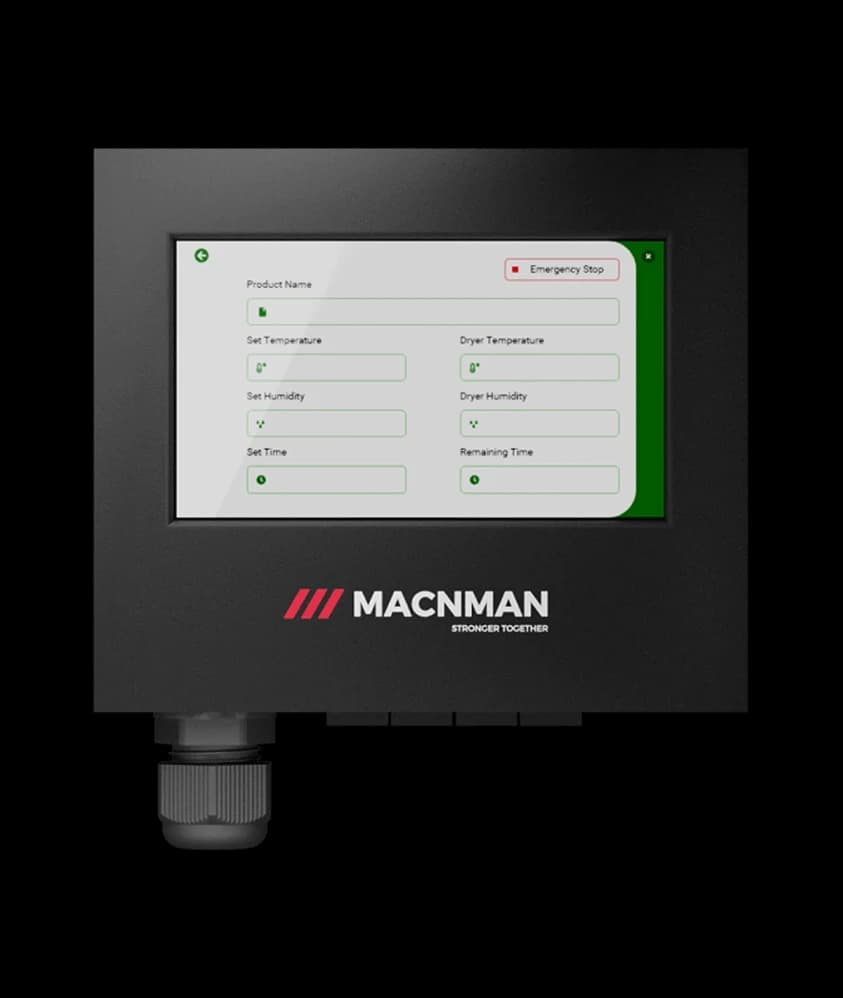
 MacSet WX1 Wi-Fi controller
 MacSet CX1 4G controller
Network
LoRaWAN · Wi-Fi · 4G
Assets and tools
Zone location, movement, shock and storage temperature
Macnman device
Network
Bluetooth LE
Plant-wide coverage
The LoRaWAN network that carries every device above
Macnman device
Network
4G, Ethernet or Wi-Fi backhaul
| Application | What you measure | Macnman device | Network |
|---|---|---|---|
| Factory energy monitoring and sub-metering | kWh, kW, voltage, current and power factor from Modbus energy meters; water, steam and gas flow meters | LoRaWAN · Wi-Fi · 4G | |
| 4–20 mA and 0–10 V process instruments | Any 4–20 mA or 0–10 V output: flow, level and pressure transmitters, analysers | LoRaWAN · Wi-Fi | |
| DG set and diesel tank level | Fuel level in DG set day tanks and bulk storage, refills and drops | LoRaWAN | |
| Water tanks, sumps and silos | Level by distance to the surface, without contact | LoRaWAN | |
| Line and hydrant pressure | Pipeline, process and fire hydrant pressure | LoRaWAN | |
| Machine, process and surface temperature | PT100 probes on pipelines, ovens and motors; non-contact infrared on hot or moving surfaces | LoRaWAN · Wi-Fi | |
| Cold rooms, stores and clean areas | Temperature and humidity, CO₂, door open and close events | LoRaWAN · Wi-Fi | |
| Gas safety | Hydrogen sulphide, oxygen and ammonia concentration | LoRaWAN | |
| Effluent and process water | pH and electrical conductivity, measured online | LoRaWAN | |
| Boundary noise | Sound level in dBA, continuously | LoRaWAN | |
| Remote pump, valve and motor control | Remote switching, schedules, threshold rules and run status | LoRaWAN · Wi-Fi · 4G | |
| Assets and tools | Zone location, movement, shock and storage temperature | Bluetooth LE | |
| Plant-wide coverage | The LoRaWAN network that carries every device above | 4G, Ethernet or Wi-Fi backhaul |
Hover a device to see its name; click it to open the product page, or the datasheet where there is no page yet. If your application is not listed, send us the signal type and we will tell you what fits.
The hardware
Four device families cover the path from the meter to your platform, all designed and manufactured by Macnman in Pune.
01 · METER
Read the energy, water, steam and gas meters already on site. One converter takes RS485 Modbus, 4–20 mA and 0–10 V signals and sends them over LoRaWAN, Wi-Fi or 4G.
02 · MONITOR
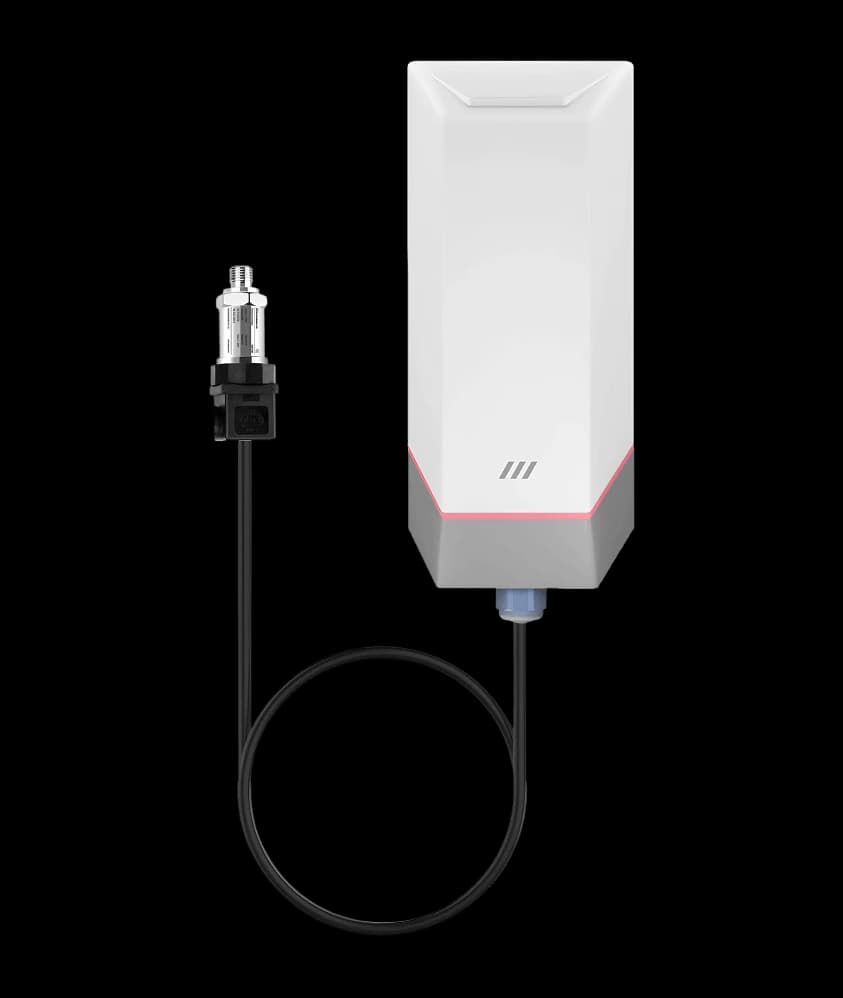

Industrial IoT sensors for temperature, humidity, CO₂, level, pressure, gas and noise, measured on a battery that lasts for years and reported without a cable.
03 · CONTROL
Switch pumps, motors, valves and alarms from anywhere. Schedules, cycles and threshold rules run on the controller itself.
04 · CONNECT
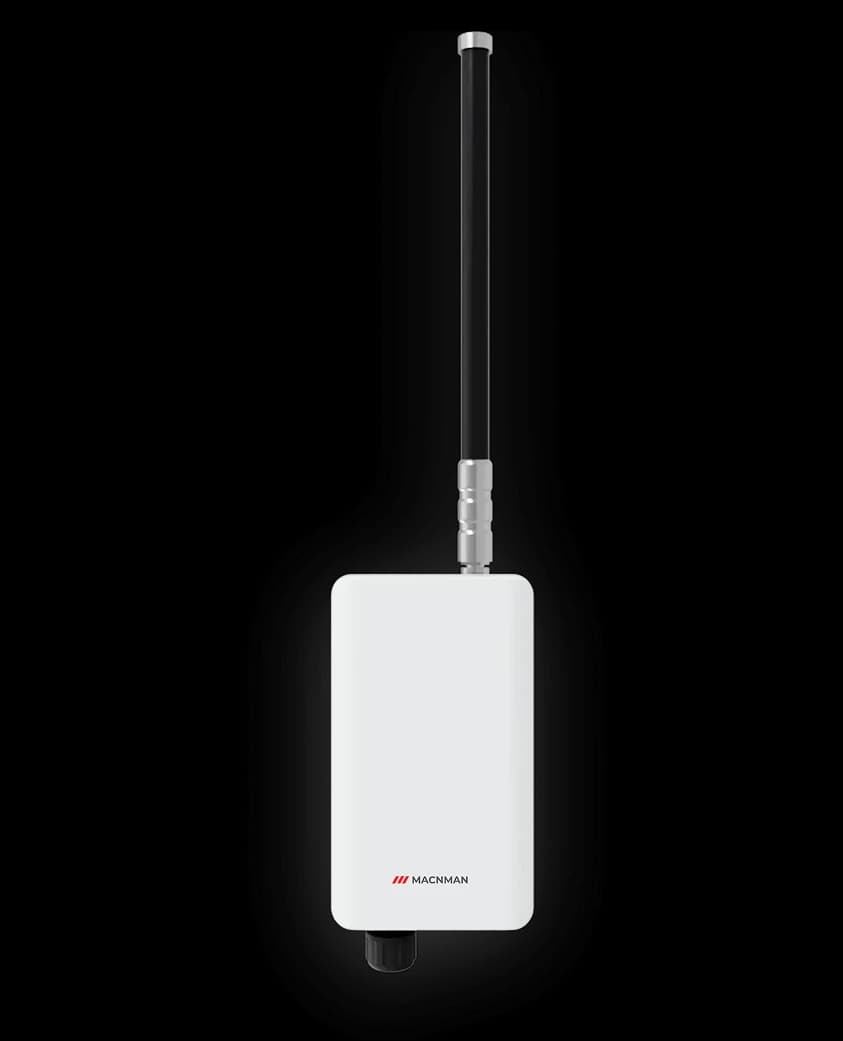
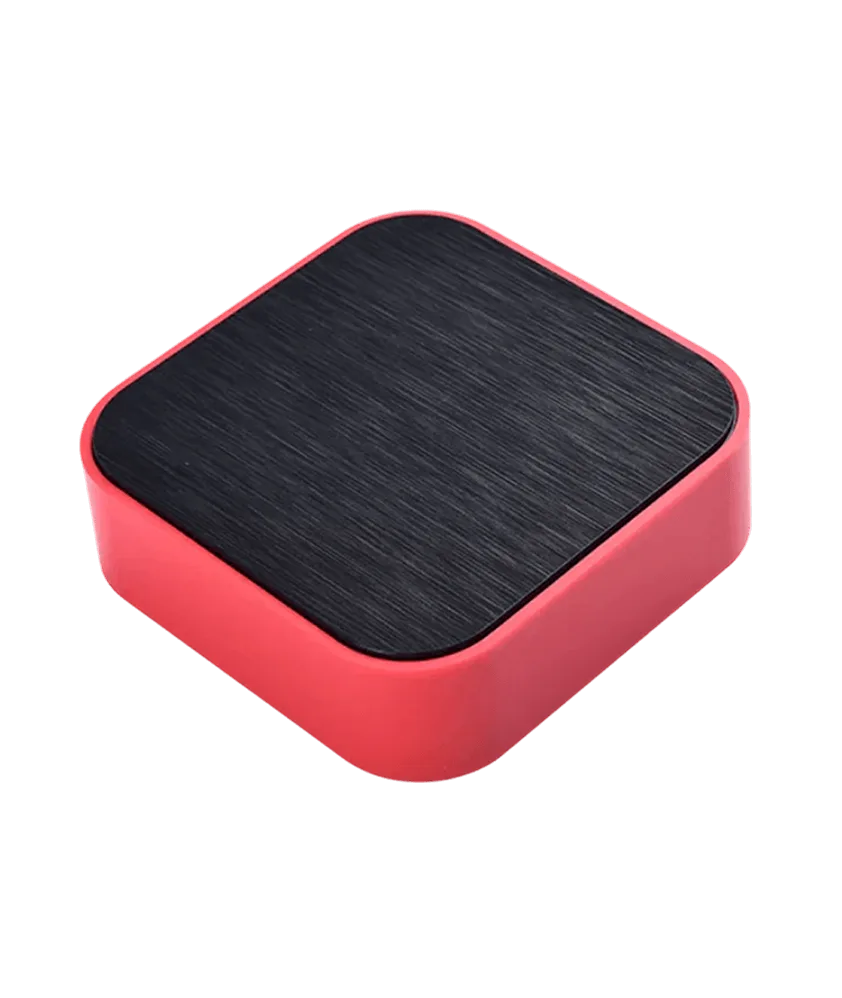
One gateway usually covers a plant. MacLink Gen 2 for outdoors and Setu X1 for indoors, each with eight channels and 4G, Ethernet or Wi-Fi backhaul.
Curious how all your sensors can talk seamlessly over LoRaWAN?
Read our LoRaWAN BookUse cases
Industrial monitoring and control for factories, process plants and utilities
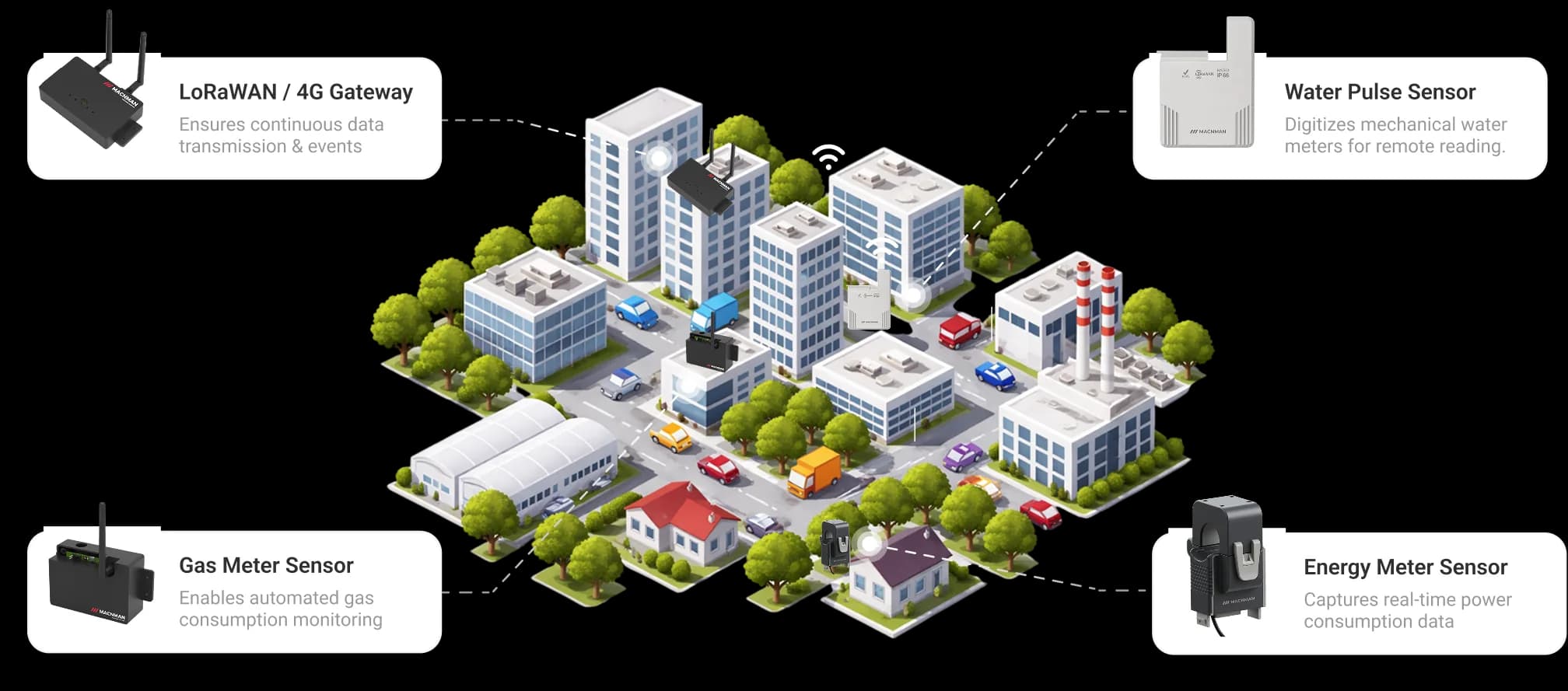
Macnman's MacSync converters read the Modbus energy, water and gas meters already installed, giving feeder-level consumption without manual meter rounds across lines, utilities and buildings. kWh, demand and power factor arrive on a schedule, so the energy used by each line and shift is on record.
Tank, Sump & Silo Level: Macnman's ultrasonic and time-of-flight sensors measure the level in tanks, sumps and silos without touching the contents, and report it over LoRaWAN. Overflow and dry-run alerts reach the team in time, and a MacSet controller can switch the pump itself.
Cold Rooms & Warehouses: Macnman's temperature and humidity sensors keep a continuous record for cold rooms, stores and clean areas, with door status alongside. An alert goes out when a room drifts or a door is left open, on LoRaWAN across a campus or on the Wi-Fi already in the store.
Gas Safety & Air Quality: Macnman's hydrogen sulphide, oxygen, ammonia and CO₂ sensors provide continuous gas readings from places a cable never reached, on battery power. Threshold alerts give early warning alongside the plant's fixed gas detection.
Effluent, ETP & STP Monitoring: Macnman's pH, conductivity and level sensors show what is happening in the treatment plant between lab samples, from the equalisation tank to the outlet. Dosing and transfer pumps can be switched over the same network by a MacSet controller.
Remote Pump, Valve & Motor Control: Macnman's MacSet controllers enable remote switching of pumps, motors, solenoid valves and alarms over LoRaWAN, Wi-Fi or 4G. Schedules, cycles and threshold rules run on the controller, so they keep working through a network outage.
Asset & Tool Tracking: Macnman's Bluetooth tags and gateways give zone-level location for moulds, dies, pallets and instruments inside the plant. Movement, shock and temperature are reported with it, so a search becomes a lookup.
Applications
A factory monitoring system is built one application at a time. Pick one to see what it measures and the hardware behind it.
Most plants meter energy at the incomer and estimate the rest. An energy monitoring system starts with the sub-meters already fitted: a MacSync converter reads their Modbus registers on each feeder, compressor and production line, and sends kWh, demand and power factor at the interval you set. The same converter reads water, steam and gas flow meters, so one network carries every utility.
Diesel is one of the few consumables a plant cannot see. A capacitive level sensor in the DG set day tank or the bulk tank reports the level continuously, to ±1% of full scale, so every refill, the consumption between refills and every unexplained drop is on record.
Overflowing sumps and dry-running pumps are both level problems. An ultrasonic or time-of-flight sensor mounted above the liquid measures the distance to the surface without touching it, which suits water and effluent that would foul a float. The reading feeds a dashboard, an alarm, or a MacSet controller that starts and stops the pump.
Pressure gauges on pipelines, process loops and hydrant lines are usually read on a walk-round, if at all. The MacSync LPS transducer reports line pressure wirelessly from a stainless-steel sensing element. Where a 4–20 mA transmitter is already fitted, the MacSync analog converter can power it, read it and send the value, so the instrument stays and only the cable run disappears.
Heat is an early sign of most equipment trouble, which is why predictive maintenance usually starts with temperature. PT100 probes on bearings, pipelines, ovens and compressors report through the MacSync RTD sensor, and the non-contact infrared sensor reads surfaces that are too hot, moving or electrically live to touch, up to 600 °C as standard and 1,500 °C in the high-temperature variant. A vibration transmitter with a Modbus or 4–20 mA output connects through a MacSync converter.
Pharmaceutical stores, food cold storage and electronics lines need a continuous temperature and humidity record, not a clipboard. Wireless sensors report every few minutes and raise an alert when a room drifts or a door is left open. Choose LoRaWAN to cover a whole campus, or Wi-Fi where access points already reach the store; the Wi-Fi sensor keeps logging on board through a network outage.
Hydrogen sulphide in an effluent plant, oxygen depletion near nitrogen lines and ammonia around refrigeration all build up unseen. Battery-powered gas sensors report the concentration continuously and alert on a threshold, in places where running a cable to a fixed detector was never practical. They add visibility alongside the plant's certified fixed gas detection and do not replace it.
A treatment plant is judged on what leaves the outlet. Online pH and conductivity sensors show the trend between lab samples, level sensors watch the equalisation and sludge tanks, and hydrogen sulphide sensors cover the wet well. Dosing and transfer pumps can be switched over the same network by a MacSet controller.
Monitoring tells you a tank is low; control does something about it. MacSet controllers switch pumps, motors, solenoid valves and alarms over LoRaWAN, Wi-Fi or 4G, on a schedule, on a cycle or when an input crosses a threshold. The rules run on the controller itself, so they keep working when the network does not.
Moulds, dies, pallets, trolleys and test instruments go missing inside the fence far more often than outside it. Bluetooth tags broadcast movement, shock and temperature, and gateways place each tag in a zone, so a search becomes a lookup.
Devices
Planning an Industrial IoT Project? Let's Talk Through the Details Together
Chat with the ExpertsCapabilities
Deploy sensors, converters, controllers and gateways that work on one network

Why projects stall
Most plants already know what they want to measure. What stops them is the cost of getting a signal from the equipment to a screen.
Retrofit
Read the signals the equipment already produces. Almost every energy meter, PLC, drive, flow meter and transmitter in a plant has an RS485 Modbus port or a 4–20 mA output. A converter wired to that port reads the values and sends them over a wireless network, so the machine, its controls and its warranty are untouched.
This is the lowest-risk way into industrial IoT, because the converter only reads unless you choose to send a write, and it needs no change to PLC code. One MacSync converter polls several Modbus devices on a single RS485 line, or reads two 4–20 mA, two 0–10 V and two digital inputs. Macnman builds it for three networks, so the choice depends on the site rather than on the equipment.
What your equipment already speaks
Almost every meter, drive, transmitter and panel in a plant already produces one of these signals. Match the signal to the device and the network, and the machine itself stays untouched.
| Signal | Typical equipment | LoRaWAN device | Wi-Fi device |
|---|---|---|---|
| RS485 Modbus RTU | Energy meters, PLCs, VFDs, flow meters, generator controllers, chillers | MacSync LX1 RS485 to LoRaWAN converter: Modbus RTU master, several slaves on one line | MacSync WX1 RS485 to Wi-Fi MQTT converter |
| 4–20 mA | Pressure, level, flow and temperature transmitters | MacSync LX1 analog to LoRaWAN converter: two channels, 12-bit | MacSync WX1 analog to Wi-Fi converter |
| 0–10 V | Analysers, position feedback, plant sensors with a voltage output | MacSync LX1 analog converter: two channels, 12-bit | MacSync WX1 analog to Wi-Fi converter |
| Dry contact, pulse | Run and trip status, door contacts, alarm relays, pulse meters | Digital inputs on the MacSync LX1 or the MacSet LX1 | Digital inputs on the MacSync WX1 |
| PT100 / RTD | Bearings, pipelines, ovens, compressors | MacSync LRTD LoRaWAN RTD sensor | MacSync W RTD Wi-Fi PT100 sensor |
| Relay or contactor | Pumps, motors, solenoid valves, alarms | MacSet LX1: two 16 A relays; MacSet LX2: eight outputs | MacSet WX1 Wi-Fi relay controller |
| No output at all | Tanks, cold rooms, gas, boundary noise | Add a LoRaWAN sensor beside it: level, temperature and humidity, gas or noise | Wi-Fi temperature and humidity sensor |
Converters read in parallel with the existing signal and write nothing to a meter or PLC unless you configure a write. Controllers switch only their own relays. Safety interlocks and emergency stops stay wired to the PLC.
Choosing a converter
The same job on three networks. Pick by what already exists at the site.
| Compare | MacSync LX1 — LoRaWAN | MacSync WX1 — Wi-Fi | MacSync CX1 — 4G |
|---|---|---|---|
| Network it needs | A LoRaWAN gateway on site | The Wi-Fi already on site | Mobile coverage and a SIM |
| Reach | Kilometres from a gateway | Up to about 100 m indoors from an access point | Anywhere with a 4G signal |
| Inputs | RS485 Modbus RTU, 4–20 mA, 0–10 V, digital | RS485 Modbus RTU, 4–20 mA, 0–10 V, digital | RS485 Modbus RTU, 4–20 mA, 0–10 V |
| Power | 19 Ah battery or 9–36 V DC | 19 Ah battery or 9–36 V DC | 9–36 V DC |
| Data goes to | A LoRaWAN network server | An MQTT broker or HTTPS endpoint | Your cloud or server over 4G |
| Choose it when | Many points are spread across a large plant or campus | The equipment sits inside good Wi-Fi coverage | A single remote asset has no local network |
All three are housed in an IP65 enclosure with an IP67 option and are rated from −40 °C to +80 °C.
Compare: RS485 to LoRaWAN converters compared, with sources · 4–20 mA to LoRaWAN converters compared · LoRaWAN I/O and relay controllers compared · Outdoor LoRaWAN gateways compared · All comparisons
IIoT vs SCADA vs PLC
A plant does not choose between them. The PLC keeps controlling, SCADA keeps its screens, and wireless IoT brings in the points that were never wired to either. This is who does what.
| Compare | PLC | SCADA | Wireless IoT (Macnman devices) |
|---|---|---|---|
| The job | Controls a machine or a process loop in real time | Supervises, displays and records what PLCs and RTUs report | Measures points that have no wiring to either, and switches equipment on rules |
| Where it runs | In the panel, hard-wired to its I/O | On a server or workstation in the plant | On the equipment, over LoRaWAN, Wi-Fi or 4G |
| How it talks | Fieldbus and hard-wired I/O | OPC, Modbus TCP, drivers and databases | Reads Modbus RTU and 4–20 mA in the field; LoRaWAN to a network server; MQTT or HTTPS out |
| Adding a point | Spare I/O, cable, panel work and a program change | A tag, once the PLC has the point | A device mounted beside the equipment: no cable, no PLC change |
| Timing | Milliseconds | Seconds | Seconds to minutes: schedules, thresholds and events, not control loops |
| If the network drops | Keeps running | Loses the live view until it returns | Controllers keep their local rules; the Wi-Fi converter stores readings and forwards them when the link returns |
| Keep it for | Safety interlocks, emergency stops, fast closed loops | Operator view and history | Monitoring, alarms, sub-metering, remote switching of pumps and valves |
| Who supplies it | Your automation vendor | Your SCADA vendor | Macnman makes the devices; the data lands in your SCADA, MES or broker |
Wireless IoT does not replace a PLC or SCADA. It reads until you choose to write, and it should never carry safety interlocks or emergency shutdown.
Architecture
Four stages. The first is the plant you already have and the last is the software you choose; Macnman builds what sits between them.
01
Meters, PLCs, tanks, pipelines, cold rooms and pumps: the equipment you already run.
02
Sensors measure, MacSync converters read Modbus and 4–20 mA, and MacSet controllers switch.
Made by Macnman
03
A LoRaWAN gateway on site, the Wi-Fi already there, or 4G for assets further out.
Gateways by Macnman
04
A LoRaWAN network server, MQTT broker, SCADA, MES or cloud dashboard, on-premise or hosted.
Readings travel from the plant to the platform. Commands, such as a register write or a relay switch, travel back the other way.
Choosing a network
Most plants end up with more than one, and that is fine. The right network depends on how far a point is from infrastructure and how much data it sends.
| Compare | LoRaWAN | Wi-Fi | 4G LTE |
|---|---|---|---|
| Infrastructure | Your own gateway; one usually covers a plant | Access points already installed | The operator's towers and a SIM per device |
| Typical reach | 2 to 5 km from an outdoor gateway in built-up areas, less through heavy structure | Up to about 100 m indoors per access point | Wherever there is mobile coverage |
| Power | Years on a 19 Ah battery | Years at 15-minute or longer intervals, less at fast rates | Usually DC powered |
| Data per message | Small: 51 to 222 bytes | Large: many registers at once | Large |
| Recurring cost | None per device on a private network | None beyond the existing Wi-Fi | A data plan per device |
| Best for | Many battery-powered points across a wide site | Indoor points inside reliable coverage | Isolated or mobile assets |
LoRaWAN bands: IN865 for India and EU868 for Europe, plus US915, AU915 and RU864, with KR920 and AS923 on selected products. Tell us the country and we ship the right band.
Plan it: LoRaWAN gateway and coverage calculator · LoRaWAN battery life calculator · LoRaWAN, Wi-Fi or 4G: technology selector · Antenna height planner · Gateway and sensor placement guide
OT security and data ownership
Plant engineers ask the same three things before anything is mounted: is it encrypted, where does the data go, and can it touch the PLC. The answers come from the datasheets, not from a policy page.
OT security and data ownership
Plant engineers ask the same three things before anything is mounted: is it encrypted, where does the data go, and can it touch the PLC. The answers come from the datasheets, not from a policy page.
LoRaWAN carries AES-128 encryption with keys per device and over-the-air activation. The Wi-Fi converters publish over MQTT with TLS on port 8883 or over HTTPS.
MacLink Gen-2 and Setu X1 gateways run ChirpStack and Node-RED on the gateway itself, or forward to a network server on your own machine. With an MQTT broker in the plant, the data never has to leave the site.
Converters read Modbus registers and tap 4–20 mA loops in parallel; nothing is written to a meter or PLC unless you configure it. Controllers switch their own relays. Interlocks and emergency stops stay wired.
No subscription from Macnman. Open LoRaWAN, MQTT and HTTPS, with payload decoders published on GitHub, so the data goes to your SCADA, MES or dashboard and moves when you decide.
Planning coverage for a plant? Size it before you order.
Open the Planning ToolsSectors
Manufacturing, pharma, food, chemicals, fuel, water and power. The devices are the same from one sector to the next; what changes is what gets measured.
Feeder-level energy, utilities, tank levels and machine status across discrete and process lines.
A continuous temperature and humidity record for stores, cold rooms and clean areas.
Cold storage, chillers and ripening chambers watched around the clock.
Tank levels, line pressure and the 4–20 mA instruments already in the field.
Fuel and diesel tank levels and pressure at sites that are spread out or unmanned.
Treatment plants, pumping stations and reservoirs on one network.
Storage conditions, access and the whereabouts of assets inside the site.
Sub-metering and equipment temperature across substations and utility blocks.
Deployment
Industrial IoT works best started small. A pilot proves the coverage and the data path, and the same network then takes on more points.
01
Choose a single measurable job: one feeder, one DG tank, one cold room. Tell us the signal type, the distance and how often you need a reading.
02
Estimate gateway count, range and battery life with the free planning tools, or send a site layout and we will do it.
Network planning tools03
Devices mount beside the equipment and are set up from a phone with the Maya app over Bluetooth. There is no programming.
04
Point the devices at your network server, broker or SCADA, confirm the data arrives, then add points to the same network.
Start small: Pilot kit: one gateway and a few devices to prove the data path · System integrator and partner programme · LoRa and BLE modules for OEM designs · Macnman as an industrial IoT manufacturer in Pune · Smart water management: tank level, pump control and bulk meters · Smart farming and agriculture IoT: soil, irrigation, weather and pumps
Why Macnman
A manufacturer, not a reseller: the people who answer your questions are the people who designed the device.
Why Macnman
A manufacturer, not a reseller: the people who answer your questions are the people who designed the device.
An industrial IoT device manufacturer in Pune, not a reseller: hardware, firmware and enclosures are designed and made here, with engineering support in Indian Standard Time.
LoRaWAN, Modbus, MQTT and HTTPS. The devices work with any LoRaWAN network server and any broker, with no mandatory subscription.
IP65 enclosures with an IP67 option, rated from −40 °C to +80 °C, on a long-life battery or 9–36 V DC.
Firmware, payloads, enclosures and branding adapted for OEM and project orders.
Choosing a provider
Search for industrial IoT solution providers in India and most results are lists written by the companies on them. These checks separate a hardware maker from a reseller, and an open system from a locked one.
Choosing a provider
Search for industrial IoT solution providers in India and most results are lists written by the companies on them. These checks separate a hardware maker from a reseller, and an open system from a locked one.
LoRaWAN, Modbus and MQTT, with no proprietary radio or mandatory platform in between. If the vendor goes away, the devices keep working.
Devices built for India's 865–867 MHz plan with WPC compliance, stated on the datasheet. Ask for it in writing.
A datasheet for every device, a user guide, and payload decoders published where your integrator can read them before an order.
One feeder, one tank or one cold room on the same hardware that will scale. A provider who will not pilot is selling a platform, not a solution.
The people who designed the device answer the questions, in Indian Standard Time, with replacements from a factory in India.
Your network server, your broker, your dashboard, and no subscription needed to keep the hardware running.
FAQ
Industrial IoT is IoT applied to plants and factories. The idea is the same, connected devices sending data to software, but the equipment is built for a harder job: sealed enclosures, wide temperature ratings, long battery life, and industrial interfaces such as RS485 Modbus and 4–20 mA so it can read the meters, PLCs and instruments already on site.
They are related, not the same. Industry 4.0 is the idea of a plant whose machines, utilities and stores report their own condition, and a smart factory is a plant that has got there. Industrial IoT is the means: the sensors, converters and networks that collect the data. Most plants start smaller than the phrase suggests, by connecting the equipment they already have and getting one reliable set of readings.
Yes. SCADA is the operator's view and history of what the PLCs control, and it stays. Wireless IoT adds the points SCADA never had, such as the sub-meters, the DG tank, the cold room and the boundary noise meter, because nobody ran a cable to them. The readings land in SCADA over Modbus TCP, MQTT or your historian, or in a separate dashboard if the SCADA team prefers to keep the plant network untouched.
No. A LoRaWAN gateway moves radio packets to a network server; it does not control anything. The PLC keeps every control loop, interlock and emergency stop. Macnman converters read what the PLC and the meters already expose over Modbus or 4–20 mA, and MacSet controllers switch pumps, valves and alarms on schedules and thresholds for jobs the PLC was never wired to.
Both, at different ends. Modbus RTU is how the meter, drive or PLC speaks on the RS485 line in the panel; MQTT is how the reading reaches your broker, SCADA or cloud. A MacSync converter reads Modbus registers in the field and sends them over LoRaWAN to a network server, or publishes them directly as MQTT over Wi-Fi or 4G. Nothing in the panel has to change.
Yes, and this is how most plants start. If the equipment has an RS485 Modbus port or a 4–20 mA or 0–10 V output, a MacSync converter reads it and sends the values over LoRaWAN, Wi-Fi or 4G. The machine, its controller and its wiring stay as they are. Where there is no usable output, a wireless sensor is added beside the equipment instead.
Usually neither. A converter is wired to a spare RS485 port or in parallel with an existing 4–20 mA signal and only reads, so the PLC program is not touched. Non-contact and surface-mounted sensors go in while the process runs. A sensor that sits inside a tank or a pipeline is the exception and is normally fitted at a planned stop.
Wire the loop into a MacSync analog converter. It reads the 4–20 mA current at 12-bit resolution on two channels, can supply the loop power for a two-wire transmitter, and sends the value over LoRaWAN, or over Wi-Fi as MQTT, on the interval you set. The scaling from milliamps to engineering units is done in the decoder or on your platform, so the transmitter keeps its existing range.
It depends on distance and data. LoRaWAN suits many battery-powered points spread over a large site, because one gateway covers a plant and there is no per-device fee. Wi-Fi suits indoor points inside reliable coverage that need to send more data, more often. 4G suits a single remote asset with no local network. Most plants use more than one, and Macnman builds the same converters and controllers for all three.
An outdoor MacLink Gen 2 gateway typically covers 2 to 5 km in built-up areas, and an indoor Setu X1 gateway 1 to 2 km. Steel structures, basements and thick walls reduce that, which is why a coverage check comes before an order. Each gateway has eight channels and supports more than 2,000 devices, so capacity is rarely the limit in a single plant.
Through walls and across a plant, yes; through heavy steel and deep basements, with planning. Concrete and steel cut the range, so a gateway placed high and central usually covers a plant, and a second gateway or an indoor Setu X1 covers a basement or a utility block. A coverage check with a device at the real mounting point comes before an order; the network calculator and the placement guide on this site are the starting point.
LoRaWAN sensors and converters run on a 19 Ah lithium cell. The years depend on the reporting interval, the spreading factor and the temperature: for the MacSync LX1 the estimate is about 8 years at one reading an hour on SF7, and about 4 years at a reading every 5 minutes. Wi-Fi costs more energy per message: the MacSync WX1 converter is estimated at about 2.5 years on 15-minute uploads and 6.7 years on hourly uploads. Controllers and gateways run from mains or DC. The battery life calculators on this site give the figure for your settings.
No. A LoRaWAN network server and an MQTT broker can both run on a machine inside the plant, so the data never has to leave the site. Macnman devices do not require a subscription to work. A cloud platform is an option for multi-site visibility, not a condition of using the hardware.
You own it. The LoRaWAN network server can be ChirpStack running on the MacLink or Setu gateway or on a machine inside the plant, and the MQTT broker can sit beside it, so readings never leave the site unless you send them out. The payload formats are published, and there is no Macnman account or subscription in the path.
LoRaWAN is its own radio network with its own gateway; the devices never join the plant Ethernet or the PLC network, and the converters only read from the RS485 line or the 4–20 mA loop. The gateway's backhaul to your server can run on a separate VLAN, and the Wi-Fi devices on an SSID you control. Writes to a register or a relay happen only where you configure them, from your platform.
Yes. The devices deliver data over open protocols: LoRaWAN to any standard network server, and MQTT or HTTPS from the Wi-Fi and 4G devices. Most SCADA, MES and analytics platforms accept one of these directly or through their own connector. Send us the name of the platform and we will confirm the route.
Yes. The devices are standard LoRaWAN, so they register on ChirpStack, The Things Stack, LORIOT, Orbiwise or a private network server, with payload decoders published on GitHub for the main sensors and converters. From the network server, or directly from the Wi-Fi and 4G devices, the data reaches AWS IoT Core, Azure IoT Hub or your own broker over MQTT or HTTPS.
For monitoring and supervisory control, yes. Readings are sent on a schedule, converters store data on board and forward it after an outage, and controllers run their rules locally. Wireless should not carry safety interlocks, emergency shutdown or fast closed-loop control. Those stay wired.
Every LoRaWAN device joins with its own keys and encrypts its payload with AES-128; the network server checks every frame, so a captured packet cannot be replayed. Like any radio, the band can be jammed by a strong transmitter nearby, which is why LoRaWAN is used for monitoring, alarms and supervisory switching, and why safety interlocks stay wired. A missed heartbeat is itself an alarm on the platform.
Yes, if each machine or feeder has a Modbus energy meter, which most panels already do or can have added. A MacSync converter polls the meters on one RS485 line and reports kWh, demand, voltage, current and power factor per meter. That shows which line, shift or machine uses the energy, which a single incomer meter cannot.
Yes. A LoRaWAN capacitive fuel level sensor in the day tank or bulk tank reports the diesel level continuously to ±1% of full scale. Refills, consumption and sudden drops all show in the trend, and a low-level alert can be raised before the tank runs dry. Generator controllers with a Modbus port can also be read through a MacSync converter.
Temperature-based condition monitoring is covered directly: PT100 probes through the RTD sensor, and non-contact infrared for hot or moving surfaces. For vibration, a transmitter with a Modbus or 4–20 mA output connects through a MacSync converter and its values travel over the same network. Tell us the machines and we will suggest the measurement points.
The standard devices are industrial, IP65 with an IP67 option, and are not certified for use in hazardous (Ex) zones. Tell us the zone classification before ordering and we will confirm what can be used and where it can be mounted.
Yes. LoRaWAN in India uses the IN865 plan in the 865 to 867 MHz band, which the Wireless Planning and Coordination wing (WPC) has delicensed for low-power devices, so you need no spectrum licence to run your own gateway. Macnman hardware is built for IN865 and is WPC compliant. For other countries the devices come in EU868, US915, AU915 and RU864 variants, with KR920 and AS923 on selected products; the band is fixed by the country's regulations, so tell us where the devices will be installed.
Yes. As the manufacturer, Macnman adapts firmware, payload formats, enclosures and branding for OEM and project orders. Customisation depends on volume, so share the quantity and the change you need and we will tell you what is possible.
Four lines, and the device is only one of them: the number of points and the signal type at each, the gateways needed for coverage (one usually covers a plant, basements and far blocks add more), the mounting and wiring at each point, and the platform the data lands in, which is often one you already run. Send the point list with signal types and a site plan and we quote the whole project rather than a device in isolation.
Yes. Macnman Technologies designs and manufactures its sensors, converters, controllers and gateways in Pune, Maharashtra, and supports them directly from the engineering team.
Check six things: open protocols rather than a proprietary radio; IN865 and WPC compliance stated on the datasheet; specifications and decoders published, not shared on request; a pilot on the same hardware that will scale; engineers in India who designed the device; and data that stays on your servers with no subscription. A manufacturer can show all six; a reseller or a platform company usually cannot.
LoRaWAN devices are built in regional band variants: IN865 for India, EU868 for Europe and the countries that follow the European plan, plus US915, AU915 and RU864. The Wi-Fi and 4G devices do not depend on a LoRaWAN band. Radio approvals differ by country: the hardware is WPC approved for India and conforms to RoHS, so tell us the country of installation and we confirm the band, the variant and the compliance position before you order.
Yes, and that is the normal way in. Pick one measurable job, such as sub-metering one feeder, watching one DG tank or one cold room, and tell us the signal type, the distance and the reporting interval. We specify the devices and the gateway, you confirm the data reaches your platform, and the same network then takes on more points. The pilot kit on this site is one gateway and a few devices for exactly that; there is no minimum order to talk to us.
More from Macnman
 New
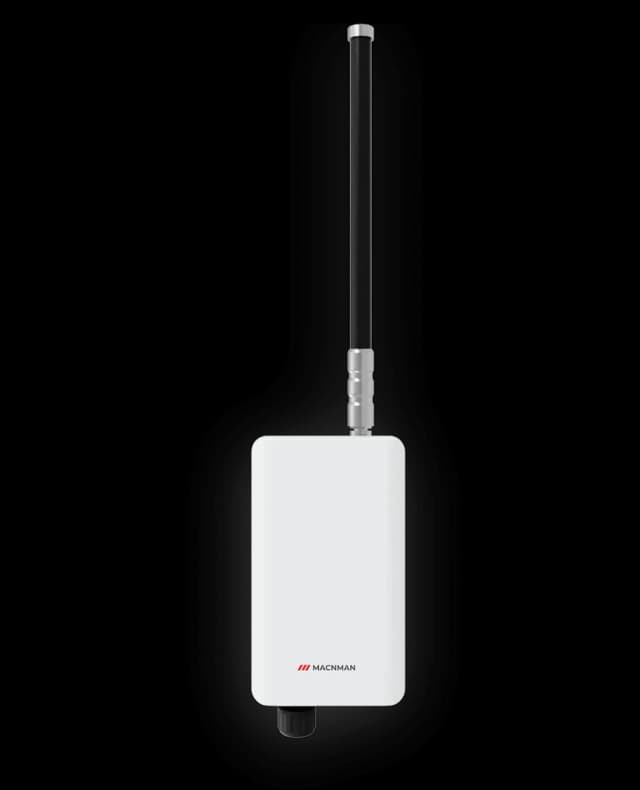
Outdoor LoRaWAN Gateway
 Hot Selling
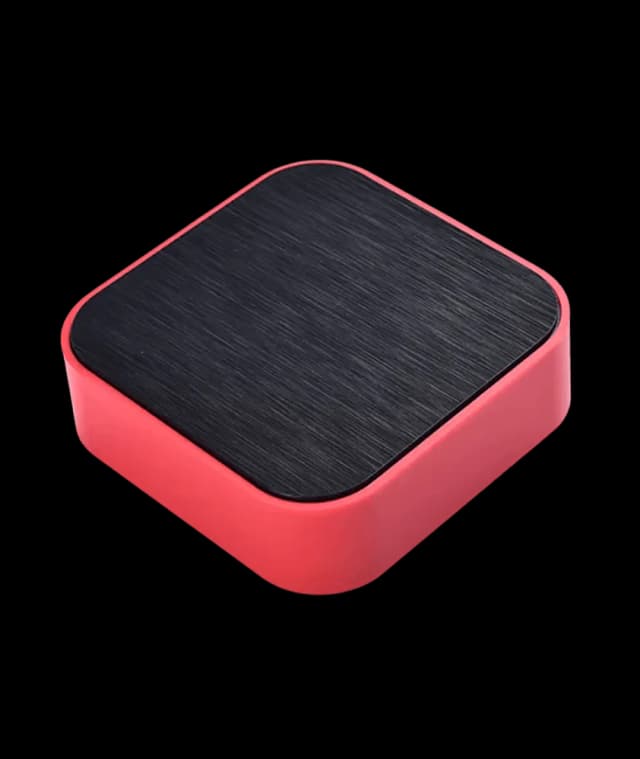
Indoor LoRaWAN Gateway
 Hot Selling
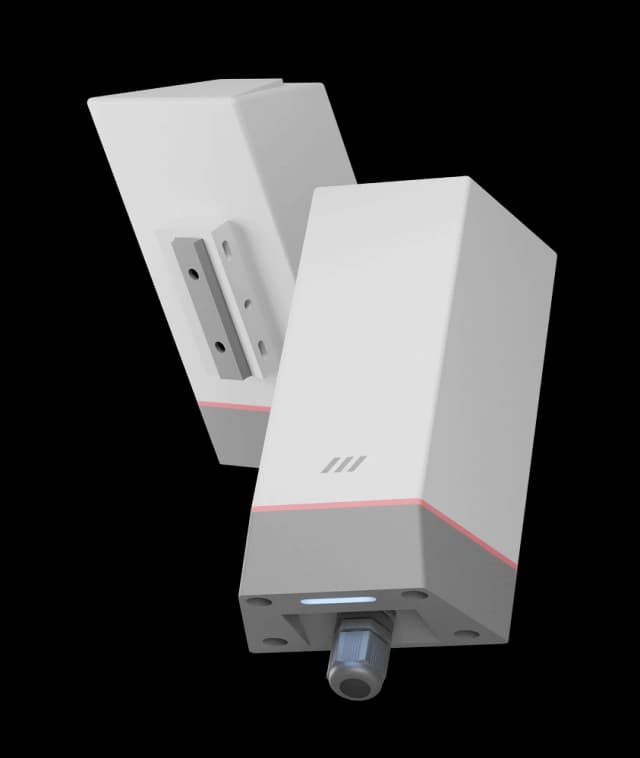
RS485 Modbus to LoRaWAN Converter
Analog 4-20mA to LoRaWAN Converter
NewRS485 Modbus to Wi-Fi Converter
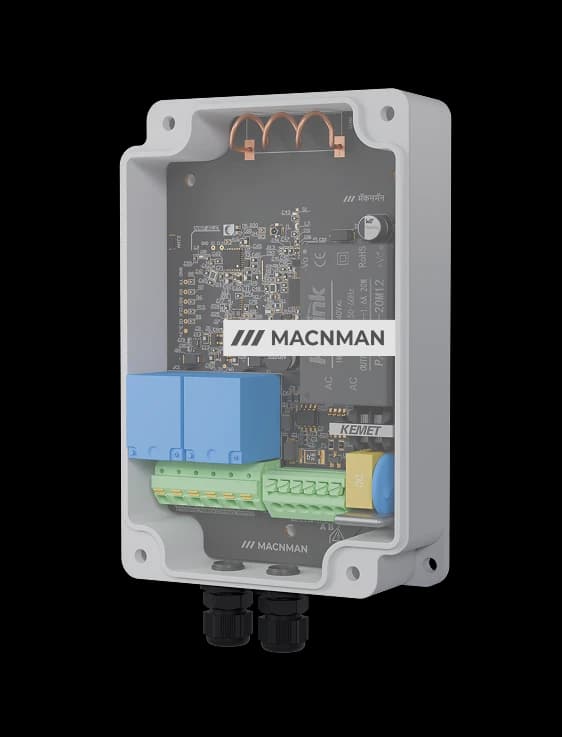
LoRaWAN Relay Controller
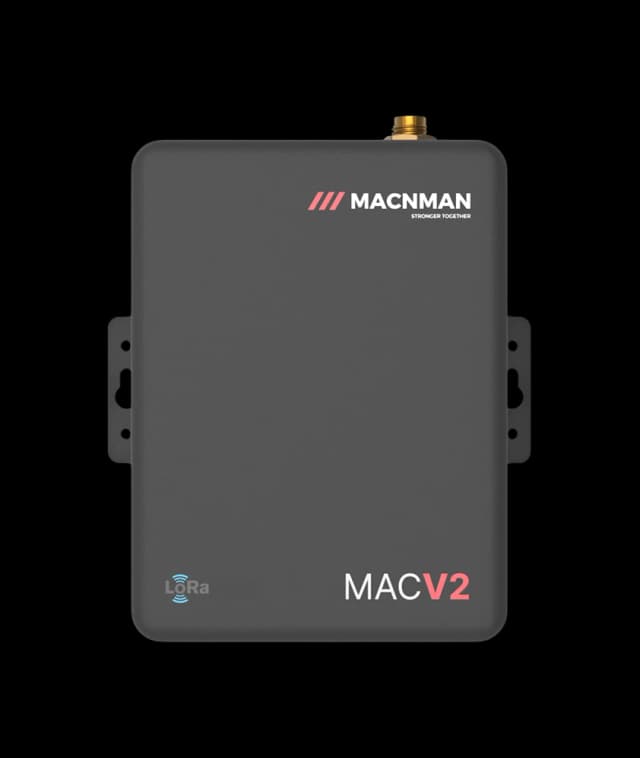
4G LTE Gateway
NewOutdoor LoRaWAN Gateway
Hot SellingIndoor LoRaWAN Gateway
Hot SellingRS485 Modbus to LoRaWAN Converter
Analog 4-20mA to LoRaWAN Converter
NewRS485 Modbus to Wi-Fi Converter
LoRaWAN Relay Controller
4G LTE Gateway
Let’s bring it to life!
Let‘s Make it Easy
Reach Out Now


We are always ready
to help and
answer your
questions
+91 7972856163
+91 9096830856
Office-15 Bibwewadi, Pune, Maharashtra 411037
Define your goals and all to value your time
Use of this website and purchase of Macnman products are subject to our Terms and Conditions.