LoRaWAN® Pressure Sensor
Wireless Pressure Transducer for Water Networks, Hydrant Lines, Pumping Stations and Process Pipelines · 0–2.5, 0–5 or 0–10 MPa · SS316, G1/4 · Battery or DC
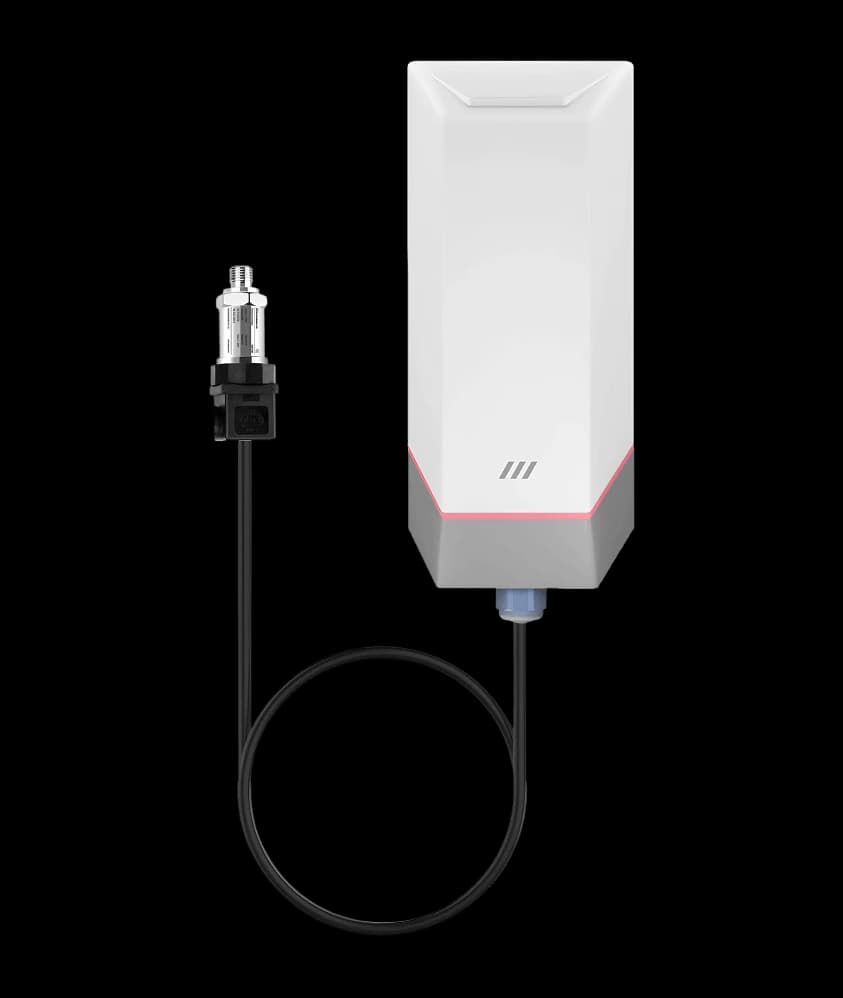
The MacSync LPS Xx is a LoRaWAN pressure sensor built around an SS316 pressure transducer: 0–2.5, 0–5 or 0–10 MPa at ±0.05 % of full scale on a G1/4 tapping, with low and high pressure alerts reported within the sampling interval, on a 19 Ah battery or 9–36 V DC, kilometres from your gateway
Wireless Pressure Monitoring for Water Utilities, Fire Lines, Pumping Stations, Plants & Pipelines.
Wireless Pressure Monitoring for
Water Utilities, Fire Lines, Pumping Stations, Plants & Pipelines.
MacSync LPS Xx
Explore the highlights
The X1 reads 0–2.5 MPa for water networks, hydrant lines and pumping stations; the X2 0–5 MPa for hydraulics and medium-pressure process lines; the X3 0–10 MPa for high-pressure pipelines, fire protection and oil and gas. Same node, same radio, same app.
Measurement accuracy of ±0.05 % FS with a temperature effect of ±0.02 % FS per °C, from a transducer rated for a million cycles, 200 % overload and 300 % burst pressure, with a response time of 10 ms or better.
Threshold alerts report when pressure falls below or rises above the limits you set — a burst, a closed valve, a pump trip, a hydrant line losing head — within the sampling interval you choose, from one minute, instead of at the next scheduled uplink.
The wetted element is SS316 stainless steel on a standard G1/4 thread, so it goes on the tee, the test point or the isolation valve the line already has, for water, oil, gas and hydraulic media named on the datasheet.
The transducer's reading goes over LoRaWAN® at 23 dBm with −137 dBm sensitivity to a gateway kilometres away, so a valve pit, a hydrant ring main or a rising main is monitored without trenching a signal cable or buying a SIM for every point.
The 19 Ah variant is rated about 2, 4 and 7+ years at 5, 15 and 60-minute reports; the DC variant runs from 9–36 V at a pump house or a plant.
Glass-filled nylon enclosure, IP65 as standard with an IP67 option, rated from −40 to +80 °C; the transducer itself is rated IP65. An IP68 cable extender separates the two where the node must sit above the pit.
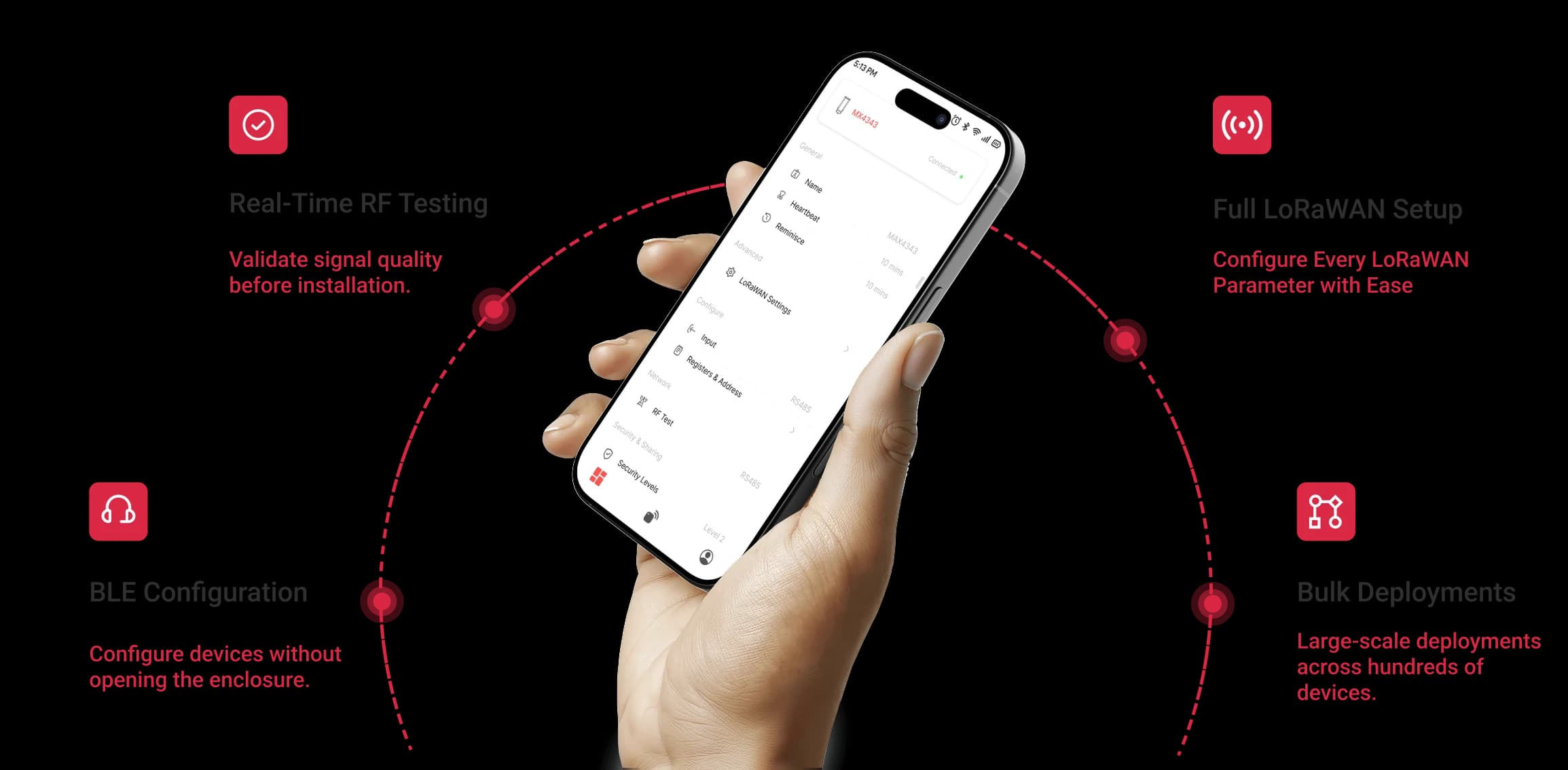
Pair over Bluetooth with the Maya app to set the sampling and reporting intervals, the low and high pressure limits and the LoRaWAN class; change them later by downlink.
Designed and manufactured in Pune. WPC compliant on IN865 and RoHS conforming, with an engineer in Pune who answers during the Indian working day.
In plain terms
What Is a LoRaWAN Pressure Sensor?
The short answer
A LoRaWAN pressure sensor is a pressure transducer with a long-range radio and a battery: it screws onto a pipeline, a hydrant line or a vessel, measures the pressure, and sends it over LoRaWAN® radio kilometres to a gateway, with no signal cable and no SIM at the point. The MacSync LPS Xx pairs an SS316 transducer — 0–2.5, 0–5 or 0–10 MPa at ±0.05 % of full scale on a G1/4 thread — with a 19 Ah battery or DC node and threshold alerts, so a water utility, a fire-protection line or a plant sees pressure at every point and hears about a drop the moment it happens.
Range
- 0–2.5
MPa (25 bar), model X1
- 0–5
MPa (50 bar), model X2
- 0–10
MPa (100 bar), model X3
Accuracy
- ±0.05 %
Of full scale, measurement accuracy
- ±0.02 %
FS per °C, temperature effect
- ≤10 ms
Response time
Transducer
- SS316
Wetted stainless steel
- G1/4
Thread
- 200 / 300 %
Overload / burst pressure
Alerts
- 1 min
Shortest sampling interval
- 3
Modes: periodic, event, hybrid
- 24 h
Longest sampling interval
Power
- 19 Ah
Battery variant
- 7+ yr
At hourly reports, datasheet estimate
- 9–36 V
DC variant
Radio
- 23 dBm
Transmit power, −137 dBm sensitivity
- 5
Regional bands, IN865 standard
- A / C
LoRaWAN classes, set in the app

MacSync LPS Xx
The MacSync LPS Xx is Macnman's LoRaWAN pressure sensor: three ranges to 10 MPa, ±0.05 % FS, 200 % overload, SS316 wetted part on G1/4, threshold alerts, LoRaWAN® v1.0.4 on IN865 and four other bands, a 19 Ah battery or 9–36 V DC, and setup from the Maya app.
Three transducer ranges; choose the lowest that covers the line's maximum including surges.
Stated as a percentage of full scale, which is why the range should be chosen to fit the line.
SS316 element on a G1/4 thread, rated for overload and a million cycles.
Low and high limits that report the moment they are crossed.
A 19 Ah cell for years at a pit or a hydrant, or 9–36 V DC at a pump house.
LoRaWAN® v1.0.4, Class A or C, on IN865 and four other bands; MacTalk device to device.
Also searched for as a wireless pressure transmitter, an IoT pressure sensor, a battery-powered pressure transducer, a water pressure monitoring sensor or a LoRaWAN pressure transmitter. For liquid level in a small tank by hydrostatic head, the companion MacSync LPS X7 reads −10 to +10 kPa; for level without contact, the MacRay LUS X1 ultrasonic sensor.
Get a quote
Need a quote for the MacSync LPS Xx?
Tell us how many you need and where they are going. A product engineer replies within one working day with availability, lead time and the right variant for your site.
- Reply within one working day
- Designed and built in Pune, India
- WPC compliant, RoHS conformant
Downloads
Everything You Need to Get Building
Datasheets, drawings, firmware, and tools — all in one place.
MacSync LPS Xx Datasheet (PDF)
Transducer, radio, power and variant specifications
Datasheet web page
The same specifications on the documentation site
MacSync LPS X7 Hydrostatic Level Sensor Datasheet (PDF)
The −10 to +10 kPa companion for small-tank level
Pressure Sensor User Manual
Installation, mounting, live readings and remote configuration
Maya App Setup Guide
LoRaWAN settings shared by all MacSync sensors
Engineered for
What Sets the MacSync LPS Xx Apart for Pressure Monitoring
±0.05 % of full scale, ±0.02 % FS per °C, 200 % overload, 300 % burst, a million cycles and a 10 ms response: the figures a process or utility engineer expects on a transducer sheet, on a node that runs on a battery.
01 / 05
Works with
Why Choose the MacSync LPS Xx LoRaWAN Pressure Sensor?
An SS316 transducer at ±0.05 % of full scale with threshold alerts and a battery rated for years, sending over LoRaWAN® to any network server, with no cable, Wi-Fi or SIM at the point.An SS316 transducer at ±0.05 % of full scale with threshold alerts and a battery rated for years, sending over LoRaWAN® to any network server, with no cable, Wi-Fi or SIM at the point.
Applications
Where Is a LoRaWAN Pressure Sensor Used?
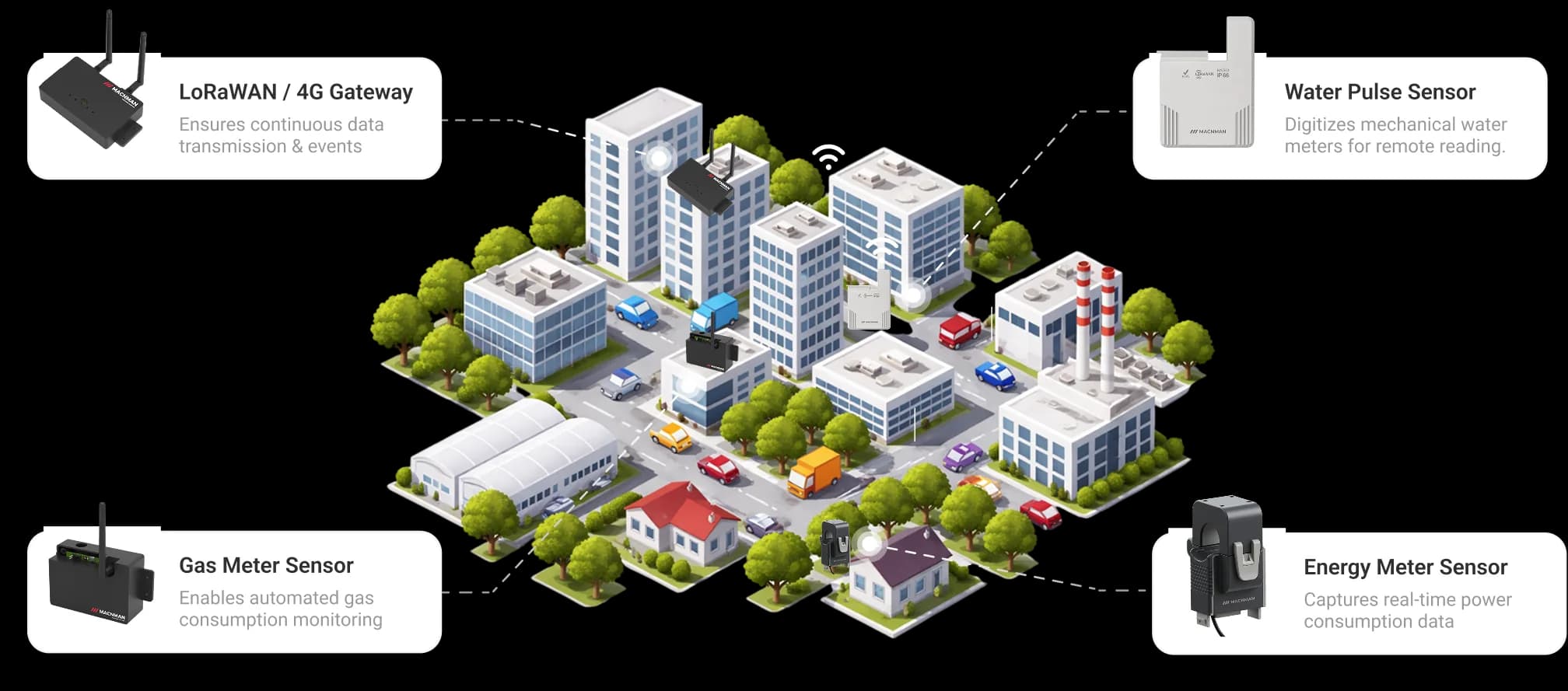
Water Distribution & DMA Pressure
Pressure at the zone inlet, the critical point and the tail end: a drop that stays down is a burst or a closed valve, found from the screen instead of the road.
Read case studiesFire Hydrant Ring Mains (Residual pressure, Low-limit alert): Residual pressure on the hydrant line of a plant, a campus or a high-rise, with an alert the moment it falls below the limit, so a fault is a work order rather than a finding at the inspection.
Pumping Stations & Rising Mains (Discharge pressure, Pump trip): Discharge pressure at the pump and along the rising main: a pump that trips or a line that bursts shows within minutes, and the reading sits beside the pump's run status from the MacSet controller.
Booster Pumps & Building Risers (Riser pressure, Society and campus): Pressure on the riser and after the booster set in a tower, a hospital or a campus, with the tank level from the ultrasonic sensor on the same network.
Process Lines & Gas Receivers (X2 and X3 ranges, Into SCADA): Process water, cooling lines, compressed-air and gas receivers and steam-side auxiliaries on the medium and high ranges, reported into SCADA over MQTT.
Hydraulic Machines (0–10 MPa, Million-cycle transducer): Hydraulic presses, lifts and power packs where a falling pressure is a seal or a pump on its way out, on a transducer rated for a million cycles.
Oil & Gas and Mining Pipelines (Remote points, Battery for years): Pressure along pipelines and at remote wellheads and dewatering lines where no power exists, on a battery rated for years and a gateway kilometres away.
Irrigation Mains & Pumpsets (Drip main pressure, Filter blockage): Pressure before and after the filter station and along the drip main: a rising differential is a blocked filter, a falling main is a burst lateral.
Smart City Water Networks (Ward by ward, ICCC feed): A ring of pressure points across a city's distribution network, into the water SCADA or the ICCC over MQTT, beside the bulk meters and tank levels on the same gateways.
Existing 4–20 mA Transmitters (Keep the transmitter, Add the radio): Where a line already carries a 4–20 mA transmitter, the MacSync LX1 analog converter puts it on the same LoRaWAN network; where it does not, the LPS Xx is the one-box answer.
Browse all 10 applications
01 / 10
Where it fits
From Valve Pits to Hydraulic Presses, Wherever Pressure Is the Signal
Water Distribution & DMAs
Pressure at the inlet, the critical point and the far end of each zone, so a burst, a closed valve or a starved tail end is seen from the control room rather than reported by a resident.
Fire Hydrant Lines & Pumping Stations
Residual pressure on the hydrant ring main and discharge pressure at the pump, with a low-limit alert that turns a silent fault into a work order.
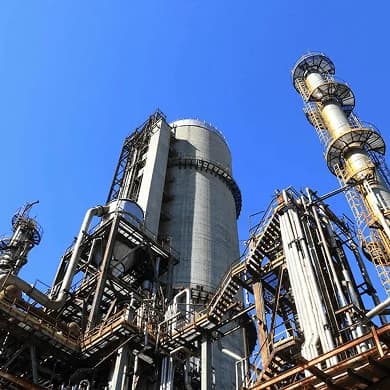
Plants, Hydraulics & Pipelines
Process lines, compressed-air and gas receivers, hydraulic machines and oil and gas pipelines, with the reading into SCADA over MQTT and the X2 and X3 ranges for medium and high pressure.

Water Distribution & DMAs
Pressure at the inlet, the critical point and the far end of each zone, so a burst, a closed valve or a starved tail end is seen from the control room rather than reported by a resident.
Fire Hydrant Lines & Pumping Stations
Residual pressure on the hydrant ring main and discharge pressure at the pump, with a low-limit alert that turns a silent fault into a work order.
Plants, Hydraulics & Pipelines
Process lines, compressed-air and gas receivers, hydraulic machines and oil and gas pipelines, with the reading into SCADA over MQTT and the X2 and X3 ranges for medium and high pressure.
Installing it
Installing a Wireless Pressure Sensor: Tapping, Range, Node Placement and a Reference Check
The four decisions every installation turns on. The figures are from the datasheet; the practice is standard for any transducer.
Installing it
The four decisions every installation turns on. The figures are from the datasheet; the practice is standard for any transducer.
Tapping point
A G1/4 tee, test point or isolation valve on the line, where the transducer sees steady line pressure rather than pump turbulence; an isolation valve lets the transducer be changed without draining the line.
Range: the lowest that covers the surge
Accuracy is ±0.05 % of full scale, so a 6 bar main on the 2.5 MPa X1 is read far more finely than on the 10 MPa X3. Cover the maximum including surge and water hammer; the transducer tolerates 200 % overload.
Node above the water line
The transducer is rated IP65 and the node IP65 with an IP67 option: mount the node on the chamber wall or a post above any flooding level and use the IP68 cable extender to reach the tapping.
Compare against a gauge
At commissioning, read the line gauge beside the transducer and note the offset; repeat at the next inspection. The datasheet publishes accuracy, not a calibration certificate, and the comparison is what makes the record defensible.
Free planning tools
Size your deployment before you order the hardware
Free engineering calculators for coverage, range and battery life — built on measurements from our own deployments rather than textbook models, which is why the answers tend to be smaller and a good deal more useful. Nothing here quotes a range we have not actually achieved.
No sign-up, no email, nothing to install. More on the way for Wi-Fi and BLE.
Hardware
IP65 Node with an IP67 Option, an IP65 SS316 Transducer, and a Cable Between Them
The glass-filled nylon node is IP65 rated as standard, IP67 optional, and operates from −40 °C to +80 °C on a pole or a wall; the transducer's wetted element is SS316 and its sealing grade is IP65. An IP68 cable extender lets the node sit above a valve chamber while the transducer sits on the tapping below.

Ready to see pressure at every point? Ask for a quote on the MacSync LPS Xx.
At a glance
MacSync LPS Xx LoRaWAN Pressure Sensor Specifications
Every key specification in one view, from the datasheet.
0–2.5 / 5 / 10 MPa
three transducer ranges
Models X1, X2, X3 · 25, 50, 100 bar
±0.05 % FS
measurement accuracy
±0.02 % FS/°C · ≤10 ms response
SS316 · G1/4
wetted element and thread
200 % overload · 300 % burst · ≥1,000,000 cycles
19 Ah or 9–36 V DC
power
~2 / 4 / 7+ years at 5 / 15 / 60-minute reports
−40 to +80 °C
operating range
IP65 node, IP67 optional · IP65 transducer · ~175 g
LoRaWAN® v1.0.4
IN865 and four more bands
23 dBm · Class A, Class C via Maya · OTAA
Features
Built into the MacSync LPS Xx: Transducer, Radio, Power and Setup
Low and High Pressure Alerts
Set the limits and the sensor reports the moment the line drops below or rises above them.
Report on a fixed interval, on an event, or both, with sampling from 1 minute to 24 hours.
Long-Range LoRaWAN®
LoRaWAN® v1.0.4, Class A with Class C via the app, on IN865, EU868, US915, AU915 and RU864.
Battery or 9–36 V DC
A 19 Ah cell rated 7+ years at hourly reports, or site power from 9 to 36 V DC.
±0.05 % FS Transducer
SS316 element, G1/4 thread, 200 % overload, a million cycles, 10 ms response.
Three Ranges to 10 MPa
0–2.5 MPa for water and hydrants, 0–5 MPa for hydraulics and process, 0–10 MPa for high-pressure lines.
Any LoRaWAN® Network Server
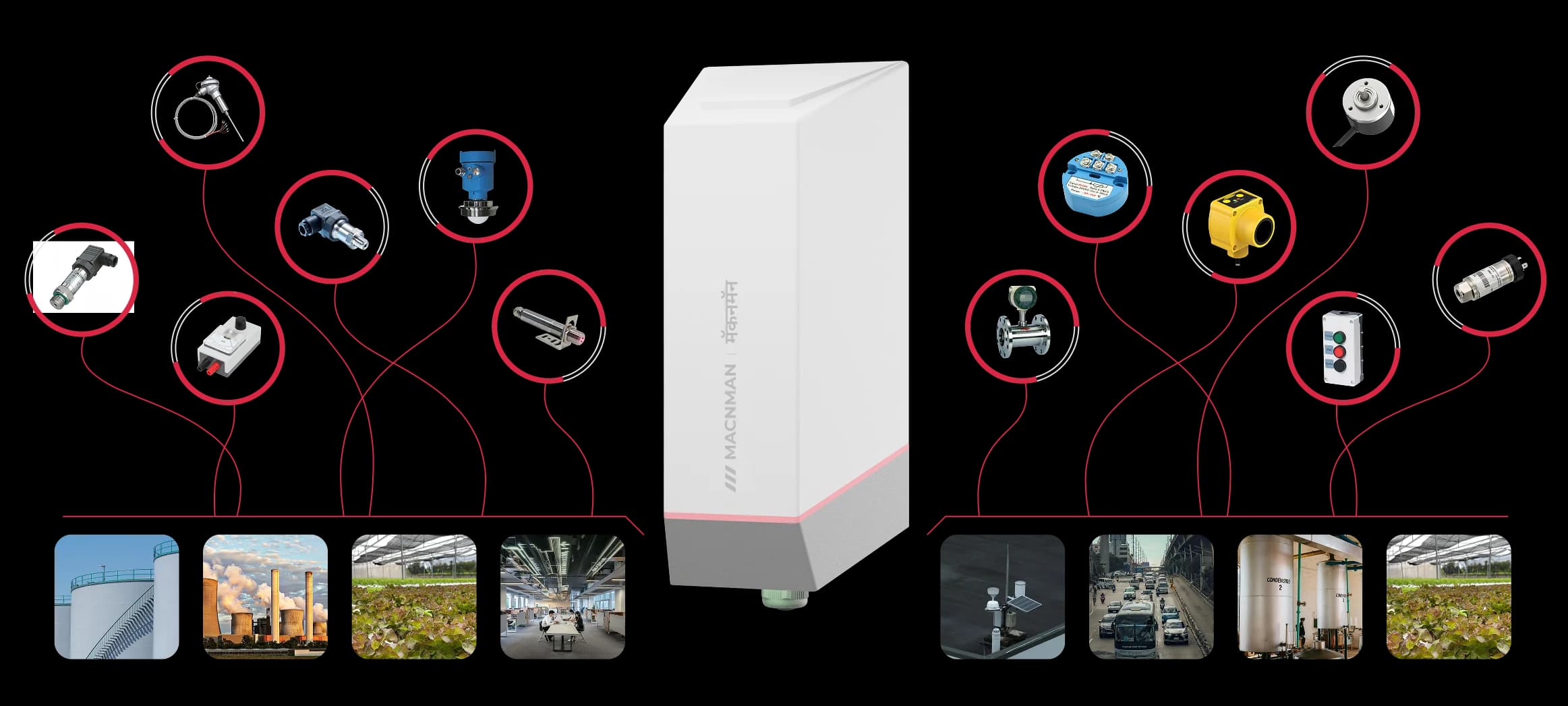
ChirpStack, The Things Network, Orbiwise, Netmore, MQTT platforms, SCADA or a private LNS, with AES-128 end to end.
Macnman Maya App
Intervals, pressure limits, LoRaWAN class and live readings from your phone; the same settings by downlink later.
MacTalk and BLE Variants
MacTalk variants talk device to device to a MacSet controller with no gateway, so a pressure drop can stop a pump or close a valve on a site with no network; the BLE variant reads locally into the Maya app for commissioning.
Capabilities
A Pressure That Drops and Stays Down Is a Burst
A gauge in a chamber is read once a month. A transducer on LoRaWAN is read every few minutes, and the pattern is the diagnosis: a step down that recovers is a pump cycle, a slow fall is a leak growing, a drop that stays is a burst or a closed valve, a rise is a dead end or a stuck PRV.

Before you order
Send Us the Point List and We Confirm the Variants
Four details are enough for an engineer to reply with the range for each point, the reporting interval and the gateway count.
Before you order
Four details are enough for an engineer to reply with the range for each point, the reporting interval and the gateway count.
Points and their maximum pressure
Each tapping with its normal and maximum pressure including surge: a 6 bar main points to the 2.5 MPa X1; a 40 bar hydraulic line to the X2; an 80 bar pipeline to the X3.
Media and tapping
Water, oil, gas or hydraulic fluid, and whether a G1/4 tee, test point or isolation valve exists at the point. The wetted element is SS316.
Power at the point
No power points to the 19 Ah battery variant; a pump house, substation or plant with power points to the 9–36 V DC variant.
Network and platform
An existing LoRaWAN® gateway and network server, or a new MacLink Gen-2; or MacTalk to a MacSet controller that acts on the pressure with no gateway.
Ready now: Get a quote · Request a pilot kit · Partner programme
Architecture
LoRaWAN Network Architecture: Pressure Sensor, Gateway, Network Server and SCADA or Dashboard

Why it matters
See the Pressure Where It Falls, Not a Month Later.
A gauge in a chamber is read on a round. A transducer on LoRaWAN is read every few minutes, and the control room sees the burst, the starved tail end and the failing pump as they happen.
Why it matters
A gauge in a chamber is read on a round. A transducer on LoRaWAN is read every few minutes, and the control room sees the burst, the starved tail end and the failing pump as they happen.
Find the burst before the complaint
A pressure that drops and stays down at a point is a burst or a closed valve; the alert arrives within minutes, with the location.
Keep the hydrant line ready
Residual pressure on the ring main, logged continuously, with a low-limit alert that turns a silent fault into a work order before the inspection.
Protect the pump
Discharge pressure beside the pump's run status: a falling head is a worn impeller, a closed valve or a burst, caught before the motor pays for it.
A pressure record you own
Every point logged on your own network server, exported to the SCADA or the audit, ready to compare zone against zone and season against season.
How it works
How Does a LoRaWAN Pressure Sensor Work?
Step 1 of 5
Transducer on the tapping, node on the wall
Screw the G1/4 transducer onto the tee or test point and mount the node above the water line with the supplied clip, joined by the cable.
Join the LoRaWAN network with Maya
Pair over Bluetooth, set the intervals and pressure limits, and the sensor joins your network server by OTAA with its pre-loaded keys.
The SS316 element reads the line
Line pressure deflects the transducer's SS316 element; the node reads it at ±0.05 % of full scale on the sampling interval you set, from 1 minute to 24 hours.
Readings travel kilometres to the gateway
Pressure, events and the battery level are sent as LoRaWAN® uplinks, encrypted with AES-128, to the gateway and on to your network server.
Your platform shows it and raises the alarm
The values land in your water SCADA, plant SCADA, ICCC or dashboard over MQTT or HTTPS. Cross a limit and the sensor reports immediately; a MacSet controller can stop the pump or close a valve on the same network.
Reporting modes
Periodic, Threshold and Hybrid Reporting: Chosen by What Acts on the Pressure.
An uplink on a fixed interval with the current pressure. Predictable data for a zone record; every 10 or 15 minutes is the usual utility setting.
Note: At hourly reports the 19 Ah battery is rated about 7+ years; 15-minute reports about 4 years.
The sensor samples on its own schedule and reports the moment pressure falls below the low limit or rises above the high one: a burst, a closed valve, a pump trip, a stuck PRV. Note: Best for control rooms that must act within minutes.
The periodic record plus immediate reports on limit events, so you keep the continuous log and still hear about the drop at once. Note: Sampling from 1 minute to 24 hours; the reporting interval is set independently.
Cloud & LNS
Works with Every LoRaWAN® Network Server You Already Run
TTN, ChirpStack, MQTT, Orbiwise & Private LNS — No Vendor Lock-In
MacSync LPS Xx pressure sensors join any LoRaWAN® network server — The Things Network, ChirpStack, MQTT platforms, Orbiwise, Netmore, or your own private gateway — with AES-128 encryption end to end and no vendor lock-in. Readings reach your water SCADA, plant SCADA, ICCC or dashboard over MQTT or HTTPS.


Build the network: MacLink Gen-2 outdoor LoRaWAN gateway · Setu X1 indoor LoRaWAN gateway · MacSet LX1 controller for pumps and valves · Gateway and coverage calculator · LoRaWAN battery life calculator
Device-to-device
Monitor Smarter with Macnman
Why Choose the Macnman LoRaWAN® Pressure Sensor
A transducer-grade specification, alerts the moment a line drops, and a battery rated for years, in one rugged wireless node.

Plug & Play
Truly plug & play — no complex setup.
Real-Time Alerts
Instant threshold alerts the moment conditions drift.
Long-Range
Long-range coverage for hard- to-reach places.
RF performance
Stable in Chambers, Pump Houses and Plant Floors
The SS316 element is rated for a million cycles and 200 % overload, so pump cycling and water hammer are within its working life; the node is rated from −40 to +80 °C. The internal antenna holds the LoRaWAN® link from a chamber wall or a pump-house post at 23 dBm with −137 dBm sensitivity; a deep chamber is served by an indoor gateway or the cable extender to a node above ground.
Installation
Pressure Sensor Installation in Minutes, No Trench to the SCADA
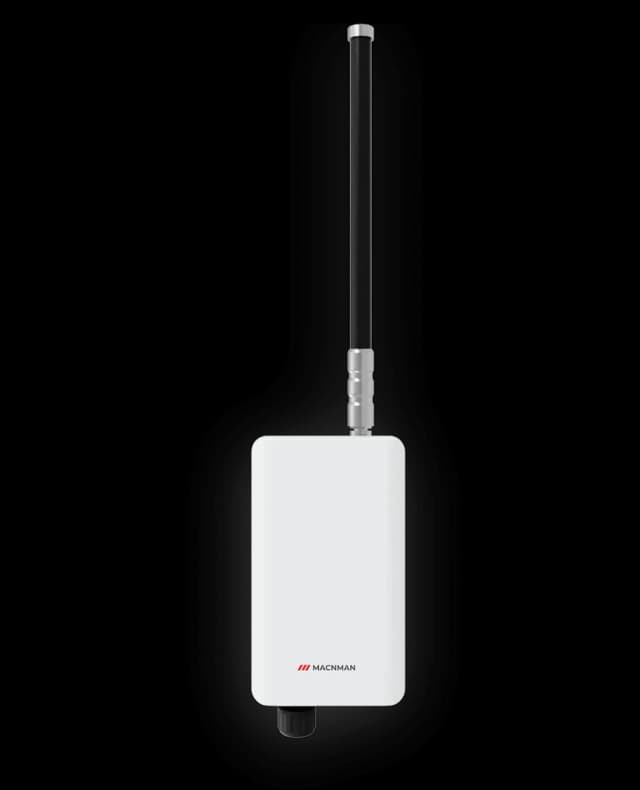
The MacSync LPS Xx goes on with a G1/4 tapping and a mounting clip — the transducer on the tee or test point, the node on the wall or a post above it. With no signal cable, mains power or SIM at the point, a zone, a ring main or a plant can be instrumented in a day.
The MacSync LPS Xx goes on with a G1/4 tapping and a mounting clip — the transducer on the tee or test point, the node on the wall or a post above it. With no signal cable, mains power or SIM at the point — a zone, a ring main or a plant can be instrumented in a day.
Installation
On the line in minutes, reporting for years.
Fit the transducer to the tapping
Screw the G1/4 transducer onto the tee, test point or isolation valve with the sealing the line uses, where it sees steady line pressure; an isolation valve lets it be changed without draining.
Mount the node above the water line
Fix the node to the chamber wall or a post with the supplied clip and screws, above any flooding level, with the IP68 cable extender to the transducer where needed; the DC variant wires to the site's 9–36 V supply.
Pair with Maya over BLE
Set the sampling and reporting intervals, the low and high pressure limits and the LoRaWAN class, read the live pressure beside the line gauge, and run a Ping to confirm the gateway. The device joins by OTAA with its pre-loaded keys.
Note the gauge offset, then trust the record
Record the line gauge reading against the transducer at commissioning and at each inspection; the record then stands on its own for the control room and the audit.
Range & reliability
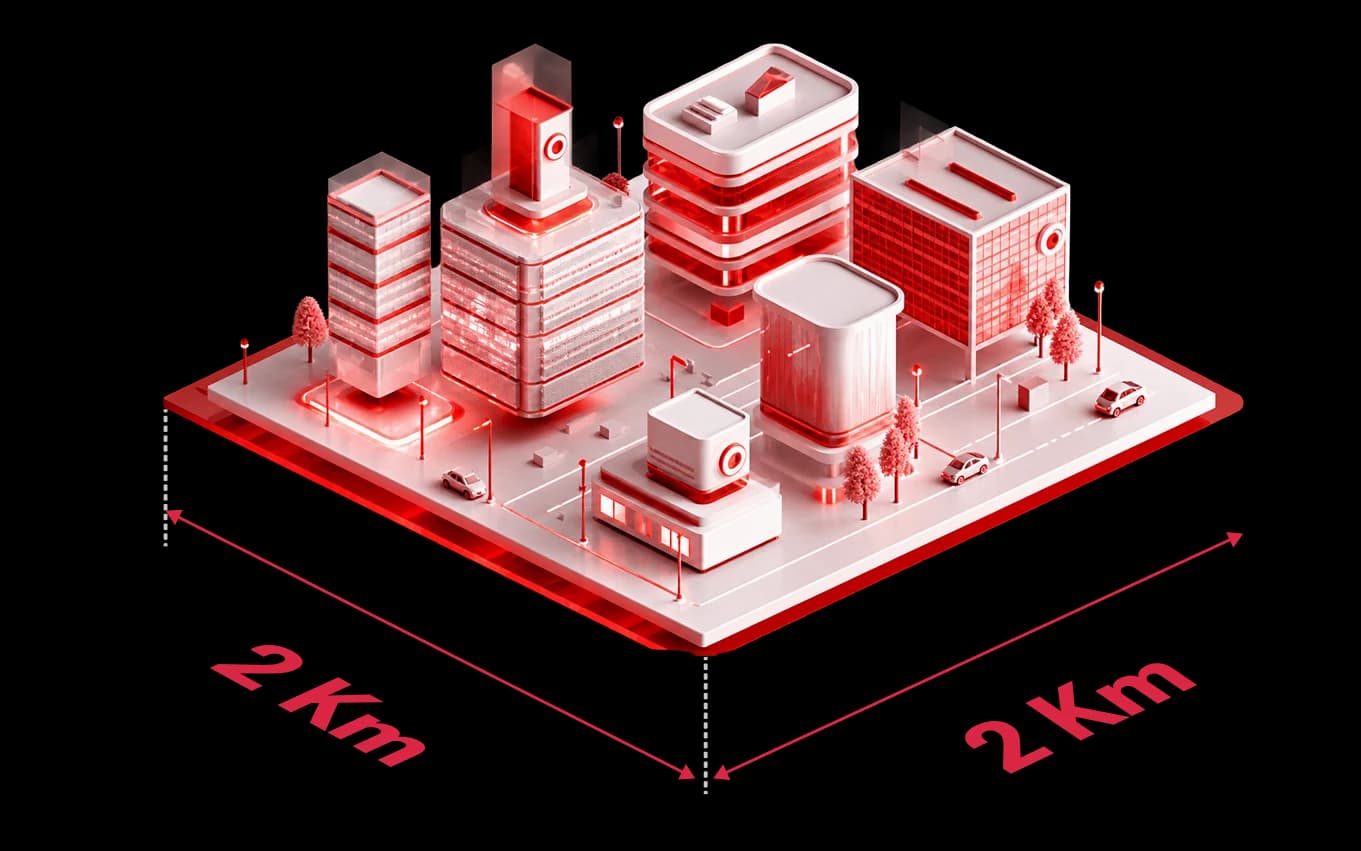
Long-Range LoRaWAN® Coverage Across the Zone, the Ring Main or the Plant
One gateway reaches pressure points spread over kilometres of mains, chambers and pump houses
At 23 dBm with −137 dBm sensitivity, a MacLink Gen-2 gateway on a water-works roof or a plant building reaches sensors across a zone, a ring main or a site, so one installation carries a ring of them. Range depends on terrain, chambers and antenna height; the coverage calculator gives a first estimate and the Maya app's Ping test confirms each point before the chamber lid closes.
Made in India
A LoRaWAN pressure sensor made in Pune, India
Sites in India get the IN865 plan as standard, a WPC compliant radio, and an engineer in Pune who answers during the Indian working day. Projects abroad take the same sensor on EU868, US915, AU915 or RU864.
Made in India
Sites in India get the IN865 plan as standard, a WPC compliant radio, and an engineer in Pune who answers during the Indian working day. Projects abroad take the same sensor on EU868, US915, AU915 or RU864.
IN865 as standard
Shipped on the 865–867 MHz LoRaWAN® plan for India; another regional plan is set when ordering.
WPC compliant radio
The LoRaWAN® radio is WPC compliant for use in India and the hardware conforms to RoHS.
Built in Pune
Designed, assembled and tested at one site in Pune, where the support engineers also sit.
Next steps: LoRaWAN in India: the IN865 band and WPC rules · Request a pilot kit · All LoRaWAN sensors · Industrial IoT manufacturer in India
The three ranges
MacSync LPS Xx Pressure Ranges: X1, X2 and X3 Side by Side
Three transducer ranges on the same node. Accuracy is a share of full scale, so the table shows what ±0.05 % FS means in pressure for each.
| Model | X1 | X2 | X3 |
|---|---|---|---|
| Working pressure | 0–2.5 MPa (0–25 bar) | 0–5 MPa (0–50 bar) | 0–10 MPa (0–100 bar) |
| Accuracy | ±0.05 % FS, about ±1.25 kPa (±0.0125 bar) | ±0.05 % FS, about ±2.5 kPa (±0.025 bar) | ±0.05 % FS, about ±5 kPa (±0.05 bar) |
| Accuracy in metres of water head | About ±0.13 m | About ±0.25 m | About ±0.5 m |
| Temperature effect | ±0.02 % FS per °C | ±0.02 % FS per °C | ±0.02 % FS per °C |
| Overload / burst | 200 % / 300 % | 200 % / 300 % | 200 % / 300 % |
| Response time | ≤10 ms | ≤10 ms | ≤10 ms |
| Thread and wetted element | G1/4, SS316 | G1/4, SS316 | G1/4, SS316 |
| Cycle life | ≥1,000,000 cycles | ≥1,000,000 cycles | ≥1,000,000 cycles |
| Transducer sealing | IP65 | IP65 | IP65 |
| Typical lines | Water distribution, hydrant ring mains, pumping stations, risers, irrigation mains | Hydraulic machines, medium-pressure process and gas lines | High-pressure pipelines, fire protection, oil and gas |
| SKUs | 9101 battery · 9102 DC · 9103/9104 MacTalk · 9105 BLE | 9106 battery · 9107 DC · 9108/9109 MacTalk · 9110 BLE | 9111 battery · 9112 DC · 9113/9114 MacTalk · 9115 BLE |
Figures are from the MacSync LPS Xx datasheet; the kPa and bar equivalents of ±0.05 % FS are arithmetic, not separate specifications. The datasheet does not state whether the reference is gauge or absolute, or media compatibility beyond the SS316 element; ask for the engineering note for a non-water medium. Metres of head are water at 4 °C.
Units
MPa, bar, kg/cm², Metres of Head and psi: The Pressures You Meet on a Network
Indian tenders write kg/cm², pump curves write metres of head, the datasheet writes MPa and imported transmitters write psi. The same pressures in all five, with where each is met.
| Where you meet it | MPa | bar | kg/cm² | m of water head | psi |
|---|---|---|---|---|---|
| NBC 2016 Table 7: minimum 3.5 kg/cm² at the remotest hydrant | 0.3432 | 3.432 | 3.5 | 35 | 50 |
| A 6 bar distribution main | 0.6 | 6 | 6.12 | 61 | 87 |
| A 10 bar rising main | 1 | 10 | 10.2 | 102 | 145 |
| A PN16 main at its rating | 1.6 | 16 | 16.32 | 163 | 232 |
| LPS X1 full scale | 2.5 | 25 | 25.49 | 255 | 363 |
| LPS X2 full scale | 5 | 50 | 50.99 | 510 | 725 |
| LPS X3 full scale | 10 | 100 | 101.97 | 1,020 | 1,450 |
Conversions are arithmetic (1 MPa = 10 bar = 10.197 kg/cm² = 101.97 m of water at 4 °C = 145.04 psi). The NBC figure is quoted from Table 7 of the National Building Code 2016, Part 4, as published by state fire services; the scheme's own figure governs.
Ways to read a line
LoRaWAN Pressure Sensor, Utility Pressure Logger, 4–20 mA Transmitter with a Converter, or Mechanical Gauge
Four ways pressure gets read on a network or a plant, with our weaker rows left in. The LPS Xx is a transducer with a radio; a utility logger is a transient-capture instrument with a SIM; a transmitter needs a cable or a converter; a gauge needs a person.
| Compare | MacSync LPS Xx (LoRaWAN) | Utility DMA / transient logger (GSM) | 4–20 mA transmitter + MacSync LX1 converter | Mechanical gauge |
|---|---|---|---|---|
| What it is | SS316 transducer, LoRaWAN node, 19 Ah battery or DC and enclosure as one unit | Transducer with a high-rate logger and a SIM, built for transient and DMA analysis | The transmitter on the line plus a converter node on LoRaWAN that powers the loop | A dial on the tapping |
| Reading rate and transients | Sampled from 1 minute to 24 hours, plus limit events; not a transient-capture instrument (our weaker row) | Tens to hundreds of samples a second; the purpose-built tool for water hammer | The converter's interval | Whatever the round records |
| Alerts | Low and high limits within the sampling interval | By the logger's rules | Via the converter's thresholds | None |
| Recurring cost | No SIM per point on your own gateway | A SIM per logger and usually a service subscription | No SIM per point on your own gateway | Labour for the round |
| Calibration certificate | None claimed (our weaker row) | Often supplied where the tender asks | The transmitter's, if supplied | The gauge's, if supplied |
| Points per gateway or SIM | A ring of sensors on one gateway | One SIM per logger | Two channels per converter, many converters per gateway | Not applicable |
| Installation | G1/4 tapping, clip and screws; no cable to the SCADA | Tapping, logger box, antenna; SIM provisioning | Transmitter wiring plus the converter | Tapping |
| Made in | Pune, India; WPC compliant | Varies; imported in most Indian tenders | Converter: Pune; transmitter: varies | Varies |
| Where it fits | Many points across a zone, a ring main or a plant for monitoring and alerts | A few critical points where transient analysis is required | Lines that already carry a transmitter | The local check beside any of the above |
The logger, transmitter and gauge columns describe the categories, not one product. Macnman makes the LPS Xx and the LX1 converters; a utility that needs transient capture runs a logger at a few points and LoRaWAN sensors at many.
What the datasheet does not state
What the MacSync LPS Xx Datasheet Does Not State, and How Other Makers State It
The datasheet gives accuracy, temperature effect, overload, cycle life and response time. It is silent on several things a utility or a plant engineer may ask, so this page says so rather than guessing, and shows how the sensors buyers compare it with publish them.
What the datasheet does not state
The datasheet gives accuracy, temperature effect, overload, cycle life and response time. It is silent on several things a utility or a plant engineer may ask, so this page says so rather than guessing, and shows how the sensors buyers compare it with publish them.
Pressure reference
Gauge, sealed or absolute is not stated. Milesight's EM500-PP states a vented gauge reference; Ellenex's PTS2-L offers vented, sealed or absolute. Ask for the engineering note before a vacuum or altitude application.
Long-term stability and resolution
Only the temperature effect (±0.02 % FS per °C) is stated. Milesight states ±0.3 % FS per year, Ellenex 0.2 % of span per year with 0.01 % resolution, Decentlab a separate total error band. The practical answer is the gauge comparison at each inspection.
Cable, records and payload
The user manual gives a 1 m transducer cable as standard with custom lengths on request; the datasheet does not state the cable, whether readings are stored while the gateway is down, or the payload format. Milesight states 1,000 stored entries. Tell us the chamber and the network server and we confirm what ships.
Certificate, media and seals
No calibration certificate is claimed. The wetted element is SS316; seals, fill fluid and media temperature are not stated, so steam and hot media need a caveat. Sensocon in the United States sells a traceable certificate as an option; Macnman does not claim one.
Sources: Milesight EM500-PP product page (vented gauge, ±0.5 % FS, ±0.3 % FS/yr, 1,000 entries) · Dragino PS-LB / PS-LS product page (probe by order code, 0.2 % FS) · Decentlab DL-PR21 product page (linearity and total error band) · Ellenex PTS2-L product page (vented, sealed or absolute; stability per year) · MacSync LPS Xx datasheet (the figures on this page) · MacSync pressure sensor user manual (1 m transducer cable as standard)
24x7 schemes, JJM and AMRUT
Where a Pressure Sensor Sits in a 24x7 Water Scheme, and What the Guidelines Ask For
India's water programmes describe pressure sensing as part of the measuring and monitoring architecture of a scheme. Quoted here as context from the published documents; Macnman claims no conformity, empanelment or approval under any of them.
24x7 schemes, JJM and AMRUT
India's water programmes describe pressure sensing as part of the measuring and monitoring architecture of a scheme. Quoted here as context from the published documents; Macnman claims no conformity, empanelment or approval under any of them.
Jal Jeevan Mission: a sensor at the tail end
The JJM Technical Expert Committee report on measuring and monitoring places one pressure sensor with an RTU at the tail end or low-pressure area of each network, to measure tail-end pressure in bar for equitable supply, and recommends an RF (LoRa) first mile to a gateway with cellular backhaul. It assumes pressure sensors may need continuous power; the 19 Ah battery variant removes that need.
AMRUT 2.0: NRW and DMAs
The AMRUT 2.0 operational guidelines set a reform target of non-revenue water below 20 %, ask 24x7 'Drink from Tap' projects to cover at least one ward or DMA of 2,000 or more households, and evaluate NRW reduction through district metered areas. A pressure point per DMA, beside the bulk meter, is the instrument that shows it.
Residual pressure and the low limit
The CPHEEO Manual on Water Supply and Treatment sets the minimum residual pressure a scheme must hold at the consumer; the scheme's own figure, in metres of head, becomes the sensor's low limit at the tail end, and NBC 2016's 3.5 kg/cm² at the remotest hydrant becomes it on a fire ring main.
Tender wording that fits the device
"LoRaWAN battery-powered pressure sensor, SS316 element, G1/4, 0–2.5 MPa, ±0.05 % FS, low and high pressure event reporting, IN865 WPC-compliant." Not "DMA transient logger" and not "calibrated" or "NABL", which this device does not claim.
Guidelines: Jal Jeevan Mission, Technical Expert Committee report on measuring and monitoring (tail-end pressure sensor, LoRa first mile) · Jal Jeevan Mission Operational Guidelines (SCADA for pressure, leakage and quality) · AMRUT 2.0 Operational Guidelines (NRW below 20 %, 24x7 DMAs) · National Building Code 2016, Part 4, Table 7 (3.5 kg/cm² at the remotest hydrant), as published by Kerala Fire and Rescue Services
Level, not pressure
Need Level Rather Than Line Pressure? MacSync LPS X7 Hydrostatic vs MacRay LUS X1 Ultrasonic
Two Macnman LoRaWAN devices read liquid level. One sits in the liquid and reads head; the other looks down at the surface. The figures are from their datasheets.
| Criterion | MacSync LPS X7 hydrostatic | MacRay LUS X1 ultrasonic |
|---|---|---|
| Measures | Hydrostatic pressure −10 to +10 kPa, about one metre of water head, with the sensor in the liquid | Distance to the surface, 3–450 cm, without touching the liquid |
| Accuracy and resolution | ±0.2 % FS · 0.1 kPa | 0.1 cm resolution · 100 ms response; accuracy not stated |
| Contact with the liquid | Yes: the element is wetted, so the liquid must suit the stainless element | None: any surface, though foam and vapour can scatter the echo |
| Vessels | Soap and chemical dispensers, bottles, small tanks, shallow vessels, diesel day tanks | Water tanks, sumps, canals, drains, bins and silos |
| Power | 19 Ah battery, about 2 / 4 / 7+ years at 5 / 15 / 60-minute reports, or 9–36 V DC | 8 Ah battery, about 1 / 2 / 3+ years at 5 / 15 / 60-minute reports |
| Enclosure | IP65 node, IP67 option · 152 × 62 × 43 mm | IP67 head, IP55 body · 96 × 96 × 28 mm |
| Where it does not fit | Tanks deeper than about a metre of head; liquids that coat or attack the element | Foam, heavy vapour, narrow necks, surfaces closer than 3 cm |
| Page | Datasheet on the documentation site | Product page |
Figures are from the MacSync LPS X7 and MacRay LUS X1 datasheets. For line pressure on a pipe, the LPS Xx on this page; for a deep borewell or reservoir, ask for the engineering note.
Which Macnman device
Which Macnman Device Do You Need: Pressure Transducer, Hydrostatic Level, Ultrasonic Level or a Converter?
Four Macnman LoRaWAN devices meet a pressure or level question. Choose by what the site must know.
| Criterion | MacSync LPS Xx pressure (this page) | MacSync LPS X7 hydrostatic level | MacRay LUS X1 ultrasonic level | MacSync LX1 analog converter |
|---|---|---|---|---|
| Measures | Line or vessel pressure, 0–2.5, 5 or 10 MPa | Liquid level by hydrostatic head, −10 to +10 kPa (about a metre of water) | Level by distance to the surface, 3–450 cm, non-contact | Any 4–20 mA or 0–10 V transmitter, two channels |
| Accuracy | ±0.05 % FS | ±0.2 % FS, 0.1 kPa resolution | 0.1 cm resolution | The transmitter's, read at 12-bit |
| Power | 19 Ah battery or 9–36 V DC | 19 Ah battery or 9–36 V DC | 8 Ah battery | 19 Ah battery or 9–36 V DC; powers the loop |
| Choose it when | The question is pressure on a line: networks, hydrants, pumps, process, hydraulics | Level in a small tank, dispenser or shallow vessel by a sensor in the liquid | Level in a tank, sump, canal or bin without touching the liquid | A transmitter is already on the line and only needs the radio |
| Page | This page | Datasheet on the documentation site | Product page | Product page |
Figures are from the Macnman datasheets. A pumping station usually runs all of them: pressure on the discharge, level in the sump, and the panel's transmitters through the converter.
See also: Compare all MacSync LPS Xx versions · MacSync LPS X7 hydrostatic level sensor datasheet (−10 to +10 kPa) · MacRay LUS X1 ultrasonic level sensor for tanks and sumps · Already have a 4–20 mA pressure transmitter? The MacSync LX1 analog converter reads it · Modbus pressure transmitters: the MacSync LX1 RS485 converter
Power
Battery, DC or MacTalk: How Each MacSync LPS Xx Variant Is Powered
Every range ships in the same five variants; the SKU changes with the range.
| Variant | Power | Runtime | Choose it when |
|---|---|---|---|
| LoRaWAN battery (9101 / 9106 / 9111) | 19 Ah Li-SOCl₂ cell | ~2 years at 5-minute reports · ~4 years at 15-minute reports · ~7+ years at hourly reports (datasheet estimate) | No power at the point: chambers, hydrant lines, remote mains |
| LoRaWAN DC (9102 / 9107 / 9112) | 9–36 V DC from the site | Continuous | Pump houses, plants, substations with power at the point |
| MacTalk battery / DC (9103–9104 / 9108–9109 / 9113–9114) | As above | As above | A MacSet controller must act on the pressure with no gateway on site |
| BLE battery (9105 / 9110 / 9115) | 19 Ah Li-SOCl₂ cell | As the battery variant | Local reading and commissioning with the Maya app |
Datasheet figures; spreading factor, event frequency and temperature change the battery figure. Battery level is sent in every uplink.
Application map
Zone Inlet, Hydrant Main, Pump Discharge, Riser, Process Line and Pipeline: How the Sensor Is Used
Each row is a point found on most Indian water, fire and plant systems, with the range and variant that suit it and how it is usually set to report.
| Point | What is watched | Range, variant and placement | Reporting |
|---|---|---|---|
| Water zone inlet and critical point | Supply pressure, tail-end pressure, burst and closed-valve detection | X1 battery variant on the chamber tapping, node above the water line on the extender | Every 5 to 15 minutes; low-limit alert |
| Hydrant ring main | Residual pressure for readiness | X1 battery variant on a test point of the ring main | Hourly; low-limit alert at the scheme's figure (NBC 2016: 3.5 kg/cm² at the remotest hydrant) |
| Pumping station discharge | Discharge pressure beside pump status | X1 or X2 DC variant on the discharge header; MacSet on the same network | Every 5 minutes; low and high alerts |
| Rising main | Burst and pump-trip detection along the main | X1 battery variant at chambers along the route | Every 10 minutes; low-limit alert |
| Building riser and booster set | Riser pressure after the booster | X1 DC variant in the pump room; LUS X1 on the tank | Every 15 minutes; low alert |
| Process line or gas receiver | Line pressure into SCADA | X2 or X3 DC variant on the plant's supply | Every 1 to 5 minutes; both limits |
| Hydraulic machine | System pressure and slow decay | X3 DC variant | Every minute during runs; low alert |
| Irrigation filter station and drip main | Differential across the filter, main pressure | Two X1 battery variants, before and after the filter; one on the main | Every 15 minutes; alert on the main's low limit |
Intervals are typical starting points, not standards; the engineer sets them per line. Each variant is in the compare tab with its SKU.
Related: Smart water management: networks, hydrants, tanks and pumps · Smart city IoT: the water network and the ICCC · Industrial IoT solutions: process instruments · Smart building IoT: risers, boosters and hydrant lines
Deployments: Case study: automating remote water level control · Case study: underground water level monitoring
What you set
What the Maya App and a Downlink Can Set on the MacSync LPS Xx
Everything an integrator or a utility engineer changes, from the phone at installation or later from the network server by downlink.
| Setting | What it does | Set from |
|---|---|---|
| Sampling interval | How often the transducer is read, from 1 minute to 24 hours | Maya app over BLE · downlink |
| Reporting interval | How often an uplink is sent, independent of sampling | Maya app · downlink |
| Pressure thresholds | The low and high limits that trigger an immediate report, on the way out and on the way back | Maya app · downlink |
| Reporting mode | Periodic, event-based or hybrid | Maya app · downlink |
| LoRaWAN class | Class A by default; Class C for sites that need fast downlinks | Maya app |
| Live readings and Ping | Read the live pressure beside the line gauge and confirm the gateway is reachable before the chamber lid closes | Maya app |
The device joins by OTAA with pre-loaded keys; configuration is AES-128 encrypted like the data. Settings are described in the datasheet and the user manual linked above.
Against the shortlist
MacSync LPS Xx vs Milesight EM500-PP vs Dragino PS-LB vs Decentlab DL-PR21 vs Ellenex PTS2-L
The LoRaWAN pressure sensors an Indian buyer finds on the same search, on figures published on their own pages, opened 25 October 2026. 'Not stated' means the page or datasheet is silent.
| Criterion | Macnman MacSync LPS Xx | Milesight EM500-PP | Dragino PS-LB | Decentlab DL-PR21 | Ellenex PTS2-L |
|---|---|---|---|---|---|
| Ranges | 0–2.5, 0–5 or 0–10 MPa, three models on one node | 0–1.6 MPa (16 bar), one range | Threaded probe by order code, −0.1 to 60 MPa; immersion probe to 100 m | −0.1 to 1 MPa (−1 to 10 bar) | 0–0.05 to 0–100 MPa, selectable |
| Accuracy wording | ±0.05 % FS, basis not stated | ±0.5 % FS | 0.2 % FS (probe maker's figure) | ±0.15 % FS linearity; ±0.7 % FS total error band | ±0.25 % of span typical (linearity, hysteresis, repeatability) |
| Temperature effect and stability | ±0.02 % FS per °C; long-term stability not stated | ±0.3 % FS per year | 0.2 % FS per year; zero drift 0.02–0.03 % FS per °C | Not stated on the page | Zero and span ≤±0.02 % FS per °C; ≤0.2 % of span per year |
| Overload | 200 % overload, 300 % burst | 150 % FS | 200 % | Not stated on the page | 300 % below 1 bar, 150 % above |
| Pressure reference | Not stated | Vented gauge | Not stated on the product page | Not stated on the page | Vented, sealed or absolute, selectable |
| Thread and wetted material | G1/4, SS316 element | G1/2 male, SS316L | Threaded probe; 316 stainless immersion variant | G1/4 pipe thread | G1/4 male; SS304 body, SS316 diaphragm, Viton seal |
| Ingress protection | Node IP65 (IP67 option); transducer IP65 | Transducer IP65; transceiver IP67 | Probe IP65 (immersion IP68); node not on the page | Not stated on the page | IP66 |
| Power | 19 Ah: about 2 / 4 / 7+ years at 5 / 15 / 60-minute reports; or 9–36 V DC | 19 Ah ER34615: 10 years at 10-minute reports, lab conditions | 8,500 mAh, up to 5 years; PS-LS solar with 3,000 mAh | Two C alkaline cells | Replaceable 3.6 V lithium: 50,000+ readings / 20,000+ transmissions |
| Class and configuration | Class A, Class C from the Maya app; BLE and downlink; MacTalk device to device | Class A; NFC, USB-C and downlink | LoRaWAN 1.0.3 Class A; BLE 5.1; OTA | Class A | Class A; Class C on request |
| Bands | IN865 standard; RU864, EU868, US915, AU915 | IN865 among eight plans | IN865 among the listed bands | Not stated on the page | AS923, EU868, US915, AU915; others on request, IN865 not listed |
| Stored records | Not stated | 1,000 entries | Not on the page | Not on the page | Not stated |
| Designed and made in | Pune, India; WPC compliant, RoHS | China | China | Switzerland | Australia and the United States |
Sources are the pages linked below, opened 25 October 2026. Competitor figures are quoted as published and may change; the LPS Xx figures are from its datasheet.
More: MacSync LPS Xx vs Milesight EM500-PP vs Dragino PS-LB vs Decentlab vs Ellenex, in full · All comparisons
FAQ
MacSync LPS Xx LoRaWAN Pressure Sensor: Frequently Asked Questions
A pressure transducer with a long-range radio and a battery. It screws onto a pipeline, a hydrant line or a vessel on a G1/4 thread, measures the pressure and sends it over LoRaWAN® kilometres to a gateway, with no signal cable and no SIM at the point. The MacSync LPS Xx does it with an SS316 transducer at ±0.05 % of full scale, three ranges to 10 MPa, low and high pressure alerts and a 19 Ah battery rated for years.
From the datasheet: working pressure 0–2.5 MPa (X1), 0–5 MPa (X2) or 0–10 MPa (X3), at ±0.05 % of full scale with a temperature effect of ±0.02 % FS per °C, a response time of 10 ms or better, 200 % overload and 300 % burst pressure, and a million-cycle rating, on an SS316 element with a G1/4 thread.
All three describe the LPS Xx in different trades. The sensing element is a transducer; a transmitter is a transducer with a conditioned output, classically 4–20 mA; a sensor is the everyday word. Process tenders write 'transmitter', engineers write 'transducer', and search uses 'sensor', so this page uses all three. For a tender, 'LoRaWAN battery-powered pressure sensor, SS316, G1/4, 0–2.5 MPa, ±0.05 % FS' describes it exactly.
The lowest range that covers the line's maximum including surge. Accuracy is a share of full scale, so a 6 bar distribution main on the 2.5 MPa X1 is read to about ±1.25 kPa, while the same line on the 10 MPa X3 is read to about ±5 kPa. The transducer tolerates 200 % overload for the water-hammer peak. Water networks, hydrant lines and pumping stations usually take the X1; hydraulics and medium-pressure process the X2; high-pressure pipelines, fire protection and oil and gas the X3.
1 MPa is 10 bar, 10.2 kg/cm², about 102 metres of water head and 145 psi. So the NBC 2016 minimum of 3.5 kg/cm² at the remotest hydrant is 0.34 MPa or 34 metres of head; a 6 bar main is 0.6 MPa or 61 metres; the X1's full scale of 2.5 MPa is 25 bar or 255 metres. The unit table on this page lists the common points.
The datasheet states the ranges, the SS316 wetted element and the lines it is suited to — water, oil tanks, gas tanks, hydraulic systems and process pipelines — but does not state the pressure reference (gauge or absolute) or media compatibility beyond the SS316 element. For a non-water medium or a vacuum application, ask for the engineering note before ordering.
A transmitter needs a loop supply and a cable to a PLC or a logger. The LPS Xx is the transducer and the radio in one unit on a battery, so the point needs no cable and no power. Where a line already carries a transmitter, the MacSync LX1 analog converter puts it on the same LoRaWAN network and powers the loop; where it does not, the LPS Xx is the one-box answer.
A burst or a closed valve shows as a pressure that drops and stays down; a growing leak shows as a slow fall over days at the same demand. The low-limit alert reports the drop within the sampling interval, and the periodic record shows the trend. Pinpointing a leak's location is done by comparing points across the zone, which is why a ring of sensors beats one.
For monitoring and alerts at many points, yes; for transient capture, no. The LPS Xx samples from 1 minute upward and reports limits and trends; a purpose-built pressure logger records at high rates for water-hammer and transient analysis at a few critical points. The usual design runs loggers at a few points and LoRaWAN sensors at many; the method table on this page sets them side by side.
As a device, yes: the JJM Technical Expert Committee's reference architecture places one pressure sensor at the tail end or low-pressure point of each network and recommends a LoRa first mile to a gateway, and AMRUT 2.0 evaluates NRW reduction through DMAs where a pressure point sits beside the bulk meter. The LPS Xx battery variant reads that tail-end pressure for years without power. Macnman claims no conformity, empanelment or approval under either programme; the scheme's engineer confirms the specification.
The CPHEEO Manual on Water Supply and Treatment sets the minimum residual pressure for a scheme at the consumer, in metres of head; the figure depends on the scheme's design and the manual's edition, so take it from the manual rather than from this page. Whatever that figure is, it becomes the low limit on the tail-end sensor, and the sensor reports within the sampling interval when the line falls below it.
Yes: residual pressure on a hydrant ring main or riser, logged continuously, with a low-limit alert the moment the line loses head, so a fault becomes a work order before the inspection. The X1 range covers hydrant lines; Macnman makes no claim of conformity to any fire-code instrument requirement, so check the specification where one applies.
Through a controller on the same network, yes. A MacSet LX1 starts or stops the pump or closes a valve on the rule your platform sends it, and the MacTalk variants talk device to device to a MacSet with no gateway on site, so a pressure drop can stop a pump on a site with no network at all.
The 19 Ah battery variants are rated about 2 years at 5-minute reports, 4 years at 15-minute reports and 7 or more years at hourly reports (datasheet estimates); event reporting during a fault adds uplinks. The DC variants run from 9–36 V at the point. Battery level is sent in every uplink.
The transducer goes on the tapping; the node mounts on the chamber wall or a post above any flooding level with the supplied clip and screws, joined by the cable, with the optional IP68 cable extender where the node must sit further away. The datasheet does not state the standard cable length; tell us the chamber and we confirm what ships.
The node is IP65 with an IP67 option and rated from −40 to +80 °C; the transducer is rated IP65. Mount the node above the water line, and for a deep chamber with a metal lid either bring the node above ground on the cable extender or serve the chamber with an indoor gateway nearby; the Maya app's Ping confirms the link before the lid closes.
The datasheet publishes the transducer's accuracy and temperature effect; it does not publish a calibration procedure, interval or certificate, and this page does not claim one. The practical check is a comparison against the line gauge at commissioning and at each inspection, recorded with the data. Where a tender requires a traceable certificate, ask before quoting.
Kilometres, depending on terrain, chambers and antenna height. The node transmits at 23 dBm with −137 dBm sensitivity on LoRaWAN®; a MacLink Gen-2 gateway on a water-works roof or a plant building typically covers a zone, a ring main or a site. The coverage calculator gives a first estimate and the Maya app's Ping test confirms each point.
On a distribution zone: the inlet, the critical (lowest-pressure) point and the tail ends, then one per rising main and pumping station; on a hydrant system: one per ring main section; in a plant: one per line that matters. A ring of cheap points beats one expensive logger for finding bursts; a pilot of three or four points on the zone that behaves worst settles the count.
Yes. The LPS Xx joins any LoRaWAN® v1.0.4 network server — ChirpStack, The Things Network, Orbiwise, Netmore, MQTT platforms or a private LNS — by OTAA with pre-loaded keys, and the readings reach your water SCADA, plant SCADA, ICCC or dashboard over MQTT or HTTPS. There is no mandatory Macnman cloud and no subscription.
IN865 for India, plus RU864, EU868, US915 and AU915, set when ordering. LoRaWAN in India uses the delicensed 865–867 MHz band, so a utility, a plant or a campus runs its own gateway without a spectrum licence; the device is WPC compliant and RoHS conforming.
The LPS Xx is a pressure transducer to 10 MPa for lines and vessels. The LPS X7 is a hydrostatic level sensor reading −10 to +10 kPa — about a metre of water column — that sits in a small tank, a dispenser or a shallow vessel to report its level. For level without contact, the MacRay LUS X1 ultrasonic sensor reads 3–450 cm from above.
The datasheet lists gas tanks among the suited applications and the X2 and X3 ranges cover receivers and gas lines; the wetted element is SS316. The pressure reference and media compatibility beyond that are not stated, so for a specific gas or a vacuum application ask for the engineering note.
The transducer is rated for 200 % overload, 300 % burst pressure and a million cycles, which covers pump cycling and water-hammer peaks within its range; the node is IP65 with an IP67 option and rated from −40 to +80 °C. Mount the node above the water line and choose the range that covers the surge.
The pressure reading, event flags on threshold crossings and the battery level, in an AES-128 encrypted LoRaWAN® uplink, periodic or on an event. Decoding is documented with the product; tell us your network server and we send the decoder for it.
The datasheet does not state a stored-record count, and this page does not claim one. The event and periodic reporting are described; if buffering during a gateway outage matters for your record, ask before ordering and we confirm the current firmware's behaviour in writing.
That is an earlier generation of the product. The MacSync LPS Xx on this page is the current datasheet: SS316 transducer, three ranges to 10 MPa, ±0.05 % FS, 19 Ah battery or 9–36 V DC. Marketplace and reseller listings that still show the older figures or prices are not maintained by Macnman; the documentation site and this page are the reference.
The data is yours. The sensor sends to your own network server and from there to the SCADA, ICCC or dashboard you choose, over MQTT or HTTPS. Macnman supplies the hardware, the documentation and the decoder, not a mandatory cloud.
Screw the G1/4 transducer onto the tee, test point or isolation valve with the sealing the line uses; mount the node above the water line with the supplied clip and screws; the DC variant wires to the site's 9–36 V supply. Pair over Bluetooth with the Maya app to set the intervals, the pressure limits and the LoRaWAN class, read the live pressure beside the gauge, run a Ping to confirm the gateway, and the device joins by OTAA. No trench, no laptop.
The MacSync LPS Xx node with its transducer, a mounting clip, mounting screws, the user manual and the warranty card. The IP68 cable extender and a power adapter are optional accessories ordered separately.
Yes. The MacSync LPS Xx is designed and manufactured in Pune, Maharashtra. It is WPC compliant for the IN865 band and conforms to RoHS; the datasheet states both. No calibration certificate and no fire-code or utility-standard conformity is claimed.
Four lines, and the sensor is only one: the number of points, which depends on the zones and lines that matter; battery or DC at each point; the gateway, usually one per site plus one for a far corner or a deep chamber; and the integration into the SCADA or platform you run. To quote, send the list of points with their normal and maximum pressure and media, whether a G1/4 tapping exists, whether there is power at each point, whether a LoRaWAN gateway and network server already exist, whether a controller must act on the pressure, and the platform the data should reach. With that we confirm the ranges, the variants, the count and the gateway position.
Yes, and it is the recommended way in: three or four LPS Xx sensors on the zone or the line that behaves worst, one gateway, your own network server, through one season, with the line gauges read beside them. The pilot kit on this site is that set; the rest of the points join the same gateway afterwards.
More from Macnman
What Else Do We Build at Macnman
 New
Maclink Gen-2
LoRaWAN Outdoor Gateways
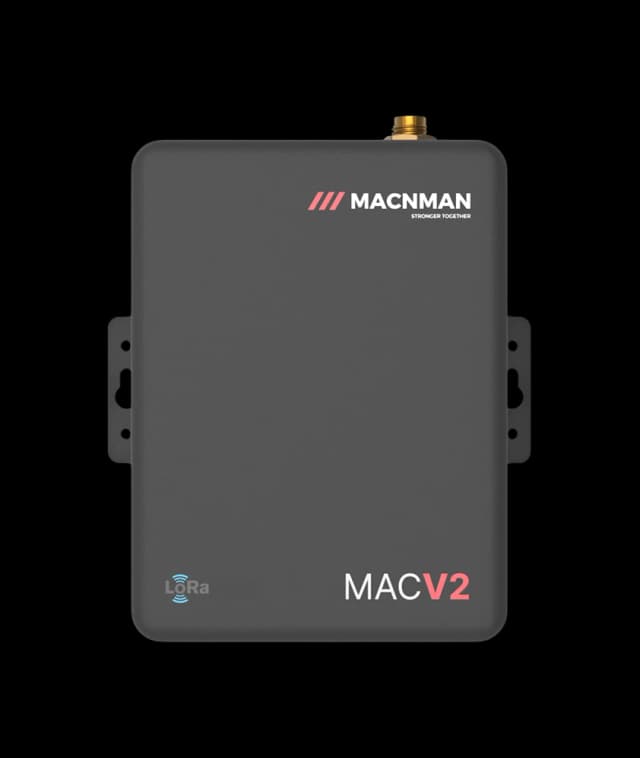
MacEge 4G Mini Gateway
4G Lte Gateways
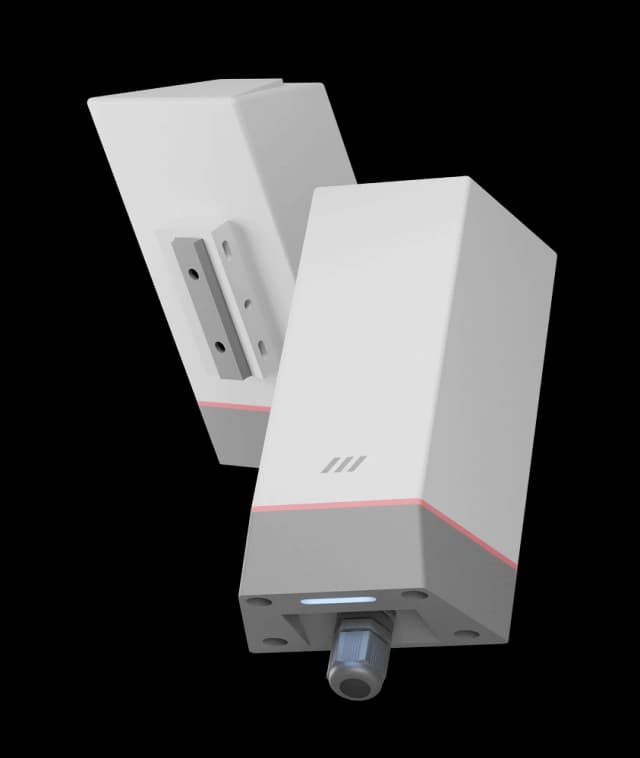 Hot Selling
MacSync LX1
RS485 Modbus to LoRaWAN Converter
MacSync LX1
Analog 4-20mA to LoRaWAN Converter
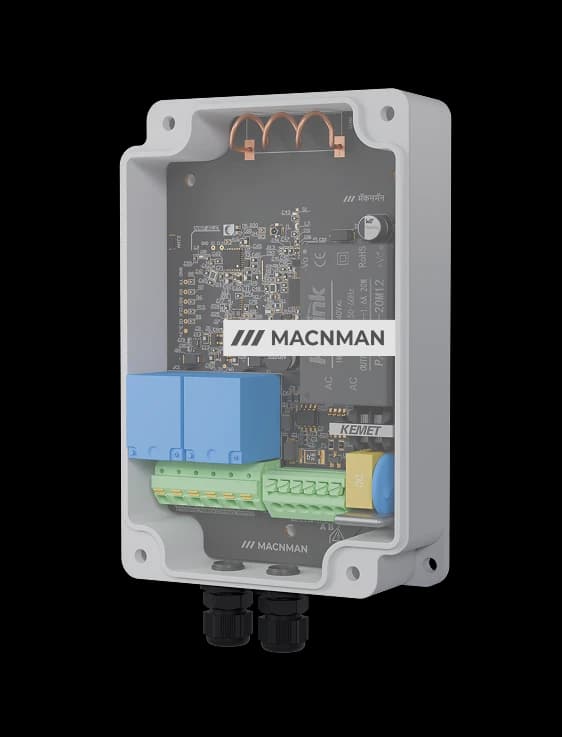 New
MacSet
RS485/Analog + Relay Output
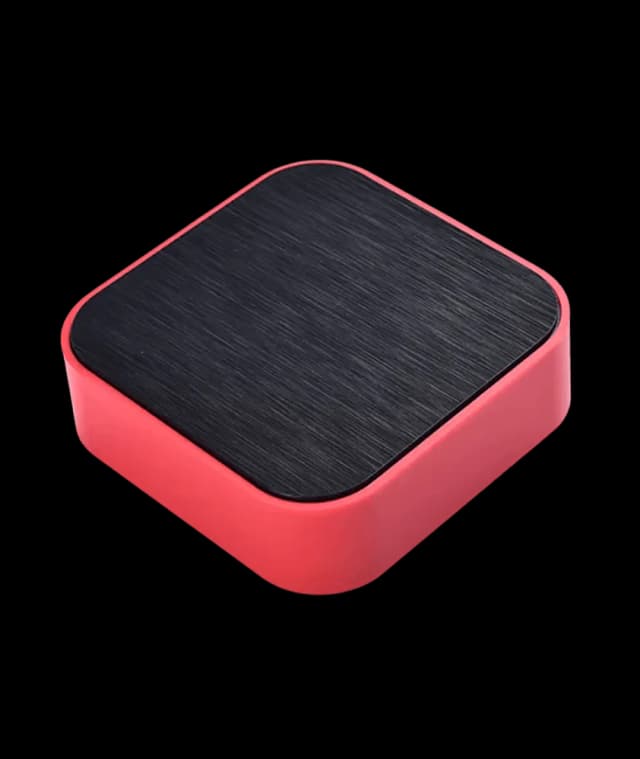 Hot Selling
Setu X
LoRaWAN Indoor Gateways
NewMaclink Gen-2
LoRaWAN Outdoor Gateways
MacEge 4G Mini Gateway
4G Lte Gateways
Hot SellingMacSync LX1
RS485 Modbus to LoRaWAN Converter
MacSync LX1
Analog 4-20mA to LoRaWAN Converter
NewMacSet
RS485/Analog + Relay Output
Hot SellingSetu X
LoRaWAN Indoor Gateways
Let‘s make it easy - reach out now!
Let’s bring it to life!
Let‘s Make it Easy
Reach Out Now


We are always ready
to help and
answer your
questions
Call
+91 7972856163
+91 9096830856
Location
Office-15 Bibwewadi, Pune, Maharashtra 411037
Get in Touch
Define your goals and all to value your time
Use of this website and purchase of Macnman products are subject to our Terms and Conditions.