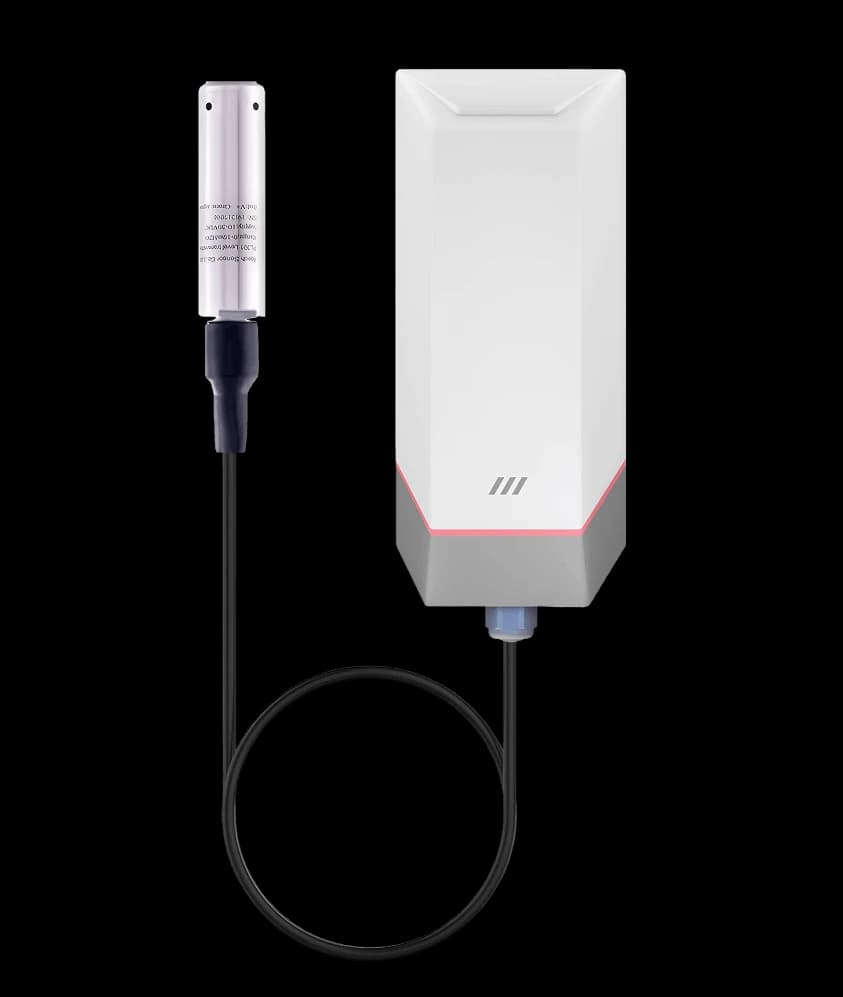
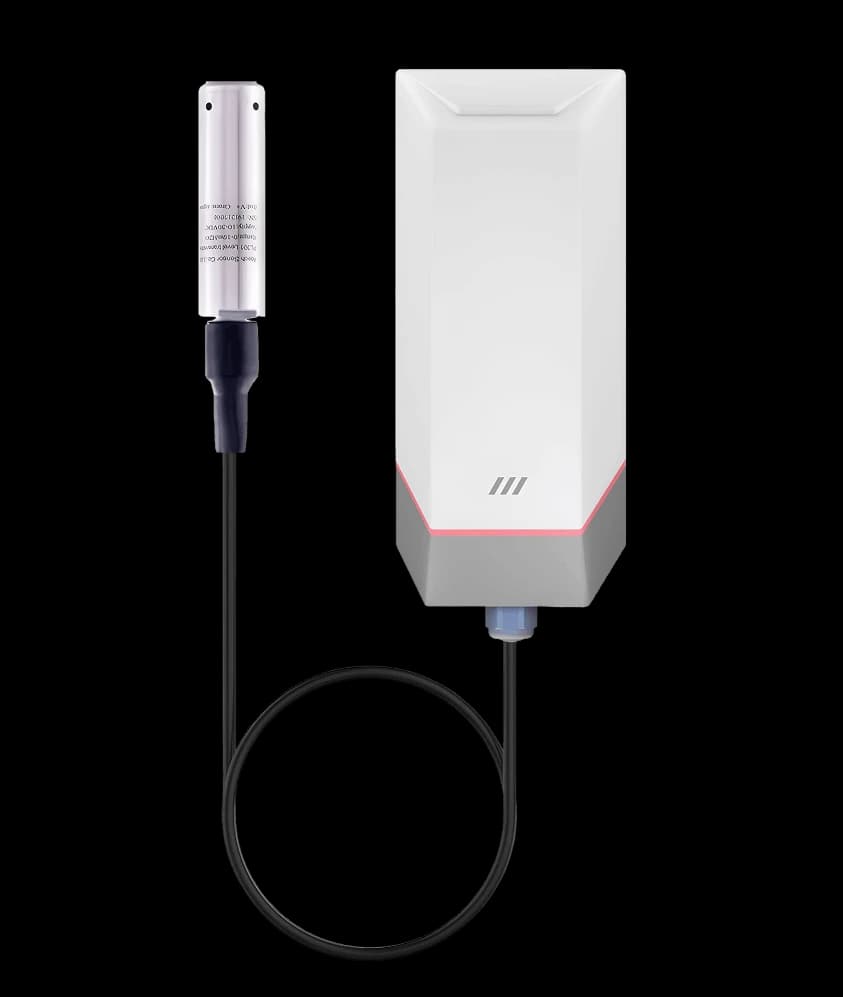
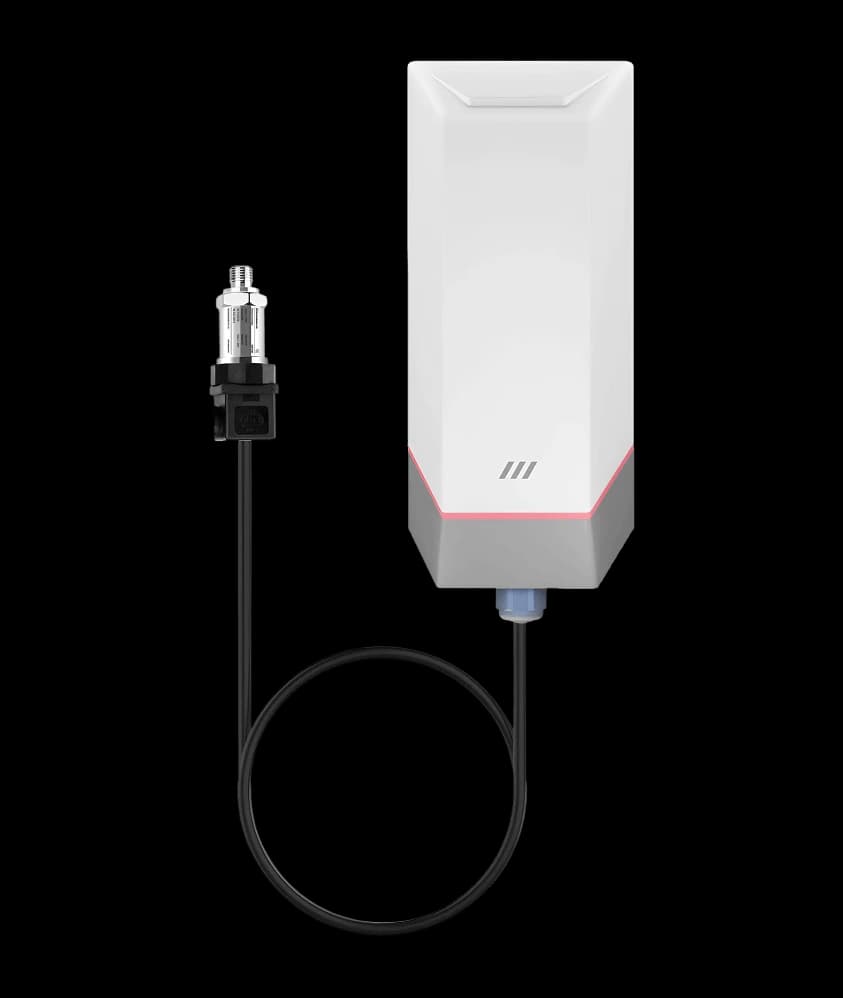
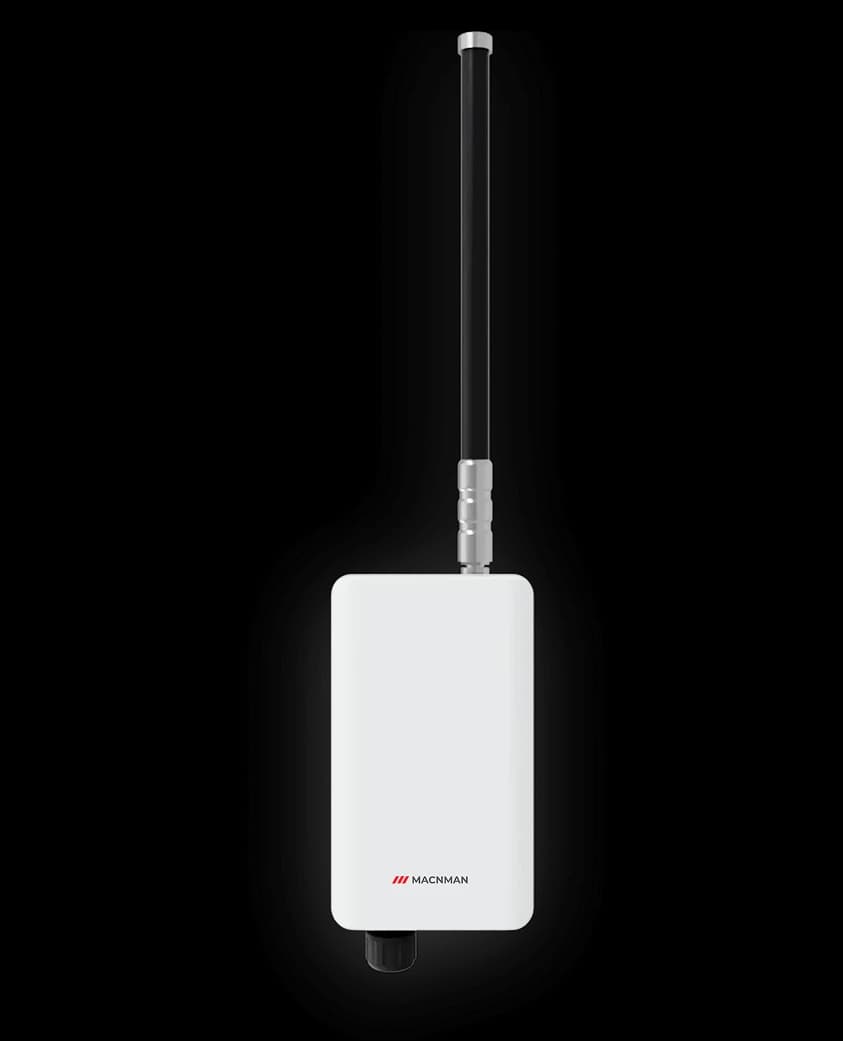
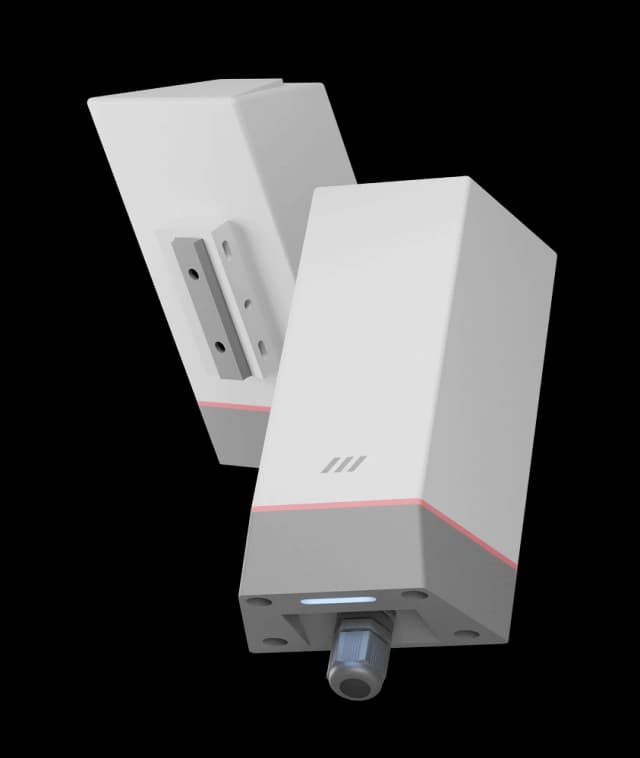
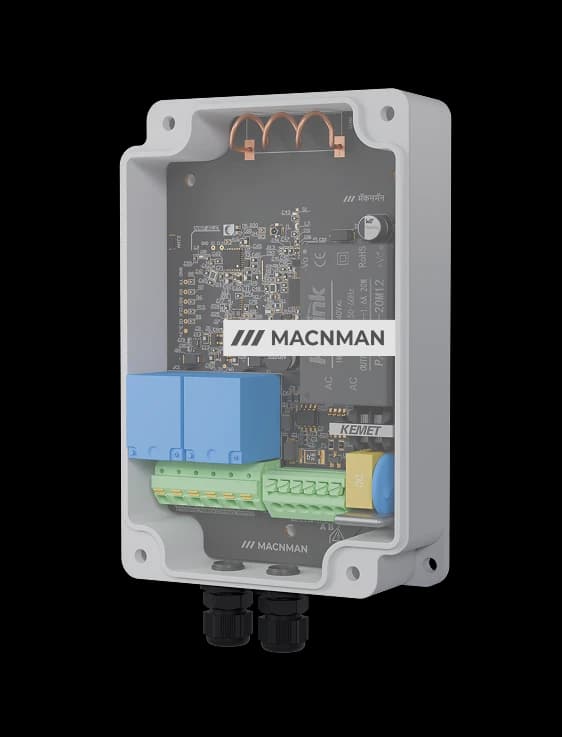
Tanks, Sumps & BorewellsUltrasonic · hydrostatic · 4–20 mA
Automatic Pump ControlStart low, stop full, no dry run
Multi-Year BatteryNo power at the tank
IP67 TransducerRated −40 °C to +80 °C
Open IntegrationMQTT · HTTPS · any LNS
In plain terms
What Is a Smart Water Management System?
A smart water management system puts a level sensor on every tank, sump and borewell, a controller on every pump, and a converter on the bulk meters and pressure points, so the water position of a society, a campus, a ward or a plant is on one screen and the pumps run on the readings instead of on a phone call. The sensors report over LoRaWAN or Wi-Fi on a battery; the controller switches the pump on a low level and off on a high one, and the whole picture reaches the dashboard, BMS or SCADA you already run.
Macnman builds the hardware for it: ultrasonic and hydrostatic level sensors, converters for 4–20 mA transmitters and Modbus meters, pump controllers, pressure transducers and LoRaWAN gateways, on open standards.
Designed and made in Pune, India
LoRaWAN, Wi-Fi and 4G
No mandatory subscription
Your tanks and pumps
Your dashboard
Sense
Tank, sump, borewell level; pressure
Convert
Bulk meters, transmitters, pump panels
Control
Pumps and valves on thresholds
Connect
LoRaWAN, Wi-Fi, 4G
Integrate
MQTT, HTTPS, BMS, SCADA
Your dashboard
Five steps from the tank to the screen. Macnman makes the hardware for the first four; the fifth is the software you already use or choose.
The problem
Water Problems Every Site Knows, and the Sensor That Shows Each
Tanks that run dry at 7 a.m., sumps that overflow at night, pumps started by a phone call and forgotten, borewells that nobody can see into, and a bulk meter read once a month. Each one is a level, a flow or a pressure that is not being measured.
Overhead Tanks That Run Dry
Overhead Tanks That Run Dry
Nobody knows the level until the taps stop
An ultrasonic sensor under the tank lid reads the level without touching the water, from 3 cm to 450 cm, and reports it every few minutes. A low threshold raises an alert, or starts the pump, before the tank is empty.
A MacSet controller at the pump works as a wireless water level controller: it switches on a low level and off on a high one, with the rule running on the controller itself. The pump runs when the water needs it, not when a call gets through.
The same level reading stops the pump at the high threshold and raises an overflow alarm if the level keeps rising, which also shows a stuck valve or a wrong float.
A submersible 4–20 mA level transmitter in the borewell, read through a MacSync converter, reports the standing and drawdown level over LoRaWAN, so pumping is matched to what the well can give.
Bulk water meters with a Modbus or pulse output are read by a MacSync converter on a schedule, so consumption per block, per day and per night is on the dashboard, and a night flow that never stops shows the leak.
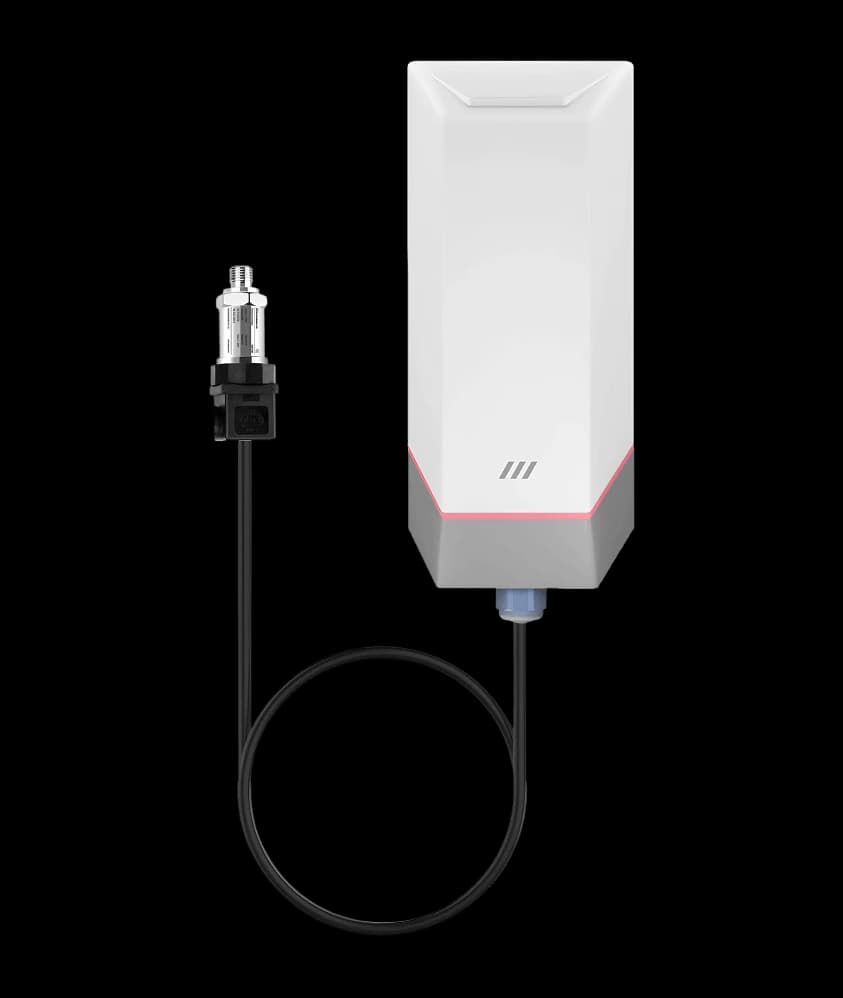
A pressure transducer on the rising main or the distribution line reports pressure on a battery; a drop that does not recover is a burst or a closed valve, found from the screen instead of the road.
Need tank level monitoring and pump control for a society, campus, ward or plant?
Tell us the tanks, sumps and borewells, the pumps (HP and phase), the distance from the tanks to the pump room and the tallest terrace, the meters you want read and whether the pump house has power and signal. A product engineer replies within one working day with the kit for a pilot tank.
Reply within one working day
Designed and built in Pune, India
WPC compliant, RoHS conformant
Tanks, sumps, borewells, pumps, meters and pressure, with the hardware behind each
Key Smart Water Management Applications
01 / 08
Overhead Tank Level Monitoring
Level Every Few Minutes
Low-Level Alert
Overflow Alarm
Sump & Underground Tank Level
Non-Contact Reading
Dry-Run Prevention
Night Overflow Caught
Automatic Pump Control
Start Low, Stop Full
Schedules & Thresholds
Runs Without Internet
Borewell Level Monitoring
Submersible Transmitter
Drawdown Trend
Pumping Matched to Yield
Bulk Water Meter Reading
Modbus or Pulse
Per Block, Per Day
Night Flow Shows Leaks
Network Pressure Monitoring
Rising Main
Distribution Line
Burst Detection
Canals, Drains & Reservoirs
Open-Channel Level
Rising-Level Alert
Gate and Pump Control
Plant Utility Water
Cooling Tower Sumps
ETP Tanks
Process Water Pressure
Tell us the tanks, the pumps and the distances between them, and we specify the kit.
Smart Water Management Devices by Application: Level Sensors, Converters, Controllers and Gateways
Start from the tank, not the catalogue. Each row is a water monitoring or control task found on most sites, with the Macnman device that does it and the network it runs on.
Overhead tanks and ESRs
Level by distance to the water surface, non-contact, 3 cm to 450 cm
Hover a device to see its name; click it to open the product page, or the datasheet where there is no page yet. Send us the tank list, the pump locations and the distances and we will say what fits.
The hardware
Macnman's IoT Devices Built for Tanks, Pumps, Meters and Pipelines
Four device families cover the path from the tank to your dashboard, all designed and manufactured by Macnman in Pune.
01 · SENSE
Level and pressure sensors
The MacRay LUS X1 reads a tank or sump from above without touching the water; the LPS X7 hydrostatic sensor sits in it; the LPS pressure transducer reports the line. Each on a battery, in an enclosure built for the terrace and the pump house.
Read the borewell transmitter, the bulk meter and the pump panel already on site. One converter takes a 4–20 mA loop, a 0–10 V signal or an RS485 Modbus line and sends it over LoRaWAN or Wi-Fi.
Start and stop pumps and valves on a level, a pressure, a schedule or a tap on the phone. The rules run on the controller, so the tank fills even when the network is down.
One outdoor gateway on a terrace usually covers a society, a campus or a plant; an indoor gateway covers basements and pump rooms. Eight channels each, with 4G, Ethernet or Wi-Fi backhaul.
Macnman's Smart Water Management Sensors & Controllers
Tanks, sumps, borewells, pumps, meters and pressure on one wireless network
A MacRay LUS X1 under the tank lidreads the level without touching the water, from 3 cm to 450 cm,and reports it over LoRaWAN every few minutes.A low threshold alerts or starts the pump; a high one stops itand raises an overflow alarm if the level keeps rising.
Sump & Underground Tank Level: Covered sumps and underground tanksare read from above by the ultrasonic sensor or from inside by the LPS X7 hydrostatic sensor,so a night-time overflow or a dry sump is seen in time.The same reading protects the pumpfrom running dry.
Automatic Pump Control: A MacSet LX1 at the pumpswitches on the low level and off on the high one, with hysteresis you set,and reports run status and pump energy from the panel meter.The rule lives on the controller,so it works through an internet or network drop.
Borewell Level Monitoring: A submersible 4–20 mA level transmitter in the borewell,read through a MacSync converter that powers the loop,reports standing and drawdown level over LoRaWAN or Wi-Fi.Pumping is matched to what the well gives,and a falling trend is seen months before the well fails.
Bulk Meters & Network Pressure: Bulk water meters and pump-panel meters with Modbus or pulse outputsare read by a MacSync converter on a schedule,and LPS transducers report pressure on the rising main and the distribution line.Night flow that never stops and pressure that drops and stays downare the signs of a leak or a burst.
Campus, Ward & Plant Networks: One MacLink Gen-2 gateway on a terracecarries every tank, sump, borewell, pump and meter on the site, kilometres around,and an indoor Setu X1 covers basements and pump rooms.Readings land in the society app, the BMS, the water SCADA or the ICCCover MQTT or HTTPS.
Applications
What Can You Monitor and Control in a Water System?
A water system is built one tank at a time. Pick one to see what it measures and the hardware behind it.
Overhead Tank Level Monitoring and Overflow Alarm
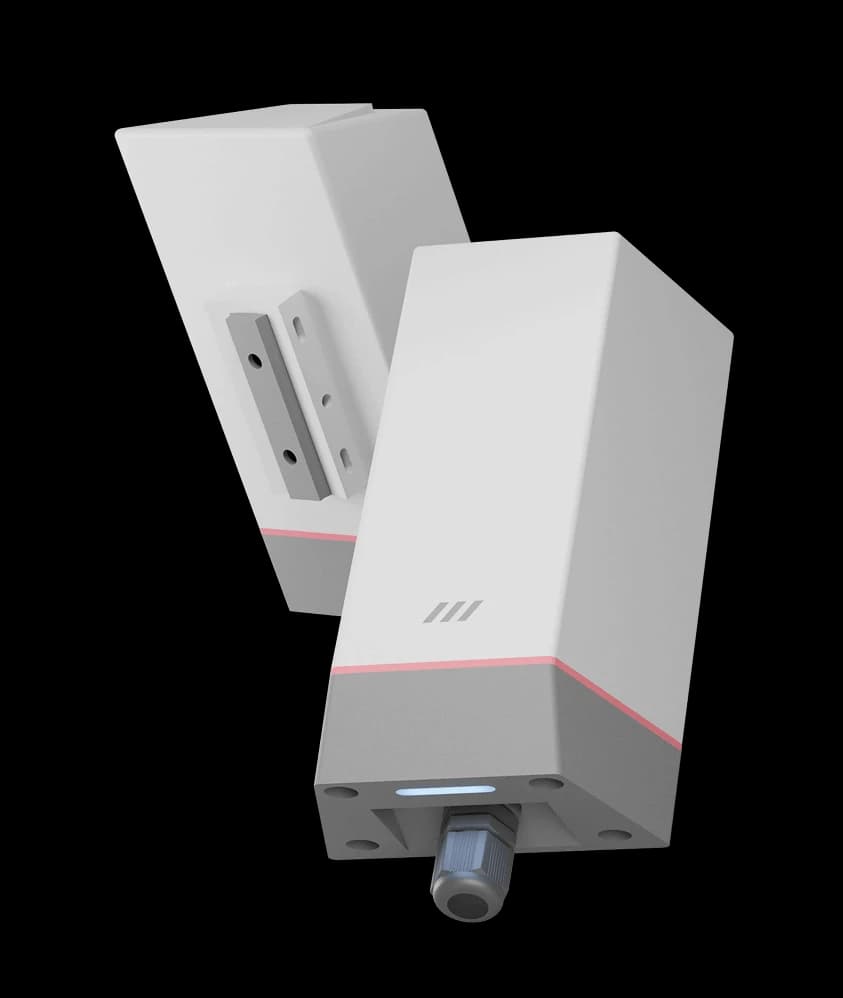
The MacRay LUS X1 mounts under the tank lid and measures the distance to the water surface with a 40 kHz ultrasonic pulse, from 3 cm to 450 cm at 0.1 cm resolution, without touching the water. Level is reported on a schedule and the moment a threshold is crossed, so the low-level alert arrives before the taps run dry and the overflow alarm before the terrace floods. One gateway on the terrace serves every tank on the site.
A covered sump is read from above by the ultrasonic sensor through a hatch, or from inside by the MacSync LPS X7 hydrostatic sensor for a small tank. Both report over LoRaWAN on a battery, and the indoor Setu X1 gateway covers the basement the terrace gateway cannot see. A dry sump stops the pump; a rising sump at night raises the alarm.
Automatic Pump Control with Dry-Run and Overflow Protection
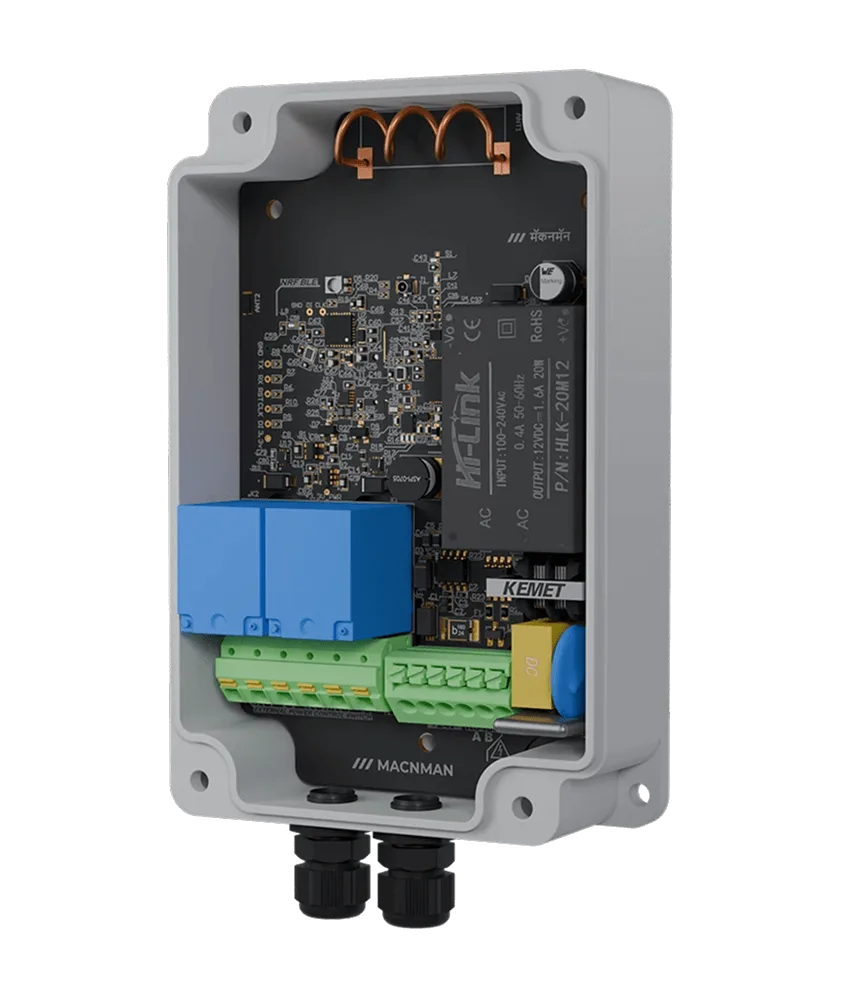
The MacSet LX1 switches the pump on when the overhead tank reaches the low threshold and off at the high one, with the sump level as a second condition so the pump never runs dry. The rule runs on the controller itself, so a network drop does not stop the water. Two 16 A relays switch the pump and a valve; the LX2 switches eight outputs for a manifold; run status and the panel's energy meter come back on the same network.
Borewell, Sump and Overhead Tank Run as One System
Most Indian sites move water in a chain: the borewell or the municipal inlet fills the sump, and the sump pump lifts it to the overhead tank. One network runs the whole chain. A transmitter in the borewell and a level sensor on the sump and on the tank feed one MacSet in the pump room: the borewell pump runs while the sump is below its high level and the well has water; the lift pump runs while the tank is below its high level and the sump above its low one. Municipal supply hours and tanker arrivals go in as schedules, so the sump fills when the line is live.
A submersible 4–20 mA level transmitter lowered into the borewell measures the water column above it. The MacSync LX1 analog converter powers the loop, reads it at 12-bit resolution and sends the depth over LoRaWAN, or the WX1 does the same over Wi-Fi from a pump house with coverage. Standing level, drawdown during pumping and recovery afterwards show what the well can sustain through the summer.
Bulk water meters on the inlet and on each block, and the energy meter in the pump panel, already have Modbus or pulse outputs. A MacSync converter polls them on a schedule and sends volume, flow and kWh over LoRaWAN or Wi-Fi, so consumption per block, per day and per night is on the dashboard without a meter round, and a night flow that never reaches zero points at the leak.
The MacSync LPS pressure transducer, with an SS316 wetted part and a G1/4 thread, reports pressure on rising mains, distribution lines and hydrant networks in 0 to 2.5, 5 or 10 MPa ranges, on a battery or DC. A pressure that drops and stays down is a burst or a closed valve; a hydrant line that loses pressure is a fire-safety fault found before the inspection.
An ultrasonic sensor on a bracket over a canal, a drain or a reservoir inlet reports the level without touching the water, and a MacSet controller operates a gate actuator or a pump on the reading. For a farm it is the irrigation canal and the pond; for a city it is the nullah before the monsoon.
Borewell and Treated Water Quality: pH and Conductivity
Online pH and electrical conductivity sensors report the quality of borewell, treated and process water over LoRaWAN on a battery: pH from 0 to 14 at ±0.1, conductivity to ±1 % of full scale with an IP68 probe. Rising conductivity in a borewell is salinity creeping in; a pH drift at an STP outlet is caught between lab samples.
Level sensors, converters, pump controllers and LoRaWAN gateways that work with the dashboard you already run
Why projects stall
What Stops a Water Monitoring Project, and What Removes It
Every site knows which tank runs dry. What stops the fix is getting a reading from a terrace, a sump and a borewell to one screen without digging a trench.
What stops itWhat removes it
01
01No power at the tankThe terrace tank and the borewell head have no socket and never will.
What removes it: Battery-powered level sensors report for years; the converter powers the borewell transmitter's loop.
02
02Cable from tank to pump roomA float switch needs a wire from the terrace to the pump house, through every floor.
What removes it: The level goes over LoRaWAN to the controller at the pump; no cable between them.
03
03Float switches that stickA float jams, the pump runs all night, the tank overflows.
What removes it: A non-contact ultrasonic reading with high, low and overflow thresholds, and a run-time alarm on the pump.
04
04Sites too spread out for Wi-FiThe borewell is at the gate, the tank on block C, the sump in the basement.
What removes it: One LoRaWAN gateway on the terrace covers the site; an indoor gateway covers the basement.
05
05Pumps started by phoneA GSM starter needs a SIM, a recharge and someone to call it.
What removes it: The controller starts the pump on the reading and keeps its rules through a network drop.
06
06Data locked in a vendor's appThe society app or the SCADA cannot see the device.
What removes it: Open LoRaWAN, MQTT and HTTPS send the readings wherever you decide, with published decoders.
Pump control
How Does an Automatic Water Level Controller Work?
An automatic water level controller is a level sensor and a pump switch working together. A level sensor on the overhead tank reports the water level over LoRaWAN; a controller at the pump compares it with two thresholds and switches the pump on when the level falls to the low one and off when it reaches the high one. A second reading from the sump stops the pump from running dry. The thresholds, the gap between them and a run-time limit are set from a phone, and the rule runs on the controller itself.
Start with one tank and one pump: a MacRay LUS X1 on the tank, a MacSet LX1 in the pump panel and a gateway on the terrace. The same network then takes on the sump, the borewell, the bulk meter and the line pressure, and every reading lands on the dashboard you already run.
Level thresholds
Start at, say, 30 % and stop at 95 %, with the gap (hysteresis) you choose so the pump does not chatter around one level. Figures are examples; you set them per tank.
Dry-run interlock
The sump level, a flow reading or the pump's run status is a second condition: no water below the pump, no start. Where a flow meter exists, no flow after start means stop and alarm.
Schedules and cycles
Fixed windows for supply hours and tariff periods, with the level rule still active inside them.
Through a network drop
The rule lives on the MacSet, so the tank fills and the pump stops whether or not the gateway, the internet or the dashboard is reachable; it reports when the link returns.
Choosing a level sensor
Ultrasonic, Hydrostatic, 4–20 mA Transmitter or Float Switch: Which Level Sensor for Which Tank?
Four ways to read a water level. Pick by the tank: open or covered, shallow or a borewell, and whether you want a level or just a switch.
Compare
MacRay LUS X1 ultrasonic
MacSync LPS X7 hydrostatic
4–20 mA transmitter via MacSync LX1
Float switch (for comparison)
How it reads
Distance to the surface from above, non-contact
Pressure of the water column, sensor in the liquid
Submersible transmitter at the bottom, pressure of the column
A float that tips at one level
Range
3 cm to 450 cm, 0.1 cm resolution, 3 cm blind zone
−10 to +10 kPa, about one metre of water column, ±0.2 % FS
Set by the transmitter you choose; read at 12-bit
One or two switch points
Best for
Overhead tanks, ESRs, sumps, canals, reservoirs
Small tanks, dispensers, shallow vessels
Borewells, deep wells, tall underground tanks
A simple on-off backup
Mounting
Under the lid or on a bracket, pointing straight down, clear of the walls
Lowered into the tank on its cable
Lowered into the borewell on the transmitter's cable
Inside the tank on a cable
Power
8 Ah battery: about 3 years at hourly reports, 2 at 15 minutes, 1 at 5 minutes
19 Ah battery, multi-year
Converter on a 19 Ah battery or 9–36 V DC; it powers the loop
None
Output
Level, trend and threshold events over LoRaWAN
Level and threshold events over LoRaWAN
Level over LoRaWAN or Wi-Fi
A contact, wired to the pump
Watch for
Foam, heavy condensation on the transducer, and the 60° beam touching the wall
Sediment around the sensor
Transmitter range and cable length for the well depth
Sticking, scaling and the cable run to the pump room
Figures are from the Macnman datasheets; the float switch column describes the category. A float switch can stay as a hard-wired backup while the sensor and the controller do the work.
Automatic Water Level Controller: LoRaWAN Pump Controller, GSM Mobile Starter or Timer?
Three ways sites switch a water pump today. The MacSet does the switching on the site's own network and adds what the others cannot: the level decides.
Compare
Typical GSM mobile starter
Timer or manual
MacSet LX1 LoRaWAN controller
How it switches
A call or SMS to the starter's SIM
At a clock time, or by hand
On the tank and sump levels, on a schedule, or from the phone
Knows the level
No, unless a float is wired to it
No
Yes: ultrasonic, hydrostatic or transmitter readings on the same network
Needs
Mobile signal and a SIM kept recharged
Nothing, and it fills nothing when supply hours change
A LoRaWAN gateway on the site; no SIM, no recurring plan
Dry-run and overflow
Only with extra wired protection
None
Sump level as an interlock; high level and run-time limit stop the pump
Feedback
On or off; some report voltage
None
Run status, two digital inputs, two 4–20 mA and 0–10 V channels, RS485 for the panel meter
Pump size and phase
Built around the starter's rating; single or three phase by model
Whatever the starter handles
Relays switch up to 16 A directly; larger and three-phase pumps, including submersibles, through the existing starter's contactor coil
When the network drops
Nothing until the call gets through
Keeps its clock
Rules keep running on the controller; it reports when the link returns
Power and enclosure
Mains; varies by maker
Mains
230 V AC or 9–36 V DC; IP65 with an IP67 option; −40 °C to +80 °C
GSM starter and timer columns describe the category, not one product; MacSet figures are from its datasheet. For pumps above the relay rating the MacSet switches the starter's contactor coil, so the existing starter and its protection stay in place.
Smart Water Management Architecture: Tank, Sensor, Gateway, Controller and Dashboard
Four stages. The first is the water system you already run and the last is the software you choose; Macnman builds what sits between them.
01
Your water system
Overhead tanks, sumps, borewells, pumps, bulk meters, rising mains and treated-water lines: what the site already has.
02
Devices
Level sensors and pressure transducers measure, MacSync converters read transmitters and meters, MacSet controllers switch the pumps.
Made by Macnman
03
Network
A LoRaWAN gateway on the terrace or the pump house, the Wi-Fi already in a building, or 4G for an isolated pumping station.
Gateways by Macnman
04
Your dashboard
A LoRaWAN network server, then MQTT or HTTPS into the society app, the BMS, the water SCADA or the ICCC, on-premise or hosted.
Readings travel from the tank to the screen. Commands, such as starting a pump or opening a valve, travel back the other way.
Choosing a network
LoRaWAN, Wi-Fi or 4G: Which Network for Tanks, Pumps and Borewells?
Most sites end up with LoRaWAN for the tanks, sumps and borewells spread across the property and Wi-Fi or 4G for a pump house that already has coverage.
Compare
LoRaWAN
Wi-Fi
4G LTE
Infrastructure
Your own gateway; one on the terrace usually covers the site
Access points already installed
The operator's towers and a SIM per device
Reach
Kilometres from a rooftop gateway; a second or an indoor one for the basement
Up to about 100 m indoors per access point
Wherever there is mobile coverage
Power
Years on a battery at the tank
Years at 15-minute or longer intervals; mains in the pump house
Usually DC powered
Recurring cost
None per device on a private network
None beyond the existing Wi-Fi
A data plan per device
Best for
Tanks, sumps, borewells and pressure points across a society, campus, ward or plant
A pump room or plant room inside good coverage
A single remote pumping station or well with no local network
LoRaWAN bands: IN865 for India and EU868 for Europe, plus US915, AU915 and RU864, with KR920 and AS923 on selected products. Tell us the country and we ship the right band.
How Many Sensors, Controllers and Gateways Does a Site Need? Working Estimates
Labelled estimates to size a quote, not a design. A one-tank pilot settles the gateway position and the thresholds before the rest is ordered.
Sizing
How Many Sensors, Controllers and Gateways Does a Site Need? Working Estimates
Labelled estimates to size a quote, not a design. A one-tank pilot settles the gateway position and the thresholds before the rest is ordered.
One level sensor per tank or sump
One MacRay LUS X1 under each overhead tank lid and over each sump; an LPS X7 or a 4–20 mA transmitter where the sensor must sit in the water. Estimate.
Level
One controller per pump or pump group
A MacSet LX1 switches a pump and a valve, or two pumps; a MacSet LX2 handles a manifold or eight pumps. Count the panels, not the tanks.
Control
One gateway per site, usually
A MacLink Gen-2 on the highest terrace covers a society, a campus or a plant; add an indoor Setu X1 for a basement sump or pump room and a second outdoor gateway where blocks shadow each other. Estimate; check with the network calculator.
Gateway
One converter per meter cluster
One MacSync converter reads every Modbus meter on an RS485 line, so a pump panel with its energy meter and bulk meter needs one; a borewell transmitter needs one analog channel.
Meters
Starter kits
What a Smart Water Kit Looks Like, by Site
Five typical starting points and the hardware each usually needs. Quantities are working estimates for a quote; the pilot tank settles them.
Site
What it usually needs
Gateway
Grows into
Housing society, one or two towers
A LUS X1 on each overhead tank and the sump, a MacSet LX1 in the pump panel, a converter on the inlet bulk meter
One MacLink Gen-2 on the tallest terrace; a Setu X1 if the sump is in a deep basement
Borewell level, per-wing bulk meters, pressure on the rising main
Campus, hospital or hotel
Level sensors on every tank and sump, controllers at each pump house, converters on the bulk meters and pump energy meters
One outdoor gateway per campus; indoor gateways for plant rooms
Treated-water quality, hydrant line pressure, cooling tower sumps
Municipal zone or ward
Level sensors on ESRs and sumps, pressure transducers on the distribution network, converters on bulk meters and pump panels, controllers at pumping stations
Rooftop MacLink Gen-2 gateways per ward; 4G controllers at isolated stations
Every ESR in the zone, network pressure management, drains before the monsoon
Factory or process plant
Level on raw-water, fire and ETP tanks, pressure on process and hydrant lines, converters on the plant's water and energy meters, pH and EC on the ETP outlet
One gateway covering the plant; Wi-Fi converters inside the utility block
A LUS X1 on the storage tank, a transmitter in the borewell, a MacSet LX1 on the pump, a soil sensor on the plot
One MacLink Gen-2 on the farmhouse roof
Canal level, valve groups on a MacSet LX2, the weather station
Working estimates, not a design. Every device here is on this page's application table with its datasheet; send the tank list and the pump locations and we size it properly.
Planning coverage from the terrace tank to the pump house? Size it before you order.
Smart Water Management for Societies, Campuses, Cities, Plants and Farms
The devices are the same from one site to the next. What changes is which tank gets measured first.
Housing societies and RWAs
Overhead tanks, sumps, borewells and the pump that feeds them.
Tank and sump level
Automatic pump control
Bulk meter per wing
Campuses and institutions
Tanks across buildings, pump houses and hydrant lines on one gateway.
Every tank on one screen
Pump house control
Hydrant pressure
Hospitals and hotels
Water that must not run out, with treated-water quality and plant-room pumps.
Tank and sump level
Pump room pumps
pH and conductivity
Municipal water and SPVs
ESR levels, network pressure, bulk meters and pumping stations across a zone.
ESR and sump level
Distribution pressure
Pumping-station control
Factories and utilities
Raw water, fire water, ETP tanks and process-line pressure, into SCADA.
Tank and ETP level
Process and hydrant pressure
Water and energy meters
Farms and estates
Storage tanks, borewells and pumps kilometres apart, with the canal and the pond.
Borewell level
Pump on a reading
Canal and pond level
Builders and FM companies
A water system handed over with the monitoring already in it, and run for many sites from one dashboard.
Multi-site view
Handover-ready
Open data per site
System integrators
Open hardware for water platforms, with documentation, decoders and engineering support.
Any LNS
MQTT and HTTPS
Pilot kits
Deployment
From One Tank to the Whole Site
Water monitoring works best started small. One tank, one pump and one gateway prove the coverage and the thresholds, and the same network then takes on the sumps, the borewell and the meters.
01
Pick one tank
Choose the tank that runs dry most often and the pump that feeds it. Tell us its height, the distance to the pump room and whether the pump house has power and signal.
02
Check coverage
Estimate the gateway position and the range from the terrace to the pump room with the free planning tools, or send a site layout and we will do it.
The sensor mounts under the lid or on a bracket, the controller wires into the pump panel (an electrician's job at 230 V), and every device is set up from a phone with the Maya app over Bluetooth, with a Ping test from the spot.
04
Connect and scale
Point the devices at your dashboard, BMS or SCADA, confirm the level arrives and the pump obeys the thresholds, then add tanks, sumps, borewells and meters to the same gateway.
A manufacturer of smart water management hardware in Pune, not a reseller: the people who answer your questions are the people who designed the device.
Why Macnman
Why Sites Choose Macnman Hardware for Water
A manufacturer of smart water management hardware in Pune, not a reseller: the people who answer your questions are the people who designed the device.
Designed and made in India
Hardware, firmware and enclosures are designed and manufactured in Pune, with WPC compliance for IN865 and engineering support in Indian Standard Time.
Made in India
Open standards, no lock-in
LoRaWAN, Modbus, MQTT and HTTPS. The devices work with any LoRaWAN network server, any broker, the society app, the BMS or the water SCADA, with no mandatory subscription.
Open
Built for the terrace and the pump house
IP67 transducers, IP65 enclosures with an IP67 option, rated from −40 °C to +80 °C, on batteries that last for years or on the pump panel's supply.
Rugged
Customised at volume
Firmware, payloads, enclosures and branding adapted for builders, FM companies, water platforms and tender orders.
Smart Water Terms, Defined the Way the Datasheets Use Them: Eight to Know
The words that appear in a water monitoring quote and a pump controller's settings, each in one paragraph.
Terms in the quote
Smart Water Terms, Defined the Way the Datasheets Use Them: Eight to Know
The words that appear in a water monitoring quote and a pump controller's settings, each in one paragraph.
Water level controller
India's name for the device that switches the pump on the tank level. Here it is a level sensor on the tank plus a MacSet controller at the pump, joined by LoRaWAN instead of a cable, with the rules on the controller.
Control
ESR, OHT and sump
An elevated service reservoir or overhead tank feeds by gravity; a sump or underground tank stores the supply the pump lifts from. Both are read by level; the pump is controlled by the pair.
Tanks
Non-contact ultrasonic level
A 40 kHz pulse from above the water, timed to the echo. The MacRay LUS X1 reads 3 cm to 450 cm at 0.1 cm resolution within a 60° beam; nothing touches the water.
Sensing
4–20 mA level transmitter
A submersible sensor whose current output rises with the water column above it. The MacSync LX1 analog converter powers the loop and reads it at 12-bit, which is how a borewell is measured.
Borewell
Hysteresis
The gap between the start and stop levels of a pump rule, so the pump does not switch on and off around one level. Set on the MacSet from the phone.
Control
Dry-run protection
A second condition that stops the pump when there is no water to pump: the sump level, a flow reading or the run status. On the MacSet it is a rule, not an extra relay.
Control
IN865 and WPC
India's LoRaWAN frequency plan in the delicensed 865 to 867 MHz band, so a society or a city runs its own gateway without a licence; the hardware carries WPC compliance.
Radio
Blind zone
The first 3 cm in front of the ultrasonic transducer, where an echo cannot be timed. Mount the sensor so the maximum water level stays below it.
Sensing
FAQ
Smart Water Management in India: Frequently Asked Questions
A level sensor on the overhead tank reports the water level over LoRaWAN; a MacSet controller at the pump switches on when the level falls to the low threshold and off when it reaches the high one, with a gap between them so the pump does not chatter. The sump level or a flow reading is a second condition that stops a dry run, and a run-time limit catches a pump that keeps going. The rule runs on the controller, so it works whether or not the dashboard or the internet is reachable.
Ultrasonic for overhead tanks, ESRs, sumps and canals: the MacRay LUS X1 reads 3 to 450 cm from above without touching the water and gives a level, a trend and threshold events. A hydrostatic sensor such as the LPS X7 for small or shallow vessels where the sensor can sit in the liquid. A submersible 4–20 mA transmitter, read through the MacSync analog converter, for borewells and tall underground tanks. A float switch gives one switch point and a cable to the pump room, and can stay as a hard-wired backup. The table on this page sets them side by side.
Yes, mounted through the hatch or under the lid, pointing straight down and clear of the walls so the 60° beam meets only the water. Keep the first 3 cm (the blind zone) above the maximum level, and expect heavy condensation or thick foam to disturb the echo; the transducer itself is IP67. Where a sump is very deep or the surface is turbulent, a submersible transmitter through the converter is the alternative.
Lower a submersible 4–20 mA level transmitter, sized for the depth, into the borewell beside the pump cable. The MacSync LX1 analog converter at the well head powers the loop, reads it at 12-bit resolution and sends the water column over LoRaWAN; the WX1 does the same over Wi-Fi where the pump house has coverage. Standing level before pumping, drawdown during it and recovery afterwards show what the well can sustain, months before it fails.
Yes. The MacSet LX1 has two 16 A relays and takes the tank level, the sump level and the pump's run status as inputs to its rules: start on low, stop on high, no start when the sump is below the pump, stop and alarm when the run-time limit passes. For pumps above the relay rating it switches the starter's contactor coil, so the existing starter and its protection stay in place.
Yes, and that is how most sites use it. A transmitter in the borewell, a level sensor on the sump and one on the overhead tank feed one MacSet in the pump room: the borewell pump runs while the sump is below its high level and the well has water; the lift pump runs while the tank is below its high level and the sump above its low one. Municipal supply hours and tanker arrivals go in as schedules. One gateway on the terrace carries all of it.
Through the starter, yes. The MacSet LX1's two relays switch up to 16 A directly, which covers small single-phase pumps and valves; a larger or three-phase pump, including a borewell submersible, is switched through the coil of the starter already in the panel, so the starter's overload and phase protection stay in place. An electrician wires it at 230 V; the MacSet takes the starter's run contact back as a digital input for feedback.
Yes. Schedules sit alongside the level rules on the MacSet: a supply window in which the inlet pump may run, a tariff window for the lift pump, and the level thresholds still active inside them, so the sump fills while the line is live and the tank never overflows. The schedules are set from the phone and run on the controller.
The readings and the threshold events go to the dashboard or platform you choose, and that platform sends the push notification, SMS, email or WhatsApp message; most society apps, BMS and SCADA packages do this, and so do ChirpStack with Node-RED or any MQTT-based dashboard. Macnman supplies the hardware, the open payloads and the decoders, not a messaging service, so the alert reaches whichever phones you configure.
The ultrasonic sensor does not care about the material; it needs a clear line from the lid to the water with the 60° beam kept off the walls, which a bracket or a short stand-off gives in a narrow tank. Plastic, RCC and steel tanks all work; a tank with an internal ladder, a pipe or an agitator in the beam path needs the sensor moved to a clear spot. For a very deep or turbulent vessel, the submersible transmitter through the converter is the alternative.
It removes the two ways a pump wastes power: running after the tank is full and overflowing, and running dry. How much that saves depends on how often it happened before, so we do not quote a figure; the pump's energy meter, read through the same converter, shows the kWh before and after the pilot.
Kilometres, not metres: the sensor on the tank and the controller in the pump room both talk to the LoRaWAN gateway, which sits on the highest terrace and typically covers a society, a campus or a plant. A basement pump room or a deep sump takes an indoor Setu X1 gateway. The planning tools on this site give a first estimate and the Maya app's Ping test confirms each spot before the device is fixed.
No. The level rule runs on the controller and the readings go to your own LoRaWAN network server, MQTT broker or HTTPS endpoint, or to the society app, BMS or SCADA you already run. ChirpStack can run on the gateway itself. There is no mandatory Macnman cloud and no subscription in the path.
The MacSet keeps running its thresholds and schedules locally, so the tank fills and the pump stops without the gateway or the internet; it reports the history when the link returns. Battery sensors keep measuring through a power cut, and a sensor that goes silent is raised as a stale-data alarm on the dashboard rather than read as a flat line.
Yes, where the meter has an RS485 Modbus port or a pulse output, which most bulk water meters and panel energy meters do. A MacSync LX1 or WX1 polls the meters on the line and sends volume, flow and kWh on the interval you set. The meters stay as they are; the converter only reads.
For switching the pump, yes, and it adds what the starter cannot: the tank and sump levels decide, no SIM, no recharge and no mobile signal are needed at the pump house, and the rules keep running through a network drop. The comparison table on this page lists the differences; the starter's protection relays stay in place.
As a working estimate, one level sensor per overhead tank and per sump, one controller per pump panel, one converter for the inlet bulk meter and the pump energy meter together, and one gateway on the tallest terrace, with an indoor gateway for a deep basement. A two-tower society is typically a handful of devices; the pilot on one tank settles the rest.
Two ways, without a leak cable. A bulk meter read every few minutes shows a night flow that never reaches zero, which is a leak downstream of the meter; a pressure transducer on the line shows a pressure that drops and stays down, which is a burst or a closed valve. Both appear as trends and alerts on the dashboard.
Yes, it is free to use and needs no SIM. LoRaWAN in India uses the IN865 plan in the 865 to 867 MHz band, which the Wireless Planning and Coordination wing has delicensed for low-power devices, so a society, a campus or a city runs its own gateway without a spectrum licence. Macnman devices are built for IN865 and are WPC compliant. The gateway's backhaul is the only recurring link: the site's broadband or one SIM in the gateway, not one per device.
You own it. The devices send to your own network server and broker, and from there to the society management app, the BMS, the water SCADA or the ICCC over MQTT or HTTPS; payload decoders are published on GitHub. Macnman does not hold your data and supplies no mandatory dashboard.
Yes. The devices register on any LoRaWAN network server, and decoded readings reach SCADA or the ICCC over MQTT or HTTPS; a 4G controller at an isolated pumping station publishes the same way. Commands, such as starting a pump at a station, go back as downlinks.
From the datasheets: the MacRay LUS X1 is rated about 3 years at hourly reports, 2 years at 15 minutes and 1 year at 5 minutes on its 8 Ah cell; the LPS X7 hydrostatic sensor is rated about 2 years at 5 minutes, 4 years at 15 minutes and 7 or more years at hourly reports on its 19 Ah cell, and the pressure transducer runs on the same cell or on DC; converters run on a 19 Ah cell or 9–36 V DC; controllers run from the pump panel. Battery level is sent in every message, and the battery life calculator estimates your interval.
The ultrasonic sensor has an IP67 transducer and is rated from −40 °C to +80 °C; the pressure transducer has an SS316 wetted part; the EC probe is IP68; enclosures are IP65 with an IP67 option. The datasheets carry the figures. Mount the ultrasonic sensor so it cannot be submerged; a sump that can flood to the lid is a job for the submersible transmitter.
The MacRay LUS X1 reports at 0.1 cm resolution across 3 to 450 cm; absolute accuracy depends on the surface, the temperature and the mounting, which is why the datasheet states resolution rather than a single accuracy figure. The hydrostatic LPS X7 is rated ±0.2 % of full scale and the LPS pressure transducers ±0.05 % of full scale. For pump control the thresholds matter more than the last millimetre. Calibration is a matter of entering the tank: the empty distance and the full distance go in from the Maya app, and the sensor reports percent and centimetres from them.
Usually, yes. A MacLink Gen-2 on the tallest terrace carries more than 2,000 devices on eight channels and reaches kilometres with line of sight; blocks that shadow each other, deep basements and far pump houses add an indoor Setu X1 or a second outdoor gateway. The coverage check with a sensor at the real mounting point comes before the order.
pH and electrical conductivity, yes: the LoRaWAN pH sensor reads 0 to 14 at ±0.1 and the EC sensor to ±1 % of full scale with an IP68 probe, on a battery. Macnman does not make a dissolved-oxygen, turbidity or chlorine sensor; a third-party analyser with a 4–20 mA or Modbus output connects through a MacSync converter.
The level sensor reports the high threshold as an event the moment it is crossed; the controller stops the pump at that level, and a second, higher threshold raises the overflow alarm if the level keeps rising, which also exposes a stuck valve or a gravity feed that should have closed. The alert reaches the phone or the dashboard within the sensor's reporting interval.
Yes, and that is the recommended way in. One MacRay LUS X1 on the tank that runs dry most often, one MacSet LX1 in its pump panel and one gateway on the terrace, on your own dashboard, for a few weeks; then the sump, the borewell and the meters join the same gateway. The pilot kit on this site is that set.
The list of tanks and sumps with their heights, where the pumps and their panels are, the distance from the tanks to the pump room and to the tallest terrace, whether there is power and mobile signal at the pump house, the bulk meters you want read and the dashboard, BMS or SCADA the data should reach. With that we specify the sensors, the controllers, the converters and the gateway position.
Four lines, and the sensor is only one: the number of tanks, sumps, borewells and pressure points, the pump panels that need a controller, the gateways needed for coverage (usually one, plus one for a basement), and the integration into the dashboard or SCADA you run. Send the tank list and a site plan and we quote the whole system rather than a device in isolation.
The sensors mount with the clip or bracket supplied and are set up from a phone with the Maya app; an electrician wires the controller into the pump panel at 230 V. We send mounting and wiring notes with the kit, support the commissioning remotely, visit for pilots, and work with FM companies and integrators through the partner programme for roll-outs.
Yes. Macnman designs and manufactures its level sensors, converters, controllers and gateways in Pune, Maharashtra. The LoRaWAN devices are WPC compliant for the IN865 band and the hardware conforms to RoHS; the datasheets state the figures for each device.