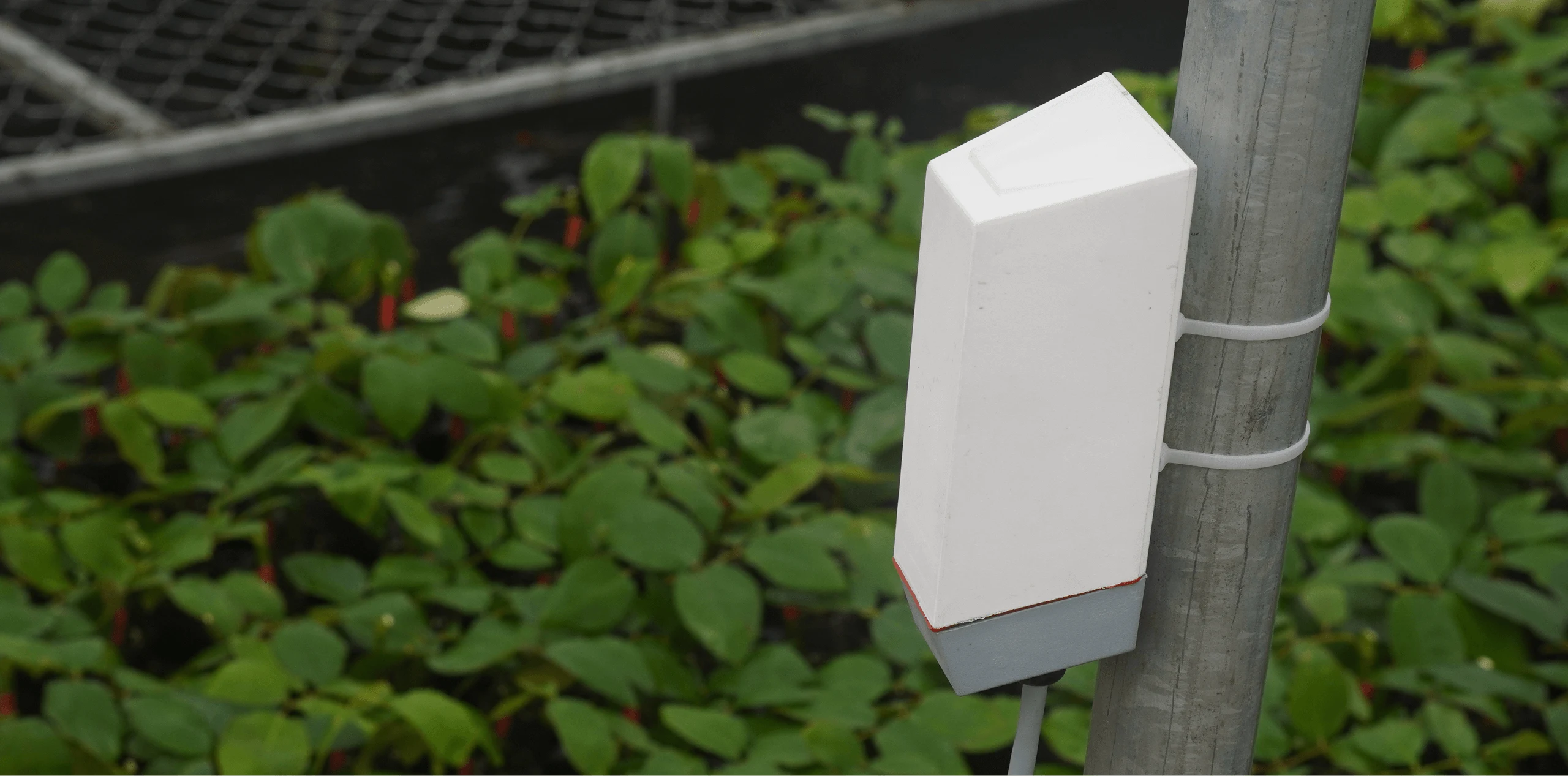







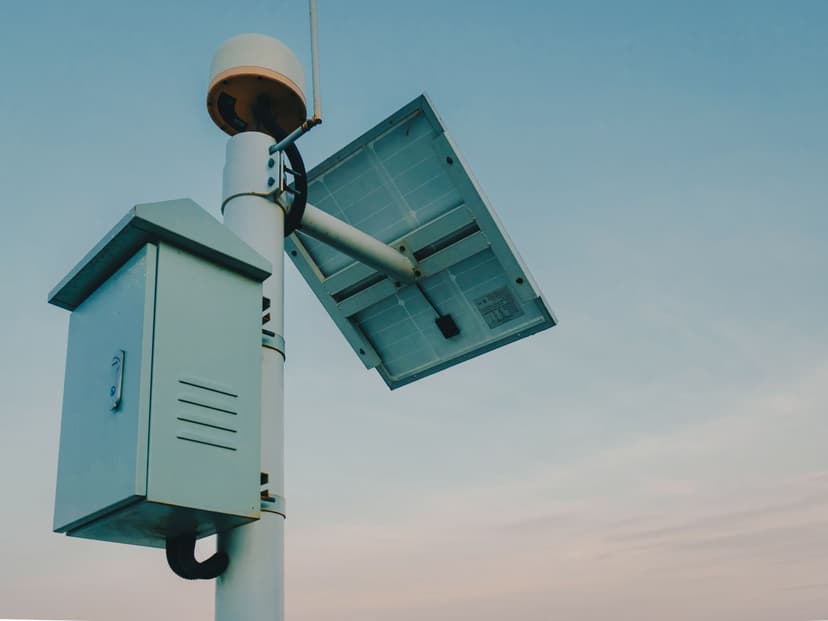




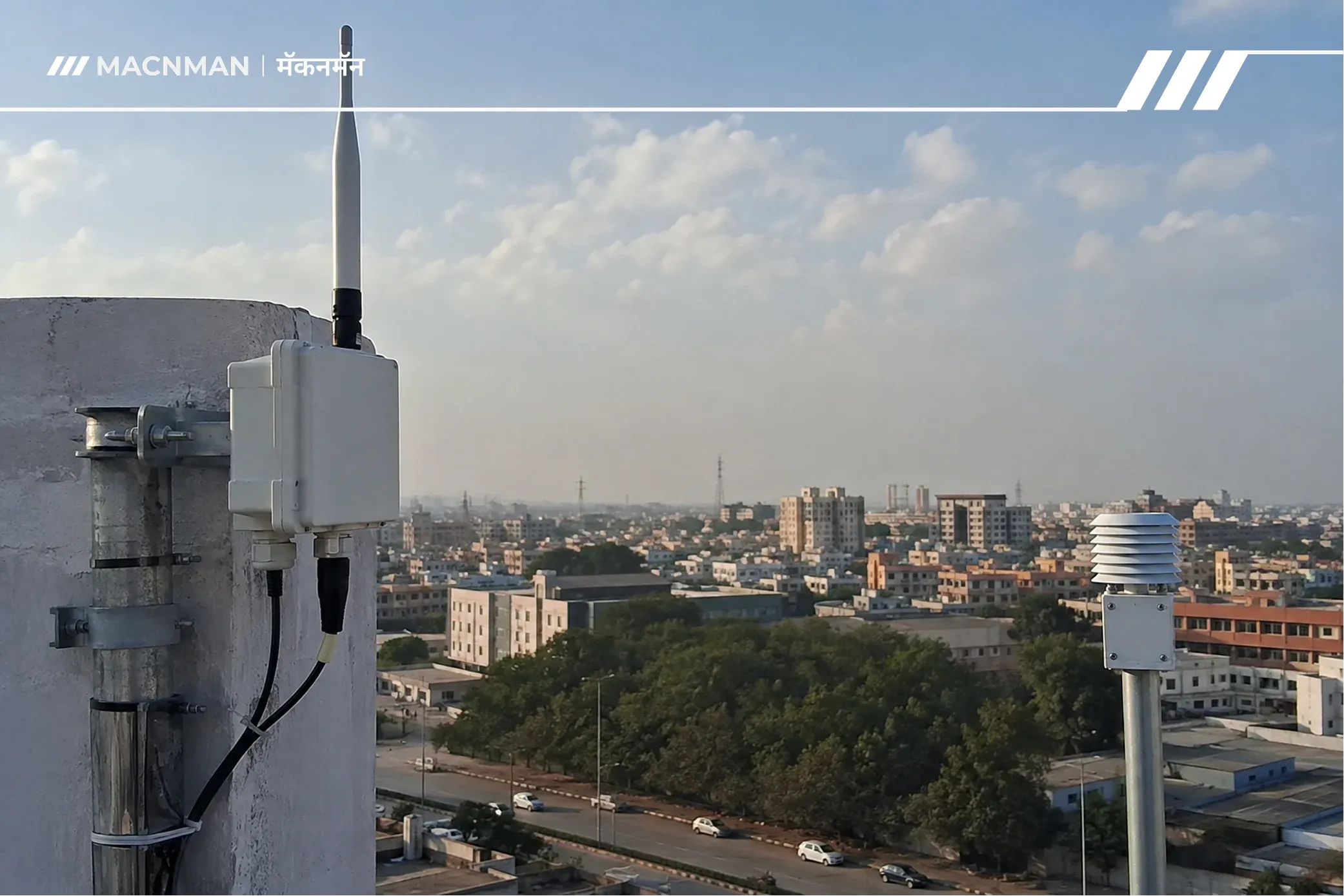
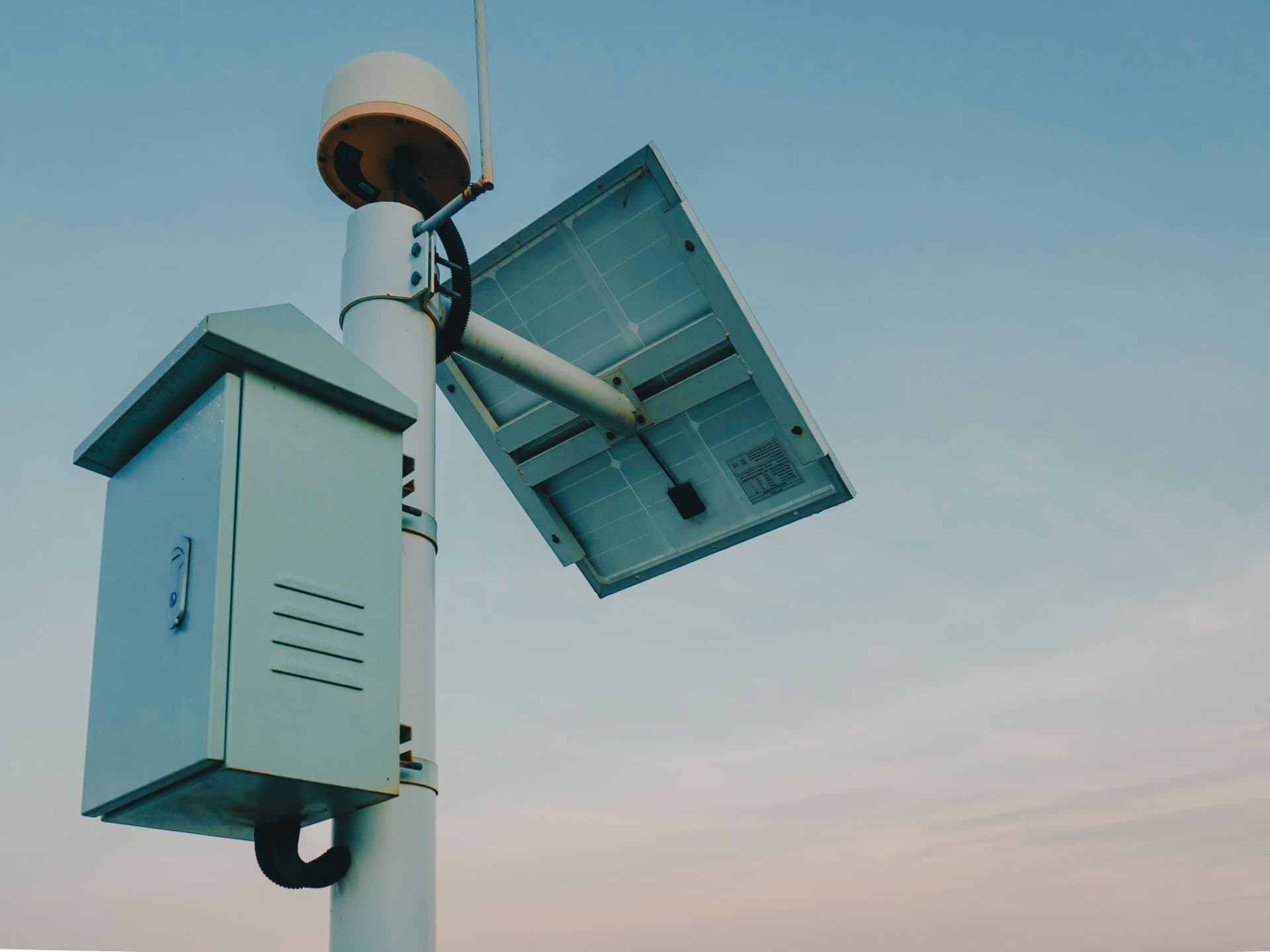


Weather Stations for Smart Agriculture

Weather Stations for Smart Agriculture

Boost yield. Reduce guesswork.

Smart AgricultureLoRaWAN
Location iconLonavala
Water Quality Monitoring for Aquaculture Farms

Water Quality Monitoring for Aquaculture Farms

Healthier ponds. Better harvest.

Smart AquacultureLoRaWAN
Location iconMurud
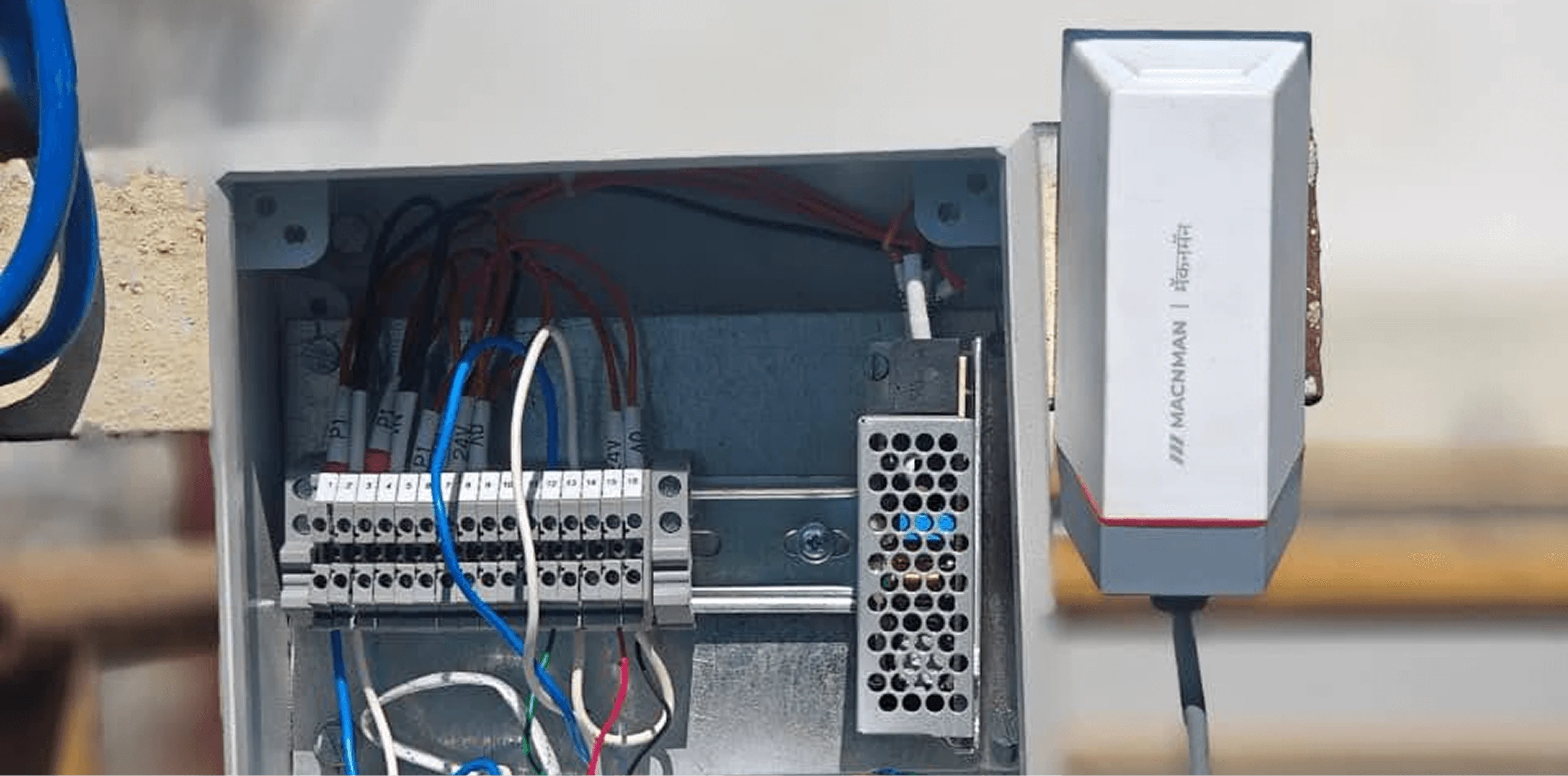
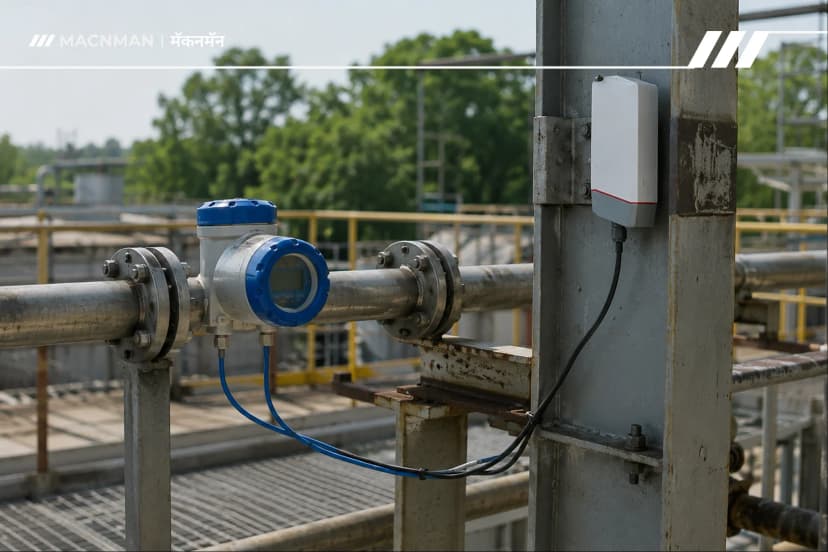
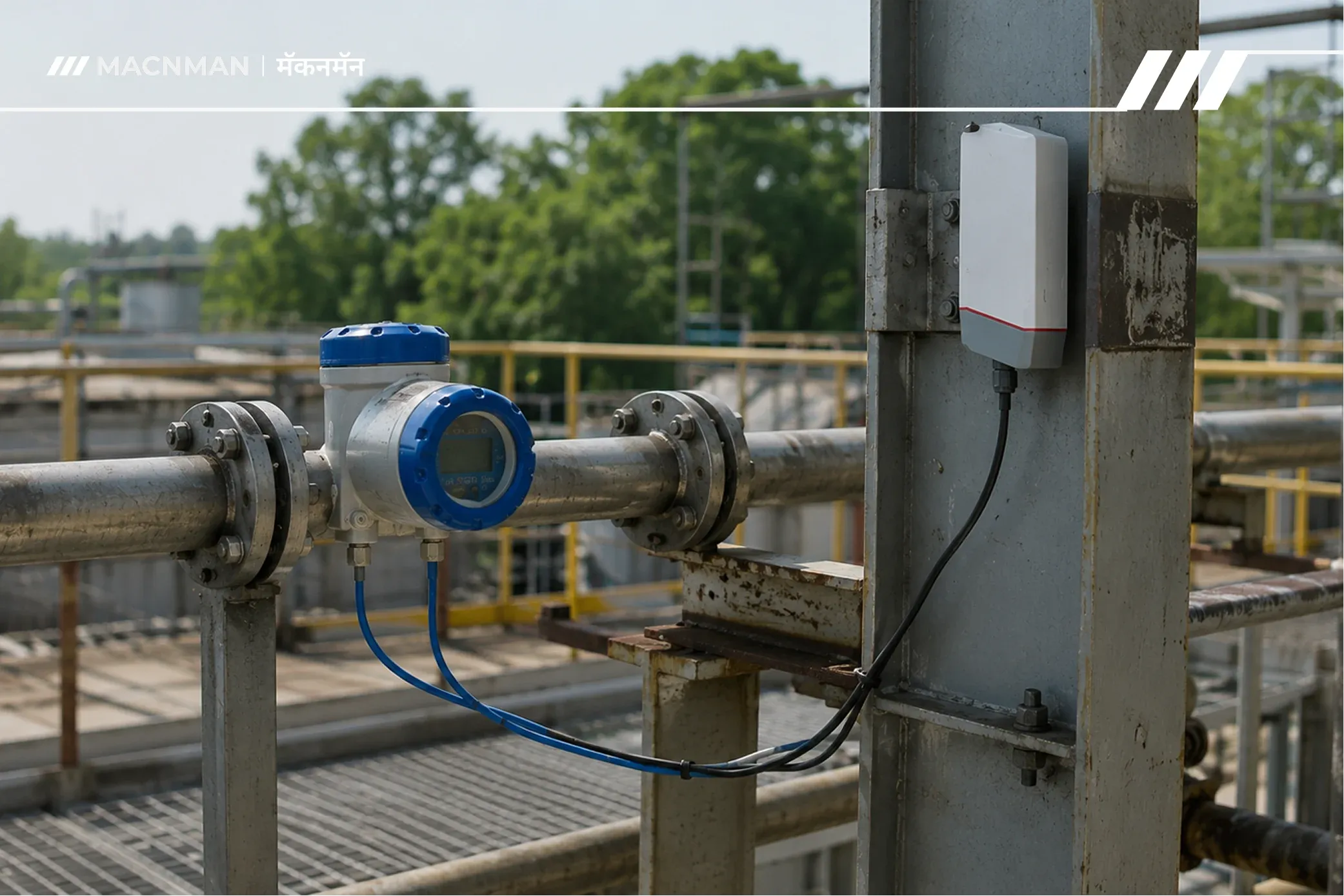
Industrial Monitoring & Control for Process Systems

Industrial Monitoring & Control for Process Systems

Stop downtime before it starts

Smart IndustryLoRaWAN
Location iconDum Duma, Kolkata
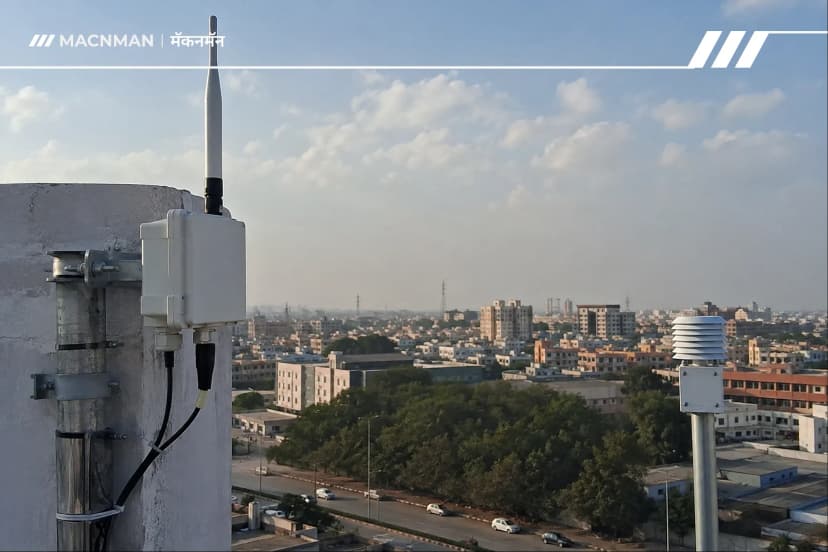
City AQI Monitoring for Smart Cities

City AQI Monitoring for Smart Cities

IoT-Driven Crop Optimization

Smart City4G Lte
Location iconNagpur
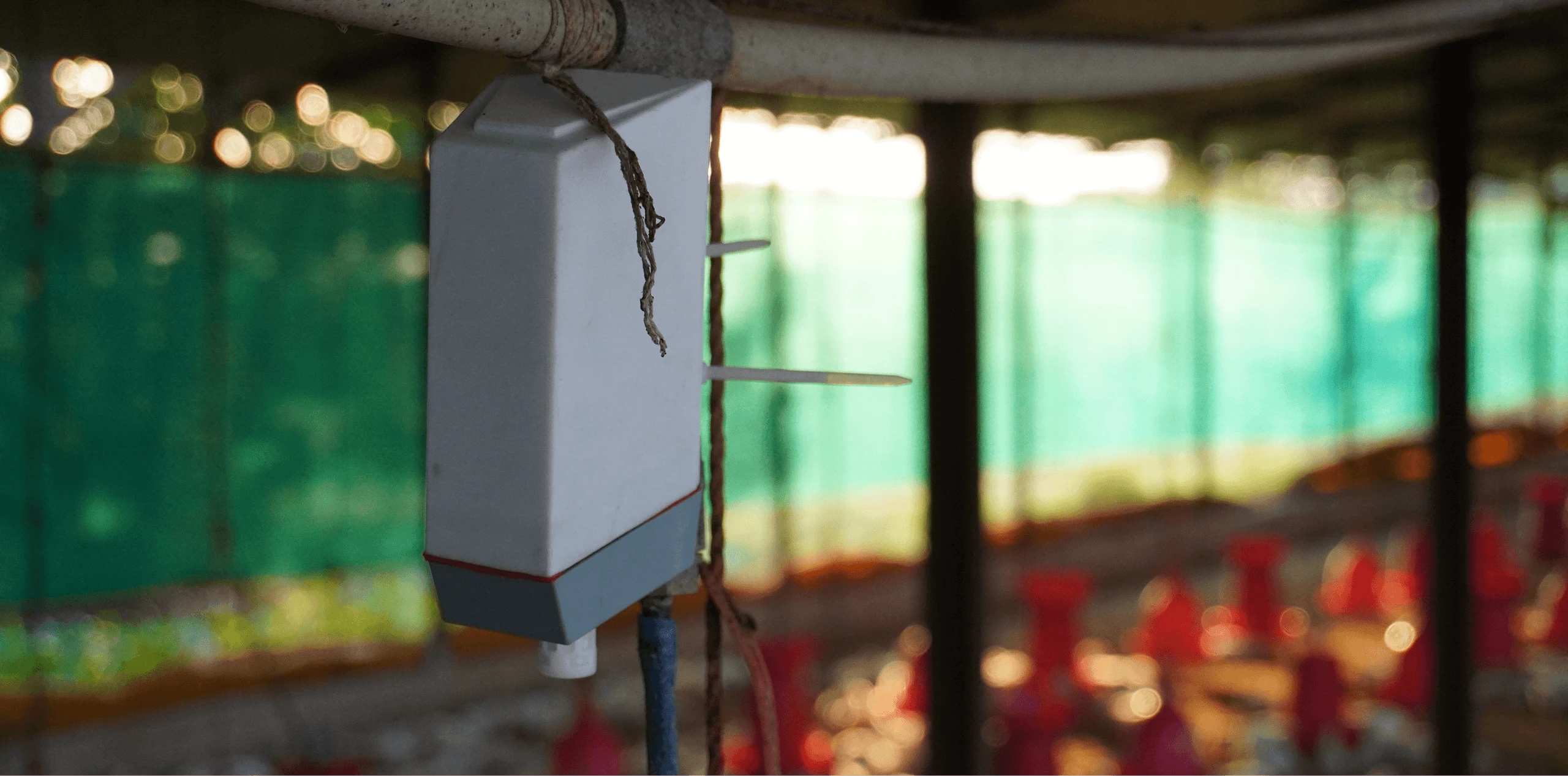
Poultry Shed Climate Monitoring & Control

Poultry Shed Climate Monitoring & Control

Comfort in control. Growth on track.

Smart AgricultureLoRaWAN
Location iconLonavala
Fire Pump Room Monitoring & Automation

Fire Pump Room Monitoring & Automation

Stay compliant. Stay confident.

Smart BuildingLoRaWAN
Location iconDelhi
Industrial Pollution Monitoring & Compliance Control

Industrial Pollution Monitoring & Compliance Control

Stay compliant. Stay confident.

Smart IndustryLoRaWAN
Location iconBengaluru
Cold Storage Monitoring & Alarm Control

Cold Storage Monitoring & Alarm Control

No spoilage. No surprises

Smart CityLorawan
Location iconNorway
Smart Airport Facility & Control System

Smart Airport Facility & Control System

Better flow. Better experience.

Smart AirportsLoRaWAN
Location iconVishkhapatnam

Blogs

Newly Added Blogs

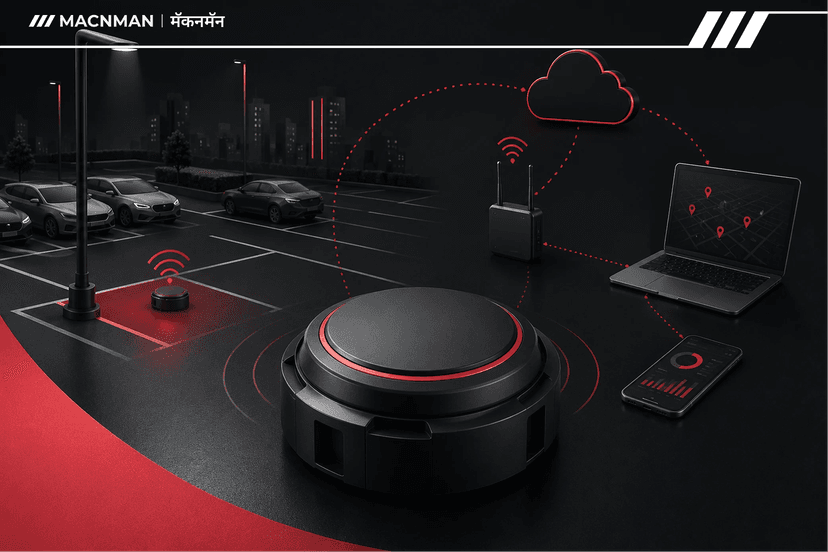
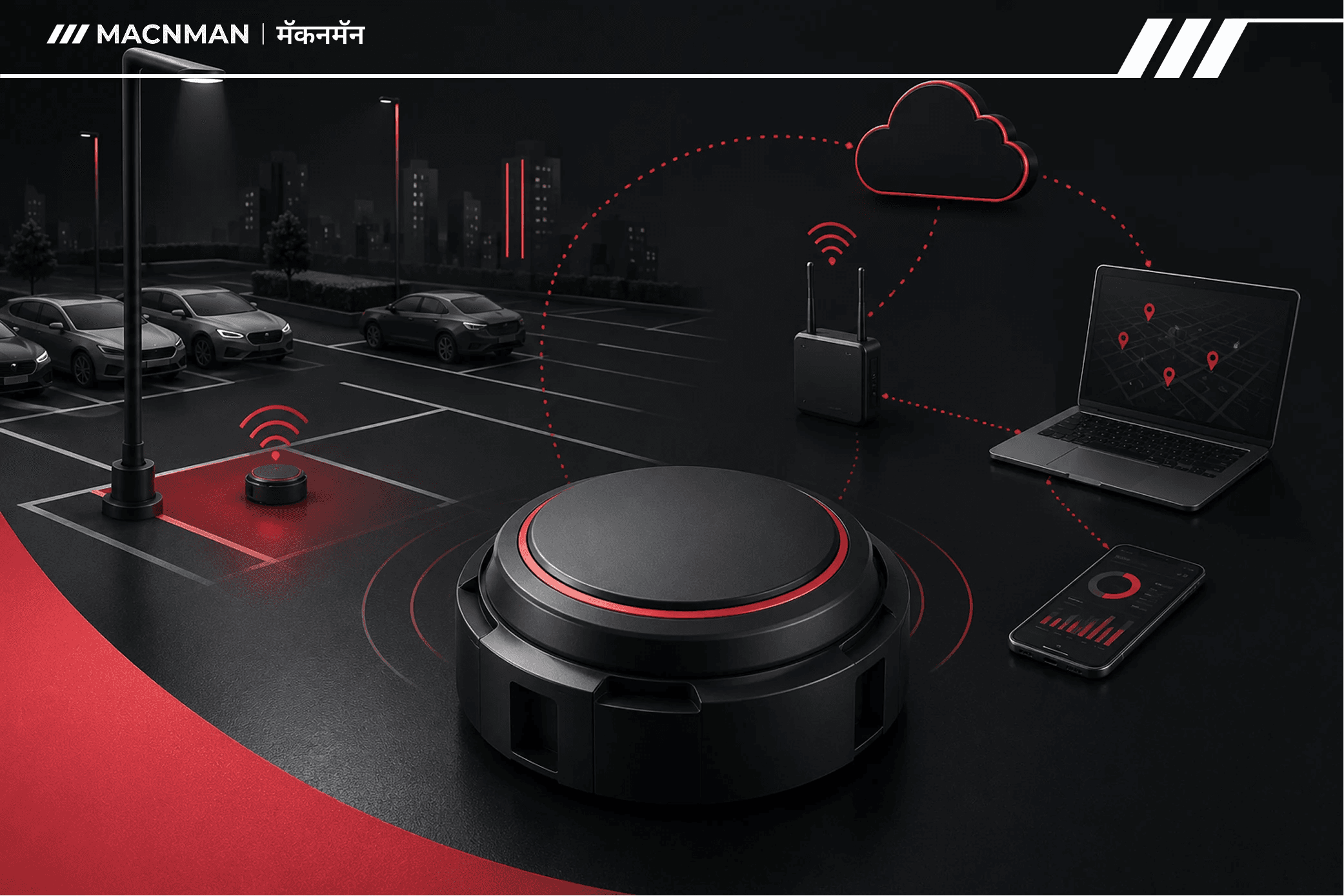
3D illustration of a LoRaWAN smart parking sensor connected to a wireless gateway and cloud platform for real-time parking occupancy monitoring in a modern smart city parking lot.

Lorawan

How to Choose a Smart Parking Sensor: Detection Types, Connectivity, and Which One Fits Which Deployment

Choosing a smart parking sensor comes down to one honest truth: there is no single "best" sensor, only the best-fit sensor for your site. The right choice depends on where you're deploying it — an open curb, a covered garage, a sprawling retail lot — and on the trade-offs you're willing to accept between accuracy, battery life, cost, and resistance to weather and interference. This guide walks through the main smart parking sensor types, the mounting and connectivity decisions that follow, and a deployment-by-deployment matrix so you can match the technology to your case. A quick scope note before we start: this guide is about smart parking sensors — the IoT vehicle-detection devices that report whether a parking space is occupied, used in smart cities, commercial lots, and parking guidance systems. It is not about automotive bumper sensors that beep when you reverse. Those are a different product entirely.

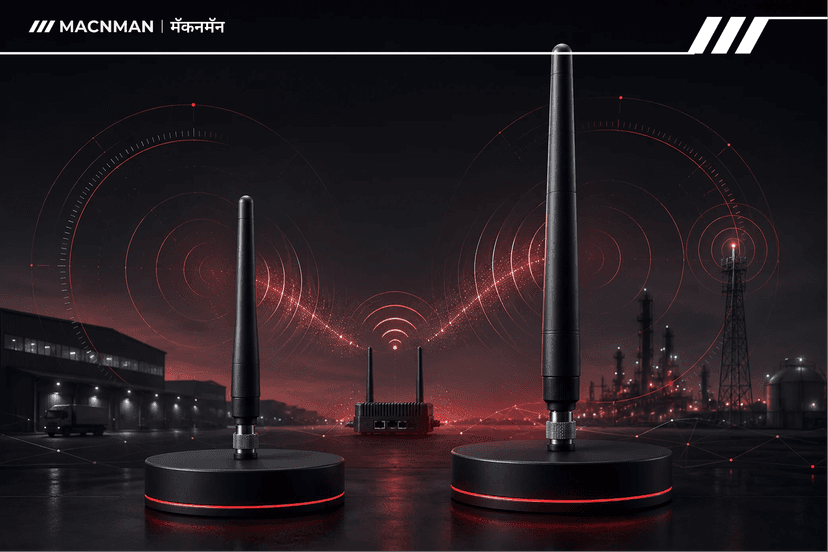
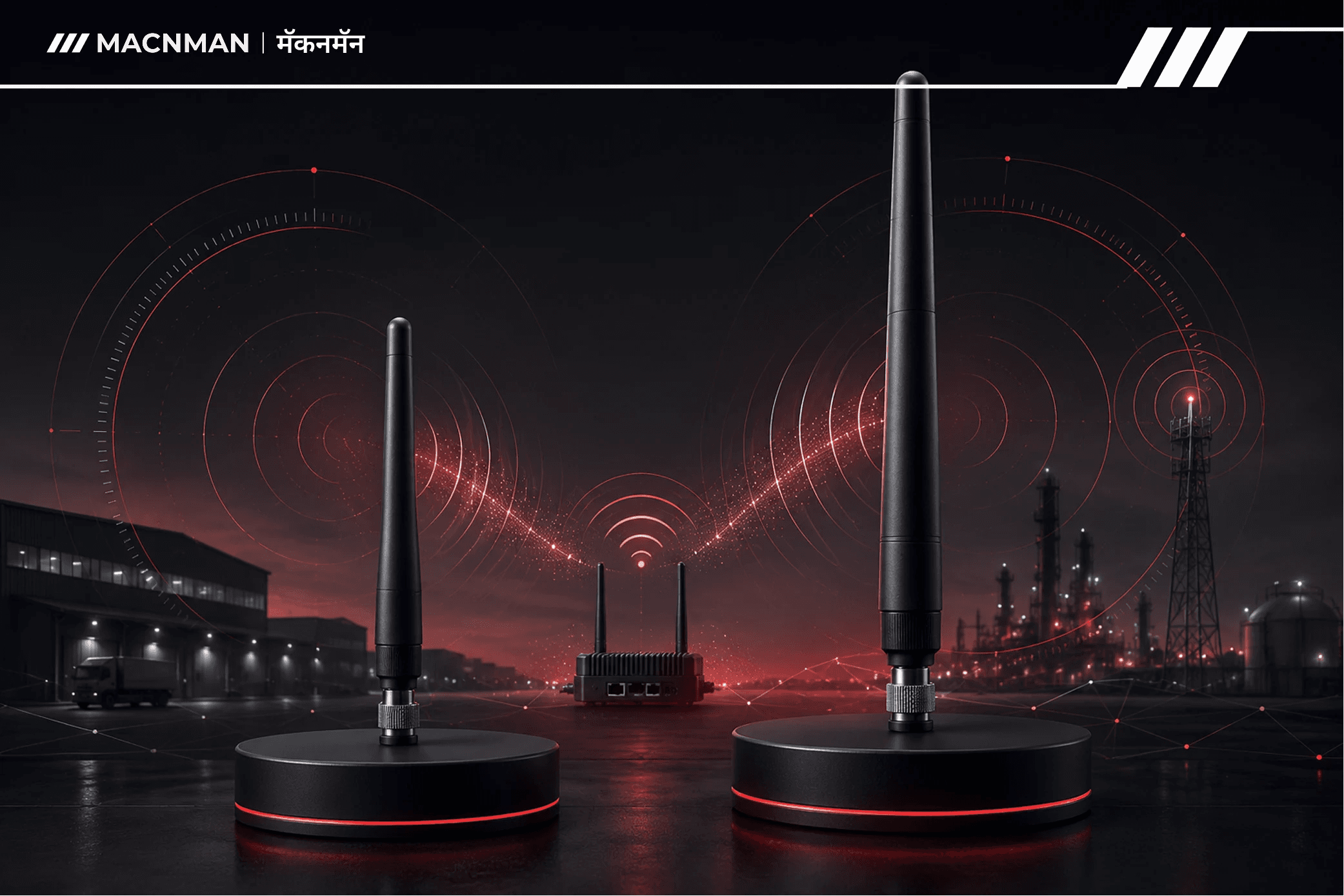
5 dBi vs 8 dBi LoRaWAN antenna comparison showing two omnidirectional antennas with different gain levels transmitting wireless signals from a LoRaWAN gateway in an industrial IoT environment.

Lorawan

Single-Channel vs Multi-Channel LoRaWAN Gateway: What's the Difference and How to Choose the Right One

A single-channel LoRaWAN gateway listens on one frequency and one spreading factor at a time, while a multi-channel LoRaWAN gateway receives across eight (or more) channels and all spreading factors simultaneously. That one difference cascades into everything that matters for a real deployment: standards compliance, device capacity, downlink support, and whether your gateway will even connect to a public network. This guide breaks down the difference between single-channel and multi-channel gateways, then walks you through how to choose the right LoRaWAN gateway for your application — channel count, concentrator chipset, environment, and network compatibility included. Here's the short version up front: for anything beyond learning the protocol on your own bench, you need a multi-channel gateway. The reasons are below.

5 dBi vs 8 dBi LoRaWAN antenna comparison showing two omnidirectional antennas with different gain levels transmitting wireless signals from a LoRaWAN gateway in an industrial IoT environment.

Lorawan

5 dBi vs 8 dBi LoRaWAN Antenna: Which Gain Actually Wins? [2026]

If you are specifying a LoRaWAN gateway, the antenna question usually collapses into a single reflex: pick the bigger number. An 8 dBi antenna must reach further than a 5 dBi one, so buy the 8. It is a clean story, and it is wrong often enough to sink real deployments. The truth behind the 5 dBi vs 8 dBi LoRaWAN antenna decision is that antenna gain is not a volume knob. It reshapes where your gateway can hear, not simply how loud it listens. Get the shape wrong and an 8 dBi antenna will happily radiate over the heads of the very sensors you installed it to serve. This guide breaks down the real 5 dBi vs 8 dBi antenna difference — radiation pattern, mounting height, cable loss, and the regulatory ceiling most comparisons ignore — so you can match gain to your site instead of to a spec sheet. The short answer Is an 8 dBi antenna always better than 5 dBi for LoRaWAN? No. An 8 dBi antenna concentrates energy into a flatter, narrower vertical beam, which extends range across open, flat terrain and long line-of-sight paths. A 5 dBi (or 5.8 dBi) antenna keeps a rounder, more forgiving pattern that covers uneven ground, nearby sensors, and obstructed suburban sites more reliably. Pick 8 dBi for rural, flat, line-of-sight coverage where the gateway sits high and the nodes are far away. Pick 5 dBi for suburban, mixed-elevation, or campus deployments where devices sit at varying heights and distances. On many real sites the 5.x dBi antenna is the safer default, and the higher-gain option only pays off once you have earned it with height and clear sight lines. What antenna gain actually means Before comparing the two, it helps to correct the mental model. Antenna gain, measured in dBi, does not add power the way an amplifier does. The radio outputs a fixed amount of energy; the antenna decides how that energy is distributed in space. Gain is a measure of directionality, not amplification. A higher-gain antenna simply takes the same energy and squeezes it into a tighter shape — more in the favored direction, less everywhere else. The "i" in dBi means the gain is referenced to a theoretical isotropic radiator, a perfect point source that radiates equally in all directions. You will occasionally see gain quoted in dBd instead, referenced to a half-wave dipole. The two differ by a fixed offset: a dipole has about 2.15 dBi of gain, so dBi = dBd + 2.15. When you compare antennas, make sure you are comparing the same reference — a "6 dBd" antenna is really around 8.15 dBi. Here is the part that reframes the whole comparison. Decibels are logarithmic, and roughly every 3 dB doubles the power in the antenna's main direction. The gap between 5 dBi and 8 dBi is exactly 3 dB. So in its peak direction, an 8 dBi antenna radiates about twice the effective power of a 5 dBi one — but only inside a narrower cone. That doubling is not free. It is borrowed from the coverage the antenna gives up above and below its main lobe.

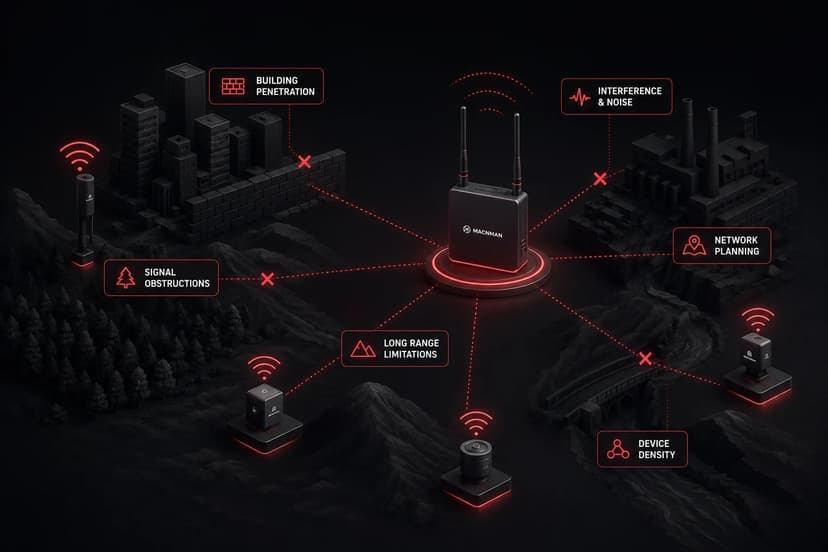
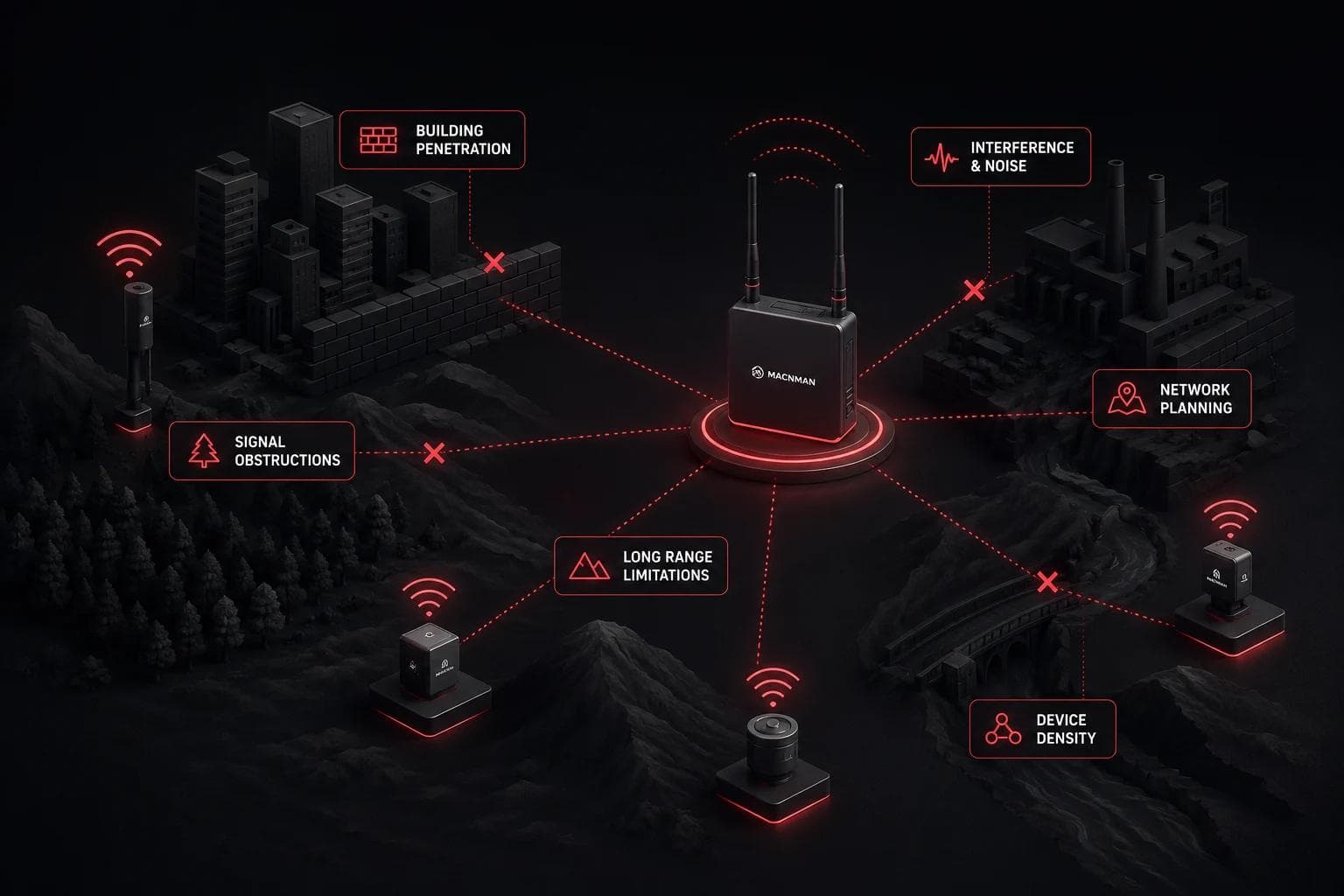
Dark isometric illustration showing the real challenges of deploying a LoRaWAN network, including signal interference, building penetration, network planning, device density, and long-range communication in an industrial environment.

Lorawan

The Real Challenges of Deploying a LoRaWAN Network (and How to Design Around Them)

LoRaWAN is one of the easiest low-power wide-area networks to start with and one of the easiest to underestimate. A single gateway can cover several kilometres and serve hundreds of devices, which makes a pilot look effortless. The problems arrive later — at scale, indoors, in dense RF environments, or when the finance team asks what the network actually costs to own. This guide walks through the real challenges in deploying a LoRaWAN network: not a textbook list of pros and cons, but the constraints that bite in the field, why each one exists at an architectural level, and how to design around it. If you're still choosing between protocols, start with our LoRaWAN vs NB-IoT vs LTE-M vs BLE vs Wi-Fi comparison. If you've already committed to LoRaWAN, this is the piece that de-risks your rollout.

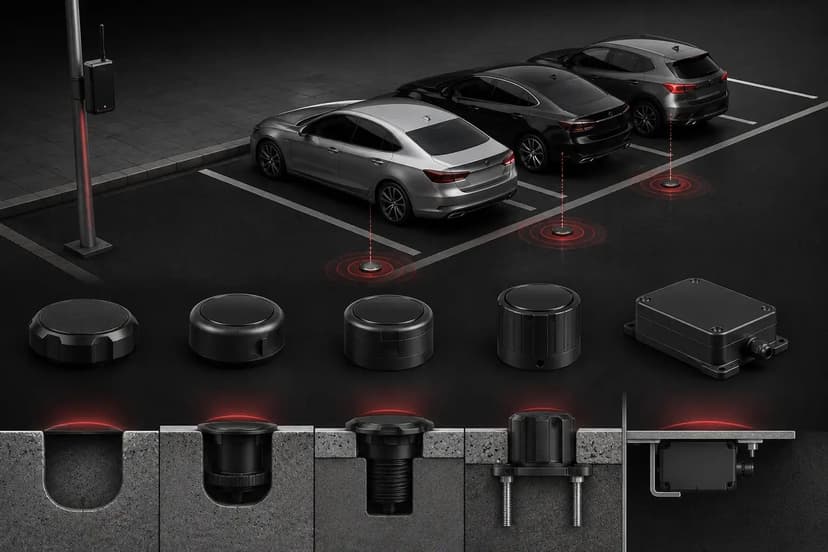
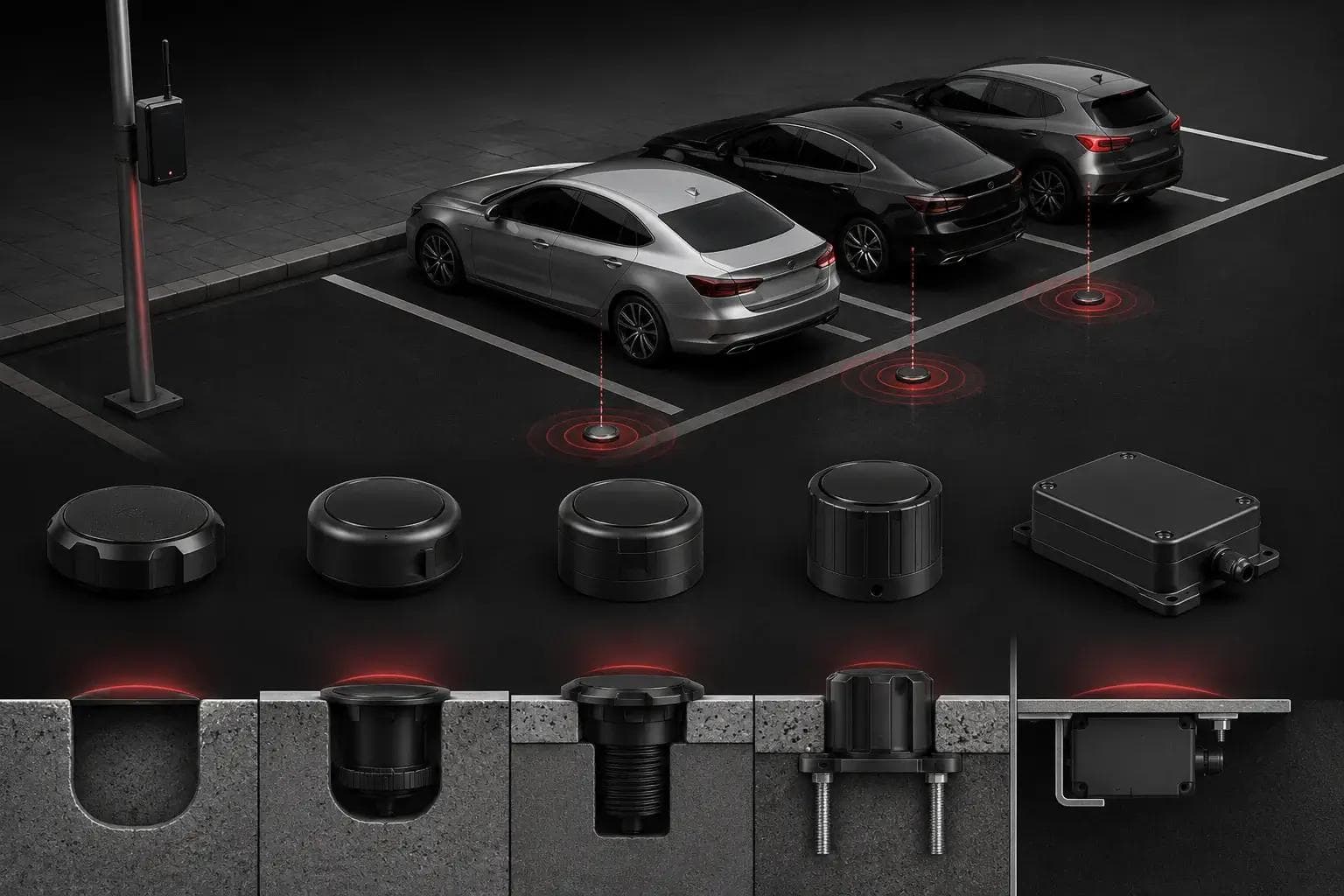
3D illustration showing different smart parking sensor types, installation methods, and mounted parking occupancy sensors used in modern smart parking management systems.

Lorawan

How to Choose a Smart Parking Sensor: Types & Mounting Guide

Choosing a smart parking sensor looks simple until you open a dozen vendor datasheets and realise every one claims to be the best. The truth is that there is no single best parking sensor — there is only the right sensor for your surface, climate, traffic, and budget. Pick well and you get years of accurate, maintenance-free occupancy data. Pick badly and you inherit false readings, dead batteries, and a car park full of sensors that need re-coring. This guide is built to prevent that. It is a vendor-neutral parking sensor selection guide that walks through the two decisions you are actually making, compares the real options on each, and then gives you a use-case matrix so you can match a sensor to your exact deployment. One quick scope note before we start: this is about smart parking and vehicle detection sensors — the IoT devices that sit in a parking bay and report whether it is occupied. It is not about the ultrasonic reversing sensors in a car bumper. Different problem, different hardware.

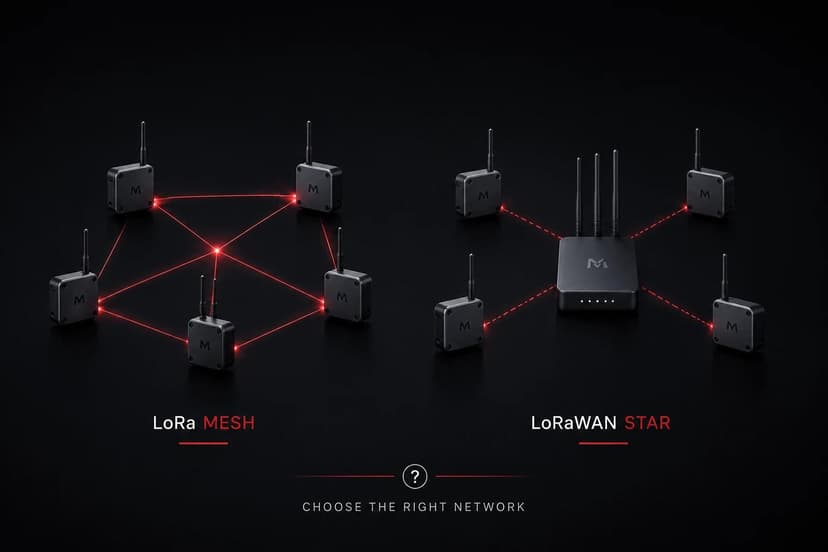
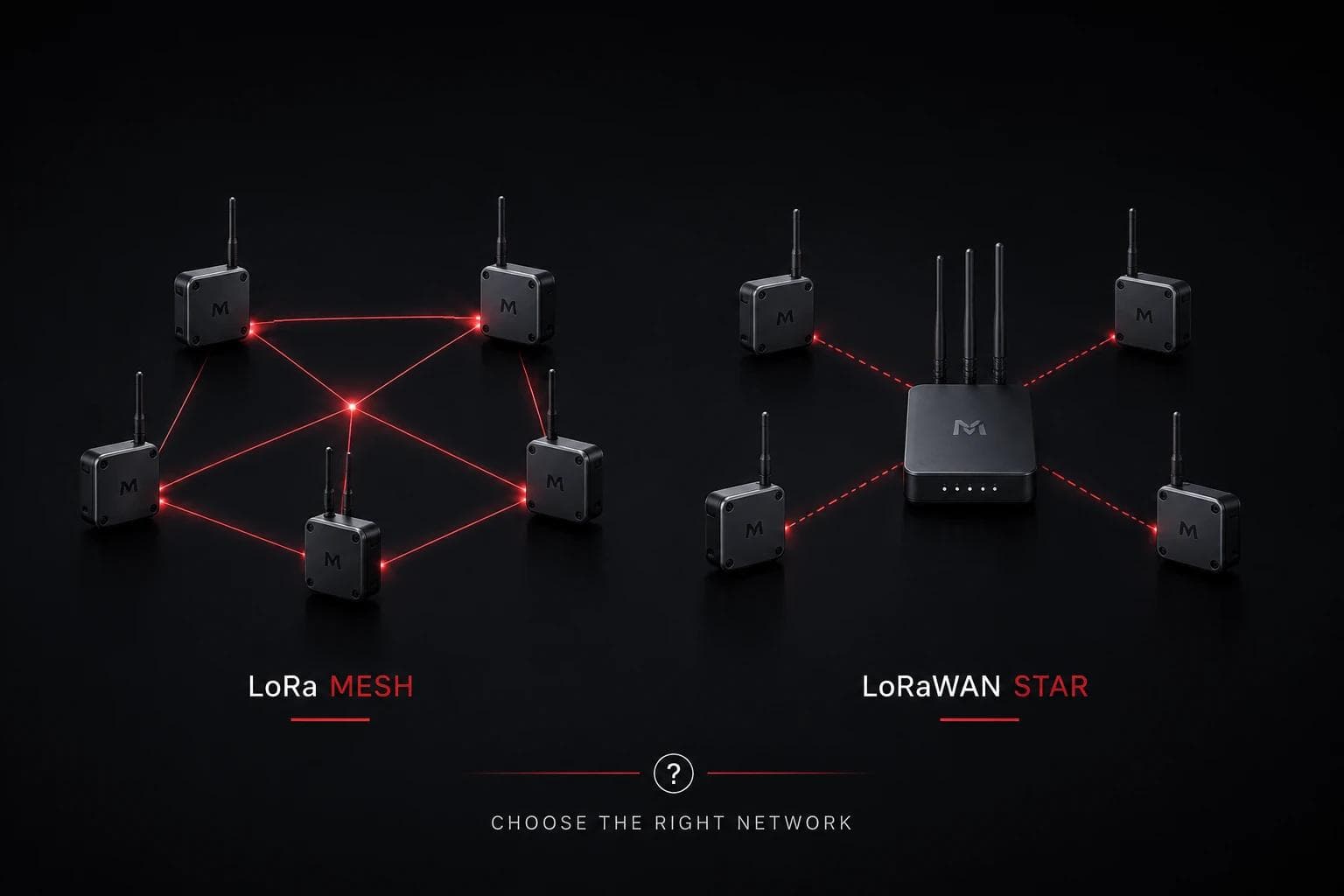
Minimal comparison illustration showing LoRa Mesh and LoRaWAN Star network topologies on a dark background, highlighting decentralized mesh communication versus centralized gateway architecture for industrial IoT deployments.

Lorawan

LoRa Mesh vs LoRaWAN Star: When to Use Each (An Engineer's Decision Guide)

If you've searched for "LoRaWAN mesh vs LoRaWAN star," the first thing worth clearing up is that one half of that phrase doesn't technically exist. LoRaWAN is a star topology — a star-of-stars, to be precise. The specification permits only a single hop between an end device and a gateway. There is no native mesh mode in the LoRaWAN standard. So the real question almost everyone is asking is this: should I use LoRaWAN's star topology, or a LoRa mesh network? Both run on the same Semtech radio silicon, both give you long range at low power, and their names are close enough to cause genuine confusion. But they impose completely different rules on every node in your network, and picking the wrong one shows up later as dead batteries, dropped packets, or a maintenance bill nobody budgeted for. This guide breaks down how each topology actually works, where each one wins, and — most importantly — gives you a decision framework you can apply to a real deployment instead of a generic pros-and-cons list.

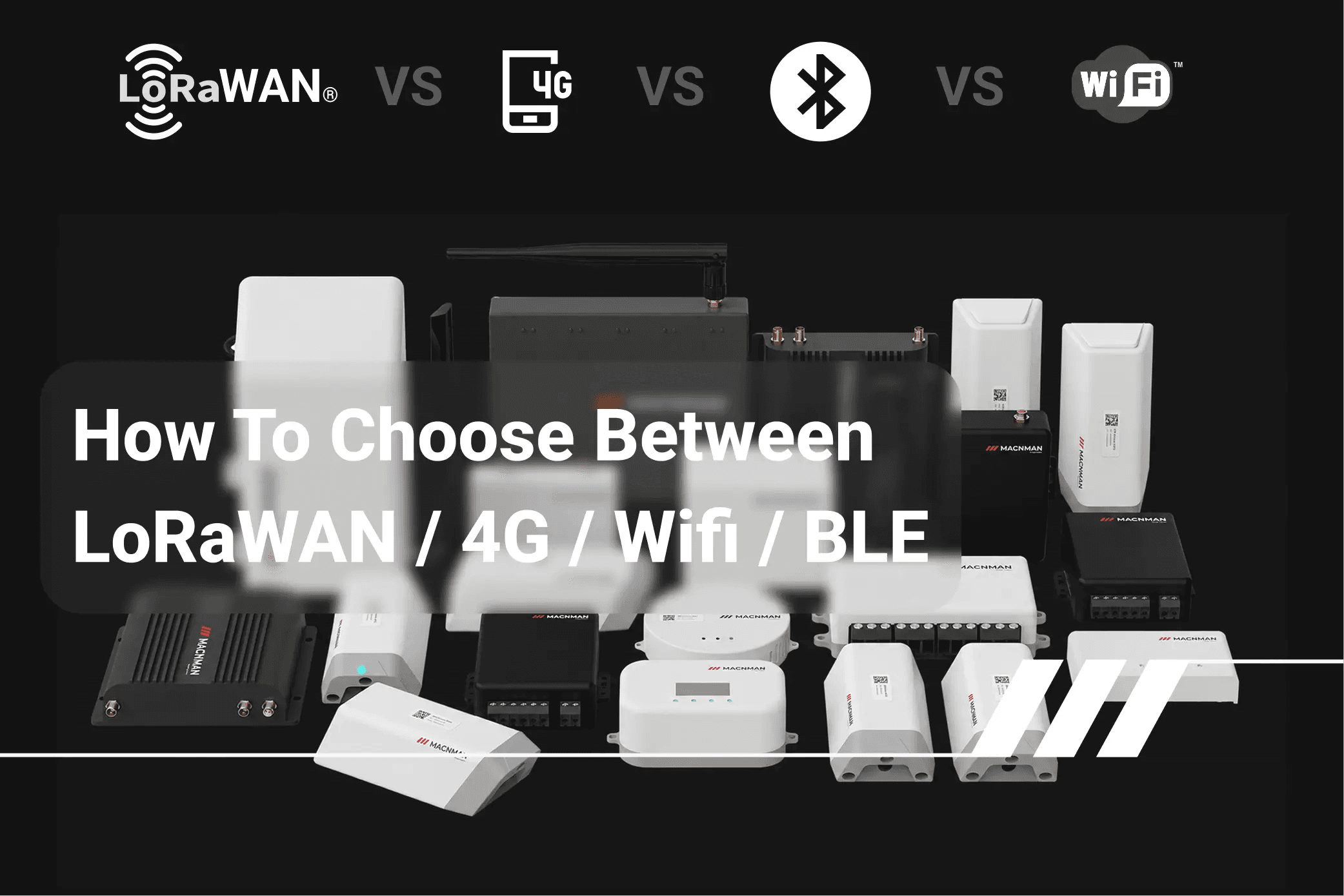
Comparison of LoRaWAN, 4G, NB-IoT, and BLE wireless technologies for industrial IoT connectivity, highlighting their strengths, coverage, power consumption, and use cases.

Lorawan

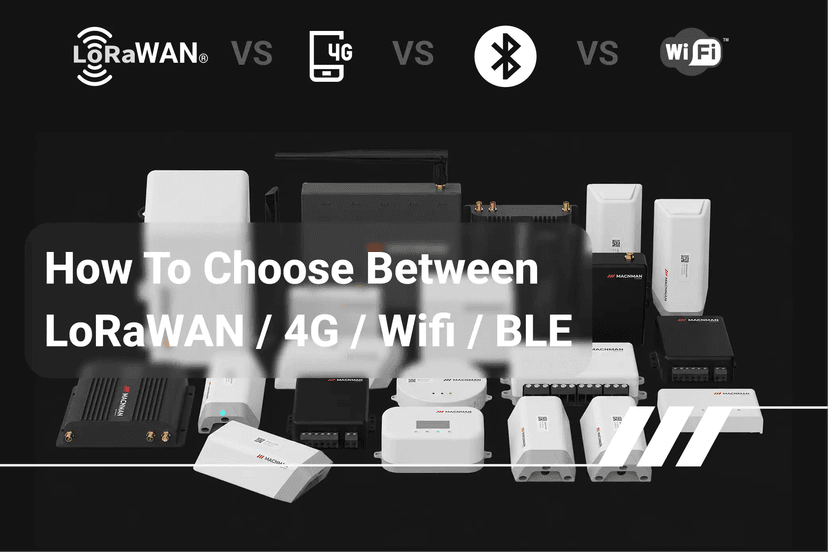
LoRaWAN vs 4G vs NB-IoT vs BLE: Which IoT Connectivity to Choose (Use-Case Guide)

Pick the wrong wireless technology for an IoT deployment and you don't find out cheaply. You find out after the sensors are already in the field — when battery life turns out to be months instead of years, when a device on a moving asset keeps dropping off the network, or when the per-device data bill quietly eats the project's margin. Swapping radios after the fact means truck rolls, re-certification, and in some cases buying the hardware twice. That's the real reason this decision matters. LoRaWAN, 4G/LTE, NB-IoT, and BLE all show up in the same vendor pitches, and it's easy to choose one by hype or by whatever a single supplier happens to sell. This guide does the opposite: it compares them on the factors that actually decide whether a deployment works — range, power and battery life, bandwidth, cost, latency, and who owns the infrastructure — and then maps each technology to the use cases it genuinely fits. First, an important reframe: these aren't all competing for the same job Before the comparison table, one distinction that saves a lot of confusion. Three of these four are wide-area technologies. LoRaWAN, NB-IoT, and 4G/LTE are all designed to move data across long distances — from a sensor in a field or a meter in a basement back to a network. BLE (Bluetooth Low Energy) is the odd one out: it's a short-range, peer-to-peer technology, typically effective from a few metres up to around a hundred metres in open space. So the honest framing isn't "which one wins." It's which layer of the problem you're solving. BLE handles the short hop — device to phone, sensor to nearby gateway. LoRaWAN and NB-IoT handle long-range, low-power telemetry. 4G handles high-bandwidth links where you're moving real volumes of data or need low latency. Many well-designed systems use two of them together, and we'll cover those combinations near the end. Keep that in mind as you read the comparison, because a spec that looks like a "weakness" (BLE's short range) is really just the technology doing a different job.

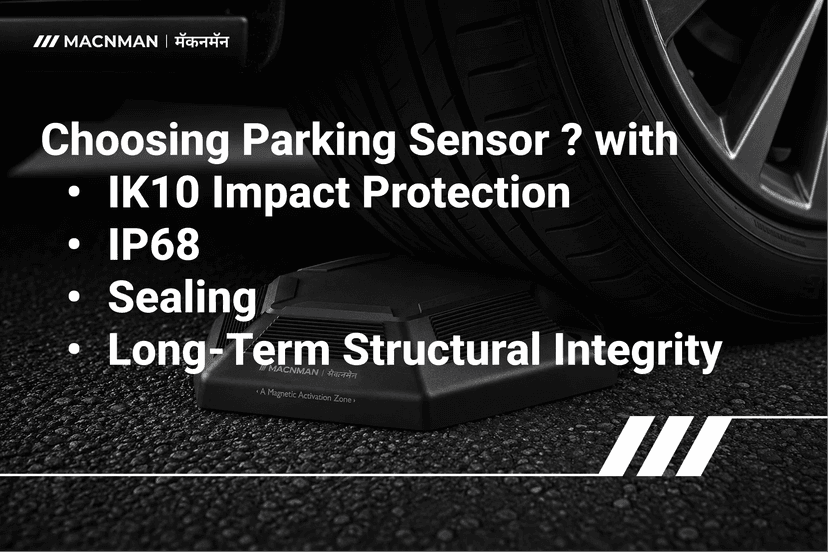
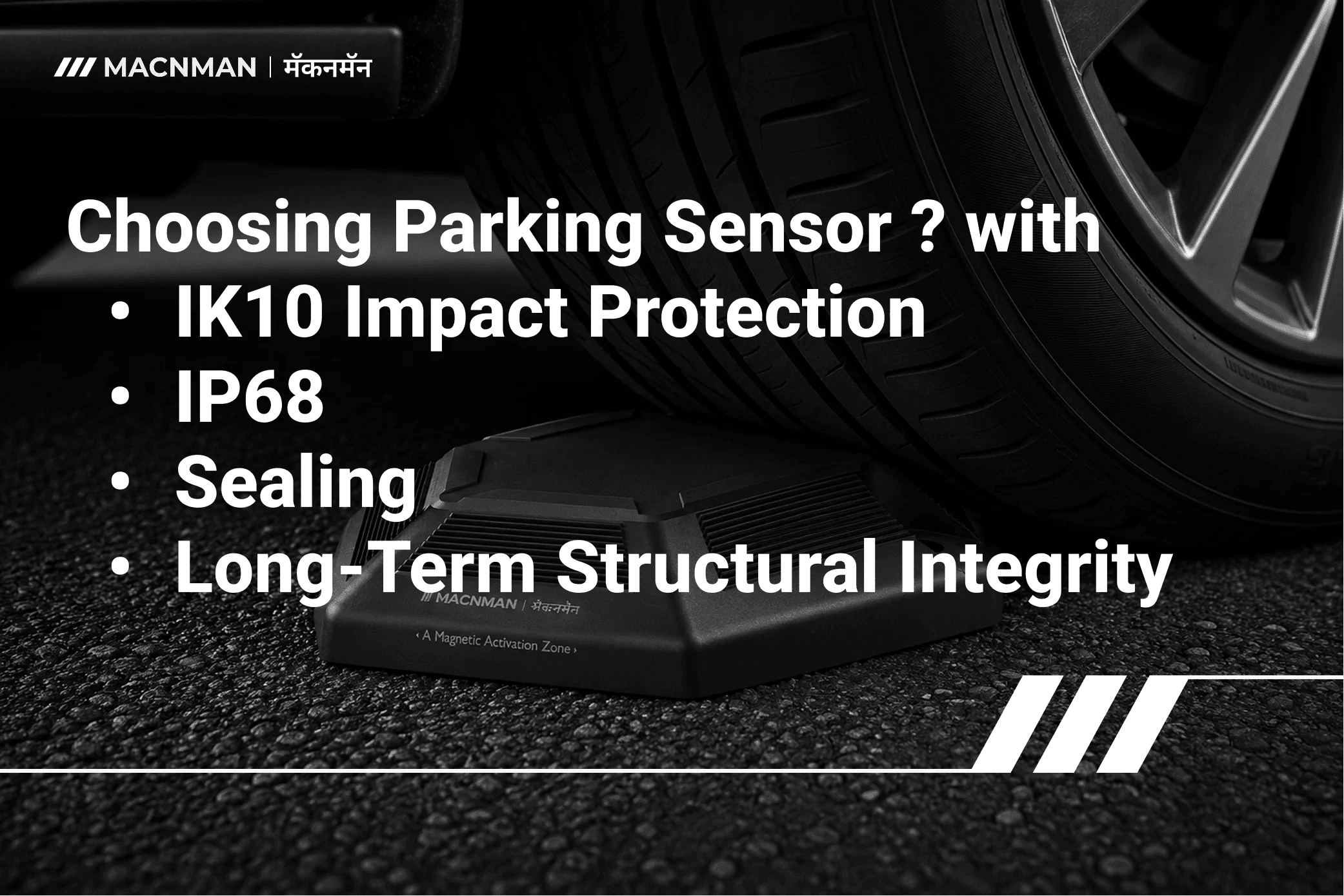
Surface-mounted LoRaWAN parking sensor withstanding vehicle tire pressure, highlighting its load-bearing capacity, rugged enclosure, and structural durability for smart parking deployments.

Lorawan

Surface-Mounted LoRaWAN Parking Sensors: Load-Bearing Capacity, Material Engineering, and Structural Design for Long-Term Urban Deployments

Surface-mounted parking sensors eliminate one of the largest cost drivers in smart parking projects: pavement excavation. Without core drilling, trenching, or extensive road restoration, municipalities can deploy hundreds or thousands of parking bays in a fraction of the time required for flush-mounted alternatives. The engineering trade-off is straightforward—every sensor now sits directly in the tire path and must survive years of repeated mechanical loading. A parking sensor is no longer just an electronic device; it becomes a structural component of the roadway. Every vehicle that enters or exits a parking space transfers compression forces, shear forces, rolling impacts, and torsional stress directly into the enclosure. The surface mount parking sensor load capacity therefore becomes one of the primary indicators of network longevity, maintenance costs, and return on investment. For infrastructure owners planning deployments expected to operate for eight to ten years, evaluating wireless performance alone is insufficient. Mechanical engineering determines whether the sensor continues transmitting data—or fails after only a few months of daily traffic.

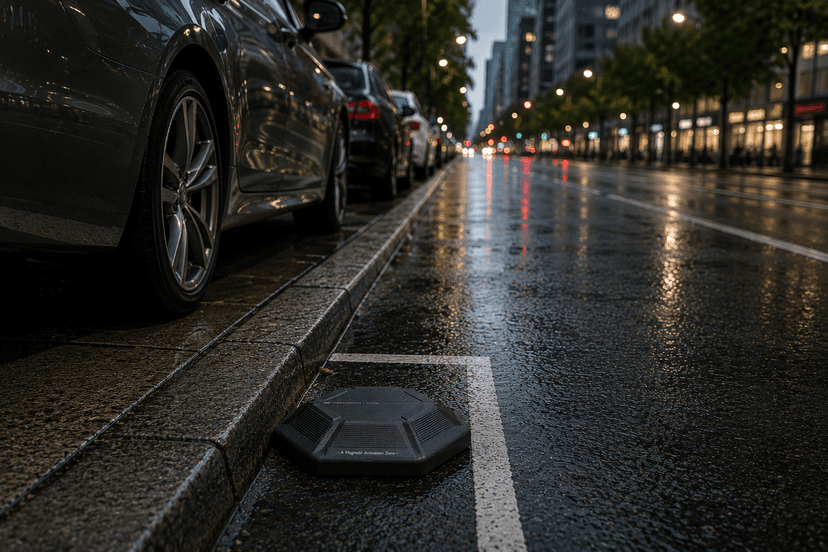
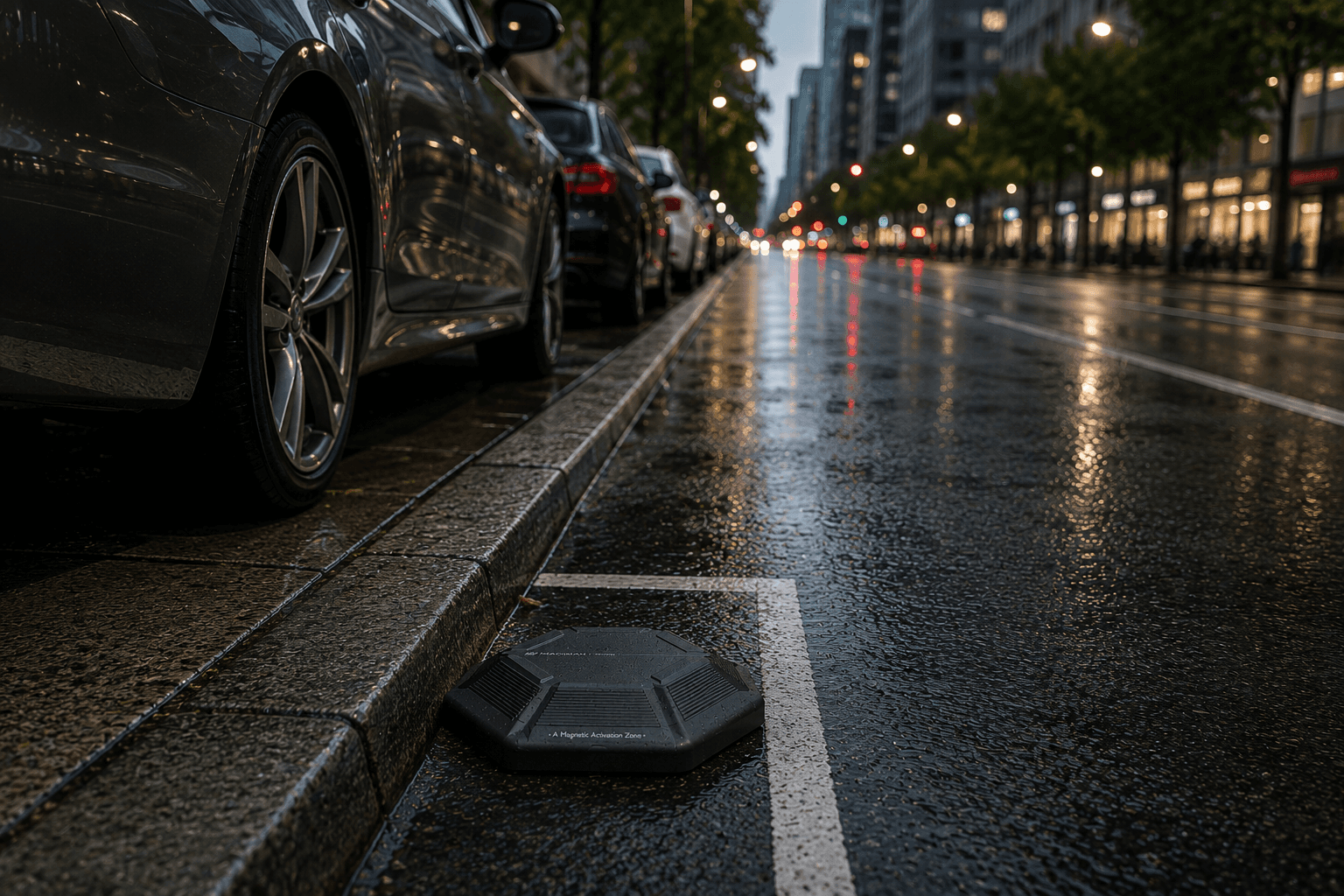
LoRaWAN geomagnetic parking sensor installed on a smart city curbside parking bay for real-time parking occupancy monitoring and revenue generation.

Lorawan

LoRaWAN Geomagnetic Parking Sensors for Smart City Revenue Generation

Municipal parking is one of the few public assets capable of generating predictable, recurring revenue every day. Yet many cities continue to operate parking infrastructure with limited visibility into what is actually happening on the street. Vehicles overstay without detection, enforcement teams patrol empty blocks while violations occur elsewhere, and parking prices remain fixed despite significant fluctuations in demand throughout the day. These inefficiencies quietly reduce municipal income. Every undetected violation, every underpriced premium parking space, and every minute spent searching for an available parking bay contributes to revenue leakage. For finance departments, this translates into lower collections. For traffic engineers, it creates unnecessary congestion. For urban mobility planners, it limits the ability to make informed, data-driven decisions. The challenge is not a lack of parking demand—it is a lack of actionable intelligence. Modern LoRaWAN geomagnetic parking sensors address this challenge by converting individual parking bays into connected digital assets. Installed directly on or beneath the road surface, these low-power sensors continuously detect vehicle occupancy and transmit real-time status updates through a LoRaWAN network. Instead of relying on periodic manual inspections, municipalities gain continuous visibility into parking occupancy across every monitored location. This stream of real-time parking occupancy analytics enables a fundamental shift in how curbside parking is managed. Enforcement teams receive live violation alerts rather than following fixed patrol routes. Pricing policies can respond dynamically to changing demand. Drivers can be guided directly to available spaces, reducing congestion caused by unnecessary circulation. Historical occupancy trends become valuable planning data for infrastructure investments, policy development, and commercial partnerships. The result is a parking ecosystem that generates higher revenue, improves operational efficiency, and supports broader smart city initiatives without requiring extensive civil infrastructure or high-maintenance hardware. This article explores how LoRaWAN parking sensors help municipalities reduce parking leakage, improve operational performance, and unlock new opportunities for smart city parking revenue generation through continuous real-time visibility.

Industrial RS485 Modbus to LoRaWAN converter bridging legacy factory equipment with modern wireless IoT connectivity for Industry 4.0 automation.

Lorawan

Bridging the Gap: How RS485 Modbus to LoRaWAN Converters Modernize Legacy Factories

Walk into almost any manufacturing plant, pharmaceutical facility, food processing unit, automotive factory, or utility installation, and you'll notice something interesting: most of the equipment isn't new. Industrial assets are designed to operate reliably for decades, making complete equipment replacement both financially impractical and operationally disruptive. Industry analysts consistently estimate that a significant majority of industrial equipment currently in operation was installed long before Industrial IoT became mainstream. These Brownfield factories contain fully functional PLCs, energy meters, variable frequency drives (VFDs), CNC machines, flow meters, pressure transmitters, and industrial controllers that continue to perform their intended functions exceptionally well. The problem is not their operational capability—it's their inability to participate in modern digital transformation initiatives. Replacing a perfectly functional CNC machine or industrial production line simply to gain cloud connectivity can cost tens or even hundreds of thousands of dollars, not including production downtime, engineering validation, commissioning, and operator retraining. This is where an RS485 Modbus to LoRaWAN converter fundamentally changes the modernization strategy. Instead of replacing proven industrial equipment, organizations can simply install a compact protocol conversion device that acts as a digital bridge between legacy serial communication and modern long-range wireless networking. The converter translates industrial Modbus RTU communication into efficient LoRaWAN packets, allowing decades-old machines to become fully integrated Smart Factory assets without changing their existing control systems. The result is a practical modernization approach that minimizes capital expenditure while enabling predictive maintenance, energy monitoring, production analytics, and centralized Industrial IoT visibility.

LoRaWAN geo-magnetic parking sensor installed at an airport terminal curbside for real-time unauthorized parking detection, fire lane monitoring, and smart airport traffic management.

Lorawan

How LoRaWAN Geo-Magnetic Parking Sensors Help Airports Eliminate Unauthorized Parking, Improve Curbside Traffic Management, and Enhance Aviation Safety

Modern airports are no longer just transportation hubs—they are highly orchestrated ecosystems where every vehicle movement directly impacts passenger experience, aviation safety, operational efficiency, and airport revenue. Every day, thousands of private vehicles, airport taxis, buses, rideshare services, airline crew vehicles, emergency responders, and Ground Support Equipment (GSE) compete for limited roadway space around terminals, parking facilities, cargo zones, and airside operations. Unlike shopping malls, commercial complexes, or municipal parking facilities, airports operate within an environment where every second of roadway occupancy matters. A single unauthorized vehicle parked in a terminal drop-off lane, fire lane, or service corridor can trigger a chain reaction of congestion that affects passenger flow, delays shuttle services, obstructs emergency access routes, and disrupts critical airport operations. As global passenger traffic continues to rise, airport operators face increasing pressure to optimize curbside traffic, enforce parking regulations, strengthen security, and improve operational efficiency without undertaking expensive civil infrastructure projects. Expanding roadways or constructing additional parking structures requires significant capital investment, years of planning, and operational disruption. Consequently, airports are increasingly adopting intelligent digital infrastructure that enhances the efficiency of existing assets rather than relying solely on physical expansion. One of the most impactful technologies driving this transformation is the LoRaWAN geo-magnetic parking sensor. By combining ultra-low-power sensing, long-range wireless communication, and real-time occupancy intelligence, these sensors enable airports to automatically detect unauthorized parking, monitor fire lanes, optimize commercial parking occupancy tracking, and streamline airport terminal curbside traffic management across large and complex aviation environments. Rather than relying on manual patrols or continuously monitoring dozens of CCTV screens, airport operations teams gain immediate visibility into parking violations and occupancy changes, allowing them to respond proactively before minor issues escalate into major operational disruptions. This comprehensive guide explores how LoRaWAN geo-magnetic parking sensors are transforming airport parking management, enhancing aviation safety, reducing operational costs, and supporting the next generation of smart airport infrastructure.

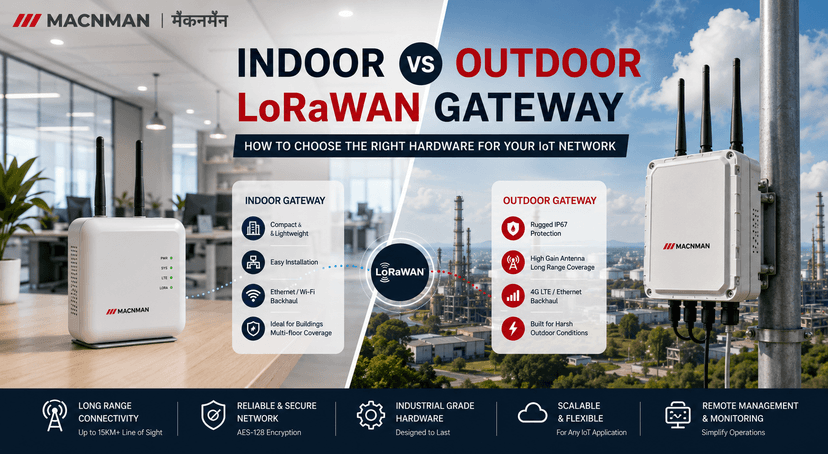
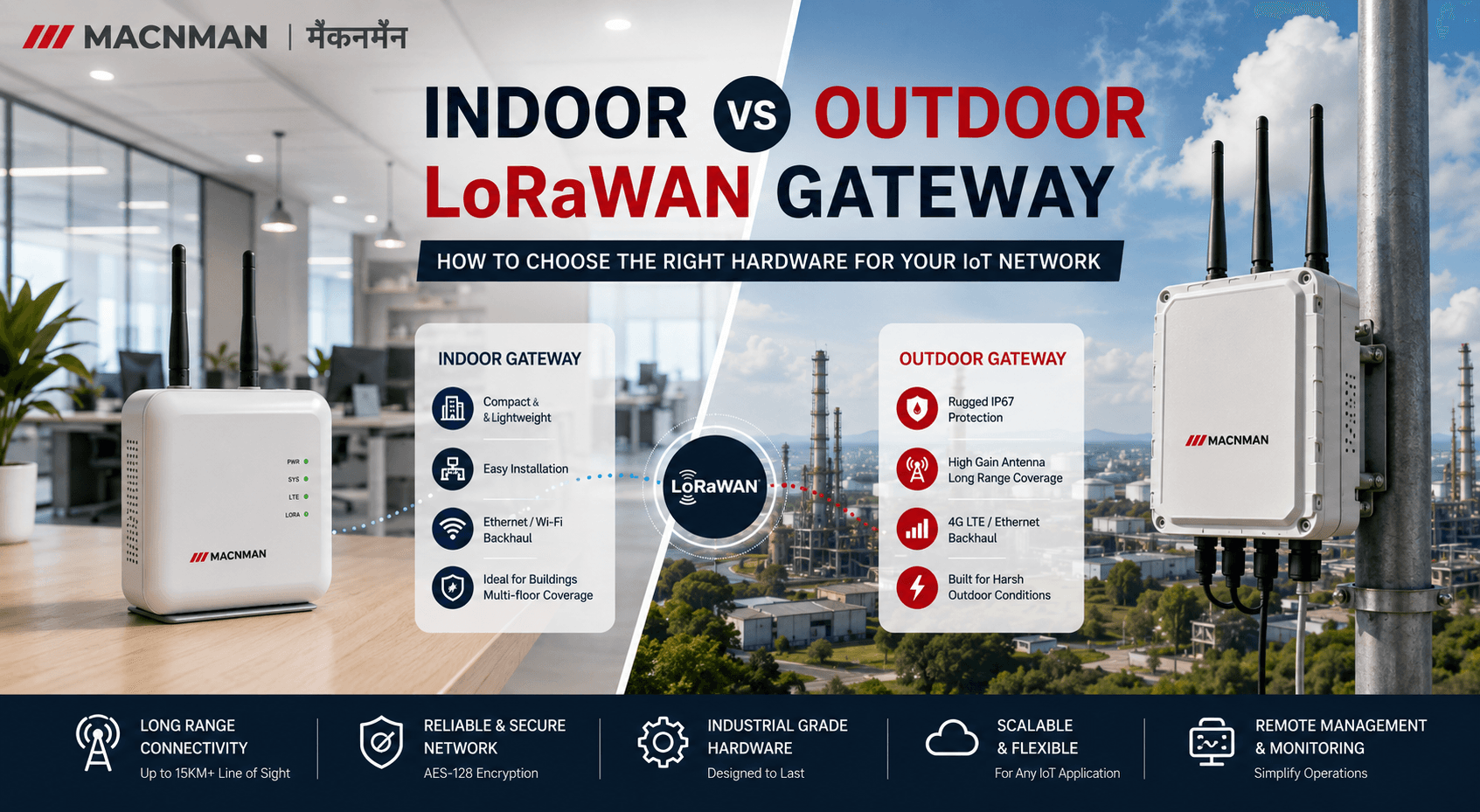
Comparison of indoor and outdoor LoRaWAN gateways showing deployment environments, IP ratings, coverage characteristics, and industrial use cases for enterprise IoT networks.

Lorawan

Indoor vs Outdoor LoRaWAN Gateway: How to Choose the Right LoRaWAN Gateway

Choosing the wrong LoRaWAN gateway causes severe signal loss and structural failure. Learn how to select the right indoor or outdoor LoRaWAN gateway based on RF coverage, environmental conditions, and industrial deployment requirements.

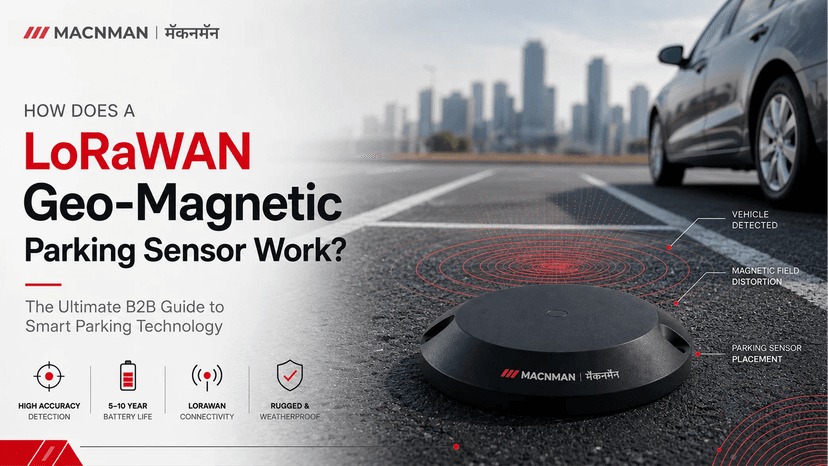
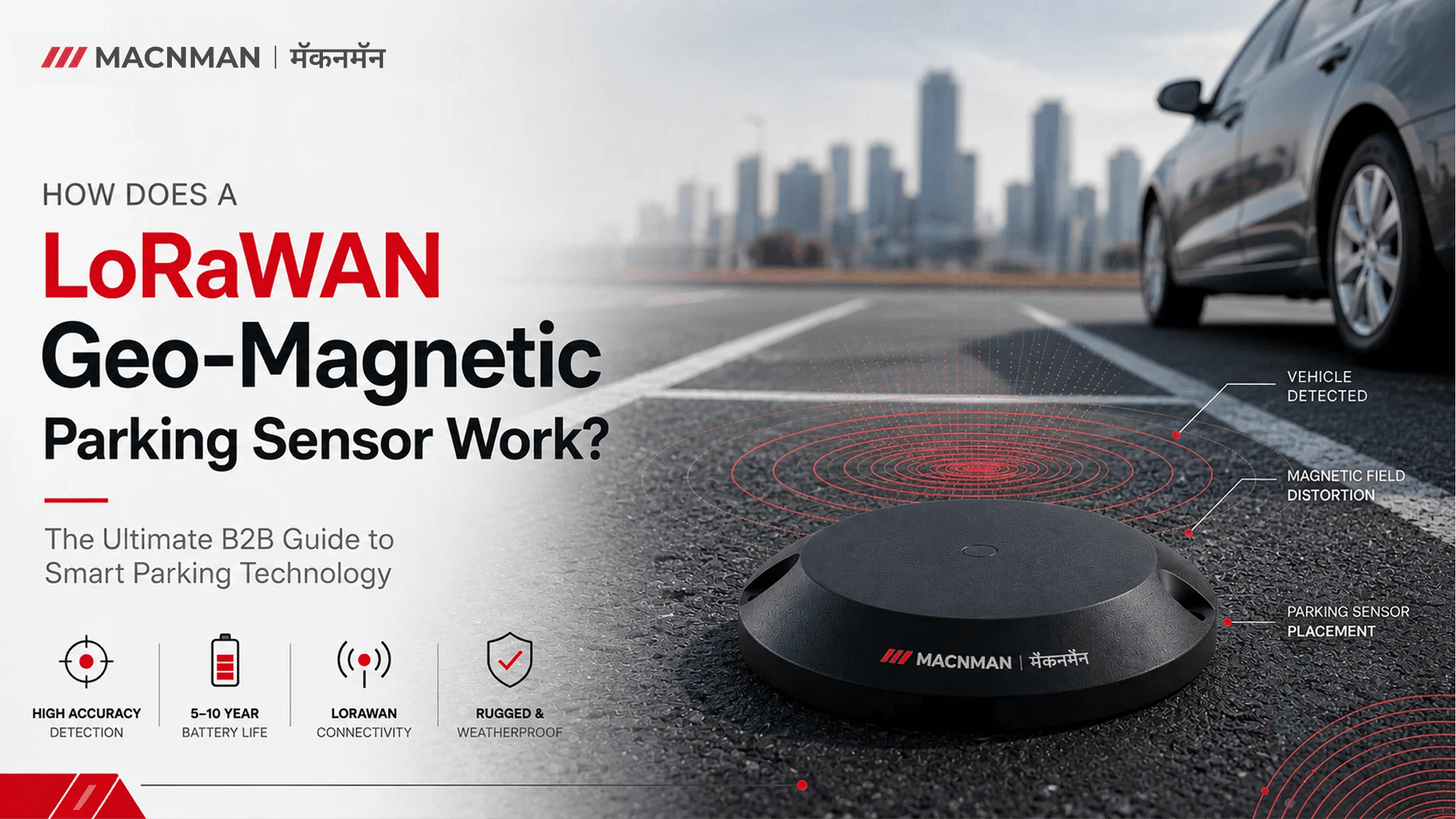
LoRaWAN geo-magnetic parking sensor detecting vehicle occupancy using magnetic field distortion for smart parking management and commercial parking occupancy tracking.

Lorawan

How Does a LoRaWAN Geo-Magnetic Parking Sensor Work? The Ultimate B2B Guide to Smart Parking Technology

Finding an available parking space has become one of the most persistent challenges in modern urban mobility. As cities continue to expand and vehicle ownership increases, parking infrastructure has struggled to keep pace. Drivers often spend several minutes circulating parking lots or city streets searching for an empty bay, creating unnecessary traffic congestion, fuel consumption, carbon emissions, and driver frustration. For municipalities, commercial real estate operators, airports, hospitals, shopping malls, universities, and smart city planners, inefficient parking management represents more than just an inconvenience—it translates directly into operational inefficiencies, reduced customer satisfaction, and lost revenue opportunities. Traditional parking monitoring technologies such as inductive loop detectors, ticketing systems, and CCTV-based analytics have attempted to solve this problem for decades. However, these approaches often require significant infrastructure investments, continuous maintenance, extensive cabling, or sophisticated image processing systems. Camera-based solutions may also introduce privacy concerns and can experience reduced accuracy under poor lighting, heavy rain, fog, snow, or physical obstructions. The emergence of the LoRaWAN geo-magnetic parking sensor has transformed the way parking occupancy is monitored. Rather than relying on cameras or embedded loop detectors, these compact IoT devices detect subtle disturbances in the Earth's magnetic field caused by the presence of a vehicle. Combined with the ultra-low-power communication capabilities of LoRaWAN, these sensors provide accurate, scalable, and cost-effective commercial parking occupancy tracking for deployments ranging from a few dozen parking bays to city-wide smart parking networks. Unlike conventional systems that require continuous power or bandwidth-intensive video streaming, a LoRaWAN parking sensor transmits only occupancy events. This event-driven communication model significantly reduces energy consumption, enabling battery lifetimes that often exceed five years and, in optimized deployments, can approach ten years without maintenance. For organizations evaluating smart parking solutions, understanding how these sensors operate—from the underlying physics of geomagnetic detection to the wireless communication architecture—is essential for making informed procurement decisions. This guide explores the technology in detail, helping infrastructure planners and decision-makers evaluate where geo-magnetic sensing delivers the greatest operational and financial value.

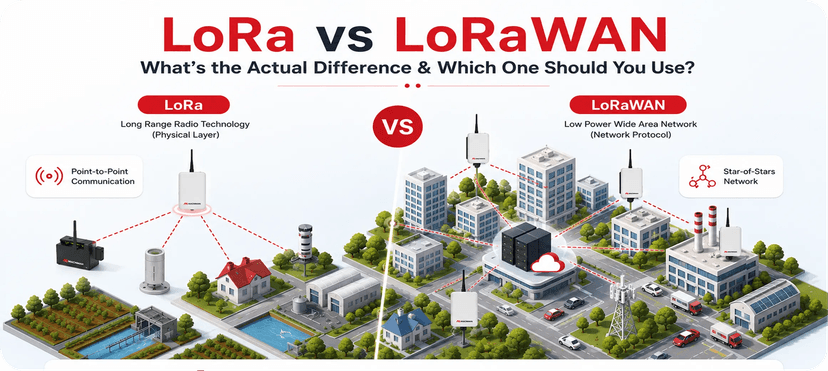
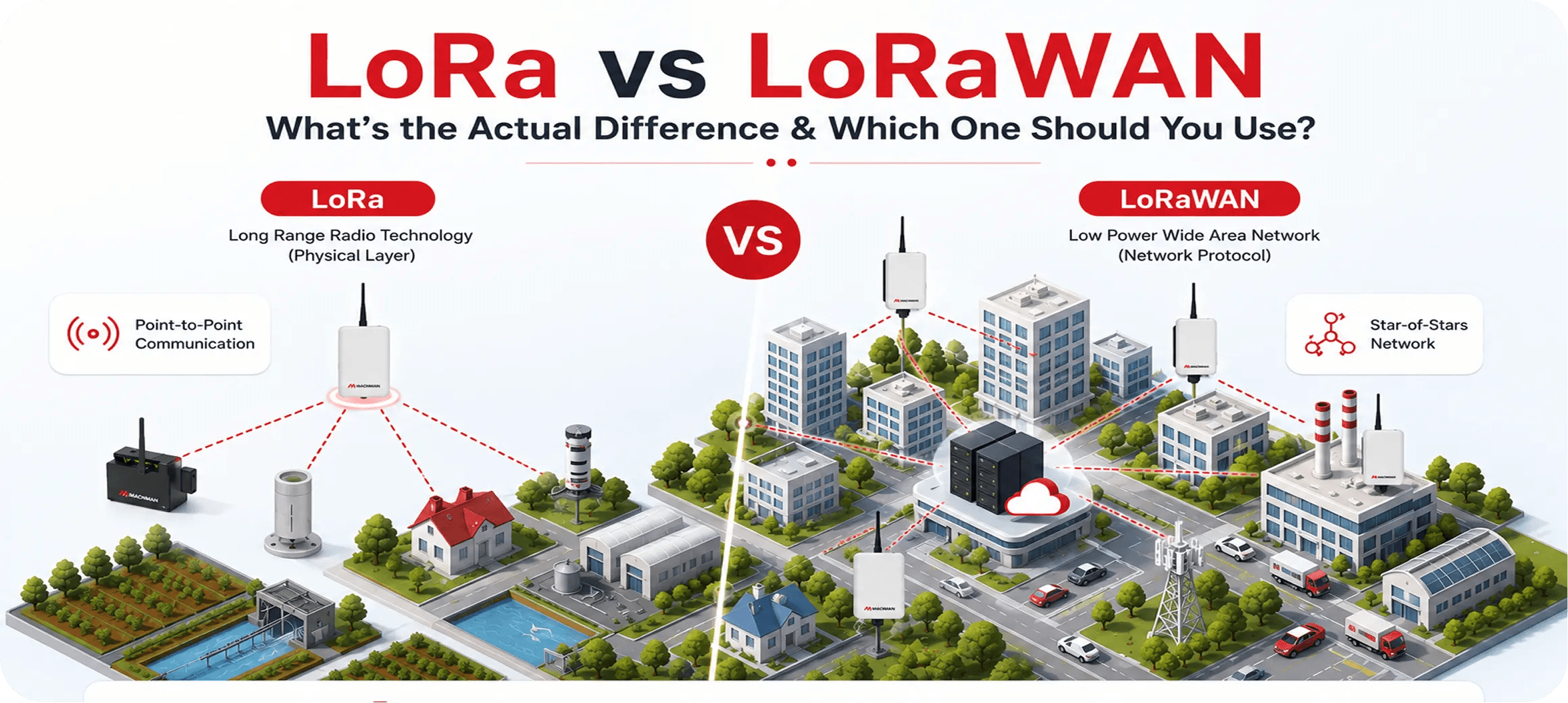
Isometric comparison of LoRa vs LoRaWAN showing point-to-point LoRa communication and scalable LoRaWAN network architecture with gateways, cloud connectivity, and Industrial IoT devices.

Lorawan

LoRa vs LoRaWAN: What’s the Real Difference? (2026 Guide)

In the rapidly evolving world of the Industrial Internet of Things (IIoT) and Low-Power Wide-Area Networks (LPWAN), terms like LoRa and LoRaWAN are frequently tossed around interchangeably. Technical datasheets, marketing brochures, and system integration specs regularly conflate the two, leaving field engineers, automation professionals, and enterprise procurement managers with a fundamental point of confusion: If I am buying a LoRa sensor, am I automatically deploying a LoRaWAN network? The short answer is no. Conflating LoRa with LoRaWAN is a bit like confusing an Ethernet cable with the global internet protocol (TCP/IP) suite. One is a physical link engineered to carry raw electrical pulses over a specific medium; the other is a massive, standardized network architecture that governs how millions of devices securely talk to each other across the globe. Misunderstanding this structural divide can lead to costly mistakes. Selecting the wrong layer can bottleneck an industrial deployment, result in severe data packet collisions, compromise field security, or trap an organization inside an unscalable, proprietary island. This deep dive dissolves the confusion. We will dissect the technical mechanics of both technologies, explore their underlying architectures, contrast their capabilities in a side-by-side engineering breakdown, and provide a clear framework to determine which solution fits your precise operational parameters.

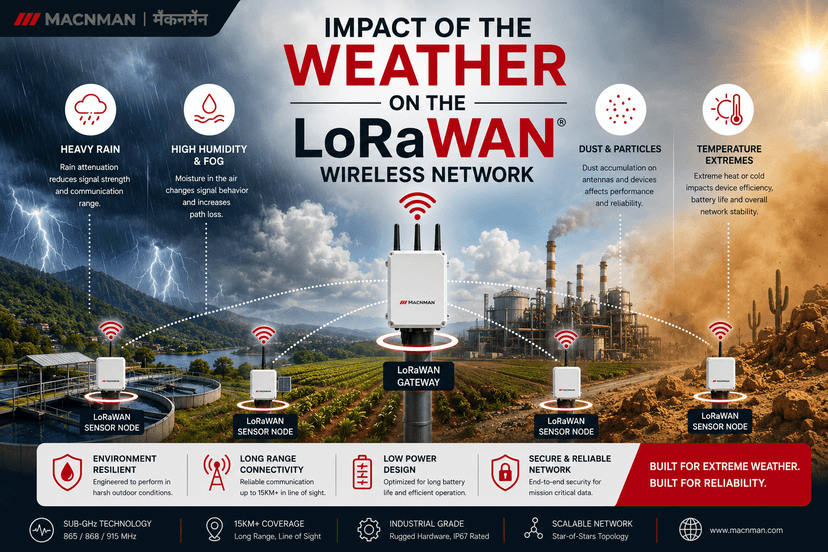
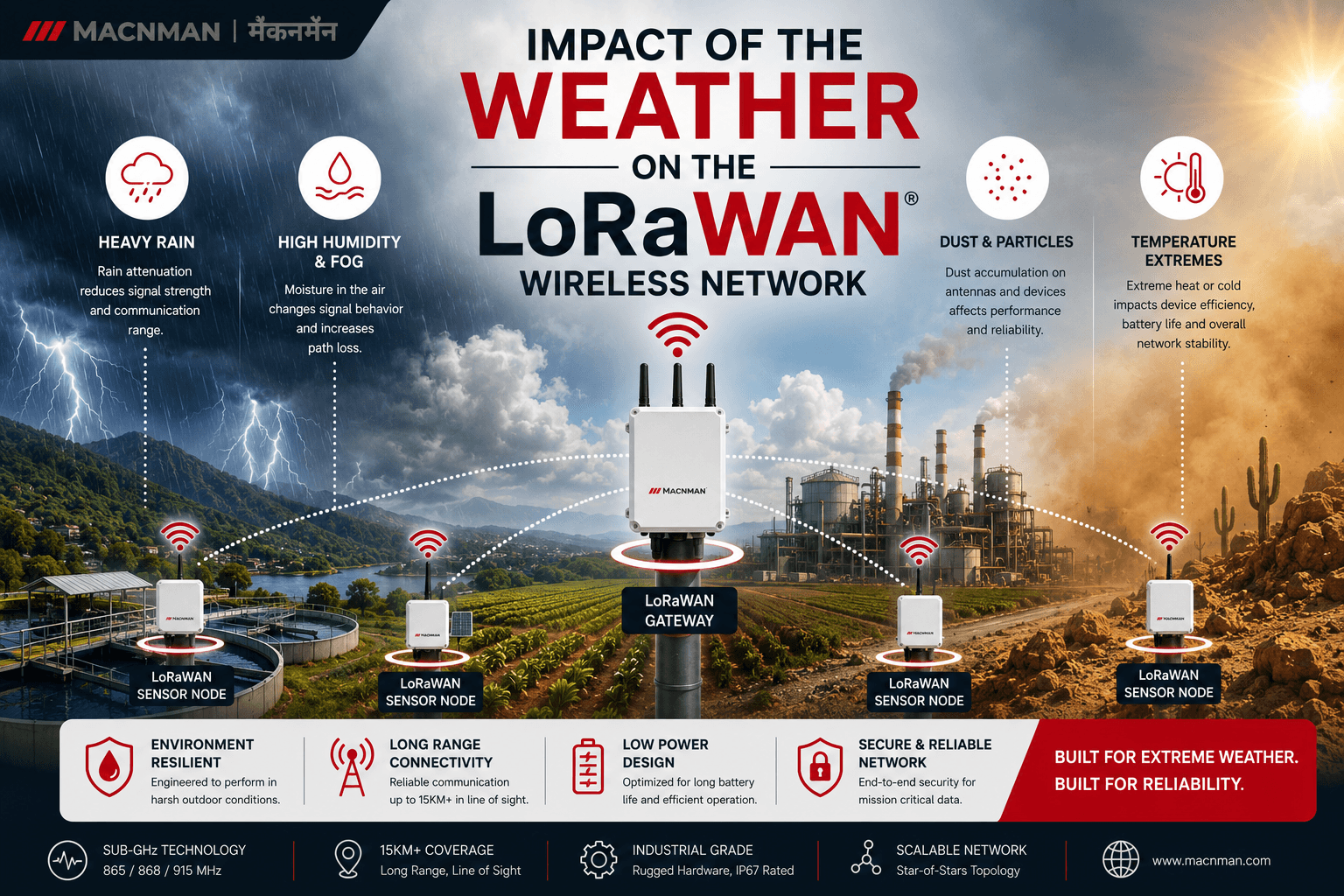
Illustration showing the impact of heavy rain, humidity, dust, and extreme temperatures on a LoRaWAN wireless network using industrial IP67 gateways and sensor nodes.

Lorawan

Impact of the weather on the long range LoRaWAN wireless networks

The Operational Stakes of Field Deployments Deploying an Industrial Internet of Things (IIoT) network is fundamentally different from validating wireless communication inside a laboratory. Controlled testing environments rarely account for continuously changing atmospheric conditions, seasonal weather patterns, terrain irregularities, or long-term environmental exposure. Once a wireless sensor network is deployed across manufacturing facilities, agricultural fields, ports, utility substations, or mining sites, every radio link becomes part of a dynamic propagation environment influenced by rain, humidity, dust, temperature, and physical obstructions. For system integrators and industrial automation engineers, network uptime is measured in operational continuity rather than theoretical RF performance. A sensor that misses telemetry packets during a heavy storm may delay predictive maintenance, interrupt environmental monitoring, or trigger false alarms within Supervisory Control and Data Acquisition (SCADA) systems. In mission-critical deployments involving water management, energy distribution, smart agriculture, or industrial asset monitoring, even temporary communication failures can translate into operational downtime and increased maintenance costs. One of the most overlooked design parameters is fade margin—the additional signal strength engineered into a wireless link to compensate for unpredictable propagation losses. During severe weather, atmospheric attenuation combined with foliage moisture, antenna contamination, and multipath fading can easily reduce available link margin by 2–5 dB. While this may appear insignificant on paper, a reduction of only 3 dB effectively halves the received signal power, pushing marginal links below the receiver sensitivity threshold and increasing packet retransmissions or communication failures. This is precisely why industrial RF engineers prioritize generous link budgets instead of designing networks that merely function under ideal conditions. Fortunately, LoRaWAN® operates within Sub-GHz Industrial, Scientific, and Medical (ISM) frequency bands, including: 865–867 MHz (India) 868 MHz (Europe) 902–928 MHz (North America) 923 MHz (Asia-Pacific regions) These lower frequencies provide significant propagation advantages over higher-frequency wireless technologies such as 2.4 GHz Wi-Fi, Bluetooth Low Energy, and portions of the 5G spectrum. Longer wavelengths experience lower atmospheric absorption, superior diffraction around obstacles, improved vegetation penetration, and significantly reduced weather-induced attenuation. These characteristics make LoRaWAN particularly well suited for long-range outdoor Industrial IoT deployments where reliability must be maintained throughout changing environmental conditions. However, weather does influence Sub-GHz propagation—it simply affects it differently than many engineers assume. Understanding the underlying RF physics enables network architects to design resilient wireless infrastructure that maintains dependable communication throughout monsoon seasons, coastal humidity, industrial dust exposure, and extreme temperature variations.

products image macnman
Got an IoT idea?

Let’s bring it to life!

flag image

Let‘s Make it Easy

Reach Out Now

Icon

Contact to Sales

Talk to our friendly team

chat@macnman.com
Icon

Call Us

24 X 7 Always On

+91 7972856163
Icon

Contact to Support

We are here to help

support@macnman.com
Icon

Visit Us

Visit our office HQ

View on Google Map

Socials

LoRaWAN

4G IoT

WiFi Ble IoT

Nb IoT

Customize

Maya

Documentation

Case Studies

Blogs