





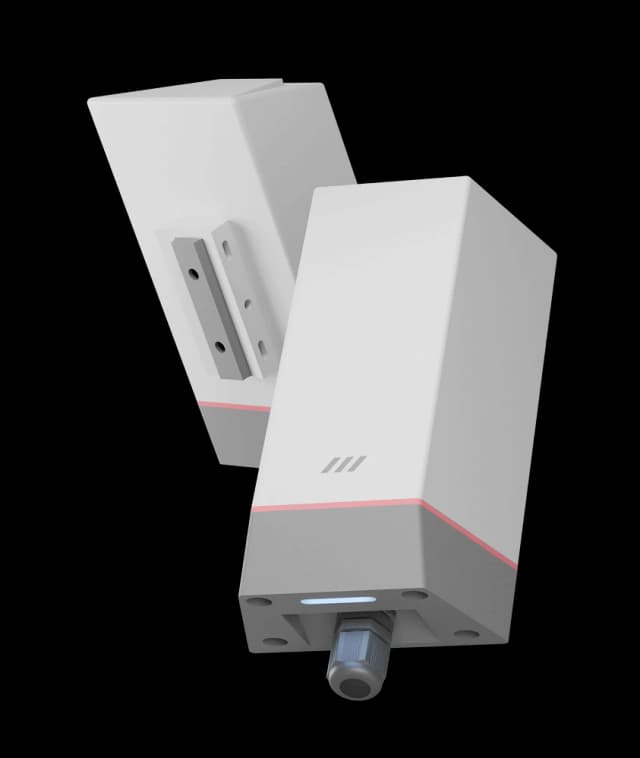

LoRaWAN® Capacitive Fuel Level Sensor

Diesel Tank Monitoring for Gensets, Towers, Fleets & Mines

LoRaWAN® Capacitive Fuel Level Sensor

MacSync LCS X1 is a capacitive dip-stick probe that measures diesel level to ±1% and reports it kilometres over LoRaWAN®

Know Your Fuel Level, Your Consumption and
Exactly When Someone Takes It.

100–1400 mm ProbeStainless steel, ±1% of full scale
Exd II C T5Flameproof probe design
Fuel Theft AlertsEvent-triggered on abnormal drop
7+ Year Battery19 Ah cell @ 60-min uplinks
Works with TTN & ChirpStackLoRaWAN® v1.0.4 · IN865

MacSync LCS X1

Explore the highlights

Capacitive fuel probe accuracy

Two concentric stainless tubes with diesel as the dielectric. ±1% of full scale, 0.1 mm resolution, and no float or sliding contact to wear out.

In plain terms

How Does a Capacitive Fuel Level Sensor Work?

A capacitive fuel probe is two concentric metal tubes forming a capacitor, lowered into the tank. Diesel between them acts as the dielectric, and because diesel has a relative permittivity of roughly 2.0 to 2.2 against air's 1.0, the measured capacitance rises in proportion to how much of the probe is submerged. There are no moving parts, nothing to wear, and no float to stick.

This is the right technology for diesel specifically, and for a reason the market usually gets backwards. Comparison tables often list capacitive sensing as temperature-sensitive. For diesel it is close to the opposite: as temperature rises, the fuel's dielectric constant falls by about 0.032% per °F while its density falls by about 0.033% per °F, and the two effects very nearly cancel. The net capacitance barely moves across the working temperature range. What does affect a capacitive probe is the fuel itself changing — a different biodiesel blend, water settling at the tank bottom, or sludge building up on the probe — which is why we publish the calibration and cleaning guidance further down this page rather than leaving you to discover it.

Probe
Stainless steel dip stick, Φ16 mm, 100–1400 mm sensing length, OEM customisable.
Accuracy
±1% of full scale with 0.1 mm reading resolution. On a 1400 mm probe that is about ±14 mm of level — and tank geometry, not the probe, is usually the larger error in litres.
Hazardous area
Exd II C T5 flameproof design — gas group IIC and a 100 °C maximum surface temperature.
Fitting
Standard 5-hole flange or M20×1.5 thread, OEM customisable to the tank.
Reporting
Periodic, event-based or hybrid over LoRaWAN®, with configurable low-fuel, refill and abnormal-drop alerts.
Power
19 Ah Li-SOCl₂ giving 7+ years at hourly uplinks, or a 9–36 V DC variant.

Downloads

Everything You Need to Get Building

Datasheets, drawings, firmware, and tools — all in one place.

Product Datasheet

Full technical specifications

Engineered for

Built for Tanks That Are Nobody's Full-Time Job

A capacitive probe has no float and no sliding contact, so vibration, sloshing and years of service do not wear it out.

Capacitive probe with no moving parts

Applications

Generator Day Tanks — IoT solution by Macnman

Generator Day Tanks

600–1200 mmLow-fuel alerts

Know a DG set will run before the grid fails, not after. Day tanks sit squarely in the probe's standard range.

Read case studies

Browse all 10 applications

01 / 10

Works with

Why Choose the MacSync LCS X1 Fuel Level Sensor?

A capacitive dip-stick probe measuring diesel to ±1% and reporting it over LoRaWAN®, with an Exd II C T5 flameproof design and 7+ years on one cell.

A capacitive dip-stick probe measuring diesel to ±1% and reporting it over LoRaWAN®, with an Exd II C T5 flameproof design and 7+ years on one cell.

Where it fits

From Day Tanks to Mine Sites, Wherever Diesel Goes Missing

Telecom tower diesel tank monitored over LoRaWAN

Generator & Telecom Tower Tanks

Unmanned sites burning diesel continuously, where theft is the business case and there is no mains power for the sensor.

Tank cannot be drilled? See the ultrasonic sensor
Mining equipment fuel tank monitoring

Fleet, Mining & Heavy Equipment

Saddle and belly tanks under vibration and tilt, where a capacitive probe holds accuracy that ultrasonic loses to sloshing.

Industrial diesel reservoir level monitoring

Industrial & Licensed Fuel Storage

Bulk reservoirs and petroleum installations where consumption has to be reconciled against deliveries, and a flameproof rating is required.

Want to see the sensor working before you commit?

Book Live Demo Now

Why Macnman

How Do You Tell Fuel Theft from Consumption?

By the shape of the change and what the generator was doing. Legitimate burn is a slow, roughly linear fall that tracks run hours. A refill is a sharp rise. Theft is a sharp fall — often tens of litres in a few minutes — and the clearest single signature is level dropping while the genset is off. Set an abnormal-drop threshold and the alert arrives in minutes rather than at the next scheduled report.

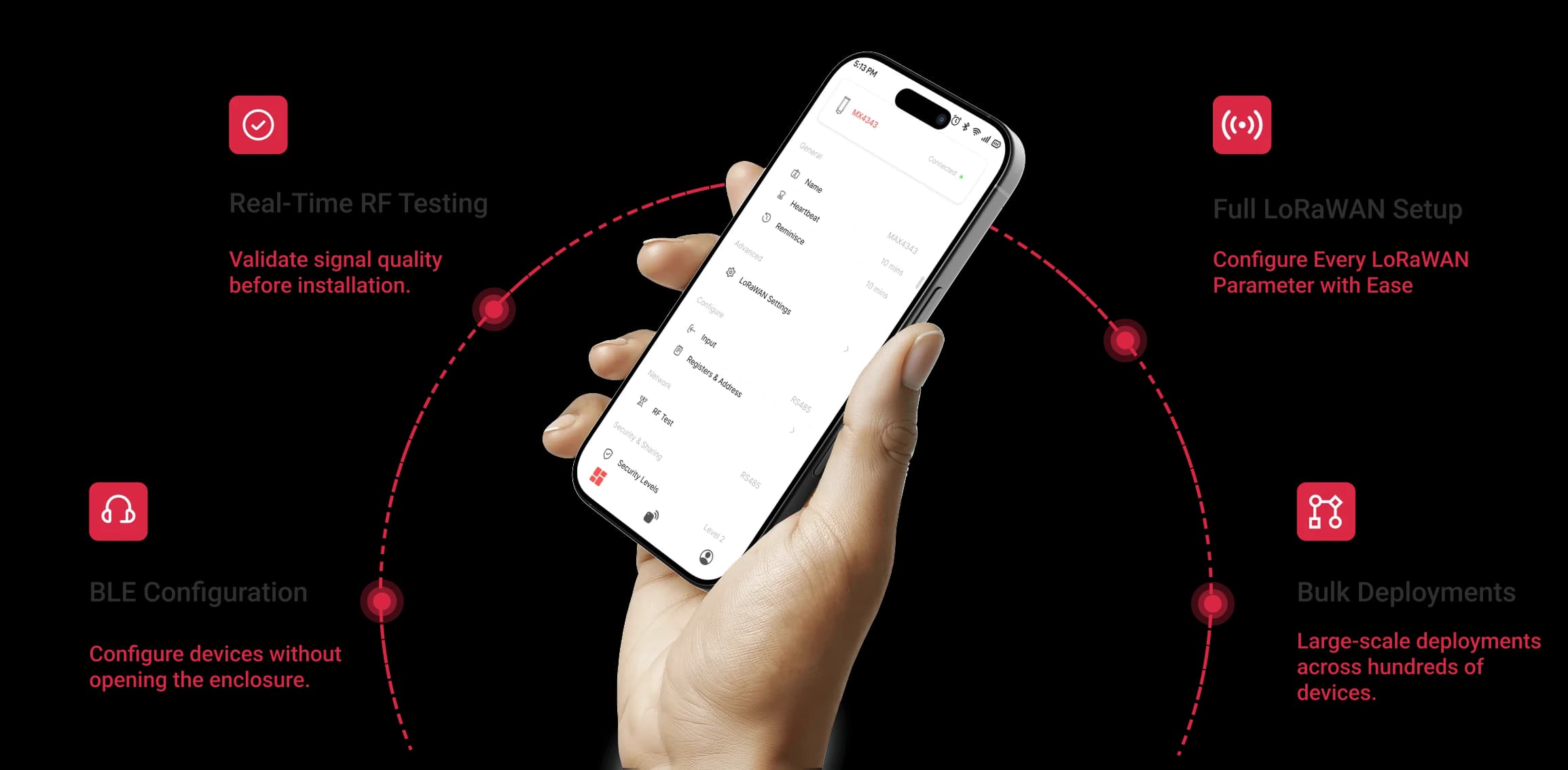
How Do You Tell Fuel Theft from Consumption? — configuration and management with the Maya app

Free planning tools

Size your deployment before you order the hardware

Free engineering calculators for coverage, range and battery life — built on measurements from our own deployments rather than textbook models, which is why the answers tend to be smaller and a good deal more useful. Nothing here quotes a range we have not actually achieved.

Open the calculatorsCoverage & capacity ·Battery life ·Antenna height

No sign-up, no email, nothing to install. More on the way for Wi-Fi and BLE.

Hardware

Stainless Probe, Flameproof Design, Seven-Year Cell

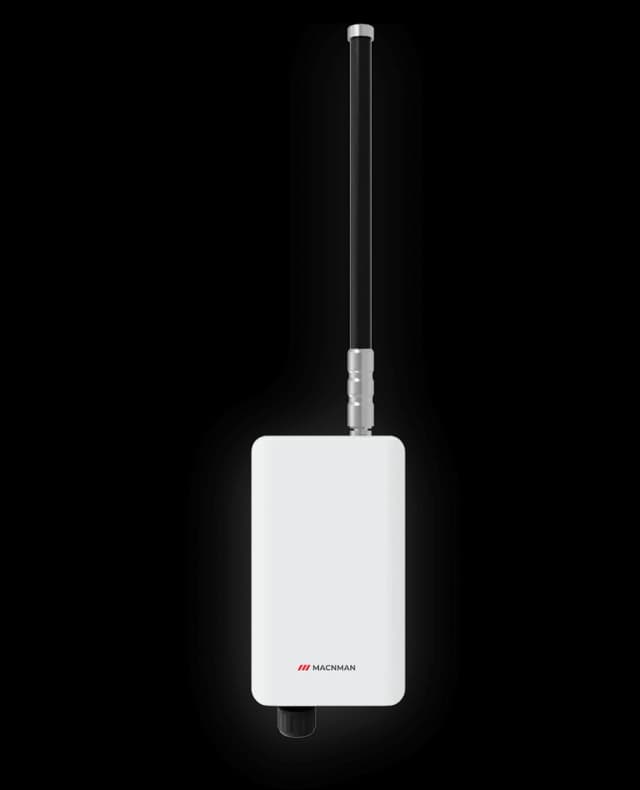
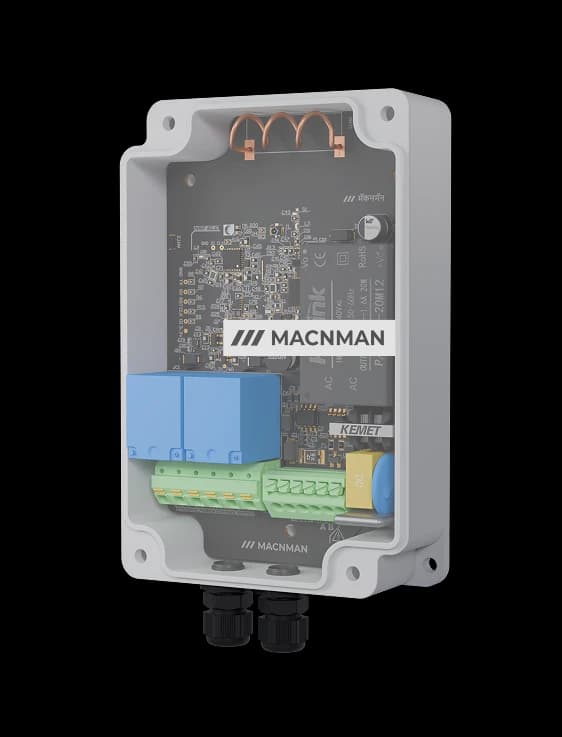
The probe is stainless steel with an Exd II C T5 flameproof rating, operating from −35 °C to +70 °C, while the glass-filled nylon transmitter enclosure is IP65 with an IP67 option and runs from −40 °C to +80 °C. On a 19 Ah industrial cell at hourly reporting, a tank reports for seven years or more without a site visit.

Stainless Probe, Flameproof Design, Seven-Year Cell illustration

Ready to account for every litre? MacSync makes it effortless.

At a glance

MacSync LCS X1 — Key Specifications

Macnman MacSync LCS X1 LoRaWAN capacitive fuel level sensor

100–1400 mm

Probe range

OEM customisable

±1% FS

Accuracy

0.1 mm resolution

Exd II C T5

Hazardous area

Flameproof design

Stainless steel

Probe material

Φ16 mm, −35 to +70 °C

7+ years

Battery life

19 Ah cell at hourly uplinks

IP65

Ingress

IP67 optional variant

Features

Everything Built into One LoRaWAN Fuel Sensor

Fuel Theft Alerts

Set an abnormal-drop threshold and the sensor uplinks the instant it is crossed, instead of waiting for the next report.

Fixed intervals, event-driven alerts, or both — sampling configurable from 1 minute to 24 hours.

Capacitive Dip-Stick Probe

Stainless steel concentric tubes with diesel as the dielectric — ±1% accuracy with no moving parts to wear.

7+ Year Battery Life

A 19 Ah Li-SOCl₂ cell runs 7+ years at hourly uplinks — set and forget across unmanned sites.

9–36 V DC Variant

A powered variant for installations reporting by the minute, where a supply is already present.

Exd II C T5 Flameproof

Gas group IIC with a 100 °C maximum surface temperature, for petrol and licensed petroleum installations.

Secure by Design

AES-128 LoRaWAN® encryption, OTAA activation, secure boot and signed OTA updates.

Macnman Maya App

Uplink interval, thresholds, diagnostics and over-the-air configuration from your phone.

Works with Every LoRaWAN® Network Server

TTN, ChirpStack, MQTT, Orbiwise, Netmore or a private LNS — no vendor lock-in.

Capabilities

Theft, Refills and Consumption from One Reading

The same level trace answers three questions at once: how much fuel is in the tank now, how fast it is being consumed against run hours, and whether a drop matches consumption or a siphon. Event thresholds turn the third one into an alert.

The same level trace answers three questions at once: how much fuel is in the tank now, how fast it is being consumed against run hours, and whether a drop matches consumption or a siphon. Event thresholds turn the third one into an alert. device feature illustration (mobile view)

Not sure what probe length your tank needs?

Customize it !

Architecture

LoRaWAN® Fuel Monitoring Network Architecture

LoRaWAN® Fuel Monitoring Network Architecture IoT architecture diagram (mobile view)

Why it matters

Most diesel loss is invisible because nobody is measuring between the delivery and the burn. Continuous level data closes that gap.

Catch theft while it happens

A sharp drop with the genset off is unambiguous. An event-triggered uplink reaches you in minutes, not at the next scheduled report.

Reconcile what was delivered

Compare the rise at refill against the delivery challan and you find the shortfall that a dipstick reading never shows.

Stop running out

Low-fuel thresholds give warning before a backup generator fails to start, which is the one moment it has to work.

Understand real consumption

Burn rate against run hours tells you which sites and which machines are costing more than they should.

How it works

How Does a LoRaWAN® Fuel Level Sensor Work?

Step 1 of 5

Fit the probe to the tank

The stainless dip stick drops into the tank through a standard 5-hole flange or an M20×1.5 thread, with the transmitter mounted on a pole or wall beside it.

MacSync LCS X1 reporting modes

Reporting

Three Reporting Modes, Chosen by What You Are Watching For.

A reading on a fixed interval from one minute to 24 hours. Predictable consumption trends and predictable battery life.

Note: Hourly reporting is what gives the 7+ year battery figure.

Rolling out across a fleet of tower sites?

Customize it !

Cloud & LNS

Works with Every LoRaWAN® Network Server You Already Run

TTN, ChirpStack, MQTT, Orbiwise & Private LNS — No Vendor Lock-In

MacSync LCS X1 sensors join any LoRaWAN® network server — The Things Network, ChirpStack, MQTT platforms, Orbiwise, Netmore or a private on-premise server — using standard OTAA activation, so there is no vendor lock-in.

Industrial IoT device data integration illustration
Cloud platforms and LoRaWAN network servers supported

Device-to-device

Monitor Smarter with Macnman

Why Choose the Macnman LoRaWAN® Fuel Level Sensor

Accurate climate sensing, tool-free installation, and years of maintenance-free battery life — in one rugged wireless node.

MacTalk device-to-device communication without gateway or internet

Plug & Play

Truly plug & play — no complex setup.

Real-Time Alerts

Instant threshold alerts the moment conditions drift.

Long-Range

Long-range coverage for hard- to-reach places.

Want the engineering detail behind LoRaWAN?

Customize it !

RF performance

Accuracy That Survives Vibration and Sloshing

A capacitive probe reads the submerged length of the tube rather than bouncing a signal off a moving surface, so vibration, sloshing and foam do not corrupt the reading the way they degrade an ultrasonic measurement on a vehicle or a running genset. There are no moving parts to wear, which is why the main maintenance task is an annual probe clean rather than a replacement.

Accuracy That Survives Vibration and Sloshing

Capabilities

Real-Time Diesel Level Monitoring over LoRaWAN®

Threshold Alerts, Event-Based Uplinks and Season-Long Records

Threshold Alerts, Event-Based Uplinks and Season-Long Records illustration

Installation

Wireless Fuel Monitoring, No Trenching to the Tank

The MacSync LCS X1 fits through an existing flange or threaded port with the transmitter on a pole beside the tank. With no cabling, no SIM and no mains supply — a site goes live in under an hour.

Wireless Fuel Monitoring, No Trenching to the Tank device mounting illustration

Choosing a level sensor

Capacitive, Ultrasonic or Hydrostatic — Which Macnman Level Sensor?

Macnman builds all three measurement technologies, and the right one depends on whether you can put something into the tank, what the liquid is, and how deep it goes. Here is how they actually differ, including where this sensor is the wrong answer.

CriterionMacSync LCS X1 — CapacitiveMacRay LU4 — UltrasonicMacSync LPS X7 — Hydrostatic
Measurement principleCapacitance of fuel between concentric tubesTime of flight of a 40 kHz ultrasonic pulseHydrostatic pressure of the liquid column
Contact with the liquidContact — dip-stick probe enters the tankNon-contact — mounts above the surfaceContact — submerged or bottom-ported
Measuring range100–1400 mm probe, OEM customisable3–450 cm, with a 3 cm blind zone−10 to +10 kPa (roughly 1 m of water column)
Accuracy±1% of full scale, 0.1 mm resolution60° sensing angle, 100 ms response±0.2% FS, 0.1 kPa resolution
Suits which liquidDiesel and non-conductive hydrocarbons; calibrate per fuelMost liquids — reads the surface, not the mediumWater and liquids of known density
Behaviour under vibrationUnaffected — reads submerged lengthDegrades with surface turbulence and foamLargely unaffected
Tank penetration neededYesNoYes
Hazardous-area designExd II C T5 flameproof probe designNot rated for hazardous areasNot rated for hazardous areas
Choose it forDiesel day tanks, tower reservoirs, equipment tanksSealed tanks you cannot drill, and open channelsWater tanks, sumps and shallow level

Figures are from each product's own datasheet. Pick capacitive for diesel in a tank you can penetrate; the MacRay LU4 ultrasonic sensor when the tank cannot be drilled or the liquid is not a hydrocarbon; and the MacSync LPS X7 hydrostatic sensor for water and other liquids of known density within about a metre of depth. If none of those fits your tank, tell us the depth and the liquid and we will say which one does.

Installation

In the tank in an hour, reporting for years.

0.1Four steps to live fuel data
1
Measuring tank depth for the fuel probe

Measure the tank

Record the internal depth and the existing fitting. Probe length is OEM customisable, so the probe should reach the bottom without fouling it.

2
Fitting the capacitive fuel probe to a diesel tank

Fit the probe

Mount through the standard 5-hole flange or M20×1.5 thread and seal it. Site the transmitter where the LoRaWAN antenna is clear of the tank body.

3
Building a tank calibration table

Build the calibration table

Pour measured volumes in ten to twenty steps, recording the reading at each. This is what makes litres accurate on a non-rectangular tank.

4
Setting fuel level thresholds in the Maya app

Set thresholds and clean annually

Configure low-fuel, refill and abnormal-drop alerts in Maya. Once a year, withdraw the probe and clean it with diesel and a soft brush to prevent coating drift.

Range & reliability

Long-Range LoRaWAN® Coverage Across Scattered Tanks

Reliable communication up to 15 km line-of-sight range for large sites and campuses

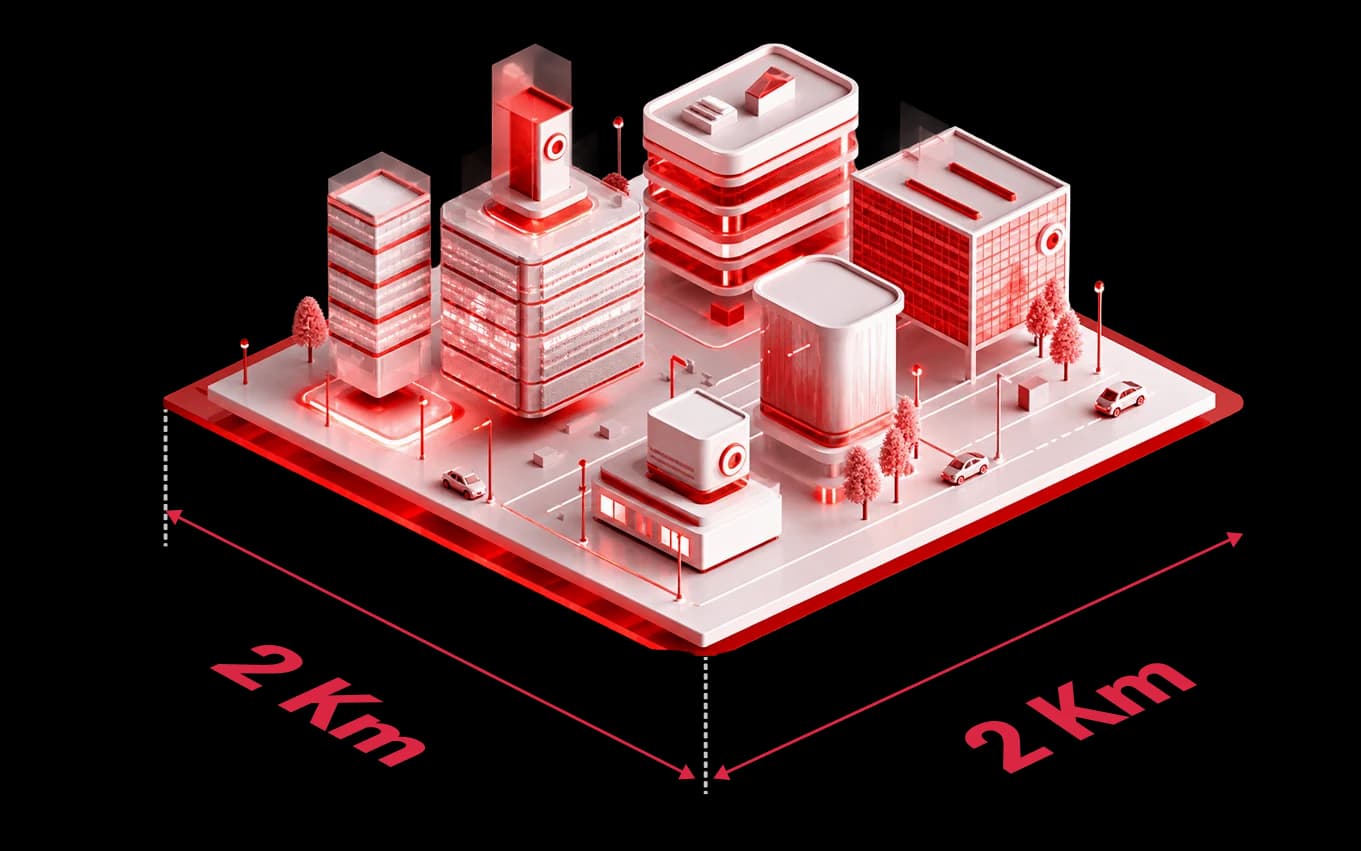
One gateway reaches fuel tanks spread across a plant, a mine or a cluster of telecom sites — kilometres of range at 23 dBm with −137 dBm sensitivity, with no SIM and no monthly data cost at each tank.

MacSync LCS X1 long-range LoRaWAN coverage across distributed fuel tanks

FAQ

Frequently asked questions

Two concentric metal tubes form a capacitor inside the tank. Diesel sitting between them acts as the dielectric, and because diesel's relative permittivity is about 2.0 to 2.2 against air's 1.0, capacitance rises in proportion to how much of the probe is submerged. An oscillator converts that capacitance to a frequency the electronics read. There are no moving parts, no float and no sliding contact to wear out.

Capacitive, in most diesel installations. A capacitive probe is in contact with the fuel and is unaffected by surface turbulence, foam or vapour, which is why it holds accuracy on moving vehicles and vibrating equipment where ultrasonic readings degrade. Ultrasonic's advantage is that it needs no tank penetration, so it suits sealed tanks you cannot drill and installations where an external mount is itself the anti-theft measure. If your tank cannot be penetrated, use our LoRaWAN ultrasonic level sensor instead — this one is a dip stick and has to go into the tank.

Far less than most comparison tables claim. Diesel's dielectric constant falls by roughly 0.032% per °F as it warms, while its density falls by roughly 0.033% per °F. The two coefficients very nearly cancel, so the capacitance a probe measures stays substantially stable across the working temperature range. This is specific to hydrocarbon fuels — the same claim would not hold for water or aqueous liquids, which are conductive and behave quite differently.

Yes, and it matters in India. Relative permittivity rises linearly with biodiesel content, so a probe calibrated on neat high-speed diesel will read differently once the tank is filled with a blend. IS 1460 permits up to 7% biodiesel (B7) and India is targeting B5 nationally by 2030. If your fuel supply changes blend, re-run the calibration. Tell us your expected blend when ordering and we will advise on the calibration procedure.

It is three separate things. 'Ex d' is a flameproof enclosure, built to contain an internal explosion and stop it propagating outside. 'II C' is the most demanding gas group, covering hydrogen and acetylene, and equipment certified to IIC is acceptable wherever IIB or IIA is required. 'T5' caps the maximum surface temperature at 100 °C. Whether you need it is a separate question — see the next answer.

Usually not, and you should be sceptical of anyone who tells you otherwise to sell you a certificate. Most grades of diesel have a flash point above 60 °C, which makes them combustible rather than flammable liquids, and petroleum fluids handled below their flash point generally do not create a hazardous area needing zoning. Zoning does apply where diesel is heated above its flash point, pressurised, or can be released as a mist — and it always applies to petrol. The Exd II C T5 design matters when you need that headroom: petrol tanks, heated fuel, and licensed petroleum installations.

No, and you should know that before you specify. Macnman does not currently hold PESO certification for this product. The probe is built to an Exd II C T5 flameproof design, but in India equipment entering a classified hazardous area requires PESO approval, and ATEX or IECEx certificates do not substitute for it. In practice most diesel installations are not classified areas at all — see the previous answer — so this rarely blocks a deployment. If your site is a PESO-licensed petroleum installation, tell us at the enquiry stage and we will be straight with you about what we can and cannot supply rather than letting you discover it at commissioning.

±1% of full scale on the standard 1400 mm probe is about ±14 mm of level, with 0.1 mm reading resolution. But the probe is usually the smaller error. Converting level to litres depends on the tank's shape, and a cylindrical or irregular tank converted with a single linear factor can be out by considerably more than the probe's own figure. That is why the sensor should be commissioned against a calibration table rather than one multiplier — see the next answer.

With a calibration or strapping table, not one multiplier. The standard field procedure is to pour in accurately measured volumes in steps of roughly one tenth to one twentieth of the tank's capacity, recording the sensor reading against the cumulative litres at each step. That gives ten to twenty reference points the platform interpolates between, which handles cylindrical, stepped and irregular tanks correctly. The table is built once at commissioning and only needs revisiting if the tank or the fuel blend changes.

By the shape of the change and by what the genset was doing at the time. Legitimate consumption is a slow, roughly linear fall that correlates with run hours. A refill is a sharp rise. Theft is a sharp fall — typically tens of litres over a few minutes — and the strongest single indicator is level dropping while the generator is off. Set an abnormal-drop threshold and the sensor uplinks the moment it is crossed rather than waiting for the next scheduled report, so the alert arrives while someone is still on site.

Three things, and we would rather you heard them from us. Water settling at the bottom of a diesel tank is conductive and will affect an uninsulated probe. Bacterial sludge grows at the water and fuel interface and coats the probe, changing what it measures. And the fuel's own dielectric properties shift as a blend ages or changes. The mitigations are straightforward: remove and clean the probe with diesel and a soft brush annually, re-run the calibration if the fuel supply changes, and watch for slow one-directional trends in your dashboard, which are the signature of coating rather than consumption.

The device is specified and calibrated for diesel. The same capacitive principle works with other non-conductive hydrocarbons such as petrol, kerosene and light oils, but each has a different dielectric constant and therefore needs its own calibration — and petrol is a genuinely hazardous area where the Exd rating becomes necessary rather than optional. Viscous media like furnace oil coat the probe and will need more frequent cleaning. Water and aqueous liquids are conductive and are not what this probe is for; use a hydrostatic or ultrasonic sensor instead.

About 2 years at 5-minute reporting, 4 years at 15-minute, and 7 or more years at hourly reporting on the 19 Ah industrial Li-SOCl₂ cell. A 9–36 V DC variant is available where a supply exists. LoRaWAN matters most at unmanned remote sites — telecom towers, mining faces, canal pumps — because there is no SIM, no monthly data cost per device, and one gateway covers kilometres of scattered tanks. For fuel monitoring the reporting rate is usually hourly, which is where the battery figure is at its best.

It is sized for the tanks it is meant for. Generator day tanks, telecom tower reservoirs, skid tanks and equipment saddle tanks typically sit between 600 and 1400 mm of depth, which the standard probe covers directly. Probe length is OEM customisable, so tell us the tank's internal depth when ordering. For bulk storage deeper than the probe range we will point you at a longer OEM probe or a different measurement technology rather than sell you something that cannot reach the bottom.

Yes. Macnman Technologies designs and manufactures the MacSync LCS X1 in Pune, Maharashtra. The device is WPC compliant for legal radio operation in India on the IN865 band, conforms to the RoHS directive, and is supported directly by the engineering team in Indian Standard Time. Because it is built locally, probe lengths and tank fittings can be customised without an import cycle.

Got an IoT idea?

Let’s bring it to life!

flag image

Let‘s Make it Easy

Reach Out Now

Icon

Contact to Sales

Talk to our friendly team

chat@macnman.com
Icon

Call Us

24 X 7 Always On

+91 7972856163
Icon

Contact to Support

We are here to help

support@macnman.com
Icon

Visit Us

Visit our office HQ

View on Google Map

Socials

LoRaWAN

4G IoT

WiFi Ble IoT

Nb IoT

Customize

Maya

Documentation

Case Studies

Blogs

Terms and Conditions

Welcome to Macnman Technologies Pvt Ltd! These Terms and Conditions ("Terms") govern your access to and use of the Macnman's website (the "Website"). As an Original Equipment Manufacturer (OEM) of IoT products and solutions, this Website is designed primarily to provide information to potential business partners, integrators, and clients. By accessing or using our Website, you acknowledge that you have read, understood, and agree to be bound by these Terms. If you do not agree to these Terms, please do not use our Website.

1. Acceptance of Terms

By using our Website, you confirm that you are authorized to enter into a binding contract on behalf of your business or entity (if applicable) and that you accept these Terms. These Terms constitute a legally binding agreement between you and Macnman IoT regarding your use of the Website.

2. Website Content & Intellectual Property

Ownership: All content on this Website, including but not limited to text, graphics, logos, images, audio clips, video clips, data compilations, software, product descriptions, and technical information (collectively, "Content"), is the property of Macnman IoT or its licensors and is protected by Indian and international copyright, trademark, and other intellectual property laws.

Informational & Marketing Purpose: All Content, including images, videos, illustrations, graphical representations, and textual descriptions of products and solutions, is provided for general informational, illustrative, and marketing purposes only. While we strive to present accurate and up-to-date information, this Content is intended to convey the general features, capabilities, and potential applications of our IoT products.

No Warranty from Website Content: The Content on this Website does not constitute a definitive specification, technical guarantee, or warranty for any specific product or solution. Actual product specifications, performance, features, and appearance are subject to change and are exclusively defined in official product datasheets, technical documentation, and specific commercial agreements (e.g., purchase orders, supply contracts) between Macnman IoT and its clients. You acknowledge that relying solely on Website Content for product suitability or performance is at your own risk.

Limited License: You are granted a limited, non-exclusive, non-transferable, revocable license to access and use the Website and its Content for your internal business informational purposes, such as evaluating potential OEM partnerships or product integration. You may not reproduce, distribute, modify, create derivative works of, publicly display, publicly perform, republish, download, store, or transmit any of the Content without the prior written consent of Macnman IoT.

3. Use of Website

You agree to use the Website only for lawful purposes consistent with its intended B2B/OEM informational nature and in a manner that does not infringe the rights of, or restrict or inhibit the use and enjoyment of this Website by any third party. Prohibited conduct includes, but is not limited to: Engaging in any activity that could harm, disable, overburden, or impair the Website or the servers and networks connected to the Website. Attempting to gain unauthorized access to any portion of the Website, other accounts, computer systems, or networks connected to the Website through hacking, password mining, or any other means. Using the Website to distribute any malicious software, viruses, or other harmful content. Collecting or storing personal data about other users or any commercial information without their express consent. Using the Website for direct sales or marketing of third-party products or services without explicit authorization.

4. Disclaimers

"As Is" and "As Available" Basis: The Website and all Content are provided on an "as is" and "as available" basis, without any warranties of any kind, either express or implied.
No Warranties of Performance or Suitability: Macnman IoT does not warrant that the Website or its Content will be error-free, uninterrupted, secure, or available at any particular time or location.
Product Development: Products and solutions mentioned on the Website may be under development or subject to change. At Macnman Technologies Pvt. Ltd. ("Macnman"), we take pride in our field success and may highlight it via case studies, client stories, and marketing materials. Unless otherwise agreed in writing, we consider ourselves to have full rights to share such information.

5. Limitation of Liability

To the fullest extent permitted by applicable law, in no event shall Macnman IoT, its affiliates, directors, officers, employees, agents, or suppliers be liable for any direct, indirect, incidental, special, consequential, punitive, or exemplary damages, including but not limited to, loss of profits, goodwill, data, or other intangible losses arising out of or in connection with your use of the Website or its Content.

6. Indemnification

You agree to defend, indemnify, and hold harmless Macnman IoT and all related entities from any claims, liabilities, damages, losses, or expenses arising from your violation of these Terms or your misuse of the Website.

7. Links to Third-Party Websites

The Website may contain links to third-party websites. We do not control or take responsibility for the content, privacy policies, or practices of any third-party websites. Inclusion of links does not imply endorsement.

8. Governing Law & Jurisdiction

These Terms shall be governed by Indian law. Any disputes shall be subject to the exclusive jurisdiction of the courts located in Pune, Maharashtra.

9. Changes to Terms

We reserve the right to update these Terms at any time. Continued use of the Website after changes have been posted constitutes acceptance of the new Terms. You should review these Terms regularly.

10. Returns & Replacement

Macnman Technologies Pvt Ltd accepts returns with a 100% payment refund within 7 days of delivery, provided the product is returned in its original condition with all accessories and packaging intact. No returns or refunds will be accepted after 7 days from the date of delivery if the product is found to be functional and free from manufacturing defects.

11. Warranty Policy

All Macnman IoT products are covered under a standard 12-month limited warranty from the date of delivery, against manufacturing defects only. The warranty does not cover damage caused by improper installation, mishandling, unauthorized modification, or operation outside the product’s specified conditions. Warranty claims will be processed only after product evaluation by Macnman’s technical team.

12. Product Modifications

Macnman Technologies Pvt Ltd reserves the right to modify the design, specifications, components, or features of its products without prior notice, in line with continuous improvement and technological upgrades.

13. Shipping & Delivery

All products are shipped through reliable courier or logistics partners. Macnman shall not be liable for any delay or damage occurring during transit once the shipment has been handed over to the carrier. Customers are advised to inspect packaging and report any visible damages immediately upon delivery.

14. Force Majeure

Macnman Technologies Pvt Ltd shall not be held responsible for any failure or delay in performance resulting from events beyond its reasonable control, including but not limited to natural disasters, war, strikes, government actions, network outages, or component shortages.

15. Limitation of Use

Macnman IoT products are designed for commercial and industrial use. They are not intended for life-support, safety-critical, or mission-critical systems where failure could lead to personal injury, death, or environmental harm. Customers assume all responsibility for use in such applications.

16. Confidentiality

Any non-public technical, business, or proprietary information shared between Macnman and its customers shall be treated as confidential and shall not be disclosed to third parties without prior written consent, except as required by law.

17. Export Compliance

Customers agree to comply with all applicable export control laws and regulations when purchasing or using Macnman products, including restrictions related to international transfers, re-exports, or use in sanctioned regions.

18. Dispute Resolution

In the event of any dispute arising out of or related to these Terms or any transaction with Macnman Technologies Pvt Ltd, both parties shall attempt to resolve the matter amicably through discussion. If unresolved, the dispute shall be subject to arbitration in Pune, Maharashtra, under the Arbitration and Conciliation Act, 1996, and governed by Indian law.