


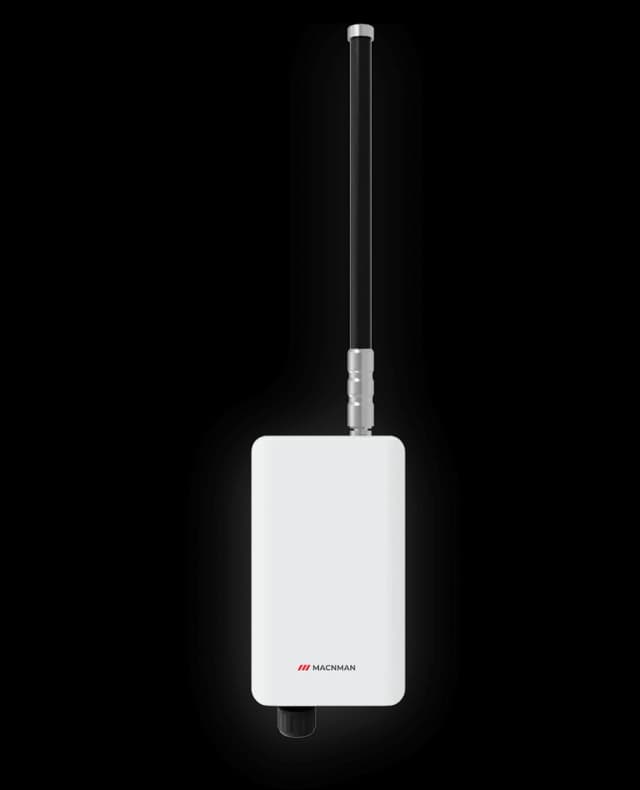
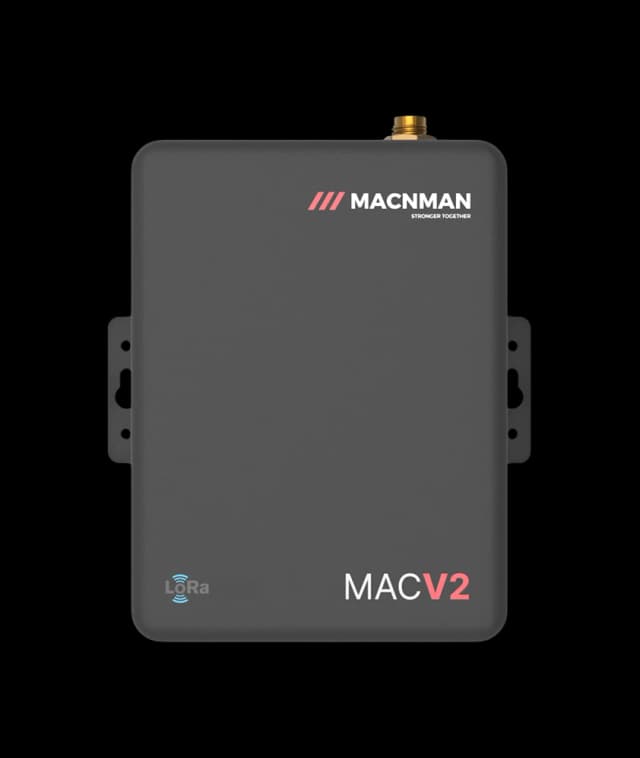
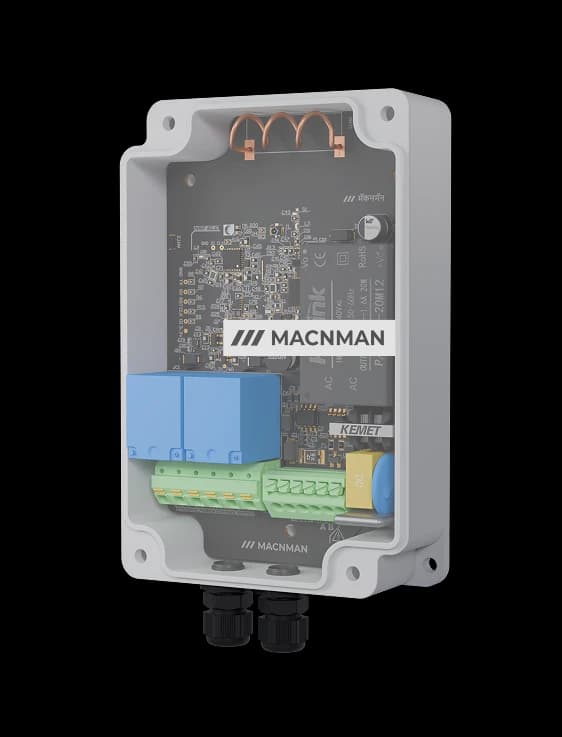
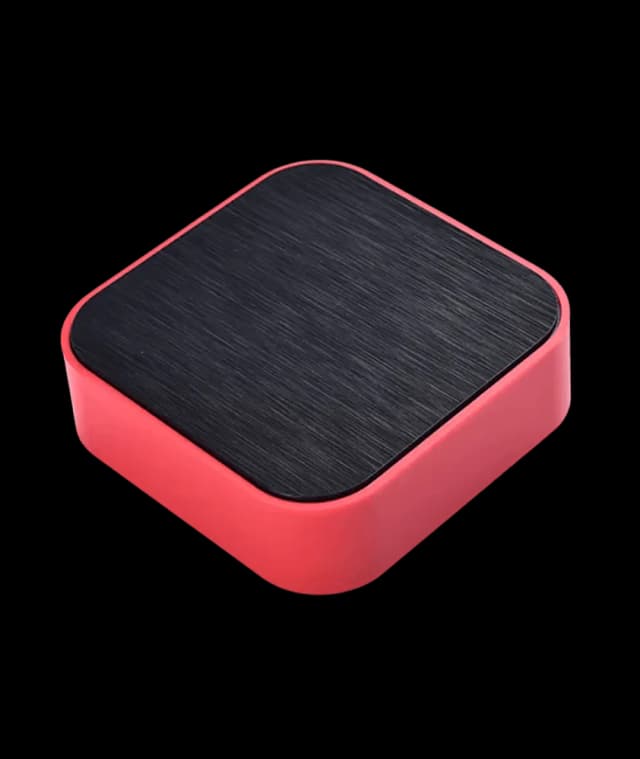
LoRaWAN® CO₂, Temperature & Humidity Sensor

Three-in-One Sensing for Industrial, Enclosed & Outdoor Sites

LoRaWAN® CO₂, Temperature & Humidity Sensor

MacSync LCO2 measures carbon dioxide, temperature and humidity from one NDIR device and reports them kilometres over LoRaWAN®

One Device for Ventilation, Air Quality and
Workplace Exposure Monitoring.

400–5,000 ppm CO₂NDIR, ±(50 ppm + 5%) to +50 °C
3 Parameters, 1 DeviceCO₂ · temperature · humidity
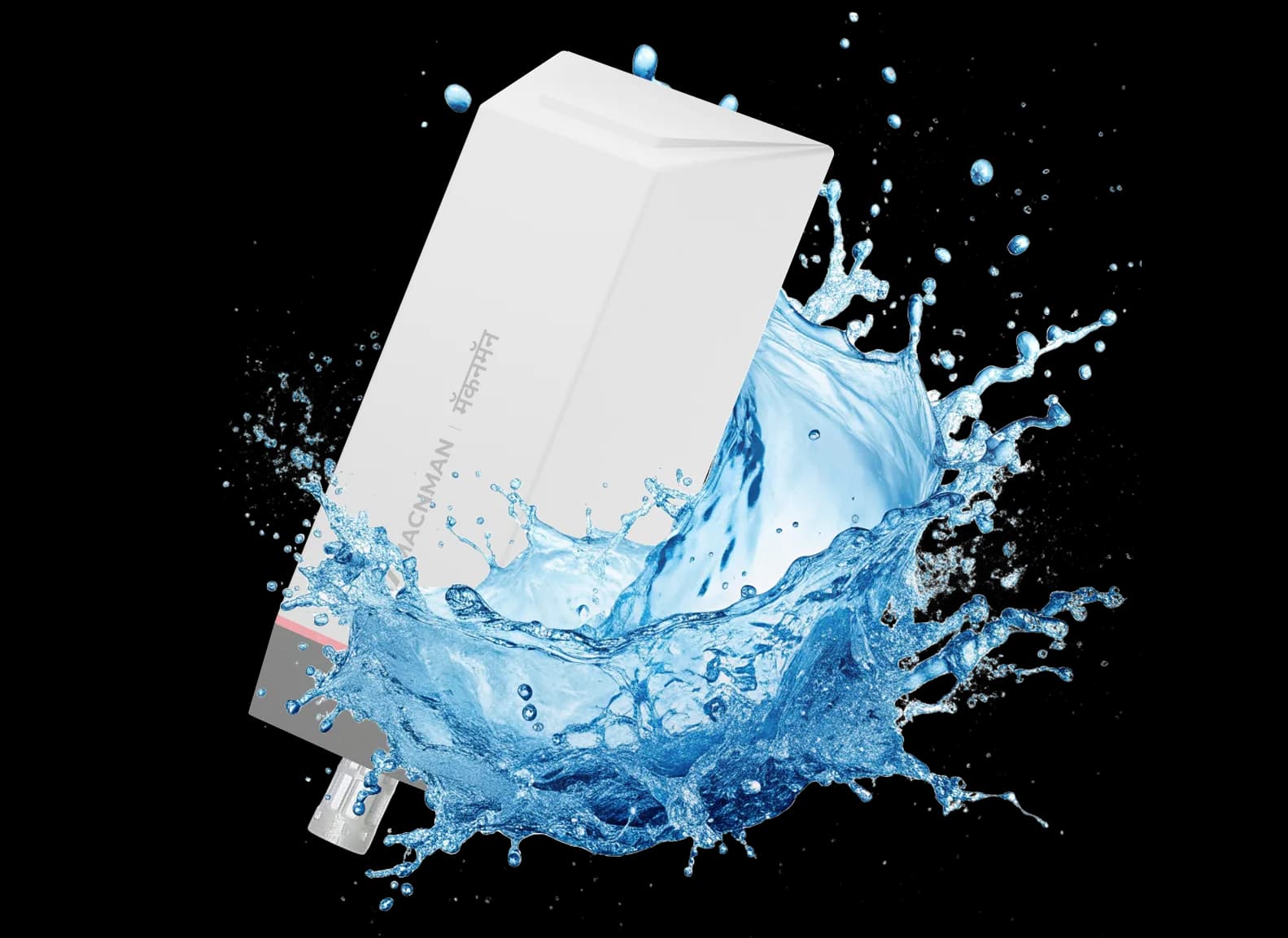
IP65 / IP67 OptionalEnclosure −40 to +80 °C
7+ Year Battery19 Ah cell @ 60-min uplinks
Works with TTN & ChirpStackLoRaWAN® v1.0.4 · 7 bands

MacSync LCO2

Explore the highlights

NDIR CO2 measurement accuracy

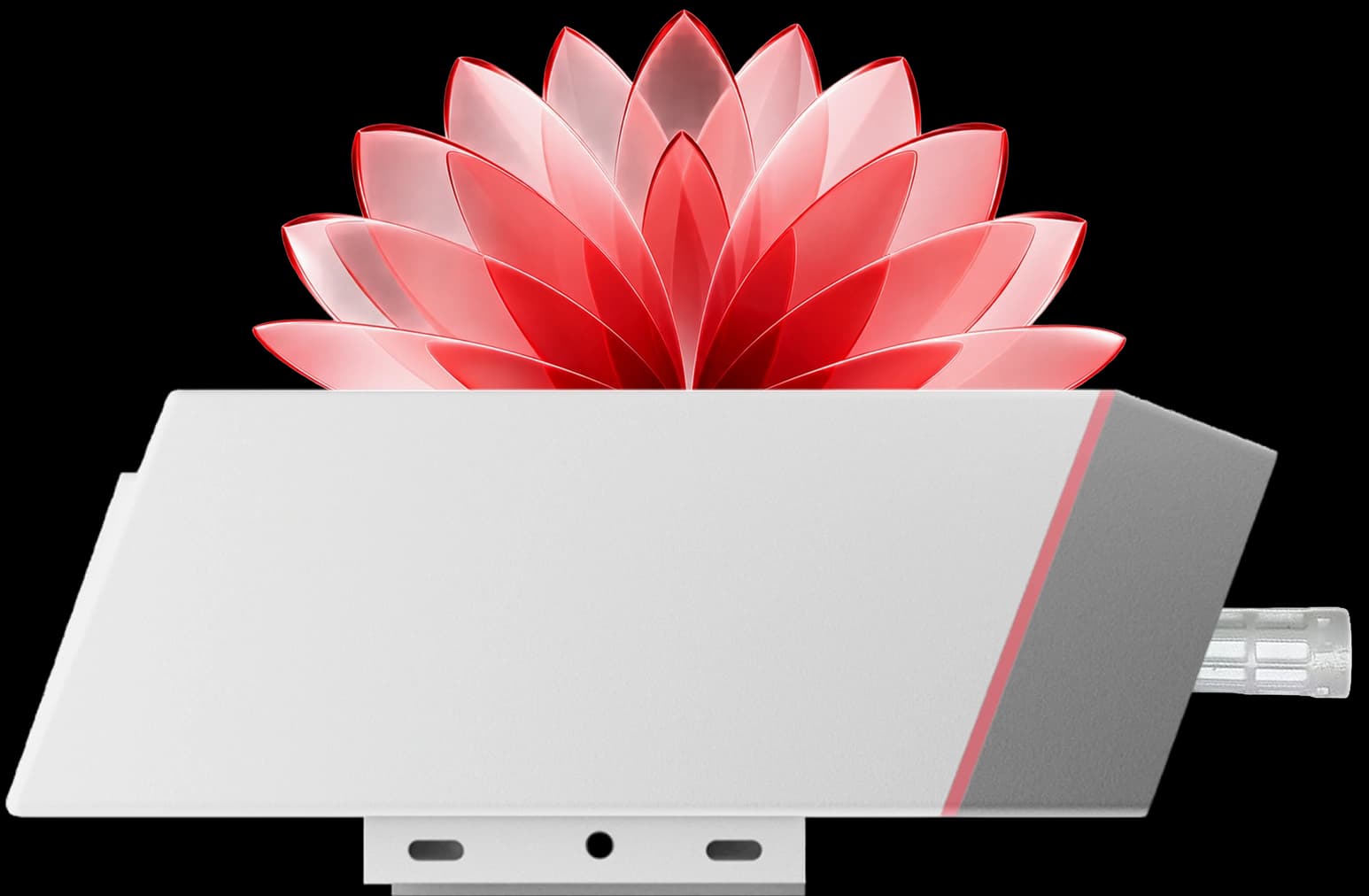
Non-dispersive infrared measurement with automatic calibration — the technology that holds up outdoors where photoacoustic sensors do not.

In plain terms

Can a CO₂ Sensor Be Used Outdoors?

Yes, if you separate two things that datasheets tend to blur. Survival is the enclosure: sealed to IP65 or better, and rated for the temperatures the site reaches. Accuracy is the sensor: almost every NDIR CO₂ sensor on the market, including this one, specifies its accuracy only up to +50 °C and only in non-condensing air. A sensor can therefore be perfectly happy outdoors and still be outside its specified accuracy on a 55 °C afternoon or a dew-covered morning.

That matters because outdoor and enclosed-space CO₂ sensing is harder than office monitoring in three specific ways. Temperature swings are far wider than the 15–25 °C a building sees, and temperature drift is the single largest source of NDIR error. Condensation on the optical path — dawn dew, a monsoon morning, a cold store — shifts readings until it clears. And outdoor CO₂ sits in a narrow 400–550 ppm band, so a fixed ±50 ppm error is a far larger share of the signal than it is at 3,000 ppm indoors. The MacSync LCO2 is built to survive that environment — IP65 with an IP67 option, −40 to +80 °C operating, glass-filled nylon, pole mounted — and we state the measurement limits rather than leaving you to find them.

Sensing technology
NDIR (non-dispersive infrared) with automatic calibration. NDIR substantially outperforms photoacoustic sensing outdoors.
CO₂ range
400–2,000 ppm (X1) or 400–5,000 ppm (X2). The X2 ceiling matches the 5,000 ppm OSHA 8-hour exposure limit.
CO₂ accuracy
±(50 ppm + 5% of reading), specified to +50 °C, non-condensing. Repeatability ±10 ppm; drift ±(5 ppm + 0.5% of reading) per year.
Enclosure rating
IP65 standard with an IP67 option; −40 to +80 °C operating. This is survival, not measurement accuracy.
Also measures
Temperature −30 to +70 °C at ±0.3 °C, and humidity 0–100% RH at ±3% RH.

Downloads

Everything You Need to Get Building

Datasheets, drawings, firmware, and tools — all in one place.

Product Datasheet

Full technical specifications

Engineered for

Built for Spaces an Office Sensor Cannot Go

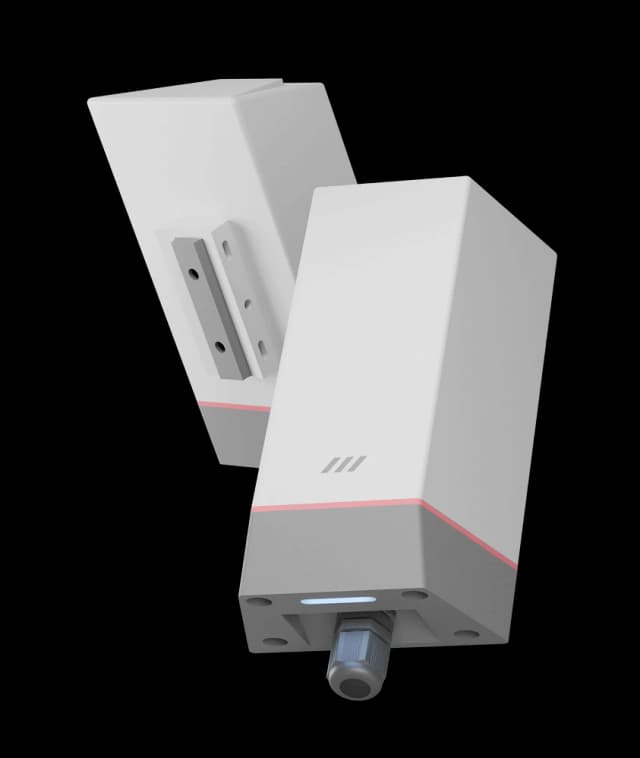
IP65 with an IP67 option, glass-filled nylon, −40 to +80 °C enclosure rating, pole or wall mounted at ~175 g. CO₂ accuracy is specified to +50 °C, non-condensing.

Sealed IP65 CO2 sensor enclosure

Applications

Greenhouses & CO₂ Enrichment — IoT solution by Macnman

Greenhouses & CO₂ Enrichment

1,000–1,500 ppmABC off

Hold the enrichment band that drives photosynthesis without wasting gas, and alarm before levels harm the crop.

Read case studies

Browse all 10 applications

01 / 10

Works with

Why Choose the MacSync LCO2 CO₂ Sensor?

One NDIR device reporting CO₂, temperature and humidity over LoRaWAN®, sealed to IP65 with an IP67 option and rated −40 to +80 °C.

One NDIR device reporting CO₂, temperature and humidity over LoRaWAN®, sealed to IP65 with an IP67 option and rated −40 to +80 °C.

Where it fits

From Plant Rooms to Open Yards, Wherever Air Needs Watching

Occupied building interior monitored by a LoRaWAN CO2 sensor

Buildings & Occupied Spaces

Offices, classrooms and healthcare spaces where CO₂ shows whether fresh-air supply matches the number of people actually in the room.

Greenhouse CO2 enrichment monitored by a LoRaWAN sensor

Greenhouses & Controlled Growing

Enrichment held in its target band and alarmed before it harms the crop, with automatic calibration disabled so the elevated baseline does not drag the zero point.

Underground car park ventilation monitored by a LoRaWAN CO2 sensor

Car Parks, Tunnels & Plant Rooms

Demand-controlled ventilation that runs extract fans on measured air quality rather than a timer, in damp and dusty spaces an indoor-rated sensor cannot survive.

Want to see the sensor working before you commit?

Book Live Demo Now

Why Macnman

Where Should a CO₂ Sensor Be Mounted?

For occupancy and ventilation monitoring, mount in the breathing zone — roughly 0.9 to 1.8 m above the floor, away from doors, vents and anywhere people breathe directly onto it. For confined-space and safety monitoring, mount low, because CO₂ is heavier than air and collects near the floor in cellars, wet wells and pits. Outdoors, shade the unit from direct sun so solar heating does not corrupt the temperature reading.

Where Should a CO₂ Sensor Be Mounted? — configuration and management with the Maya app

Free planning tools

Size your deployment before you order the hardware

Free engineering calculators for coverage, range and battery life — built on measurements from our own deployments rather than textbook models, which is why the answers tend to be smaller and a good deal more useful. Nothing here quotes a range we have not actually achieved.

Open the calculatorsCoverage & capacity ·Battery life ·Antenna height

No sign-up, no email, nothing to install. More on the way for Wi-Fi and BLE.

Hardware

IP65 Sealed, IP67 Optional, −40 to +80 °C

The glass-filled nylon enclosure is IP65 rated with an IP67 option and operates from −40 °C to +80 °C, so the device survives outdoors, in plant rooms and in cold stores. The CO₂ measurement itself is specified to +50 °C in non-condensing air — the same ceiling every NDIR sensor in this class carries, and worth checking against your site before you order.

IP65 Sealed, IP67 Optional, −40 to +80 °C illustration

Ready to ventilate on measured air? MacSync makes it effortless.

At a glance

MacSync LCO2 — Key Specifications

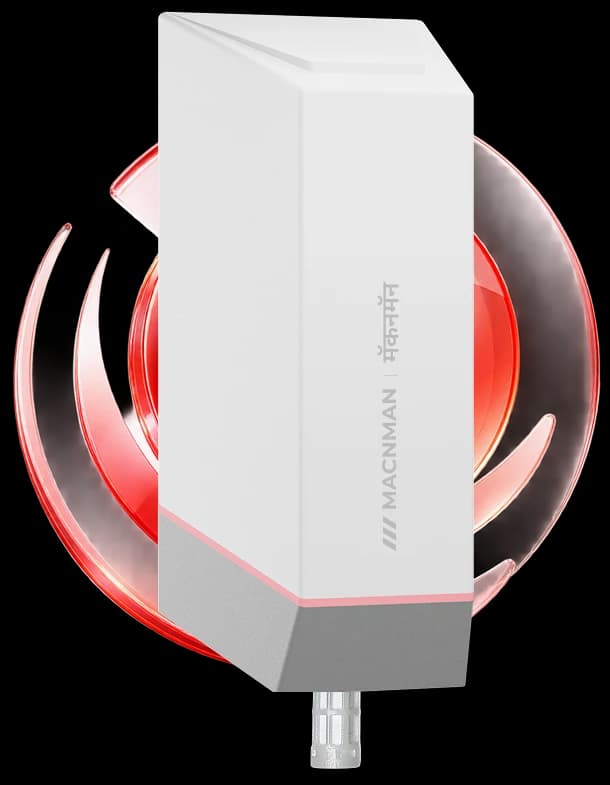
Macnman MacSync LCO2 LoRaWAN CO2, temperature and humidity sensor

400–5,000 ppm

CO₂ range

X1 to 2,000 ppm · X2 to 5,000 ppm

±(50 ppm + 5%)

CO₂ accuracy

Specified to +50 °C, non-condensing

≤ 60 s

Response time

T90, with automatic calibration

±0.3 °C

Temperature

−30 to +70 °C measurement

7+ years

Battery life

19 Ah cell at hourly uplinks

IP65

Ingress

IP67 optional · enclosure −40 to +80 °C

Features

Everything Built into One LoRaWAN CO₂ Sensor

Threshold CO₂ Alerts

Set a CO₂ limit and the sensor uplinks the instant it is crossed, instead of waiting for the next scheduled report.

Fixed intervals, event-driven alerts, or both — sampling configurable from 1 minute to 24 hours.

NDIR CO₂ to 5,000 ppm

Non-dispersive infrared sensing at ±(50 ppm + 5% of reading), 400–2,000 ppm on the X1 or 400–5,000 ppm on the X2, responding in under 60 seconds.

7+ Year Battery Life

A 19 Ah Li-SOCl₂ cell runs 7+ years at hourly uplinks — set and forget for a whole building.

9–36 V DC Variant

A powered variant for permanent installations that report by the minute, where a supply is already present.

Temperature & Humidity Included

Temperature from −30 to +70 °C at ±0.3 °C and humidity across 0–100% RH at ±3% RH, measured by the same device at the same instant.

Secure by Design

AES-128 LoRaWAN® encryption, OTAA activation, secure boot and signed OTA updates.

Macnman Maya App

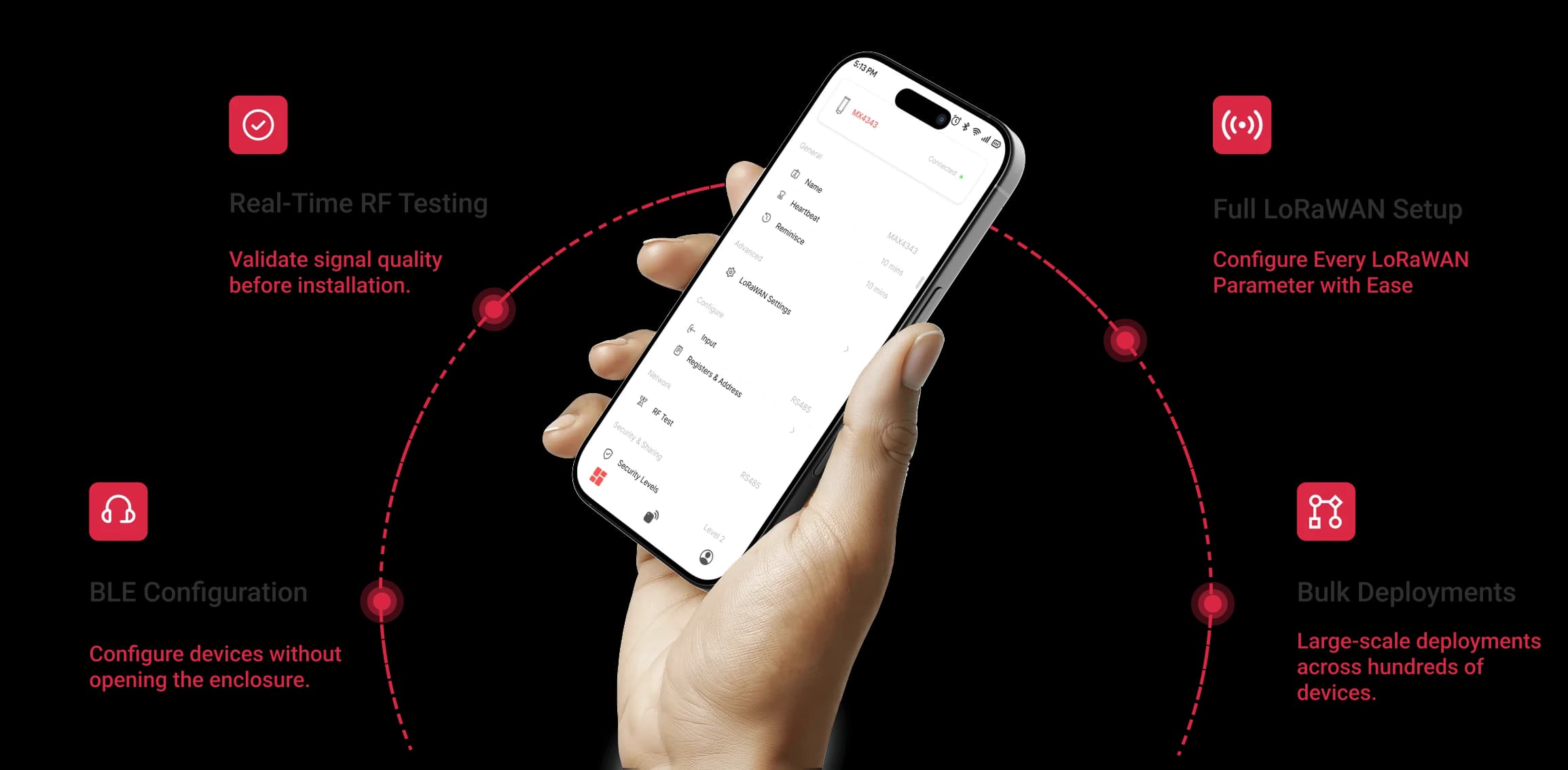
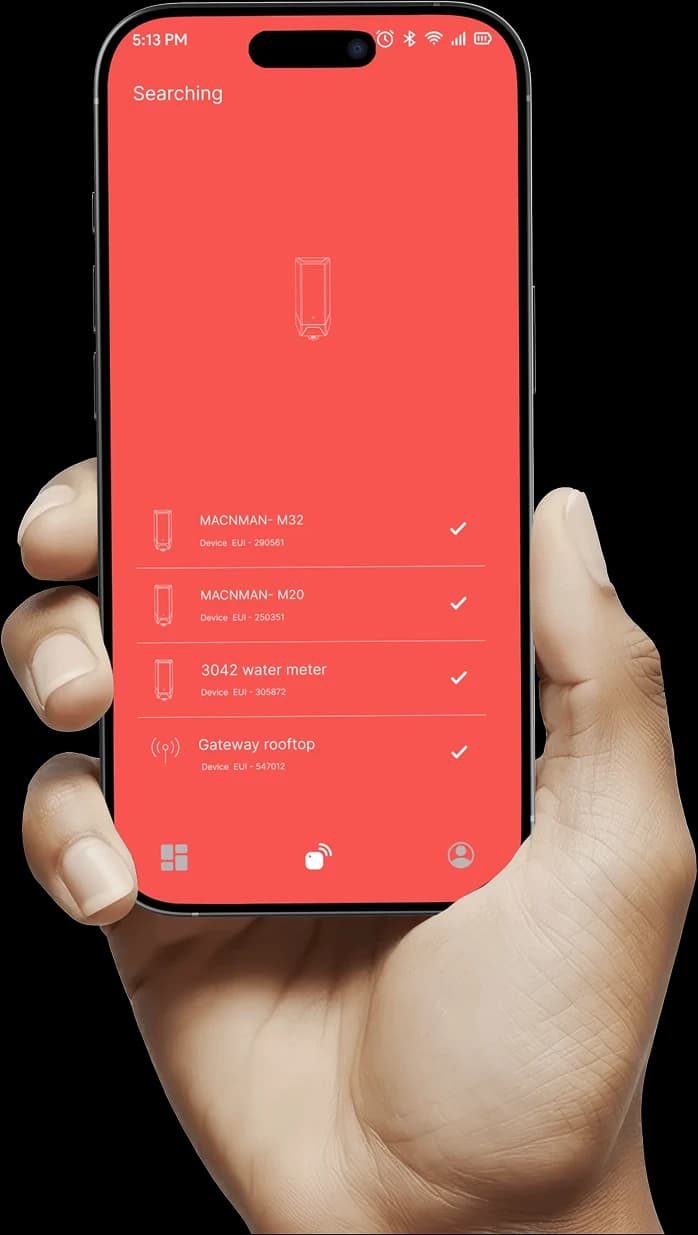
Uplink interval, thresholds, diagnostics and over-the-air configuration from your phone.

Works with Every LoRaWAN® Network Server

TTN, ChirpStack, MQTT, Orbiwise, Netmore or a private LNS — no vendor lock-in.

Capabilities

Measured by One Device, at One Point, at One Instant

CO₂, temperature and humidity are measured at the same point and the same instant by one device, so ventilation decisions do not depend on correlating three separate sensors. Response time is under 60 seconds and drift is ±(5 ppm + 0.5% of reading) per year.

CO₂, temperature and humidity are measured at the same point and the same instant by one device, so ventilation decisions do not depend on correlating three separate sensors. Response time is under 60 seconds and drift is ±(5 ppm + 0.5% of reading) per year. device feature illustration (mobile view)

Not sure which CO₂ range your site needs?

Customize it !

Architecture

LoRaWAN® CO₂ Sensor Network Architecture

LoRaWAN® CO₂ Sensor Network Architecture IoT architecture diagram (mobile view)

Why it matters

Most ventilation runs to a schedule that was set once and never revisited. Measuring CO₂ tells you whether the fresh air actually matches the people and the process in the space right now.

Cut fan energy

Demand-controlled ventilation runs extract at the rate the space needs. In car parks and large halls the fans are the load, so the saving is substantial.

Catch spoilage early

In grain and produce storage, respiring stock raises CO₂ before it raises temperature — so CO₂ gives you the earlier warning.

Evidence for compliance

Continuous logged readings turn a ventilation argument into a record, whether the question comes from a safety officer or an auditor.

Protect people

At 5,000 ppm you are at the workplace exposure limit. In cellars, wet wells and confined spaces a fixed sensor watches when nobody is carrying a detector.

How it works

How Does a LoRaWAN® CO₂ Sensor Work?

Step 1 of 5

Mount it where the air matters

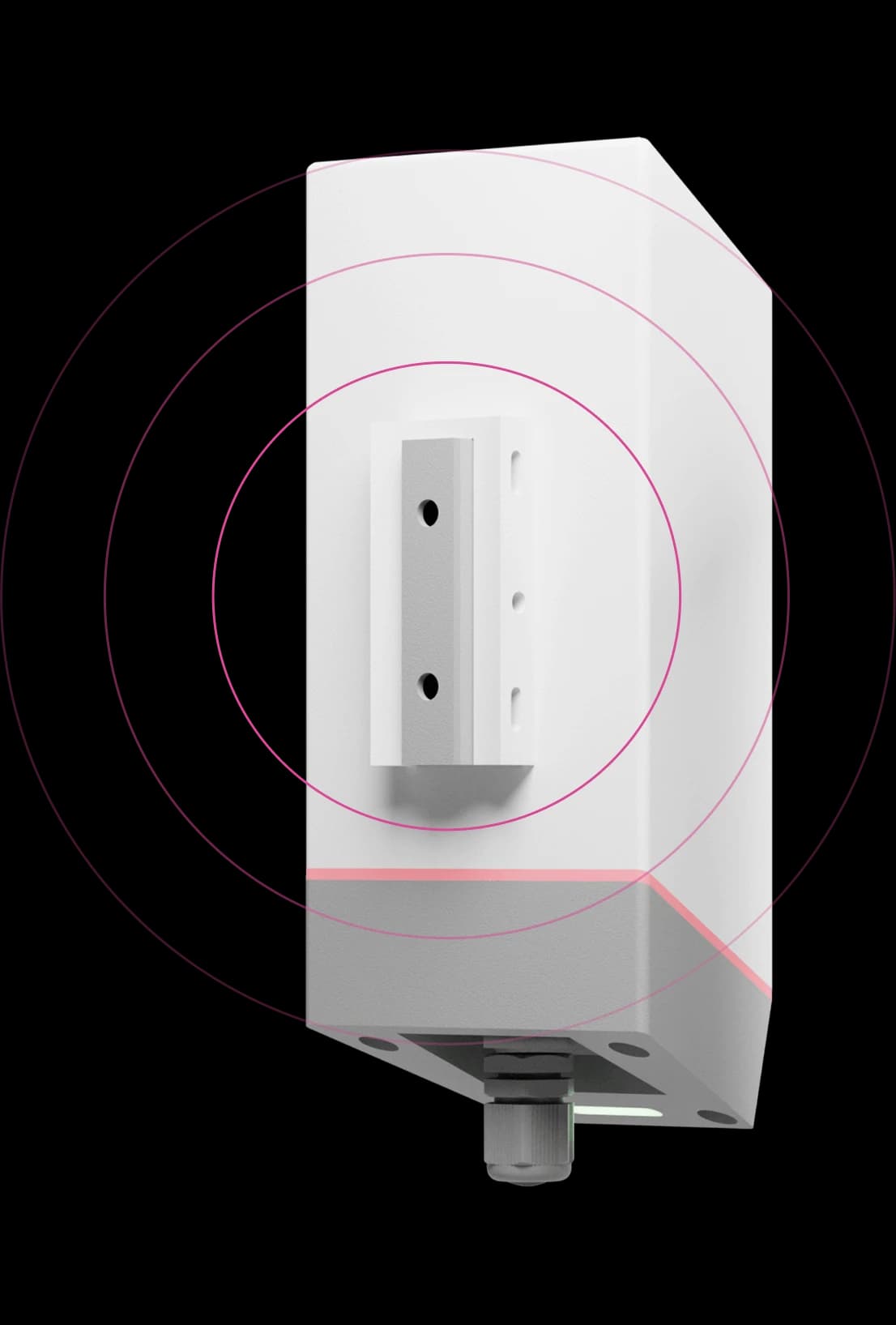
Breathing zone for occupancy and ventilation, low down for confined spaces where CO₂ pools. A clip and two screws on a pole or wall — no cabling and no mains supply.

MacSync LCO2 reporting modes

Reporting

Three Reporting Modes, Chosen by What You Are Watching For.

A reading on a fixed interval from one minute to 24 hours. Predictable data and predictable battery life — the right default for trend monitoring and compliance records.

Note: Hourly reporting is what gives the 7+ year battery figure.

Planning a multi-building ventilation rollout?

Customize it !

Cloud & LNS

Works with Every LoRaWAN® Network Server You Already Run

TTN, ChirpStack, MQTT, Orbiwise & Private LNS — No Vendor Lock-In

MacSync LCO2 sensors join any LoRaWAN® network server — The Things Network, ChirpStack, MQTT platforms, Orbiwise, Netmore or a private on-premise server — using standard OTAA activation, so there is no vendor lock-in.

Industrial IoT device data integration illustration
Cloud platforms and LoRaWAN network servers supported

Device-to-device

Monitor Smarter with Macnman

Why Choose the Macnman LoRaWAN® CO₂ Sensor

Accurate climate sensing, tool-free installation, and years of maintenance-free battery life — in one rugged wireless node.

MacTalk device-to-device communication without gateway or internet

Plug & Play

Truly plug & play — no complex setup.

Real-Time Alerts

Instant threshold alerts the moment conditions drift.

Long-Range

Long-range coverage for hard- to-reach places.

Want the engineering detail behind LoRaWAN?

Customize it !

RF performance

NDIR Measurement That Holds Up Outside an Office

Non-dispersive infrared sensing measures how much infrared light CO₂ absorbs, rather than inferring concentration indirectly, which is why independent outdoor field testing finds NDIR substantially more reliable than photoacoustic sensing. Automatic calibration keeps the zero point honest in ventilated spaces, and can be turned off for enriched or confined areas where levels never fall back to outdoor baseline.

NDIR Measurement That Holds Up Outside an Office

Capabilities

Real-Time CO₂ Monitoring over LoRaWAN®

Threshold Alerts, Event-Based Uplinks and Season-Long Records

Threshold Alerts, Event-Based Uplinks and Season-Long Records illustration

Installation

Wireless CO₂ Monitoring, No Cabling Required

The MacSync LCO2 mounts with a clip and two screws on a pole or a wall, powered by a long-life cell. With no wiring, mains power or civil work — a building or yard can be instrumented in an afternoon.

Wireless CO₂ Monitoring, No Cabling Required device mounting illustration

Choosing a CO₂ sensor

Comparing CO₂ Sensors — the Rows That Actually Matter

Ingress rating and measurement rating are two different things, and datasheets rarely put them side by side. A sensor can be sealed against rain and still have its CO₂ accuracy specified only for a mild indoor band — ours included. Here is what to check, with our own figures stated in full.

CriterionMacSync LCO2Typical indoor sensorWhy it matters
Ingress protectionIP65 standard, IP67 optionalIP20 to IP30 — indoor onlyBelow IP65 the unit cannot be mounted outside at all
Enclosure operating range−40 °C to +80 °C0 °C to +50 °C typicalThis is survival, not measurement accuracy
CO₂ accuracy±(50 ppm + 5% of reading)±(30 ppm + 3%) typicalCompare the number and the band together, never alone
Accuracy specified to+50 °C, non-condensing+50 °C, non-condensingAlmost every NDIR sensor shares this limit, including ours
Parameters measuredCO₂, temperature, humidityCO₂, temperature, humidityOne device, one battery, one network join
MountingPole or wallWall or deskPole mounting is what outdoor siting needs
Power19 Ah cell, 7+ yr hourly, or 9–36 V DC2–5 year battery typicalBattery life falls sharply as reporting rate rises
India complianceWPC compliant, IN865 standardOften EU868 onlyAn EU-only radio cannot be deployed legally in India

MacSync figures are from its datasheet. The indoor-sensor column describes the common pattern across widely sold LoRaWAN CO₂ sensors rather than any single product. We publish our accuracy band rather than leaving it in a footnote, because above +50 °C or in condensing conditions no NDIR sensor on the market — ours included — is operating inside its specified accuracy. Tell us the site conditions and we will say plainly whether this device suits them.

Installation

Mounted in minutes, reporting for years.

0.1Four steps to live CO₂ data
1
Choosing mounting height for the CO2 sensor

Choose the height

Mount in the breathing zone for occupancy monitoring, roughly 0.9 to 1.8 m. For confined spaces, mount low — CO₂ is heavier than air and pools near the floor.

2
Pole and wall mounting the MacSync LCO2

Fix to pole or wall

Use the supplied clip and screws. Outdoors, shade the unit from direct sun and avoid positions where water runs onto it.

3
Configuring the CO2 sensor with the Maya app

Pair with Maya over BLE

Set the uplink interval, the CO₂ thresholds and the frequency band from your phone, then join the network over OTAA.

4
Setting automatic baseline calibration

Set ABC to match the space

Leave automatic calibration on in normally ventilated spaces. Turn it off for greenhouses, grain stores and confined areas that never return to outdoor levels, and calibrate manually every two to three years instead.

Range & reliability

Long-Range LoRaWAN® Coverage Across the Whole Site

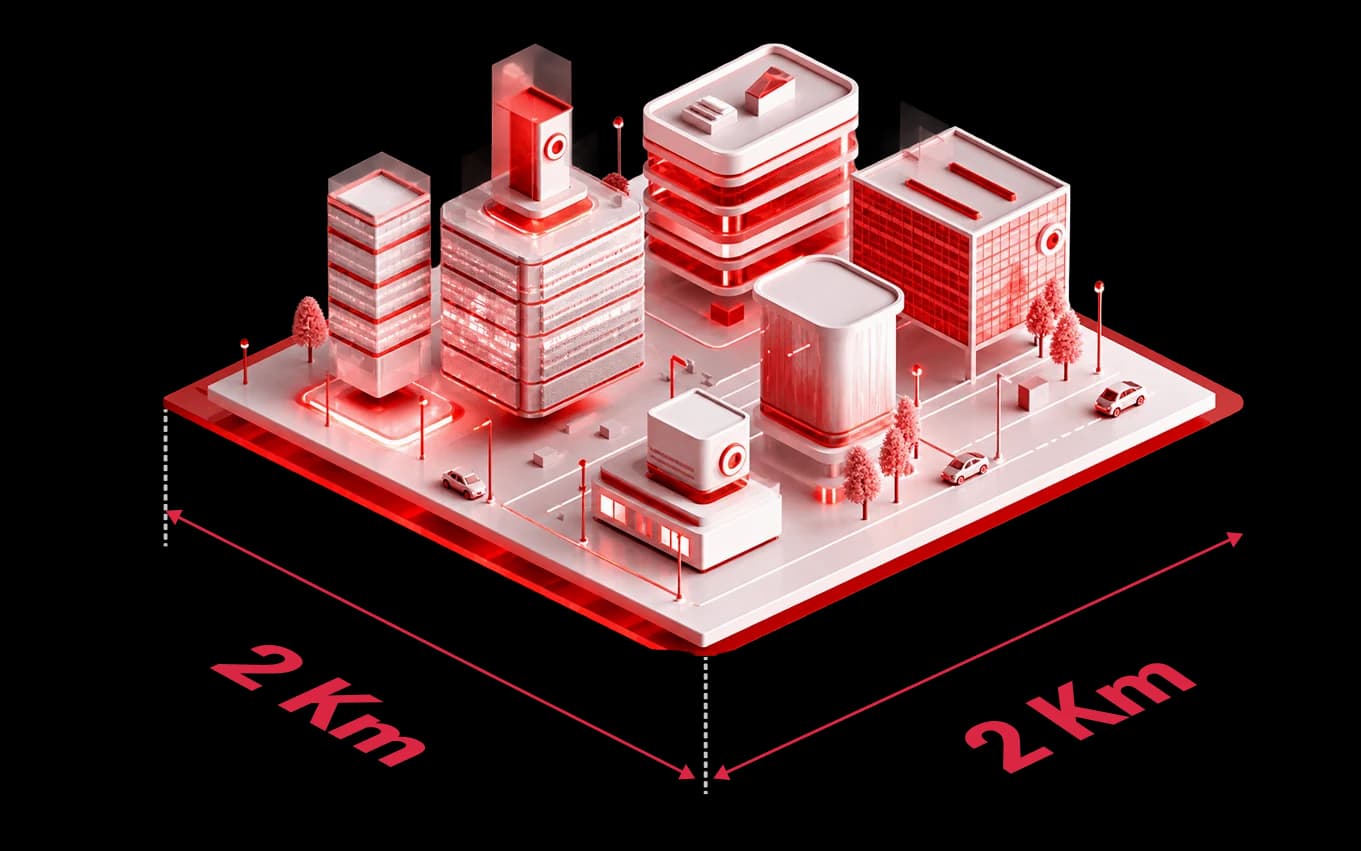
Reliable communication up to 15 km line-of-sight range for large sites and campuses

One gateway reaches sensors spread across a plant, a campus or a storage yard — kilometres of range at 23 dBm with −137 dBm sensitivity, so a single installation covers ground that would otherwise need dozens of access points or SIM cards.

MacSync LCO2 long-range LoRaWAN coverage across an industrial site

FAQ

Frequently asked questions

Yes, provided you separate survival from accuracy. The enclosure must be sealed — IP65 or better — and rated for the temperatures the site reaches; the MacSync LCO2 is IP65 with an IP67 option and operates from −40 to +80 °C. Accuracy is the separate question: like almost every NDIR CO₂ sensor sold, its accuracy is specified only up to +50 °C and in non-condensing air. Above that, or when dew forms on the optics, readings drift outside the specified figure until conditions return. For most outdoor Indian and Gulf sites that is workable for trend monitoring and threshold alerting; if you need guaranteed accuracy above 50 °C, no sensor in this class can give it to you and you should be told that before you buy.

Outdoor ambient is roughly 426 ppm as of 2024 and rising about 2.5 ppm a year. Indoors, ASHRAE Standard 62.1 sets no CO₂ limit at all — the widely quoted 1,000 ppm figure traces back to 19th-century work by Pettenkofer, not to ASHRAE. The European standard EN 16798-1 defines categories above the outdoor level: 550 ppm for Category I, 800 ppm for Category II, and 1,350 ppm for Categories III and IV. In practice, readings sustained above roughly 1,000 to 1,200 ppm indoors indicate ventilation is not keeping up with occupancy.

The OSHA permissible exposure limit and the NIOSH recommended exposure limit are both 5,000 ppm as a time-weighted average over a working shift. The short-term exposure limit is 30,000 ppm over 15 minutes, and the level immediately dangerous to life or health is 40,000 ppm. The OSHA figure is regulatory and the NIOSH one advisory. The MacSync LCO2 X2 measures to 5,000 ppm, which maps directly onto the 8-hour exposure limit for workplace monitoring.

The evidence is weaker than most marketing suggests. ASHRAE's 2025 position document on indoor carbon dioxide states that existing evidence for direct effects of CO₂ on health, well-being, learning, sleep and work performance at commonly observed indoor concentrations is inconsistent, and does not currently justify changes to ventilation standards. CO₂'s real value is as an indicator of whether ventilation is adequate for the number of people present, rather than as a toxin in its own right at those levels.

Wireless NDIR sensors in this class typically specify between ±(30 ppm + 3% of reading) and ±(100 ppm + 6% of reading). The MacSync LCO2 is specified at ±(50 ppm + 5% of reading), up to +50 °C and in non-condensing air, with repeatability of ±10 ppm and drift of ±(5 ppm + 0.5% of reading) per year. When comparing vendors, always read the number and the band together — an accuracy figure quoted without its temperature and humidity limits tells you very little, and nearly every sensor in this category shares the same +50 °C, non-condensing ceiling regardless of how its enclosure is rated.

NDIR, clearly. Independent field testing against a reference instrument found NDIR sensors achieved an R² of 0.64 to 0.69 outdoors with 0.90 agreement between units, while photoacoustic sensors managed only 0.16 to 0.24 with 0.36 agreement — leading the testers to recommend against photoacoustic sensors outdoors. Indoors the two technologies perform comparably. The MacSync LCO2 uses NDIR.

ABC is a self-calibration routine that keeps an NDIR sensor accurate without manual intervention. It records the lowest CO₂ reading seen over a rolling period of several days and slowly corrects the sensor's zero point against the expected fresh-air value of about 400 ppm. It works because a normally ventilated space returns to near-outdoor levels at some point — overnight, or at a weekend — giving the algorithm a reliable baseline to trust.

Whenever the space never returns to outdoor CO₂ levels. That includes greenhouses under CO₂ enrichment, mushroom farms, grain stores, confined spaces, digesters and continuously occupied rooms. In those environments ABC will mistake a permanently elevated level for fresh air and drag the calibration downward, so the sensor progressively under-reads. Turn ABC off for those deployments and plan on manual calibration every two to three years instead. This applies to every NDIR sensor, not only this one, and it is the most common cause of a CO₂ sensor quietly going wrong.

With ABC active in a normally ventilated space, effectively never over the sensor's service life. With ABC disabled — which is correct for enriched or confined environments — plan on manual calibration every two to three years. The MacSync LCO2 is factory calibrated, uses NDIR with automatic calibration, and specifies drift of ±(5 ppm + 0.5% of reading) per year.

Yes, and condensation is the more serious of the two. Water condensing on the optical path inside an NDIR sensor shifts readings until it clears, and repeated condensation can degrade the optics over time. This is why every CO₂ sensor, including this one, specifies its humidity range as non-condensing — ours is 0–100% RH non-condensing. For deployments where condensation is routine, such as cold stores, dawn dew, washdown areas and digesters, mount the sensor so it is shielded from direct wetting, and treat readings taken while the optics are wet as indicative rather than accurate.

Yes. NDIR measurement depends on the number of CO₂ molecules in the optical path, so readings shift with barometric pressure and therefore with altitude. This matters more in India than many buyers expect: Pune sits at about 560 m and Bengaluru at about 920 m, with Himachal and Uttarakhand installations far higher. If you are deploying significantly above sea level, tell us the site altitude when you request a quotation so the expected offset can be accounted for.

Because CO₂ on its own rarely tells you what to do. Ventilation decisions depend on the temperature you are trying to hold, condensation risk depends on humidity, and both affect how CO₂ behaves in the space. Measuring all three at the same point and the same instant removes the guesswork of correlating readings from separate devices, and it means one device, one battery and one LoRaWAN join instead of three.

About 2 years at 5-minute reporting, 4 years at 15-minute reporting, and 7 or more years at hourly reporting, on the 19 Ah industrial Li-SOCl₂ cell. The device draws roughly 100 µA asleep and 50 mA while transmitting, so the reporting interval is by far the largest factor. A 9–36 V DC powered variant is available where continuous high-rate reporting is needed and a supply is already present.

The MacSync LCO2 is a standard LoRaWAN v1.0.4 Class A device using OTAA activation, so it joins any compliant network server. It is in service with The Things Network, ChirpStack, MQTT-based platforms, Orbiwise, Netmore and private on-premise network servers. Class C is configurable through the Maya app. Supported bands are IN865, RU864, EU868, US915, AU915, KR920 and AS923, so the same hardware covers an Indian deployment and an export order.

Yes. Macnman Technologies designs and manufactures the MacSync LCO2 in Pune, Maharashtra. The device is WPC compliant for legal radio operation in India, conforms to the RoHS directive, and ships with IN865 support as standard. Support is provided directly by the engineering team in Indian Standard Time, and because the hardware is made locally, spares and replacements do not depend on import clearance.

Got an IoT idea?

Let’s bring it to life!

flag image

Let‘s Make it Easy

Reach Out Now

Icon

Contact to Sales

Talk to our friendly team

chat@macnman.com
Icon

Call Us

24 X 7 Always On

+91 7972856163
Icon

Contact to Support

We are here to help

support@macnman.com
Icon

Visit Us

Visit our office HQ

View on Google Map

Socials

LoRaWAN

4G IoT

WiFi Ble IoT

Nb IoT

Customize

Maya

Documentation

Case Studies

Blogs

Terms and Conditions

Welcome to Macnman Technologies Pvt Ltd! These Terms and Conditions ("Terms") govern your access to and use of the Macnman's website (the "Website"). As an Original Equipment Manufacturer (OEM) of IoT products and solutions, this Website is designed primarily to provide information to potential business partners, integrators, and clients. By accessing or using our Website, you acknowledge that you have read, understood, and agree to be bound by these Terms. If you do not agree to these Terms, please do not use our Website.

1. Acceptance of Terms

By using our Website, you confirm that you are authorized to enter into a binding contract on behalf of your business or entity (if applicable) and that you accept these Terms. These Terms constitute a legally binding agreement between you and Macnman IoT regarding your use of the Website.

2. Website Content & Intellectual Property

Ownership: All content on this Website, including but not limited to text, graphics, logos, images, audio clips, video clips, data compilations, software, product descriptions, and technical information (collectively, "Content"), is the property of Macnman IoT or its licensors and is protected by Indian and international copyright, trademark, and other intellectual property laws.

Informational & Marketing Purpose: All Content, including images, videos, illustrations, graphical representations, and textual descriptions of products and solutions, is provided for general informational, illustrative, and marketing purposes only. While we strive to present accurate and up-to-date information, this Content is intended to convey the general features, capabilities, and potential applications of our IoT products.

No Warranty from Website Content: The Content on this Website does not constitute a definitive specification, technical guarantee, or warranty for any specific product or solution. Actual product specifications, performance, features, and appearance are subject to change and are exclusively defined in official product datasheets, technical documentation, and specific commercial agreements (e.g., purchase orders, supply contracts) between Macnman IoT and its clients. You acknowledge that relying solely on Website Content for product suitability or performance is at your own risk.

Limited License: You are granted a limited, non-exclusive, non-transferable, revocable license to access and use the Website and its Content for your internal business informational purposes, such as evaluating potential OEM partnerships or product integration. You may not reproduce, distribute, modify, create derivative works of, publicly display, publicly perform, republish, download, store, or transmit any of the Content without the prior written consent of Macnman IoT.

3. Use of Website

You agree to use the Website only for lawful purposes consistent with its intended B2B/OEM informational nature and in a manner that does not infringe the rights of, or restrict or inhibit the use and enjoyment of this Website by any third party. Prohibited conduct includes, but is not limited to: Engaging in any activity that could harm, disable, overburden, or impair the Website or the servers and networks connected to the Website. Attempting to gain unauthorized access to any portion of the Website, other accounts, computer systems, or networks connected to the Website through hacking, password mining, or any other means. Using the Website to distribute any malicious software, viruses, or other harmful content. Collecting or storing personal data about other users or any commercial information without their express consent. Using the Website for direct sales or marketing of third-party products or services without explicit authorization.

4. Disclaimers

"As Is" and "As Available" Basis: The Website and all Content are provided on an "as is" and "as available" basis, without any warranties of any kind, either express or implied.
No Warranties of Performance or Suitability: Macnman IoT does not warrant that the Website or its Content will be error-free, uninterrupted, secure, or available at any particular time or location.
Product Development: Products and solutions mentioned on the Website may be under development or subject to change. At Macnman Technologies Pvt. Ltd. ("Macnman"), we take pride in our field success and may highlight it via case studies, client stories, and marketing materials. Unless otherwise agreed in writing, we consider ourselves to have full rights to share such information.

5. Limitation of Liability

To the fullest extent permitted by applicable law, in no event shall Macnman IoT, its affiliates, directors, officers, employees, agents, or suppliers be liable for any direct, indirect, incidental, special, consequential, punitive, or exemplary damages, including but not limited to, loss of profits, goodwill, data, or other intangible losses arising out of or in connection with your use of the Website or its Content.

6. Indemnification

You agree to defend, indemnify, and hold harmless Macnman IoT and all related entities from any claims, liabilities, damages, losses, or expenses arising from your violation of these Terms or your misuse of the Website.

7. Links to Third-Party Websites

The Website may contain links to third-party websites. We do not control or take responsibility for the content, privacy policies, or practices of any third-party websites. Inclusion of links does not imply endorsement.

8. Governing Law & Jurisdiction

These Terms shall be governed by Indian law. Any disputes shall be subject to the exclusive jurisdiction of the courts located in Pune, Maharashtra.

9. Changes to Terms

We reserve the right to update these Terms at any time. Continued use of the Website after changes have been posted constitutes acceptance of the new Terms. You should review these Terms regularly.

10. Returns & Replacement

Macnman Technologies Pvt Ltd accepts returns with a 100% payment refund within 7 days of delivery, provided the product is returned in its original condition with all accessories and packaging intact. No returns or refunds will be accepted after 7 days from the date of delivery if the product is found to be functional and free from manufacturing defects.

11. Warranty Policy

All Macnman IoT products are covered under a standard 12-month limited warranty from the date of delivery, against manufacturing defects only. The warranty does not cover damage caused by improper installation, mishandling, unauthorized modification, or operation outside the product’s specified conditions. Warranty claims will be processed only after product evaluation by Macnman’s technical team.

12. Product Modifications

Macnman Technologies Pvt Ltd reserves the right to modify the design, specifications, components, or features of its products without prior notice, in line with continuous improvement and technological upgrades.

13. Shipping & Delivery

All products are shipped through reliable courier or logistics partners. Macnman shall not be liable for any delay or damage occurring during transit once the shipment has been handed over to the carrier. Customers are advised to inspect packaging and report any visible damages immediately upon delivery.

14. Force Majeure

Macnman Technologies Pvt Ltd shall not be held responsible for any failure or delay in performance resulting from events beyond its reasonable control, including but not limited to natural disasters, war, strikes, government actions, network outages, or component shortages.

15. Limitation of Use

Macnman IoT products are designed for commercial and industrial use. They are not intended for life-support, safety-critical, or mission-critical systems where failure could lead to personal injury, death, or environmental harm. Customers assume all responsibility for use in such applications.

16. Confidentiality

Any non-public technical, business, or proprietary information shared between Macnman and its customers shall be treated as confidential and shall not be disclosed to third parties without prior written consent, except as required by law.

17. Export Compliance

Customers agree to comply with all applicable export control laws and regulations when purchasing or using Macnman products, including restrictions related to international transfers, re-exports, or use in sanctioned regions.

18. Dispute Resolution

In the event of any dispute arising out of or related to these Terms or any transaction with Macnman Technologies Pvt Ltd, both parties shall attempt to resolve the matter amicably through discussion. If unresolved, the dispute shall be subject to arbitration in Pune, Maharashtra, under the Arbitration and Conciliation Act, 1996, and governed by Indian law.