Wi-Fi RTD Temperature Sensor
Battery-Operated · PT100 & PT1000 · No Gateway Needed

MacSync W RTD is a battery-operated Wi-Fi RTD temperature sensor for PT100 and PT1000 probes. It measures from −200 to +850 °C and reports over your existing Wi-Fi network
Wireless Process Temperature Monitoring for Freezers, Ovens, Pipelines & Cold Rooms.
Wireless Process Temperature Monitoring for
Freezers, Ovens, Pipelines & Cold Rooms.
MacSync W RTD
Explore the highlights
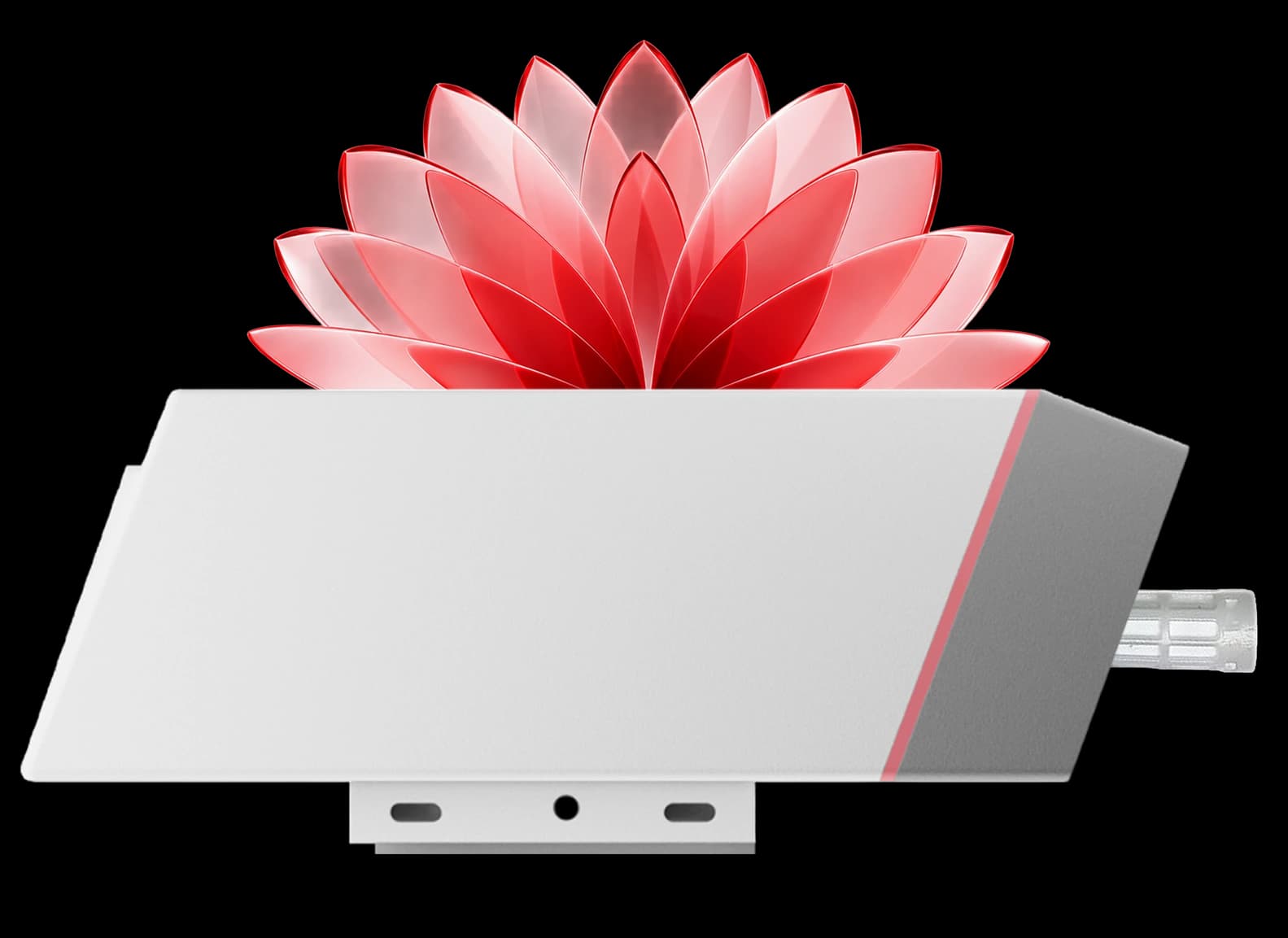
Two models: the X2 takes PT100 probes and the X5 takes PT1000. Both follow the IEC 60751 curve, so standard industrial probes work.
The RTD input covers cryogenic freezers to furnaces. The probe and its cable set the practical limit, and the electronics stay outside the hot or cold zone.
0.1 °C resolution, ±0.05 °C repeatability and less than 0.05 °C of drift a year. Probe tolerance is added on top, as with any RTD transmitter.
Joins the 2.4 or 5 GHz Wi-Fi you already run and publishes straight to your MQTT broker or HTTPS endpoint.
A battery variant on a 19 Ah cell, estimated at about 2.6 years on 15-minute uploads, or a 9–36 V DC variant for fast reporting.
Readings are stored on the device and forwarded when the network returns, so a router reboot does not leave a gap.
Set high and low limits and the sensor uploads as soon as one is crossed, instead of waiting for the next interval.
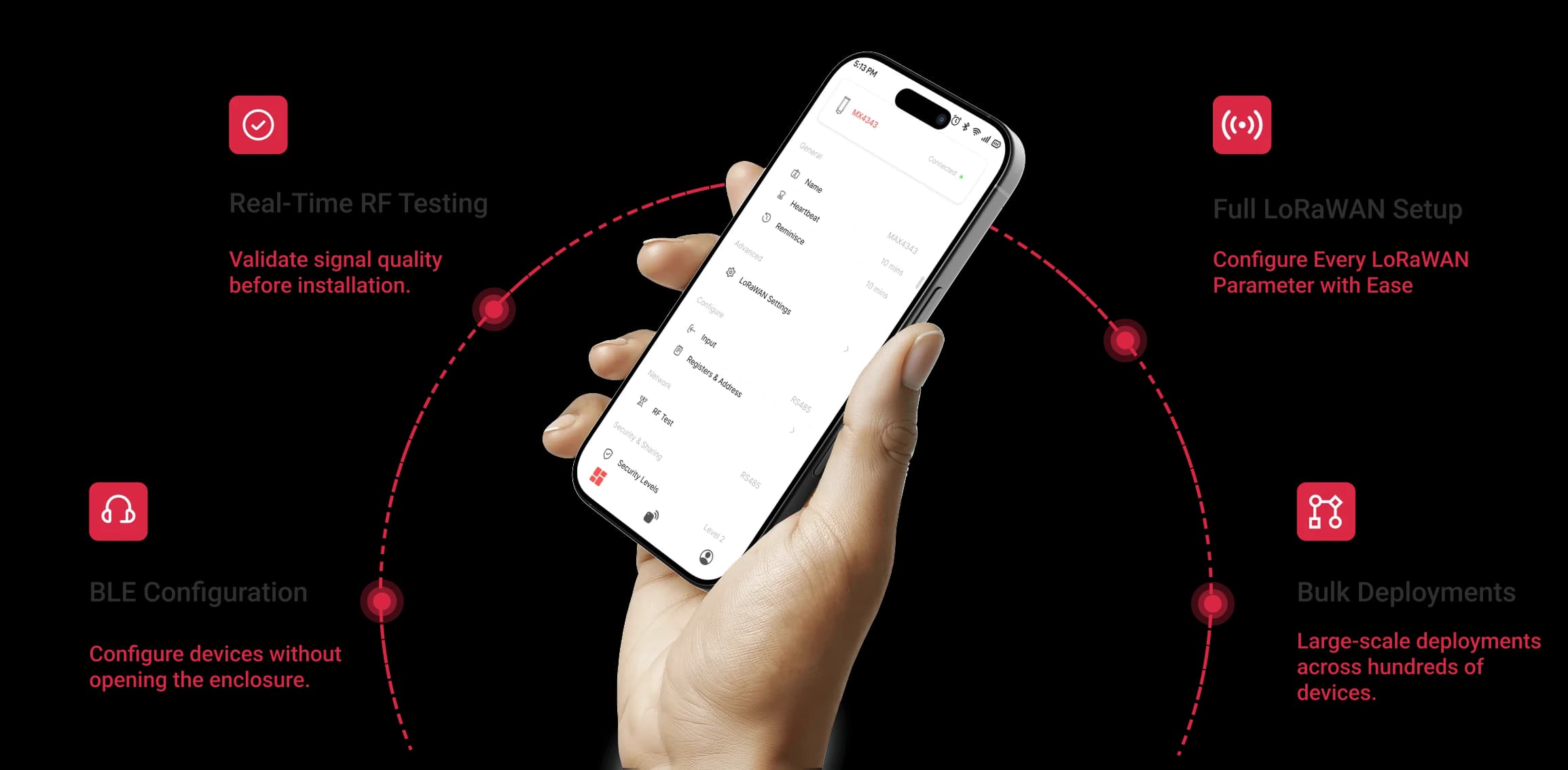
Pair over BLE with the Maya app to set the network, the server, the interval and the alarm limits.
Designed and manufactured in Pune. WPC compliant and RoHS conforming, in an IP65 enclosure with an IP67 option.
In plain terms
What Is a Wi-Fi RTD Temperature Sensor?
The short answer
A Wi-Fi RTD temperature sensor is a transmitter that reads a platinum resistance probe, usually a PT100 or PT1000, and sends the temperature over an ordinary Wi-Fi network to a server or cloud platform. The RTD probe gives the accuracy and range of an industrial instrument, and Wi-Fi removes the signal cable and the gateway, so a freezer, oven or pipeline can be monitored using the network a site already has.
RTD input
- PT100
On the X2 model
- PT1000
On the X5 model
- IEC 60751
Standard linearisation curve
Range
- +850 °C
Upper limit of the RTD input
- −200 °C
Lower limit of the RTD input
- 0.1 °C
Resolution
Accuracy
- ±0.2 °C
Typical transmitter accuracy
- ±0.05 °C
Repeatability
- <0.05 °C
Drift per year
Wi-Fi
- 2.4 / 5 GHz
Dual-band, joins your existing network
- WPA2 / WPA3
Wi-Fi security
- No gateway
No hub or receiver in between
Data
- MQTT
Also HTTP and HTTPS
- 30,000
Records stored on the device
- 3 modes
Time, threshold or sampling based
Power
- 19 Ah
Battery variant
- ~2.6 years
Estimated at 15-minute uploads
- 9–36 V
DC-powered variant


MacSync W RTD
The MacSync W RTD is a battery-operated Wi-Fi RTD sensor in two models: the X2 for PT100 probes and the X5 for PT1000. It measures from −200 to +850 °C at ±0.2 °C typical and publishes over MQTT or HTTPS, with 30,000 readings stored on board.
PT100 on the X2 and PT1000 on the X5, linearised to the IEC 60751 curve, with internal or external stainless steel probes.
Measures from −200 °C to +850 °C at 0.1 °C resolution. The probe and cable must be rated for the temperature they sit in.
±0.2 °C typical for the transmitter, with ±0.05 °C repeatability and under 0.05 °C of drift a year. Probe tolerance adds to this.
Dual-band 2.4 and 5 GHz, IEEE 802.11 b/g/n/ac, with WPA2 or WPA3 and DHCP or a static IP.
Publishes over MQTT, HTTP or HTTPS with TLS, and stores 30,000 records on the device through an outage.
A battery variant on a 19 Ah cell, estimated at about 2.6 years on 15-minute uploads, or a 9–36 V DC variant.
Also searched for as a Wi-Fi PT100 temperature sensor, a wireless PT100 transmitter or a Wi-Fi temperature data logger with a probe. Battery life is estimated for a 19 Ah cell with DHCP and TLS; a static IP extends it.
Engineered for
Built for the Places a Room Sensor Cannot Reach
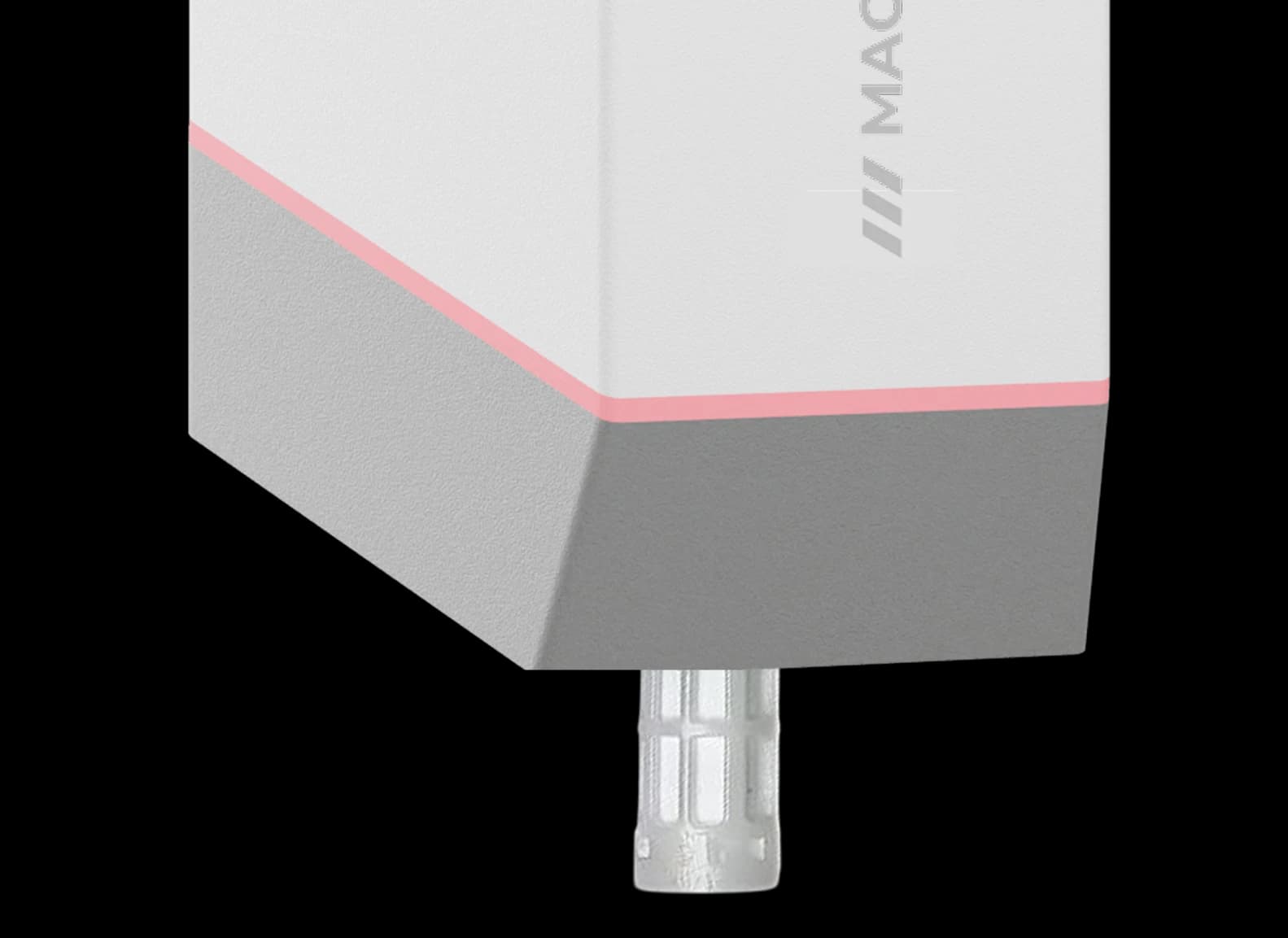
The transmitter stays on the wall outside while a stainless steel RTD probe sits inside the freezer, oven, tank or pipe. The input reads from −200 to +850 °C.
01 / 04
Applications
Where Is a Wi-Fi RTD Temperature Sensor Used?

Ultra-Low Freezers
Vaccines, samples and reagents stored at −80 °C. The probe sits in the chamber and the transmitter outside, where the Wi-Fi reaches.
Read case studiesCryogenic & Liquid Nitrogen Storage (Down to −200 °C, RTD input): Liquid nitrogen dewars and cryogenic freezers sit far below what a room sensor can read. The RTD input covers down to −200 °C.
Cold Rooms & Blast Freezers (Cold chain, Threshold alerts): Product-temperature monitoring with an alert when a door is left open or a compressor trips and the room starts to warm.
Pharma Storage & Stability Chambers (Unbroken record, 30,000 records): Continuous readings with on-board storage give an unbroken record for audits, even through a network outage.
Ovens, Dryers & Curing Lines (Up to +850 °C, Process heat): Baking, drying and curing ovens where the probe sees the process temperature and the electronics stay outside.
Boilers, Heaters & Furnaces (High temperature, No signal cable): High-temperature points on boilers, heaters and furnaces, reported without running a signal cable back to the panel.
Pipelines & Heat Exchangers (Supply and return, Thermowell): A probe in a thermowell on the supply and return lines shows what a heat exchanger or chiller is actually doing.
Food Processing (Cooking and chilling, Automatic records): Cooking, chilling and holding temperatures logged automatically, as the record a food-safety plan asks for.
Motors, Bearings & Compressors (Predictive maintenance, Trend): A bearing or winding that runs hotter week after week is flagged before it becomes a failure.
HVAC & Chilled Water (Supply and return, BMS): Chilled-water and air-handling temperatures published to the BMS over the building's own Wi-Fi.
Laboratories & Incubators (Stable reading, ±0.05 °C repeatability): Incubators, water baths and environmental chambers that need a stable, repeatable reading.
Storage Tanks & Silos (Bulk storage, Existing Wi-Fi): Tank and silo temperatures in facilities that already have Wi-Fi coverage across the floor.
Breweries, Dairies & Fermentation (Process tanks, SS304 / SS316 probe): Fermenters, pasteurisers and holding tanks, measured with a stainless steel probe in SS304 or SS316.
Browse all 13 applications
01 / 13
Choosing a probe
PT100 or PT1000: Which RTD Should You Use?
Both are platinum RTDs that follow the same IEC 60751 curve and reach the same tolerance classes. The difference is the base resistance, and that decides how much the connecting wire matters.
| Criterion | PT100 — MacSync W RTD X2 | PT1000 — MacSync W RTD X5 |
|---|---|---|
| Resistance at 0 °C | 100 Ω | 1,000 Ω |
| Change per °C | About 0.385 Ω | About 3.85 Ω |
| Error from 1 Ω of lead resistance, 2-wire | About 2.6 °C | About 0.26 °C |
| Standard and tolerance classes | IEC 60751, Class AA / A / B | IEC 60751, Class AA / A / B |
| Where it is usual | Process plants and existing installations | Battery devices, HVAC and long two-wire runs |
| Choose it when | PT100 probes are already installed | Installing new probes, especially with long leads |
Sensitivity figures follow from the IEC 60751 temperature coefficient of 0.00385 per °C. Both models measure the same range, −200 to +850 °C, at the same ±0.2 °C typical transmitter accuracy.
Works with
Why Choose the MacSync Wi-Fi RTD Temperature Sensor?
A battery-operated transmitter for PT100 or PT1000 probes, measuring −200 to +850 °C at ±0.2 °C typical and publishing over MQTT or HTTPS with no gateway.A battery-operated transmitter for PT100 or PT1000 probes, measuring −200 to +850 °C at ±0.2 °C typical and publishing over MQTT or HTTPS with no gateway.

Where it fits
From Cryogenic Freezers to Furnaces, Wherever a Probe Has to Go
Cold Chain, Pharma & Laboratories
Ultra-low freezers, liquid nitrogen storage, cold rooms, stability chambers and incubators, where the record has to be continuous and the probe has to read far below zero.

Process Heat: Ovens, Boilers & Pipelines
Ovens, dryers, furnaces, heat exchangers and steam or thermal-fluid lines, where the probe sees hundreds of degrees and the electronics stay outside.

Machines & Building Services
Motor windings, bearings, compressors, chilled water and air handling, where a rising temperature is the first sign of a fault.

Cold Chain, Pharma & Laboratories
Ultra-low freezers, liquid nitrogen storage, cold rooms, stability chambers and incubators, where the record has to be continuous and the probe has to read far below zero.
Process Heat: Ovens, Boilers & Pipelines
Ovens, dryers, furnaces, heat exchangers and steam or thermal-fluid lines, where the probe sees hundreds of degrees and the electronics stay outside.
Machines & Building Services
Motor windings, bearings, compressors, chilled water and air handling, where a rising temperature is the first sign of a fault.
Why Macnman
Do Wi-Fi RTD Sensors Need a Hub or Gateway?
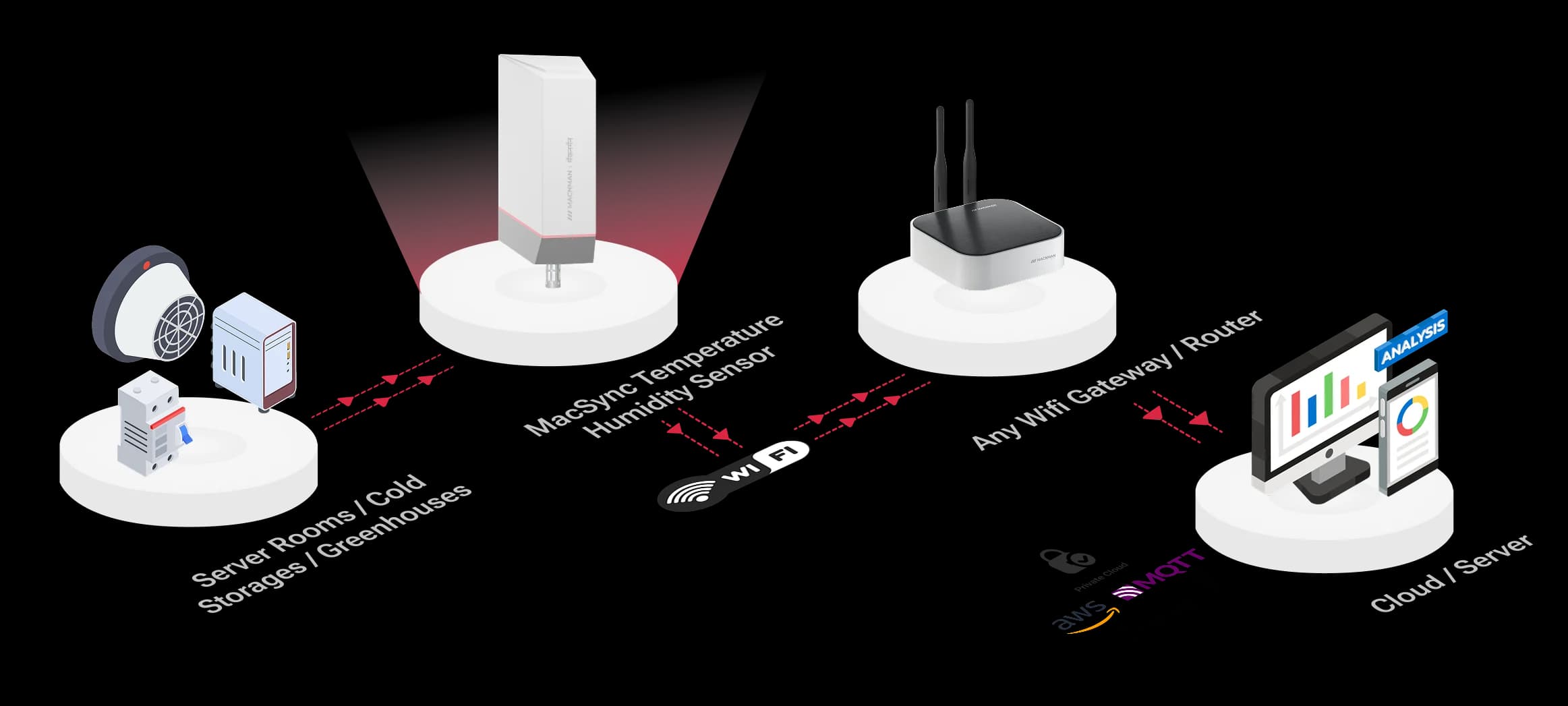
No. The MacSync W RTD joins your existing Wi-Fi network directly, on 2.4 or 5 GHz, with no gateway, hub or receiver. Mount the transmitter where the Wi-Fi reaches, run the probe to the measuring point, connect it with the Maya app, and readings arrive at your broker or dashboard.
Free planning tools
Size your deployment before you order the hardware
Free engineering calculators for coverage, range and battery life — built on measurements from our own deployments rather than textbook models, which is why the answers tend to be smaller and a good deal more useful. Nothing here quotes a range we have not actually achieved.
No sign-up, no email, nothing to install. More on the way for Wi-Fi and BLE.
Hardware
Rugged IP65 Wi-Fi RTD Sensor, Built for Plant Floors and Cold Rooms
The glass-filled nylon enclosure is IP65 rated with an IP67 option and operates from −40 °C to +80 °C. That is the rating of the electronics, not of the measuring point: the RTD input reads from −200 °C to +850 °C, so the transmitter is mounted outside the freezer or oven and the probe is run in.

At a glance
MacSync W RTD — Key Specifications
Every key specification in one view.

PT100 / PT1000
RTD input
X2 for PT100 · X5 for PT1000
−200 to +850 °C
Measurement range
Probe and cable set the practical limit
±0.2 °C
Accuracy
Typical, transmitter · 0.1 °C resolution
2.4 / 5 GHz
Wi-Fi
802.11 b/g/n/ac · WPA2 / WPA3
30,000
On-board records
Stored through Wi-Fi outages
IP65
Ingress
IP67 optional · electronics −40 to +80 °C
Choosing a sensor type
RTD, Thermocouple or Thermistor?
Three kinds of temperature sensor cover almost every industrial job. An RTD is the one to choose when the reading has to be accurate, repeatable and comparable from one year to the next.
| Criterion | RTD (PT100 / PT1000) | Thermocouple | Thermistor |
|---|---|---|---|
| How it measures | Resistance of a platinum element | Voltage from a junction of two metals | Resistance of a ceramic semiconductor |
| Typical range | −200 to +850 °C | Above 1,000 °C on common types | About −40 to +125 °C |
| Accuracy and stability | The most accurate and stable of the three | The least accurate, with the widest range | Accurate only over a narrow range |
| Best for | Freezers, process lines, ovens, anything audited | Kilns, flames and very high temperatures | Rooms, refrigerators and air |
General characteristics of each sensor type; individual probes vary. The MacSync W RTD accepts PT100 probes on the X2 and PT1000 probes on the X5. It does not accept thermocouples or thermistors.
Features
Everything Built into One Wi-Fi RTD Temperature Sensor
Threshold-Based Alerts
Set high and low limits and the sensor uploads the moment one is crossed.
Upload on a fixed interval, on a threshold, or after a stored batch of samples.
Works on Your Existing Wi-Fi
Joins 2.4 or 5 GHz networks directly, with WPA2 or WPA3 security and DHCP or a static IP.
Battery or 9–36 V DC
A 19 Ah battery variant, estimated at about 2.6 years on 15-minute uploads, or a DC-powered variant.
PT100 and PT1000 Models
The X2 reads PT100 probes and the X5 reads PT1000, both on the IEC 60751 curve.
±0.2 °C Typical Accuracy
0.1 °C resolution, ±0.05 °C repeatability and under 0.05 °C of drift a year.
30,000 Records On-Board
Readings are stored on the device and forwarded when the network returns.
Macnman Maya App
Network, server, upload interval, alarm limits and diagnostics from your phone.
Cloud & MQTT Ready
MQTT, HTTP and HTTPS to AWS IoT Core, Azure IoT Hub, on-premise servers, SCADA and BMS.
Capabilities
On-Board Memory That Never Loses a Reading
Built-in memory stores 30,000 records on the sensor itself. Through a Wi-Fi outage, a router reboot or a server restart, the temperature history stays on the device and is uploaded when the link returns.

Architecture
Wi-Fi RTD Temperature Sensor Network Architecture
Why it matters
A Probe at Every Critical Point. Four Ways It Pays Off.
A wired RTD needs a transmitter, a signal cable and a spare input on a PLC. A Wi-Fi RTD sensor needs a probe and a network that is already there.
Why it matters
A wired RTD needs a transmitter, a signal cable and a spare input on a PLC. A Wi-Fi RTD sensor needs a probe and a network that is already there.
No signal cable
Nothing to pull back to the control room; the reading travels over the Wi-Fi the site already runs.
Stock and product protected
An alert the moment a freezer warms or an oven overshoots, while there is still time to act.
Records without clipboards
Readings are logged automatically and kept through outages, which is what an audit asks to see.
Early warning on machines
A bearing or winding that runs hotter week after week is flagged before it fails.
How it works
How Does a Wi-Fi RTD Temperature Sensor Work?
Step 1 of 5
Mount the transmitter, place the probe
Fix the transmitter where the Wi-Fi reaches and the temperature is between −40 and +80 °C. Run the RTD probe to the measuring point: inside the freezer, the oven, the tank or a thermowell.
Join your Wi-Fi with Maya
Pair over Bluetooth with the Maya app, enter the network and the broker or server details, and set the upload interval and alarm limits.
The probe's resistance becomes a temperature
A platinum element's resistance rises with temperature in a known way. The transmitter measures it and converts it using the IEC 60751 curve.
Readings ride your existing network
The reading is published over MQTT or HTTPS with TLS. If the network is down it is stored on the device, up to 30,000 records, and sent later.
Your platform shows it and raises the alarm
The value lands in your dashboard, SCADA or BMS. Cross a limit and the sensor uploads immediately rather than waiting for the next interval.
Reporting modes
Three Upload Modes, Chosen by What You Are Protecting.
An upload on a fixed interval. Predictable data and predictable battery life — the right default for a trend record.
Note: At 15-minute uploads the battery estimate is about 2.6 years.
The sensor samples on its own schedule and uploads the moment a high or low limit is crossed. The shortest route from an excursion to an alarm. Note: Best for freezers, cold rooms and ovens with a limit that must not be passed.
Readings are taken at a short interval, stored, and uploaded together. You keep a fine-grained record without paying for a Wi-Fi connection on every sample. Note: Each Wi-Fi connection costs far more energy than a reading, so batching extends battery life.
Cloud & LNS
Open Connectivity with Universal Cloud Compatibility
Streams to MQTT, HTTPS & Private Clouds — No Vendor Lock-In
MacSync W RTD sensors publish readings over your existing network to MQTT brokers, HTTPS endpoints, AWS IoT Core, Azure IoT Hub or your own on-premise server — TLS encrypted, with no gateway hardware and no vendor lock-in.


Device-to-device
Monitor Smarter with Macnman
Why Choose the Macnman Wi-Fi RTD Temperature Sensor
PT100 and PT1000 accuracy on your existing Wi-Fi — no gateway, tool-free installation and a rugged wireless node.

Plug & Play
Joins your existing Wi-Fi — no hub, no gateway.
Real-Time Alerts
Instant threshold alerts the moment conditions drift.
Long Battery Life
Years of monitoring on one 19 Ah cell.
RF performance
Stable Readings in Harsh RF & Industrial Environments
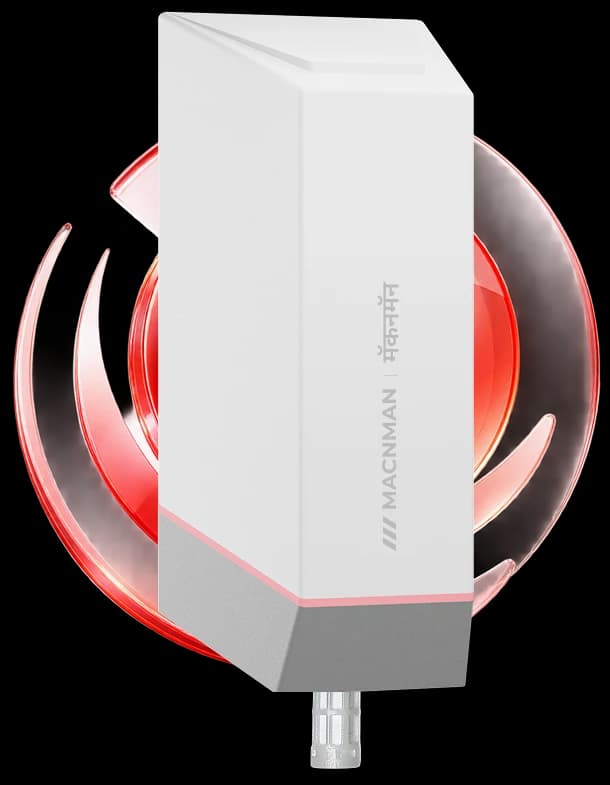
Designed for real sites, the MacSync W RTD holds its link on crowded networks on 2.4 or 5 GHz and reconnects on its own after an outage. On the measuring side, IEC 60751 linearisation and less than 0.1 °C of self-heating at 1 mA excitation keep the reading true to the probe.
Capabilities
Real-Time Process Temperature Monitoring over Wi-Fi
Threshold Alerts, Event-Based Uploads & Audit-Ready Data Logging
Installation
Quick & Wireless RTD Sensor Installation
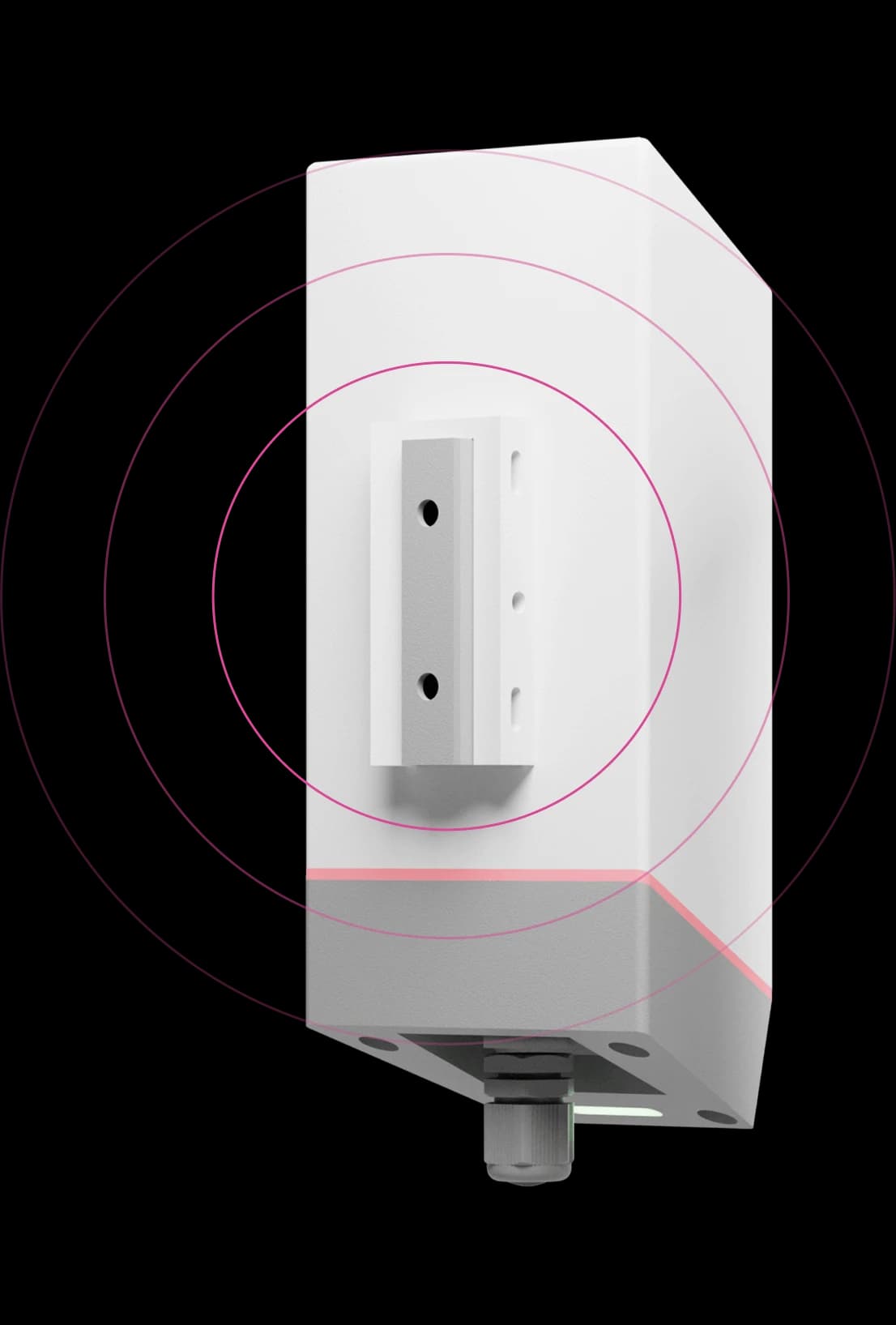
The MacSync W RTD mounts with a clip and two screws on a wall or a pole, with the probe run to the measuring point. With no signal cable, gateway or control-panel input, a freezer room or an oven line can be instrumented in an afternoon.
The MacSync W RTD mounts with a clip and two screws on a wall or a pole, with the probe run to the measuring point. With no signal cable, gateway or control-panel input — a freezer room or an oven line can be instrumented in an afternoon.
Choosing a Wi-Fi RTD sensor
Comparing Wi-Fi RTD Sensors — the Rows That Actually Matter
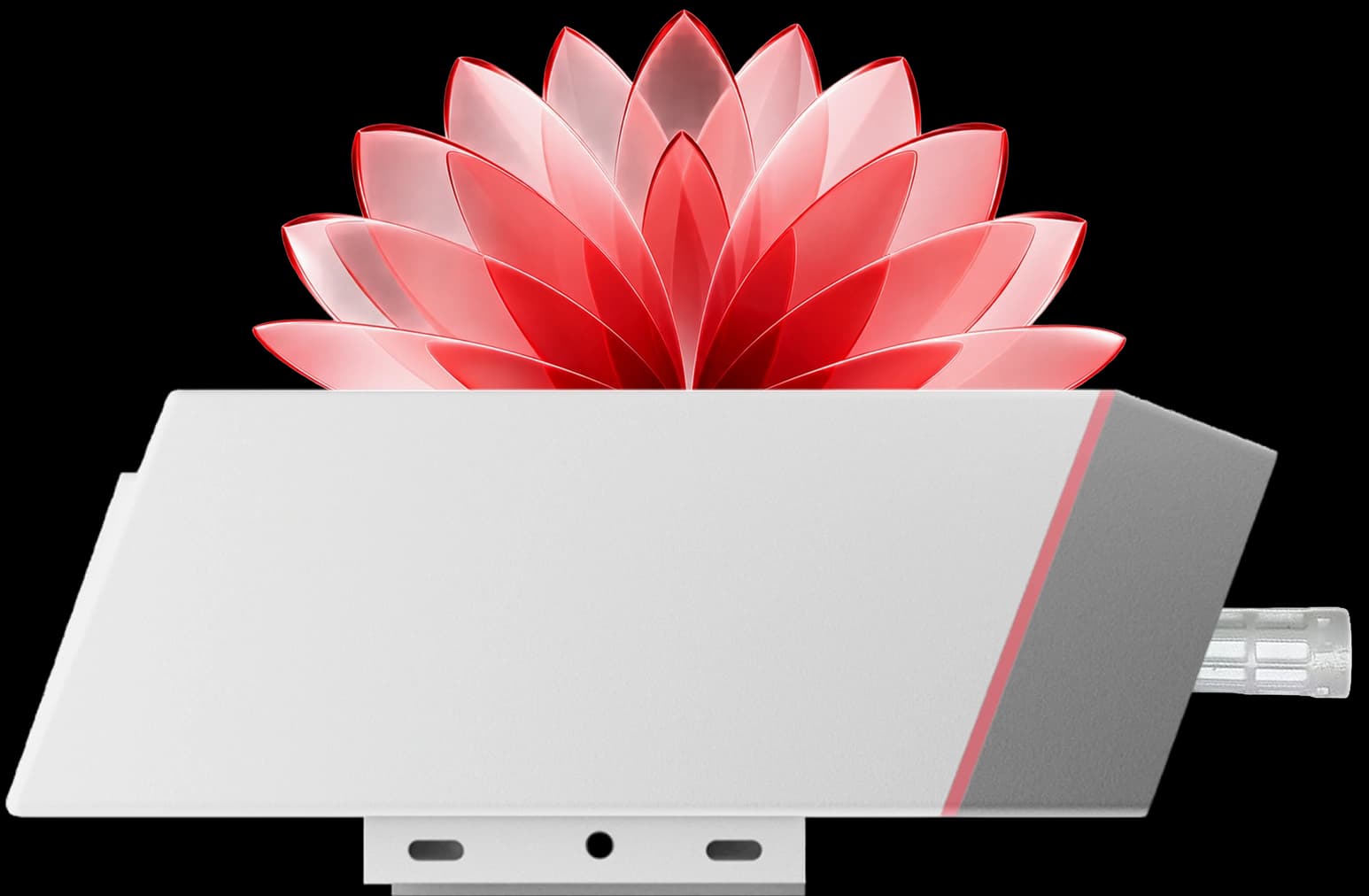
Most Wi-Fi PT100 loggers are built for laboratories and report to the maker's own software. Ours is built for plant networks and open protocols. Neither is better in every row, so here are both, with our weaker rows left in.
| Criterion | MacSync W RTD | Typical Wi-Fi PT100 logger | Why it matters |
|---|---|---|---|
| RTD type | PT100 (X2) or PT1000 (X5) | PT100 only, usually | PT1000 suits long two-wire leads and battery devices |
| Measurement range | −200 to +850 °C | Often −200 to about +150 or +250 °C | Decides whether ovens and furnaces are covered |
| Transmitter accuracy | ±0.2 °C typical | ±0.1 °C is available | Our weaker row; probe tolerance is added to either figure |
| Resolution | 0.1 °C | 0.05 °C is available | Finer resolution matters for laboratory work |
| Wi-Fi | Dual-band 2.4 and 5 GHz, WPA2 / WPA3 | Often 2.4 GHz only, WPA2 | Many plants reserve 2.4 GHz or require WPA3 |
| Where the data goes | Your own MQTT broker or HTTPS endpoint | Usually the maker's software or cloud | Open protocols keep the data in your own systems |
| Records stored on the device | 30,000 | Up to 140,000 on some loggers | Our weaker row; 30,000 is about 10 months of 15-minute readings |
| Battery | 19 Ah cell, estimated about 2.6 years at 15-minute uploads | AA cells, about 1 year | Fewer battery changes on sensors in awkward places |
| Powered option | 9–36 V DC variant | Mains adapter on some models | Removes the battery question for fast reporting |
| Ingress protection | IP65 standard, IP67 optional | IP65 on industrial models | Wash-down areas and cold rooms need a sealed unit |
| Made in | India (Pune), WPC compliant | Imported | Local support, spares and documentation |
MacSync figures are from its datasheets; battery life is estimated with our Wi-Fi battery calculator for a 19 Ah cell with DHCP and TLS. The other column describes the common pattern across widely sold Wi-Fi PT100 loggers rather than any single product.
Installation
Mounted in minutes, reporting for years.
Check the Wi-Fi at the mounting point
Stand where the transmitter will go and check the signal on your phone. Metal freezer walls and oven casings block Wi-Fi, so the transmitter goes outside and the probe goes in.
Fix the transmitter, route the probe
Use the supplied clip and screws. Keep the transmitter between −40 and +80 °C; only the probe sees the process temperature.
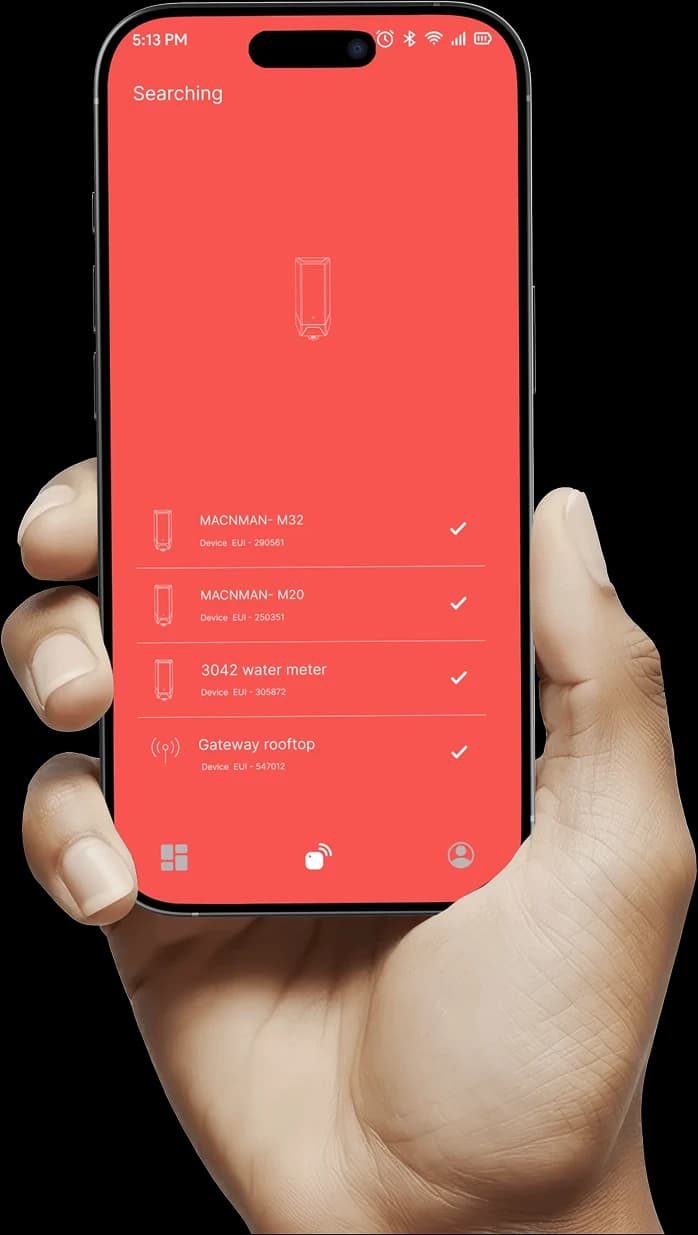
Pair with Maya over BLE
Enter the Wi-Fi network, the MQTT broker or HTTPS endpoint, the upload interval and the alarm limits from your phone.

Verify against a reference
Compare the first readings with a calibrated reference thermometer at a known point before relying on the alarm limits.
Range & reliability
Reliable Wi-Fi Connectivity, Built for Industrial Sites
Dependable 2.4 / 5 GHz Wi-Fi with automatic reconnect and 30,000-record on-board buffering
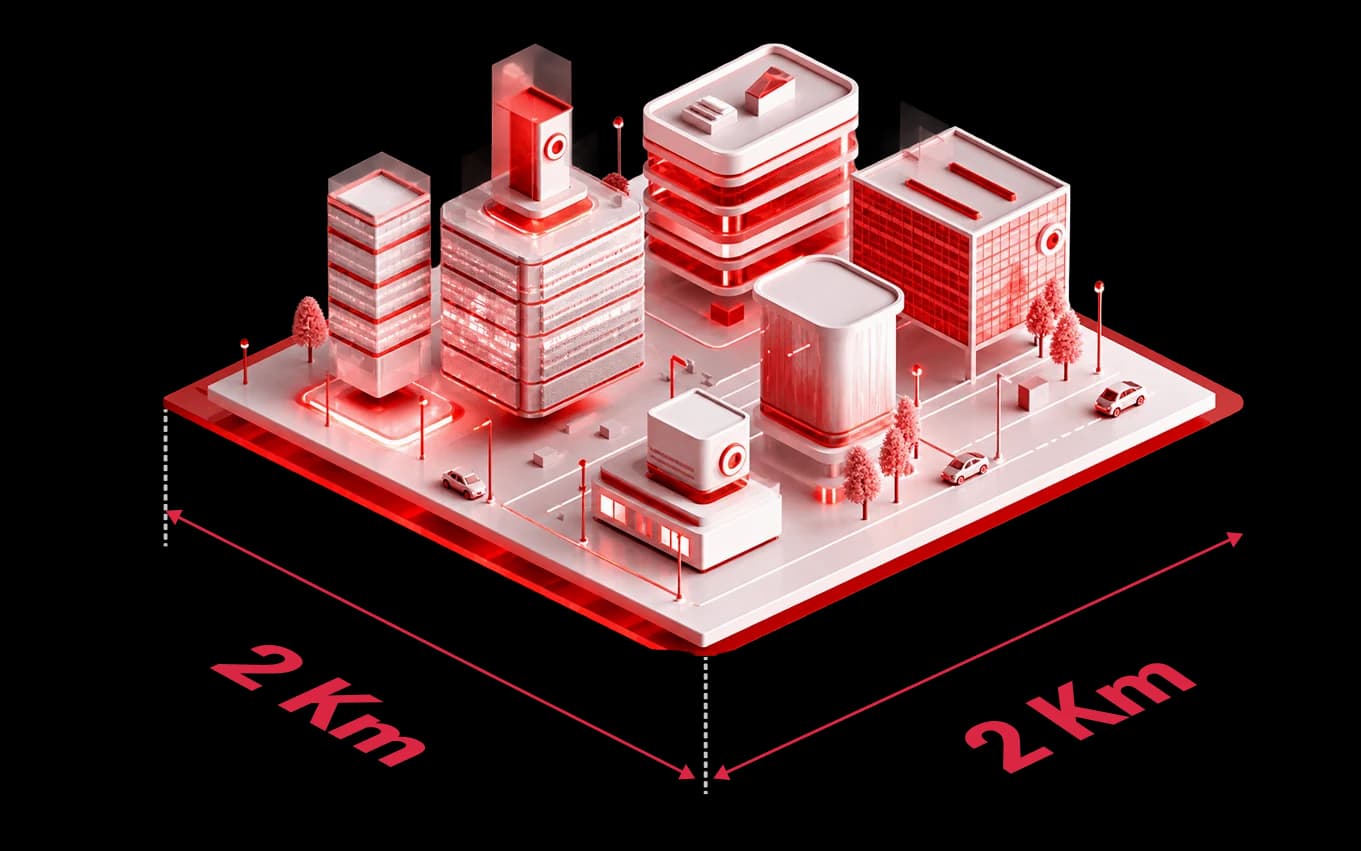
The MacSync W RTD holds a dependable link on busy industrial networks, with automatic reconnection after outages and 30,000 on-board records that keep the history intact until the connection returns. Typical indoor range is up to 100 m from the access point, depending on the building.
FAQ
Frequently asked questions
A Wi-Fi RTD temperature sensor is a transmitter that reads a platinum resistance probe — a PT100 or PT1000 — and sends the temperature over an ordinary Wi-Fi network to a server or cloud platform. The probe provides the accuracy and range of an industrial instrument, and Wi-Fi removes both the signal cable and the gateway. It is also called a Wi-Fi PT100 temperature sensor, a wireless PT100 transmitter or a Wi-Fi temperature data logger with a probe.
An RTD, or resistance temperature detector, is a sensor whose electrical resistance rises with temperature in a precisely known way. Industrial RTDs use platinum. A PT100 has a resistance of 100 Ω at 0 °C and a PT1000 has 1,000 Ω at 0 °C; both follow the IEC 60751 standard curve. The transmitter measures the resistance and converts it to a temperature.
If PT100 probes are already installed, keep them and use the MacSync W RTD X2. For new installations the PT1000 on the X5 is usually the easier choice, because the wire between probe and transmitter matters ten times less: 1 Ω of lead resistance reads as about 2.6 °C on a two-wire PT100 but only about 0.26 °C on a PT1000. Both types follow IEC 60751 and are made in the same tolerance classes.
The transmitter is accurate to ±0.2 °C typical, with 0.1 °C resolution, ±0.05 °C repeatability and less than 0.05 °C of drift a year. The probe adds its own tolerance, as with every RTD transmitter. Under IEC 60751 a Class A probe is within ±(0.15 + 0.002 × t) °C and a Class B probe within ±(0.30 + 0.005 × t) °C, where t is the temperature in °C without its sign — so at 100 °C that is ±0.35 °C for Class A and ±0.8 °C for Class B.
The RTD input measures from −200 °C to +850 °C. In practice the probe and its cable set the limit, so they must be rated for the temperature they sit in. The electronics are rated from −40 °C to +80 °C, which is why the transmitter is mounted outside the hot or cold zone and only the probe goes in.
Yes. Both are inside the −200 °C lower limit of the RTD input; liquid nitrogen boils at about −196 °C. Use a probe and cable rated for that temperature, feed the probe through the freezer's port, and mount the transmitter outside where the Wi-Fi reaches and the temperature is above −40 °C.
No. The MacSync W RTD joins your existing 2.4 or 5 GHz Wi-Fi network directly and publishes to your MQTT broker or HTTPS endpoint. There is no gateway, hub or proprietary receiver to buy or maintain.
Usually not, because insulated metal walls block the signal. That is why the transmitter is mounted outside and only the probe goes inside. In a walk-in cold room that has an access point inside it, the transmitter can be mounted inside as long as the room stays above −40 °C.
The battery variant runs on a 19 Ah cell. Using our Wi-Fi battery calculator with the datasheet's sleep current, a DHCP connection and TLS, the estimate is about 1 year at 5-minute uploads, about 2.6 years at 15 minutes and about 6.8 years at hourly uploads. A static IP address shortens each connection and extends those figures. For readings every minute or two, choose the 9–36 V DC variant.
Nothing is lost. The sensor keeps measuring and stores up to 30,000 records on the device, then uploads them when the Wi-Fi or the server comes back. At one reading every 15 minutes that is about 10 months of history.
It publishes over MQTT, HTTP and HTTPS, so it works with any MQTT broker or REST endpoint: AWS IoT Core, Microsoft Azure IoT Hub, Google Cloud, a private cloud or an on-premise server, and from there SCADA, BMS or analytics systems. There is no mandatory vendor cloud.
Yes. The Wi-Fi link uses WPA2-PSK or WPA3, and data is carried with TLS/SSL encryption to the server. The firmware is protected by secure boot and signed over-the-air updates.
With the Macnman Maya Android app over Bluetooth, standing next to the device: you enter the Wi-Fi network, the server details, the upload interval and the alarm limits. Settings can also be changed later from the server.
The X2 model reads PT100 probes that follow the IEC 60751 curve, which covers standard industrial PT100s. Tell us how your probe is wired — two, three or four wires — and what connector or cable end it has before ordering, so we can confirm the fit.
The extra wires exist to cancel the resistance of the cable. A two-wire probe includes the cable resistance in the reading, which is acceptable for short leads or a PT1000. A three-wire probe lets the transmitter subtract the cable resistance and is the industrial norm for PT100. A four-wire probe removes it completely and is used in laboratories. Confirm the wiring of your probe with us when ordering.
Choose an RTD when accuracy and long-term stability matter and the temperature is between −200 and +850 °C: freezers, cold rooms, ovens, process lines and anything that is audited. Choose a thermocouple for temperatures above that, such as kilns and flames, where its lower accuracy is acceptable. The MacSync W RTD accepts RTD probes only.
It provides what a monitoring record is built from: continuous readings, threshold alerts and on-board storage that survives a network outage. Whether a complete system meets a particular regulation also depends on calibration, the software that stores the data and your own procedures, so treat the sensor as one part of a validated system.
The transmitter converts resistance to temperature using the IEC 60751 curve and drifts by less than 0.05 °C a year. Probes are made to a tolerance class rather than individually adjusted. For audited applications, verify the complete loop — probe and transmitter together — against a reference thermometer when it is installed and at the interval your quality system sets.
Typically up to 100 m indoors from the access point, depending on walls, racking and machinery. If the measuring point is in a dead spot, mount the transmitter where the signal is good and use a longer probe cable.
Yes. Where there is no Wi-Fi coverage, the MacSync LoRaWAN RTD sensor reads the same kind of probe and reports through a LoRaWAN gateway that can be kilometres away.
Yes. The MacSync W RTD is designed and manufactured by Macnman Technologies in Pune, Maharashtra. It is WPC compliant and conforms to RoHS.
More from Macnman
What Else Do We Build at Macnman
 New
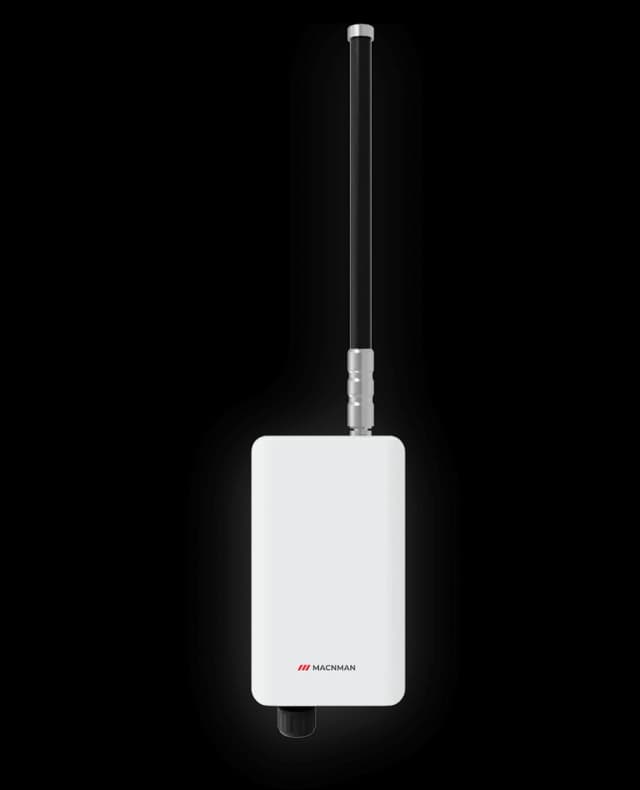
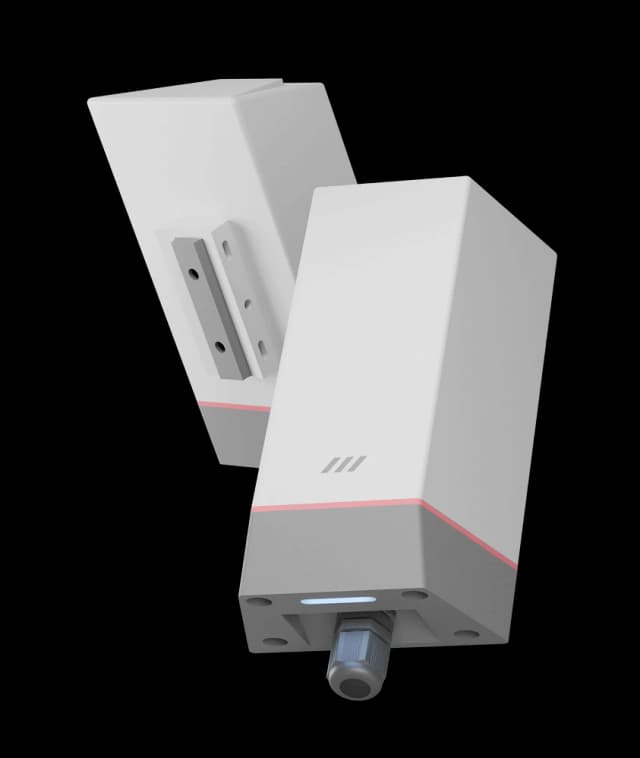
NewMaclink Gen-2
Wi-Fi Outdoor Gateways
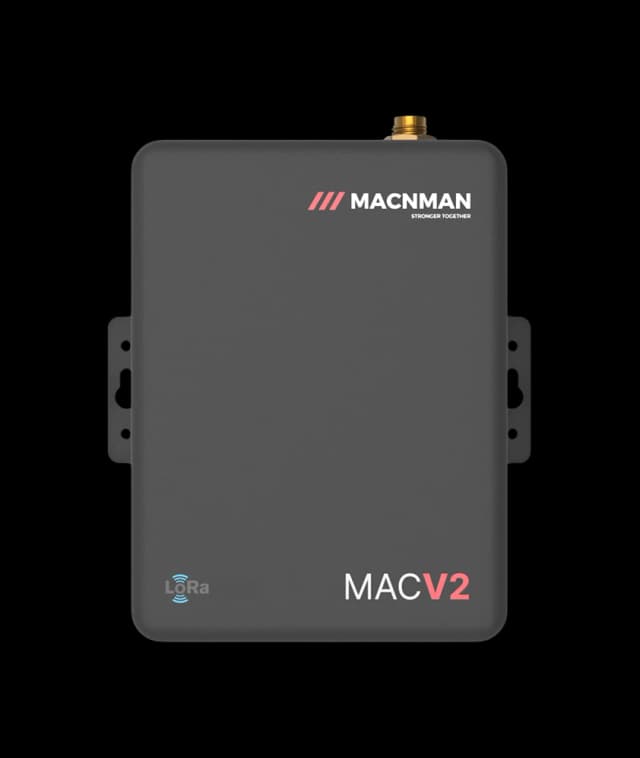
MacEdge 4G Mini Gateway
4G Lte Gateways
 Hot Selling
MacSync WX1
RS485 Modbus to Wi-Fi Converter
 New
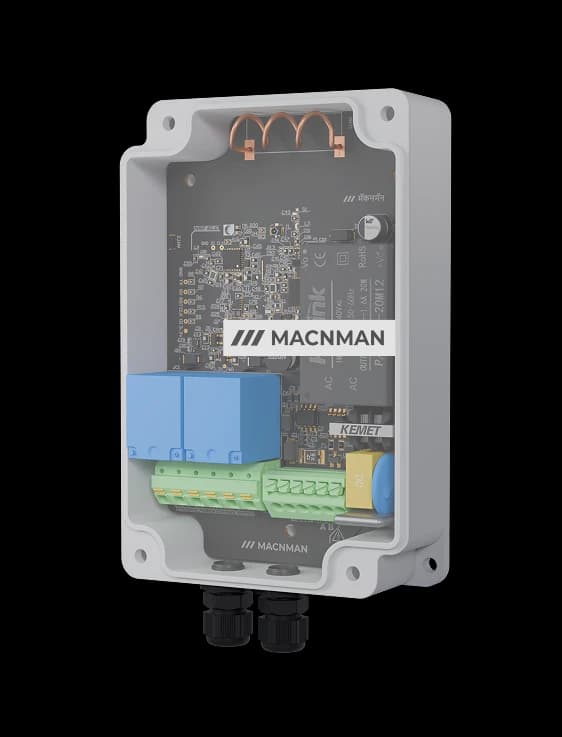
NewMacSet
RS485/Analog + Relay Output
 Hot Selling
Setu X
Wi-Fi Indoor Gateways
NewMaclink Gen-2
Wi-Fi Outdoor Gateways
MacEdge 4G Mini Gateway
4G Lte Gateways
Hot SellingMacSync WX1
RS485 Modbus to Wi-Fi Converter
NewMacSet
RS485/Analog + Relay Output
Hot SellingSetu X
Wi-Fi Indoor Gateways
Let‘s make it easy - reach out now!
Let’s bring it to life!
Let‘s Make it Easy
Reach Out Now


We are always ready
to help and
answer your
questions
Call
+91 7972856163
+91 9096830856
Location
Office-15 Bibwewadi, Pune, Maharashtra 411037
Get in Touch
Define your goals and all to value your time
Use of this website and purchase of Macnman products are subject to our Terms and Conditions.