LoRaWAN® Soil NPK, pH & EC Sensors
Single-Parameter Soil Probes for Fertigation, Salinity and Soil Chemistry Monitoring · NPK Trend to 1,999 mg/kg · pH 3–9 · EC 0–10,000 µS/cm · 19 Ah Battery or 20 W Solar
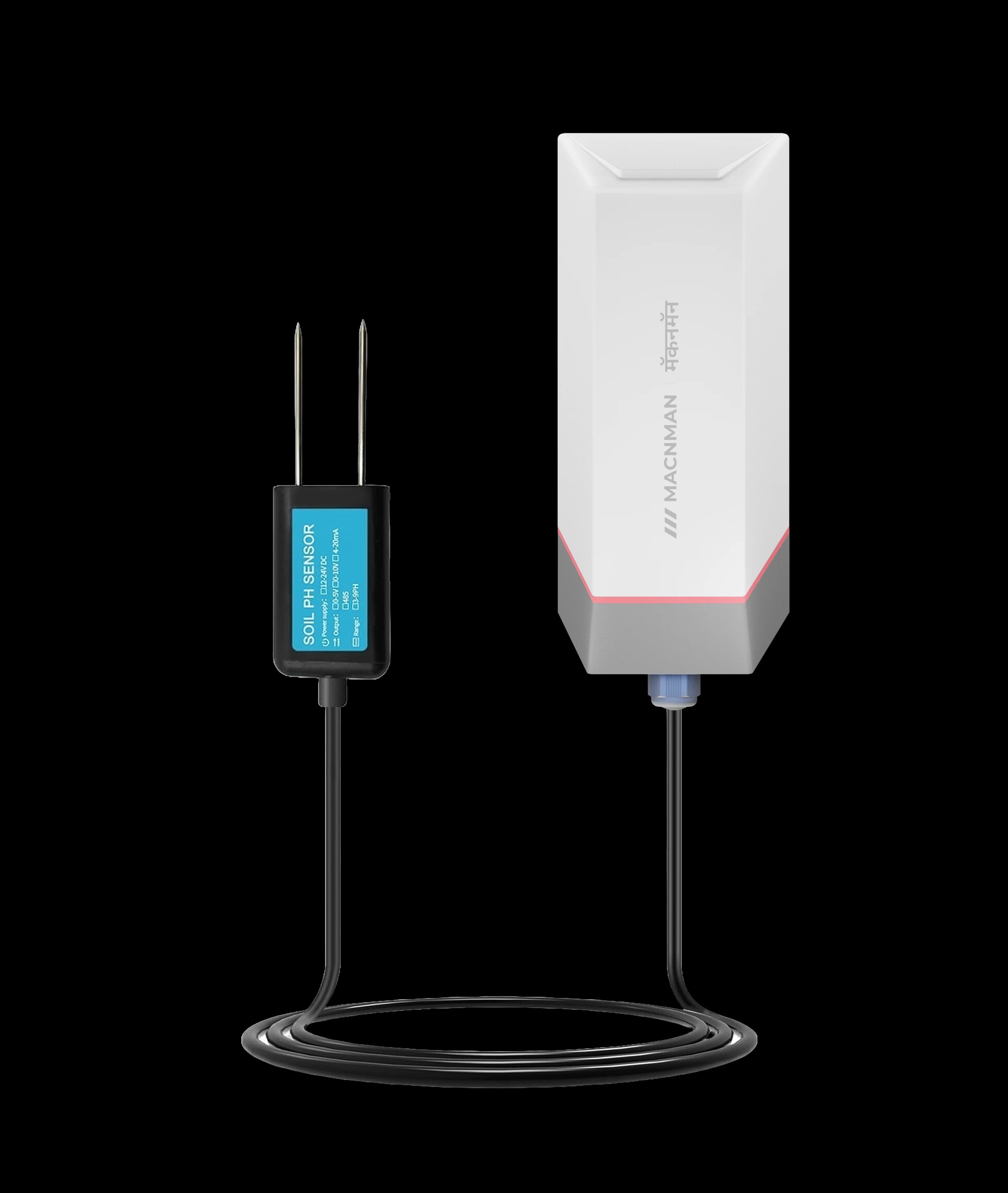
The MacSync LSS X1, X4 and X3 are LoRaWAN soil sensors that each read one chemistry parameter in the root zone — an NPK trend, pH, or electrical conductivity — and send it over LoRaWAN® on a 19 Ah battery or a 20 W solar panel, with threshold alerts, kilometres from your gateway
Wireless Soil Chemistry for Fertigation, Polyhouses, Plantations, Orchards & Research Farms.
Wireless Soil Chemistry for
Fertigation, Polyhouses, Plantations, Orchards & Research Farms.
MacSync LSS X1 · X4 · X3
Explore the highlights
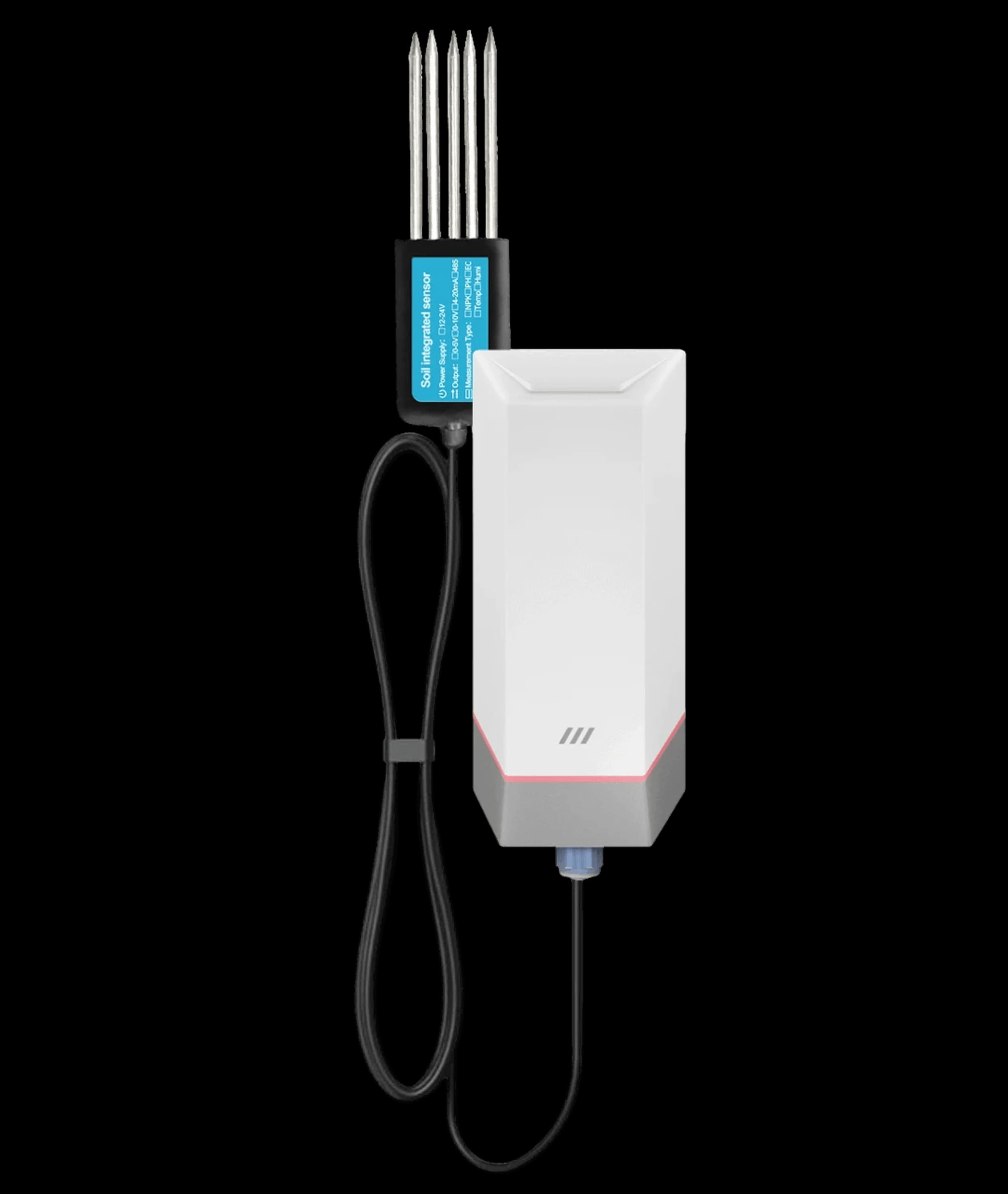
Where a block needs only salinity, only pH or only a nutrient trend, a single-parameter probe at every bed or every plot costs less per point than a seven-parameter probe and reports exactly the figure the agronomist asked for.
The LSS X3 reads 0–10,000 µS/cm (0–10 dS/m) at ±3 % of full scale with 10 µS/cm resolution: enough to see a fertigation dose arrive, salts build up through a dry season and leach after a flush.
The LSS X4 electrode reads 3–9 pH at ±0.3 pH with 0.01 resolution and a stated long-term stability of 5 % a year or better, for tea, coffee, blueberries, vines and polyhouse media where pH sets what the roots can take up.
The LSS X1 reports nitrogen, phosphorus and potassium to 1,999 mg/kg at ±2 % of full scale. No probe of this class measures the ions directly; the figures follow the soil's electrical response and are a trend to time lab tests by, not a dose to apply. This page says so, with the studies.
Low and high thresholds on EC, pH or the nutrient trend report the moment they are crossed, so a salinity rise, a pH drift or a missed fertigation dose reaches the grower within the sampling interval.
The 19 Ah variant is rated about 2, 4 and 7+ years at 5, 15 and 60-minute reports; the solar variant pairs a 20 W panel with an 8,000 mAh rechargeable battery for sites that report often.
23 dBm with −137 dBm sensitivity on IN865 and six other bands reaches a gateway kilometres away, so a plantation or a research farm runs on one gateway with no SIM at any probe.
Glass-filled nylon node, IP65 as standard with an IP67 option, rated −40 to +80 °C, on a pole or a wall above the bed; the EC probe is rated IP68 for burial, and an IP68 cable extender reaches a deeper root zone.
Designed and manufactured in Pune. WPC compliant on IN865 and RoHS conforming, with an engineer in Pune who answers during the Indian working day.
In plain terms
What Is a LoRaWAN Soil NPK, pH or EC Sensor?
The short answer
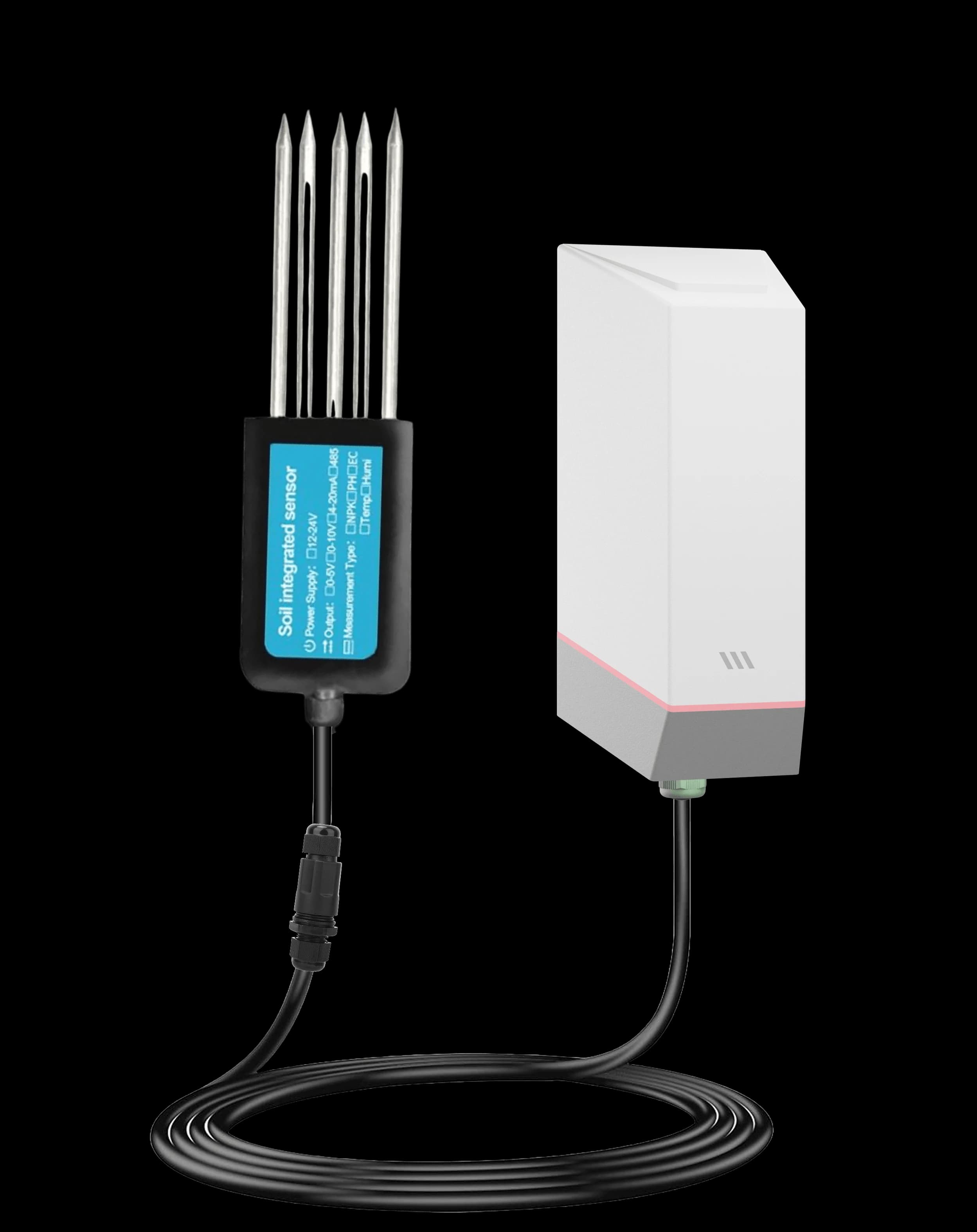
A probe buried in the root zone that measures one soil chemistry parameter — a nitrogen-phosphorus-potassium trend, pH, or electrical conductivity — and sends it over LoRaWAN® radio kilometres to a gateway on a battery or a small solar panel, with no cable and no SIM at the plot. The MacSync LSS X1 reports an NPK trend to 1,999 mg/kg, the LSS X4 reads pH 3–9 and the LSS X3 reads EC to 10,000 µS/cm; each shares the same node, radio, app and 19 Ah battery or 20 W solar option.
NPK trend (LSS X1)
- 0–1,999
mg/kg per nutrient
- ±2 %
Of full scale, repeatability
- <10 s
Response time (T90)
pH (LSS X4)
- 3–9
pH range
- ±0.3
pH accuracy
- 0.01
pH resolution
EC (LSS X3)
- 0–10,000
µS/cm (0–10 dS/m)
- ±3 %
Of full scale
- 10
µS/cm resolution
Alerts
- 1 min
Shortest sampling interval
- 3
Modes: periodic, event, hybrid
- 24 h
Longest sampling interval
Power
- 19 Ah
Battery variant
- 7+ yr
At hourly reports, datasheet estimate
- 20 W
Solar variant, 8,000 mAh
Radio
- 23 dBm
Transmit power, −137 dBm sensitivity
- 7
Regional bands, IN865 standard
- A / C
LoRaWAN classes, set in the app

MacSync LSS X1 · X4 · X3
Three single-parameter LoRaWAN soil sensors from Macnman: the LSS X1 NPK trend probe, the LSS X3 EC probe and the LSS X4 pH electrode, on LoRaWAN® v1.0.4 with threshold alerts, a 19 Ah battery or 20 W solar, and setup from the Maya app. For all seven readings from one probe, the MacSync LSS X5 7-in-1.
Nitrogen, phosphorus and potassium estimates to 1,999 mg/kg each; a trend, not an assay.
Soil acidity and alkalinity from a glass electrode in the root zone.
Bulk soil electrical conductivity: the salinity and fertigation figure.
Low and high limits that report the moment they are crossed.
A 19 Ah cell for years, or a 20 W panel with an 8,000 mAh battery.
LoRaWAN® v1.0.4, Class A or C, on IN865 and six other bands; MacTalk device to device.
Also searched for as a soil nutrient sensor, an IoT NPK sensor, a wireless soil pH sensor, an in-soil pH electrode, a soil salinity sensor or a soil conductivity sensor. Not a handheld tester or meter: these probes stay buried and report continuously. For moisture and temperature only, the MacSync LSS X2; for moisture, temperature, EC, pH and NPK from one probe, the MacSync LSS X5 7-in-1.
Get a quote
Need a quote for the MacSync LSS X1 · X4 · X3?
Tell us how many you need and where they are going. A product engineer replies within one working day with availability, lead time and the right variant for your site.
- Reply within one working day
- Designed and built in Pune, India
- WPC compliant, RoHS conformant
Downloads
Everything You Need to Get Building
Datasheets, drawings, firmware, and tools — all in one place.
MacSync LSS X4 Soil pH Sensor Datasheet (PDF)
pH electrode, radio, power and variant specifications
MacSync LSS X3 Soil EC Sensor Datasheet (PDF)
EC probe, radio, power and variant specifications
MacSync LSS X1 Soil NPK Sensor Datasheet (PDF)
NPK probe, radio, power and variant specifications
Datasheet web pages
pH, EC and NPK datasheets on the documentation site
Soil Sensor User Manual
Installation, probe placement, live readings and remote configuration
Maya App Setup Guide
LoRaWAN settings shared by all MacSync sensors
Engineered for
What Sets the MacSync Single-Parameter Soil Sensors Apart
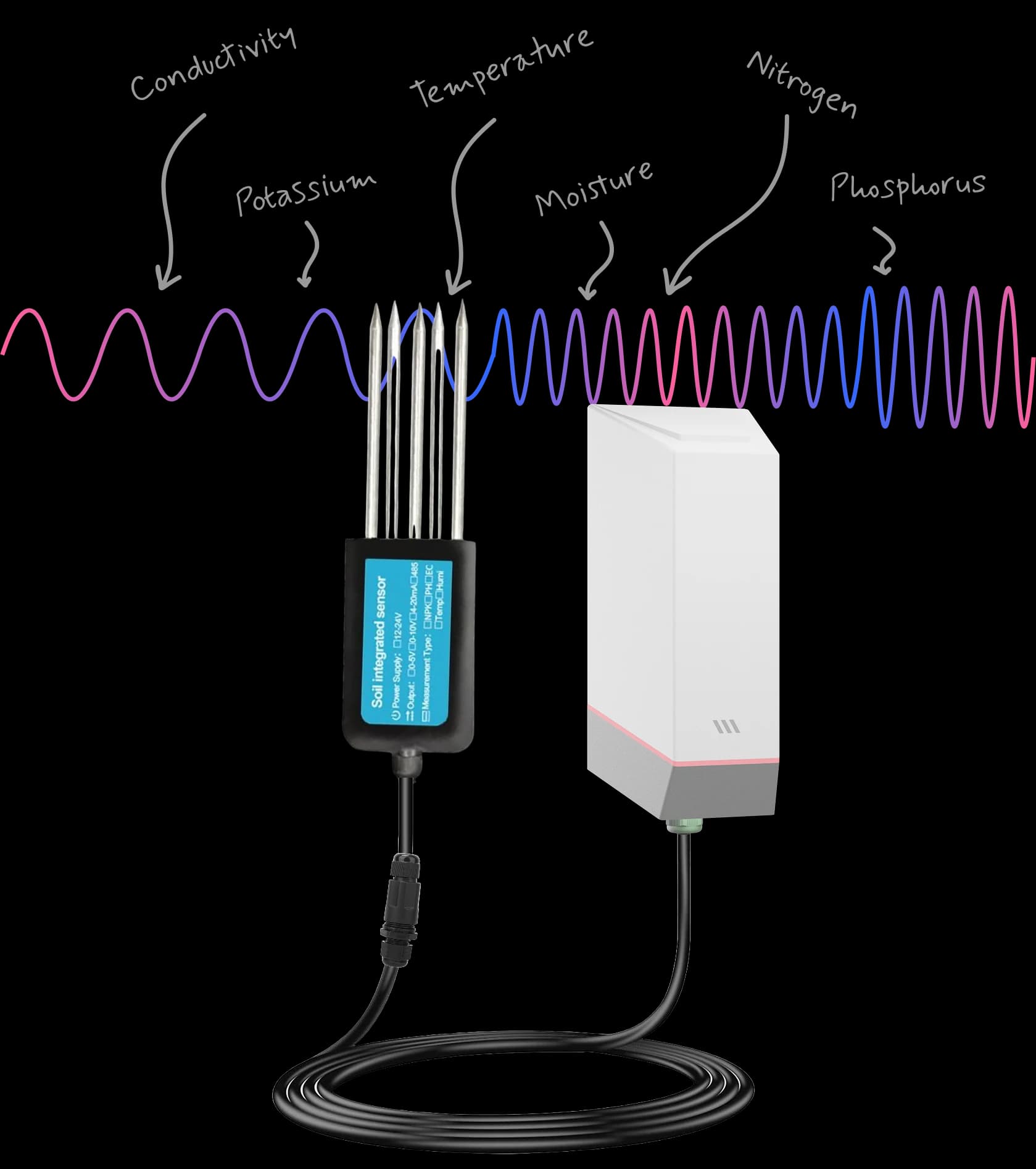
Salinity management wants EC; acid-loving crops and polyhouse media want pH; a fertigation trial wants a nutrient trend between lab samples. Each probe reports that one figure with the resolution the question needs, at a cost per point that lets you place one on every bed.
01 / 05
Works with
Why Choose the MacSync LSS X1, X4 and X3 LoRaWAN Soil Sensors?
An EC probe, a pH electrode or an NPK trend probe with threshold alerts and a battery rated for years, sending over LoRaWAN® to any network server, with no cable, Wi-Fi or SIM at the plot.An EC probe, a pH electrode or an NPK trend probe with threshold alerts and a battery rated for years, sending over LoRaWAN® to any network server, with no cable, Wi-Fi or SIM at the plot.
Applications
Where Are Single-Parameter LoRaWAN Soil Sensors Used?
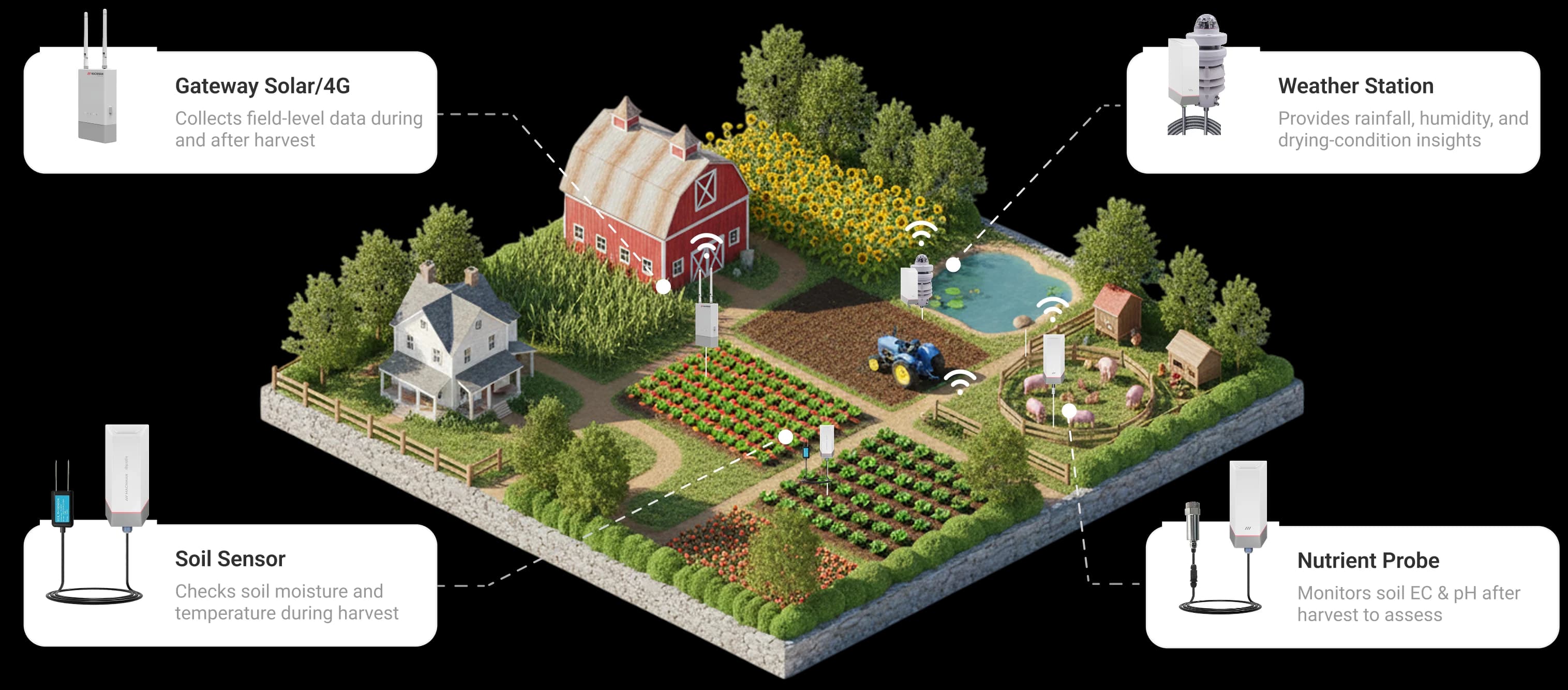
Fertigation Blocks
EC rises when the fertigation dose reaches the roots and falls as it is taken up or leached; a block that never rises missed its dose, and the grower hears within the sampling interval.
Read case studiesSaline & Coastal Farms (Salinity build-up, Leaching check): Salts build through a dry season on canal, borewell and coastal land; the EC probe shows the build-up, the threshold flags the limit, and the leaching flush is confirmed rather than assumed.
Polyhouses & Soilless Media (pH in cocopeat, Nutrient lockout): In cocopeat and soilless media the pH drifts fast and locks nutrients out; the LSS X4 holds a continuous pH record for each bed and alerts before the leaves show it.
Tea, Coffee & Acid-Loving Crops (Acid-soil pH bands, Liming decisions): Tea, coffee, blueberry and other acid-loving crops sit in a narrow pH band; a probe per block shows the drift and times the lime or the sulphur before yield is lost.
Orchards & Vineyards (Block by block, Seasonal trend): EC and pH per block through the season, beside moisture from the LSS X2 and rain from the LORS X1 on the same gateway, so the irrigation and nutrient plan is set from data rather than habit.
Research Farms & Trials (Treatment plots, NPK trend): An NPK trend and EC on each treatment plot between lab samples, logged on the university's own server for the season's analysis; the trend decides when the next sample is taken.
Plantations & FPOs (Many points, one gateway, Battery or solar): Dozens of probes across a plantation or a farmer-producer organisation's member plots on one MacLink gateway, each on a battery rated for years or a 20 W panel.
Landscapes, Golf Courses & Nurseries (Turf EC and pH, Reclaimed water): Turf irrigated with reclaimed or borewell water builds salts; EC and pH probes across greens, parks and nursery beds show where to flush and where to lime.
Browse all 8 applications
01 / 08
Where it fits
From Fertigation Blocks to Research Plots, Wherever One Soil Figure Decides the Next Move
Fertigation & Salinity Management
EC at the root zone of each block: see the dose arrive, watch salts build through the dry months and confirm the leaching flush worked, on coastal, canal-irrigated and borewell farms.
Polyhouses, Nurseries & Acid-Loving Crops
pH in cocopeat, soilless media and the beds of tea, coffee, blueberry, vine and orchard blocks, where a drift of half a pH unit changes what the roots can take up.

Trials, Research Farms & Plantations
A nutrient trend between lab samples on treatment plots, demonstration farms and plantation blocks, with every reading logged on your own server for the season's analysis.
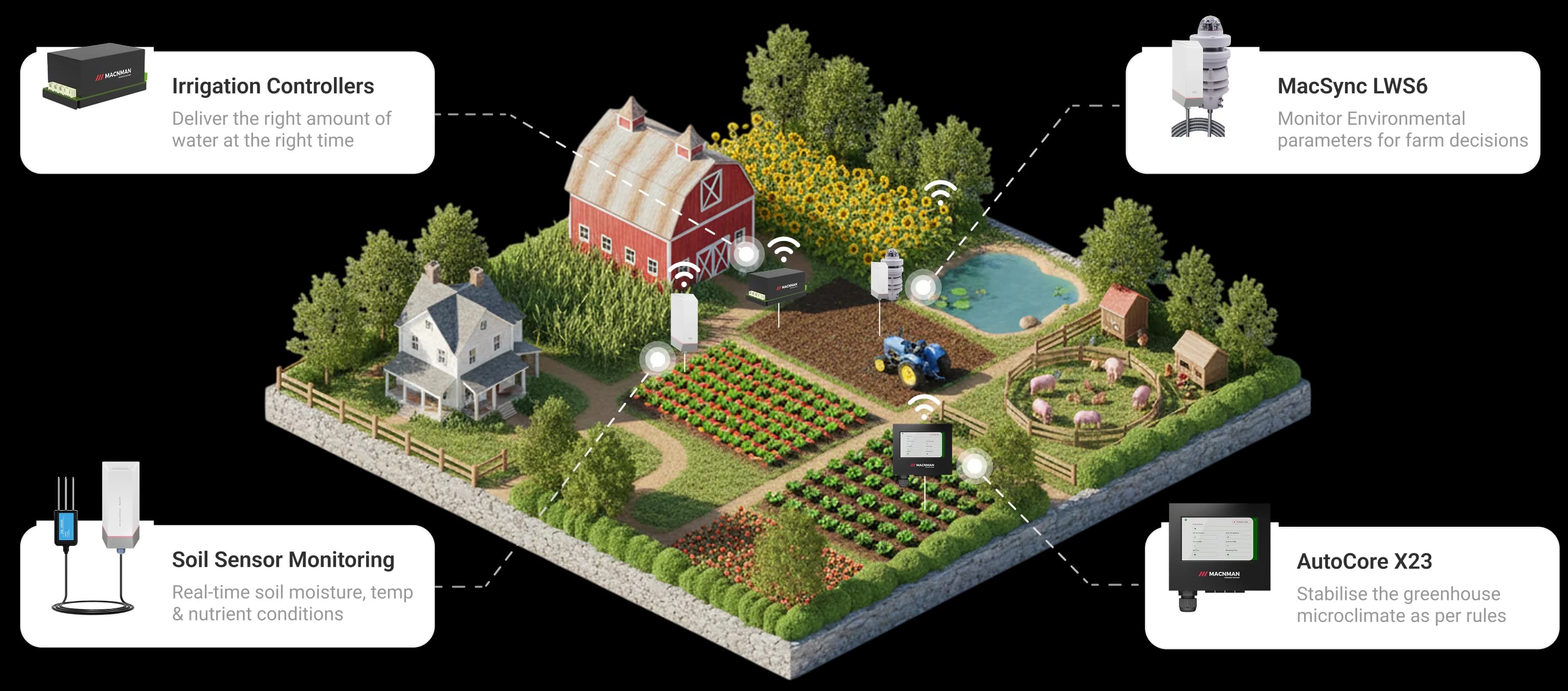
Fertigation & Salinity Management
EC at the root zone of each block: see the dose arrive, watch salts build through the dry months and confirm the leaching flush worked, on coastal, canal-irrigated and borewell farms.
Polyhouses, Nurseries & Acid-Loving Crops
pH in cocopeat, soilless media and the beds of tea, coffee, blueberry, vine and orchard blocks, where a drift of half a pH unit changes what the roots can take up.
Trials, Research Farms & Plantations
A nutrient trend between lab samples on treatment plots, demonstration farms and plantation blocks, with every reading logged on your own server for the season's analysis.
Installing it
Installing a Soil Chemistry Probe: Depth, Contact, Node Placement and a Lab Reference
The four decisions every installation turns on. The figures are from the datasheets; the practice is standard for any buried probe.
Installing it
The four decisions every installation turns on. The figures are from the datasheets; the practice is standard for any buried probe.
Depth: the active root zone
Bury the probe where the crop takes up water and nutrients: typically 15–30 cm for field crops and vegetables, deeper for orchards and vines. The NPK probe is rated 5–45 °C, which is another reason to keep it below the surface.
Contact: no air gaps
Push the electrodes fully into undisturbed, moist soil, or open a slot, insert and press the soil back around the probe. An air gap reads as low EC and an unstable pH; let the site settle for a day before trusting the figures.
Node above the bed
Mount the node on a pole or a post above irrigation and flood level with the supplied clip, and use the IP68 cable extender where the probe must sit deeper or further away.
Pair the probe with a lab sample
At commissioning, send a soil sample from beside the probe to the lab and note the offset for EC and pH; repeat each season. For the NPK trend the lab assay is the number to act on; the probe tells you when to take it.
Free planning tools
Size your deployment before you order the hardware
Free engineering calculators for coverage, range and battery life — built on measurements from our own deployments rather than textbook models, which is why the answers tend to be smaller and a good deal more useful. Nothing here quotes a range we have not actually achieved.
No sign-up, no email, nothing to install. More on the way for Wi-Fi and BLE.
Hardware
IP65 Node with an IP67 Option, an IP68 EC Probe, and a Cable Between Them
The glass-filled nylon node is IP65 rated as standard, IP67 optional, and operates from −40 °C to +80 °C on a pole above the bed. The EC probe is rated IP68 for burial; the NPK and pH probes are described on their datasheets as corrosion-resistant industrial probes for long-term outdoor deployment. An IP68 cable extender lets the node sit above flood level while the probe sits at root depth.

Ready to see soil chemistry at every plot? Ask for a quote on the MacSync LSS X1, X3 or X4.
At a glance
MacSync LSS X1, X4 and X3 Soil Sensor Specifications
Every key specification in one view, from the three datasheets.
0–1,999 mg/kg
N, P and K trend, LSS X1
±2 % FS · 1 mg/kg · T90 <10 s · probe 5–45 °C
3–9 pH
soil pH, LSS X4
±0.3 pH · 0.01 resolution · T90 <15 s · ≤5 %/year drift
0–10,000 µS/cm
soil EC, LSS X3
±3 % FS · 10 µS/cm · T90 <10 s · IP68 probe
19 Ah or 20 W solar
power
~2 / 4 / 7+ years at 5 / 15 / 60-minute reports
−40 to +80 °C
node operating range
IP65 node, IP67 optional · ~175 g · 152 × 62 × 43 mm
LoRaWAN® v1.0.4
IN865 and six more bands
23 dBm · Class A, Class C via Maya · OTAA
Features
Built into the MacSync LSS Probes: Sensing, Radio, Power and Setup
Periodic, Event or Hybrid Reporting
Report on a fixed interval, on an event, or both, with sampling from 1 minute to 24 hours.
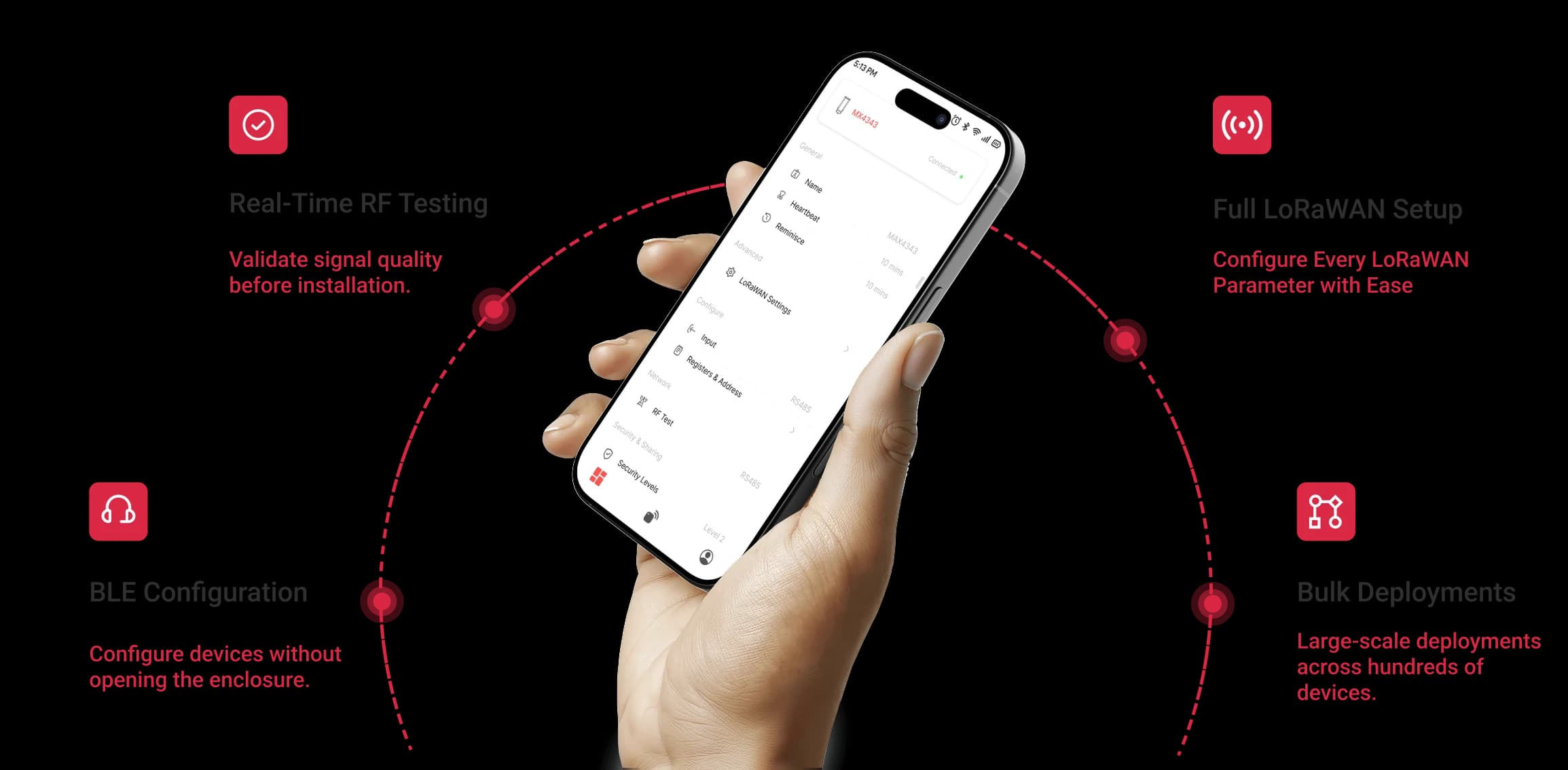
Commission, calibrate and diagnose from the Maya app in minutes, at the plot, with no laptop.
Long-Range LoRaWAN®
LoRaWAN® v1.0.4, Class A with Class C via the app, on IN865, EU868, US915, AU915, RU864, KR920 and AS923.
Battery or 20 W Solar
A 19 Ah cell rated 7+ years at hourly reports, or a 20 W panel with an 8,000 mAh rechargeable battery.
EC, pH or NPK Trend
One probe per parameter: EC to 10,000 µS/cm, pH 3–9, or N, P and K estimates to 1,999 mg/kg.
Threshold Alerts
Low and high limits on the reading that report the moment they are crossed.
Any LoRaWAN® Network Server
ChirpStack, The Things Network, Orbiwise, Netmore, MQTT platforms or a private LNS, with AES-128 end to end.
Macnman Maya App
Intervals, limits, calibration parameters, LoRaWAN class and live readings from your phone; the same settings by downlink later.
Three Probes, One Node
The LSS X1, X3 and X4 share the same node, radio, battery and solar options, app and decoder, so a farm mixes EC, pH and NPK probes on one gateway and one dashboard, and adds the LSS X2 moisture probe or the LSS X5 7-in-1 to the same network.
Capabilities
A Reading Every Few Minutes Is a Different Instrument from a Sample a Season
A lab sample tells you the soil's state on one day. A probe on LoRaWAN tells you how it moves: EC that climbs after every irrigation and never fully falls is salt building; pH that drifts up over weeks in cocopeat is nutrient lockout coming; a nutrient trend that steps up after fertigation and decays is the dose being taken up.
Before you order
Send Us the Plot List and We Confirm the Probes
Four details are enough for an engineer to reply with the probe for each plot, the reporting interval and the gateway count.
Before you order
Four details are enough for an engineer to reply with the probe for each plot, the reporting interval and the gateway count.
The question at each plot
Salinity or fertigation points to the EC probe (X3); crop pH or soilless media to the pH electrode (X4); a nutrient trend between lab samples to the NPK probe (X1). Moisture, temperature and all seven at once point to the LSS X2 and LSS X5.
Soil, media and depth
Field soil, cocopeat or soilless media, and the root depth; the probe and the cable extender are chosen accordingly.
Reporting interval
Every 15 to 60 minutes is the usual farm setting and keeps the 19 Ah battery at years; fertigation trials that report every few minutes point to the 20 W solar variant.
Network and platform
An existing LoRaWAN® gateway and network server, or a new MacLink Gen-2; or MacTalk to a MacSet controller that acts on the reading with no gateway.
Ready now: Get a quote · Request a pilot kit · Partner programme
Architecture
LoRaWAN Network Architecture: Soil Probe, Gateway, Network Server and Farm Platform

Why it matters
See the Soil Change Where It Changes, Not at the Next Sample.
A lab sample is a photograph. A probe on LoRaWAN is a film, and the grower sees salinity build, pH drift and the dose arrive as they happen, plot by plot.
Why it matters
A lab sample is a photograph. A probe on LoRaWAN is a film, and the grower sees salinity build, pH drift and the dose arrive as they happen, plot by plot.
Catch salinity before the yield shows it
EC that climbs after each irrigation and never fully recovers is salt building; the threshold flags it while a leaching flush still fixes it.
Hold pH in the crop's band
Tea, coffee, berries, vines and soilless media sit in narrow pH bands; a continuous record per block times the lime or the acid before nutrient lockout.
Time the lab test, don't replace it
The NPK trend shows the fertigation dose arrive and decay; it tells the agronomist when to sample, and the sample sets the dose.
A soil record you own
Every plot logged on your own network server, exported to the farm platform, the trial report or the audit, ready to compare block against block and season against season.
How it works
How Does a LoRaWAN Soil Chemistry Sensor Work?
Step 1 of 5
Probe at root depth, node on a pole
Bury the EC, pH or NPK probe in moist soil at the active root zone and mount the node above the bed with the supplied clip, joined by the cable.
Join the LoRaWAN network with Maya
Pair over Bluetooth, set the intervals and limits, and the sensor joins your network server by OTAA with its pre-loaded keys.
The probe reads the root zone
The EC probe measures the soil's conductivity between its electrodes, the pH electrode its hydrogen-ion activity, and the NPK probe an electrical response it reports as a nutrient trend, on the sampling interval you set.
Readings travel kilometres to the gateway
The reading, events and the battery level are sent as LoRaWAN® uplinks, encrypted with AES-128, to the gateway and on to your network server.
Your platform shows it and raises the alarm
The values land in your farm platform, the university's server or a dashboard over MQTT or HTTPS. Cross a limit and the sensor reports immediately; a MacSet controller can open a valve or start a flush on the same network.

Reporting modes
Periodic, Threshold and Hybrid Reporting: Chosen by What Acts on the Reading.
An uplink on a fixed interval with the current reading. Predictable data for a season's record; every 15 to 60 minutes is the usual farm setting, since soil chemistry moves over hours and days.
Note: At hourly reports the 19 Ah battery is rated about 7+ years; 15-minute reports about 4 years.
The sensor samples on its own schedule and reports the moment the reading falls below the low limit or rises above the high one: a salinity rise, a pH drift, a missed dose. Note: Best for polyhouses and fertigation systems that must act within the hour.
The periodic record plus immediate reports on limit events, so you keep the continuous log and still hear about the excursion at once. Note: Sampling from 1 minute to 24 hours; the reporting interval is set independently.
Cloud & LNS
Works with Every LoRaWAN® Network Server You Already Run
TTN, ChirpStack, MQTT, Orbiwise & Private LNS — No Vendor Lock-In
MacSync LSS soil sensors join any LoRaWAN® network server — The Things Network, ChirpStack, MQTT platforms, Orbiwise, Netmore, or your own private gateway — with AES-128 encryption end to end and no vendor lock-in. Readings reach your farm platform, the university's server or a dashboard over MQTT or HTTPS.

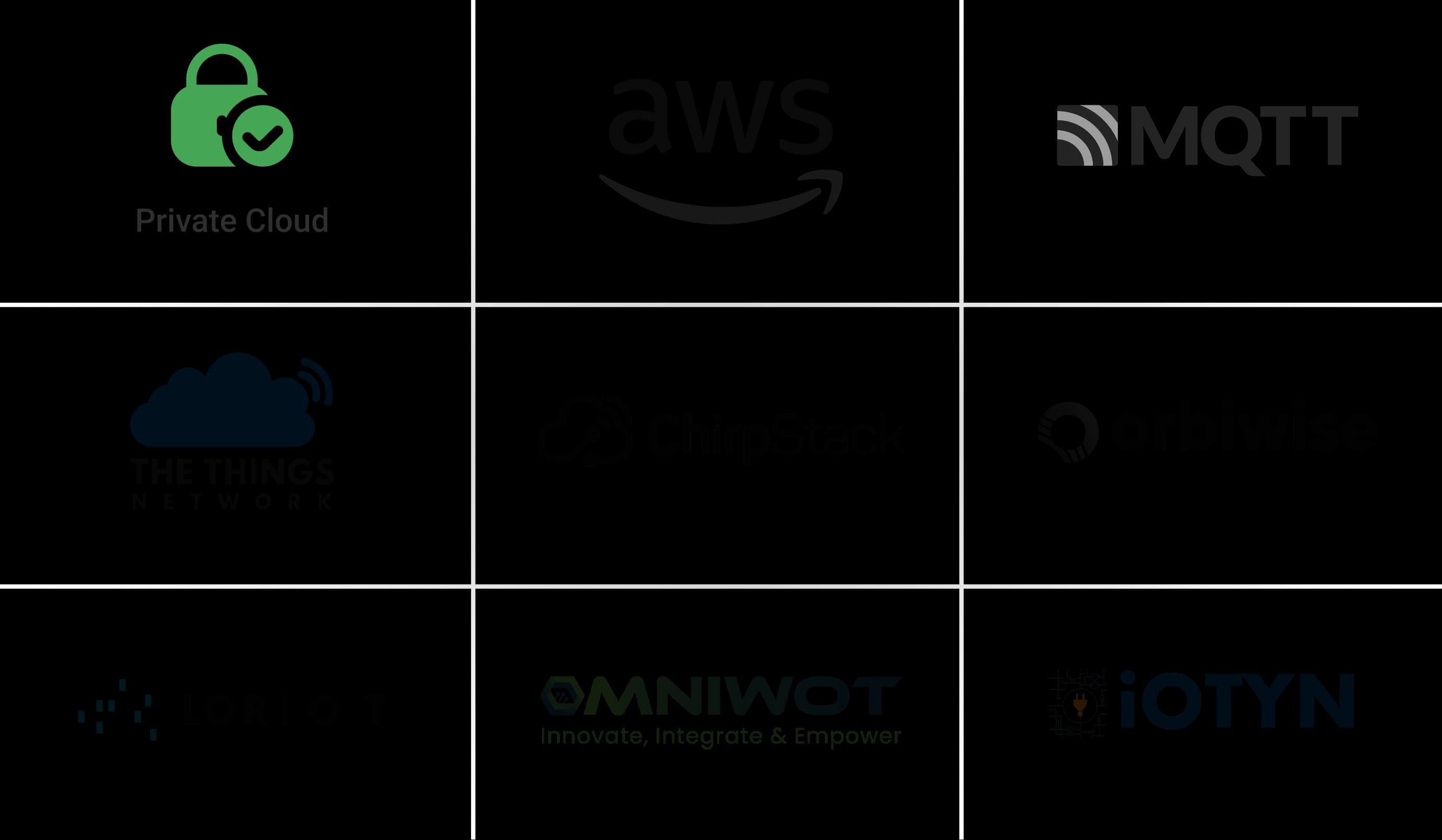
Build the network: MacLink Gen-2 outdoor LoRaWAN gateway · Setu X1 indoor LoRaWAN gateway · MacSet LX1 controller for valves and pumps · Gateway and coverage calculator · LoRaWAN battery life calculator
Device-to-device
Monitor Smarter with Macnman
Why Choose the Macnman LoRaWAN® Soil Chemistry Sensors
One honest reading per probe, alerts the moment a limit is crossed, and a battery rated for years, in one rugged wireless node.

Plug & Play
Truly plug & play — no complex setup.
Real-Time Alerts
Instant threshold alerts the moment conditions drift.
Long-Range
Long-range coverage for hard- to-reach places.
RF performance
Stable in the Bed, the Polyhouse and the Plantation
The EC and NPK probes respond within 10 seconds and the pH electrode within 15, and the pH datasheet states a long-term stability of 5 % a year or better. The node is rated from −40 to +80 °C and holds the LoRaWAN® link from a pole above the bed at 23 dBm with −137 dBm sensitivity; a polyhouse with a metal frame is served by an indoor gateway or a node mounted outside on the cable extender.
Installation
Soil Sensor Installation in Minutes, No Trench to the Office
A MacSync LSS probe goes in with a trowel and the supplied mounting clip — the probe at root depth, the node on a pole above the bed. With no signal cable, mains power or SIM at the plot, a polyhouse, an orchard or a trial field can be instrumented in a day.
A MacSync LSS probe goes in with a trowel and the supplied mounting clip — the probe at root depth, the node on a pole above the bed. With no signal cable, mains power or SIM at the plot — a polyhouse, an orchard or a trial field can be instrumented in a day.
Installation
In the ground in minutes, reporting for years.
Bury the probe at root depth
Open a slot at the active root zone, insert the electrodes fully into moist soil and press the soil back around them so there is no air gap; for cocopeat and soilless media, set the probe into the bed where the roots are.
Mount the node above the bed
Fix the node to a pole or a post with the supplied clip and screws, above irrigation and flood level, with the IP68 cable extender to the probe where needed; the solar variant's panel faces the sun clear of the canopy.
Pair with Maya over BLE
Set the sampling and reporting intervals, the low and high limits and the LoRaWAN class, check the calibration parameters, read the live value, and run a Ping to confirm the gateway. The device joins by OTAA with its pre-loaded keys.
Send a lab sample, then trust the trend
Take a soil sample from beside the probe at commissioning and each season; note the offset for EC and pH and keep the NPK dose decision with the lab. The record then stands on its own for the agronomist and the trial report.
Range & reliability
Long-Range LoRaWAN® Coverage Across the Farm, the Plantation or the Campus
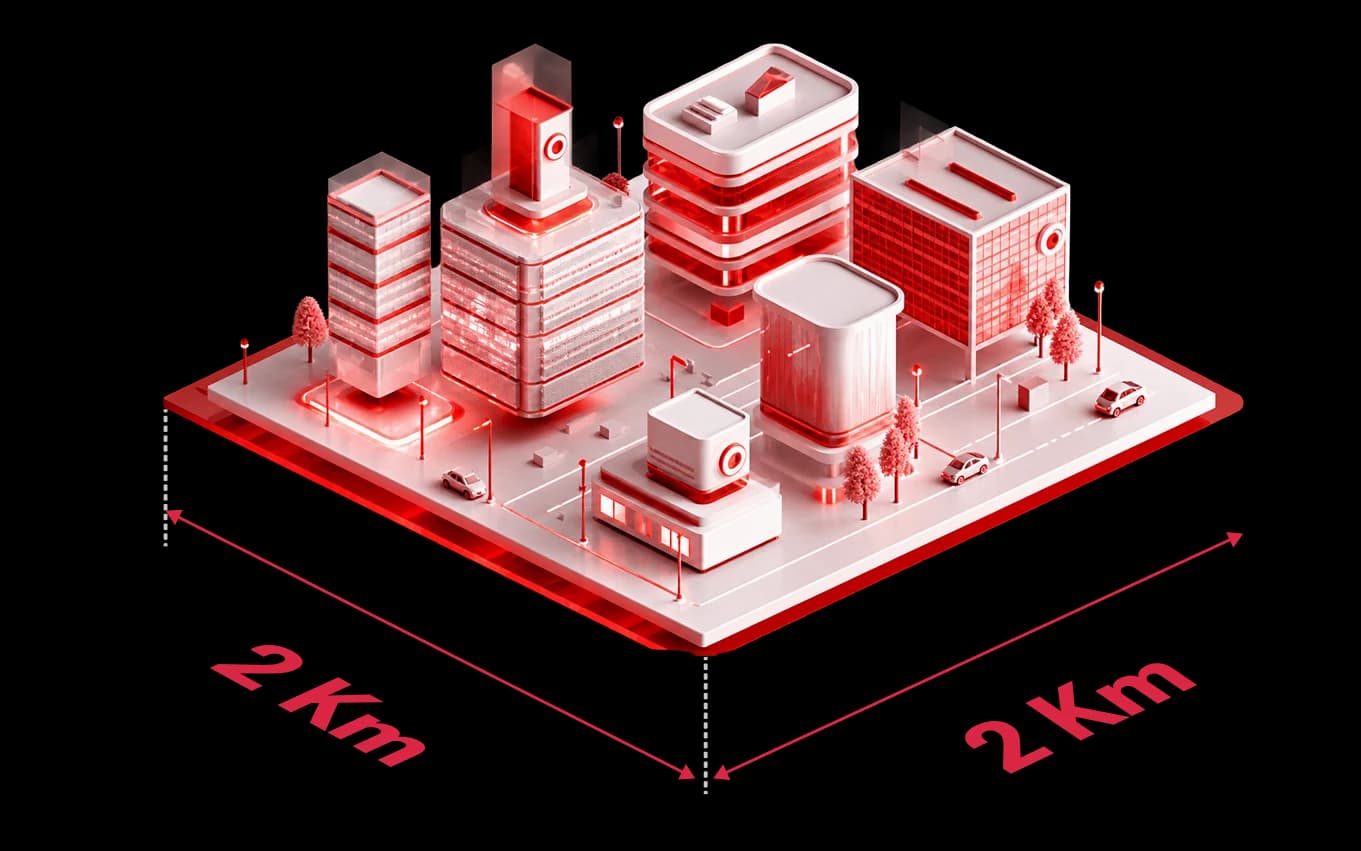
One gateway reaches probes spread over kilometres of fields, polyhouses and orchards
At 23 dBm with −137 dBm sensitivity, a MacLink Gen-2 gateway on a farmhouse, a pump house or a water tank reaches probes across a plantation or a research campus, so one installation carries dozens of them. Range depends on terrain, canopy and antenna height; the coverage calculator gives a first estimate and the Maya app's Ping test confirms each plot before the probe is buried.
Made in India
LoRaWAN soil sensors made in Pune, India
Farms in India get the IN865 plan as standard, a WPC compliant radio, and an engineer in Pune who answers during the Indian working day. Projects abroad take the same sensors on EU868, US915, AU915, RU864, KR920 or AS923.
Made in India
Farms in India get the IN865 plan as standard, a WPC compliant radio, and an engineer in Pune who answers during the Indian working day. Projects abroad take the same sensors on EU868, US915, AU915, RU864, KR920 or AS923.
IN865 as standard
Shipped on the 865–867 MHz LoRaWAN® plan for India; another regional plan is set when ordering.
WPC compliant radio
The LoRaWAN® radio is WPC compliant for use in India and the hardware conforms to RoHS.
Built in Pune
Designed, assembled and tested at one site in Pune, where the support engineers also sit.
Next steps: LoRaWAN in India: the IN865 band and WPC rules · Request a pilot kit · All LoRaWAN sensors · Industrial IoT manufacturer in India
The three probes
MacSync LSS X1, X4 and X3 Side by Side: NPK Trend, pH and EC
Three probes on the same node. The measurement rows are from each datasheet; the rest is shared.
| Model | LSS X1 · soil NPK trend | LSS X4 · soil pH | LSS X3 · soil EC |
|---|---|---|---|
| Reads | Nitrogen, phosphorus and potassium estimates | pH, from a glass electrode | Electrical conductivity of the bulk soil |
| Range | 0–1,999 mg/kg per nutrient | 3–9 pH | 0–10,000 µS/cm (0–10 dS/m) |
| Accuracy | ±2 % of full scale (repeatability of the estimate) | ±0.3 pH | ±3 % of full scale |
| Resolution | 1 mg/kg | 0.01 pH | 10 µS/cm |
| Response time (T90) | <10 s | <15 s | <10 s |
| Probe operating range | 5 to 45 °C · 5–95 % RH | −20 to +60 °C · 5–95 % RH | −20 to +60 °C · 0.9–1.1 atm |
| Probe sealing | Corrosion-resistant industrial probe (rating not stated) | Corrosion-resistant industrial electrode (rating not stated) | IP68 |
| Stated stability | Not stated | ≤5 % per year | Not stated |
| What the reading is for | Timing lab samples; a trend, not a dose | Liming and acidifying decisions, soilless media, acid-loving crops | Fertigation dosing, salinity management, leaching checks |
| SKUs | 8801 battery · 8800 solar · 8802/8803 MacTalk · 8804 BLE | 8816 battery · 8815 solar · 8817/8818 MacTalk · 8819 BLE | 8811 battery · 8810 solar · 8812/8813 MacTalk · 8814 BLE |
Figures are from the MacSync LSS X1, X3 and X4 datasheets. The dS/m equivalent is arithmetic (1 dS/m = 1,000 µS/cm). The X1 sheet states no sensing principle and, unlike the X5 sheet, no 'trend estimation' row; this page states the limitation itself. The X4 sheet states no electrode type, calibration procedure or electrode life; the X3 sheet does not say whether EC is referenced to 25 °C.
What the NPK figures are, and are not
How the LSS X1 Gets Its N, P and K, and Why They Are a Trend
No soil probe of this class measures nitrogen, phosphorus and potassium ions directly. Independent tests — University of Bologna (Horticulturae, 2026), Engineering, Technology & Applied Science Research (2026) — found the N, P and K outputs follow the soil's electrical response rather than individual nutrients, and advise against setting fertiliser doses from them. That is why Macnman's datasheets call the figures a trend estimation, and why this page says so plainly.
What the NPK figures are, and are not
No soil probe of this class measures nitrogen, phosphorus and potassium ions directly. Independent tests — University of Bologna (Horticulturae, 2026), Engineering, Technology & Applied Science Research (2026) — found the N, P and K outputs follow the soil's electrical response rather than individual nutrients, and advise against setting fertiliser doses from them. That is why Macnman's datasheets call the figures a trend estimation, and why this page says so plainly.
What the ±2 % figure means
It is the sensor's full-scale specification under the maker's test conditions: how repeatably the probe reports its own estimate. It is not an agronomic accuracy against a laboratory assay, and the page never presents it as one.
What the trend is good for
Seeing a fertigation dose arrive in the root zone within hours, watching leaching after heavy rain or irrigation, comparing blocks or treatments against each other, and choosing when to send the next lab sample.
What to keep for the lab
The season's fertiliser plan and any dose decision rest on a laboratory soil test. Do not set fertiliser doses from these readings alone; use the probe to time and target the tests.
EC and pH are the readings to automate on
The LSS X3 and LSS X4 measure conductivity and pH directly; those are the figures to set alerts and valves on. They also explain what the X1's trend is doing: EC moves first, the estimate follows.
Sources: Baldi et al., Horticulturae 12(7):898, 2026 — multi-parameter soil probes tested against laboratory N, P and K · Fathima et al., ETASR 16(2), 2026 — accuracy of low-cost soil NPK sensors · FAO Irrigation and Drainage Paper 29 (Ayers and Westcot), water quality for agriculture — ECw classes and soil-water salinity · FAO GLOSOLAN standard operating procedure, soil EC on a 1:5 soil:water suspension · Murata soil sensor FAQ — bulk EC and pore-water EC · University of Arizona CEAC, Chapter 10 — fertigation EC and pH for greenhouse recipes · TNAU Agritech — fertigation practice · Press Information Bureau, February 2025 — the Soil Health Card's twelve parameters and village-level labs · Press Information Bureau, July 2025 — cards issued, demonstrations and trainings · MacSync LSS X1, X3 and X4 datasheets
Reading soil EC
What a Soil EC Reading Means: Units, Bulk EC Against Pore-Water and Lab EC, and the FAO Water Classes
Three different numbers are all called 'soil EC'. The buried LSS X3 reads one of them; the Soil Health Card reports another; fertigation recipes quote a third. Knowing which is which is what makes the probe useful.
| Term | What it is | What the LSS X3 gives you |
|---|---|---|
| Units | 1,000 µS/cm = 1 mS/cm = 1 dS/m = 1 mmho/cm. The X3 reads 0–10,000 µS/cm, so 0–10 dS/m, at 10 µS/cm steps | A figure in µS/cm you convert on the platform; the alert limit is set in the same unit |
| Bulk EC: what a buried electrode reads | The conductivity of soil particles, pore water and air together; it rises with both moisture and salts and falls as the soil dries | The X3's reading: a trend per plot that shows a fertigation dose arrive, salts build between flushes and a leaching flush work |
| Pore-water EC: what fertigation recipes quote | The EC of the water in the pores alone, the figure greenhouse recipes give (for example drip solutions around 2–3.5 mS/cm for some tomato programmes); derived from bulk EC and moisture by a model | Not stated for the X3; compare the probe against a pore-water or lab figure at commissioning and use the offset |
| Lab suspension EC: the Soil Health Card figure | Measured in a laboratory on a soil:water suspension, typically 1:5 by the FAO GLOSOLAN procedure; the number printed on the Soil Health Card | Not the same number as the probe's; the probe tells you when to send the next sample and shows what happened between cards |
| Saturated-paste ECe: the salinity class | The lab extract on which soil salinity classes are defined; higher than bulk EC in the field | Beyond the probe; a rising bulk-EC baseline under constant water is the early warning that the class may be changing |
| Irrigation water ECw: FAO Paper 29 | Below 0.7 dS/m no restriction on use, 0.7–3.0 slight to moderate, above 3.0 severe; soil-water salinity averages about three times that of the applied water | A baseline that climbs after each irrigation with borewell or canal water is salt accumulating; set the high limit and confirm the flush |
Definitions from the sources linked above: FAO Irrigation and Drainage Paper 29, the FAO GLOSOLAN soil EC procedure, a probe maker's bulk-versus-pore-water explanation and a university fertigation chapter. The X3 figures are from its datasheet.
pH electrode care
In-Soil pH Electrodes: What the LSS X4 Datasheet States, What the Lab Does, and What Makers of This Probe Class Publish About Calibration
The searches around soil pH sensors are trust questions: do they work, how often are they calibrated, how long do they last. The datasheet answers some; for the rest, here is what the lab does and what other makers of in-soil pH heads publish, quoted as theirs, not as X4 figures.
| Source | What it says | What to do with it |
|---|---|---|
| MacSync LSS X4 datasheet | 3–9 pH, ±0.3 pH, 0.01 resolution, response under 15 s, long-term stability of 5 % a year or better; 'calibration parameters' among the Maya app settings. Electrode type, buffers, interval and electrode life are not stated | Treat the stated stability as the reason to re-check each season, and ask us for the current calibration guidance in writing before a trial that depends on absolute pH |
| The soil laboratory | pH on a soil:water suspension with a buffer-calibrated bench meter; the figure on the Soil Health Card and in the agronomist's recommendation | The reference. Send a sample from beside the probe at commissioning and each season and log the offset |
| Renke RS-PH (in-soil pH head, 3–9 pH) | States calibration before each measurement and, for long-term use, once a month; stability 5 % a year or better; 0.1 resolution | The most cautious statement in the class; it shows why a seasonal check is the minimum, not the maximum |
| Rika RK500-22 (the probe inside RAK's kit) | Calibration cycle every six months; stability 0.01 pH per 24 h; 304 stainless, IP68 | A six-month cycle is the common figure for this probe class |
| Seeed SenseCAP S2106 | Probe cleaning every three to six months; calibration every six to twelve months through the maker's app | Cleaning the electrode is part of the cycle, not only calibrating it |
| Dragino SPH01-LB | Solid AgCl reference electrode with a pure-metal pH electrode; user calibration supported; accuracy stated as a percentage over 0–50 °C | Another maker states the electrode type and user calibration; the X4 datasheet does not yet |
| Macnman's practice recommendation (not a specification) | Verify the X4 against a lab sample or a buffer-calibrated meter at commissioning and at the start of each season; keep the electrode in moist soil; log the offset with the data | What a trial report or an audit will ask for; it costs one sample a season per probe |
Competitor and probe-maker statements are from their pages linked below, opened 25 October 2026, and describe their products, not the LSS X4. No 'maintenance-free' claim is made for any in-soil pH electrode on this page.
Soil Health Card
The Soil Health Card's Twelve Parameters, and Which of Them a Buried Probe Can Follow Between Cards
India's Soil Health Card reports twelve parameters from a laboratory test (PIB, February 2025; over 25 crore cards issued by July 2025). Three of them have a continuous in-field counterpart in the LSS probes; the rest stay with the lab. Quoted as context; no conformity or endorsement is claimed.
| Card parameter | How the card gets it | What the LSS probes add between cards |
|---|---|---|
| pH | Lab meter on a soil:water suspension | Continuous on the LSS X4: drift, lime or acid response, polyhouse media swings |
| EC | Lab meter on a 1:5 suspension (GLOSOLAN procedure) | Continuous bulk EC on the LSS X3: dose arrival, salt build-up, leaching checks; a different number from the card's, tracked as a trend |
| N, P, K | Lab assays | A trend on the LSS X1 that shows a dose arrive and decay and times the next sample; the dose decision stays with the card |
| S, Zn, Fe, Cu, Mn, B (secondary and micronutrients) | Lab assays | Lab only; no in-field probe on this page reads them |
| Organic carbon | Lab assay | Lab only |
| Who runs it | State labs, village-level soil testing labs run by rural youth and self-help groups, school labs, agricultural universities, KVKs | The same institutions can run LSS probes on demonstration plots and RKVY Soil Health and Fertility projects to show change between cards |
Parameter list and programme facts from the Press Information Bureau releases linked above; the probes' figures are from the Macnman datasheets.
Which soil sensor
Which Macnman Soil Sensor Do You Need: Single Parameter, 7-in-1, Moisture Only or Wi-Fi?
Macnman makes soil sensors for LoRaWAN and Wi-Fi, from the single-parameter probes on this page to a seven-parameter probe. Choose by which readings you will act on and by the network the site has.
| Criterion | MacSync LSS X1 / X3 / X4 (this page) | MacSync LSS X5 7-in-1 | MacSync LSS X2 moisture & temperature | MacSync Wi-Fi 7-in-1 |
|---|---|---|---|---|
| Measures | X3: EC · X4: pH · X1: NPK trend, one per probe | Moisture, temperature, EC, pH, N, P, K | Moisture (VWC) and soil temperature | Moisture, temperature, EC, pH, N, P, K |
| Key accuracy | EC ±3 % FS · pH ±0.3 · NPK ±2 % FS | Moisture ±5 % · EC ±3 % FS · pH ±0.3 · NPK ±2 % FS | Moisture ±3 % (0–53 % VWC), ±5 % above | Moisture ±5 % · 0.1 % resolution |
| Network | LoRaWAN® v1.0.4, kilometres to a gateway | LoRaWAN® v1.0.4 | LoRaWAN® v1.0.4 | Existing 2.4 / 5 GHz Wi-Fi, no gateway |
| Power | 19 Ah battery, or 20 W solar + 8,000 mAh | 19 Ah battery, or 20 W solar + 8,000 mAh | 19 Ah battery, or 20 W solar + 8,000 mAh | Internal 19 Ah battery |
| Battery life | ~2 years at 5-minute reports · ~4 years at 15-minute reports · ~7+ years at hourly reports | ~2 years at 5-minute reports · ~4 years at 15-minute reports · ~7+ years at hourly reports | ~2 years at 5-minute reports · ~4 years at 15-minute reports · ~7+ years at hourly reports | Estimated about 6.7 years at hourly uploads |
| Choose it when | One parameter is the question, at the lowest cost per point; or EC and pH are being added to an existing moisture network | Irrigation and fertigation decisions from one probe; salinity and pH matter | Irrigation timing is the only question | Every probe sits inside Wi-Fi coverage: polyhouses, nurseries, campuses |
| Page | This page | Product page | Product page | Product page |
Figures are from the Macnman datasheets. The seven-parameter probe and the single-parameter EC, pH and NPK probes state the same chemistry figures; the difference is how many readings each point needs.
See also: Compare all MacSync LSS X1, X3 and X4 versions · MacSync LSS X5 LoRaWAN 7-in-1 soil sensor: moisture, temperature, EC, pH and NPK from one probe · MacSync LSS X2 LoRaWAN soil moisture and temperature sensor · MacSync Wi-Fi 7-in-1 soil sensor · Already have an RS485 soil probe? The MacSync LX1 RS485 to LoRaWAN converter reads it
Power
Battery, Solar or MacTalk: How Each MacSync LSS Variant Is Powered
Every probe ships in the same five variants; the SKU changes with the probe.
| Variant | Power | Runtime | Choose it when |
|---|---|---|---|
| LoRaWAN battery (8811 EC / 8816 pH / 8801 NPK) | 19 Ah Li-SOCl₂ cell | ~2 years at 5-minute reports · ~4 years at 15-minute reports · ~7+ years at hourly reports (datasheet estimate) | Most farm plots: reports every 15 to 60 minutes, no maintenance for years |
| LoRaWAN solar (8810 EC / 8815 pH / 8800 NPK) | 20 W solar panel + 8,000 mAh rechargeable battery | Continuous in sunlight; the battery carries the nights and the monsoon | Fertigation trials and polyhouses that report every few minutes |
| MacTalk solar / battery (8812–8813 / 8817–8818 / 8802–8803) | As above | As above | A MacSet controller must act on the reading with no gateway on site |
| BLE battery (8814 EC / 8819 pH / 8804 NPK) | 19 Ah Li-SOCl₂ cell | As the battery variant | Local reading, calibration and commissioning with the Maya app |
Datasheet figures; spreading factor, event frequency and temperature change the battery figure. The datasheets list no mains-powered DC variant for the soil probes. Battery level is sent in every uplink.
Application map
Fertigation Block, Coastal Farm, Polyhouse, Tea Estate, Orchard and Trial Plot: Which Probe and How It Is Set
Each row is a site found on most Indian farms and estates, with the probe and variant that suit it and how it is usually set to report.
| Site | What is watched | Probe, variant and placement | Reporting |
|---|---|---|---|
| Drip-fertigated vegetable or fruit block | Dose arrival, salt build-up between flushes | LSS X3 EC, battery variant, at 20–30 cm under the dripper line | Every 15 minutes; high limit at the crop's salinity threshold |
| Canal, borewell or coastal farm | Seasonal salinity and leaching | LSS X3 EC, battery variant, one per block at root depth | Hourly; high limit; compare blocks |
| Polyhouse in cocopeat or soilless media | pH drift and nutrient lockout | LSS X4 pH, solar or battery variant, in the bed; node outside the frame on the extender | Every 15 minutes; tight high and low limits |
| Tea, coffee or berry estate | pH in the acid band | LSS X4 pH, battery variant, one per section | Hourly; high limit at the top of the band |
| Orchard or vineyard | EC and pH per block through the season | LSS X3 and LSS X4 in the same block; LSS X2 for moisture | Hourly; seasonal comparison |
| Research farm or demonstration plot | Nutrient trend between lab samples | LSS X1 NPK, solar variant, one per treatment plot; lab sample each month | Every 15 minutes during trials |
| Golf course, park or nursery | Turf salinity from reclaimed water, media pH | LSS X3 on greens and beds; LSS X4 in nursery media | Hourly; high limit |
Intervals are typical starting points, not standards; the agronomist sets them per crop. Each variant is in the compare tab with its SKU.
Related: Smart agriculture IoT: soil, irrigation, weather and pumps · LoRaWAN 6-in-1 weather station for the same gateway · LoRaWAN optical rain sensor for the same gateway · Smart water management: canals, tanks and pumps
Deployments: Case study: automating remote water level control
What you set
What the Maya App and a Downlink Can Set on the MacSync LSS Probes
Everything an integrator or an agronomist changes, from the phone at installation or later from the network server by downlink.
| Setting | What it does | Set from |
|---|---|---|
| Sampling interval | How often the probe is read, from 1 minute to 24 hours | Maya app over BLE · downlink |
| Reporting interval | How often an uplink is sent, independent of sampling | Maya app · downlink |
| Thresholds | The low and high limits on EC, pH or the nutrient trend that trigger an immediate report | Maya app · downlink |
| Reporting mode | Periodic, event-based or hybrid | Maya app · downlink |
| Calibration parameters | The probe's calibration settings, as described on the datasheets | Maya app · downlink |
| LoRaWAN class | Class A by default; Class C for sites that need fast downlinks | Maya app |
| Live readings and Ping | Read the live value beside the lab sample and confirm the gateway is reachable before the probe is buried | Maya app |
The device joins by OTAA with pre-loaded keys; configuration is AES-128 encrypted like the data. Settings are described in the datasheets and the user manual linked above.
Choosing a soil chemistry sensor
Integrated LoRaWAN Probe, Bare RS485 Probe with a Converter, Handheld Meter, or the Lab
Four ways farms get soil EC, pH and nutrient figures today. Here are all four, with our weaker rows left in.
| Criterion | MacSync LSS X1 / X3 / X4 | RS485 probe + MacSync LX1 converter | Handheld EC / pH meter | Laboratory soil test |
|---|---|---|---|---|
| What you get | Probe, LoRaWAN node, battery or solar and enclosure as one unit | A third-party probe plus a converter node that powers and reads it | A spot reading where you stand | ECe, pH and nutrient assays from a sample |
| Reading | Every 1 minute to 24 hours, plus limit events | At the converter's interval | When someone walks the plot | Once a season, days later |
| NPK | A trend estimate (our weaker row); the lab sets the dose | Whatever the probe claims; same probe class | Not usually | The reference |
| Getting the data out | LoRaWAN® to any network server; MQTT or HTTPS onward | LoRaWAN® to any network server | A notebook or an app | A report |
| Recurring cost | None per point on your own gateway | None per point on your own gateway | Labour for the round | A fee per sample |
| Calibration certificate | None claimed (our weaker row) | The probe's, if supplied | Buffer solutions, user's responsibility | Accredited |
| Where it fits | Many plots, continuous, alerts | Sites that already own a probe | The check beside any of the above | The decision the others time |
MacSync figures are from the LSS X1, X3 and X4 datasheets. The other columns describe the categories, not one product.
Against the shortlist: NPK
MacSync LSS X1 vs Dragino LSNPK01 vs Honde LoRaWAN NPK
The LoRaWAN soil NPK sensors an Indian buyer finds on the same search, on figures published on their own pages, opened 25 October 2026.
| Criterion | Macnman MacSync LSS X1 | Dragino LSNPK01 | Honde LoRa / LoRaWAN NPK |
|---|---|---|---|
| Range, accuracy, resolution | 0–1,999 mg/kg each, ±2 % FS, 1 mg/kg | 1–1,999 mg/kg, ±2 % FS, 1 mg/kg (reseller page) | No figures published |
| What the maker says the figures are | Not stated on the X1 sheet; this page calls them a trend, with the studies | 'Use TDR method'; 'provide a plant growing reference' | 'Precise readings', no basis |
| Probe | Rated 5–45 °C; sealing not stated | Probe IP68, enclosure IP66; 2 m cable (reseller page) | Not stated |
| Power | 19 Ah: about 2 / 4 / 7+ years at 5 / 15 / 60-minute reports; or 20 W solar with 8,000 mAh | 8,500 mAh, up to 5 years | Not stated |
| LoRaWAN and IN865 | v1.0.4, Class A, Class C from the Maya app; IN865 standard; MacTalk device to device | v1.0.3 Class A; IN865 listed; AT commands | Not stated |
| Designed and made in | Pune, India; WPC compliant, RoHS | China | China |
Every NPK probe in this class shares the same specification block; none measures the ions selectively. See the honesty block and its sources above.
Against the shortlist: pH
MacSync LSS X4 vs Dragino SPH01-LB vs SenseCAP S2106 vs RAK Sensor Hub with RK500-22
The LoRaWAN soil pH sensors an Indian buyer finds on the same search, on figures published on their own pages, opened 25 October 2026. 'Not stated' means the page is silent.
| Criterion | Macnman MacSync LSS X4 | Dragino SPH01-LB | Seeed SenseCAP S2106 | RAK Sensor Hub + RK500-22 |
|---|---|---|---|---|
| Range | 3–9 pH, a soil-range electrode | 3–10 pH | 0–14 pH | 0–14 pH |
| Accuracy and resolution | ±0.3 pH · 0.01 | '±2 %' over 0–50 °C · 0.01 | ±0.1 pH · 0.01 | ±0.05 pH · 0.01 |
| Electrode and calibration | Electrode type not stated; calibration parameters in the Maya app; interval not stated | Solid AgCl reference, pure-metal pH electrode; user calibration supported | Water pH transmitter adapted to soil; clean every 3–6 months, calibrate every 6–12 months | Rika electrochemical probe; calibration cycle every six months (probe maker) |
| Stability | ≤5 % per year | Not stated | Not stated | ≤0.01 pH per 24 h (probe maker) |
| Probe and enclosure | Probe −20 to +60 °C; node IP65, IP67 option, −40 to +80 °C | Probe IP68, enclosure IP66; also reads soil temperature | Probe IP68; data unit IP66; 2 m and 5 m cables; −40 to +85 °C | Probe IP68, 5 m cable; response under 10 s with soil moisture above 30 % |
| Power | 19 Ah: about 2 / 4 / 7+ years at 5 / 15 / 60-minute reports; or 20 W solar with 8,000 mAh | 8,500 mAh Li-SOCl₂ or solar with 3,000 mAh; up to 5 years | 19 Ah replaceable; up to 10 years | Mains adapter or the maker's solar battery; the hub cannot run on batteries |
| LoRaWAN and IN865 | v1.0.4, Class A, Class C from the app; IN865 standard; MacTalk | v1.0.3 Class A; IN865 listed; BLE and AT commands | v1.0.3 Class A; IN865 listed; 19 dBm | LoRaWAN or NB-IoT variants |
| Designed and made in | Pune, India; WPC compliant, RoHS | China | China | China |
The X4's ±0.3 pH is the widest stated accuracy of the four and its 3–9 range the narrowest; its battery, solar and Class C options, IN865 as standard and Pune support are where it differs. Sources linked below.
Against the shortlist: EC
MacSync LSS X3 vs Dragino SE01-LB vs Milesight EM500-SMTC vs Seeed SenseCAP S2105
Buyers searching for a LoRaWAN soil EC sensor mostly find moisture-and-EC probes; the X3 is EC alone. Figures from the makers' pages, opened 25 October 2026.
| Criterion | Macnman MacSync LSS X3 | Dragino SE01-LB | Milesight EM500-SMTC | Seeed SenseCAP S2105 |
|---|---|---|---|---|
| Reads | Soil EC only | Moisture, temperature and EC | Moisture, temperature and EC | Moisture, temperature and EC |
| EC range, accuracy, resolution | 0–10,000 µS/cm · ±3 % FS · 10 µS/cm | 0–20,000 µS/cm at 25 °C · 2 % FS · 1 µS/cm | 0–20,000 µS/cm · ±3 % to 10,000, ±5 % above · 10 / 50 µS/cm | 0–23 dS/m; accuracy not on the page |
| Temperature reference | Not stated | Stated at 25 °C, with temperature and EC compensation of the moisture reading | Not stated on the page | Not on the page |
| Probe | IP68; −20 to +60 °C; 0.9–1.1 atm | Probe IP68, enclosure IP66 | Soil sensor IP68, transceiver IP67; 2 m cable, 50 mm probe | IP66 |
| Power | 19 Ah: about 2 / 4 / 7+ years at 5 / 15 / 60-minute reports; or 20 W solar with 8,000 mAh | 8,500 mAh or solar with 3,000 mAh; up to 5 years | 19,000 mAh; up to 10 years at 10-minute reports, lab conditions | Not on the page |
| LoRaWAN and IN865 | v1.0.4, Class A, Class C from the app; IN865 standard; MacTalk | v1.0.3 Class A; IN865 listed; BLE | Class A, OTAA and ABP; IN865 listed; NFC; 1,000 stored entries | Not on the page; Bluetooth app |
| Choose it when | EC alone at many points, or EC added to an existing moisture network | Moisture and EC from one probe | Moisture and EC from one probe with a long lab-rated battery | Moisture and EC from one probe |
| Designed and made in | Pune, India; WPC compliant, RoHS | China | China | China |
The X3's range is half the Dragino and Milesight figures and its temperature reference is not stated; when moisture is also the question, the MacSync LSS X2 or LSS X5 is the comparable product. Sources linked below.
Sources: Dragino SPH01-LB / LS product page · Seeed SenseCAP S2106 LoRaWAN pH sensor page · RAK Sensor Hub soil pH kit page · Rika RK500-22 soil pH sensor page · Renke RS-PH soil pH sensor page · Dragino SE01-LB / LS product page · Milesight EM500-SMTC product page · Seeed SenseCAP S2105 product page · Dragino LSNPK01 on an Indian reseller's page · Honde LoRa / LoRaWAN soil NPK sensor page
FAQ
MacSync LSS X1, X3 and X4 LoRaWAN Soil Sensors: Frequently Asked Questions
A probe buried in the root zone that reads one soil chemistry parameter and sends it over LoRaWAN® kilometres to a gateway on a battery or a small solar panel, with no cable and no SIM at the plot. Macnman makes three: the LSS X3 for electrical conductivity, the LSS X4 for pH and the LSS X1 for a nitrogen-phosphorus-potassium trend, all on the same node with threshold alerts and the Maya app.
Start from the decision the reading drives. Fertigation dosing and salinity management act on EC, so the LSS X3 is the first probe on most farms. Acid-loving crops, soilless media and liming decisions act on pH, so the LSS X4 goes into tea, coffee, berries, vines and polyhouse beds. A nutrient trend between lab samples is the LSS X1's job on trial plots. When moisture is also the question, the LSS X2; when all seven readings are, the LSS X5 7-in-1.
From the datasheets: the LSS X3 reads soil EC from 0 to 10,000 µS/cm at ±3 % of full scale with 10 µS/cm resolution and a response time under 10 seconds, on an IP68 probe. The LSS X4 reads pH 3–9 at ±0.3 pH with 0.01 resolution, a response time under 15 seconds and a stated long-term stability of 5 % a year or better. The LSS X1 reports nitrogen, phosphorus and potassium from 0 to 1,999 mg/kg each at ±2 % of full scale with 1 mg/kg resolution, on a probe rated 5–45 °C.
Not as a laboratory does. No probe of this class measures the ions directly; independent tests found the N, P and K outputs follow the soil's electrical response, and advise against setting fertiliser doses from them. Macnman's datasheets call the figures a trend estimation. Use the trend to see a dose arrive and decay and to time the next lab sample; set the dose from the lab.
The Maya app exposes calibration parameters, and the datasheet states no procedure for them. In practice an NPK probe of this class is scaled to a lab assay per soil and per season, and even then it tracks the soil's electrical response rather than the individual ions. Use the lab assay to interpret the trend and set the dose; use the probe to see the dose arrive and decay and to time the next assay.
The LSS X5 7-in-1 reads moisture, temperature, EC, pH, N, P and K from one probe. The single-parameter probes on this page each read one of EC, pH or the NPK trend, with the same chemistry figures, for sites that need one parameter at many points, or that are adding EC or pH to an existing moisture network. Both share the node, the radio, the app and the gateway.
Bulk EC: the conductivity of soil, pore water and air together at the electrodes, which rises with moisture and salts. Fertigation recipes quote pore-water EC, which is derived from bulk EC and moisture by a model, and the Soil Health Card reports a laboratory EC on a 1:5 soil:water suspension. The three numbers differ, so use the X3 for the trend and the alerts and the lab for the absolute figure; compare them once at commissioning and keep the offset.
The LSS X3 datasheet does not state whether the reading is referenced to 25 °C, and this page does not claim it. Soil temperature changes EC by a few per cent per degree, so compare like with like: read the trend at the same time of day, or pair the X3 with the LSS X2's soil temperature on the same gateway and correct on the platform.
Yes, both from the EC probe. A dose that arrives shows as a short rise in EC at the root zone that decays as it is taken up; a block that never rises missed its dose. Salt building shows as a baseline that climbs after each irrigation and never fully recovers; the high limit flags it while a leaching flush still fixes it, and the probe confirms the flush worked.
The LSS X4 datasheet publishes the electrode's accuracy and a long-term stability of 5 % a year or better, and lists calibration parameters among the settings in the Maya app; it does not publish a calibration interval, a replacement interval or a certificate, and this page does not claim one. The practical check is a lab sample beside the probe each season; where a tender requires a traceable certificate, ask before quoting.
Because it is a soil-range electrode: agricultural soils and growing media sit between about pH 4 and 9, and the electrode and its stated accuracy cover that band. Sensors that quote 0–14 are usually water pH transmitters adapted to soil. For a process tank, a drain or an aquaculture pond, ask about water pH probes on the MacSync RS485 converter instead.
A pH electrode needs moist contact with the soil to read; in dry or cracked soil the reading drifts or stalls. The X4 datasheet states a 5–95 % humidity range for the probe and no moisture threshold; other makers of in-soil pH heads quote a response only above about 30 % soil moisture. Bury the electrode in the irrigated root zone, water in at installation and read the trend around irrigation events.
Into the active root zone: typically 15–30 cm for field crops and vegetables, deeper for orchards and vines, and into the bed itself for cocopeat and soilless media. Insert the electrodes fully into moist soil with no air gap, or open a slot and press the soil back; let the site settle for a day before trusting the figures. The NPK probe is rated 5–45 °C, another reason to keep it below the surface in summer.
The datasheets list cocopeat and greenhouse media among the soils the probes are suited to. In media the pH drifts fast and locks nutrients out within days, so the usual setting is a report every 15 minutes with tight limits. A polyhouse with a metal frame is served by an indoor gateway or by mounting the node outside the frame on the IP68 cable extender.
The datasheets describe both as soil probes for burial, and this page does not claim a water rating for them. For fertigation tanks, drain water or a pond, ask us about water pH and EC probes on the MacSync LX1 RS485 converter, which puts an industrial water probe on the same LoRaWAN network.
The 19 Ah battery variants are rated about 2 years at 5-minute reports, 4 years at 15-minute reports and 7 or more years at hourly reports (datasheet estimates). The solar variants pair a 20 W panel with an 8,000 mAh rechargeable battery for plots that report every few minutes. Battery level is sent in every uplink.
The soil sensor datasheets list battery and solar variants for LoRaWAN, MacTalk and BLE, and no mains DC variant. A power adapter is an optional accessory; tell us the site and we confirm what applies.
Through a controller on the same network, yes. A MacSet LX1 opens the valve or starts the pump on the rule your platform sends it, and the MacTalk variants talk device to device to a MacSet with no gateway on site, so an EC limit can start a leaching flush on a farm with no network at all.
Kilometres, depending on terrain, canopy and antenna height. The node transmits at 23 dBm with −137 dBm sensitivity on LoRaWAN®; a MacLink Gen-2 gateway on a farmhouse, a pump house or a water tank typically covers a plantation or a research campus. The coverage calculator gives a first estimate and the Maya app's Ping test confirms each plot.
One per management unit: each fertigation block, each polyhouse bed group, each section of an estate, each treatment plot in a trial. A probe per block beats one probe per farm for finding the block that is building salt or drifting in pH. A pilot of three or four probes on the blocks that behave worst settles the count.
Yes. The probes join any LoRaWAN® v1.0.4 network server — ChirpStack, The Things Network, Orbiwise, Netmore, MQTT platforms or a private LNS — by OTAA with pre-loaded keys, and the readings reach your farm platform, the university's server or a dashboard over MQTT or HTTPS. There is no mandatory Macnman cloud and no subscription.
IN865 for India, plus RU864, EU868, US915, AU915, KR920 and AS923, set when ordering. LoRaWAN in India uses the delicensed 865–867 MHz band, so a farm, an estate or a university runs its own gateway without a spectrum licence; the devices are WPC compliant and RoHS conforming.
The node is IP65 with an IP67 option and rated from −40 to +80 °C; the EC probe is rated IP68 for burial. Mount the node above flood level on a pole and keep the probe at root depth, where the soil stays within the probes' ratings (−20 to +60 °C for EC and pH, 5–45 °C for the NPK probe).
The reading, event flags on threshold crossings and the battery level, in an AES-128 encrypted LoRaWAN® uplink, periodic or on an event. Decoding is documented with the product; tell us your network server and we send the decoder for it.
The data is yours. The sensor sends to your own network server and from there to the platform you choose, over MQTT or HTTPS. Macnman supplies the hardware, the documentation and the decoder, not a mandatory cloud.
Open a slot at root depth, insert the probe fully into moist soil and press the soil back; mount the node on a pole above the bed with the supplied clip and screws; the solar variant's panel faces the sun clear of the canopy. Pair over Bluetooth with the Maya app to set the intervals, the limits and the LoRaWAN class, check the calibration parameters, read the live value, run a Ping to confirm the gateway, and the device joins by OTAA. No trench, no laptop.
The MacSync LSS node with its probe, a mounting clip, mounting screws, the user manual and the warranty card. The IP68 cable extender and a power adapter are optional accessories ordered separately.
Yes. The MacSync LSS X1, X3 and X4 are designed and manufactured in Pune, Maharashtra. They are WPC compliant for the IN865 band and conform to RoHS; the datasheets state both. No calibration certificate is claimed.
Yes. The LSS X1, X3 and X4 share the node, the radio and the decoder with the LSS X2 moisture probe and the LSS X5 7-in-1, so a farm runs EC on the fertigation blocks, pH in the polyhouse, an NPK trend on the trial plots and moisture everywhere, all on one MacLink gateway and one dashboard, beside the weather station and the rain sensor.
Yes, and it is a natural fit: the Soil Health Card reports pH, EC and N, P, K among its twelve parameters from a lab test, and the LSS X4, X3 and X1 follow those three between cards on a demonstration plot. The probes join the institution's own LoRaWAN gateway and network server, the data stays with the institution, and Macnman sends the decoder. No conformity with or endorsement by the Soil Health Card scheme is claimed.
Four lines, and the probe is only one: the number of management units, which sets the probe count; battery or solar at each; the gateway, usually one per farm plus one for a far corner or a polyhouse; and the integration into the platform you run. To quote, send the list of plots with the question at each (nutrient trend, pH or salinity), the soil or media and the crop, the reporting interval you want, whether a LoRaWAN gateway and network server already exist, whether a controller must act on the reading, and the platform the data should reach. With that we confirm the probes, the variants, the count and the gateway position.
Yes, and it is the recommended way in: three or four probes on the blocks that behave worst, one gateway, your own network server, through one season, with a lab sample beside each probe at the start and the end. The pilot kit on this site is that set; the rest of the plots join the same gateway afterwards.
More from Macnman
What Else Do We Build at Macnman
 New
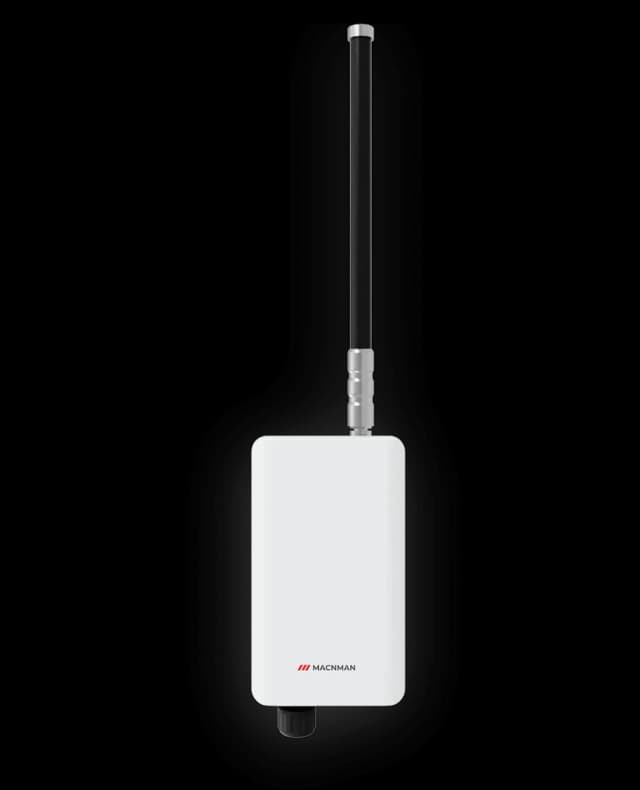
Maclink Gen-2
LoRaWAN Outdoor Gateways
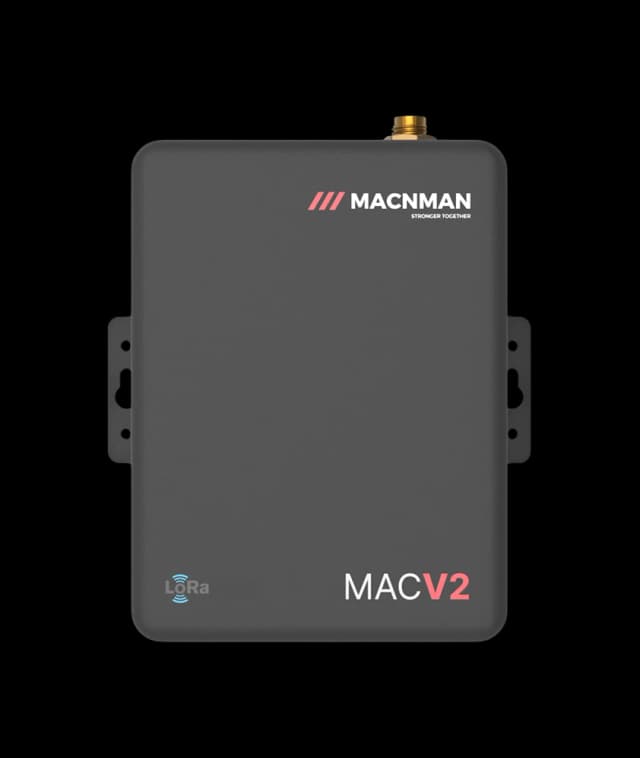
MacEge 4G Mini Gateway
4G Lte Gateways
 Hot Selling
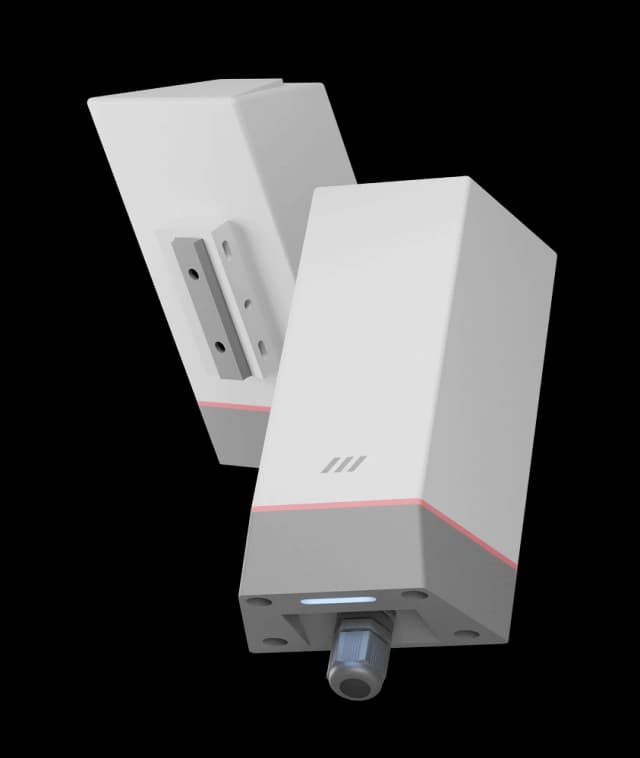
MacSync LX1
RS485 Modbus to LoRaWAN Converter
MacSync LX1
Analog 4-20mA to LoRaWAN Converter
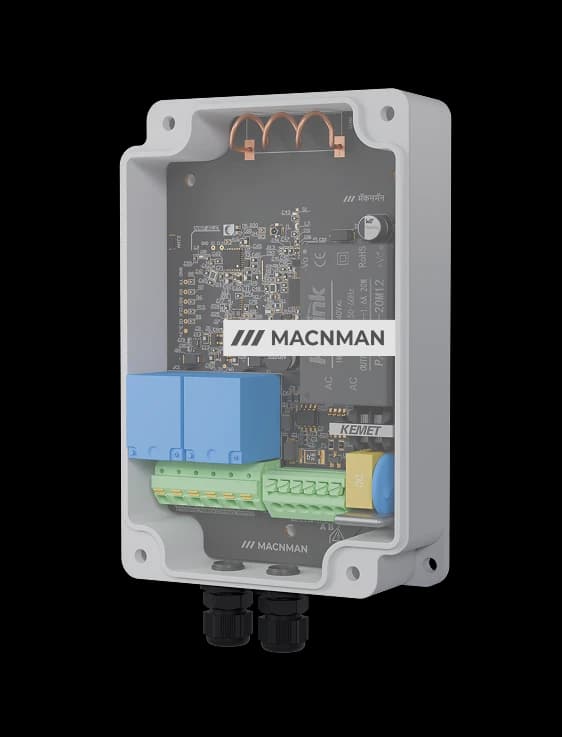 New
MacSet
RS485/Analog + Relay Output
 Hot Selling
Setu X
LoRaWAN Indoor Gateways
NewMaclink Gen-2
LoRaWAN Outdoor Gateways
MacEge 4G Mini Gateway
4G Lte Gateways
Hot SellingMacSync LX1
RS485 Modbus to LoRaWAN Converter
MacSync LX1
Analog 4-20mA to LoRaWAN Converter
NewMacSet
RS485/Analog + Relay Output
Hot SellingSetu X
LoRaWAN Indoor Gateways
Let‘s make it easy - reach out now!
Let’s bring it to life!
Let‘s Make it Easy
Reach Out Now


We are always ready
to help and
answer your
questions
Call
+91 7972856163
+91 9096830856
Location
Office-15 Bibwewadi, Pune, Maharashtra 411037
Get in Touch
Define your goals and all to value your time
Use of this website and purchase of Macnman products are subject to our Terms and Conditions.