LoRaWAN® 6-in-1 Weather Station
A Compact, All-in-One Automatic Weather Station: Rainfall, Wind Speed and Direction, Temperature, Humidity and Pressure · Solar or DC · IN865 LoRaWAN
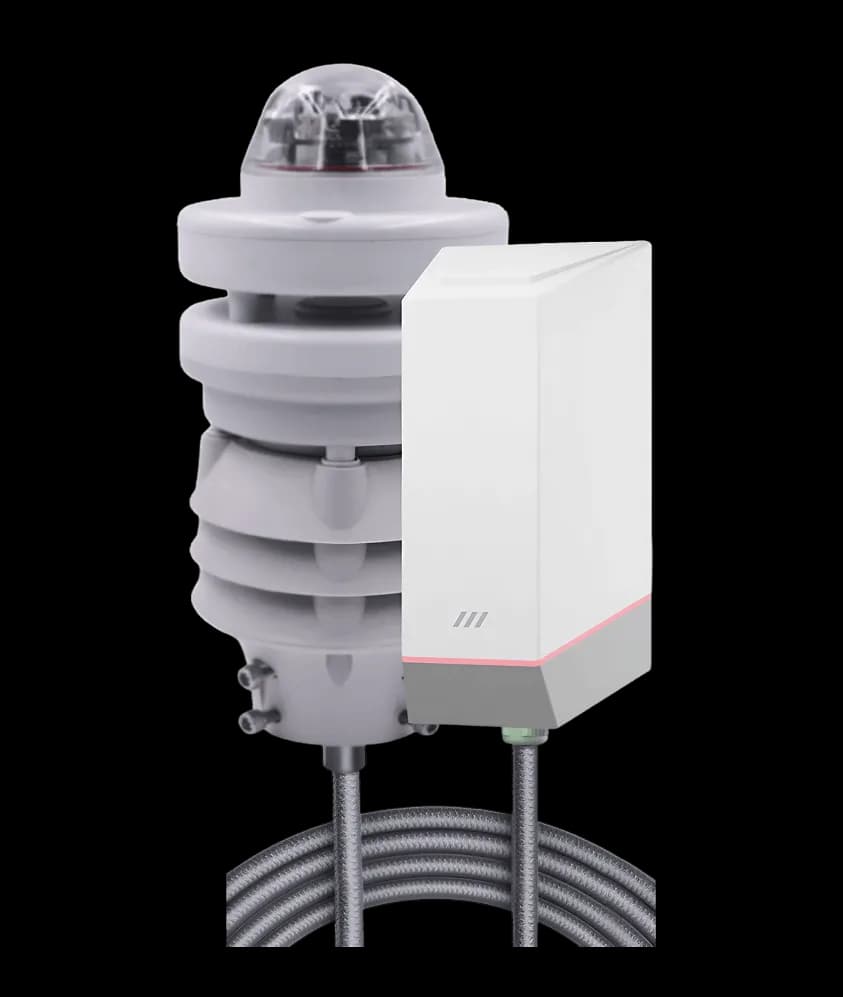
The MacSync LWS X2 is a compact all-in-one LoRaWAN weather station: an optical rain sensor instead of a tipping bucket, wind to 60 m/s, temperature to ±0.3 °C and pressure to ±0.5 hPa, on a 20 W solar panel or 9–36 V DC, reporting kilometres to your gateway
Hyperlocal Weather Data for Farms, Plantations, Cities, Dams, Solar Plants & Industrial Sites.
Hyperlocal Weather Data for
Farms, Plantations, Cities, Dams, Solar Plants & Industrial Sites.
MacSync LWS X2
Explore the highlights
Rainfall, wind speed, wind direction, air temperature, relative humidity and barometric pressure from one compact head on one pole, in every LoRaWAN® uplink.
An optical rain sensor measures rainfall intensity from 0 to 200 mm/h with nothing to tip, clog or level, so the station keeps reading through dust, leaves and the long dry season.
Wind speed from 0 to 60 m/s at ±(0.3 + 0.03V) m/s and direction over the full 360° at ±3° below 10 m/s: gust alarms for cranes, sprayers and solar trackers, and the wind record for every site.
Air temperature from −40 to +85 °C at ±0.3 °C, humidity 0–100 % at ±3 % RH and pressure 500–1,100 hPa at ±0.5 hPa: the three readings behind frost, heat-stress, disease-window and storm-approach alerts.
A 20 W solar panel with an 8,000 mAh rechargeable battery for the field, or 9–36 V DC where the site has power. Both LoRaWAN variants report every few minutes indefinitely.
Threshold alerts on rainfall intensity, wind speed, temperature, humidity and pressure: the station reports the moment a limit is crossed instead of waiting for the next interval.
LoRaWAN® v1.0.4 at 23 dBm with −137 dBm sensitivity. One MacLink gateway covers the farm, the campus, the plant or the ward; a ring of stations gives hyperlocal data a single observatory cannot.
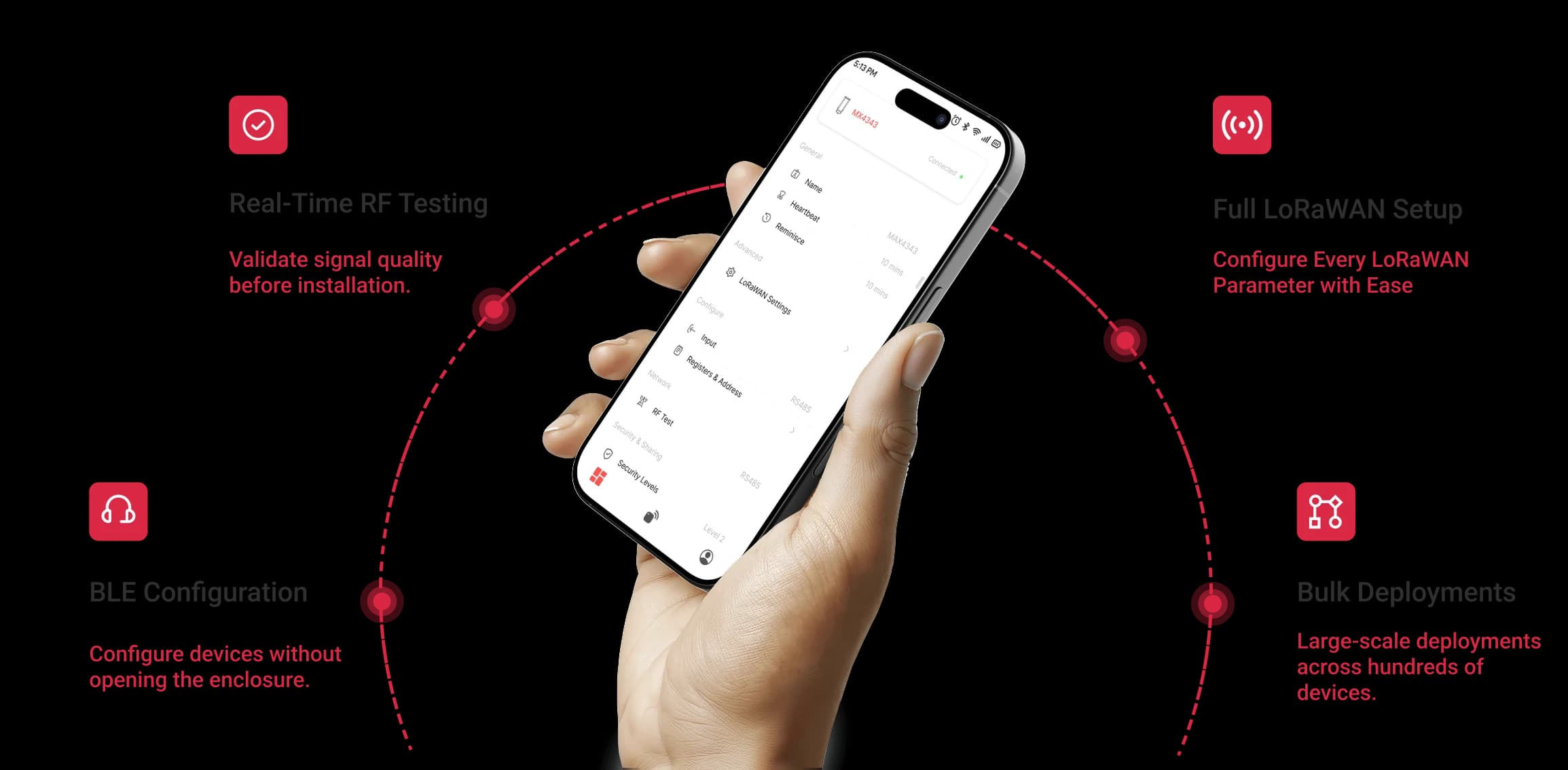
Pair over Bluetooth with the Maya app to set the sampling and reporting intervals, the alert limits and the LoRaWAN class, read live values on site, or change settings later by downlink.
Designed and manufactured in Pune. WPC compliant on IN865 and RoHS conforming, in a UV-resistant glass-filled nylon enclosure rated IP65 with an IP67 option.
In plain terms
What Is a LoRaWAN Weather Station, and Is It an Automatic Weather Station?
The short answer
A LoRaWAN weather station is a compact outdoor sensor that measures the weather at one spot — rainfall, wind speed and direction, air temperature, humidity and barometric pressure — and sends the readings over LoRaWAN® radio, kilometres to a gateway, on solar power. It is an automatic weather station in the plain sense: unattended, continuous, self-powered. It is not the mast-and-logger AWS that tenders and meteorological departments mean; it is the microclimate instrument for the farm block, the drain, the plant or the ward in between those stations, and a ring of them costs less than one mast.
Rainfall
- 0–200
mm/h rainfall intensity range
- ±0.2 mm/h
Rainfall accuracy (datasheet)
- Optical
No bucket to tip, clog or level
Wind
- 0–60 m/s
Wind speed range, 0.01 m/s resolution
- ±(0.3+0.03V)
m/s wind speed accuracy
- ±3°
Direction accuracy below 10 m/s
Temperature
- ±0.3 °C
Accuracy at 25 °C
- 0.01 °C
Resolution
- −40 to +85
°C measuring range
Humidity
- 0–100 %
RH range, non-condensing
- ±3 % RH
Accuracy at 90 % RH
- 0.01 %
Resolution
Pressure
- 500–1,100
hPa measuring range
- ±0.5 hPa
Accuracy at 25 °C
- 0.1 hPa
Resolution
Radio & power
- 23 dBm
Transmit power, −137 dBm sensitivity
- 20 W
Solar panel with an 8,000 mAh battery
- 9–36 V
DC variant for powered sites

MacSync LWS X2
The MacSync LWS X2 is Macnman's 6-in-1 LoRaWAN weather station: an optical rain sensor instead of a tipping bucket, wind to 60 m/s, pressure to ±0.5 hPa, a 20 W solar panel or 9–36 V DC, LoRaWAN® v1.0.4 on IN865 and six other regional bands, threshold alerts on every parameter and setup from the Maya app.
Rain intensity from an optical sensor with no tipping bucket, 0 to 200 mm/h.
Speed to 60 m/s and direction over 360°, for gust alarms and the site's wind record.
Air temperature from −40 to +85 °C for frost, heat-stress and curing alerts.
Relative humidity 0–100 % for disease windows, drying and comfort.
Barometric pressure 500–1,100 hPa; a falling trend is the storm-approach signal.
LoRaWAN® v1.0.4 at 23 dBm, on a 20 W solar panel or 9–36 V DC.
Also searched for as an IoT weather station, an automatic weather station for agriculture, a wireless or solar weather station, an all-in-one or 6-in-1 weather sensor, or a LoRaWAN rain gauge and anemometer. A compact station like this complements, and does not replace, a reference observatory where official records are required.
Get a quote
Need a quote for the MacSync LWS X2?
Tell us how many you need and where they are going. A product engineer replies within one working day with availability, lead time and the right variant for your site.
- Reply within one working day
- Designed and built in Pune, India
- WPC compliant, RoHS conformant
Downloads
Everything You Need to Get Building
Datasheets, drawings, firmware, and tools — all in one place.
MacSync LWS X2 Datasheet (PDF)
Measurement, radio, power and variant specifications
Datasheet web page
The same specifications on the documentation site
Weather Station User Manual
Installation, mounting, live readings and remote configuration
Maya App Setup Guide
LoRaWAN settings shared by all MacSync sensors
Engineered for
What Sets the MacSync LWS X2 Apart for Weather Monitoring
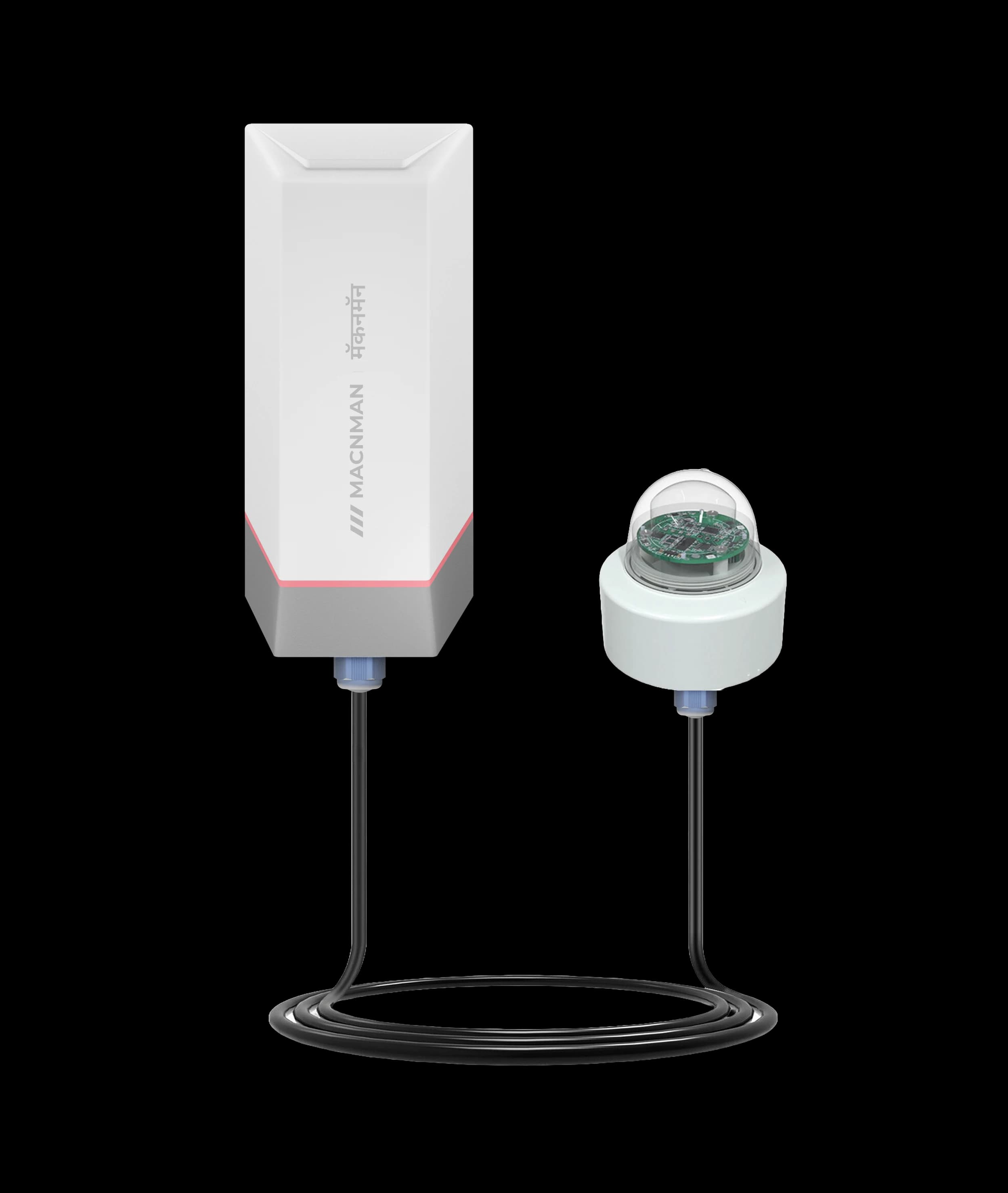
Tipping-bucket gauges clog with dust and leaves, go out of level and under-read in heavy rain. The LWS X2 reads rain intensity optically, so there is nothing to clean, tip or re-level between visits.
01 / 05
Works with
Why Choose the MacSync LWS X2 LoRaWAN 6-in-1 Weather Station?
One compact head measures rainfall, wind, temperature, humidity and pressure; a solar or DC transmitter sends it over LoRaWAN® to any network server, with no cable, Wi-Fi or SIM at the site.One compact head measures rainfall, wind, temperature, humidity and pressure; a solar or DC transmitter sends it over LoRaWAN® to any network server, with no cable, Wi-Fi or SIM at the site.
Applications
Where Is a LoRaWAN Weather Station Used?
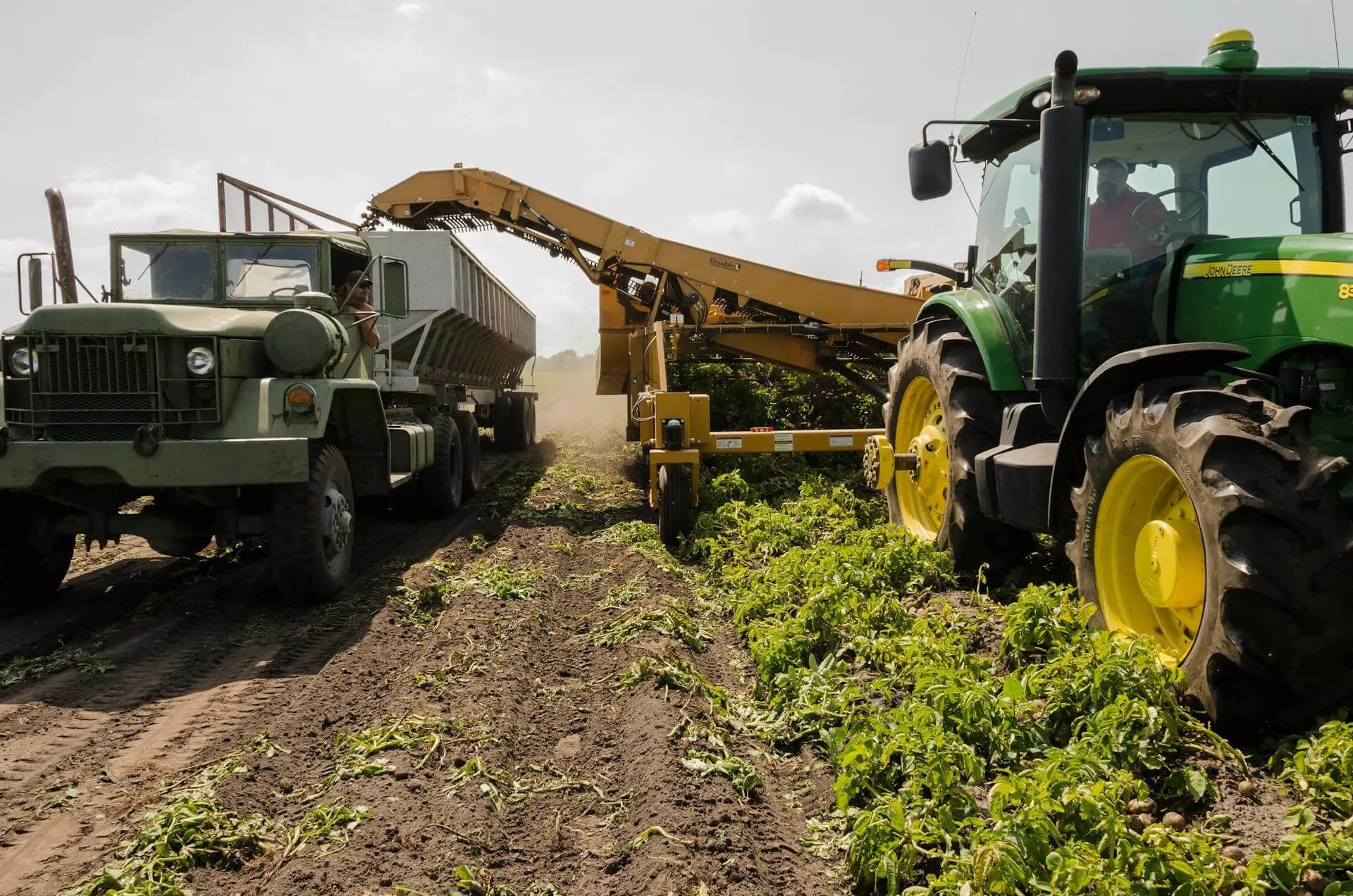
Farms & Drip Irrigation
Rainfall tells the irrigation controller what the sky already delivered; wind tells the sprayer when to stop; temperature and humidity raise frost and heat-stress alerts for the block, not the district.
Read case studiesPolyhouses & Nurseries (Outside reference, Ventilation decisions): The station outside the structure gives the outside reference that vent, shade and fogging decisions are made against, with the T&H sensor inside.
Vineyards, Orchards & Spray Timing (Leaf-wetness proxy, Disease windows): Humidity, temperature and rain hours flag the disease-pressure windows; wind speed decides whether a spray goes on the leaf or the neighbour's field.
Tea, Coffee & Rubber Plantations (One per section, Factory-roof gateway): Rainfall and temperature by section across estates kilometres wide, on one gateway on the factory roof, for plucking rounds, drying and the estate's own climate record.
Urban Flood & Drain Early Warning (Rain intensity, Flood cell feed): Rain intensity at the catchment reaches the flood cell minutes before the drain fills; paired with ultrasonic level sensors on the nullah, the city sees the event forming.
Dams, Reservoirs & Canals (Catchment rainfall, Gate operations): Rainfall and wind at the reservoir and along the catchment, feeding inflow estimates and gate operations with data from the site rather than the nearest town.
Solar Plants & Substations (Wind for trackers, Ambient for derating): Wind speed for tracker stow decisions, ambient temperature and humidity for performance analysis, rain for cleaning schedules, from the 9–36 V DC variant on the plant's own supply.
Construction, Mining & Ports (Crane wind alarms, Dust and rain): A wind-speed threshold that stops crane and hoist work, rainfall for haul-road and tailings decisions, and a weather record for every incident report.
Smart Cities, Highways & Airports (Hyperlocal network, ICCC integration): A ring of compact stations across a city or along a corridor shows the heat island, the squall line and the cloudburst ward by ward, over MQTT into the ICCC.
Universities, KVKs & Research (Logged record, Per-plot weather): Continuous six-parameter data per trial site, exported from the network server, beside the institution's reference observatory.
Browse all 10 applications
01 / 10
Where it fits
From Drip Blocks to Drain Outfalls, Wherever the Weather Decides the Day
Farms, Orchards & Plantations
Rain and wind for spray and irrigation windows, temperature and humidity for frost and disease alerts, one station per block on one gateway.
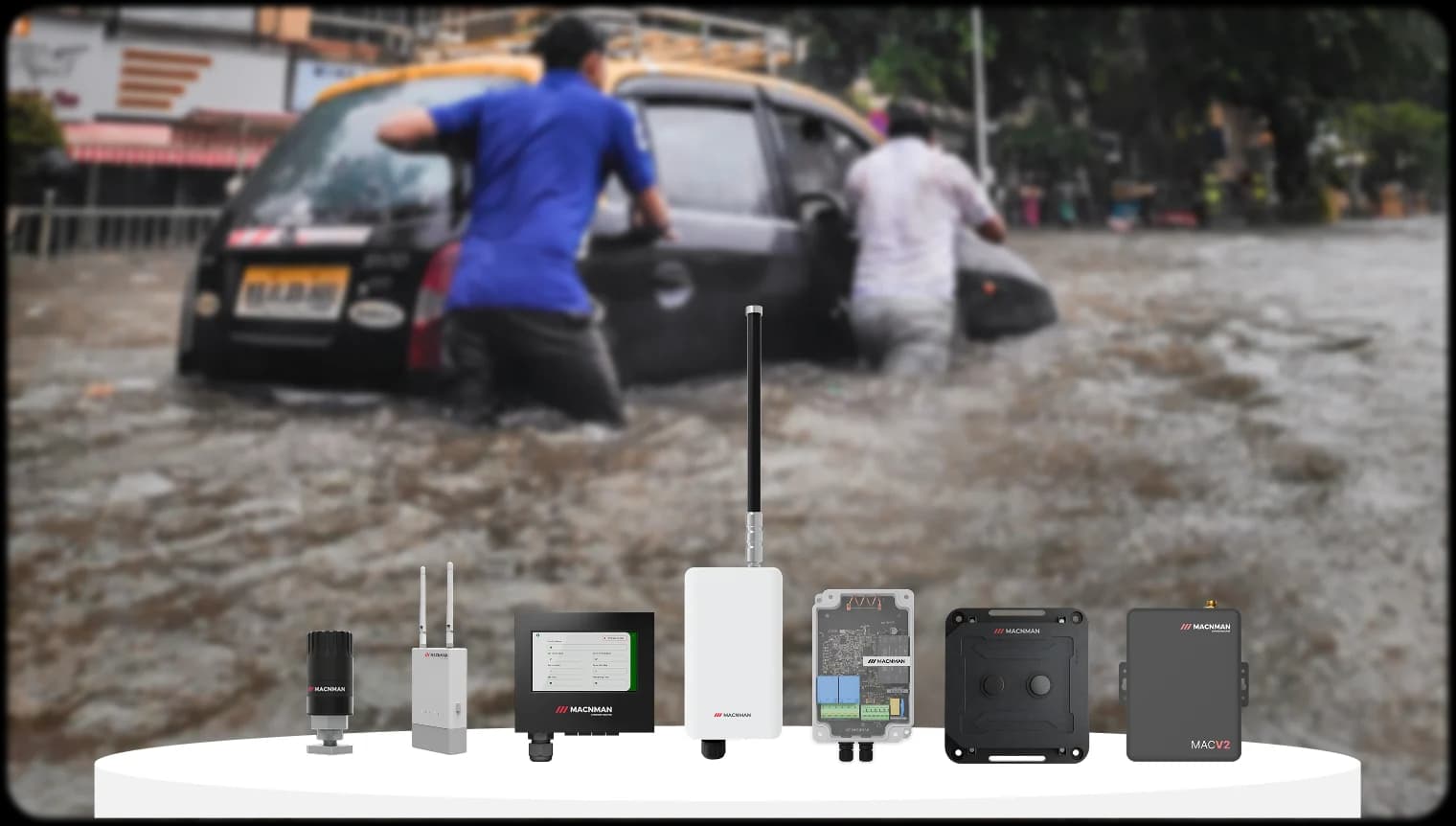
Cities, Drains, Dams & Reservoirs
Rainfall intensity at the catchment and the outfall, wind and pressure for storm approach, feeding the flood cell and the ICCC.
Plants, Solar Farms & Work Sites
Wind alarms for cranes and trackers, temperature and humidity for curing and storage, rain for yard and tailings management.

Farms, Orchards & Plantations
Rain and wind for spray and irrigation windows, temperature and humidity for frost and disease alerts, one station per block on one gateway.
Cities, Drains, Dams & Reservoirs
Rainfall intensity at the catchment and the outfall, wind and pressure for storm approach, feeding the flood cell and the ICCC.
Plants, Solar Farms & Work Sites
Wind alarms for cranes and trackers, temperature and humidity for curing and storage, rain for yard and tailings management.
Siting it
Siting a Weather Station: Height, Clearance, Orientation and a Reference Check
Where a compact station is mounted decides what its numbers mean. Four rules, from standard meteorological practice; the station's own figures are from the datasheet.
Siting it
Where a compact station is mounted decides what its numbers mean. Four rules, from standard meteorological practice; the station's own figures are from the datasheet.
Height: the exposure you want to measure
Standard practice puts air temperature and humidity at about 1.5 to 2 m and wind at 10 m over open ground. A compact station is usually mounted at 2 to 3 m on one pole; note the height in the record and keep it the same across sites so stations compare.
Clearance from obstacles
Keep the head clear of buildings, trees and walls, as a rule of thumb ten times the obstacle's height for wind, and away from heat-reflecting surfaces for temperature. A rooftop corner or a field edge is a poor spot; an open field or a flat roof centre is a good one.
Level and oriented
Mount the pole plumb so the rain and wind readings are not biased, point the head's direction reference to north and check the live wind direction in the Maya app before leaving.
Compare against a reference
For the first weeks, compare rainfall totals and temperature against the nearest reference gauge or observatory and note the offset. That comparison, repeated each season, is what makes a compact station's record defensible.
Free planning tools
Size your deployment before you order the hardware
Free engineering calculators for coverage, range and battery life — built on measurements from our own deployments rather than textbook models, which is why the answers tend to be smaller and a good deal more useful. Nothing here quotes a range we have not actually achieved.
No sign-up, no email, nothing to install. More on the way for Wi-Fi and BLE.
Hardware
UV-Resistant, IP65 Enclosure with an IP67 Option, Built for Open Sky
The glass-filled nylon enclosure is UV-resistant and IP65 rated as standard, IP67 optional, and operates from −40 °C to +80 °C on a pole or a wall. The optical rain sensor has no bucket to clog or level, and an IP68 cable extender is available where the transmitter must sit away from the head.

Ready to see the weather where it matters? Ask for a quote on the MacSync LWS X2.
At a glance
MacSync LWS X2 LoRaWAN 6-in-1 Weather Station Specifications
Every key specification in one view, from the datasheet.
0–200 mm/h
rainfall intensity, optical
±0.2 mm/h · no tipping bucket
0–60 m/s
wind speed
±(0.3 + 0.03V) m/s · 0.01 m/s resolution
0–359.9°
wind direction
±3° below 10 m/s · 0.1° resolution
−40 to +85 °C
air temperature
±0.3 °C at 25 °C · 0.01 °C resolution
0–100 % RH · 500–1,100 hPa
humidity and pressure
±3 % RH · ±0.5 hPa
LoRaWAN® v1.0.4
IN865 and six more bands
23 dBm · Class A, Class C via Maya · OTAA
Features
Built into the MacSync LWS X2: Head, Radio, Power and Setup
Threshold Alerts on Every Parameter
Set limits for rain intensity, wind speed, temperature, humidity and pressure; the station reports the moment one is crossed.
Report on a fixed interval, on a threshold, or both, with sampling from 1 minute to 24 hours.
Long-Range LoRaWAN®
LoRaWAN® v1.0.4, Class A with Class C via the app, on IN865, EU868, US915, AU915, RU864, KR920 and AS923.
Solar or 9–36 V DC
A 20 W panel with an 8,000 mAh rechargeable battery for the field, or site power from 9 to 36 V DC.
Six Readings in Every Uplink
Rainfall, wind speed, wind direction, temperature, humidity and pressure, together, every interval.
Optical Rain Sensor
Rain intensity 0–200 mm/h with no tipping bucket to clog, tip or re-level.
Any LoRaWAN® Network Server
ChirpStack, The Things Network, Orbiwise, Netmore, MQTT platforms, SCADA or a private LNS, with AES-128 end to end.
Macnman Maya App
Intervals, alert limits, LoRaWAN class and live readings from your phone; the same settings by downlink later.
MacTalk and BLE Variants
MacTalk variants talk device to device to a MacSet controller with no gateway, so a wind limit can stop a crane or a rain reading can hold an irrigation valve; the BLE variant reads locally into the Maya app.
Capabilities
Six Parameters, Read at the Same Spot at the Same Moment
Rain tells you what fell; wind tells you whether to spray, lift or stow; temperature and humidity tell you about frost, heat and disease; a falling pressure tells you what is coming. Reading them together from one head, at your site, is what a district forecast cannot do.

Before you order
Send Us the Site List and We Confirm the Variants
Four details are enough for an engineer to reply with the variant for each site, the reporting interval and the gateway count.
Before you order
Four details are enough for an engineer to reply with the variant for each site, the reporting interval and the gateway count.
Sites and what decides the day there
Farm blocks, estate sections, drains, reservoirs, plants or corridors, and which reading matters most at each: rain, wind, frost or all six.
Power at the pole
Open sky points to the 20 W solar variant (9210); a pump house, substation or rooftop with power points to the 9–36 V DC variant (9211).
Rain and wind only, or all six?
Rainfall alone points to the MacSync LORS X1 optical rain sensor; wind, temperature, humidity and pressure without rain to the LWS X1 five-in-one; all six to the LWS X2 on this page.
Network and platform
An existing LoRaWAN® gateway and network server, or a new MacLink Gen-2; or MacTalk to a MacSet controller that acts on a wind or rain limit with no gateway.
Ready now: Get a quote · Request a pilot kit · Partner programme
Architecture
LoRaWAN Network Architecture: Weather Station, Gateway, Network Server and Dashboard

Why it matters
Decide on the Weather at Your Site, Not the District's.
A forecast describes a region; a compact station describes your block, your drain or your roof, now and all season. That is the difference between reacting to the weather and planning around it.
Why it matters
A forecast describes a region; a compact station describes your block, your drain or your roof, now and all season. That is the difference between reacting to the weather and planning around it.
Spray and irrigate on measured weather
Rain that already fell, wind that is too strong to spray in, and the temperature and humidity that open a disease window, from the field itself.
See the cloudburst forming
Rain intensity at the catchment and a falling pressure trend reach the flood cell before the drain fills.
Stop work before the gust
A wind-speed threshold alarms the crane operator, stows the tracker or pauses the hoist, with the record kept for the incident report.
A climate record you own
Six parameters logged continuously across every site, exported from your own network server, ready to compare season against season.
How it works
How Does a LoRaWAN Weather Station Work?
Step 1 of 5
Pole, head, transmitter, panel
Set a plumb pole in the open, fix the head level on top facing north, and the transmitter and solar panel below it.
Join the LoRaWAN network with Maya
Pair over Bluetooth, set the intervals and alert limits, and the station joins your network server by OTAA with its pre-loaded DevEUI and keys.
The head reads the sky
The optical sensor reads rain intensity, the head reads wind speed and direction, and the shielded sensors read temperature, humidity and pressure, on the sampling interval you set.
Readings travel kilometres to the gateway
Each set of six readings is sent as a LoRaWAN® uplink, encrypted with AES-128, to the gateway and on to your network server.
Your platform shows it and raises the alarm
The values land in your farm platform, SCADA, flood cell or ICCC over MQTT or HTTPS. Cross a limit and the station reports immediately; a MacSet controller can act on the same network.
Reporting modes
Periodic, Threshold and Hybrid Reporting: Chosen by What the Site Needs.
An uplink on a fixed interval. Predictable data for a climate record; every 10 or 15 minutes is the usual station setting.
Note: The solar variant is recharged daily; the DC variant draws from site power.
The station samples on its own schedule and reports the moment a limit is crossed: rain intensity above the flood threshold, wind above the crane limit, temperature below frost. Note: Best for alarms that must arrive within minutes.
The periodic record plus immediate reports on threshold events, so you keep the continuous log and still hear about the gust or the cloudburst at once. Note: Sampling from 1 minute to 24 hours; the reporting interval is set independently.
Cloud & LNS
Works with Every LoRaWAN® Network Server You Already Run
TTN, ChirpStack, MQTT, Orbiwise & Private LNS — No Vendor Lock-In
MacSync LWS X2 weather stations join any LoRaWAN® network server — The Things Network, ChirpStack, MQTT platforms, Orbiwise, Netmore, or your own private gateway — with AES-128 encryption end to end and no vendor lock-in. Readings reach your farm platform, SCADA, flood cell or ICCC over MQTT or HTTPS.

Build the network: MacLink Gen-2 outdoor LoRaWAN gateway · Setu X1 indoor LoRaWAN gateway · MacSet LX1 controller for valves, pumps and alarms · Gateway and coverage calculator · Antenna height planner
Device-to-device
Monitor Smarter with Macnman
Why Choose the Macnman LoRaWAN® 6-in-1 Weather Station
Six weather readings from one head, tool-free installation and solar power that runs on its own, in one rugged wireless station.

Plug & Play
Truly plug & play — no complex setup.
Real-Time Alerts
Instant threshold alerts the moment conditions drift.
Long-Range
Long-range coverage for hard- to-reach places.
RF performance
Stable Readings Through Dust, Monsoon Rain and Summer Heat
The optical rain sensor has no bucket to clog with dust or leaves and no mechanism to stick after months without rain; the head and the enclosure are UV-resistant and rated to +80 °C. The internal antenna holds the LoRaWAN® link from a rooftop or a field pole at 23 dBm with −137 dBm sensitivity.
Installation
Weather Station Installation in an Hour, No Mast, No Trench
The MacSync LWS X2 goes up with one pole, a bracket and zip ties — the head on top, the transmitter and panel below it. With no cabling, mains power or civil work, a block, a drain or a rooftop can be instrumented in an hour.
The MacSync LWS X2 goes up with one pole, a bracket and zip ties — the head on top, the transmitter and panel below it. With no cabling, mains power or civil work — a block, a drain or a rooftop can be instrumented in an hour.
Installation
On the pole in an hour, reporting for years.
Choose and prepare the site
Open ground or a flat roof centre, clear of buildings and trees, with sky for the solar panel. Set a plumb pole; 2 to 3 m is the usual height for a compact station.
Mount the head and the transmitter
Fix the head level on top of the pole with its direction reference pointed north, and the transmitter and solar panel below it with the bracket and zip ties; the DC variant wires to the site's 9–36 V supply.
Pair with Maya over BLE
Set the sampling and reporting intervals, the alert limits for rain, wind, temperature, humidity and pressure, and the LoRaWAN class; check the live wind direction and run a Ping to confirm the gateway. The device joins by OTAA with its pre-loaded keys.
Compare with a reference, then trust the record
For the first weeks compare rainfall totals and temperature against the nearest reference gauge or observatory and note the offset; repeat each season.
Range & reliability
Long-Range LoRaWAN® Coverage Across the Farm, the Ward or the Plant
One gateway reaches stations spread over kilometres of fields, drains and rooftops
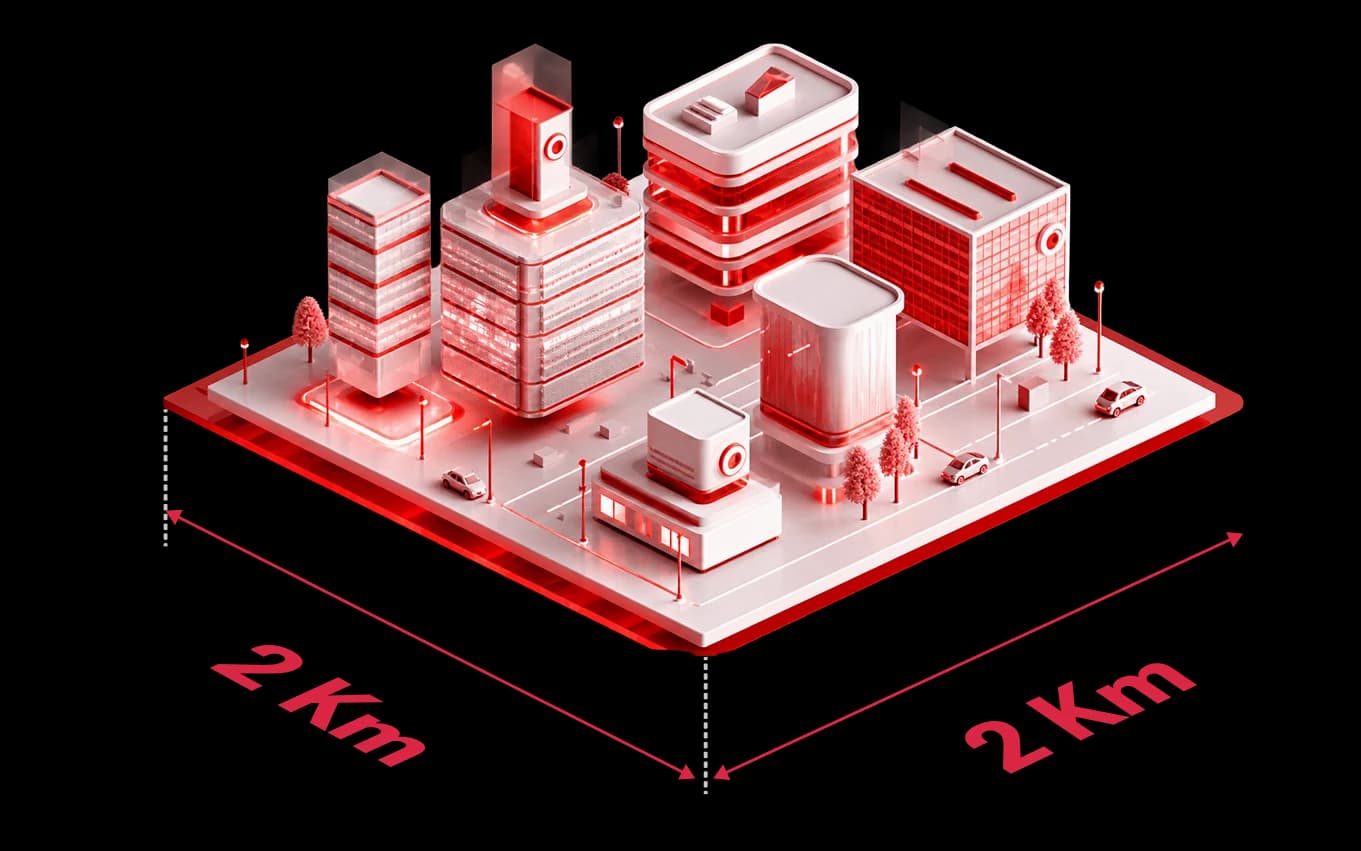
At 23 dBm with −137 dBm sensitivity, a MacLink Gen-2 gateway on a roof reaches stations across an estate, a ward or a plant, so one installation carries a ring of them. Range depends on terrain, canopy and antenna height; the coverage calculator gives a first estimate and the Maya app's Ping test confirms each pole.
Made in India
A LoRaWAN weather station made in Pune, India
Sites in India get the IN865 plan as standard, a WPC compliant radio, and an engineer in Pune who answers during the Indian working day. Projects abroad take the same station on EU868, US915, AU915, RU864, KR920 or AS923.
Made in India
Sites in India get the IN865 plan as standard, a WPC compliant radio, and an engineer in Pune who answers during the Indian working day. Projects abroad take the same station on EU868, US915, AU915, RU864, KR920 or AS923.
IN865 as standard
Shipped on the 865–867 MHz LoRaWAN® plan for India; another regional plan is set when ordering.
WPC compliant radio
The LoRaWAN® radio is WPC compliant for use in India and the hardware conforms to RoHS.
Built in Pune
Designed, assembled and tested at one site in Pune, where the support engineers also sit.
Next steps: LoRaWAN in India: the IN865 band and WPC rules · Request a pilot kit · All LoRaWAN sensors · Industrial IoT manufacturer in India
The six readings
Six Weather Parameters: Range, Accuracy and What Each One Tells You
What the MacSync LWS X2 measures, from its datasheet, and the decision each reading usually drives.
| Parameter | Range | Accuracy | Resolution | What it tells you |
|---|---|---|---|---|
| Rainfall (optical) | 0–200 mm/h | ±0.2 mm/h | Not stated on the datasheet | What fell and how hard: irrigation credit, drain and flood warning, spray wash-off |
| Wind speed | 0–60 m/s | ±(0.3 + 0.03V) m/s | 0.01 m/s | Spray windows, crane and tracker limits, gust record |
| Wind direction | 0–359.9° | ±3° below 10 m/s | 0.1° | Drift direction for sprays and dust, storm approach |
| Air temperature | −40 to +85 °C | ±0.3 °C at 25 °C | 0.01 °C | Frost and heat-stress alerts, degree-days, curing and storage |
| Relative humidity | 0–100 % RH | ±3 % RH at 90 % RH | 0.01 % RH | Disease-pressure windows, drying, comfort |
| Barometric pressure | 500–1,100 hPa | ±0.5 hPa at 25 °C | 0.1 hPa | Storm approach from the trend; altitude correction for the record |
Figures are from the MacSync LWS X2 datasheet; V in the wind accuracy is the measured speed in m/s. The station does not measure solar radiation, UV or leaf wetness; where evapotranspiration needs radiation, pair it with a radiation sensor through a MacSync converter or use a reference station's value.
Rain sensing
Optical Rain Sensor or Tipping-Bucket Rain Gauge: What Each Gives You
The LWS X2 measures rain optically. A tipping bucket is the reference method for totals and is what an observatory uses. Both have a place; this is how to choose.
| Compare | Optical rain sensor (LWS X2, LORS X1) | Tipping-bucket rain gauge |
|---|---|---|
| How it measures | Rain intensity, from the optical signature of drops on the sensor | Counts bucket tips of a fixed volume, usually 0.2 mm each |
| Moving parts | None | A see-saw bucket and a funnel |
| Maintenance | Keep the dome clean | Clear the funnel of dust, leaves and insects; re-level after knocks |
| Heavy rain | Reads intensity up to 200 mm/h | Under-reads in very heavy rain as the bucket cannot keep up |
| Long dry spells | Nothing to seize | Mechanism can stick or clog before the first rain |
| Stated accuracy | ±0.2 mm/h (datasheet) | Typically a percentage of the total; depends on the gauge |
| Official records | Hyperlocal operational data; compare against a reference gauge | The reference method for observatories and insurance stations |
| Use it for | Irrigation credit, flood and drain warning, spray wash-off, site records across many points | The one reference total per site, where an official figure is required |
The tipping-bucket column describes the category, not one product. Independent work (Dombrowski et al., Sensors 2021) found compact all-in-one rain sensors within roughly ±8 % of a reference across units and susceptible to wind; the WMO's own table notes that precipitation uncertainty is seriously affected by wind for every gauge type. The right design for a district often runs many optical stations against one reference gauge.
Wind sensing
Ultrasonic Anemometer or Cup and Vane: How Wind Is Measured, and What the Datasheet Says
Buyers ask whether a compact head is ultrasonic or mechanical. The MacSync LWS X2 datasheet states the wind figures — 0–60 m/s, ±(0.3 + 0.03V) m/s, direction ±3° below 10 m/s — but does not name the sensing method, so this table is about the two methods, not a claim for the product.
| Compare | Ultrasonic anemometer | Cup anemometer and wind vane |
|---|---|---|
| How it measures | Time of flight of sound pulses between transducers | Rotation of cups for speed; a vane for direction |
| Moving parts | None | Bearings and a vane that wear |
| Start-up | Virtually no detection limit (KNMI) | A threshold speed before the cups turn |
| Agreement in service | US National Weather Service test: average speed within 2 knots of the cup reference, direction within 4° most of the time; sonics report higher, near-instantaneous gusts | The reference most networks grew up with; over-reads in light, gusty wind (University of Calgary study) |
| Maintenance | Keep the transducer paths clear of insects and ice | Bearings, cups and vane need checking and replacement |
| What to ask a maker | Stated accuracy and range, averaging and gust logic, and whether the head needs levelling and north alignment | The same, plus start-up threshold and bearing life |
Sources are linked below. The LWS X2's own wind figures are from its datasheet; its sensing method is not stated there and is not claimed here.
Compact station, full AWS, or the national network
Compact LoRaWAN Weather Station, Full Automatic Weather Station (AWS), or the IMD / WINDS Network?
An AWS in a tender usually means a mast with separate calibrated instruments and a logger; the national network puts one such station per block. A compact LoRaWAN station is the instrument for everything in between. Knowing which the project needs saves money in both directions.
| Compare | MacSync LWS X2 compact station | Full AWS (mast, instruments, logger) | IMD observatories and the WINDS network |
|---|---|---|---|
| What it is | One compact head with six readings, a LoRaWAN transmitter and a solar panel on one pole | A 10 m mast with separate wind, temperature/humidity, rain and radiation sensors wired to a logger | Reference observatories plus, under WINDS, an AWS per block and an automatic rain gauge per panchayat |
| Parameters | Rain, wind speed and direction, temperature, humidity, pressure | Those plus solar radiation, and often soil temperature and moisture, sunshine or evaporation | Instrument lists set by the department; calibrated and traceable |
| Density | One per block, section, drain or rooftop: a ring across the site | One per site | One per block and one per panchayat, with the Cabinet release describing a five-fold increase in density |
| Installation | One pole, one person, about an hour; no trench | Civil foundation, mast, cabling, a day or more | Agency-installed and maintained |
| Data path | LoRaWAN to your gateway and server; MQTT or HTTPS onward | Logger with GSM or satellite; vendor software | Department systems; data rental to governments under WINDS |
| Recurring cost | None per station on your own gateway | A SIM per station and often a software subscription | Borne by the scheme |
| Calibration and records | Datasheet accuracies; compare against a reference gauge; no traceability certificate is claimed | Instrument-level certificates where the procurement requires them | Validated against co-located observatories within WMO limits |
| Where it fits | Hyperlocal operational data for farms, plantations, drains, dams, plants, sites and wards, between the official stations | One reference point per site where an official or insurance-grade record is required | The official record: forecasts, advisories, crop insurance |
| Together | A ring of compact stations around one reference AWS or beside the block AWS gives both the record and the resolution | — | — |
The AWS and network columns describe the categories, from the Cabinet's WINDS release of January 2025 and IMD's published AWS validation; Macnman does not claim conformity of the LWS X2 to any meteorological department's AWS specification, to WINDS or to PMFBY requirements. Check the tender's instrument list before quoting it as the reference station.
What we do not claim
What the MacSync LWS X2 Datasheet Does Not State, So This Page Does Not Either
Competitor pages for compact weather stations are full of figures their datasheets never carry. Ours lists what is published and leaves the rest out; here is the rest, so you can ask before a tender rather than after.
What we do not claim
Competitor pages for compact weather stations are full of figures their datasheets never carry. Ours lists what is published and leaves the rest out; here is the rest, so you can ask before a tender rather than after.
Wind sensing method
The datasheet gives the wind range and accuracy but not whether the head is ultrasonic or mechanical, nor the averaging or gust logic. The method table above is generic for that reason; ask us for the engineering detail.
Rainfall resolution and basis
Range 0–200 mm/h and accuracy ±0.2 mm/h are stated; the resolution is not, and no comparison against a reference gauge is published. Compare the first weeks against one.
Calibration, traceability and conformity
No field calibration procedure, calibration interval or traceability certificate is published, and no IMD, WMO, WINDS, PMFBY or IEC 61724-1 conformity is claimed. Figures from those standards appear on this page only as context.
Range, autonomy and logging
No kilometre figure, no solar autonomy in days and no record count are stated. Range is checked per pole with the Maya app's Ping; the 8,000 mAh battery carries cloudy days; the datasheet says readings are buffered through outages without a number.
Sources: Dombrowski et al., Sensors 21(3):741, 2021 — performance of a compact all-in-one weather station against reference instruments · Lewis & Dover, US National Weather Service — sonic versus cup-and-vane wind sensor comparison · Wauben, KNMI, WMO TECO-2005 — ultrasonic wind sensors in an operational network · Government of India Cabinet release, January 2025 — WINDS: one AWS per block, one rain gauge per panchayat · MacSync LWS X2 datasheet
Which Macnman station
Which Macnman Weather Sensor Do You Need: 6-in-1, 5-in-1, Rain Only or Temperature and Humidity?
Four Macnman LoRaWAN devices read the weather. Choose by the readings you will act on.
| Criterion | MacSync LWS X2 6-in-1 (this page) | MacSync LWS X1 5-in-1 | MacSync LORS X1 optical rain sensor | MacSync LTS X1 temperature & humidity |
|---|---|---|---|---|
| Measures | Rain, wind speed and direction, temperature, humidity, pressure | Wind speed and direction, temperature, humidity, pressure | Rainfall only: intensity 0–200 mm/h equivalent, rain class 0–3 | Air temperature and humidity, indoor or outdoor |
| Rain | Optical, 0–200 mm/h, ±0.2 mm/h | Not measured | Optical, infrared refraction, ±5 % typical, 1 mm/h resolution | Not measured |
| Wind | 0–60 m/s · 0–359.9° | 0–60 m/s · 0–359.9° | Not measured | Not measured |
| Power | 20 W solar + 8,000 mAh, or 9–36 V DC | 20 W solar + 8,000 mAh, or 9–36 V DC | 19 Ah battery, or 20 W solar | 19 Ah battery, or 9–36 V DC |
| Choose it when | The site needs the full picture: farms, drains, dams, plants, cities | Rain is already measured elsewhere, or wind and ambient are the question | Rainfall at many points cheaply: catchments, drains, irrigation credit | Climate inside a room, store or polyhouse; or ambient without wind |
| Page | This page | Datasheet on the documentation site | Datasheet on the documentation site | Product page |
Figures are from the Macnman datasheets. The LWS X1 shares the LWS X2's wind, temperature, humidity and pressure specifications without the rain sensor.
See also: Compare all MacSync LWS X2 versions · MacSync LWS X1 five-in-one weather station datasheet · MacSync LORS X1 LoRaWAN optical rain sensor datasheet · MacSync LTS X1 LoRaWAN temperature and humidity sensor · MacSync LSS X5 LoRaWAN 7-in-1 soil sensor · Already have an RS485 Modbus weather sensor? The MacSync LX1 RS485 to LoRaWAN converter reads it · Pyranometer for a solar plant: 4–20 mA to LoRaWAN converter
Power
Solar, DC or Battery: How Each MacSync LWS X2 Variant Is Powered
LoRaWAN stations report every few minutes, so the two LoRaWAN variants run on solar or site power. The datasheet's 19 Ah battery figures apply to the BLE variant.
| Variant | Power | Runtime | Choose it when |
|---|---|---|---|
| 9210 · LoRaWAN solar | 20 W solar panel + 8,000 mAh rechargeable battery | Recharged daily; the battery carries cloudy days | Open sky: fields, estates, drains, reservoirs, rooftops |
| 9211 · LoRaWAN DC | 9–36 V DC from the site | Continuous | Pump houses, substations, solar plants, buildings with power at the pole |
| 9212 / 9213 · MacTalk solar / DC | As above | As above | A MacSet controller must act on the reading with no gateway on site |
| 9214 · BLE battery | 19 Ah Li-SOCl₂ cell | ~2 years at 5-minute reports · ~4 years at 15-minute reports · ~7+ years at hourly reports (datasheet estimate) | Local reading and commissioning with the Maya app |
Datasheet figures. The solar panel needs open sky; under canopy or on a shaded wall take the DC variant. Battery level is sent in every uplink.
Application map
Farm Block, Estate, Drain, Reservoir, Solar Plant and Work Site: How the Station Is Used
Each row is a site found on most Indian projects, with the variant that suits it, where the pole goes and how it is usually set to report.
| Site | What is watched | Variant and placement | Reporting |
|---|---|---|---|
| Drip-irrigated farm block | Rainfall credit, wind for spraying, frost and heat alerts | Solar variant on a 2–3 m pole in the open, one per block or per few blocks | Every 15 minutes; alerts on rain intensity, wind and temperature |
| Vineyard or orchard | Humidity and temperature for disease windows, wind for spray drift | Solar variant in an open row end, 2–3 m | Every 10 to 15 minutes; humidity and wind alerts |
| Tea, coffee or rubber estate | Rainfall and temperature by section | Solar variant on a clearing pole per section; gateway on the factory roof | Every 15 to 30 minutes |
| Urban drain or catchment | Rain intensity, pressure trend | Solar variant on a lamp post or rooftop near the outfall; pair with an ultrasonic level sensor | Every 5 to 10 minutes in the monsoon, event alerts on intensity |
| Dam, reservoir or canal | Rainfall, wind, temperature at the water | Solar variant on the bund or the gate house | Every 15 minutes; rain alerts |
| Solar plant or substation | Wind for trackers, ambient temperature and humidity, rain | DC variant on the plant's supply, 2–3 m pole in the open | Every 5 to 15 minutes; wind alerts to SCADA |
| Construction site, mine or port | Wind limits for lifting, rain, dust-related humidity | Solar variant on a mast-free pole clear of structures; MacTalk to a MacSet alarm where no gateway | Every 5 minutes; wind alert within a minute of the limit |
| University, KVK or research site | All six parameters continuously | Solar variant beside the reference observatory, same height every season | Every 10 minutes; record exported each season |
Heights and intervals are typical starting points, not meteorological standards; the agronomist or engineer sets them per site. Each variant is in the compare tab with its SKU.
Related: Smart farming IoT: weather monitoring on the farm · Smart city IoT: flood and drainage early warning · Smart water management: canals, reservoirs and pumps · MacRay LUS X1 ultrasonic level sensor for the drain beside the rain reading
Deployments: Case study: LoRaWAN weather station for smart farming and yield protection · Case study: LoRaWAN weather station installation for smart-city environmental monitoring
What you set
What the Maya App and a Downlink Can Set on the MacSync LWS X2
Everything an integrator or a farm manager changes, from the phone at installation or later from the network server by downlink.
| Setting | What it does | Set from |
|---|---|---|
| Sampling interval | How often the head is read, from 1 minute to 24 hours | Maya app over BLE · downlink |
| Reporting interval | How often an uplink is sent, independent of sampling | Maya app · downlink |
| Threshold alerts | Limits for rain intensity, wind speed, temperature, humidity and pressure; the station reports the moment one is crossed | Maya app · downlink |
| Reporting mode | Periodic, event-based or hybrid | Maya app · downlink |
| LoRaWAN class | Class A by default; Class C for sites that need fast downlinks | Maya app |
| Live readings and Ping | Read the six values on the pole, check wind direction after orienting the head, and confirm the gateway is reachable | Maya app |
The device joins by OTAA with pre-loaded keys; configuration is AES-128 encrypted like the data. Settings are described in the datasheet and the user manual linked above.
Choosing a weather station
Integrated LoRaWAN Station, RS485 Weather Sensor with a Logger, or GSM Automatic Weather Station
Three ways sites buy weather data today. Here are all three, with our weaker rows left in.
| Criterion | MacSync LWS X2 | RS485 compact weather sensor + your logger | GSM automatic weather station |
|---|---|---|---|
| What you get | Head, LoRaWAN transmitter, solar or DC supply and enclosure as one unit | A sensor head on a cable; logger, power, enclosure, SIM and code are yours | Mast, instruments, logger and the vendor's software |
| Readings | Rain, wind speed and direction, temperature, humidity, pressure | Usually the same six, sometimes radiation and light | Those plus radiation and soil; depends on the tender |
| Getting the data out | LoRaWAN® to any network server; MQTT or HTTPS onward | Modbus RTU to whatever you build | GSM to the vendor's cloud; API if offered |
| Recurring cost | None per station on your own gateway | A SIM per logger if cellular | A SIM and usually a subscription per station |
| Installation | One pole, about an hour | Pole plus your enclosure and wiring | Foundation and mast, a day or more |
| Solar radiation | Not measured (our weaker row) | On some heads | Usually included |
| Calibration certificate | Datasheet accuracies; no traceability certificate claimed (our weaker row) | Depends on the head | Often supplied where the tender asks |
| Points per gateway | A ring of stations on one gateway | One logger per point | One SIM per station |
| Made in | India (Pune), WPC compliant | Usually imported head | Varies |
MacSync figures are from the LWS X2 datasheet. The other two columns describe the common pattern across widely sold products rather than any single model; the named-competitor table below quotes specific products from their own pages. If you already own an RS485 weather sensor, the MacSync LX1 RS485 to LoRaWAN converter reads it.
Compared
MacSync LWS X2 vs Milesight WTS506 vs SenseCAP S2120 vs Dragino WSC2-L vs Decentlab DL-ATM41G2
The LoRaWAN® weather stations most often shortlisted together, on the figures each manufacturer publishes. Checked 19 October 2026; where a page does not state a figure, the cell says so.
| Criterion | Macnman MacSync LWS X2 | Milesight WTS506 | Seeed SenseCAP S2120 | Dragino WSC2-L + WSS-09 + WSS-08 | Decentlab DL-ATM41G2 |
|---|---|---|---|---|---|
| Parameters | Rain, wind speed and direction, temperature, humidity, pressure — one head | Rain, wind speed and direction, temperature, humidity, pressure — one head | Eight: adds light and UV; rain, wind, temperature, humidity, pressure | Main unit plus a nine-parameter head (wind, temperature, humidity, pressure, noise, particulates, light) and a separate rain sensor | Eleven: adds solar radiation, gust, tilt and lightning |
| Rain | Optical · 0–200 mm/h · ±0.2 mm/h | Piezoelectric · ±0.5 mm below 10 mm, ±5 % above · 0.01 mm | 0–450 mm/h intensity · ±7 % · 0.254 mm/h; method not stated | WSS-08: optical or tipping bucket, 0.1 mm pulse | Drop-counting · 0–1,500 mm/h · ±5 % · 0.017 mm |
| Wind speed | 0–60 m/s · ±(0.3 + 0.03V) m/s; method not stated | Ultrasonic · 0–60 m/s · ±0.3 m/s or ±3 % | 0–50 m/s · ±0.5 m/s below 5 m/s, ±10 % above | Ultrasonic · 0–60 m/s · ±(0.2 m/s ± 2 %) | 0–60 m/s · greater of 0.3 m/s or 6 % |
| Wind direction | 0–359.9° · ±3° below 10 m/s | ±3° | ±8° | ±3°, with compass | ±5° |
| Temperature | −40 to +85 °C · ±0.3 °C at 25 °C | −40 to +85 °C · ±0.3 °C | −40 to +80 °C · ±0.5 / ±0.6 °C | −40 to +80 °C · ±0.5 °C | −50 to +60 °C · ±0.2 °C |
| Pressure | 500–1,100 hPa · ±0.5 hPa | ±0.5 hPa | 540–1,100 hPa · ±5 hPa | ±1.5 hPa (0.15 kPa) | ±0.5 hPa (0.05 kPa) |
| Power | 20 W solar + 8,000 mAh, or 9–36 V DC; 19 Ah battery on the BLE variant | 15 W solar + 2 × 2,550 mAh; backup up to seven days | 0.5 W solar + 3 AA cells (6 in the box); about 2 years at hourly uplinks | 12 V with a 1,000 mAh cell; solar, battery and cabinet bought locally | 2 C alkaline cells; life not stated |
| Enclosure | IP65, IP67 optional · −40 to +80 °C · glass-filled nylon | Sensors IP65, hub IP67 · hub −20 to +60 °C · aluminium, 2.15 kg | IP66 · −20 to +60 °C on alkaline cells · 1.5 kg | IP65/IP66 stated · −20 to +60 °C | Not stated on the page |
| LoRaWAN | v1.0.4 · Class A, Class C via the app · OTAA | Class A · OTAA and ABP · version not stated | v1.0.3 · Class A | v1.0.3 · Class A, Class C optional | Class A · version not stated |
| IN865 for India | Yes, as standard; WPC compliant | Listed | Universal 863–928 MHz unit, IN865 set in the app | Listed | Bands not stated |
| Configuration | Maya app over Bluetooth · downlink | NFC | Bluetooth app | Bluetooth 5.1 · AT commands | Not stated |
| Designed and made in | Pune, India | Milesight, China | Seeed Studio, China | Dragino, China | Decentlab, Switzerland |
Figures for the other products are taken from their manufacturers' published pages and datasheets, checked 19 October 2026, and may change; the comparison page carries the links. Milesight, SenseCAP, Dragino and Decentlab are trademarks of their owners. Prices are not compared; ask each maker.
More: MacSync LWS X2 vs Milesight WTS506 vs SenseCAP S2120 vs Dragino vs Decentlab, with sources · All comparisons
FAQ
MacSync LWS X2 LoRaWAN 6-in-1 Weather Station: Frequently Asked Questions
A compact outdoor station that measures the weather at one spot — rainfall, wind speed and direction, air temperature, humidity and barometric pressure — and sends the readings over LoRaWAN® radio, kilometres to a gateway, on solar power or site DC. The MacSync LWS X2 is Macnman's: six readings from one head on one pole, with threshold alerts and setup from a phone.
From the datasheet: rainfall 0–200 mm/h at ±0.2 mm/h from an optical sensor; wind speed 0–60 m/s at ±(0.3 + 0.03V) m/s; wind direction 0–359.9° at ±3° below 10 m/s; air temperature −40 to +85 °C at ±0.3 °C; relative humidity 0–100 % at ±3 % RH; barometric pressure 500–1,100 hPa at ±0.5 hPa. It does not measure solar radiation, UV or leaf wetness.
In the plain sense, yes: an automatic weather station is an unattended station that measures and records weather continuously, and the LWS X2 does that on solar power with no one on site. In the procurement sense, an AWS usually means a 10 m mast with separate calibrated instruments and a logger, often with solar radiation and soil sensors and calibration certificates. The LWS X2 is the compact station for many points between those; the table on this page sets the two side by side.
No conformity is claimed. India's WINDS programme, per the Cabinet release of January 2025, places an AWS at block level and an automatic rain gauge at panchayat level through accredited agencies; IMD validates its stations against co-located observatories. The LWS X2 is the microclimate instrument for the farm block, the drain, the plant or the ward between those stations, and Macnman does not present it as IMD-, WINDS- or PMFBY-grade. Where an official record is required, it sits beside the reference station, not instead of it.
In between them. The national network, as the Cabinet release describes it, aims at one AWS per block and one rain gauge per panchayat for forecasts, advisories and crop insurance. A block is many farms and a panchayat many fields; a plantation, a drain or a solar plant needs its own readings at its own pole. That is the LWS X2's place: a ring of compact stations for operational decisions, with the official record coming from the network.
Yes to both, as for any weather station. Mount the pole plumb: tilt biases rain and wind readings on every compact head. Point the head's direction reference to north and check the live wind direction in the Maya app before leaving; wind direction is only as good as that alignment.
Frost alerts, yes: a temperature threshold on the station, or a rule on your platform combining temperature, humidity and wind. Evapotranspiration models need solar radiation as well, which the LWS X2 does not measure; pair it with a radiation sensor read through the MacSync 4–20 mA converter, or use a reference station's radiation with the LWS X2's local temperature, humidity and wind.
For wind, rain and ambient conditions at the O&M level, yes, on the 9–36 V DC variant from the plant's own supply. The plant's performance-ratio station under IEC 61724-1 needs irradiance and module temperature, which the LWS X2 does not measure; it pairs with a pyranometer on the MacSync 4–20 mA converter, and Macnman claims no IEC 61724-1 class for it.
A station that measures the weather where a decision is made — this block, this drain, this rooftop — rather than the regional value a forecast or a distant observatory gives. Rain, frost and wind vary over a few hundred metres; a ring of compact LoRaWAN stations on one gateway is how a farm, an estate or a city sees that variation.
Any LoRaWAN® gateway on the right band works; the station joins the network server, not the gateway. Macnman's MacLink Gen-2 outdoor and Setu X1 indoor gateways are the usual pairing in India because they ship on IN865 with the same support, and ChirpStack can run on the MacLink itself.
Yes. The network server you run — ChirpStack, The Things Network or another — exposes the decoded readings over MQTT and HTTPS integrations and its own API, so the station's data reaches your application, a farm platform, SCADA or an ICCC without a Macnman platform in the path.
Four lines, and the station is only one: the number of points, which depends on how much the weather varies across the site; solar or DC power at each pole; the gateway, usually one per site plus one for a far corner; and the integration into the platform you run. Send the site list and we quote the system rather than a device in isolation.
Yes. Two published case studies — a LoRaWAN weather station for smart farming and yield protection, and a weather station installation for smart-city environmental monitoring — are linked on this page, with the hardware and the data path described.
It reads rain intensity from the optical signature of drops on the sensor, with no bucket to tip, clog or level, so it keeps working through dust, leaves and long dry spells, and it reads heavy rain up to 200 mm/h. A tipping bucket is the reference method for totals and is what observatories use. For many operational points, optical; for the one official total per site, a reference gauge; the page's rain table shows the trade-off.
The datasheet states the range (0–200 mm/h) and accuracy (±0.2 mm/h) but does not state a resolution for the optical rain reading, so this page does not quote one. The rain classification and intensity are reported in every uplink.
The datasheet states the wind figures — 0–60 m/s, ±(0.3 + 0.03V) m/s, direction to ±3° — but does not name the wind sensing method, so this page does not claim one; the wind-method table above explains the two methods generically. Ask us for the engineering detail for a tender.
Standard meteorological practice measures temperature and humidity at about 1.5 to 2 m and wind at 10 m over open ground. A compact station is usually mounted at 2 to 3 m on one plumb pole, clear of buildings and trees — as a rule of thumb ten times the obstacle height for wind — and away from heat-reflecting surfaces. Point the head's direction reference north and check the live wind direction in the Maya app; keep the height the same across sites.
It ships with the datasheet accuracies and no field calibration procedure is published, so the practical check is a comparison: for the first weeks compare rainfall totals and temperature against the nearest reference gauge or observatory and note the offset, then repeat each season. Macnman does not claim a traceability certificate for the LWS X2.
The LoRaWAN variants run on a 20 W solar panel with an 8,000 mAh rechargeable battery (9210) or on 9–36 V DC from the site (9211), so neither needs a battery change. The datasheet's 19 Ah battery figures — about 2, 4 and 7+ years at 5, 15 and 60-minute reports — apply to the BLE variant (9214). The panel needs open sky; under canopy or on a shaded wall, take the DC variant.
Sampling is configurable from 1 minute to 24 hours and the reporting interval is set independently; every 10 or 15 minutes is the usual station setting. Threshold alerts on rain intensity, wind speed, temperature, humidity and pressure report the moment a limit is crossed, so a crane wind limit or a flood-cell rain threshold arrives within the sampling interval rather than at the next scheduled uplink.
Kilometres, depending on terrain, canopy and antenna height. The station transmits at 23 dBm with −137 dBm sensitivity on LoRaWAN®; a MacLink Gen-2 gateway on a roof typically covers an estate, a ward or a plant. The coverage calculator gives a first estimate and the Maya app's Ping test confirms each pole.
One per management unit where the weather differs: per block or group of blocks on a farm, per section on an estate, per catchment or ward in a city, one per solar plant with a second at the far end of a large one. Rain and frost vary over short distances; wind and pressure less so. A pilot of two or three stations on the sites that behave differently settles the count.
Yes. The LWS X2 joins any LoRaWAN® v1.0.4 network server — ChirpStack, The Things Network, Orbiwise, Netmore, MQTT platforms or a private LNS — by OTAA with pre-loaded keys, and the readings reach your farm platform, SCADA, flood cell or ICCC over MQTT or HTTPS. There is no mandatory Macnman cloud and no subscription.
IN865 for India, plus RU864, EU868, US915, AU915, KR920 and AS923, set when ordering. LoRaWAN in India uses the delicensed 865–867 MHz band, so a farm, a city or a plant runs its own gateway without a spectrum licence; the device is WPC compliant and RoHS conforming.
The station needs a gateway within range; the gateway needs a backhaul — usually one SIM or the site's broadband, not one per station. ChirpStack can run on the gateway itself, so readings and alerts keep working on site when the backhaul drops and sync when it returns. The MacTalk variants act on a MacSet controller with no gateway at all.
Yes, through a controller on the same network. A MacSet LX1 switches an alarm, a valve or a pump on the threshold the platform sends it, and the MacTalk variants (9212, 9213) talk device to device to a MacSet with no gateway, so a wind limit can stop a hoist on a site with no network at all.
The LWS X1 is the five-in-one: the same wind speed and direction, temperature, humidity and pressure specifications without the optical rain sensor. Choose it where rainfall is already measured by a reference gauge or is not the question; choose the LWS X2 where rain matters, which on most farms, drains and dams it does.
Yes, the MacSync LORS X1 LoRaWAN optical rain sensor: rainfall intensity to 200 mm/h equivalent and a rain class from 0 to 3, on a 19 Ah battery or solar. It is the device for many rainfall points cheaply — catchments, drains, irrigation credit — with its datasheet on the documentation site.
No. The six readings are rain, wind speed, wind direction, temperature, humidity and pressure. Evapotranspiration models need solar radiation as well; pair the station with a radiation sensor read through a MacSync converter, or use a reference station's radiation value with the LWS X2's local temperature, humidity and wind.
The enclosure is UV-resistant glass-filled nylon, IP65 as standard with an IP67 option, rated from −40 to +80 °C; the optical rain sensor has no bucket to clog or seize. Mount the head level and clear of standing water; keep the dome and the panel clean.
The MacSync LX1 RS485 to LoRaWAN converter reads a Modbus weather sensor and sends it over the same network, so an existing head can join a ring of LWS X2 stations. Where the project wants one unit per pole with no wiring, the integrated station is the simpler system.
The six readings — rainfall, wind speed, wind direction, temperature, humidity, pressure — with the battery or supply status, in an AES-128 encrypted LoRaWAN® uplink, periodic or on a threshold event. Decoding is documented with the product; tell us your network server and we send the decoder for it.
The data is yours. The station sends to your own network server and from there to the farm platform, SCADA, flood cell or ICCC you choose, over MQTT or HTTPS. Macnman supplies the hardware, the documentation and the decoder, not a mandatory cloud.
Set a plumb pole in the open, fix the head level on top facing north, and the transmitter and solar panel below it with the bracket and zip ties; the DC variant wires to the site's 9–36 V supply. Pair over Bluetooth with the Maya app to set the intervals, the alert limits and the LoRaWAN class, check the live wind direction, run a Ping to confirm the gateway, and the device joins by OTAA. No mast, no trench, no laptop.
The MacSync LWS X2 station, the user manual, the warranty card and mounting screws and hardware. The industrial mounting bracket, the IP68 cable extender and a power adapter are optional accessories ordered separately; the solar variant ships with its 20 W panel.
Yes. Readings reach the ICCC over MQTT or HTTPS from your network server, and a rain-intensity threshold reports within the sampling interval. Paired with ultrasonic level sensors on the drains and a MacSet at the pumping station, the city sees the cloudburst forming and acts on it.
Yes. The MacSync LWS X2 is designed and manufactured in Pune, Maharashtra. It is WPC compliant for the IN865 band and conforms to RoHS; the datasheet states both. No meteorological conformity is claimed.
The list of sites with what decides the day at each (rain, wind, frost or all six), whether there is power at the pole or open sky for solar, whether a LoRaWAN gateway and network server already exist, whether a controller must act on the reading, and the platform the data should reach. With that we confirm the variants, the count and the gateway position.
Yes, and it is the recommended way in: two or three LWS X2 stations on the sites that behave differently, one gateway, your own network server, through one monsoon or one season, with a reference gauge beside one of them. The pilot kit on this site is that set; the rest of the ring joins the same gateway afterwards.
More from Macnman
What Else Do We Build at Macnman
 New
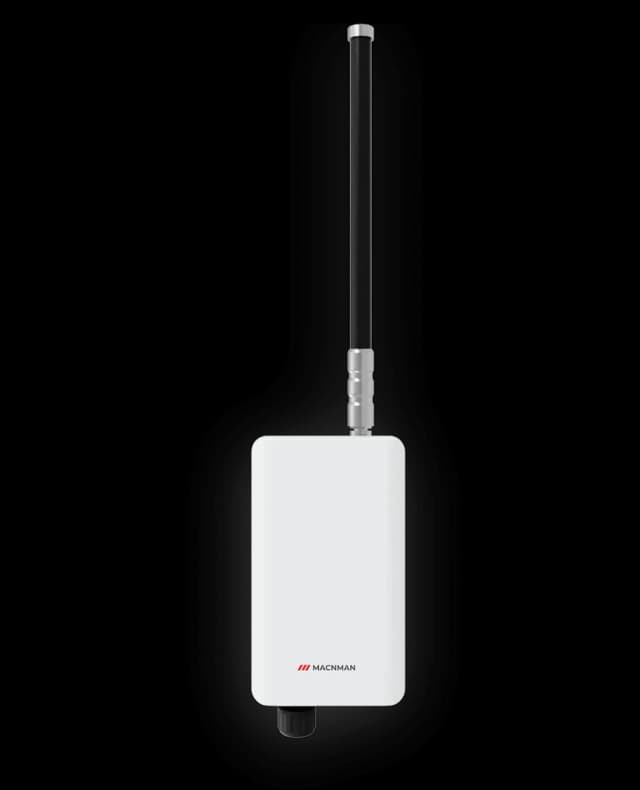
Maclink Gen-2
LoRaWAN Outdoor Gateways
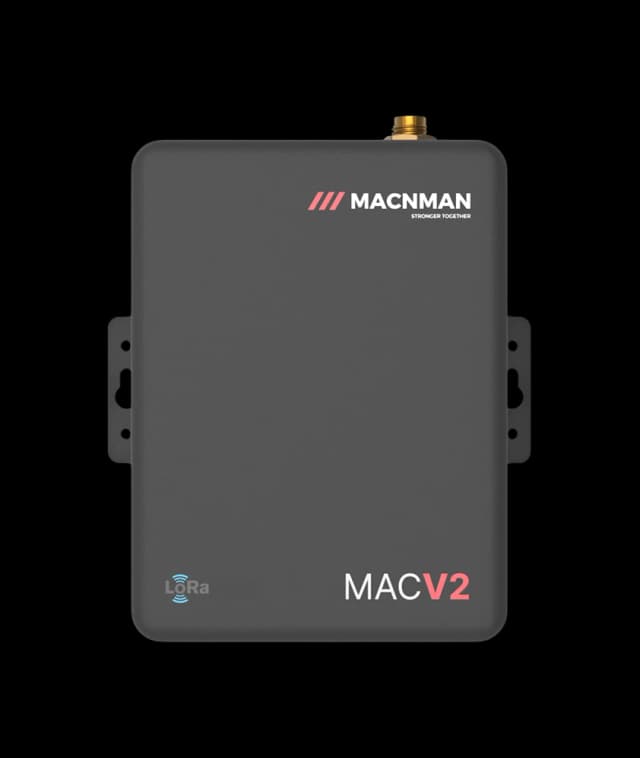
MacEge 4G Mini Gateway
4G Lte Gateways
 Hot Selling
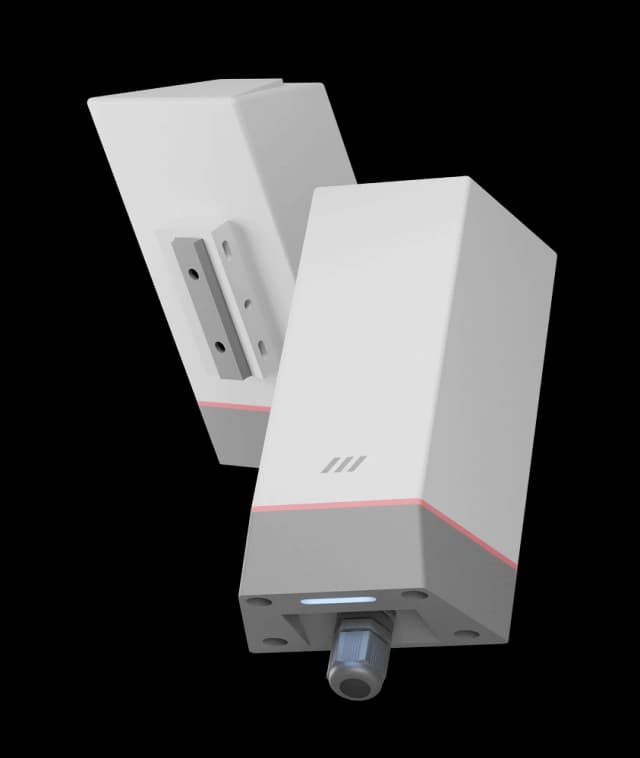
MacSync LX1
RS485 Modbus to LoRaWAN Converter
MacSync LX1
Analog 4-20mA to LoRaWAN Converter
 New
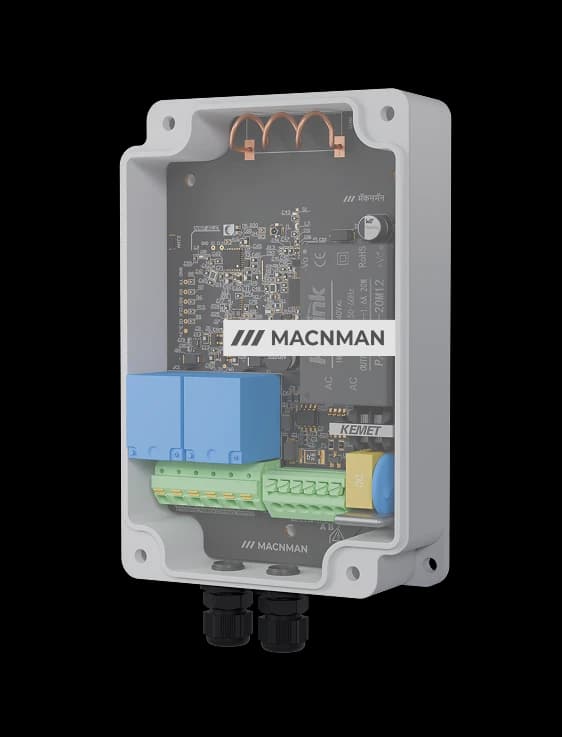
MacSet
RS485/Analog + Relay Output
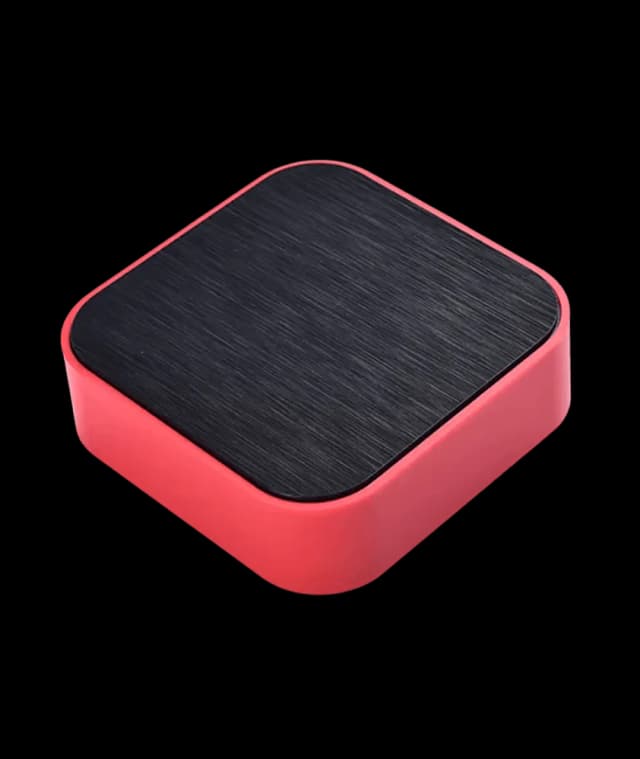 Hot Selling
Setu X
LoRaWAN Indoor Gateways
NewMaclink Gen-2
LoRaWAN Outdoor Gateways
MacEge 4G Mini Gateway
4G Lte Gateways
Hot SellingMacSync LX1
RS485 Modbus to LoRaWAN Converter
MacSync LX1
Analog 4-20mA to LoRaWAN Converter
NewMacSet
RS485/Analog + Relay Output
Hot SellingSetu X
LoRaWAN Indoor Gateways
Let‘s make it easy - reach out now!
Let’s bring it to life!
Let‘s Make it Easy
Reach Out Now


We are always ready
to help and
answer your
questions
Call
+91 7972856163
+91 9096830856
Location
Office-15 Bibwewadi, Pune, Maharashtra 411037
Get in Touch
Define your goals and all to value your time
Use of this website and purchase of Macnman products are subject to our Terms and Conditions.