LoRaWAN® 7-in-1 Soil Sensor
Soil Moisture, Temperature, EC, pH and NPK from One Probe · for Fertigation, Polyhouses, Plantations and Research Farms
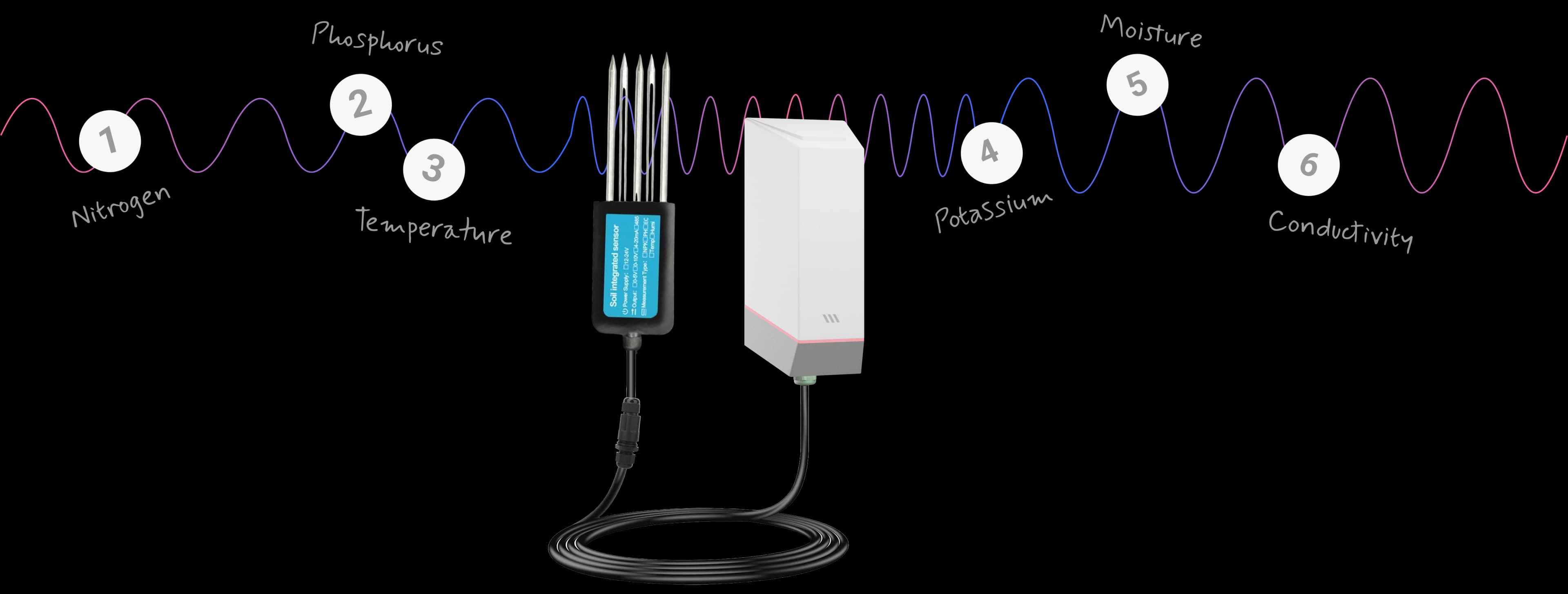
The MacSync LSS X5 is a multi-parameter LoRaWAN soil sensor: one stainless-steel probe in the root zone reads moisture, temperature, EC, pH and an N, P, K trend, and a battery or solar transmitter sends it kilometres to your gateway
Wireless Soil Monitoring for Farms, Plantations, Polyhouses, Orchards & Research Plots.
Wireless Soil Monitoring for
Farms, Plantations, Polyhouses, Orchards & Research Plots.
MacSync LSS X5
Explore the highlights
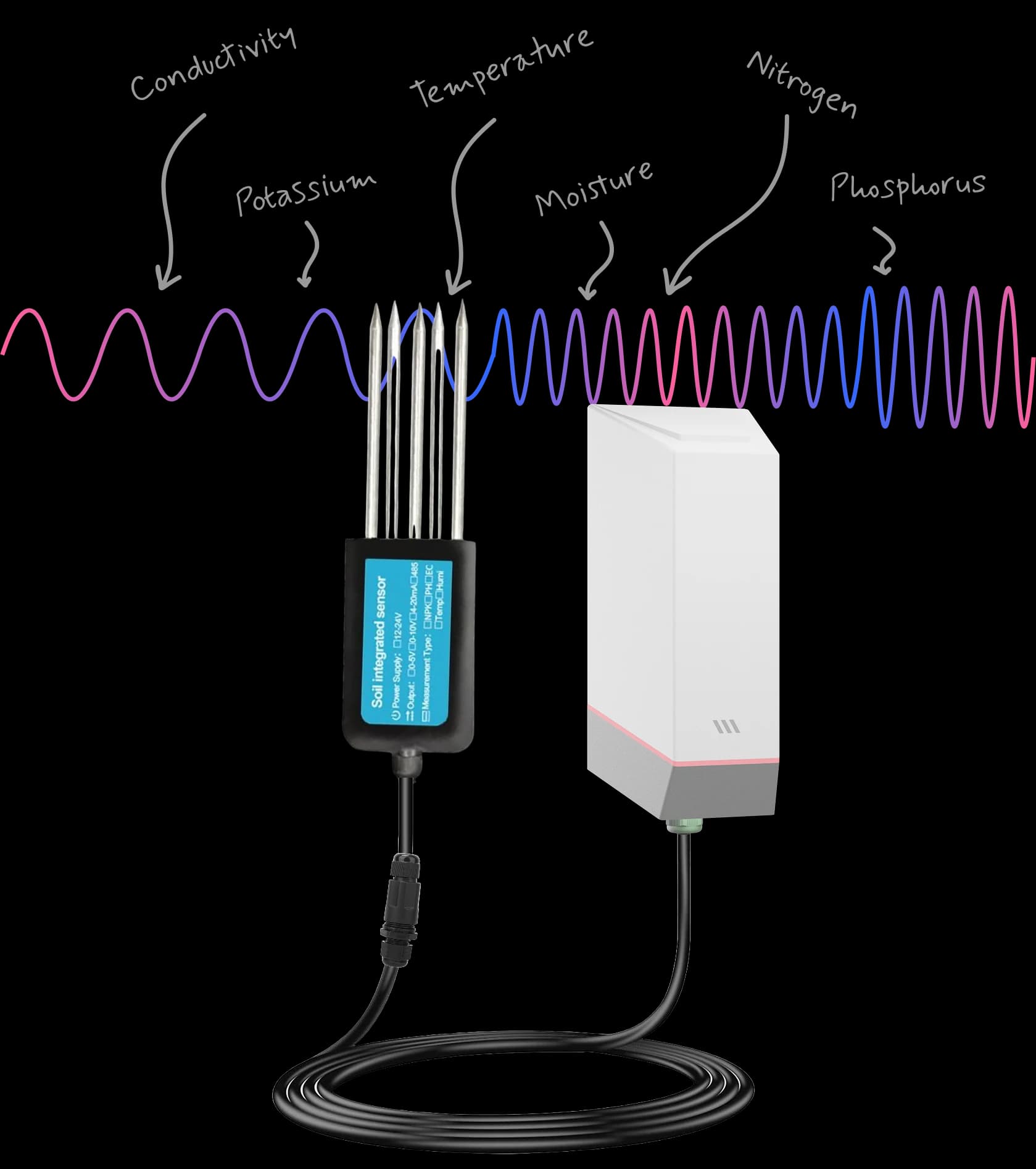
Moisture, temperature, EC, pH, nitrogen, phosphorus and potassium from a single stainless-steel probe, so one hole in the ground replaces a set of separate sensors.
Volumetric water content from 0 to 100% VWC at 0.1% resolution, accurate to ±5%: the reading irrigation is scheduled on, with a low-moisture alert the moment a block dries past the limit.
EC up to 10,000 µS/cm shows how much dissolved salt and fertiliser sits in the root zone and tracks salinity. pH from 3 to 9, at ±0.3, shows whether the crop can take it up.
Nitrogen, phosphorus and potassium estimates from 0 to 1,999 mg/kg. The datasheet calls them a trend estimation: read them as a direction between laboratory soil tests, not as a lab result.
LoRaWAN® v1.0.4 at 23 dBm with −137 dBm sensitivity. One MacLink gateway on a farm building reaches probes across fields, orchards and plantations that no Wi-Fi would cover.
A 19 Ah cell is rated about 2, 4 and 7+ years at 5, 15 and 60-minute reports. The solar variant pairs a 20 W panel with an 8,000 mAh rechargeable battery for fast reporting without a battery change.
Threshold alerts on moisture, EC, pH, salinity and NPK: the sensor reports the moment a limit is crossed rather than waiting for the next interval.
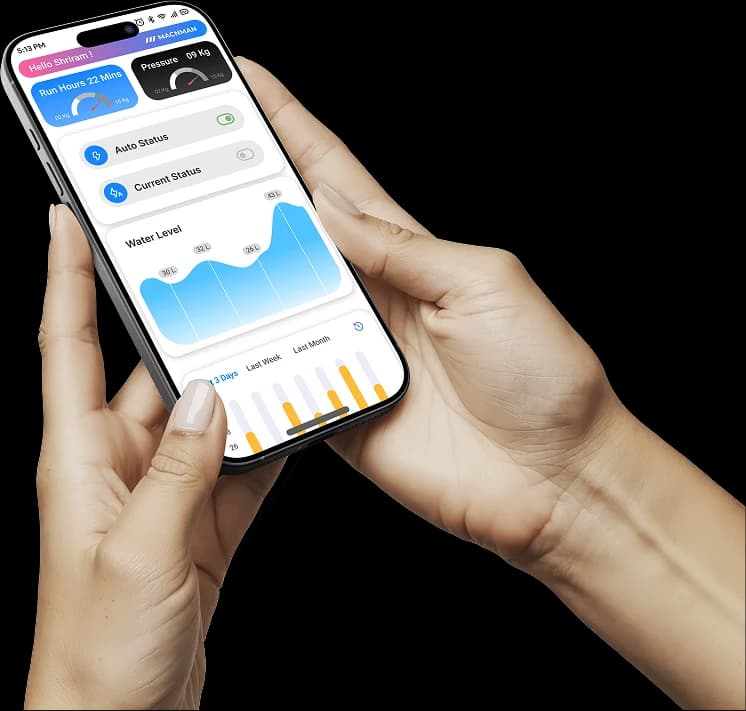
Pair over Bluetooth with the Maya app to set the sampling and reporting intervals, the alert limits and the LoRaWAN class, or change them later by downlink.
Designed and manufactured in Pune. WPC compliant on IN865 and RoHS conforming, in a glass-filled nylon enclosure rated IP65 with an IP67 option.
In plain terms
What Is a LoRaWAN 7-in-1 Soil Sensor?
The short answer
A LoRaWAN 7-in-1 soil sensor is a multi-parameter soil probe with a long-range radio. One stainless-steel probe buried in the root zone measures soil moisture, soil temperature, electrical conductivity (EC) and pH, and estimates nitrogen, phosphorus and potassium (NPK); a battery or solar-powered transmitter above ground sends the seven readings over LoRaWAN®, kilometres to a gateway, so fields, orchards, plantations and polyhouses are monitored without cables, Wi-Fi or a SIM card at every point.
Moisture
- 0–100%
Volumetric water content (VWC)
- ±5%
Moisture accuracy
- 0.1%
Moisture resolution
Temperature
- ±0.5 °C
Accuracy, at 0.1 °C resolution
- −45 °C
Lower limit of the range
- +115 °C
Upper limit of the range
EC
- 10,000
µS/cm, top of the EC range
- ±3%
Of full scale, EC accuracy
- 10 µS/cm
EC resolution
pH
- 3–9 pH
Measuring range
- ±0.3 pH
Accuracy
- 0.1 pH
Resolution
NPK
- 1,999
mg/kg, top of the range for N, P and K
- ±2%
Of full scale, sensor specification
- 1 mg/kg
Resolution
Radio & power
- 23 dBm
Transmit power, −137 dBm sensitivity
- 19 Ah
Battery variant; 7+ years at hourly reports
- 20 W
Solar variant with an 8,000 mAh battery

MacSync LSS X5
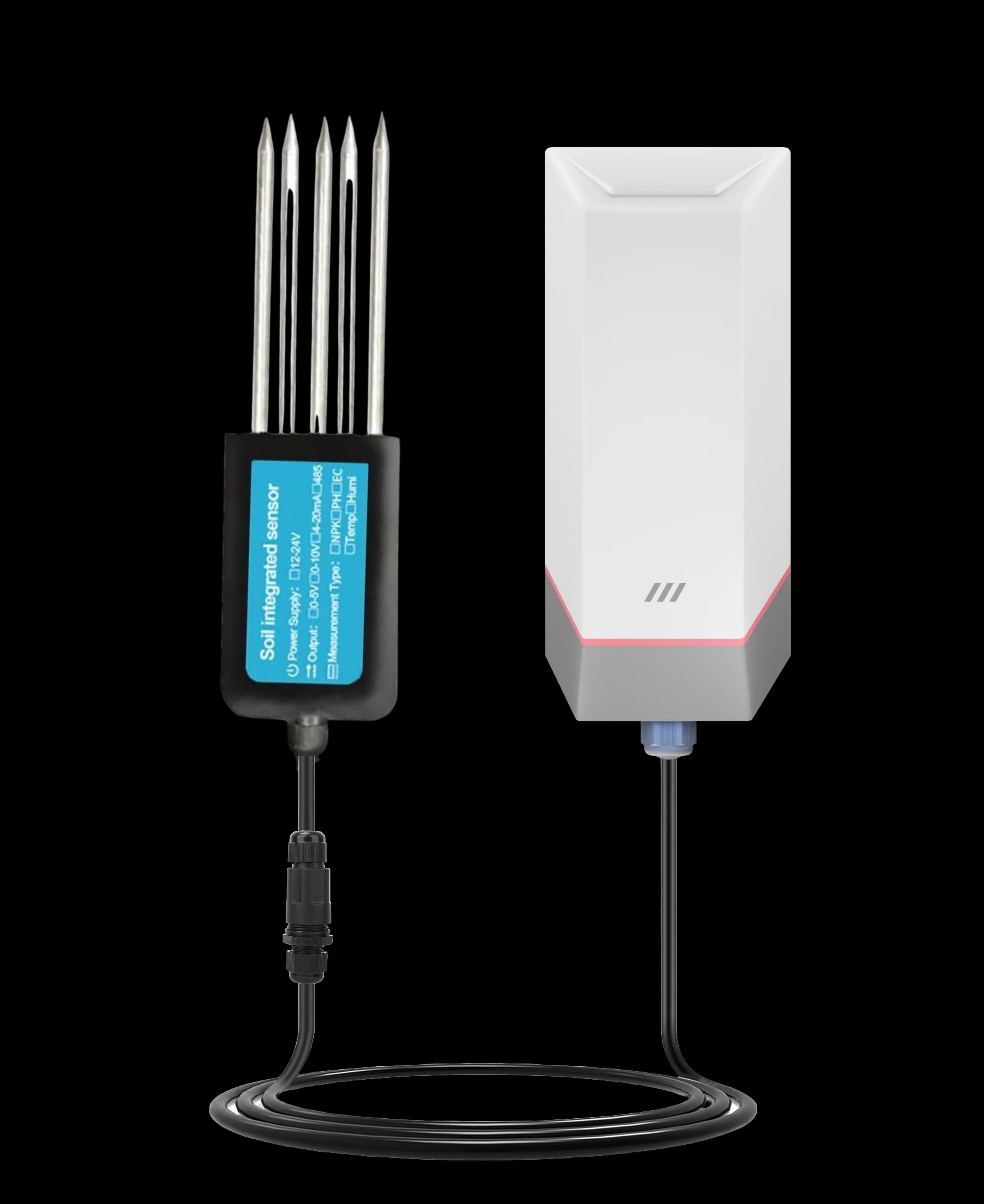
The MacSync LSS X5 is Macnman's LoRaWAN 7-in-1 soil sensor: a stainless-steel probe and an IP65 transmitter on a 19 Ah battery or a 20 W solar panel, reporting on LoRaWAN® v1.0.4 across IN865 and six other regional bands, with threshold alerts on every parameter and setup from the Maya app.
Volumetric water content from 0 to 100%, the reading that irrigation is scheduled on.
Soil temperature from −45 to +115 °C, for germination, root activity and frost or heat alerts.
Electrical conductivity from 0 to 10,000 µS/cm: dissolved salts, fertiliser strength and salinity.
Soil pH from 3 to 9, which decides how available the nutrients are to the crop.
Nitrogen, phosphorus and potassium, each estimated up to 1,999 mg/kg. A trend between lab tests.
LoRaWAN® v1.0.4 at 23 dBm, on a 19 Ah battery or a 20 W solar panel with an 8,000 mAh cell.
Also searched for as a multi-parameter soil sensor, a soil NPK sensor, a LoRaWAN soil moisture sensor with EC and pH, or a wireless soil nutrient sensor. The N, P and K values are estimates for following a trend; confirm fertiliser decisions with a laboratory soil test.
Get a quote
Need a quote for the MacSync LSS X5?
Tell us how many you need and where they are going. A product engineer replies within one working day with availability, lead time and the right variant for your site.
- Reply within one working day
- Designed and built in Pune, India
- WPC compliant, RoHS conformant
Downloads
Everything You Need to Get Building
Datasheets, drawings, firmware, and tools — all in one place.
MacSync LSS X5 Datasheet (PDF)
Measurement, radio, power and variant specifications
Datasheet web page
The same specifications on the documentation site
Soil Sensor User Manual
Installation, mounting, live readings and remote configuration
Maya App Setup Guide
LoRaWAN settings shared by all MacSync sensors
Engineered for
What Sets the MacSync LSS X5 Apart for Soil Monitoring
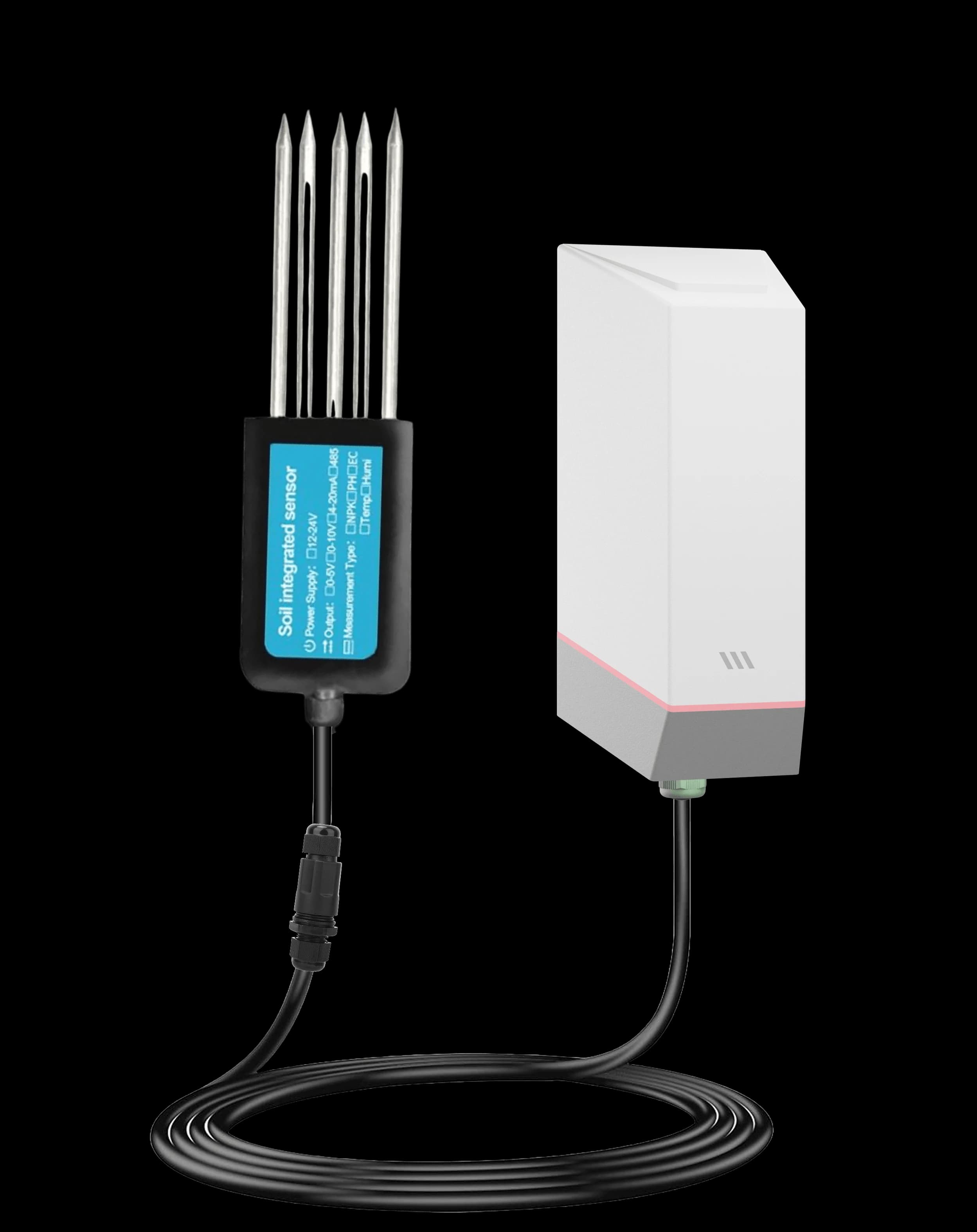
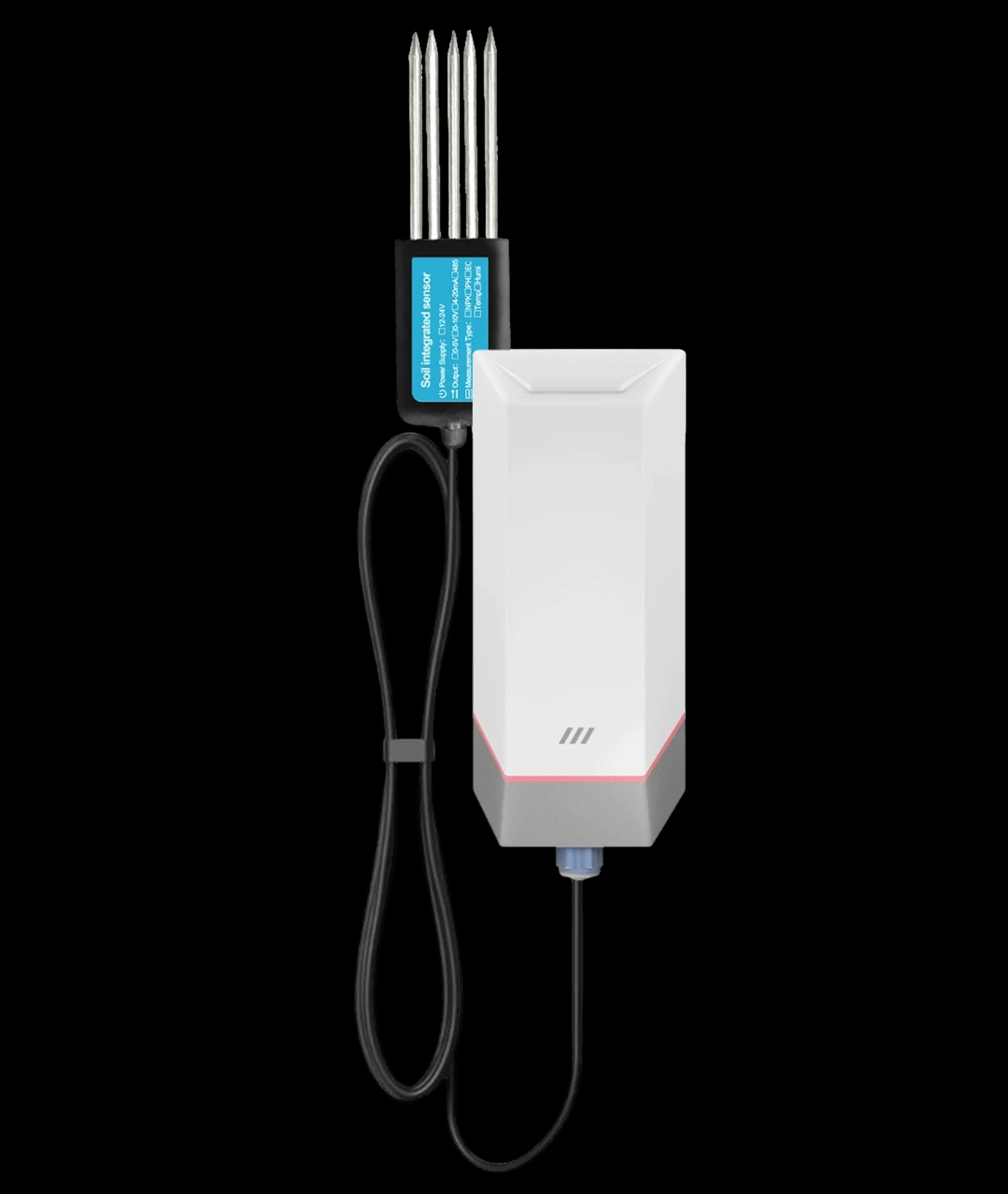
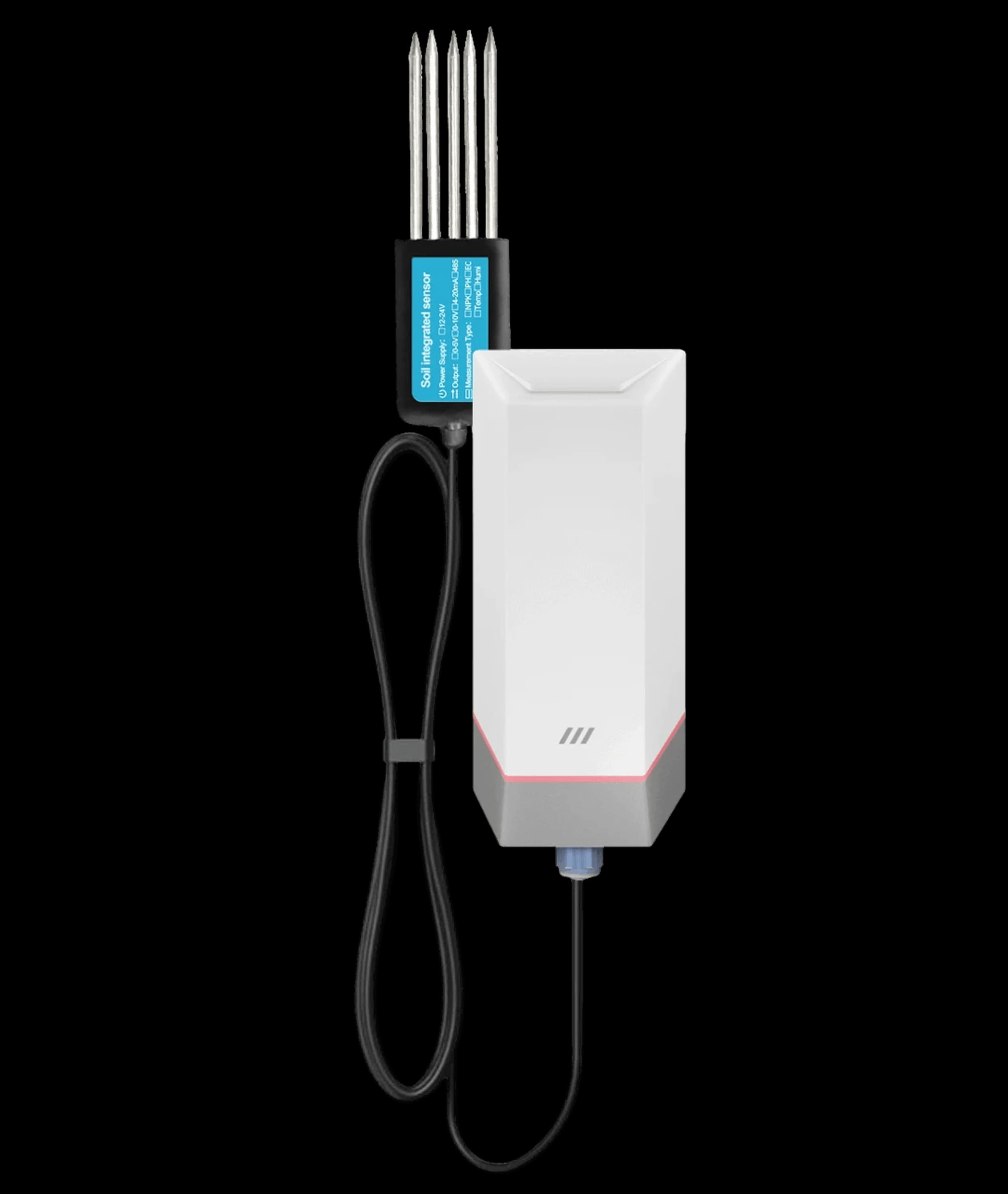
Corrosion-resistant stainless-steel electrodes read in clay, sandy, saline and wet soils. Only the probe goes in the ground; the transmitter stays above it on a pole or a wall.
01 / 05
Works with
Why Choose the MacSync LSS X5 LoRaWAN 7-in-1 Soil Sensor?
One stainless-steel probe measures moisture, temperature, EC, pH and an NPK trend; a battery or solar transmitter sends it over LoRaWAN® to any network server, with no cable, Wi-Fi or SIM at the plot.One stainless-steel probe measures moisture, temperature, EC, pH and an NPK trend; a battery or solar transmitter sends it over LoRaWAN® to any network server, with no cable, Wi-Fi or SIM at the plot.
Applications
Where Is a LoRaWAN 7-in-1 Soil Sensor Used?

Greenhouses & Polyhouses
Vegetables, flowers and herbs under cover, where one gateway covers every structure on the site. Moisture, EC and pH are logged bed by bed.
Read case studiesSmart Irrigation & Precision Farming (0–100% VWC, Threshold alerts): Irrigate when the root zone is actually dry rather than by the clock. A soil moisture limit triggers an upload the moment a bed dries past it.
Fertigation & Crop Nutrition (EC and pH, NPK trend): EC rises when fertiliser is injected and falls as it is taken up or washed out. Tracking EC and pH in the root zone shows whether a dose arrived and stayed.
Nurseries & Seedling Production (Young plants, Moisture and temperature): Seedlings have little tolerance for a dry or cold root zone. Continuous moisture and soil temperature readings catch both before the plants show it.
Floriculture & High-Value Crops (Flowers, vegetables, herbs, Bed-level data): Cut flowers, exotic vegetables and herbs, where each bed is worth instrumenting and a build-up of salt can cost a harvest.
Research Plots & Field Trials (Logged record, Season-long record): Trial plots at universities, research stations and seed companies, with an unbroken record of seven soil parameters for every treatment.
Orchards, Vineyards & Plantations (Kilometres from the building, Root-zone data): Blocks kilometres from the farm building, on one gateway. The solar variant reports every few minutes indefinitely; the battery variant runs for years.
Parks, Lawns & Landscape Irrigation (Campuses and golf courses, Measured watering): Lawns, campus gardens, parks and golf courses watered on measured soil moisture instead of a fixed timer.
Terrace Farms & Urban Gardens (Rooftops, Campus gateway): Rooftop farms, kitchen gardens and community plots, on a city or campus LoRaWAN network or a small indoor gateway.
Soil Restoration & Saline Land (EC tracking, Long-term record): Reclaimed, saline or degraded ground, where the question is whether salinity and pH are moving the right way over months.
Browse all 10 applications
01 / 10
Where it fits
From Drip Blocks to Plantations, Wherever a Gateway Reaches the Soil
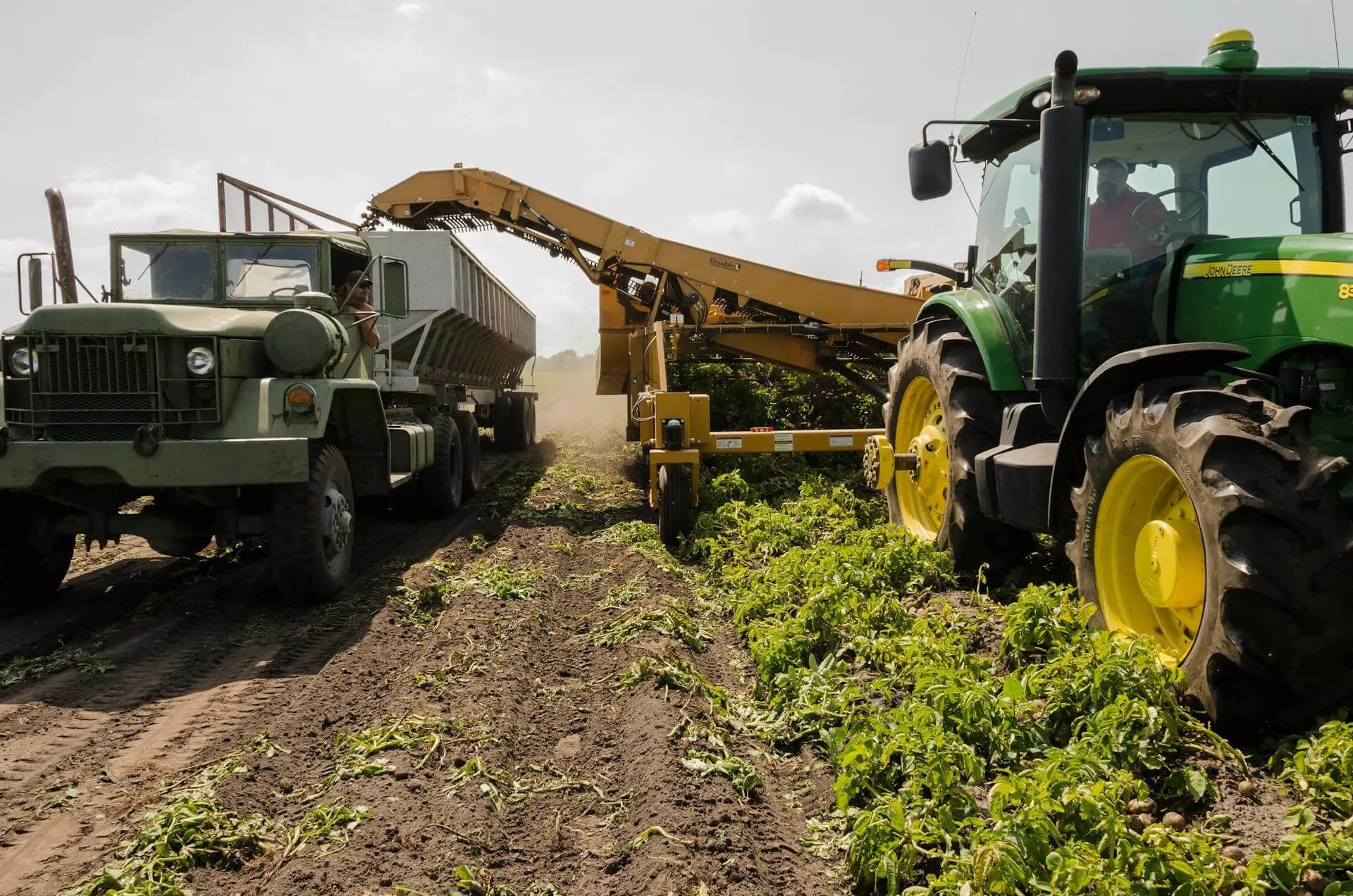
Farms, Orchards & Plantations
Drip-irrigated blocks, orchards, vineyards and tea, coffee, mango or sugarcane plantations, with one gateway covering ground that would need dozens of Wi-Fi access points or SIM cards.
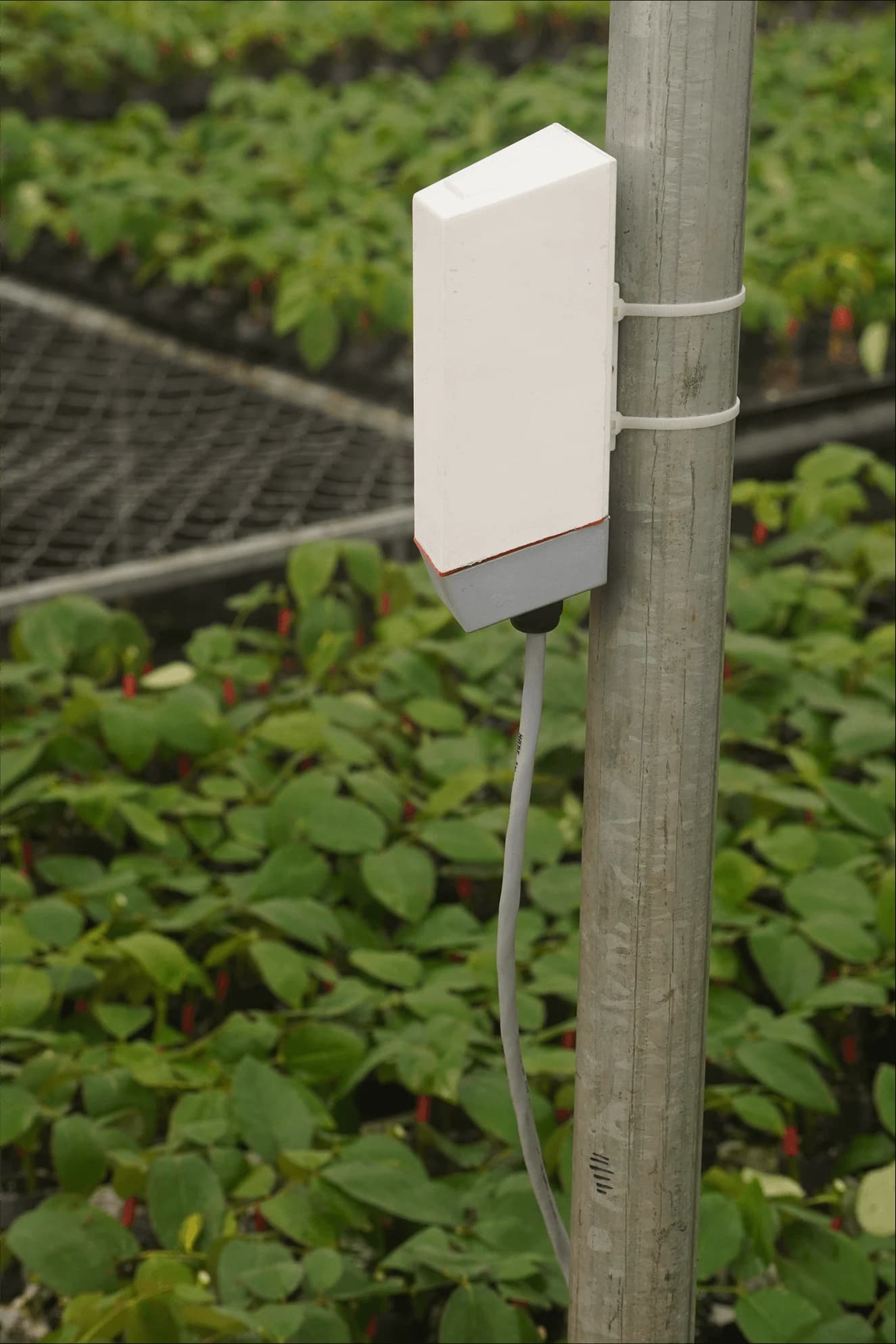
Polyhouses, Nurseries & Research Plots
Bed-by-bed moisture, EC and pH for protected cultivation and seedling production, and an unbroken seven-parameter record for every treatment on a trial plot.
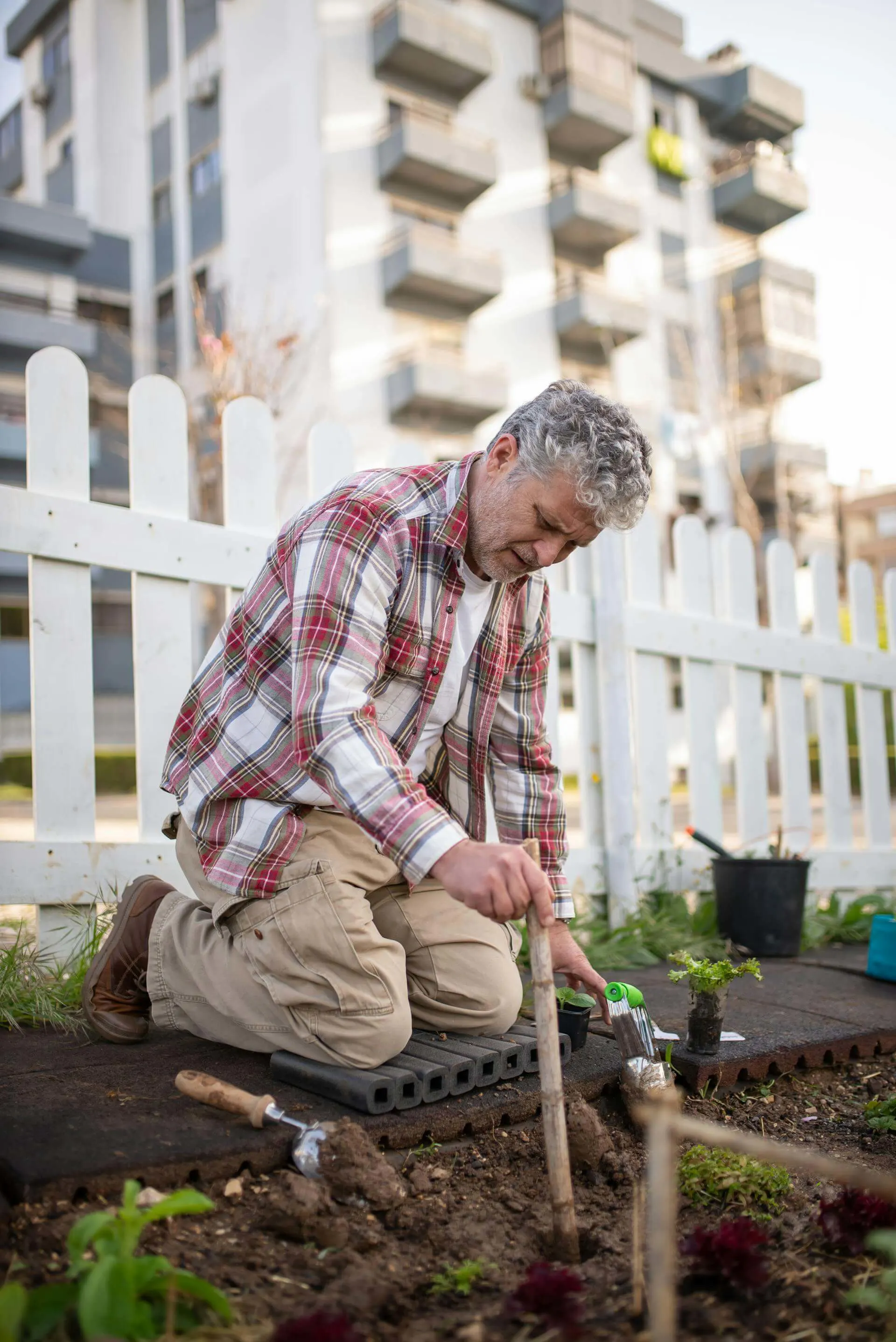
Parks, Campuses & Reclaimed Land
Landscape irrigation on measured moisture, and the long EC and pH record that shows whether saline or degraded ground is recovering.
Farms, Orchards & Plantations
Drip-irrigated blocks, orchards, vineyards and tea, coffee, mango or sugarcane plantations, with one gateway covering ground that would need dozens of Wi-Fi access points or SIM cards.
Polyhouses, Nurseries & Research Plots
Bed-by-bed moisture, EC and pH for protected cultivation and seedling production, and an unbroken seven-parameter record for every treatment on a trial plot.
Parks, Campuses & Reclaimed Land
Landscape irrigation on measured moisture, and the long EC and pH record that shows whether saline or degraded ground is recovering.
Installing it
Installing a 7-in-1 Soil Sensor: Depth, Spacing, Settling and the Lab Test
The four questions every grower asks before the first probe goes in. The answers come from how the probe reads and from the datasheet; the agronomy stays with your agronomist.
Installing it
The four questions every grower asks before the first probe goes in. The answers come from how the probe reads and from the datasheet; the agronomy stays with your agronomist.
Depth: the active root zone
Around 15 cm for most row crops and vegetables, deeper for orchards and plantations; about 5 cm to the side of a drip emitter so the probe sees the wetted bulb, not the emitter itself.
Spacing: one per management unit
One probe per irrigation valve zone, polyhouse bed group or trial treatment is the usual start; a second at a different depth shows whether water is passing the roots.
Settling: 10 to 14 days
Readings stabilise as the soil re-consolidates around the electrodes. Judge trends after that, not on the first day.
Then compare with a soil test
Take a laboratory sample from the probe's spot once it has settled and note the offset for pH and the N, P, K estimates. Repeat each season.
Free planning tools
Size your deployment before you order the hardware
Free engineering calculators for coverage, range and battery life — built on measurements from our own deployments rather than textbook models, which is why the answers tend to be smaller and a good deal more useful. Nothing here quotes a range we have not actually achieved.
No sign-up, no email, nothing to install. More on the way for Wi-Fi and BLE.
Hardware
Stainless-Steel Probe in the Ground, IP65 Transmitter Above It
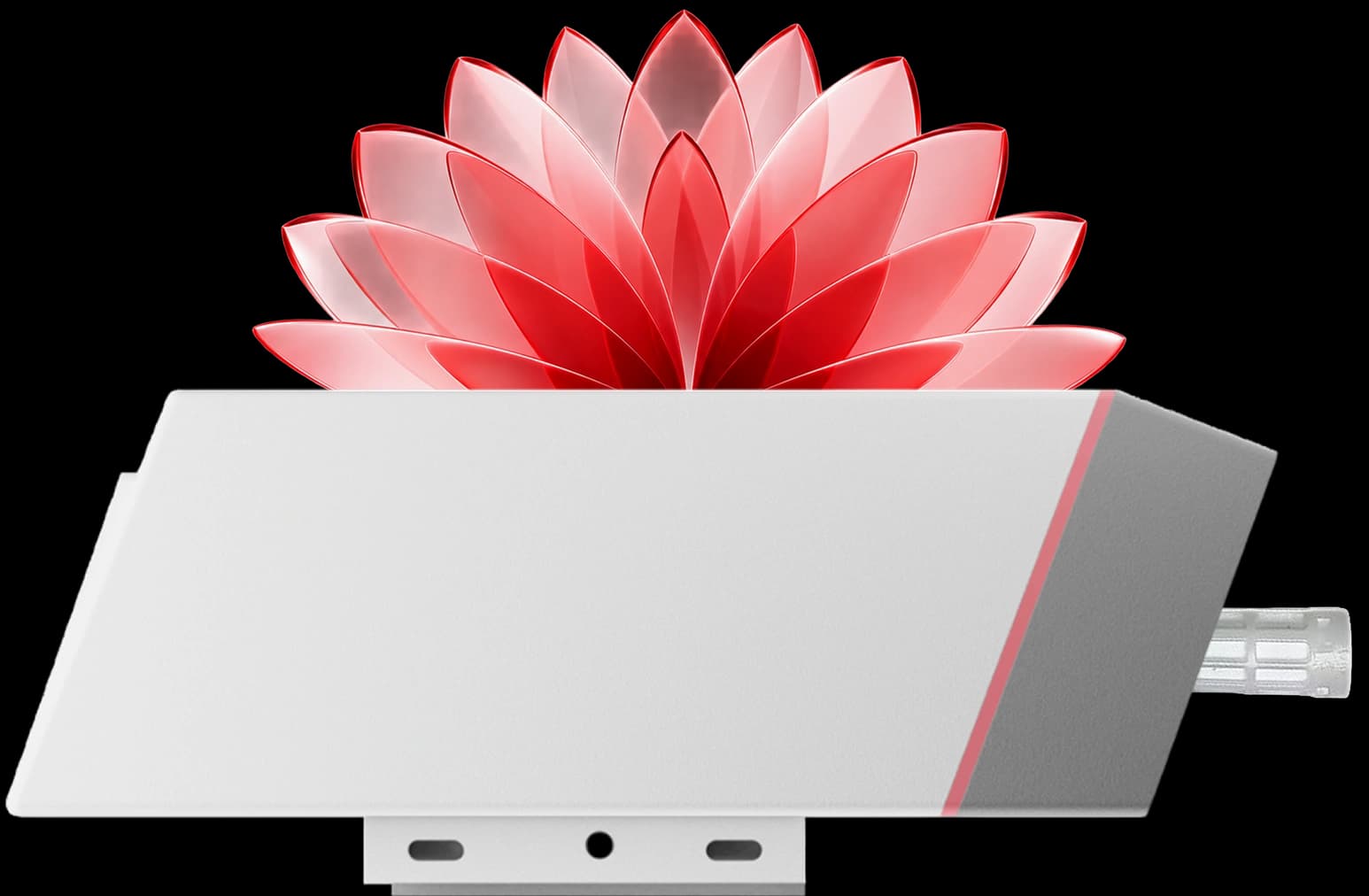
The probe's corrosion-resistant stainless-steel electrodes are made to stay buried through irrigation cycles, fertigation and the monsoon. The glass-filled nylon transmitter above ground is IP65 rated with an IP67 option and operates from −40 °C to +80 °C, on a pole or a wall; an IP68 cable extender is available where the transmitter must sit further from the probe.

Ready to irrigate and feed on soil data? Ask for a quote on the MacSync LSS X5.
At a glance
MacSync LSS X5 LoRaWAN 7-in-1 Soil Sensor Specifications
Every key specification in one view, from the datasheet.
0–100% VWC
soil moisture
±5% · 0.1% resolution
−45 to +115 °C
soil temperature
±0.5 °C · 0.1 °C resolution
0–10,000 µS/cm
electrical conductivity
±3% of full scale · 10 µS/cm steps
3–9 pH
soil pH
±0.3 pH · 0.1 pH resolution
0–1,999 mg/kg
nitrogen, phosphorus, potassium
Each of N, P and K · trend estimate
LoRaWAN® v1.0.4
IN865 and six more bands
23 dBm · Class A, Class C via Maya · OTAA
Features
Built into the MacSync LSS X5: Probe, Radio, Power and Setup
Threshold Alerts on Every Parameter
Set limits for moisture, EC, pH, salinity and NPK; the sensor reports the moment the soil crosses one.
Report on a fixed interval, on a threshold, or both, with sampling from 1 minute to 24 hours.
Long-Range LoRaWAN®
LoRaWAN® v1.0.4, Class A with Class C via the app, on IN865, EU868, US915, AU915, RU864, KR920 and AS923.
Battery or Solar
A 19 Ah cell rated 7+ years at hourly reports, or a 20 W panel with an 8,000 mAh rechargeable battery.
Seven Readings from One Probe
Moisture, temperature, EC, pH, nitrogen, phosphorus and potassium in every uplink.
Stainless-Steel Soil Probe
Corrosion-resistant electrodes that read in clay, sandy, saline and wet soils.
Any LoRaWAN® Network Server
ChirpStack, The Things Network, Orbiwise, Netmore, MQTT platforms or a private LNS, with AES-128 end to end.
Macnman Maya App
Intervals, alert limits, LoRaWAN class and live readings from your phone; the same settings by downlink later.
MacTalk and BLE Variants
MacTalk variants talk device to device to a MacSet controller with no gateway; the BLE variant reads locally into the Maya app for commissioning and spot checks.
Capabilities
Seven Parameters, Read at the Same Spot at the Same Moment
Moisture tells you when to irrigate; EC tells you whether the last fertigation arrived and stayed; pH tells you whether the crop can use it; the N, P, K trend tells you which way the nutrients are moving. Reading them together, from one probe, is what a single-parameter sensor cannot do.

Before you order
Send Us the Plot List and We Confirm the Variants
Four details are enough for an engineer to reply with the variant for each block, the reporting interval and the gateway count.
Before you order
Four details are enough for an engineer to reply with the variant for each block, the reporting interval and the gateway count.
Blocks and what is grown
Fields, orchard blocks, polyhouse bays or trial plots, with the crop and the irrigation method (drip, flood, sprinkler, fertigation).
Which readings matter
Moisture only points to the MacSync LSS X2; moisture with EC, pH and an NPK trend points to the LSS X5 on this page; a single extra parameter to the X1, X3 or X4 probes.
Shade and reporting interval
Open sun with a reading every few minutes points to the solar variant; shade, canopy or hourly reporting points to the 19 Ah battery variant.
Network and server
An existing LoRaWAN® gateway and network server, or a new MacLink Gen-2; or MacTalk to a MacSet controller that switches the pump or valve with no gateway.
Ready now: Get a quote · Request a pilot kit · Partner programme
Architecture
LoRaWAN Network Architecture: Soil Sensor, Gateway, Network Server and Farm Dashboard

Why it matters
Irrigate and Feed on Data. Four Ways It Pays Off.
A soil test tells you what the ground was like on the day it was sampled. A buried sensor tells you what it is doing now, and what it did all season. That is the basis of precision farming: irrigating and feeding on measurements rather than habit.
Why it matters
A soil test tells you what the ground was like on the day it was sampled. A buried sensor tells you what it is doing now, and what it did all season. That is the basis of precision farming: irrigating and feeding on measurements rather than habit.
Water when the root zone needs it
Irrigation follows measured moisture instead of a calendar, and a threshold alert catches a block that dries out early.
See fertiliser arrive and leave
EC rises with each fertigation and falls as nutrients are taken up or leached, so over-feeding and under-feeding show in the data.
Catch salinity and pH drift early
A slow rise in EC or a drifting pH shows as a trend in the record before it shows in the crop.
A record for every season
Seven parameters logged continuously, ready to compare block against block and year against year.
How it works
How Does a LoRaWAN 7-in-1 Soil Sensor Work?
Step 1 of 5
Bury the probe, mount the transmitter
Push the probe into undisturbed soil in the root zone and firm the soil back. Mount the transmitter above ground on a pole or a wall.
Join the LoRaWAN network with Maya
Pair over Bluetooth, set the intervals and alert limits, and the sensor joins your network server by OTAA with its pre-loaded DevEUI and keys.
The probe reads the soil electrically
Stainless-steel electrodes in contact with the soil measure its water content, temperature, conductivity and pH, and estimate nitrogen, phosphorus and potassium.
Readings travel kilometres to the gateway
Each set of readings is sent as a LoRaWAN® uplink, encrypted with AES-128, to the gateway and on to your network server.
Your platform shows it and raises the alarm
The values land in your dashboard or irrigation platform over MQTT or HTTPS. Cross a limit and the sensor reports immediately; a MacSet controller can open the valve or start the pump on the same network.
Reporting modes
Periodic, Threshold and Hybrid Reporting: Chosen by What the Crop Needs.
An uplink on a fixed interval. Predictable data and predictable battery life — the right default for a soil record.
Note: At hourly reports the 19 Ah battery is rated about 7+ years; 15-minute reports about 4 years.
The sensor samples on its own schedule and reports the moment a low or high limit is crossed: a block drying out, EC climbing after a fertiliser dose, pH drifting. Note: Best for irrigation alerts and salinity limits that must not be passed.
The periodic record plus immediate reports on threshold events, so you keep the season-long log and still hear about the exception within minutes. Note: Sampling from 1 minute to 24 hours; the reporting interval is set independently.
Cloud & LNS
Works with Every LoRaWAN® Network Server You Already Run
TTN, ChirpStack, MQTT, Orbiwise & Private LNS — No Vendor Lock-In
MacSync LSS X5 soil sensors join any LoRaWAN® network server — The Things Network, ChirpStack, MQTT platforms, Orbiwise, Netmore, or your own private gateway — with AES-128 encryption end to end and no vendor lock-in. Readings reach your farm platform, irrigation controller or dashboard over MQTT or HTTPS.

Build the network: MacLink Gen-2 outdoor LoRaWAN gateway · Setu X1 indoor LoRaWAN gateway · MacSet LX1 controller for pumps and valves · Gateway and coverage calculator · LoRaWAN battery life calculator · Antenna height planner for the farm gateway
Device-to-device
Monitor Smarter with Macnman
Why Choose the Macnman LoRaWAN® 7-in-1 Soil Sensor
Seven soil readings from one probe, tool-free installation and years of maintenance-free battery life, in one rugged wireless node.

Plug & Play
Truly plug & play — no complex setup.
Real-Time Alerts
Instant threshold alerts the moment conditions drift.
Long-Range
Long-range coverage for hard- to-reach places.
RF performance
Stable Readings in Wet, Saline and Fertilised Soil
Corrosion-resistant stainless-steel electrodes keep reading through irrigation, fertigation and salt build-up, in clay, sandy and red soils and in cocopeat. The internal antenna holds the LoRaWAN® link through canopy, polyhouse structures and pump-house interference, at 23 dBm with −137 dBm sensitivity.
Installation
Wireless Soil Sensor Installation, No Trenching Required
The MacSync LSS X5 goes in with an auger and a mounting clip — the probe sits in the root zone and the transmitter mounts on a pole or wall. With no cabling, mains power or civil work, a block can be instrumented in an afternoon.
The MacSync LSS X5 goes in with an auger and a mounting clip — the probe sits in the root zone and the transmitter mounts on a pole or wall. With no cabling, mains power or civil work — a block can be instrumented in an afternoon.
Installation
In the ground in minutes, reporting for years.
Seat the probe in the root zone
Open the soil to root depth — around 15 cm for most row crops, about 5 cm to the side of a drip emitter. Push the probe into undisturbed soil and firm the soil back so no air gaps remain against the electrodes.
Mount the transmitter above ground
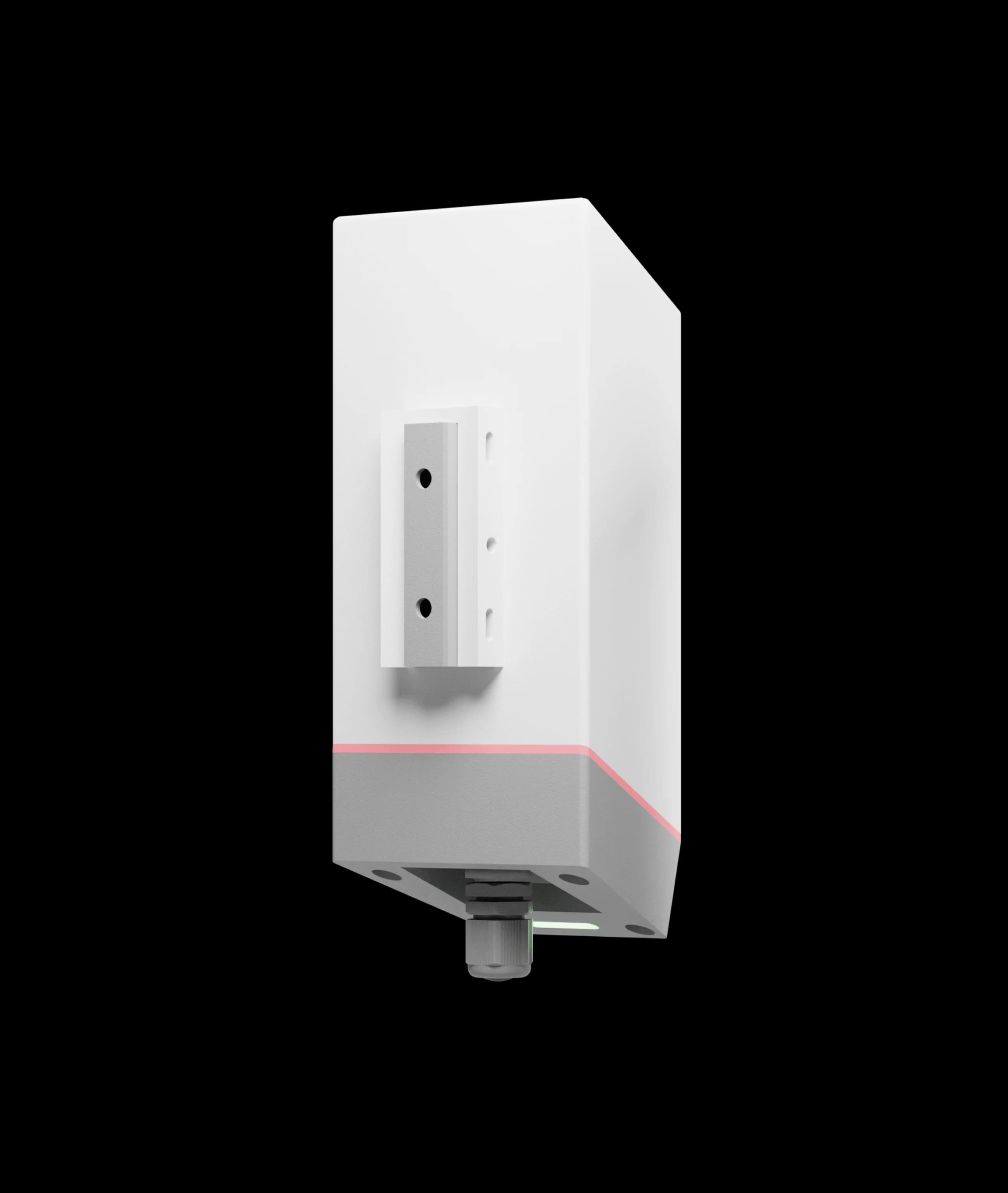
Fix the transmitter to a pole or a wall with the supplied clip and screws, clear of standing water, with the solar panel facing the sun on the solar variant.
Pair with Maya over BLE
Set the sampling and reporting intervals, the alert limits for moisture, EC, pH, salinity and NPK, and the LoRaWAN class; the device joins the network by OTAA with its pre-loaded keys. A Ping confirms the gateway is reachable from the spot.
Let it settle, then compare with a soil test
Readings stabilise as the soil re-consolidates around the probe; allow 10 to 14 days. Then compare pH and the N, P, K estimates with a laboratory test from the same spot and note the difference.
Range & reliability
Long-Range LoRaWAN® Coverage Across the Whole Farm
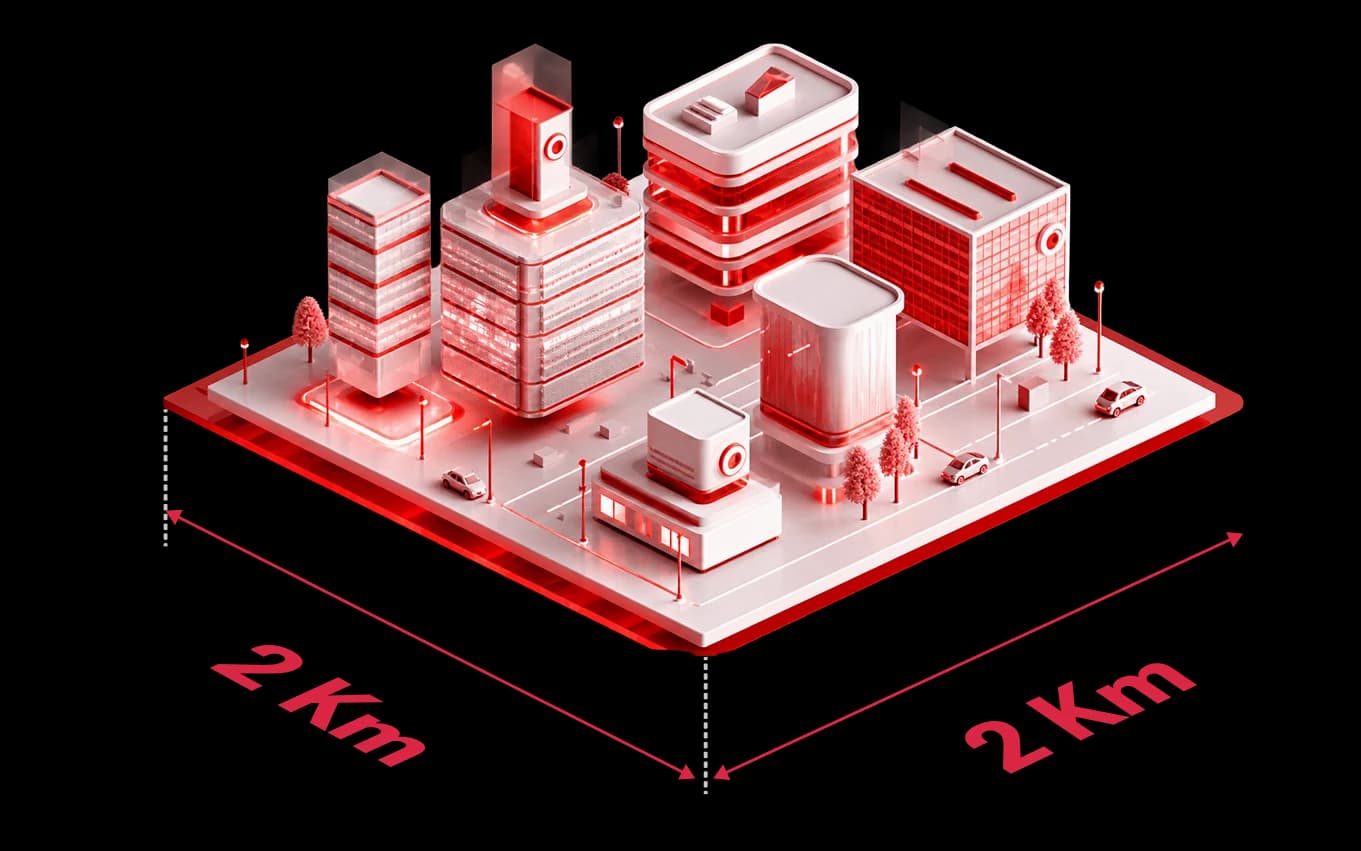
One gateway reaches probes spread over kilometres of fields, orchards and plantations
At 23 dBm with −137 dBm sensitivity, a MacLink Gen-2 gateway on a farm building reaches sensors across fields, orchards and plantations, so one installation covers ground that would need dozens of Wi-Fi access points or SIM cards. Range depends on terrain, canopy and antenna height; the coverage calculator gives a first estimate and the Maya app's Ping test confirms each spot.
Made in India
A LoRaWAN 7-in-1 soil sensor made in Pune, India
Sites in India get the IN865 plan as standard, a WPC compliant radio, and an engineer in Pune who answers during the Indian working day. Projects abroad take the same sensor on EU868, US915, AU915, RU864, KR920 or AS923.
Made in India
Sites in India get the IN865 plan as standard, a WPC compliant radio, and an engineer in Pune who answers during the Indian working day. Projects abroad take the same sensor on EU868, US915, AU915, RU864, KR920 or AS923.
IN865 as standard
Shipped on the 865–867 MHz LoRaWAN® plan for India; another regional plan is set when ordering.
WPC compliant radio
The LoRaWAN® radio is WPC compliant for use in India and the hardware conforms to RoHS.
Built in Pune
Designed, assembled and tested at one site in Pune, where the support engineers also sit.
Next steps: LoRaWAN in India: the IN865 band and WPC rules · Request a pilot kit · All LoRaWAN sensors · Industrial IoT manufacturer in India
The seven readings
Seven Soil Parameters: Range, Accuracy and What Each One Tells You
A 7-in-1 probe reports seven values every time it is read. Four are measurements you can act on directly. The three nutrient values are estimates, best read as a trend.
| Parameter | Range | Accuracy | Resolution | What it tells you |
|---|---|---|---|---|
| Soil moisture | 0–100% VWC | ±5% | 0.1% | When to irrigate, and whether water is reaching the root zone |
| Soil temperature | −45 to +115 °C | ±0.5 °C | 0.1 °C | Germination and root activity; frost and heat stress |
| Electrical conductivity (EC) | 0–10,000 µS/cm | ±3% of full scale | 10 µS/cm | Dissolved salts: fertiliser strength and salinity build-up |
| pH | 3–9 pH | ±0.3 pH | 0.1 pH | Whether the nutrients in the soil are available to the crop |
| Nitrogen (N) | 0–1,999 mg/kg | ±2% of full scale | 1 mg/kg | The trend in available nitrogen between soil tests |
| Phosphorus (P) | 0–1,999 mg/kg | ±2% of full scale | 1 mg/kg | The trend in available phosphorus between soil tests |
| Potassium (K) | 0–1,999 mg/kg | ±2% of full scale | 1 mg/kg | The trend in available potassium between soil tests |
Figures are from the MacSync LSS X5 datasheet. Accuracy is the probe's own measurement specification. Nitrogen, phosphorus and potassium are estimated electrically rather than by chemical analysis — the datasheet calls them a trend estimation — so follow them as a trend and check them against a laboratory soil test before changing a fertiliser plan. Salinity is followed through the EC reading.
Reading NPK honestly
What a 7-in-1 Soil Sensor's NPK Reading Is Good For, and What It Is Not
Every 7-in-1 probe on the market, this one included, estimates nitrogen, phosphorus and potassium electrically. That is useful when it is used for the right job.
| Question | Use the sensor | Use a laboratory test |
|---|---|---|
| Did the last fertigation dose arrive in the root zone? | Yes: EC and the N, P, K estimates step up within hours and the record shows it | Too slow; a sample takes days |
| Which way are nutrients moving over the season? | Yes: the trend between lab tests, block by block | Only at the sampling dates |
| How much fertiliser should this field get? | No: the absolute values are estimates | Yes: the season's plan rests on the lab assay |
| Is salinity building up? | Yes: EC in µS/cm, continuously | Confirms the cause |
| Is the pH drifting out of the crop's range? | Yes: ±0.3 pH, continuously, with an alert | Confirms and refines |
| Calibrating the estimate to this soil | Note the offset once the probe has settled, per field, per season | The reference the offset is taken against |
How the sensor is meant to be used with, not instead of, soil testing. The datasheet specifies ±2 % of full scale for the N, P, K readings as a sensor specification; it does not claim equivalence to a laboratory assay.
What the NPK figures are, and are not
How a 7-in-1 Probe Gets Its N, P and K, and Why They Are a Trend
No 7-in-1 soil probe measures nitrogen, phosphorus and potassium ions directly. Independent tests of this probe class — University of Bologna (Horticulturae, 2026), Engineering, Technology & Applied Science Research (2026) and the Alliance Bioversity–CIAT sensor study — found the N, P and K outputs follow the soil's electrical response rather than individual nutrients, and advise against setting fertiliser doses from them. That is why the MacSync LSS X5 datasheet calls them a trend estimation, and why this page says so plainly.
What the NPK figures are, and are not
No 7-in-1 soil probe measures nitrogen, phosphorus and potassium ions directly. Independent tests of this probe class — University of Bologna (Horticulturae, 2026), Engineering, Technology & Applied Science Research (2026) and the Alliance Bioversity–CIAT sensor study — found the N, P and K outputs follow the soil's electrical response rather than individual nutrients, and advise against setting fertiliser doses from them. That is why the MacSync LSS X5 datasheet calls them a trend estimation, and why this page says so plainly.
What the ±2 % figure means
It is the sensor's full-scale specification under the maker's test conditions: how repeatably the probe reports its own estimate. It is not an agronomic accuracy against a laboratory assay, and the page never presents it as one.
What the trend is good for
Seeing a fertigation dose arrive in the root zone within hours, watching leaching after heavy rain or irrigation, comparing blocks or treatments against each other, and choosing when to send the next lab sample.
What to keep for the lab
The season's fertiliser plan and any dose decision rest on a laboratory soil test. Do not set fertiliser doses from these readings alone; use the probe to time and target the tests.
Moisture and EC are the anchors
The readings the same probe measures directly — moisture, temperature, EC and pH — are the ones to automate on. They also explain what the N, P, K trend is doing: EC and moisture move first, the estimate follows.
Sources: Baldi et al., Horticulturae 12(7):898, 2026 — multi-parameter soil probes tested against laboratory N, P and K · Fathima et al., ETASR 16(2), 2026 — accuracy of low-cost soil NPK sensors · MacSync LSS X5 datasheet (NPK listed as a trend estimation)
Which soil sensor
Which Macnman Soil Sensor Do You Need: 7-in-1, Moisture Only, Single Parameter or Wi-Fi?
Macnman makes soil sensors for LoRaWAN and Wi-Fi, from a moisture-only probe to the seven-parameter probe on this page. Choose by which readings you will act on and by the network the site has.
| Criterion | MacSync LSS X5 (this page) | MacSync LSS X2 moisture & temperature | MacSync LSS X1 / X3 / X4 single parameter | MacSync Wi-Fi 7-in-1 |
|---|---|---|---|---|
| Measures | Moisture, temperature, EC, pH, N, P, K | Moisture (VWC) and soil temperature | X1: NPK trend · X3: EC · X4: pH, each with temperature | Moisture, temperature, EC, pH, N, P, K |
| Moisture accuracy | ±5% · 0.1% resolution | ±3% (0–53% VWC), ±5% above · capacitive | Not the primary reading | ±5% · 0.1% resolution |
| Network | LoRaWAN® v1.0.4, kilometres to a gateway | LoRaWAN® v1.0.4 | LoRaWAN® v1.0.4 | Existing 2.4 / 5 GHz Wi-Fi, no gateway |
| Power | 19 Ah battery, or 20 W solar + 8,000 mAh | 19 Ah battery, or 20 W solar + 8,000 mAh | 19 Ah battery, or solar (see datasheet) | Internal 19 Ah battery |
| Battery life | ~2 years at 5-minute reports · ~4 years at 15-minute reports · ~7+ years at hourly reports | ~2 years at 5-minute reports · ~4 years at 15-minute reports · ~7+ years at hourly reports | See each datasheet | Estimated about 6.7 years at hourly uploads |
| Choose it when | Irrigation and fertigation decisions from one probe; salinity and pH matter | Irrigation timing is the only question | One parameter is the question, at the lowest cost per point | Every probe sits inside Wi-Fi coverage: polyhouses, nurseries, campuses |
| Page | This page | Product page | Datasheets on the documentation site | Product page |
Figures are from the Macnman datasheets. The LSS X2's capacitive probe states a tighter moisture figure in the dry range than the seven-parameter electrode probe; if moisture is all you need, it is the better instrument for it.
See also: Compare all MacSync LSS X5 versions · MacSync LSS X2 LoRaWAN soil moisture and temperature sensor · MacSync Wi-Fi 7-in-1 soil sensor · Single-parameter soil probes: NPK, EC and pH datasheets · Already have an RS485 7-in-1 probe? The MacSync LX1 RS485 to LoRaWAN converter reads it
Sensing methods
Electrode Probe, Capacitive Probe, TDR or Lab Test: How Soil Is Measured
Four ways to learn what is in the soil, and what each is good at. The LSS X5 is an electrode probe; the LSS X2 is capacitive; TDR is the research instrument; the lab test is the reference.
| Compare | 7-in-1 electrode probe (LSS X5) | Capacitive moisture probe (LSS X2) | TDR probe | Laboratory soil test |
|---|---|---|---|---|
| What it measures | Moisture, temperature, EC, pH, and an N, P, K estimate | Moisture (dielectric) and temperature | Moisture, usually EC and temperature | Nutrients, pH, EC, texture, organic matter |
| How | Stainless-steel electrodes in contact with the soil | Dielectric response of the soil around the probe | Travel time of an electrical pulse along the rods | Chemical analysis of a sample |
| Continuous? | Yes, every few minutes to hourly | Yes | Yes | No: a point in time |
| Salinity sensitivity | EC is a reading; moisture is read alongside it | Low: capacitive reading is stable in saline ground | Low to moderate, by design | Not applicable |
| Nutrients | Trend estimate | No | No | Yes, the reference |
| Cost per point | Moderate | Lower | High | Per sample, recurring |
| Use it for | Irrigation plus fertigation, salinity and pH from one spot | Irrigation timing | Research-grade moisture | The season's fertiliser plan and the sensor's calibration |
The TDR and laboratory columns describe the category. Macnman does not make a TDR probe; the LSS X2 is the capacitive moisture sensor and the LSS X5 is the seven-parameter electrode probe.
Battery life
Battery Life of the LoRaWAN 7-in-1 Soil Sensor by Reporting Interval
From the MacSync LSS X5 datasheet, for the 19 Ah battery variant: about 100 µA in sleep and 50 mA while transmitting. Soil changes slowly, so most sites report every 15 to 60 minutes.
| Reporting interval | 19 Ah battery variant (8821) | Solar variant (8820) |
|---|---|---|
| Every 5 minutes | About 2 years (datasheet estimate) | Recharged daily by the 20 W panel |
| Every 15 minutes | About 4 years (datasheet estimate) | Recharged daily by the 20 W panel |
| Every 60 minutes | About 7+ years (datasheet estimate) | Recharged daily by the 20 W panel |
Datasheet estimates for the battery variant; spreading factor, confirmed uplinks and temperature change the figure. The solar variant's 8,000 mAh battery carries it through cloudy days; the panel needs open sky, so shaded and canopy sites take the 19 Ah variant. Battery level is sent in every uplink. Try your own interval in the LoRaWAN battery life calculator.
Application map
Drip Block, Orchard, Polyhouse, Plantation and Trial Plot: How the Sensor Is Used
Each row is a site found on most Indian farms and institutions, with the variant that suits it, where the probe goes and how it is usually set to report.
| Site | What is watched | Variant and placement | Reporting |
|---|---|---|---|
| Drip-irrigated field crop | Moisture for the irrigation decision; EC after each fertigation | Battery or solar variant, probe at root depth 5 cm beside an emitter, one per valve zone | Every 15 to 60 minutes, alert on low moisture |
| Orchard or vineyard block | Moisture at two depths, salinity, pH | Solar variant in the open row, 19 Ah under canopy; probes at 30 and 60 cm | Hourly, alerts on moisture and EC |
| Polyhouse or nursery bed | Moisture, EC and pH bed by bed | 19 Ah variant on a post; probe in the bed or the grow bag | Every 15 minutes, EC and pH alerts |
| Tea, coffee or rubber plantation | Moisture and pH across sections | 19 Ah variant under canopy, one per section; MacLink gateway on the factory roof | Hourly |
| Sugarcane or banana | Moisture and EC through the fertigation schedule | Solar variant, probe in the row | Every 15 to 30 minutes |
| University or KVK trial plot | All seven parameters per treatment | 19 Ah variant, one probe per treatment, same depth throughout | Every 15 minutes, with the record exported each season |
| Park, campus lawn or golf course | Moisture for the irrigation controller | 19 Ah variant, probe in the root zone of the turf | Hourly, low-moisture alert to the controller |
| Saline or reclaimed land | EC and pH over months | Solar or 19 Ah variant, probes at the depths being treated | Hourly |
Depths and intervals are typical starting points, not agronomic advice; the agronomist sets them per crop and soil. Each variant is in the compare tab with its SKU.
Related: Smart farming and agriculture IoT solutions · Smart water management: borewells, tanks and pumps · Smart city IoT: parks and landscape irrigation
What you set
What the Maya App and a Downlink Can Set on the MacSync LSS X5
Everything a grower or an integrator changes, from the phone at installation or later from the network server by downlink.
| Setting | What it does | Set from |
|---|---|---|
| Sampling interval | How often the probe is read, from 1 minute to 24 hours | Maya app over BLE · downlink |
| Reporting interval | How often an uplink is sent, independent of sampling, for battery control | Maya app · downlink |
| Threshold alerts | Low and high limits for moisture, EC, pH, salinity and NPK; the sensor reports the moment one is crossed | Maya app · downlink |
| Reporting mode | Periodic, event-based or hybrid | Maya app · downlink |
| LoRaWAN class | Class A by default; Class C for sites that need fast downlinks, at a battery cost | Maya app |
| Live readings and Ping | Read the seven values on the spot and confirm the gateway is reachable before the probe is buried | Maya app |
The device joins by OTAA with pre-loaded keys; configuration is AES-128 encrypted like the data. Settings are described in the datasheet and the soil sensor user manual linked above.
Choosing a 7-in-1 soil sensor
Integrated LoRaWAN 7-in-1 Sensor, Bare RS485 7-in-1 Probe or Single-Parameter LoRaWAN Sensors
Most 7-in-1 soil probes are sold bare, on RS485, and still need a logger, power and code before they report anything. Single-parameter LoRaWAN sensors are ready to use but each measures one or two things. Here are all three, with our weaker rows left in.
| Criterion | MacSync LSS X5 | Bare RS485 7-in-1 probe | Single-parameter LoRaWAN soil sensors |
|---|---|---|---|
| What you get | Probe, LoRaWAN transmitter, battery or solar and enclosure as one unit | A probe on a cable; the logger, power, enclosure and code are yours to build | One ready-to-use node per parameter |
| Readings | Moisture, temperature, EC, pH, N, P and K | Moisture, temperature, EC, pH, N, P and K | Moisture and temperature; EC or pH or NPK on separate units |
| Getting the data out | LoRaWAN® to any network server, kilometres from a gateway | Your own RS485 wiring and a converter or logger | LoRaWAN® |
| Power | 19 Ah battery or 20 W solar | External DC supply | Battery, sometimes solar |
| Battery life | About 2 / 4 / 7+ years at 5 / 15 / 60-minute reports | Not applicable | Varies by maker and unit |
| Moisture accuracy | ±5% (our weaker row; the LSS X2 states ±3% in the dry range) | ±2 to 3% is commonly quoted | ±3% is commonly quoted |
| NPK readings | Estimated; a trend between lab tests | Estimated; a trend between lab tests | On a dedicated NPK unit, also estimated |
| Points to install for seven readings | One | One probe plus your logger | Three or more nodes |
| Enclosure outdoors | IP65 transmitter, IP67 optional | Sealed probe; your electronics need a box | Typically IP65 to IP67 |
| Made in | India (Pune), WPC compliant | Usually imported | Usually imported |
MacSync figures are from the LSS X5 datasheet. The other two columns describe the common pattern across widely sold products rather than any single model; the named-competitor table below quotes specific products from their own pages. On every 7-in-1 probe, ours included, the N, P and K values are estimates.
Compared
MacSync LSS X5 vs Milesight EM500-SMTC vs Dragino SE01-LB + SPH01-LB + LSNPK01 vs SenseCAP S2105
The LoRaWAN® soil sensors most often shortlisted together, on the figures each manufacturer publishes. Checked 18 October 2026; where a page does not state a figure, the cell says so. The Dragino column is three sensors, because no single Dragino unit covers moisture, pH and NPK.
| Criterion | Macnman MacSync LSS X5 | Milesight EM500-SMTC | Dragino SE01-LB + SPH01-LB + LSNPK01 | Seeed SenseCAP S2105 | Dragino-made NPK-7in1 (Molukas) |
|---|---|---|---|---|---|
| Parameters, one probe? | Moisture, temperature, EC, pH, N, P, K — one probe | Moisture, temperature, EC — one probe | Moisture, temperature, EC (SE01) + pH (SPH01) + N, P, K (LSNPK01) — three sensors, three holes | Moisture, temperature, EC — one probe | N, P, K, moisture, temperature, EC/salinity — one probe; pH not on the page checked |
| Moisture | 0–100 % VWC · ±5 % · 0.1 % resolution | 0–100 % · ±2 % (0–50 %), ±3 % (50–100 %) | ±3 % (0–53 %), ±5 % above · 0.01 % resolution | 0–100 % m³/m³ · accuracy not on the store page checked | ±2 % VWC stated |
| Electrical conductivity | 0–10,000 µS/cm · ±3 % of full scale | 0–20,000 µS/cm · ±3 % / ±5 % | 0–20,000 µS/cm · 2 % of full scale | 0–23 dS/m | 0–2,000 µS/cm |
| pH | 3–9 · ±0.3 · 0.1 resolution | Not measured | 3–10 · 0.01 resolution · ±2 % at 0–50 °C (SPH01-LB) | Not measured | Not on the page checked |
| N, P, K and how it is described | 0–1,999 mg/kg · ±2 % FS · called a trend estimation on the datasheet | Not measured | 1–1,999 mg/kg · ±2 % FS · described as a 'TDR method', no caveat on the pages checked | Not measured | 0–1,999 · described as a 'plant growing reference' |
| Power | 19 Ah Li-SOCl₂, or 20 W solar + 8,000 mAh rechargeable | 19,000 mAh ER34615 | 8,500 mAh, or solar + 3,000 mAh on the SE01-LS; 8,500 mAh on SPH01 and LSNPK01 | 19 Ah ER34615 | 8,500 mAh |
| Battery life claim | About 2 / 4 / 7+ years at 5 / 15 / 60-minute reports (datasheet estimate) | Up to 10 years at 10-minute reports, 25 °C, lab conditions | Up to 5 years, conditions not stated | More than 10 years best case at hourly reports | Up to 5 years |
| Enclosure and probe | IP65 body, IP67 optional · stainless-steel electrodes | IP67 body, IP68 probe · 2 m cable | IP66 body · IP68 probe on pH and NPK · 2 to 3.5 m cables | IP66 | IP66 box, IP68 probe |
| LoRaWAN | v1.0.4 · Class A, Class C via the app · OTAA | Class A · OTAA and ABP · version not stated | v1.0.3 · Class A | v1.0.3 · Class A | v1.0.3 · Class A |
| IN865 for India | Yes, as standard; WPC compliant | Listed | Listed | Not shown on the store page checked | EU868 only |
| Configuration | Maya app over Bluetooth · downlink | Not on the page checked | AT commands · downlink | SenseCAP Mate app over Bluetooth | Not on the page checked |
| Designed and made in | Pune, India | Milesight, China | Dragino, China | Seeed Studio, China | Dragino for a Madrid reseller |
Figures for the other products are taken from their manufacturers' published pages, checked 18 October 2026, and may change; the comparison page carries the links. Milesight, Dragino and SenseCAP are trademarks of their owners. Prices are not compared; ask each maker.
More: MacSync LSS X5 vs Milesight EM500-SMTC vs Dragino vs SenseCAP S2105, with sources · LoRaWAN soil moisture sensors compared (MacSync LSS X2) · All comparisons
FAQ
MacSync LSS X5 LoRaWAN 7-in-1 Soil Sensor: Frequently Asked Questions
A soil probe that measures seven properties — moisture, temperature, electrical conductivity, pH and the nutrients nitrogen, phosphorus and potassium — and a long-range radio that sends them over LoRaWAN® to a gateway kilometres away. The MacSync LSS X5 is Macnman's: a stainless-steel probe in the root zone and a battery or solar transmitter above it, with threshold alerts on every parameter.
From the datasheet: soil moisture 0–100% VWC at ±5% and 0.1% resolution; soil temperature −45 to +115 °C at ±0.5 °C; EC 0–10,000 µS/cm at ±3% of full scale; pH 3–9 at ±0.3; nitrogen, phosphorus and potassium 0–1,999 mg/kg each at ±2% of full scale and 1 mg/kg resolution, as a trend estimation. Salinity is followed through the EC reading.
It cannot replace a soil test, and the datasheet does not claim it can: it calls the N, P, K readings a trend estimation. Independent tests of this probe class (University of Bologna, Horticulturae 2026; ETASR 2026) found the outputs follow the soil's electrical response rather than individual nutrients. They are reliable for direction — did the fertigation dose arrive, which way are nutrients moving between lab tests, which block differs — and should be anchored once per field against a lab sample. Keep the laboratory test for the season's fertiliser plan and never set a dose from the sensor alone.
Electrically. The stainless-steel electrodes measure the soil's electrical response — moisture, conductivity and pH — and the N, P, K values are estimated from that response; the datasheet does not describe a separate nutrient chemistry, and no 7-in-1 probe on the market measures the ions selectively. That is the reason the figures are a trend: they move with the fertiliser and salt in the root zone, which is useful, but they are not an assay of each nutrient.
The probe reports bulk EC: the conductivity of the soil, water and air mixture around the electrodes, in µS/cm. Pore-water EC, the salinity of the water the roots actually see, is higher and is what a lab reports on a saturated paste or extract. Bulk EC rises and falls with moisture as well as with salt, so read EC alongside the moisture value from the same probe: a jump in EC with no change in moisture is fertiliser or salt arriving.
No. That is the probe's soil-temperature measurement range from the datasheet. The transmitter above ground operates from −40 to +80 °C, which covers every Indian field; the probe in the ground sees a much narrower band in practice.
The datasheet specifies the MacSync LSS X5 for soil only; there is no liquid specification for the probe. For water EC and pH, Macnman makes LoRaWAN water EC and pH sensors with datasheets on the documentation site; for a nutrient solution, ask support before ordering.
The datasheet publishes the probe's measurement specifications; it does not publish a field validation study, and this page does not claim one. The honest route is the one we recommend to every buyer: a pilot of a few probes on your own blocks, with a lab sample from each probe's spot at commissioning and at the end of the season. We help set that up and are glad to publish the results with a partner institution.
At least one per zone — one irrigation valve zone, polyhouse bed group or trial treatment — placed in the representative part of the block, and two where the block is known to vary; a second probe at a lower depth shows whether water is passing the roots. University extension guidance on soil sensors makes the same point: install within the effective rooting depth and use more than one location per management zone to capture variability.
The LSS X2 is a capacitive probe that measures moisture and temperature only and states ±3% in the dry range (0–53% VWC) and ±5% above; the LSS X5's electrode probe states ±5% across the range and adds EC, pH and the NPK trend. If irrigation timing is the only question, the X2 is the better instrument for it; if fertigation, salinity and pH matter from the same spot, the X5 answers all of them from one probe.
Kilometres, depending on terrain, canopy and antenna height. The sensor transmits at 23 dBm with −137 dBm sensitivity on LoRaWAN®; a MacLink Gen-2 gateway on a farm building typically covers the fields, orchards and plantation sections around it. The coverage calculator on this site gives a first estimate and the Maya app's Ping test confirms each spot before the probe is buried.
The 19 Ah battery variant is rated about 2 years at 5-minute reports, 4 years at 15-minute reports and 7 or more years at hourly reports (datasheet estimates). The solar variant pairs a 20 W panel with an 8,000 mAh rechargeable battery and is recharged daily, for sites that want a reading every few minutes indefinitely. Battery level is sent in every uplink.
Open sun and fast reporting point to the solar variant (8820); shade, tree canopy, polyhouse posts or hourly reporting point to the 19 Ah battery variant (8821), which runs for years without attention. Under canopy a panel cannot charge, so plantations usually take the battery variant and put the gateway on the factory roof.
In the active root zone: around 15 cm for most row crops and vegetables, 30 to 60 cm for orchards and plantations, and about 5 cm to the side of a drip emitter so the probe sees the wetted bulb rather than the emitter. Push the probe into undisturbed soil and firm the soil back so no air gap sits against the electrodes. A second probe at a lower depth shows whether water is passing the roots.
One per management unit is the usual start: one per irrigation valve zone, polyhouse bed group or trial treatment, placed in the representative part of the block rather than at its edge. A pilot of a few probes on the blocks that behave differently settles the count before the rest is ordered. Send us the block list and we size it.
Yes. The probe uses corrosion-resistant stainless-steel electrodes and reads in clay, black cotton, red, sandy, saline and wet soils and in cocopeat. Heavy clay and high-organic soils are where a lab comparison matters most for the pH and nutrient estimates; in saline ground the EC reading is itself the thing to watch, and a rising EC trend is the early warning.
Not by itself: the sensor measures and reports. Automation comes from a controller on the same network. A MacSet LX1 LoRaWAN controller switches a pump or a valve on the threshold the platform sends it, and the MacTalk variant of the LSS X5 talks device to device to a MacSet with no gateway on site.
Let it settle for 10 to 14 days after installation, then take a laboratory sample from the probe's spot and note the offset for pH and the N, P, K estimates for that field; repeat each season. The datasheet does not publish a field calibration procedure beyond the stated accuracies, so the comparison against a lab sample is how the estimates are anchored to your soil.
Threshold alerts on soil moisture, EC, pH, salinity and NPK: set a low and a high limit per parameter and the sensor reports the moment a reading crosses one, instead of waiting for the next interval. Reporting can be periodic, event-based or hybrid; sampling is configurable from 1 minute to 24 hours.
Yes. The LSS X5 joins any LoRaWAN® v1.0.4 network server — ChirpStack, The Things Network, Orbiwise, Netmore, MQTT platforms or a private LNS — by OTAA with pre-loaded keys, and the readings reach your farm platform or dashboard over MQTT or HTTPS. There is no mandatory Macnman cloud and no subscription.
IN865 for India, plus RU864, EU868, US915, AU915, KR920 and AS923, set when ordering. LoRaWAN in India uses the delicensed 865–867 MHz band, so a farm or a campus runs its own gateway without a spectrum licence; the device is WPC compliant and RoHS conforming.
The sensor needs a gateway within range; the gateway needs a backhaul, which is usually one SIM or the farm's broadband, not one per sensor. ChirpStack can run on the gateway itself, so readings and thresholds keep working on site when the backhaul drops and sync when it returns.
The probe and the seven readings are the same. The Wi-Fi version joins the 2.4 or 5 GHz network already in a polyhouse, nursery or campus and needs no gateway, but reaches about 100 m from an access point. The LoRaWAN version needs a gateway and reaches kilometres, which is what fields, orchards and plantations need. The Wi-Fi model is on its own page.
A soil NPK sensor reports the nitrogen, phosphorus and potassium estimate (and usually temperature) only; a 7-in-1 adds moisture, EC and pH from the same probe. Since the NPK figures are a trend on either, the 7-in-1 is the more useful instrument: EC and moisture are the readings that explain what the NPK trend is doing. Macnman makes both; the NPK-only LSS X1 has its datasheet on the documentation site.
A complete sensor: the probe, the LoRaWAN transmitter, the battery or solar supply and the IP65 enclosure are one unit, configured from a phone. Bare 7-in-1 probes sold on RS485 need a logger, a power supply, an enclosure and code before they report anything; if you already have such a probe, the MacSync RS485 to LoRaWAN converter reads it.
Open the soil to root depth, push the probe into undisturbed soil and firm the soil back; mount the transmitter on a pole or a wall with the supplied clip and screws. Pair over Bluetooth with the Maya app to set the intervals, the alert limits and the LoRaWAN class, run a Ping to confirm the gateway, and the device joins by OTAA. No laptop, no cable, no trench.
Yes, with the optional IP68 cable extender listed in the datasheet's box contents, for a transmitter that must stand clear of machinery, flooding or the polyhouse film. State the distance when ordering.
The probe's stainless-steel electrodes are made to stay buried through irrigation, fertigation and salt; the transmitter is IP65 with an IP67 option and rated from −40 to +80 °C. Mount the transmitter above the flood line; the probe can stay in saturated soil.
The seven readings — moisture, temperature, EC, pH, N, P, K — with the battery level, in an AES-128 encrypted LoRaWAN® uplink, periodic or on a threshold event. Decoding is documented with the product; tell us your network server and we send the decoder for it.
The data is yours. The sensor sends to your own network server and from there to the farm platform, irrigation controller or dashboard you choose, over MQTT or HTTPS. Macnman supplies the hardware, the documentation and the decoder, not a mandatory cloud.
Yes. The probe goes into the bed, the grow bag or the pot at root depth and the transmitter mounts on a post. In a polyhouse an indoor Setu X1 gateway or the farm's MacLink covers the structures; where Wi-Fi already reaches every bed, the Wi-Fi 7-in-1 is the simpler system.
Yes, and it is a common use: one probe per treatment at the same depth, reporting every 15 minutes, gives an unbroken seven-parameter record for the season that exports from the network server as CSV or JSON. The BLE variant is used for spot readings and training.
Yes, with the MacTalk variants (8822 solar, 8823 battery). They talk device to device to a MacSet controller, which runs the rule locally — open the valve below a moisture threshold, close it above — with no gateway, server or internet on site.
The MacSync LSS X5 sensor with its probe, a mounting clip, mounting screws, the user manual and the warranty card. The IP68 cable extender and a power adapter are optional accessories ordered separately; the solar variant ships with its 20 W panel.
Yes. The MacSync LSS X5 is designed and manufactured in Pune, Maharashtra. It is WPC compliant for the IN865 band and conforms to RoHS; the datasheet states both.
The list of blocks with crop and irrigation method, which readings you will act on (moisture only, or EC, pH and nutrients as well), sun or shade at each point and the reporting interval you want, whether a LoRaWAN gateway and network server already exist, and the platform the data should reach. With that we confirm the variants, the count and the gateway position.
Yes, and it is the recommended way in: a few LSS X5 probes on the blocks that behave differently, one gateway, your own network server, for a season's irrigation cycle. The pilot kit on this site is that set; the rest of the farm joins the same gateway afterwards.
More from Macnman
What Else Do We Build at Macnman
 New
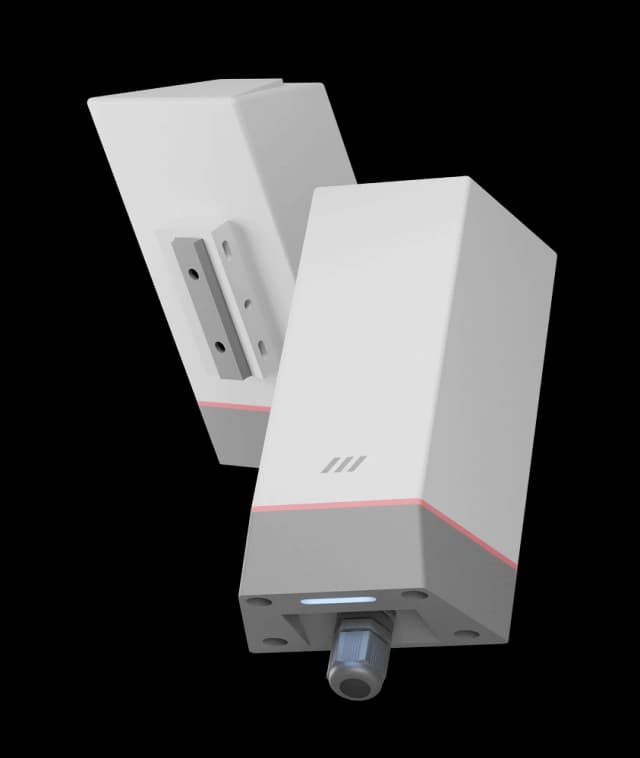
Maclink Gen-2
LoRaWAN Outdoor Gateways
MacEge 4G Mini Gateway
4G Lte Gateways
 Hot Selling
MacSync LX1
RS485 Modbus to LoRaWAN Converter
MacSync LX1
Analog 4-20mA to LoRaWAN Converter
 New
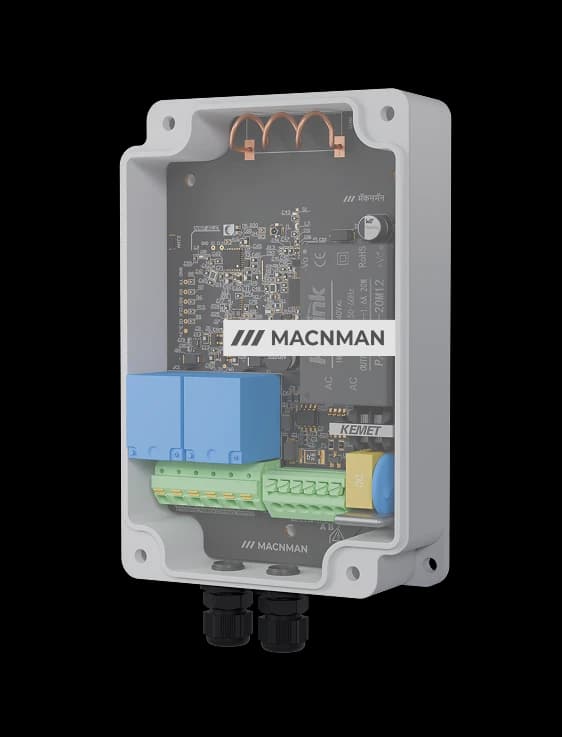
MacSet
RS485/Analog + Relay Output
 Hot Selling
Setu X
LoRaWAN Indoor Gateways
NewMaclink Gen-2
LoRaWAN Outdoor Gateways
MacEge 4G Mini Gateway
4G Lte Gateways
Hot SellingMacSync LX1
RS485 Modbus to LoRaWAN Converter
MacSync LX1
Analog 4-20mA to LoRaWAN Converter
NewMacSet
RS485/Analog + Relay Output
Hot SellingSetu X
LoRaWAN Indoor Gateways
Let‘s make it easy - reach out now!
Let’s bring it to life!
Let‘s Make it Easy
Reach Out Now


We are always ready
to help and
answer your
questions
Call
+91 7972856163
+91 9096830856
Location
Office-15 Bibwewadi, Pune, Maharashtra 411037
Get in Touch
Define your goals and all to value your time
Use of this website and purchase of Macnman products are subject to our Terms and Conditions.