Wi-Fi 7-in-1 Soil Sensor
Outdoor · Battery-Operated · Moisture, EC, pH & NPK · No Gateway
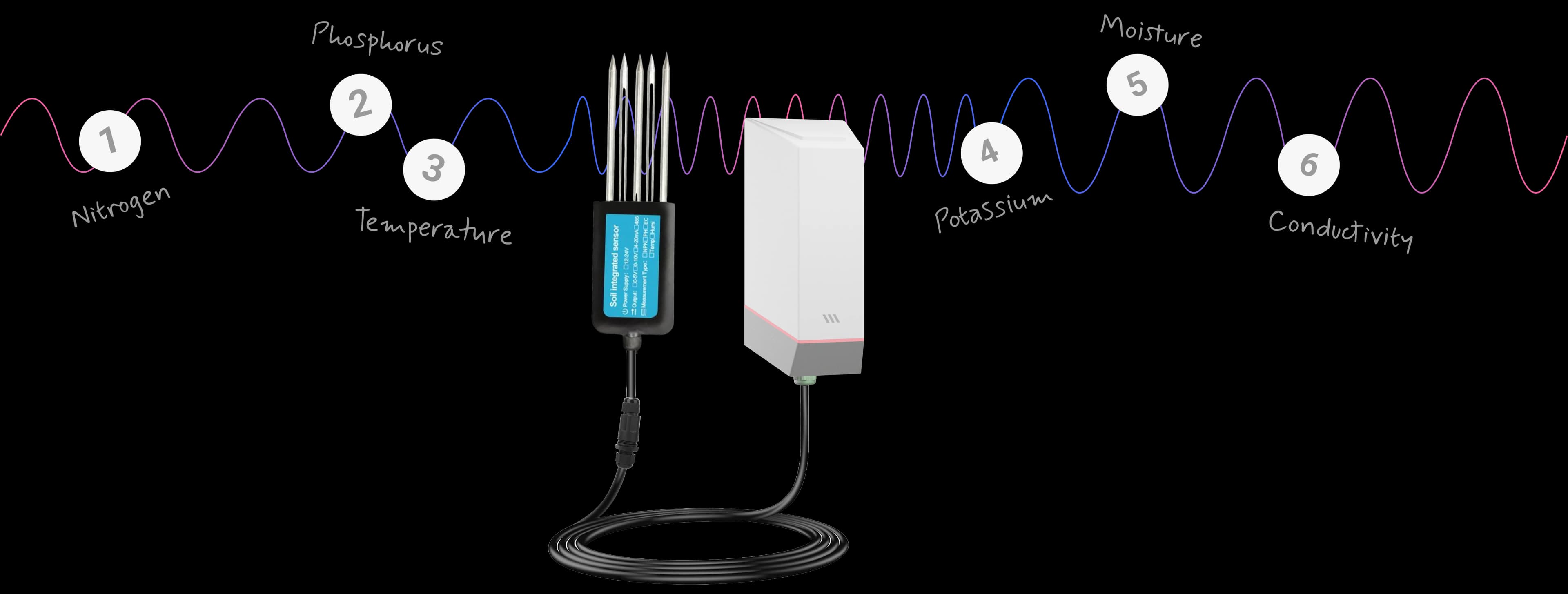
The MacSync Wi-Fi 7-in-1 soil sensor measures soil moisture, temperature, EC, pH and NPK from one buried probe, and reports over the Wi-Fi network you already have
Wireless Soil Monitoring for Greenhouses, Polyhouses, Nurseries & Farms.
Wireless Soil Monitoring for
Greenhouses, Polyhouses, Nurseries & Farms.
MacSync Wi-Fi 7-in-1
Explore the highlights
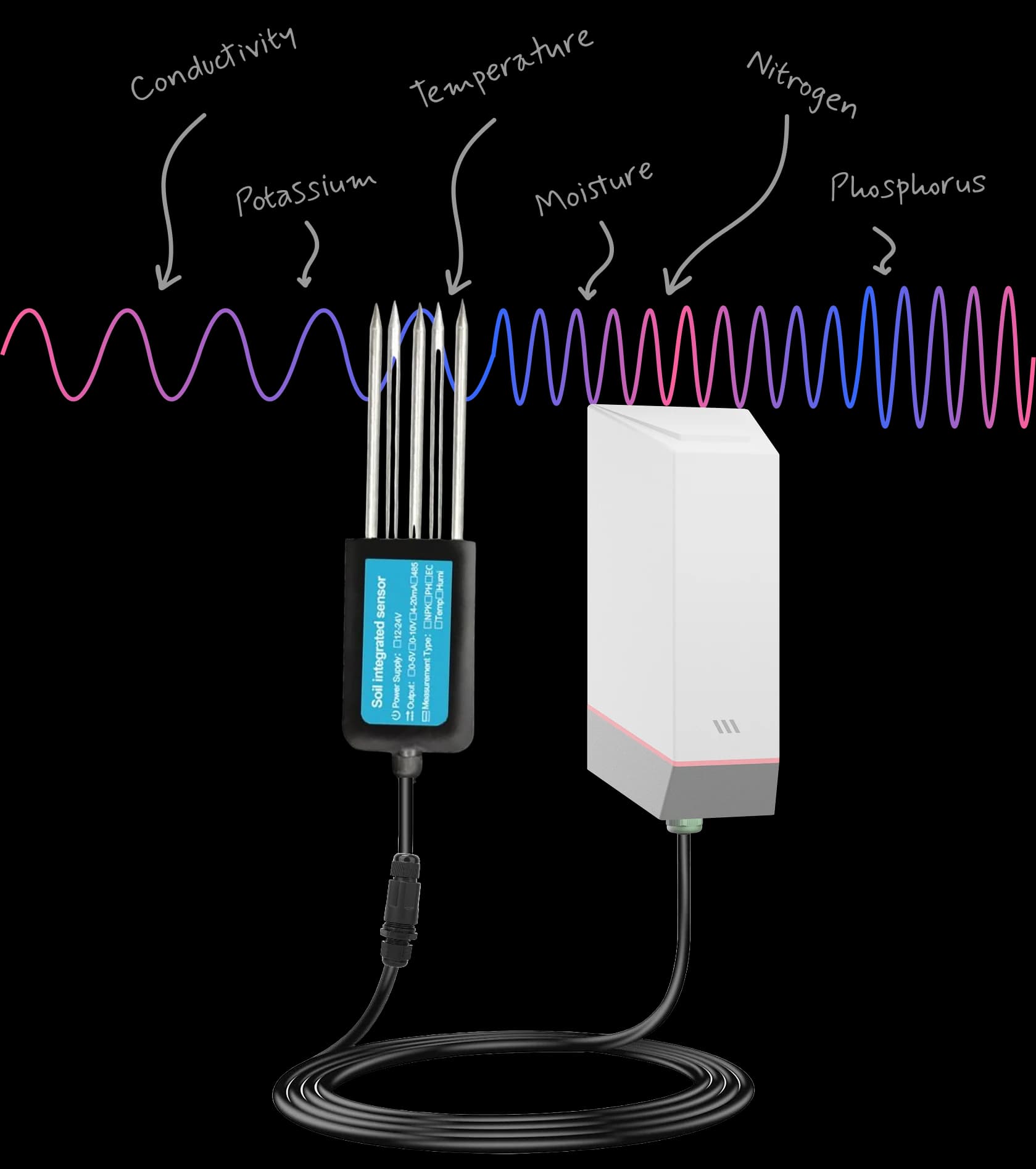
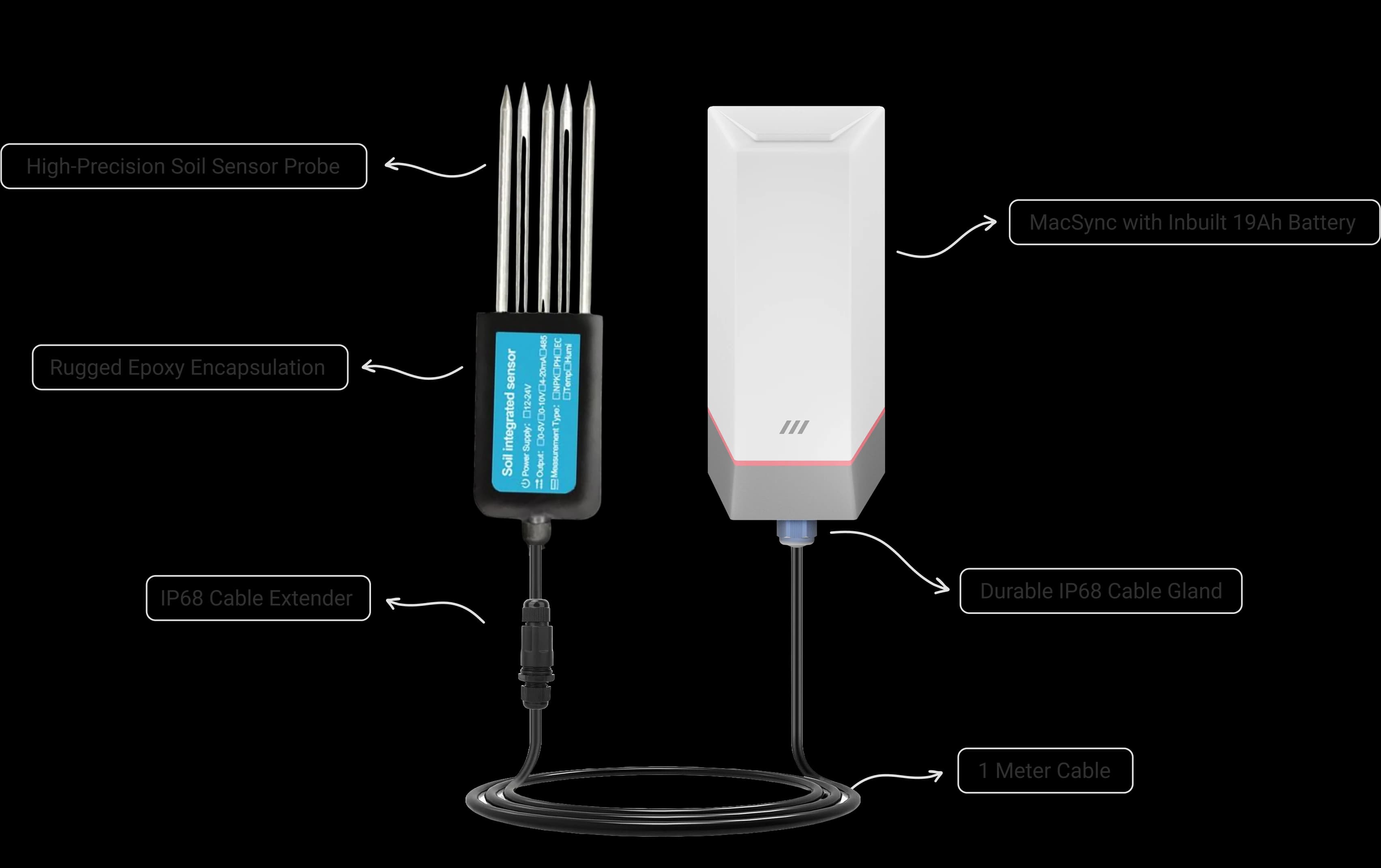
Moisture, temperature, EC, pH, nitrogen, phosphorus and potassium from a single stainless-steel probe, so one hole in the ground replaces a set of separate sensors.
Volumetric water content from 0 to 100% VWC, accurate to ±5% at 0.1% resolution. It is the reading irrigation is scheduled on.
EC up to 10,000 µS/cm shows how much dissolved salt and fertiliser sits in the root zone. pH from 3 to 9 shows whether the crop can take it up.
Nitrogen, phosphorus and potassium estimates from 0 to 1,999 mg/kg. Read them as a direction between laboratory soil tests, not as a lab result.
Joins the 2.4 or 5 GHz Wi-Fi you already run and publishes straight to your MQTT broker or HTTPS endpoint.
A 19 Ah cell runs the transmitter and the probe, so no power cable goes out to the bed or the plot. Estimated at more than six years on hourly uploads.
Readings are stored on the device and forwarded when the network returns, so a router reboot or a power cut does not leave a gap.
Pair over BLE with the Maya app to set the network, the server, the upload interval and the alarm limits for moisture, EC or pH.
Designed and manufactured in Pune. WPC compliant and RoHS conforming, in an IP65 enclosure with an IP67 option.
In plain terms
What Does a 7-in-1 Soil Sensor Measure?
The short answer
A 7-in-1 soil sensor measures seven soil properties with a single probe: moisture, temperature, electrical conductivity (EC), pH, and the nutrients nitrogen, phosphorus and potassium (NPK). A Wi-Fi 7-in-1 soil sensor adds a transmitter that sends those readings over an ordinary Wi-Fi network to a server or dashboard, so a bed, a polyhouse or a plot can be monitored without a controller, a data cable or a gateway.
Moisture
- 0–100%
Volumetric water content (VWC)
- ±5%
Moisture accuracy
- 0.1%
Moisture resolution
Temperature
- +115 °C
Upper limit of the temperature range
- −45 °C
Lower limit of the temperature range
- ±0.5 °C
Accuracy, at 0.1 °C resolution
EC
- 10,000
µS/cm, top of the EC range
- ±3%
Of full scale, EC accuracy
- 10 µS/cm
EC resolution
pH
- 3–9 pH
Measuring range
- ±0.3 pH
Accuracy
- 0.1 pH
Resolution
NPK
- 1,999
mg/kg, top of the range for N, P and K
- ±2%
Of full scale, sensor specification
- 1 mg/kg
Resolution
Wi-Fi & power
- 2.4 / 5 GHz
Dual-band Wi-Fi, no gateway
- 19 Ah
Internal battery
- 30,000
Records stored on the device

MacSync Wi-Fi 7-in-1
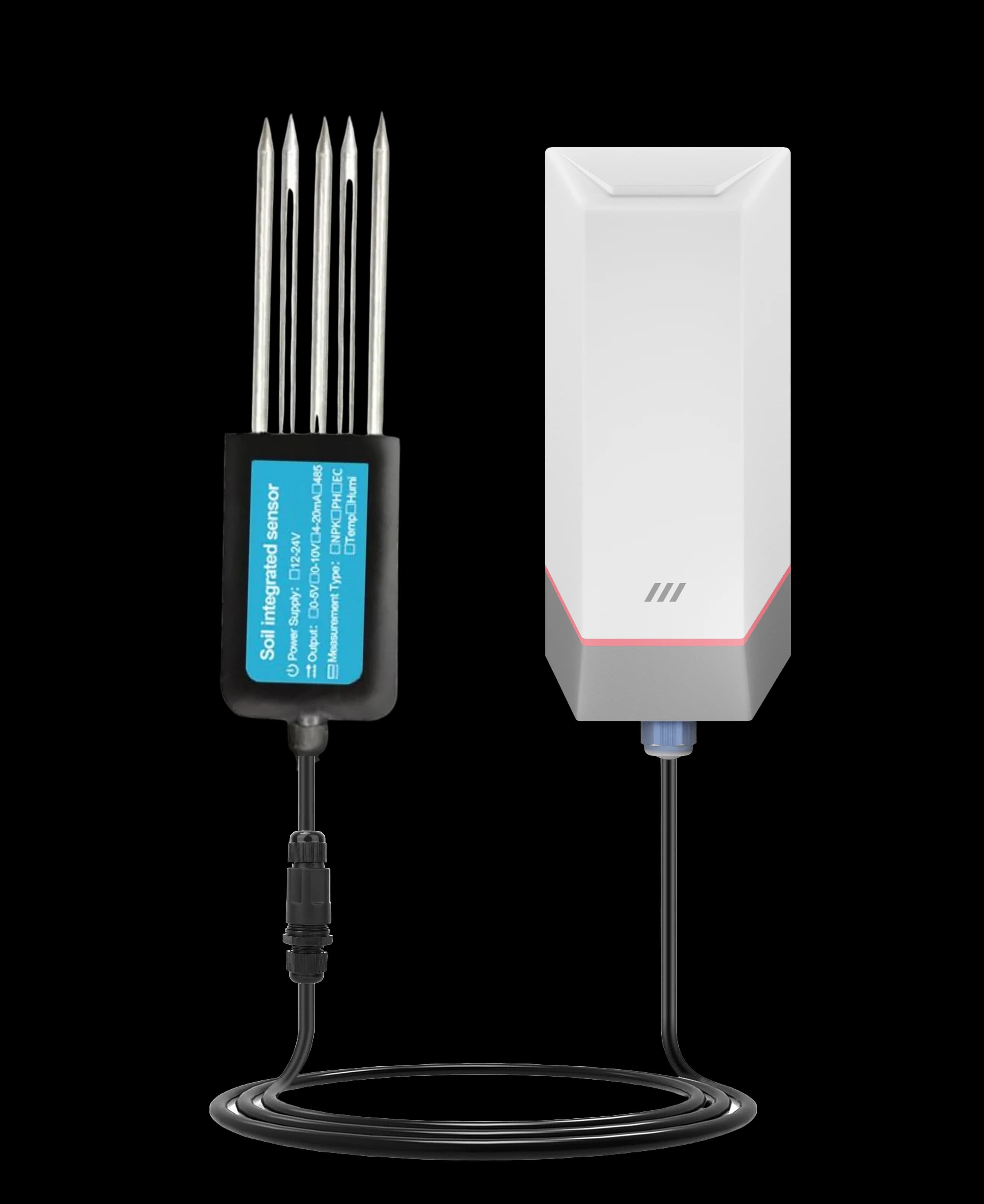
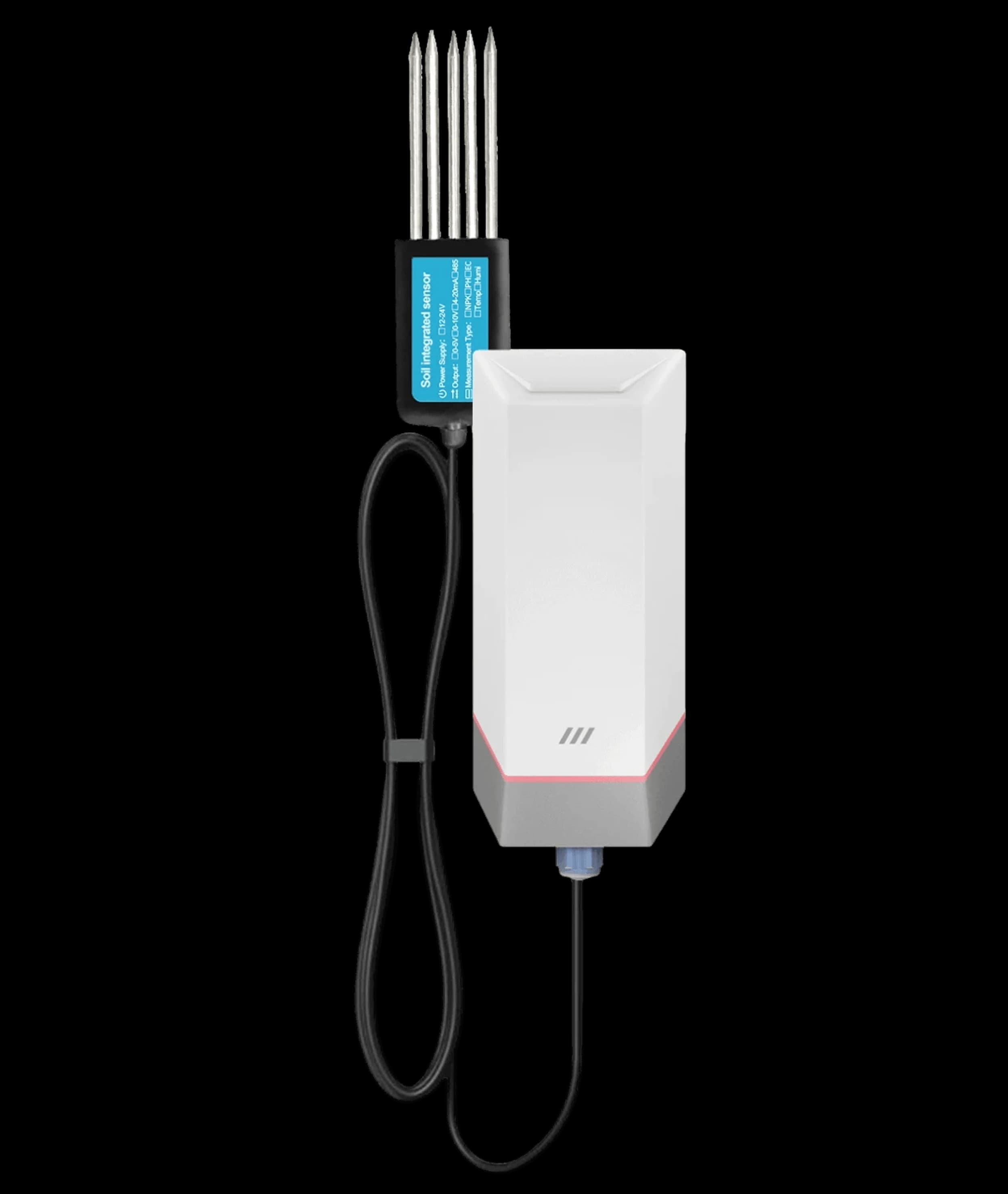
The MacSync Wi-Fi 7-in-1 soil sensor is an outdoor, battery-operated transmitter with a stainless-steel probe. It reads moisture, temperature, EC, pH and NPK and publishes over MQTT or HTTPS, with 30,000 readings stored on board.
Volumetric water content from 0 to 100%, the reading that irrigation is scheduled on.
Soil temperature from −45 to +115 °C, for germination, root activity and frost or heat alerts.
Electrical conductivity from 0 to 10,000 µS/cm: dissolved salts, fertiliser strength and salinity.
Soil pH from 3 to 9, which decides how available nutrients are to the crop.
Nitrogen, phosphorus and potassium, each estimated up to 1,999 mg/kg. Use them as a trend between lab tests.
Dual-band Wi-Fi with MQTT or HTTPS, an internal 19 Ah cell, and 30,000 records kept through an outage.
Also searched for as a battery-powered Wi-Fi soil moisture sensor, a Wi-Fi soil NPK sensor, a wireless soil pH and EC sensor or a multi-parameter soil sensor. The nitrogen, phosphorus and potassium readings are estimates for following a trend; confirm fertiliser decisions with a laboratory soil test.
The seven readings
Seven Soil Parameters: Range, Accuracy and What Each One Tells You
A 7-in-1 probe reports seven values every time it is read. Four are measurements you can act on directly. The three nutrient values are estimates, best read as a trend.
| Parameter | Range | Accuracy | Resolution | What it tells you |
|---|---|---|---|---|
| Soil moisture | 0–100% VWC | ±5% | 0.1% | When to irrigate, and whether water is reaching the root zone |
| Soil temperature | −45 to +115 °C | ±0.5 °C | 0.1 °C | Germination and root activity; frost and heat stress |
| Electrical conductivity (EC) | 0–10,000 µS/cm | ±3% of full scale | 10 µS/cm | Dissolved salts: fertiliser strength and salinity build-up |
| pH | 3–9 pH | ±0.3 pH | 0.1 pH | Whether the nutrients in the soil are available to the crop |
| Nitrogen (N) | 0–1,999 mg/kg | ±2% of full scale | 1 mg/kg | The trend in available nitrogen between soil tests |
| Phosphorus (P) | 0–1,999 mg/kg | ±2% of full scale | 1 mg/kg | The trend in available phosphorus between soil tests |
| Potassium (K) | 0–1,999 mg/kg | ±2% of full scale | 1 mg/kg | The trend in available potassium between soil tests |
Figures are from the datasheet of the 7-in-1 soil probe. Accuracy is the probe's own measurement specification. Nitrogen, phosphorus and potassium are estimated electrically rather than by chemical analysis, so follow them as a trend and check them against a laboratory soil test before changing a fertiliser plan. Salinity is followed through the EC reading.
Downloads
Everything You Need to Get Building
Datasheets, drawings, firmware, and tools — all in one place.
Engineered for
Built for Wet Soil, Fertiliser and Open Weather
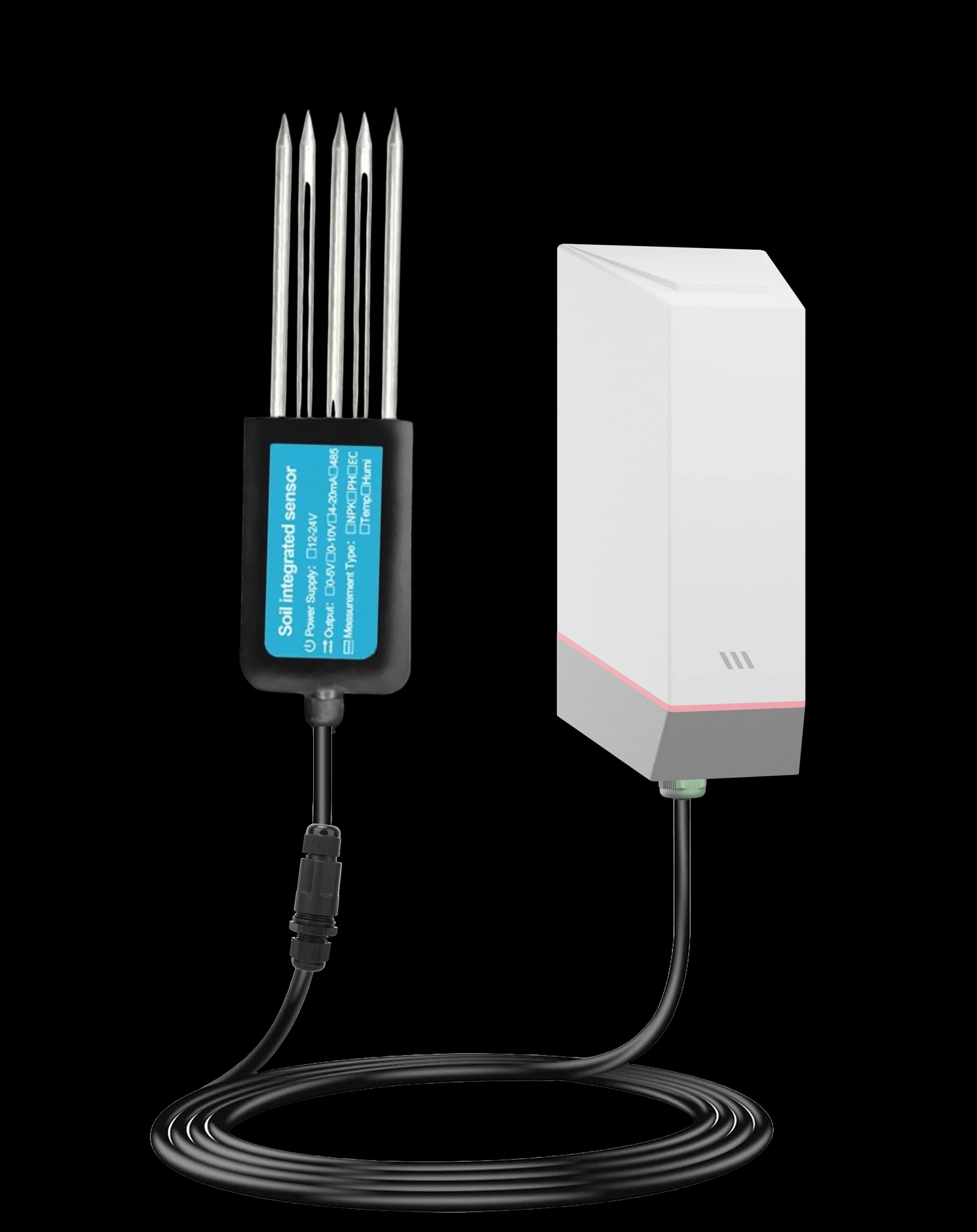
Corrosion-resistant stainless-steel electrodes on an epoxy-encapsulated body read in clay, sandy, saline and wet soils. Only the probe goes in the ground; the transmitter stays above it.
01 / 04
Applications
Where Is a Wi-Fi 7-in-1 Soil Sensor Used?

Greenhouses & Polyhouses
Vegetables, flowers and herbs under cover, where Wi-Fi already reaches or one access point covers the whole structure. Moisture, EC and pH are logged bed by bed.
Read case studiesSmart Irrigation & Precision Farming (0–100% VWC, Threshold alerts): Irrigate when the root zone is actually dry rather than by the clock. A soil moisture limit triggers an upload the moment a bed dries past it.
Fertigation & Crop Nutrition (EC and pH, NPK trend): EC rises when fertiliser is injected and falls as it is taken up or washed out. Tracking EC and pH in the root zone shows whether a dose arrived and stayed.
Nurseries & Seedling Production (Young plants, Moisture and temperature): Seedlings have little tolerance for a dry or cold root zone. Continuous moisture and soil temperature readings catch both before the plants show it.
Floriculture & High-Value Crops (Flowers, vegetables, herbs, Bed-level data): Cut flowers, exotic vegetables and herbs, where each bed is worth instrumenting and a build-up of salt can cost a harvest.
Research Plots & Field Trials (Logged record, 30,000 records): Trial plots at universities, research stations and seed companies, with an unbroken record of seven soil parameters for every treatment.
Orchards, Vineyards & Plantations (Near the farm building, Root-zone data): Blocks within reach of a farm-building or outdoor access point. For blocks beyond Wi-Fi range, the LoRaWAN version of the sensor covers kilometres.
Parks, Lawns & Landscape Irrigation (Campuses and golf courses, Measured watering): Lawns, campus gardens, parks and golf courses watered on measured soil moisture instead of a fixed timer.
Terrace Farms & Urban Gardens (Rooftops, Building Wi-Fi): Rooftop farms, kitchen gardens and community plots that sit inside ordinary building Wi-Fi, with no farm network to build.
Soil Restoration & Saline Land (EC tracking, Long-term record): Reclaimed, saline or degraded ground, where the question is whether salinity and pH are moving the right way over months.
Browse all 10 applications
01 / 10
Works with
Why Choose the MacSync Wi-Fi 7-in-1 Soil Sensor?
A battery-operated transmitter with a stainless-steel probe that measures soil moisture, temperature, EC, pH and NPK and publishes over MQTT or HTTPS with no gateway.A battery-operated transmitter with a stainless-steel probe that measures soil moisture, temperature, EC, pH and NPK and publishes over MQTT or HTTPS with no gateway.
Where it fits
From Polyhouse Beds to Research Plots, Wherever Wi-Fi Reaches the Soil
Greenhouses, Polyhouses & Nurseries
Protected cultivation, where every bed is managed and Wi-Fi is already there or one access point away. Moisture, EC and pH guide irrigation and fertigation bed by bed.
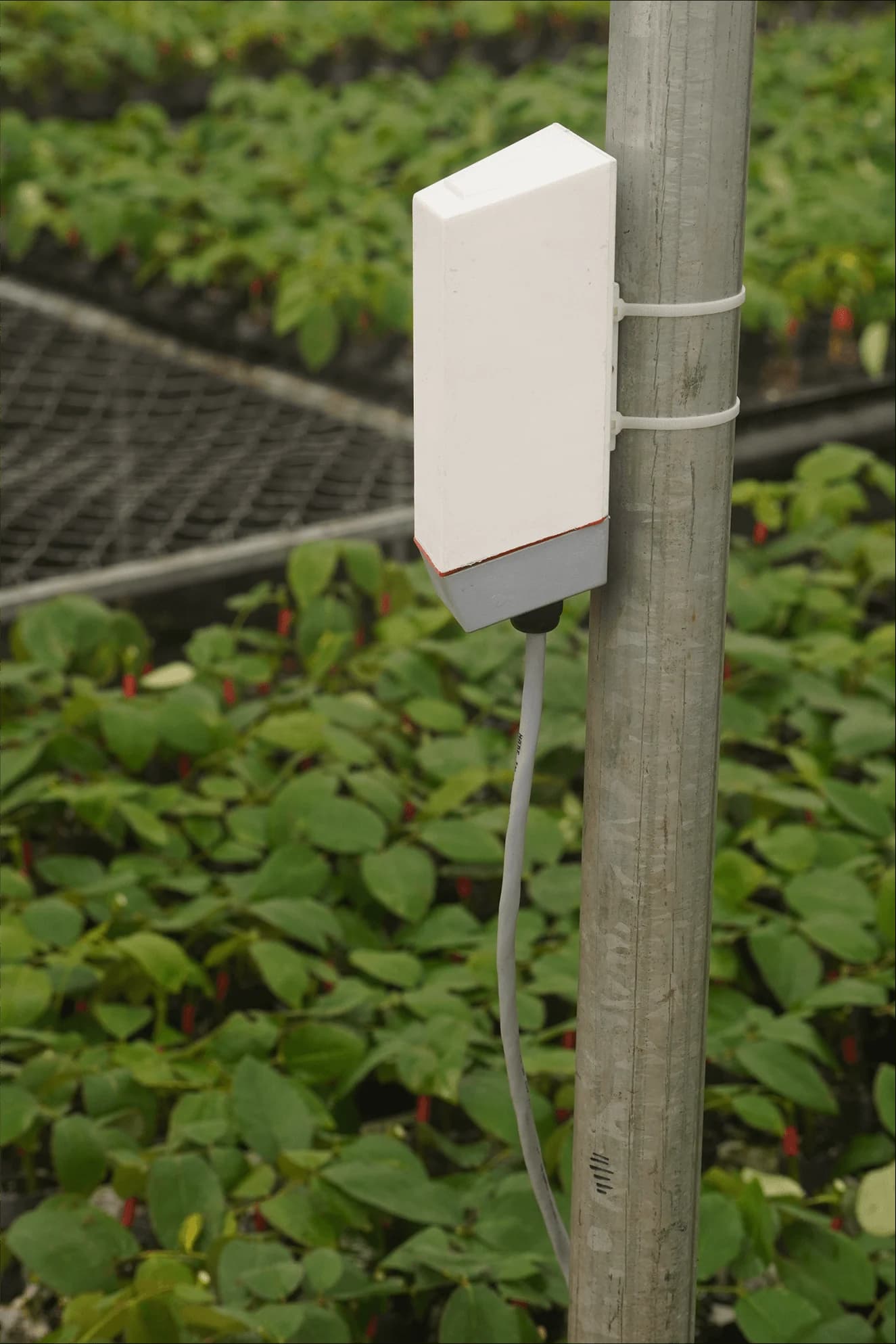
Farms, Orchards & Research Plots
Drip-irrigated blocks, orchards and trial plots within reach of a farm-building or outdoor access point, logged season after season.

Gardens, Campuses & Landscapes
Lawns, parks, terrace farms and campus gardens watered on measured soil moisture instead of a timer, over the building's own Wi-Fi.

Greenhouses, Polyhouses & Nurseries
Protected cultivation, where every bed is managed and Wi-Fi is already there or one access point away. Moisture, EC and pH guide irrigation and fertigation bed by bed.
Farms, Orchards & Research Plots
Drip-irrigated blocks, orchards and trial plots within reach of a farm-building or outdoor access point, logged season after season.
Gardens, Campuses & Landscapes
Lawns, parks, terrace farms and campus gardens watered on measured soil moisture instead of a timer, over the building's own Wi-Fi.
Why Macnman
Does a Wi-Fi Soil Sensor Need a Hub or Gateway?
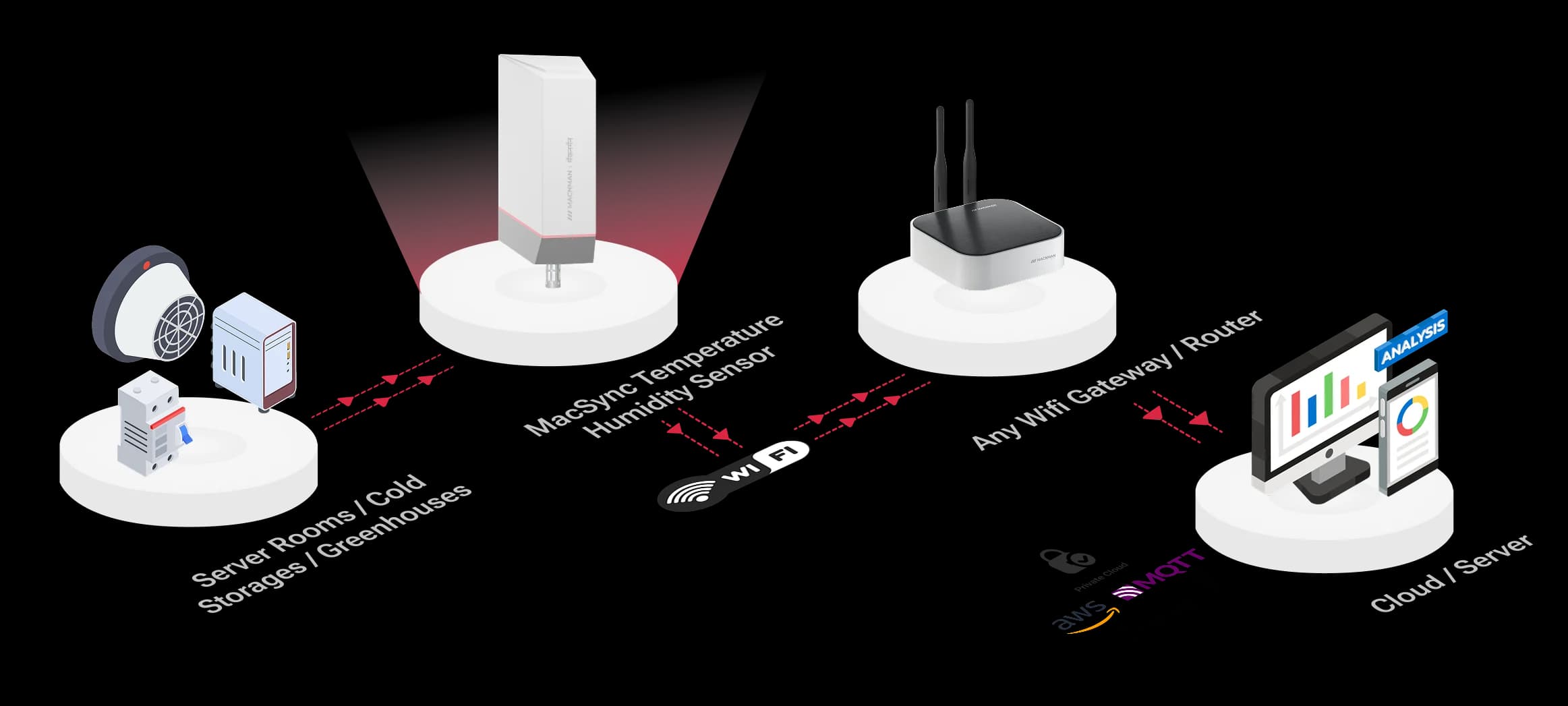
No. The MacSync Wi-Fi 7-in-1 soil sensor joins your existing Wi-Fi network directly, on 2.4 or 5 GHz, with no gateway, hub or receiver. Bury the probe in the root zone, mount the transmitter where the Wi-Fi reaches, connect it with the Maya app, and readings arrive at your broker or dashboard.
Free planning tools
Size your deployment before you order the hardware
Free engineering calculators for coverage, range and battery life — built on measurements from our own deployments rather than textbook models, which is why the answers tend to be smaller and a good deal more useful. Nothing here quotes a range we have not actually achieved.
No sign-up, no email, nothing to install. More on the way for Wi-Fi and BLE.
Hardware
Outdoor IP65 Wi-Fi Soil Sensor, Built for Rain, Mud and Irrigation
The transmitter's glass-filled nylon enclosure is IP65 rated with an IP67 option and operates from −40 °C to +80 °C, on a pole or a wall. The probe is made to stay in the ground: corrosion-resistant stainless-steel electrodes that read in clay, sandy, saline and wet soils.

Battery life
How Long Does the Battery Last on a Wi-Fi Soil Sensor?
It depends almost entirely on how often the sensor connects. Soil changes slowly, so most sites upload every 30 or 60 minutes. These are estimates from the model behind the Macnman Wi-Fi battery life calculator, for a 19 Ah cell with one probe reading and one TLS connection per upload.
| Upload interval | DHCP address | Static IP address |
|---|---|---|
| Every 10 minutes | About 1.8 years | About 2.5 years |
| Every 15 minutes | About 2.5 years | About 3.5 years |
| Every 30 minutes | About 4.3 years | About 5.7 years |
| Every hour | About 6.7 years | About 8.2 years |
| 15-minute readings, uploaded hourly (sampling mode) | About 6.1 years | About 7.4 years |
Estimated, not guaranteed. The model allows for powering the probe at each reading; a probe that needs longer to settle, or a weak Wi-Fi signal, shortens these figures. Sampling mode stores readings and sends them together, so the sensor pays for one Wi-Fi connection instead of four. Try your own settings in the Wi-Fi battery life calculator under Network Planning Tools.
At a glance
MacSync Wi-Fi 7-in-1 Soil Sensor — Key Specifications
Every key specification in one view.
0–100% VWC
soil moisture
±5% · 0.1% resolution
−45 to +115 °C
soil temperature
±0.5 °C · 0.1 °C resolution
0–10,000 µS/cm
electrical conductivity
±3% of full scale · 10 µS/cm steps
3–9 pH
soil pH
±0.3 pH · 0.1 pH resolution
0–1,999 mg/kg
nitrogen, phosphorus, potassium
Each of N, P and K · trend estimate
2.4 / 5 GHz
Wi-Fi connectivity
802.11 b/g/n/ac · WPA2 / WPA3 · no gateway
Choosing a network
Wi-Fi or LoRaWAN for a Soil Sensor?
Macnman builds the 7-in-1 soil sensor for both networks, so the honest answer depends on how far the probes are from a building.
| Compare | MacSync Wi-Fi 7-in-1 | MacSync LSS X5 — LoRaWAN |
|---|---|---|
| Network it needs | The Wi-Fi already on site | A LoRaWAN gateway |
| Reach | Typically up to 100 m from an access point | Kilometres from one gateway |
| Readings | Moisture, temperature, EC, pH, N, P and K | Moisture, temperature, EC, pH, N, P and K |
| Route to your platform | Direct, over MQTT or HTTPS | Through a LoRaWAN network server |
| Power | Internal 19 Ah battery | 19 Ah battery, or 20 W solar with an 8,000 mAh rechargeable battery |
| Battery life, hourly reporting | Estimated about 6.7 years | 7+ years (datasheet estimate) |
| Battery life, 15-minute reporting | Estimated about 2.5 years | About 4 years (datasheet estimate) |
| Choose it when | Every probe sits inside Wi-Fi coverage: greenhouses, nurseries, gardens and campuses | Fields, orchards and plantations spread beyond Wi-Fi reach |
Where every probe is within reach of an access point, Wi-Fi is the simpler system: no gateway and no network server. Across open farmland, LoRaWAN covers the distance with one gateway and spends less energy on each message. LoRaWAN figures are from the MacSync LSS X5 datasheet; Wi-Fi battery figures are estimates from the Macnman Wi-Fi battery life calculator with DHCP and TLS.
Features
Everything Built into One Wi-Fi 7-in-1 Soil Sensor
Threshold-Based Alerts
Set low and high limits and the sensor uploads the moment the soil crosses one.
Upload on a fixed interval, on a threshold, or after a stored batch of samples.
Works on Your Existing Wi-Fi
Joins 2.4 or 5 GHz networks directly, with WPA2 or WPA3 security and DHCP or a static IP.
Battery-Operated
A 19 Ah cell powers the transmitter and the probe, estimated at more than six years on hourly uploads.
Seven Readings from One Probe
Moisture, temperature, EC, pH, nitrogen, phosphorus and potassium in every message.
Stainless-Steel Soil Probe
Corrosion-resistant electrodes that read in clay, sandy, saline and wet soils.
30,000 Records On-Board
Readings are stored on the device and forwarded when the network returns.
Macnman Maya App
Network, server, upload interval, alarm limits and diagnostics from your phone.
Cloud & MQTT Ready
MQTT, HTTP and HTTPS to AWS IoT Core, Azure IoT Hub, on-premise servers and custom IoT platforms.
Capabilities
On-Board Memory That Never Loses a Reading
Built-in memory stores 30,000 records on the sensor itself. Through a Wi-Fi outage, a router reboot or a power cut at the farm, the soil history stays on the device and is uploaded when the link returns.

Architecture
Wi-Fi Soil Sensor Network Architecture
Why it matters
Irrigate and Feed on Data. Four Ways It Pays Off.
A soil test tells you what the ground was like on the day it was sampled. A buried sensor tells you what it is doing now, and what it did all season. That is the basis of precision farming: irrigating and feeding on measurements rather than habit.
Why it matters
A soil test tells you what the ground was like on the day it was sampled. A buried sensor tells you what it is doing now, and what it did all season. That is the basis of precision farming: irrigating and feeding on measurements rather than habit.
Water when the root zone needs it
Irrigation follows measured moisture instead of a calendar, and a threshold alert catches a bed that dries out early.
See fertiliser arrive and leave
EC rises with each fertigation and falls as nutrients are taken up or leached, so over-feeding and under-feeding show in the data.
Catch salinity and pH drift early
A slow rise in EC or a drifting pH shows as a trend in the record before it shows in the crop.
A record for every season
Seven parameters logged continuously and kept through outages, ready to compare block against block and year against year.
How it works
How Does a Wi-Fi 7-in-1 Soil Sensor Work?
Step 1 of 5
Bury the probe, mount the transmitter
Push the probe into undisturbed soil in the root zone and firm the soil back around it. Mount the transmitter above ground on a pole or a wall, where the Wi-Fi reaches.
Join your Wi-Fi with Maya
Pair over Bluetooth with the Maya app, choose the network, enter the broker or server details, and set the upload interval and alarm limits.
The probe reads the soil electrically
Stainless-steel electrodes in contact with the soil measure its water content, temperature, conductivity and pH, and estimate nitrogen, phosphorus and potassium.
Readings ride your existing network
Each set of readings is published over MQTT or HTTPS with TLS. If the network is down it is stored on the device, up to 30,000 records, and sent later.
Your platform shows it and raises the alarm
The values land in your dashboard or irrigation platform. Cross a limit and the sensor uploads immediately rather than waiting for the next interval.
Reporting modes
Three Upload Modes, Chosen by What the Crop Needs.
An upload on a fixed interval. Predictable data and predictable battery life — the right default for a soil record.
Note: At hourly uploads the battery estimate is about 6.7 years.
The sensor samples on its own schedule and uploads the moment a low or high limit is crossed: a bed drying out, or EC climbing after a fertiliser dose. Note: Best for irrigation alerts and salinity limits that must not be passed.
Readings are taken at a short interval, stored, and uploaded together. You keep a fine-grained record without paying for a Wi-Fi connection on every sample. Note: Each Wi-Fi connection costs far more energy than a reading, so batching extends battery life.
Cloud & MQTT
Open Connectivity with Universal Cloud Compatibility
Streams to MQTT, HTTPS & Private Clouds — No Vendor Lock-In
MacSync Wi-Fi soil sensors publish readings over your existing network to MQTT brokers, HTTPS endpoints, AWS IoT Core, Azure IoT Hub or your own on-premise server — TLS encrypted, with no gateway hardware and no vendor lock-in.


Wondering how long the battery will last on your network?
Open the CalculatorRF performance
Stable Readings in Wet, Saline and Fertilised Soil
Designed for real ground, the MacSync Wi-Fi 7-in-1 soil sensor holds its link on 2.4 or 5 GHz and reconnects on its own after an outage. In the soil, corrosion-resistant stainless-steel electrodes keep reading through irrigation, fertiliser and salt.
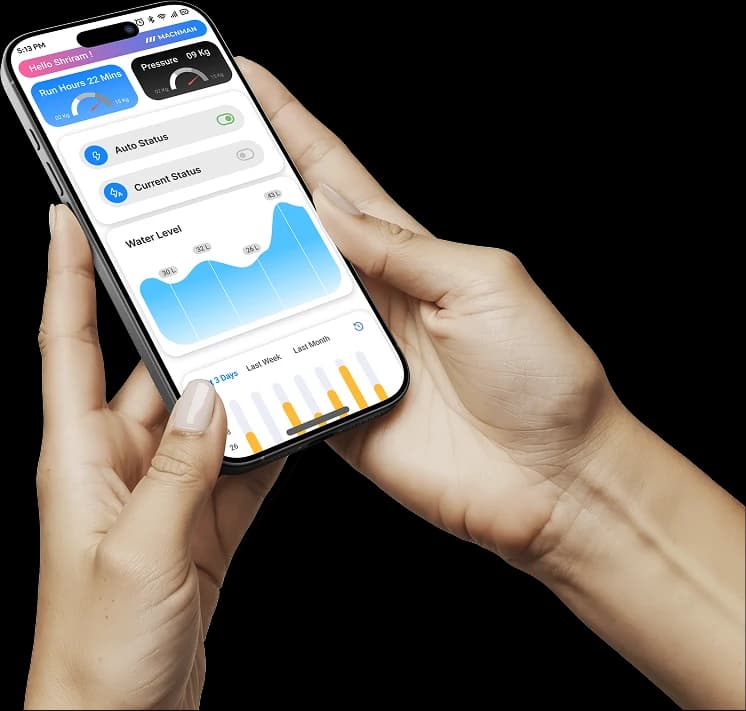
Capabilities
Real-Time Soil Monitoring over Wi-Fi
Threshold Alerts, Event-Based Uploads & Season-Long Data Logging
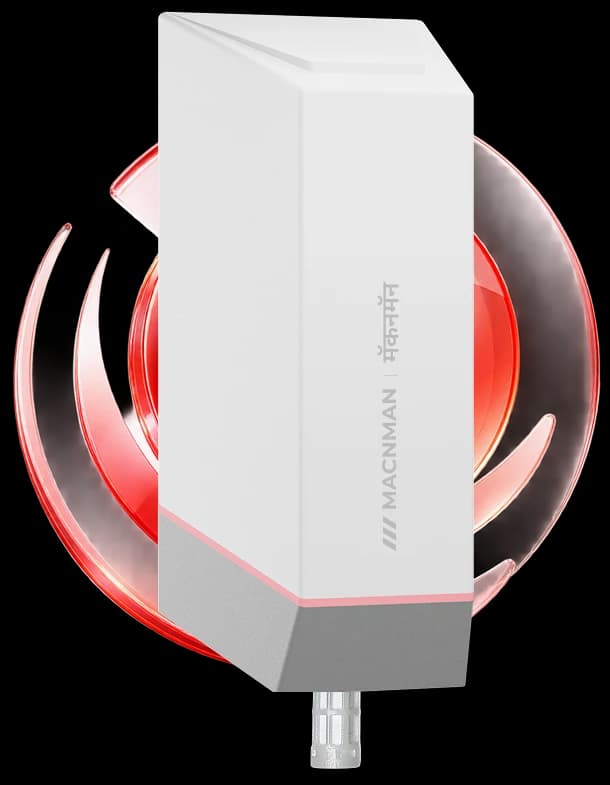
Installation
Quick & Wireless Soil Sensor Installation
The MacSync Wi-Fi 7-in-1 soil sensor mounts with a clip and two screws on a pole or a wall, with the probe pushed into the root zone. With no signal cable, power cable or gateway, a polyhouse or a block of beds can be instrumented in an afternoon.
The MacSync Wi-Fi 7-in-1 soil sensor mounts with a clip and two screws on a pole or a wall, with the probe pushed into the root zone. With no signal cable, power cable or gateway — a polyhouse or a block of beds can be instrumented in an afternoon.
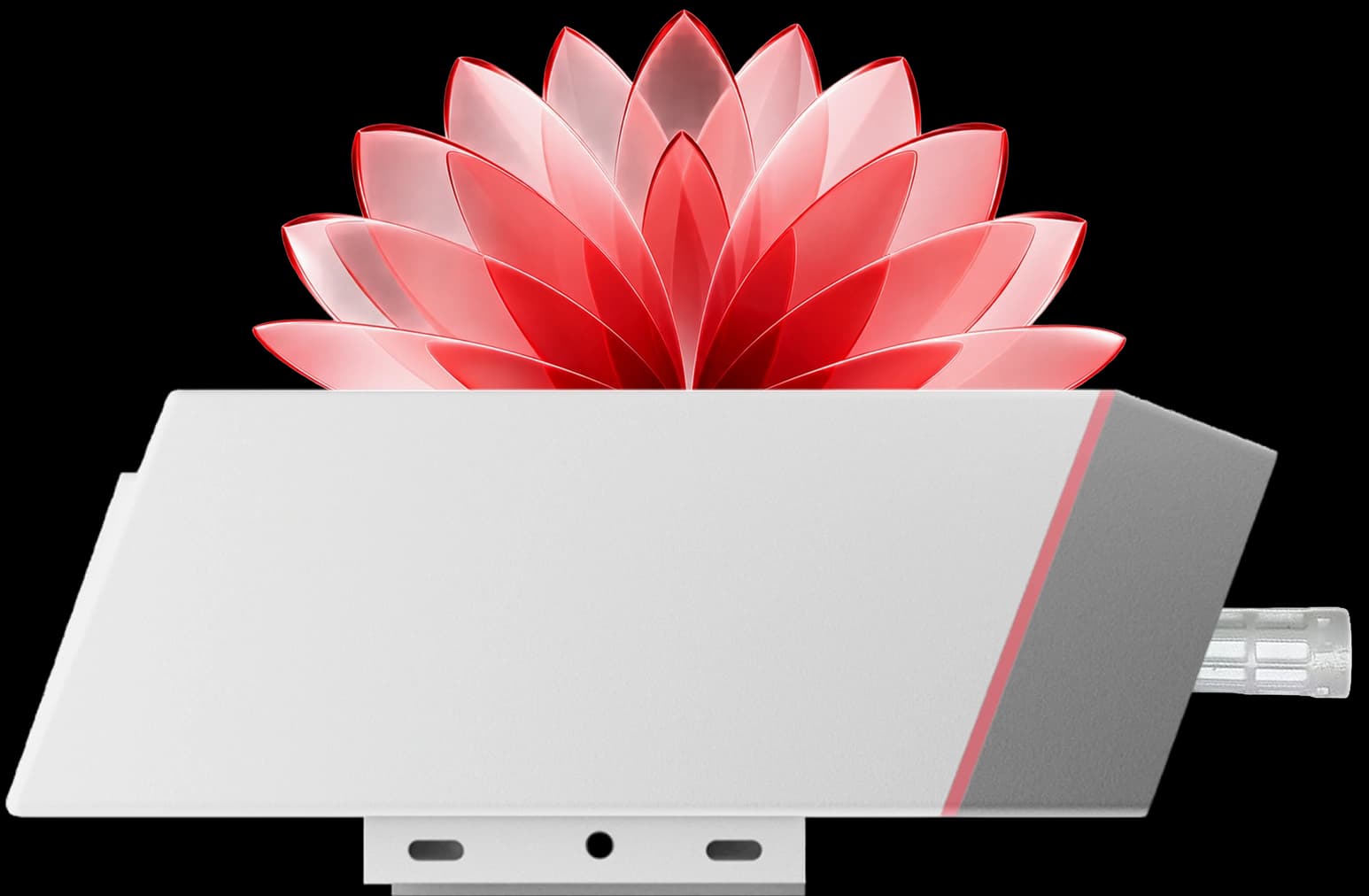
Choosing a 7-in-1 soil sensor
Comparing 7-in-1 Soil Sensors — the Rows That Actually Matter
Most 7-in-1 soil sensors are sold as a bare RS485 probe that still needs a controller, a power supply and code before it reports anything. Consumer Wi-Fi soil sensors are ready to use but measure less and usually report through the maker's own hub. Here are all three, with our weaker rows left in.
| Criterion | MacSync Wi-Fi 7-in-1 | Bare RS485 7-in-1 probe | Consumer Wi-Fi soil sensor |
|---|---|---|---|
| What you get | Probe, Wi-Fi transmitter, battery and enclosure as one unit | A probe on a cable; the rest is yours to build | A probe with a small radio, usually sold with a hub |
| Readings | Moisture, temperature, EC, pH, N, P and K | Moisture, temperature, EC, pH, N, P and K | Moisture; some add temperature and EC |
| Getting the data out | Wi-Fi direct to your MQTT broker or HTTPS endpoint | Your own controller, RS485 wiring and code | Through the maker's hub and app |
| Hub or gateway | None | Whatever you build | Usually required |
| Power | Internal 19 Ah battery | External DC supply | Small replaceable cells |
| Battery life | Estimated at more than six years on hourly uploads | Not applicable | About a year is typical |
| Moisture accuracy | ±5% (our weaker row) | ±2 to 3% is commonly quoted | Often not stated |
| NPK readings | Estimated; a trend between lab tests | Estimated; a trend between lab tests | Not measured |
| Stored on the device in an outage | 30,000 records | None, unless you add a logger | Little or none |
| Solar charging | Not on the Wi-Fi model; the LoRaWAN version offers it (our weaker row) | Depends on what you build | Rare |
| Enclosure outdoors | IP65 transmitter, IP67 optional | Sealed probe; your electronics need a box | Weatherproof, typically IP66 |
| Where the data lives | Your own server or cloud | Wherever you build it | Usually the maker's cloud |
| Made in | India (Pune), WPC compliant | Usually imported | Usually imported |
MacSync measurement figures are from the 7-in-1 probe datasheet; battery life is estimated with our Wi-Fi battery calculator for a 19 Ah cell with DHCP and TLS. The other two columns describe the common pattern across widely sold products rather than any single model. On every 7-in-1 probe, ours included, the N, P and K values are estimates.
Installation
In the ground in minutes, reporting for years.
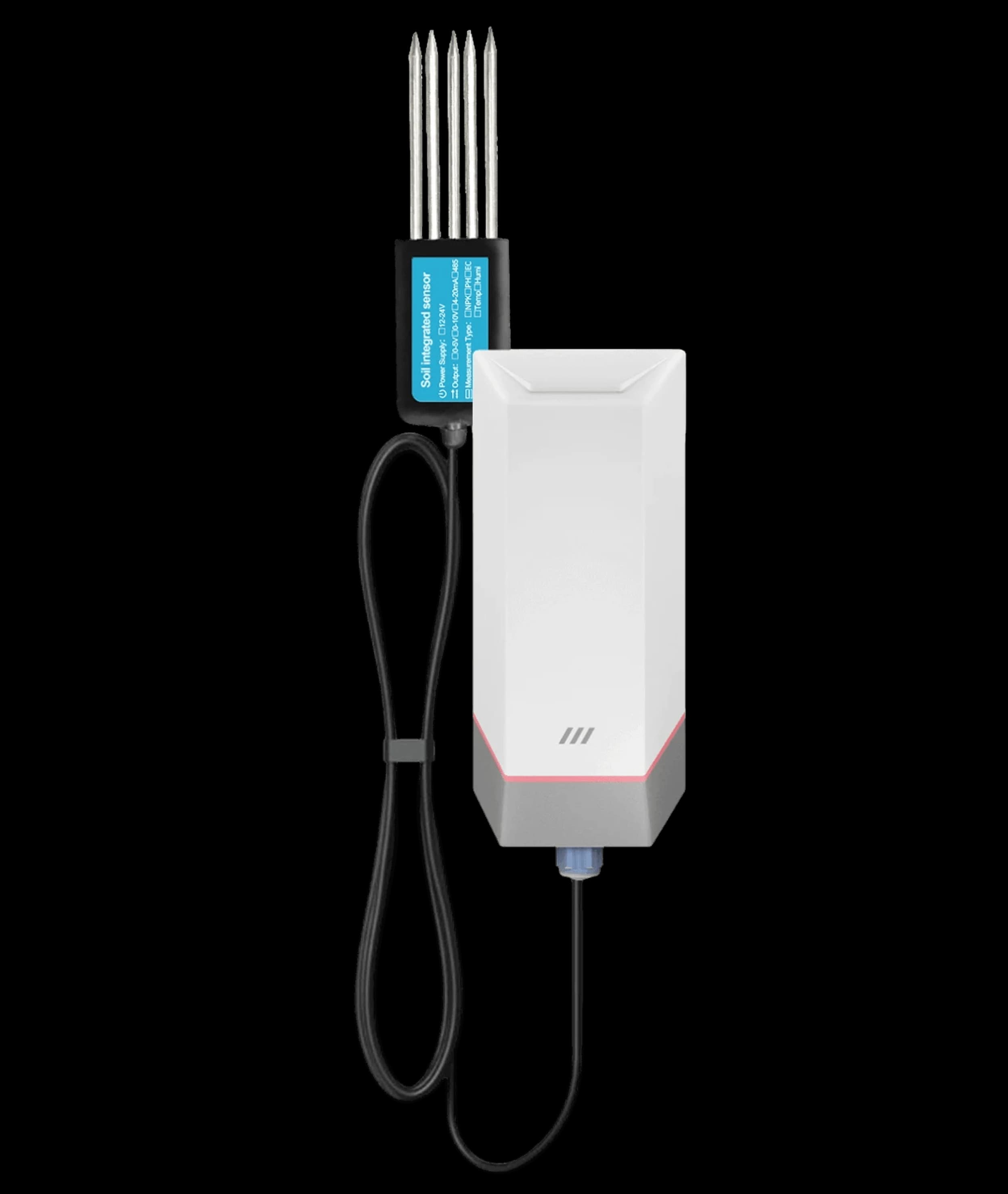
Seat the probe in the root zone
Open the soil to root depth — around 15 cm for most row crops, and about 5 cm to the side of a drip emitter. Push the probe into undisturbed soil and firm the soil back so no air gaps remain.
Mount the transmitter above ground
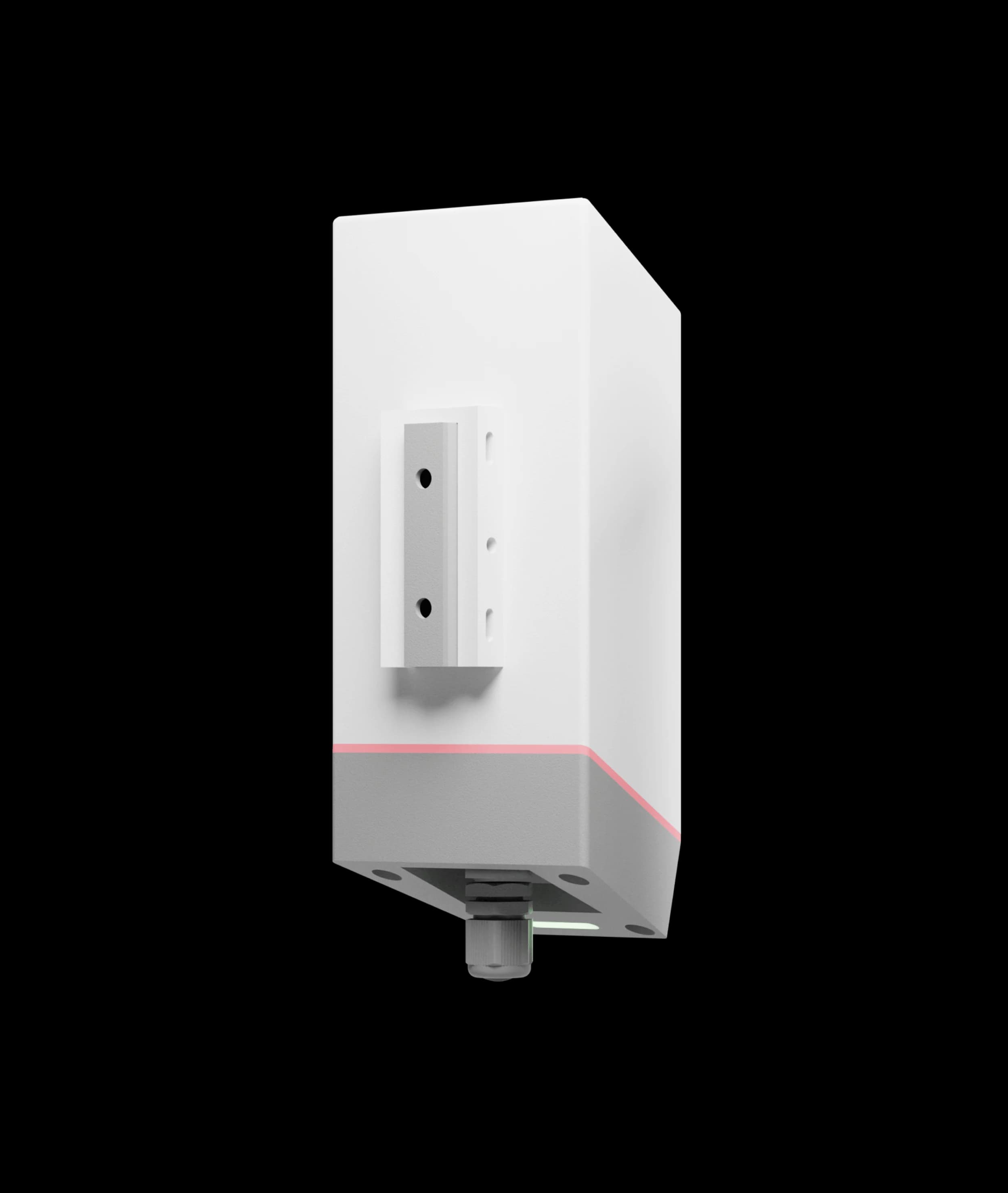
Fix the transmitter to a pole or a wall with the supplied clip and screws, clear of standing water and where the Wi-Fi reaches.
Pair with Maya over BLE
Choose the Wi-Fi network, enter the MQTT broker or HTTPS endpoint, and set the upload interval and alarm limits. Send Uplink confirms the signal strength and that a message reached the server.
Let it settle, then compare with a soil test
Readings stabilise as the soil re-consolidates around the probe; allow 10 to 14 days. Then compare pH and NPK with a laboratory test from the same spot and note the difference.
Range & reliability
Reliable Wi-Fi Connectivity, Built for Farms and Greenhouses
Dependable 2.4 / 5 GHz Wi-Fi with automatic reconnect and 30,000-record on-board buffering
The MacSync Wi-Fi 7-in-1 soil sensor holds a dependable link on farm and campus networks, with automatic reconnection after outages and 30,000 on-board records that keep the history intact until the connection returns. Typical range is up to 100 m from the access point, depending on what stands in between.
FAQ
Frequently asked questions
A 7-in-1 soil sensor is a single probe that measures seven soil properties at once: moisture, temperature, electrical conductivity (EC), pH, nitrogen, phosphorus and potassium. It is also called a multi-parameter soil sensor or a soil NPK sensor. The MacSync Wi-Fi 7-in-1 soil sensor adds a battery-operated Wi-Fi transmitter, so the seven readings reach your server or dashboard without a separate controller or gateway. In smart agriculture it is the sensor that covers irrigation, fertigation and soil health from one hole in the ground.
A soil moisture sensor reads one thing: how much water the soil is holding. A 7-in-1 soil sensor reads moisture as well, and adds soil temperature, EC, pH and a nitrogen, phosphorus and potassium trend from the same probe. If irrigation is the only question, moisture and temperature are enough. If fertigation, salinity or soil pH matter too, the extra readings earn their place.
Soil moisture from 0 to 100% volumetric water content (±5%); soil temperature from −45 to +115 °C (±0.5 °C); EC from 0 to 10,000 µS/cm (±3% of full scale); pH from 3 to 9 (±0.3 pH); and nitrogen, phosphorus and potassium, each from 0 to 1,999 mg/kg. Moisture, temperature, EC and pH are direct measurements. The three nutrient values are estimates, best used as a trend.
Treat them as a trend, not as a laboratory result. Probes of this kind estimate nitrogen, phosphorus and potassium from the soil's electrical behaviour rather than by chemical analysis, so the absolute numbers can differ from a lab report and shift with moisture, temperature and soil type. The datasheet figure of ±2% of full scale describes the sensor's own measurement, not its agreement with a laboratory. Used properly — compared with a lab test from the same spot, then watched over time — the readings show whether nutrients are building up or running down between tests.
No. A laboratory test uses chemical extraction and remains the reference for fertiliser recommendations. A buried sensor does a different job: it gives a continuous record of moisture, temperature, EC and pH, and a nutrient trend, between one soil test and the next. Most growers who use sensors keep testing as well.
No. The MacSync Wi-Fi 7-in-1 soil sensor joins your existing 2.4 or 5 GHz Wi-Fi network directly and publishes to your MQTT broker or HTTPS endpoint. There is no gateway, hub or proprietary receiver to buy or maintain.
No. A bare 7-in-1 probe needs a controller, an RS485 interface, a power supply and code before it reports anything. This sensor includes the transmitter, the battery and the Wi-Fi, and publishes the readings itself over MQTT or HTTPS, so there is nothing to program.
Typically up to 100 m from the access point, depending on what stands in between: walls, polyhouse structures, foliage and terrain all reduce it. Check before fixing the transmitter: Send Uplink in the Maya app reports the Wi-Fi signal strength at that spot, and −65 dBm or stronger is a good link. If the plot is beyond reach, add an outdoor access point or use the LoRaWAN version of the sensor.
The sensor runs on an internal 19 Ah cell. Using the Macnman Wi-Fi battery life calculator with one probe reading and one TLS connection per upload on a DHCP network, the estimate is about 2.5 years at 15-minute uploads, about 4.3 years at 30 minutes and about 6.7 years at hourly uploads. A static IP address shortens each connection and extends those figures. Soil changes slowly, so half-hourly or hourly uploads suit most crops. These are estimates, not guarantees, and a weak Wi-Fi signal shortens them.
Nothing is lost. The sensor is its own soil data logger: it keeps measuring and stores up to 30,000 records on the device, then uploads them when the Wi-Fi or the server comes back. At one reading every 15 minutes that is about 10 months of history, and at hourly readings more than three years.
Place the probe in the active root zone — commonly around 15 cm deep for row crops and about 5 cm to the side of a drip emitter, deeper for tree crops. Push it into undisturbed soil and firm the soil back around it so there are no air gaps. Allow 10 to 14 days for the soil to re-consolidate around the probe before acting on the readings.
Yes, it is made for continuous installation: corrosion-resistant stainless-steel electrodes on an epoxy-encapsulated body that read in clay, sandy, saline and wet soils. Only the probe goes in the ground. The transmitter is mounted above it on a pole or a wall, in an IP65 enclosure with an IP67 option.
Electrical conductivity, or EC, measures how easily the soil carries a current, which rises with the amount of dissolved salts. Because fertilisers are salts, EC in the root zone rises after fertigation and falls as nutrients are taken up or leached. A reading that climbs week after week points to salt building up. The probe reads EC in the soil as it stands, which also moves with moisture, so compare readings taken at similar moisture levels.
Salinity is followed through the EC reading: the more dissolved salt there is in the soil water, the higher the conductivity. The sensor measures EC from 0 to 10,000 µS/cm, and a high limit on EC makes it report as soon as that limit is crossed.
From 3 to 9 pH, to ±0.3 pH at 0.1 pH resolution, which covers agricultural soils from strongly acidic to alkaline. Soil pH controls how available nutrients are to the crop, which is why it is read alongside EC and NPK.
VWC is the proportion of a soil volume that is water — 25% VWC means a quarter of that soil volume is water. It is the measurement irrigation scheduling uses, because it tells you how much water is in the root zone. The sensor measures 0 to 100% VWC to ±5% at 0.1% resolution.
It provides the signal. Set a moisture limit in the Maya app and the sensor uploads the moment the soil crosses it; your platform or irrigation controller acts on that message to open or close a valve. The switching is done by the controller, not by the sensor.
It publishes over MQTT, HTTP and HTTPS, so it works with any MQTT broker or REST endpoint: AWS IoT Core, Microsoft Azure IoT Hub, Google Cloud, a private cloud or an on-premise server. There is no mandatory vendor cloud.
Yes. The Wi-Fi link uses WPA2-PSK or WPA3, and data is carried with TLS/SSL encryption to the server. The firmware is protected by secure boot and signed over-the-air updates.
With the Macnman Maya Android app over Bluetooth, standing next to the device: you choose the Wi-Fi network, enter the server details, and set the upload interval and alarm limits. Settings can also be changed later from the server.
Choose Wi-Fi when every probe sits within reach of an access point — greenhouses, polyhouses, nurseries, gardens and campuses — because there is no gateway or network server to set up. Choose LoRaWAN for open fields, orchards and plantations: the MacSync LSS X5 reads the same seven parameters and reports through a gateway that can be kilometres away.
The Wi-Fi model is battery-operated. A solar-powered 7-in-1 soil sensor is available in the LoRaWAN range: the MacSync LSS X5 with a 20 W panel and an 8,000 mAh rechargeable battery.
Yes, that is where a Wi-Fi soil sensor fits best: the structure is compact, one access point covers it, and each bed is valuable enough to instrument. Limits on moisture and EC protect the crop from drying out, over-watering and a build-up of salt.
The probe is specified for soil: clay, sandy, saline and wet soils. Soilless media such as cocopeat hold water and salts differently, so moisture and EC readings there are best treated as relative values and checked against a known sample. Tell us the medium before ordering.
It depends on how uniform the ground is. A common starting point is one sensor per irrigation zone or management block, placed in a representative spot, with more where the soil type, slope or crop differ. In a polyhouse that usually means one for each group of beds fed by the same valve.
Yes. Compare the first settled readings with a known reference: a laboratory soil test from the same spot for pH and NPK, and a hand-held meter or a weighed sample for moisture. Note the difference, and from then on use the sensor to follow change from that baseline.
Yes. The MacSync Wi-Fi 7-in-1 soil sensor is designed and manufactured by Macnman Technologies in Pune, Maharashtra. It is WPC compliant and conforms to RoHS.
More from Macnman
What Else Do We Build at Macnman
 New
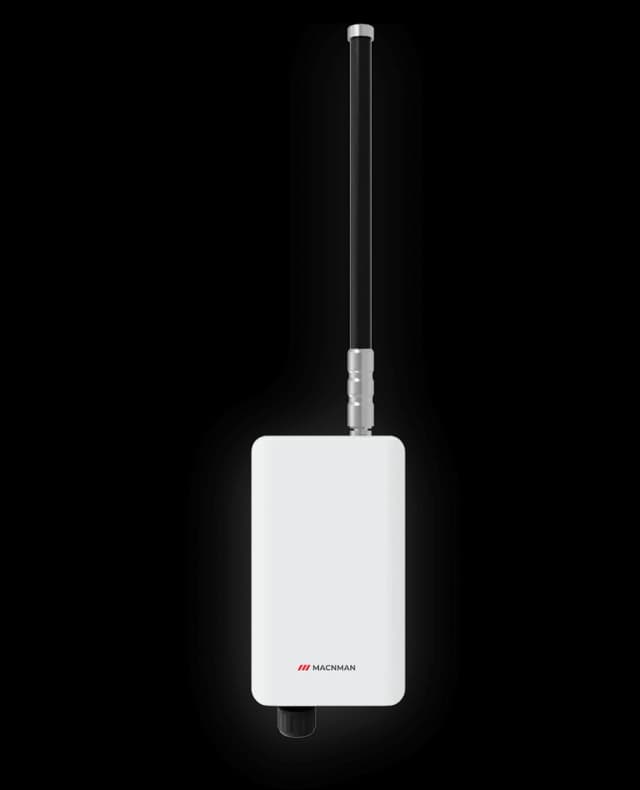
NewMaclink Gen-2
Wi-Fi Outdoor Gateways
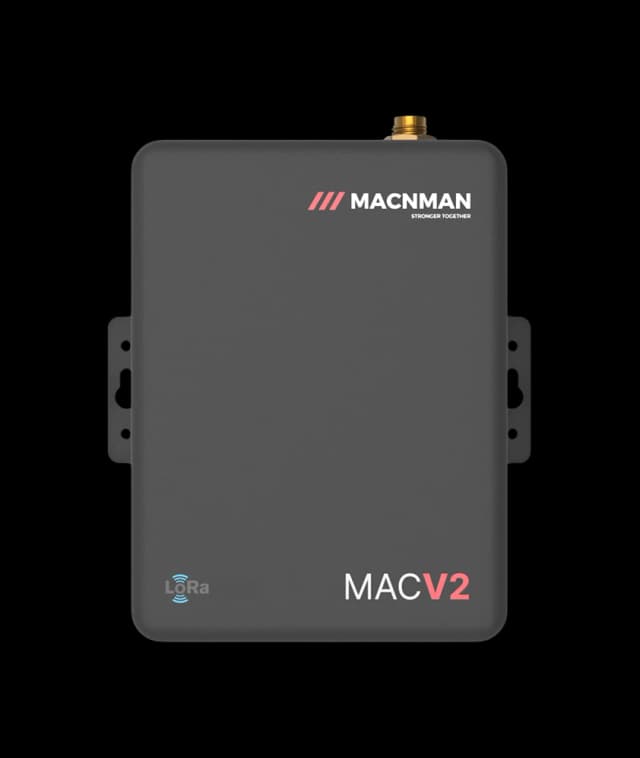
MacEdge 4G Mini Gateway
4G Lte Gateways
 Hot Selling
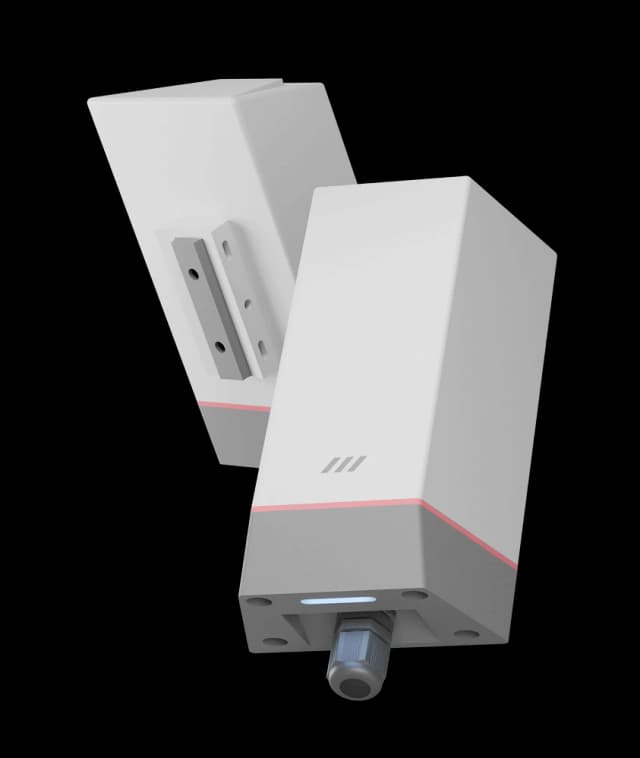
MacSync WX1
RS485 Modbus to Wi-Fi Converter
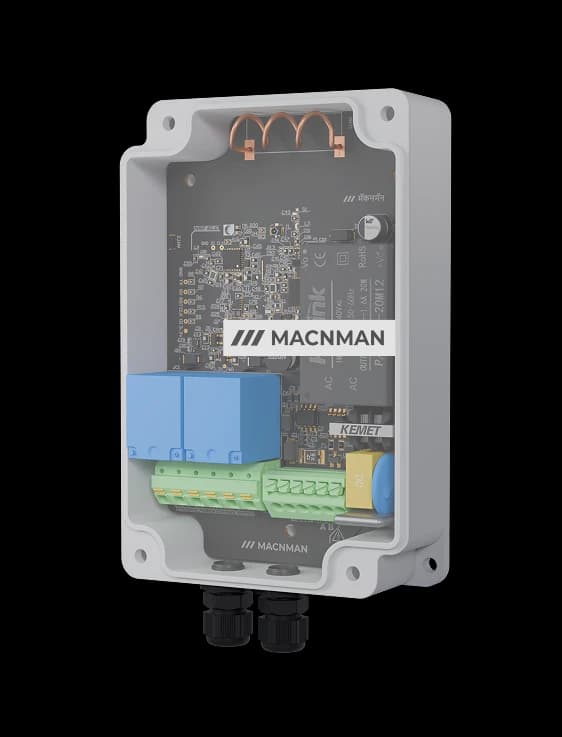 New
NewMacSet
RS485/Analog + Relay Output
 Hot Selling
Setu X
Wi-Fi Indoor Gateways
NewMaclink Gen-2
Wi-Fi Outdoor Gateways
MacEdge 4G Mini Gateway
4G Lte Gateways
Hot SellingMacSync WX1
RS485 Modbus to Wi-Fi Converter
NewMacSet
RS485/Analog + Relay Output
Hot SellingSetu X
Wi-Fi Indoor Gateways
Let‘s make it easy - reach out now!
Let’s bring it to life!
Let‘s Make it Easy
Reach Out Now


We are always ready
to help and
answer your
questions
Call
+91 7972856163
+91 9096830856
Location
Office-15 Bibwewadi, Pune, Maharashtra 411037
Get in Touch
Define your goals and all to value your time
Use of this website and purchase of Macnman products are subject to our Terms and Conditions.