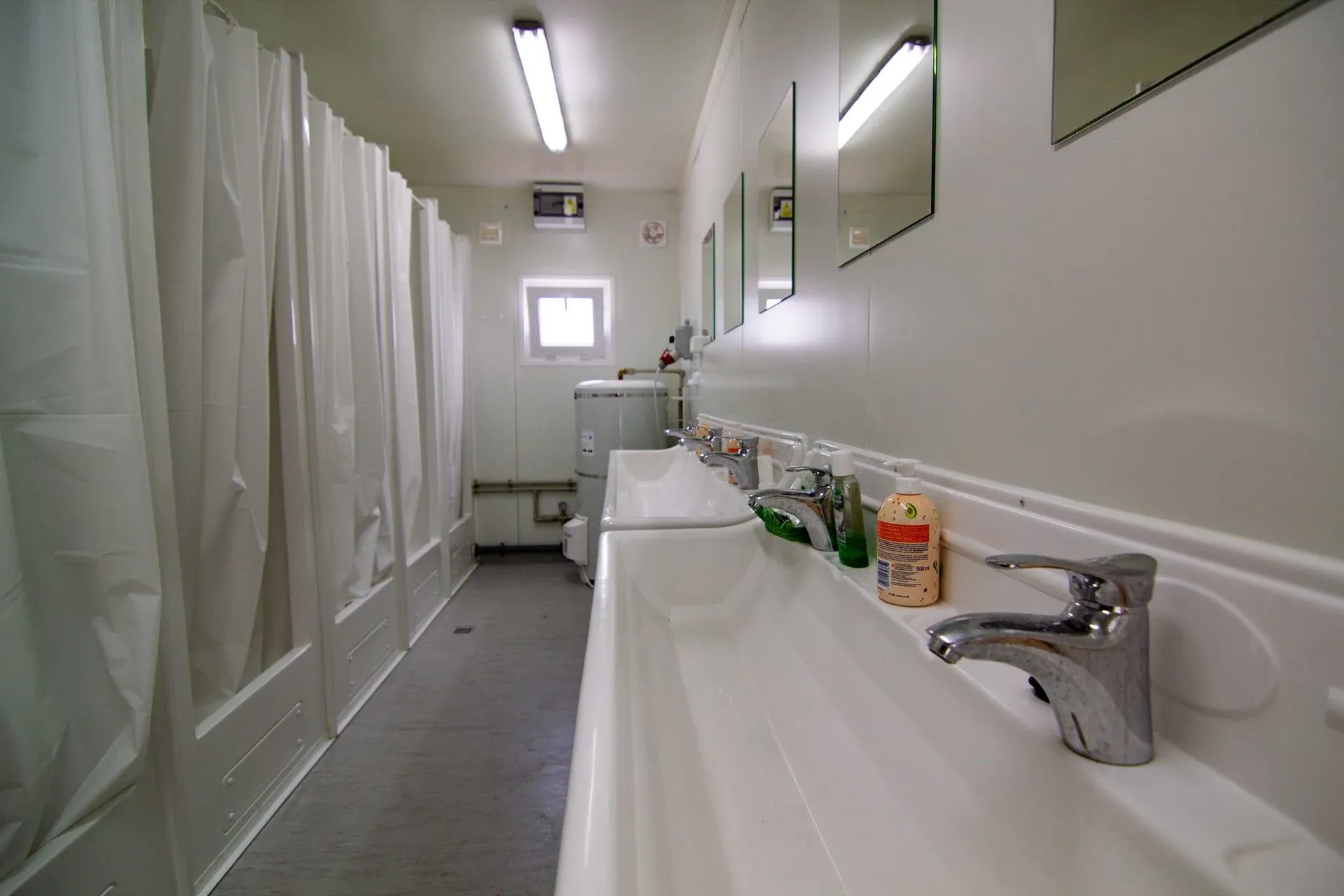
How LoRaWAN Odor Sensors Help Maintain Hygiene in Public Washrooms
A LoRaWAN odor sensor installed in a public washroom continuously measures the concentration of ammonia (NH3) and hydrogen sulfide (H2S) — the two gases responsible for washroom odor — using an electrochemical sensing element. When either gas exceeds a configured threshold, the sensor transmits a real-time alert over LoRaWAN radio to a facility management dashboard, triggering a targeted cleaning notification to the nearest staff member. The same data drives automated ventilation control and replaces fixed-schedule cleaning with condition-based cleaning — sending staff only when and where the data says they are needed, not on a clock.
The result: cleaner washrooms, lower cleaning labour costs, automated ventilation, and a data record that proves hygiene standards are being maintained — across every washroom in a facility, from a single dashboard, without Wi-Fi infrastructure at each location.
Introduction
Walk into a busy public washroom at an airport, a railway station, a shopping mall, or a stadium and the experience tells you immediately whether it has been cleaned recently — not from looking at it, but from smelling it. That smell is measurable. It is caused by specific gases at specific concentrations, and those concentrations can be detected electronically, transmitted wirelessly, and acted upon automatically before any visitor notices a problem.
This is what LoRaWAN odor sensors do. They transform washroom hygiene management from a reactive, schedule-driven operation — clean every two hours, regardless of whether it is needed — into a proactive, data-driven one: clean when the sensor says the air quality has crossed a defined threshold, not when the clock says it is time.
The gap between these two approaches is significant. A fixed-schedule operation services a quiet washroom at 2 AM just as often as a peak-traffic one at noon. A condition-based system directs cleaning resources exactly where and when they are needed, eliminates unnecessary cleaning cycles, and ensures that high-traffic peak periods receive immediate attention — rather than waiting for the next scheduled visit.
This article explains the gas chemistry behind washroom odor, how LoRaWAN sensors detect it electronically, how the data travels from the sensor to the facility management platform, and what the operational improvements look like in practice for airports, malls, railways, hospitals, and public infrastructure.
Why Public Washrooms Are Difficult to Manage at Scale
A single washroom in a small office is easy to manage. A network of 40 washrooms across a major international airport terminal, a 300-stall railway station complex, or a multi-floor shopping mall is a fundamentally different operational problem.
The challenges compound with scale:
Fixed cleaning schedules do not reflect actual usage. A washroom cleaned at 10:00 AM on a quiet Monday may remain acceptable until 12:00 PM. The same washroom after a peak boarding rush at 8:00 AM may need attention by 8:45 AM. A fixed 2-hour schedule misses one and over-serves the other.
Manual inspection cannot cover every location continuously. A facility with 40 washrooms cannot have a staff member physically checking each one every 15 minutes. The result is a gap between the last inspection and the next one — during which conditions can deteriorate without anyone knowing.
Complaints arrive too late. By the time a visitor complains about washroom condition, the experience has already happened. Complaint-driven management is reactive by definition — it responds after the failure, not before it.
Cleaning resources are wasted on unnecessary visits. Studies on condition-based cleaning consistently show that 30–40% of scheduled cleaning visits in low-traffic periods are unnecessary — the washroom is in acceptable condition when the cleaner arrives. [VERIFY against local deployment data] Those resources could be redirected to high-traffic areas that genuinely need attention.
LoRaWAN odor monitoring addresses all four of these problems with a single sensor installation per washroom zone.
What Makes a Washroom Smell Bad: The Gas Chemistry
Before evaluating any odor monitoring technology, understanding what is actually being measured — and why — is essential. The chemistry is specific and it directly determines which gases a sensor must detect.
Ammonia (NH3) — The Urinal Zone Problem
Ammonia is the primary odor gas in urinal and open toilet areas. It does not come from urine directly — fresh urine contains urea, which is odourless. The smell develops when urease-producing bacteria on toilet surfaces break down urea through a hydrolysis reaction:
Urea + Water → 2 Ammonia + Carbon Dioxide
This reaction accelerates with temperature and bacterial load. In a busy public washroom at 28–32°C (typical of Indian summers), bacterial urea hydrolysis can produce detectable ammonia concentrations within 15–20 minutes of the last cleaning.
Ammonia concentration thresholds relevant to washroom monitoring:
| NH3 Concentration (ppm) | Effect |
|---|---|
| 1–5 ppm | Detectable by sensitive individuals; typical threshold for IoT alert |
| 5–10 ppm | Clearly detectable odour; user discomfort begins |
| 25 ppm | Eye and nose irritation for most people |
| 35 ppm | OSHA short-term exposure limit (15 minutes) |
| 50 ppm | OSHA ceiling for occupational exposure |
A well-configured washroom odor sensor alerts facility management at 2–5 ppm NH3 — well before any visitor experiences discomfort and far below any health concern. This is the operational window that makes condition-based cleaning possible: the sensor detects deteriorating air quality early enough that a cleaning response prevents the user experience from being affected at all.
Hydrogen Sulfide (H2S) — The Cubicle Zone Problem
Hydrogen sulfide has a completely different biochemical origin. It is produced by anaerobic bacteria breaking down sulfur-containing amino acids (methionine, cysteine) present in human faecal matter — a process that occurs in the absence of oxygen, in sealed cubicle environments and drain lines.
H2S is chemically distinct from NH3 in two important ways. First, it is detectable at far lower concentrations — the human nose can detect it at 0.01–1.5 ppm, which is why a single improperly flushed toilet or blocked drain creates an immediately perceptible smell. Second, at higher concentrations it is genuinely hazardous:
Hydrogen sulfide concentration thresholds:
| H2S Concentration (ppm) | Effect |
|---|---|
| 0.01–1.5 ppm | Odour threshold — rotten egg smell detectable |
| 2–5 ppm | Moderate unpleasant odour; IoT alert threshold |
| 10 ppm | Eye irritation; headache onset |
| 20 ppm | Strong odour; pulmonary irritation possible |
| 50 ppm | Serious health risk; immediate evacuation required |
A LoRaWAN sensor configured to alert at 0.5–2 ppm H2S detects a problem within minutes of its onset — long before the concentration reaches any level of health concern, and well before a visiting user encounters it.
Why Both Gases Must Be Monitored Simultaneously
NH3 and H2S originate from different biological processes and concentrate in different areas of the same washroom. A urinal bank may show elevated NH3 with no H2S. A cubicle with a faulty flush valve may show elevated H2S with minimal NH3. A sensor that detects only one compound gives an incomplete picture of washroom air quality.
This is why quality LoRaWAN washroom sensors measure both NH3 and H2S simultaneously — along with temperature and humidity, which affect both bacterial activity rates and sensor calibration accuracy.
The Role of Temperature and Humidity
Temperature and humidity are not just comfort parameters in a washroom context — they directly drive the rate of odor-producing bacterial reactions. At 35°C and 80% relative humidity (common in Indian washrooms during summer), the urea hydrolysis reaction producing NH3 proceeds approximately 3–4 times faster than at 20°C and 50% RH. A facility that manages washroom hygiene well in winter may face significantly higher cleaning frequency requirements in summer — a pattern that usage-only scheduling cannot account for but sensor data reveals automatically.
How a LoRaWAN Odor Sensor Works: From Electrochemical Detection to Cloud Alert
The Electrochemical Sensing Principle
The gas detection element in a quality LoRaWAN washroom sensor uses solid polymer electrochemical sensing — a technology that is both highly sensitive and stable over multi-year operating periods without calibration.
The electrochemical cell works on the following principle:
The target gas (NH3 or H2S) diffuses through a gas-permeable membrane into the sensor cell, where it contacts a working electrode immersed in a solid polymer electrolyte. The gas undergoes an electrochemical oxidation or reduction reaction at the electrode surface — not unlike a battery reaction, but in reverse. Instead of consuming electrical energy to drive a chemical reaction, the chemical reaction of the gas at the electrode surface generates a small electrical current.
This current is directly proportional to the concentration of the target gas. The sensor's measurement circuit amplifies and digitises this current, and the firmware converts it to a parts-per-million (ppm) reading.
Key characteristics of electrochemical gas sensing in washroom applications:
- High sensitivity: Detects NH3 down to 0.01 ppm resolution; H2S below 0.01 ppm resolution
- High selectivity: The electrochemical reaction is specific to the target gas — NH3 cells do not respond to H2S and vice versa, eliminating cross-sensitivity false alerts
- No consumables: The solid polymer electrolyte is not consumed during measurement — the sensor regenerates continuously between readings
- Sensor life: Typically 2–3 years for the electrochemical element under continuous operation — after which the sensing element requires replacement, not the entire device
- Temperature/humidity compensation: The measurement circuit applies correction factors based on concurrent temperature and humidity readings to maintain accuracy across the washroom's operating conditions
The Full Data Journey: From Gas Molecule to Dashboard Alert
Stage 1 — Continuous measurement
The sensor samples NH3 and H2S concentrations at the configured interval — typically every 1–10 minutes in washroom applications where rapid response to threshold exceedances matters more than battery life extension. Temperature and humidity are sampled simultaneously.
Stage 2 — Threshold evaluation
The sensor firmware evaluates each reading against the configured alert thresholds (e.g., NH3 > 3 ppm OR H2S > 1 ppm). If either threshold is exceeded, the sensor immediately schedules an uplink rather than waiting for the next routine interval — enabling near-real-time alert response regardless of the normal reporting interval.
Stage 3 — LoRaWAN uplink
The sensor encodes its readings (NH3 ppm, H2S ppm, temperature, humidity, battery voltage, alert status) into a compact binary payload — typically 8–12 bytes — and transmits it over the IN865 LoRaWAN channel (865–867 MHz in India) to the nearest LoRaWAN gateway. The transmission takes 50–500 ms at the configured spreading factor.
Stage 4 — Gateway forwarding
The LoRaWAN gateway — mounted in a corridor, above a ceiling tile, or in the facility's server room — receives the uplink and forwards it over its IP backhaul (Ethernet or cellular) to the LoRaWAN network server. A single gateway covering a large airport terminal or multi-floor mall can serve sensors in every washroom within its radio coverage area.
Stage 5 — Network server and payload decoding
The network server decrypts the payload and applies the configured decoder, producing clean JSON:
Stage 6 — Alert routing and action
The decoded data flows to the facility management platform. The alert routing logic evaluates the status field and triggers:
- An SMS or push notification to the nearest cleaning staff member, identifying the specific washroom and the gas that triggered the alert
- A task creation in the cleaning management system with timestamp, location, and alert type
- An automated command to the ventilation controller (via BMS integration) to increase exhaust fan speed in the affected zone
- A log entry in the compliance record for audit purposes
Total time from threshold exceedance to alert delivery: typically under 60 seconds.
Why LoRaWAN Is the Right Protocol for Washroom Monitoring
Public washrooms present a specific set of wireless infrastructure challenges that most common IoT protocols handle poorly.
| Factor | LoRaWAN | Wi-Fi | Bluetooth / BLE | NB-IoT / Cellular |
|---|---|---|---|---|
| Tiled wall signal penetration | Good (sub-GHz) | Moderate (degrades with distance) | Poor (short range) | Good (licensed spectrum) |
| Battery life | 2–5 years | Hours to days | 6–18 months | 1–3 years |
| Infrastructure per washroom | None — one gateway covers multiple washrooms | Wi-Fi AP required near each location | Hub required per zone | SIM per sensor required |
| SIM / carrier cost | None | None | None | Per-device monthly fee |
| Network congestion in dense buildings | Not affected (sub-GHz, low duty cycle) | Affected (2.4/5 GHz congestion in busy venues) | Affected (crowded BLE environment) | Not affected |
| Sensor count per gateway | Hundreds | Dozens per AP | Dozens per hub | Unlimited (carrier managed) |
| Best for multi-washroom facilities | ✅ Yes — single gateway, many locations | ⚠️ Needs AP per zone | ❌ Range too limited | ⚠️ SIM costs scale with device count |
The decisive advantage of LoRaWAN in a multi-washroom facility is the single-gateway coverage model. A shopping mall with 20 washrooms spread across 6 floors does not need 20 separate wireless access points — one LoRaWAN gateway in the building's telecommunications room covers every sensor simultaneously. In a Wi-Fi deployment, each washroom zone requires a nearby AP; in a cellular deployment, each sensor requires its own SIM and monthly data plan.
For large public infrastructure operators — airports, railway terminals, stadium complexes — where washroom count runs into the dozens, the infrastructure and operating cost difference between LoRaWAN and alternatives is substantial.
Operational Benefit 1: Condition-Based Cleaning Replaces Fixed Schedules
This is the most commercially significant operational change that washroom odor monitoring enables — and the one that generates the clearest, most measurable return on investment.
How fixed-schedule cleaning works today:
A facility manager defines a cleaning interval — every 90 minutes, every 2 hours, every 3 hours — based on expected traffic and experience. Cleaning staff visit every washroom on that schedule, log the visit on a paper or digital checklist, and move to the next location. The system is predictable and auditable, but it is fundamentally disconnected from actual washroom conditions.
What condition-based cleaning looks like:
Every washroom has a sensor. The sensor reports NH3, H2S, temperature, and humidity continuously. The facility management platform evaluates each reading against configured thresholds. When a threshold is crossed — or when a composite hygiene score calculated from multiple parameters falls below the minimum — a cleaning alert is generated for that specific washroom and routed to the nearest available staff member via SMS or app notification.
Staff respond to conditions, not clocks. A quiet washroom on a lower traffic floor may go 4 hours between cleaning visits with NH3 consistently below 2 ppm. A high-traffic arrival hall washroom may trigger three alerts in 90 minutes during a peak landing period. Both are served correctly — neither is over-serviced nor under-serviced.
The cost impact:
Condition-based cleaning typically reduces total cleaning visits by 25–35% compared to fixed-schedule management in mixed-traffic facilities, while simultaneously reducing the average time between a hygiene threshold breach and a cleaning response. [VERIFY — flag for Macnman to confirm against deployment data] Fewer total visits with better targeting means lower labour cost and higher hygiene reliability simultaneously.
The data trail:
Every cleaning visit triggered by an alert is automatically logged: alert time, response time, staff member, and the post-cleaning gas concentration confirming the issue was resolved. This creates an auditable hygiene record that paper-based or manual-digital systems cannot match.
Operational Benefit 2: Automated Ventilation Control
Odor accumulation in a washroom is not only a cleaning problem — it is also a ventilation problem. Exhaust fans running on fixed timer schedules extract air at a constant rate regardless of whether the air needs extracting. An empty washroom runs its fans continuously; a crowded one may be ventilating at the same rate.
A LoRaWAN odor sensor integrated with the building's ventilation or BMS system changes this:
- When NH3 or H2S rises above the first threshold (mild alert), fan speed increases by 50% to flush the zone
- When concentration rises above the second threshold (high alert), fans run at maximum capacity and a cleaning alert is simultaneously issued
- When concentration returns below the baseline threshold after ventilation or cleaning, fans return to normal speed
This demand-controlled ventilation approach reduces exhaust fan energy consumption by eliminating unnecessary high-speed operation during low-occupancy periods, while ensuring peak ventilation when it is genuinely needed.
The integration mechanism depends on the building's existing infrastructure. Most modern BMS systems support MQTT or Modbus TCP input from external IoT platforms — the LoRaWAN network server forwards the sensor data to the BMS, which handles the fan speed command. In facilities without a BMS, a LoRaWAN-controlled relay output can directly switch fan speed circuits.
Operational Benefit 3: Multi-Washroom Visibility From a Single Dashboard
A facility with 40 washrooms managed by a single operations team needs a single view of all 40 simultaneously — not 40 separate logins or 40 separate monitoring screens. LoRaWAN monitoring delivers this through the network server's integration with a centralised dashboard platform.
The operations dashboard shows:
- Live status per washroom: Green (below threshold), Amber (approaching threshold), Red (threshold exceeded, cleaning dispatched)
- Historical gas concentration trends: By washroom, by time of day, by day of week — revealing the usage patterns that drive cleaning schedule optimisation
- Cleaning response times: Time from alert to staff arrival, time from staff arrival to post-cleaning confirmation, average response time by staff member
- Cumulative compliance records: Total hours each washroom spent above threshold, available for regulatory audit or contractual service level reporting
- Consumable status integration: Where combined with supply level sensors (toilet paper, soap, hand sanitiser), the dashboard shows hygiene gas status alongside consumable status for a complete washroom health picture
In a large airport or railway terminal, this dashboard can be accessed by the operations supervisor on a desktop, by cleaning staff on mobile devices, and by the facility management company's central reporting system simultaneously — with role-based access determining what each user sees and can act on.
Operational Benefit 4: Public Perception and User Experience
The direct operational benefits — cleaning cost, ventilation efficiency, compliance records — are measurable and immediate. The indirect benefit is harder to quantify but strategically significant: washroom condition affects overall facility perception more than almost any other single factor.
Research consistently shows that washroom cleanliness is among the top three factors affecting customer satisfaction scores in airports, shopping malls, and food service venues. [VERIFY — mark for supporting citation if available] A visitor who encounters a clean, odour-free washroom experiences the facility positively without consciously attributing it to washroom management. A visitor who encounters an unpleasant washroom remembers and reports it — in feedback surveys, in online reviews, and in word-of-mouth conversations.
For airport operators under DGCA quality audits, for mall operators competing on footfall and dwell time, and for railway station managers under public accountability for Swachh Bharat targets, washroom hygiene performance is a visible, reportable metric. LoRaWAN monitoring converts that metric from subjective (complaint-driven) to objective (data-driven) — with timestamped records showing exactly when each washroom was in what condition, and what response it received.
Where LoRaWAN Washroom Monitoring Delivers Most Value
Airports and Aviation Terminals
High footfall, 24-hour operation, international visitors with high hygiene expectations, and regulatory oversight from DGCA and airport authority quality frameworks make airports the highest-value deployment environment for smart washroom monitoring. A LoRaWAN-based smart washroom solution has already been deployed at one of India's busiest international airports, using sensor networks to provide real-time occupancy, hygiene, and consumable monitoring across terminal washrooms — enabling data-driven cleaning dispatch and real-time operations visibility for the airport's facility management team.
The LoRaWAN gateway infrastructure required for washroom monitoring in a terminal also supports other building IoT applications — energy monitoring, asset tracking, people counting — making the gateway investment multi-purpose.
Railway Stations and Metro Systems
Indian Railways manages thousands of station washrooms across a national network — many in locations with unreliable internet connectivity, limited maintenance budgets, and extreme seasonal traffic variation (festival periods can produce 5–10x normal footfall at major junction stations). LoRaWAN's sub-GHz penetration works in tiled, enclosed washroom spaces without requiring Wi-Fi AP installation in each room; its battery-powered sensors eliminate power infrastructure requirements at remote sensor locations; and its low-cost-per-sensor economics make deployment across large station networks financially viable.
Shopping Malls and Commercial Complexes
Mall operators compete on experience. A washroom that is consistently clean — not just cleaned at 10:00 AM and checked again at noon, but monitored continuously and serviced within minutes of any air quality threshold being crossed — is a measurable differentiator in a competitive retail environment. Condition-based cleaning also manages the variable traffic profile of a mall — quiet weekday mornings, crowded weekend afternoons, peak holiday periods — without requiring manual schedule adjustments.
Hospitals and Healthcare Facilities
Hospital washroom hygiene has direct infection control implications beyond user comfort. Elevated NH3 in a clinical environment indicates bacterial contamination that may extend beyond the washroom itself. H2S in a hospital setting may indicate drain line issues that carry pathogen transmission risk. Continuous monitoring with low alert thresholds (below the levels that would be acceptable in a public commercial washroom) and integration with the hospital's infection control management system addresses these requirements.
Stadiums, Event Venues, and Multiplexes
Sporting events and concerts concentrate large numbers of washroom users into short time windows. A cricket stadium washroom that handles 200 visitors in a morning may handle 2,000 in the same space during a match interval. Fixed cleaning schedules calibrated for normal conditions are systematically inadequate during events. Condition-based monitoring with alert thresholds that adapt to event periods — or that simply respond to actual gas concentration regardless of time — handles peak load automatically without manual schedule changes.
Corporate Campuses and Office Buildings
Workplace washroom standards have risen significantly post-pandemic. Corporate tenants in premium office developments expect consistently maintained washrooms as part of their lease value. LoRaWAN monitoring enables the facility management company to demonstrate hygiene performance with data — response times, threshold exceedance frequency, cleaning completion confirmation — supporting premium service-level contracts and reducing the liability of complaint-driven management.
Sensor Placement and Installation Considerations
Where to Mount the Sensor
NH3 is lighter than air — it rises and concentrates at ceiling level. H2S is heavier than air — it settles near floor level. A sensor mounted at ceiling height (2–2.6 m) captures NH3 more accurately; a floor-level sensor captures H2S more accurately.
Most commercial LoRaWAN washroom sensors are designed for ceiling mounting as a practical compromise — ceiling installation keeps the sensor out of reach of tampering, positions it above the head height that causes user discomfort, and places it in the air circulation path of the exhaust fan. At 2–2.6 m ceiling height with the sensor's gas diffusion inlet facing downward, both NH3 and H2S reach the sensing element through natural air movement, with acceptable sensitivity for both compounds.
For cubicle-heavy washroom layouts where H2S monitoring is the priority, consider a sensor mounted at 1.2–1.5 m height on the cubicle partition wall, facing the toilet area. This positions the sensor closer to the primary H2S generation point.
How Many Sensors Per Washroom
The minimum for a meaningful hygiene monitoring deployment is one sensor per washroom zone — not per toilet stall. A washroom with 8 stalls and 4 urinals is one zone and requires one sensor correctly positioned to capture the air quality of the entire space.
Larger washrooms (above 50 m² floor area) or washrooms with separate urinal bays and cubicle areas benefit from two sensors — one in the urinal area (primarily NH3 monitoring) and one in the cubicle area (primarily H2S monitoring). This enables zone-specific cleaning dispatch — "urinal bay in washroom 3B needs attention" rather than "washroom 3B needs attention."
Gateway Coverage for Washroom Networks
A single LoRaWAN gateway can cover all washrooms in a typical multi-floor commercial building — 200–500 m indoor range through concrete and tile, depending on floor construction. For large airport terminals or railway station complexes where washrooms are spread across hundreds of metres, two or three strategically placed gateways provide complete coverage with redundancy.
Gateway mounting inside washrooms themselves is not recommended — the humid environment and risk of tampering make corridor or utility room mounting the correct approach, with the sub-GHz signal penetrating the washroom walls reliably.
Limitations: What LoRaWAN Odor Monitoring Cannot Do
It does not visually inspect the washroom. Gas concentration above threshold reliably indicates a hygiene condition requiring attention — but it cannot distinguish between a wet floor, an overflowing bin, a broken soap dispenser, and an odour problem. The cleaning staff response to an alert must include a full washroom inspection, not just targeted odour remediation.
It does not replace occupancy monitoring for peak management. Gas concentration rises after use — it lags the usage event by several minutes. For real-time queue management and occupancy display (showing which stalls are occupied), a separate PIR or time-of-flight occupancy sensor is required. Odor monitoring and occupancy monitoring are complementary, not interchangeable.
Electrochemical sensors require periodic replacement. The sensing element has a defined operational life — typically 2–3 years for NH3 and H2S electrochemical cells under continuous operation. After this period, the element must be replaced to maintain measurement accuracy. Most quality sensors flag this via the battery/status telemetry before the element drifts significantly.
High humidity affects measurement accuracy. At humidity above 90% RH — which can occur briefly during wet cleaning or in washrooms without adequate ventilation — electrochemical sensors may show transient reading anomalies. Quality sensors apply humidity compensation to the measurement, but saturated conditions (condensation forming on the sensor inlet) can temporarily disrupt readings. Position sensors away from direct splash zones and ceiling areas above shower or floor washing points.
LoRaWAN cannot carry high-frequency data. Washroom monitoring requires readings every 1–10 minutes — well within LoRaWAN's capability. It is not suitable for applications requiring sub-minute continuous gas concentration streams. For industrial gas safety applications requiring continuous high-frequency monitoring, wired or cellular protocols are more appropriate.
How MACNMAN Supports Smart Washroom Deployments
MACNMAN Technologies develops LoRaWAN hardware and infrastructure for Indian industrial and commercial IoT deployments, including the gateway and network infrastructure that underpins smart washroom monitoring systems.
For washroom hygiene monitoring projects, the relevant MACNMAN portfolio includes:
LoRaWAN Gateways [Internal Link: MACNMAN LoRaWAN Gateway] for facility-wide coverage — a single gateway covering all washrooms in a typical commercial building, configured for the IN865 frequency plan applicable to Indian deployments.
LoRaWAN Sensors [Internal Link: MACNMAN IoT Sensors] — for NH3/H2S air quality monitoring, temperature and humidity sensing, and complementary occupancy monitoring where required.
Network Infrastructure and Integration Support — The Things Stack network server configuration, payload decoder setup, MQTT integration with facility management platforms, and BMS integration for automated ventilation control.
MACNMAN does not manufacture the electrochemical NH3/H2S sensing elements — these are produced by specialist sensor manufacturers. MACNMAN's value in a smart washroom project is the LoRaWAN network infrastructure that connects the sensors to the platform, and the integration expertise to connect that data to cleaning management workflows, ventilation controllers, and compliance reporting systems.
Conclusion
The problem with public washroom hygiene management has never been a shortage of cleaning staff or a lack of standards. It has been the absence of real-time information about what is actually happening in every washroom, continuously, between manual inspections.
LoRaWAN odor sensors solve that information gap. They measure the two gases that cause washroom odour — ammonia from urea decomposition, hydrogen sulfide from anaerobic bacterial activity — at concentrations that allow intervention before any user experience is affected. They transmit that data wirelessly over sub-GHz radio that penetrates tiled walls and concrete floors without Wi-Fi infrastructure at each sensor location. And they deliver it to a facility management platform that turns raw ppm readings into cleaning alerts, ventilation commands, compliance records, and trend analysis.
The operational outcome is not just cleaner washrooms. It is a washroom management system that is provably working — with timestamps, gas concentration records, cleaning response times, and post-cleaning confirmation data — across every washroom in the facility, visible on a single screen.
For airport operators, mall managers, railway authorities, hospital facility teams, and smart city programme managers, this shift from schedule-driven to data-driven washroom management is both technically straightforward and operationally significant. The hardware is simple. The data is immediate. The improvement is measurable.
Frequently Asked Questions
Q: How does a LoRaWAN odor sensor detect smell in a washroom?
It does not detect smell directly — it measures the concentration of the specific gases that cause washroom odour: ammonia (NH3) and hydrogen sulfide (H2S). The sensor uses an electrochemical cell for each gas — a solid polymer electrolyte in which the target gas undergoes a chemical reaction at the working electrode, generating an electrical current proportional to the gas concentration. This current is measured, digitised, and transmitted as a ppm reading over LoRaWAN radio to the facility management platform. The result is a precise, quantified measurement of air quality rather than a subjective odour assessment.
Q: What concentration of ammonia or hydrogen sulfide triggers a cleaning alert?
Alert thresholds are configurable and should be set based on the facility's hygiene standards and the sensitivity of the user population. Typical washroom monitoring thresholds are 2–5 ppm for NH3 (well below the 25 ppm level where users experience eye irritation) and 0.5–2 ppm for H2S (above the 0.01 ppm detection threshold but far below the 10 ppm health concern level). These thresholds allow cleaning intervention before any visitor detects a problem — which is the operational objective of predictive hygiene management.
Q: Why use LoRaWAN instead of Wi-Fi for washroom sensors?
Three practical reasons. First, range: a single LoRaWAN gateway covers all washrooms in a multi-floor building, while Wi-Fi would require an access point near each washroom zone. Second, battery life: LoRaWAN sensors run for 2–5 years on battery; Wi-Fi sensors typically need recharging or wired power. Third, infrastructure cost: LoRaWAN requires no SIM card, no monthly carrier fees, and no new AP installation — reducing both capital and operating cost for a multi-washroom deployment. Sub-GHz LoRaWAN signals also penetrate tiled walls and concrete floors more reliably than 2.4 GHz Wi-Fi in enclosed washroom environments.
Q: Can the odor sensor automate the exhaust fan in the washroom?
Yes, through BMS integration. The LoRaWAN network server forwards decoded sensor data (NH3 ppm, H2S ppm) to the building management system via MQTT or Modbus TCP. The BMS evaluates the incoming data against configured fan control rules — for example, increase exhaust fan speed to maximum when NH3 exceeds 3 ppm — and issues the control command to the ventilation hardware. In facilities without a BMS, a LoRaWAN-controlled relay module can directly switch fan speed circuits based on sensor data from the network server.
Q: How many LoRaWAN washroom sensors does a facility need?
One sensor per washroom zone is the minimum — for a standard washroom with both urinal and cubicle areas, one ceiling-mounted sensor provides adequate air quality coverage. Large washrooms above 50 m², or washrooms with separated urinal bays and cubicle areas, benefit from two sensors for zone-specific monitoring. A facility with 20 washrooms needs approximately 20–40 sensors and one LoRaWAN gateway covering the entire building. The gateway cost is shared across all sensors, keeping per-washroom monitoring costs low at scale.
Q: How long does the battery last in a washroom odor sensor?
Typically 2–3 years at a 10-minute reporting interval, using quality AA or Li-SOCl₂ batteries. Battery life varies with reporting frequency — a 5-minute interval shortens life proportionally compared to 15-minute intervals. The electrochemical sensing element draws slightly more power than a standard temperature sensor due to the continuous biasing of the working electrode, which is why washroom sensor battery life is somewhat shorter than a typical LoRaWAN temperature sensor. Most sensors report battery voltage in every uplink, enabling proactive replacement scheduling before battery exhaustion.
Q: Is this technology relevant to India's Swachh Bharat Mission?
Yes. The Swachh Bharat Mission and the Smart Cities Mission have both identified public toilet hygiene monitoring as a priority area for technology deployment. LoRaWAN-based odor and hygiene monitoring aligns directly with these programmes' objectives: data-driven proof of washroom hygiene maintenance, reduction in manual inspection overhead, and scalable deployment across large public infrastructure networks. The IN865 frequency plan (865–867 MHz) governs LoRaWAN operation in India and is supported by all compliant LoRaWAN hardware, making deployment in Indian smart city and public infrastructure projects technically straightforward and regulatory-compliant.
Q: What is the difference between an odor sensor and an air quality sensor for washrooms?
The terms are sometimes used interchangeably, but they measure different things. An odor sensor for washrooms specifically targets NH3 and H2S — the two compounds responsible for washroom smell — using electrochemical sensing cells optimised for these gases. A general air quality sensor measures a broader set of parameters: CO2, TVOC (total volatile organic compounds), PM2.5, temperature, and humidity, but may not have the NH3 and H2S sensitivity required for washroom-specific hygiene monitoring. For washroom applications, a sensor with dedicated NH3 and H2S electrochemical cells — rather than a generic TVOC sensor — provides the most actionable hygiene data.


