LoRaWAN® Geomagnetic Parking Sensor
for On-Street Bays, Malls, Housing Societies, Basements and EV Charging
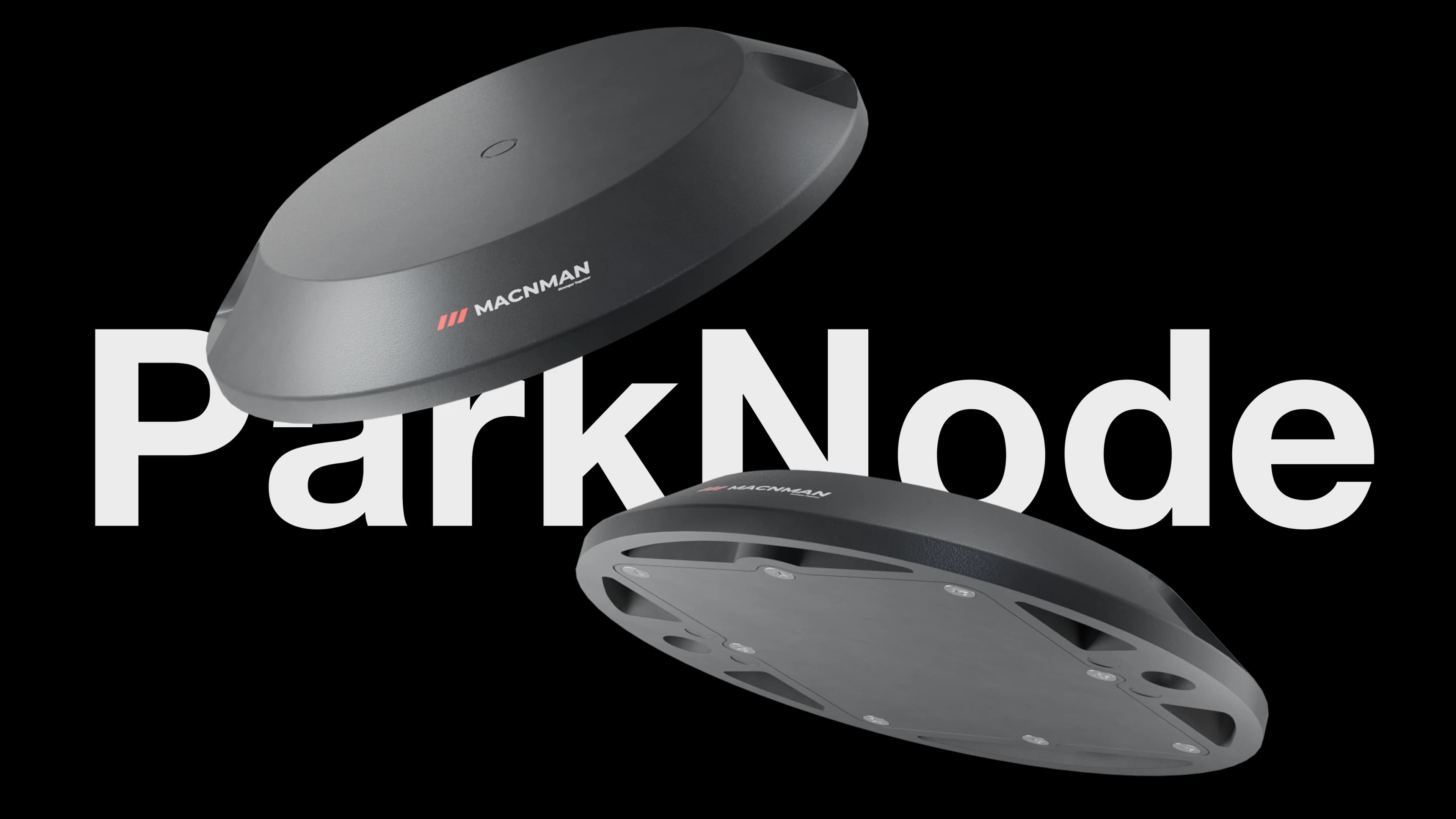
The ParkNode Gen-1 reports each arrival and departure in a parking bay over LoRaWAN®, with no wiring, no trenching and years on one battery
Made in Pune, India · WPC compliant · IN865 ready
Made in Pune, India ·
WPC compliant · IN865 ready
ParkNode Gen-1
ParkNode Gen-1 Highlights
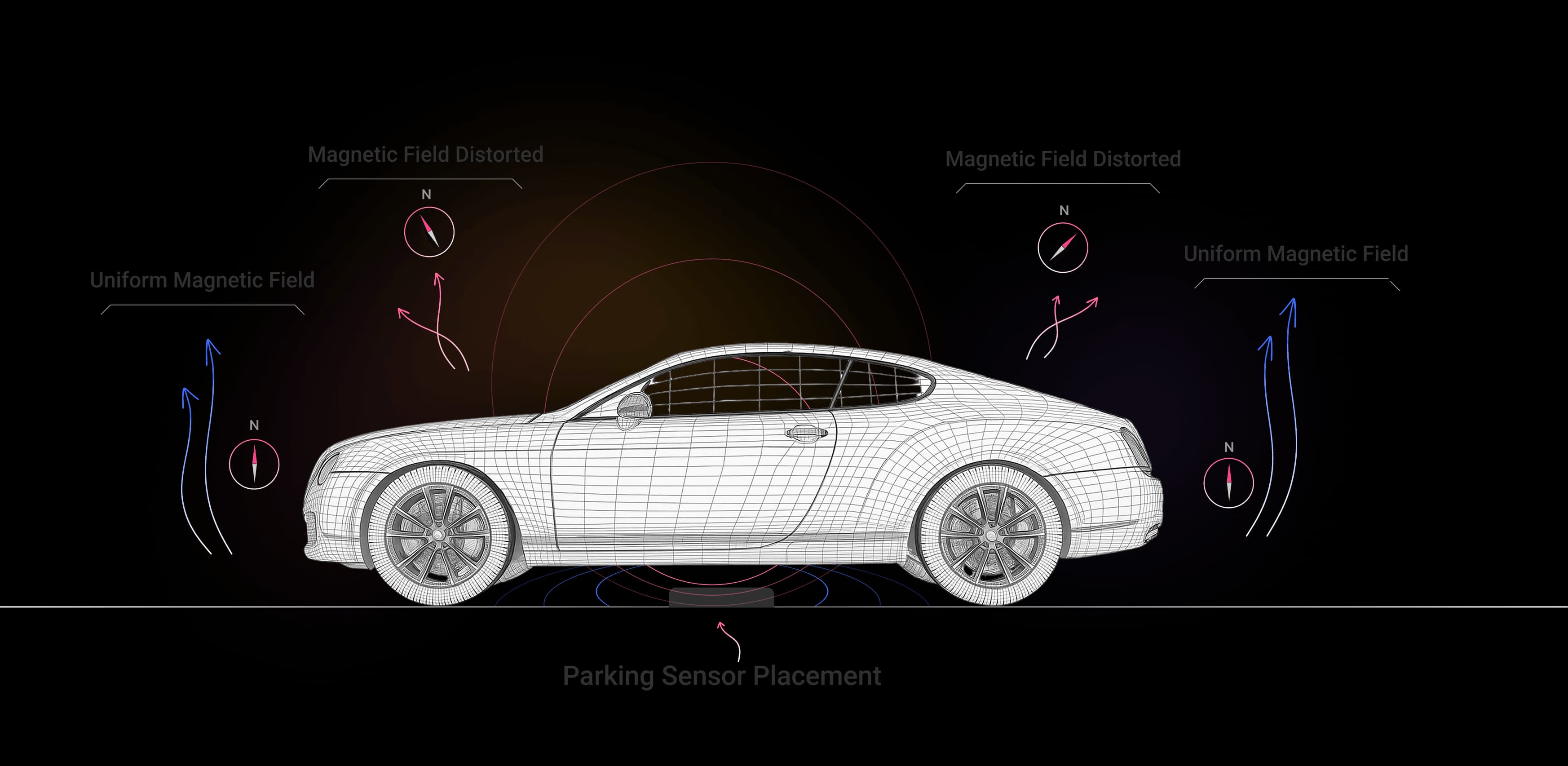
A vehicle's steel distorts the earth's magnetic field above the bay. The 3-axis magnetometer reads that change across a ±200 to ±1000 µT range, so there is nothing to aim, nothing to light and nothing to keep clean.
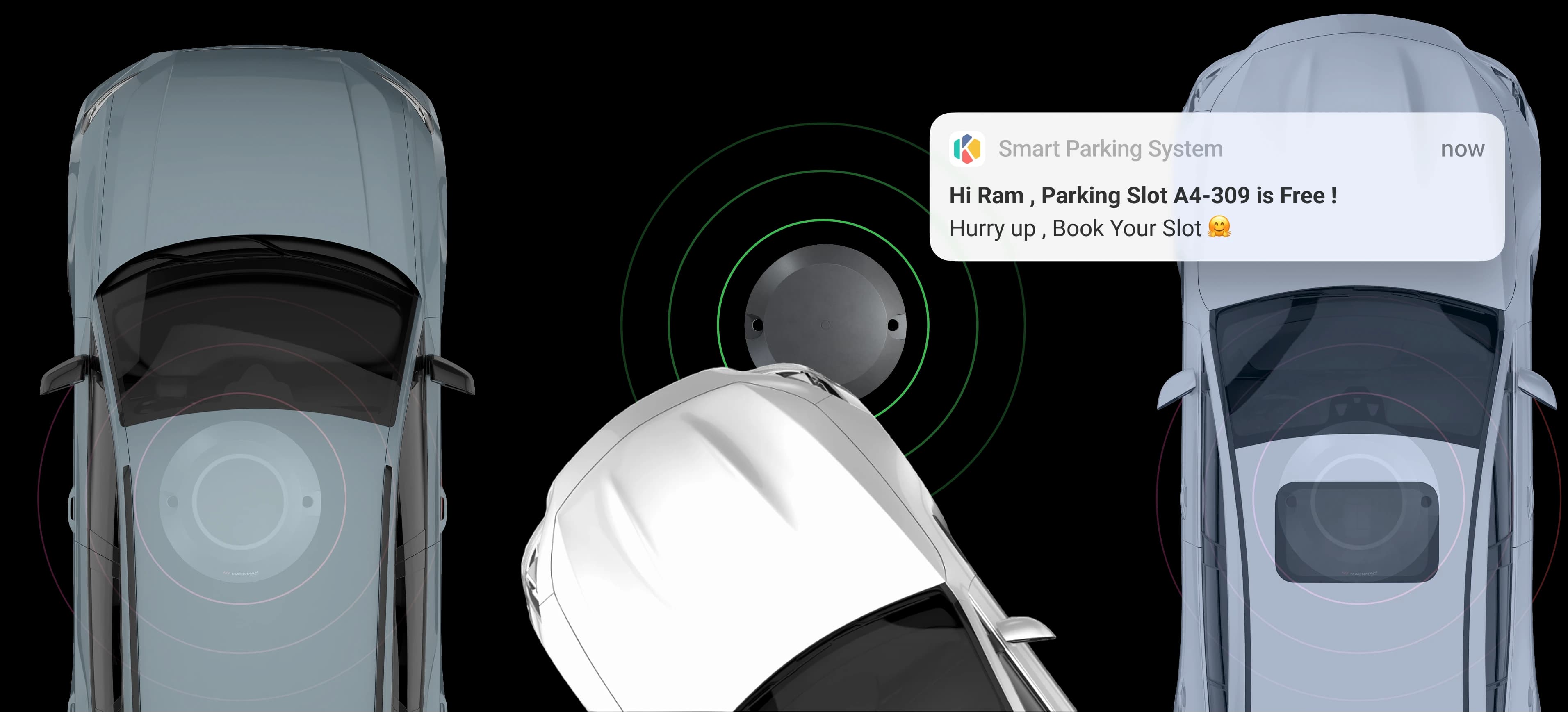
Arrival and departure are each reported as they happen, so the count on the dashboard is the count on the ground. A periodic heartbeat between events shows the sensor is alive.
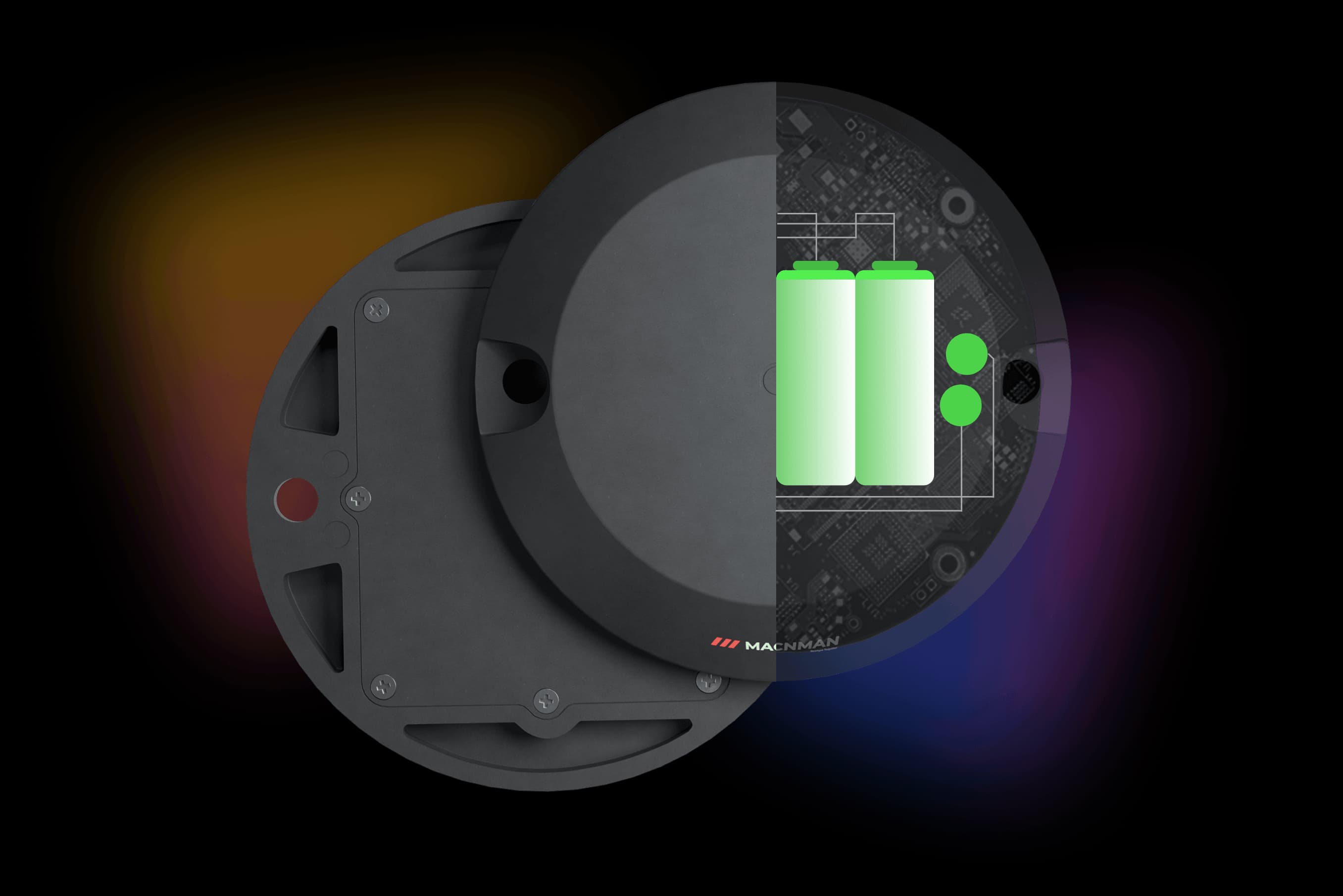
The X1 variant with its 19 Ah cell is rated up to 10 years and the X2 with 8 Ah up to 5 years; the datasheet estimates about 7 years at 50 parking events a day and 3.5 years at 100. Nothing to charge, nothing to wire.
Bicycles, carts and pedestrians are filtered out, the baseline recalibrates itself against drift, and motors, HVAC plant and power lines nearby are rejected as noise. Sequential arrivals in a busy bay are handled by the algorithm.
Each event is a short LoRaWAN® uplink, so hundreds of bays report to one gateway on a lamp post or a roof. Basements take an indoor gateway per level.
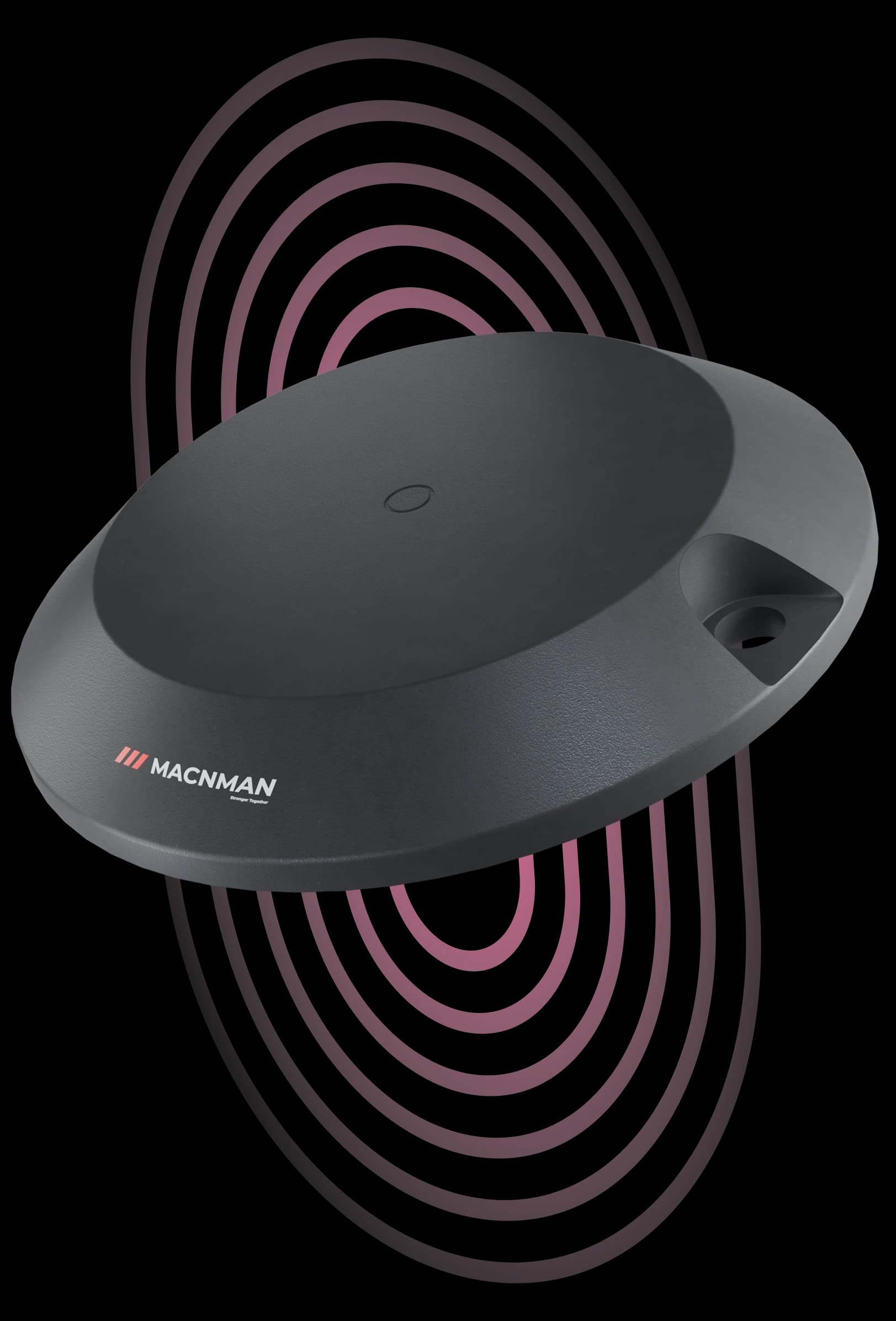
A 202 mm glass-filled nylon disc, 33 mm high, sealed to IP68 and rated from −40 to +80 °C. Cars park on it, sweepers pass over it, and the monsoon runs off it.
Fixed to asphalt or concrete with fasteners and a rubber base sheet, or set into a recess so the top sits level with the surface. No trench, no cable, no power at the bay.
Tilt and tamper detection report displacement, lifting and unauthorised handling, so a sensor that has been prised up or moved is flagged on the dashboard rather than silently reporting a free bay.
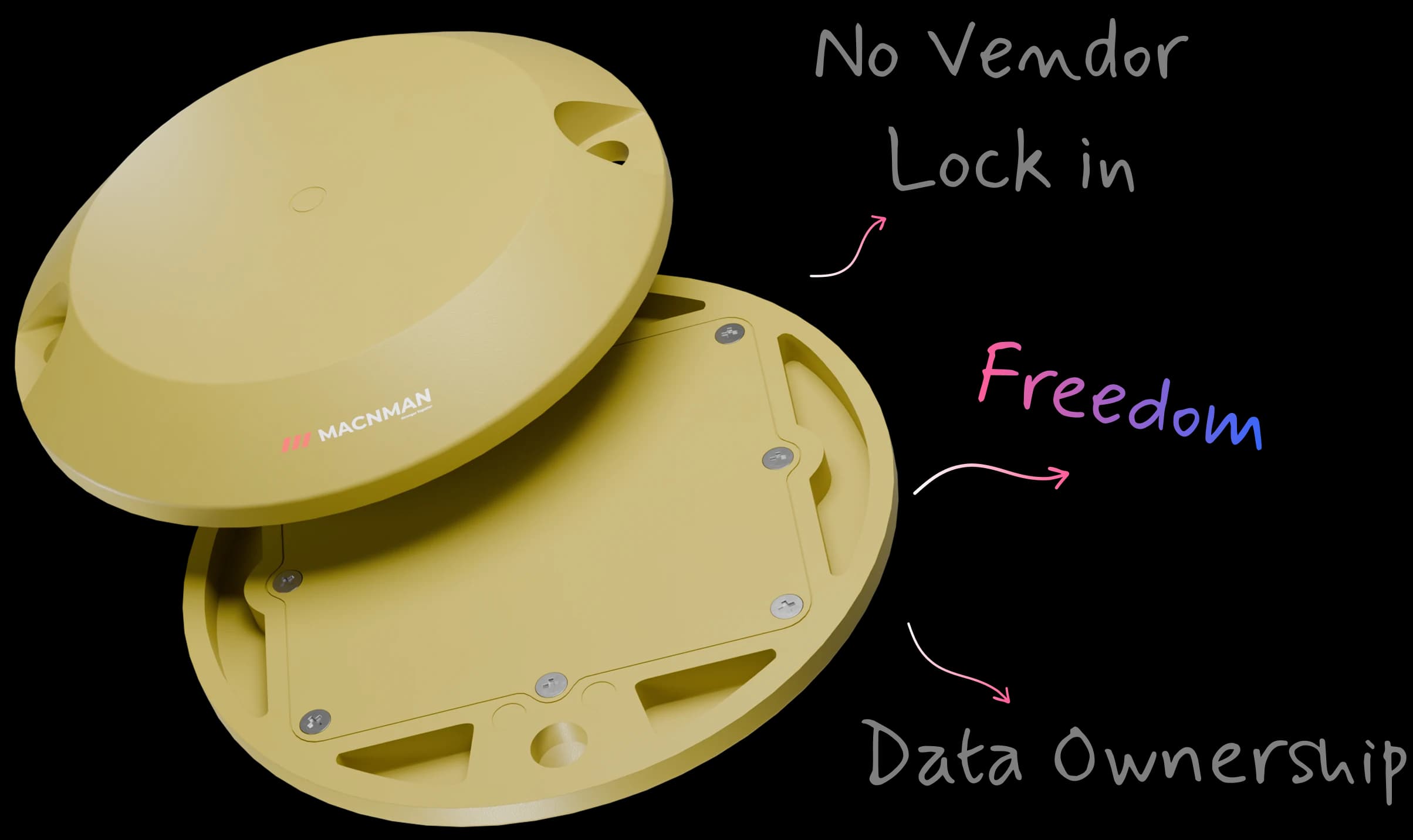
Each sensor ships factory configured with its LoRaWAN® keys. Register it on the network server, fix it in the bay, and later changes such as the heartbeat interval arrive as downlink commands.
In plain terms
What Is a LoRaWAN Parking Sensor?
The short answer
A LoRaWAN parking sensor is a battery-powered device fixed to the surface of a parking bay that detects whether a vehicle is standing over it and reports each arrival and departure over a LoRaWAN® network. A geomagnetic sensor does this by reading the change a vehicle's metal body makes in the earth's magnetic field, so it needs no camera, no wiring and no trenching.
Detection
- 3-axis
Geomagnetic field sensing
- <10 s
Detection latency, arrival and departure
- ±1000 µT
Top of the magnetic dynamic range
Filtering
- Auto
Baseline calibration and drift compensation
- EMI
Resistant to motors, HVAC and power lines
- Tamper
Alerts on displacement or tilt
Reporting
- Event-based
Arrival and departure sent as they happen
- Heartbeat
Periodic message between events
- OTA
Configuration by downlink commands
Radio
- OTAA
LoRaWAN® join, keys set at the factory
- AES-128
LoRaWAN® encryption
- IN865
Band for India, WPC compliant
Enclosure
- IP68
Ingress protection
- Surface / flush
Mounted on asphalt or concrete
- 202 × 33 mm
Device dimensions
Battery
- Li-SOCl₂
Integrated lithium battery
- Up to 10 yr
Battery life on the X1 variant
- Up to 5 yr
Battery life on the X2 variant


ParkNode Gen-1
The ParkNode Gen-1 uses 3-axis geomagnetic sensing with automatic baseline calibration, reports each arrival and departure within 7 to 10 seconds, and filters out bicycles, carts, pedestrians and magnetic noise from motors and power lines. It is sealed to IP68 for the road surface and runs for years on an internal battery.
3-axis geomagnetic field sensing over a ±200 to ±1000 µT dynamic range, reporting arrival and departure in under 10 seconds.
Automatic baseline calibration and drift compensation, with filtering of bicycles, carts, pedestrians and electrical noise.
Event-based: each arrival and departure is sent as it happens, with a periodic heartbeat message in between.
LoRaWAN® with OTAA join and AES-128 encryption; each event is a short uplink, with a periodic heartbeat between events.
IP68 glass-filled nylon, surface or flush mounted on asphalt or concrete, 202 mm across and 33 mm high, about 290 g.
An integrated Li-SOCl₂ battery: the X1 variant (19 Ah) is rated up to 10 years and the X2 (8 Ah) up to 5 years; life falls with the number of movements a bay sees each day.
The same device is searched for as a smart parking sensor, a parking occupancy sensor, a vehicle detection sensor or an in-ground parking sensor. It is not a reverse-parking sensor for a car, a camera, or an overhead ultrasonic bay indicator; it is a bay-occupancy sensor that reports to a LoRaWAN® gateway.
Get a quote
Need a quote for the ParkNode Gen-1?
Tell us how many you need and where they are going. A product engineer replies within one working day with availability, lead time and the right variant for your site.
- Reply within one working day
- Designed and built in Pune, India
- WPC compliant, RoHS conformant
In focus
What Sets the ParkNode Gen-1 Apart for Bay Occupancy
One sensor per bay, one uplink per change. A guidance display, an enforcement app or a society's gate system sees a bay go from free to taken within seconds, without a patrol, a camera or a loop cut into the road.
01 / 05
Works with
Above 98 % Detection Accuracy with 3-Axis Geomagnetic Vehicle Sensing
Arrival and departure reported within 7 to 10 seconds, bay by bayArrival and departure reported within 7 to 10 seconds, bay by bay
Where ParkNode fits
On-Street Bays, Malls and Societies: Where the Smart Parking Sensor Is Installed
On-street and kerbside bays
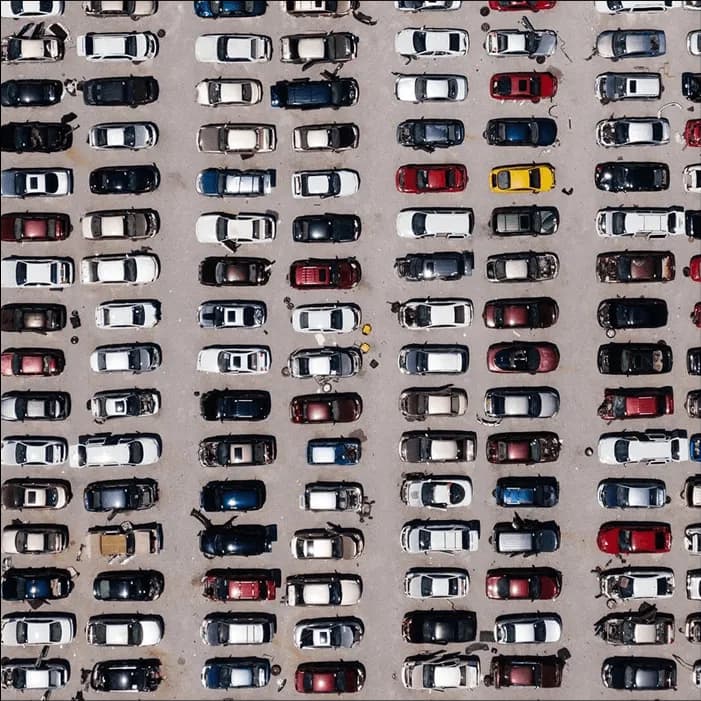
A sensor fixed in each marked bay reports occupancy to the city's parking platform for guidance, enforcement and time-limit checks, in rain, dust and direct sun, with no trench and no cable.
Malls, offices and commercial lots
Visitors are guided to free bays by displays and the mall app fed from the bay sensors; one gateway on the roof covers the open lot and the reserved bays by the entrance.

Societies, basements and EV bays
Allotted bays in a housing society, basement levels with an indoor gateway per floor, and EV charging bays where an overstay or a non-EV blocking the charger is reported the moment it happens.

On-street and kerbside bays
A sensor fixed in each marked bay reports occupancy to the city's parking platform for guidance, enforcement and time-limit checks, in rain, dust and direct sun, with no trench and no cable.
Malls, offices and commercial lots
Visitors are guided to free bays by displays and the mall app fed from the bay sensors; one gateway on the roof covers the open lot and the reserved bays by the entrance.
Societies, basements and EV bays
Allotted bays in a housing society, basement levels with an indoor gateway per floor, and EV charging bays where an overstay or a non-EV blocking the charger is reported the moment it happens.
Still counting free bays by eye? A sensor in each one reports for you.
Book Live Demo NowWhy Macnman
How a Geomagnetic Parking Sensor Detects a Vehicle
The sensor records the earth's magnetic field in the empty bay as its baseline. A car's steel body bends that field; the 3-axis magnetometer reads the change, the algorithm confirms it is a vehicle and not a bicycle, a cart or a passing truck, and the sensor sends an occupied event. When the field returns to baseline, it sends a free event.
Hardware
Up to 10 Years on One Battery: The X1 and X2 Variants
The ParkNode Gen-1 X1 carries a 19 Ah Li-SOCl₂ cell rated up to 10 years and the X2 an 8 Ah cell rated up to 5 years. Life follows traffic: the datasheet estimates about 7 years at 50 parking events a day, 3.5 years at 100 and about a year at 250, so a residential or office bay runs far longer than a short-stay bay at a station.
Ready to see every bay report itself? Ask for a quote or a pilot kit.
At a glance
ParkNode Gen-1 LoRaWAN Parking Occupancy Sensor Specifications
The key figures in one view: detection, reporting, power, protection and setup.
3-axis
geomagnetic detection
±200 to ±1000 µT · > 98 % accuracy
< 10 s
arrival and departure
Event uplink plus periodic heartbeat
10 yr
X1 battery rating
19 Ah; X2 8 Ah up to 5 years
IP68
drive-over housing
202 × 33 mm · ~290 g · −40 to +80 °C
LoRaWAN®
OTAA, AES-128
IN865 for India · WPC compliant
Tilt
tamper alerts
Reports lifting and displacement
Features
Built into the ParkNode Gen-1: Detection, Radio, Power and Housing
Geomagnetic vehicle detection
3-axis sensing over ±200 to ±1000 µT, above 98 % accuracy
Arrival and departure reported as they happen, heartbeat in between
Hundreds of bays on one gateway
Each event is a short LoRaWAN® uplink; a gateway on a post or a roof covers a street or a lot
Years on an integrated battery
X1 rated up to 10 years, X2 up to 5; about 7 years at 50 parking events a day
Tilt and tamper detection
Lifting, tilting or moving the sensor raises an alert on the server
IP68 glass-filled nylon disc
202 × 33 mm, about 290 g, −40 to +80 °C, driven over every day
Secure by design
AES-128 LoRaWAN® encryption, OTAA activation, secure boot and signed over-the-air updates
Configured by downlink
Factory set keys and parameters; heartbeat and reporting settings changed from the network server
Any LoRaWAN® network server
ChirpStack, The Things Stack, LORIOT, Orbiwise, Netmore or a private server, on to the parking platform by MQTT or HTTPS
Capabilities
More Reasons Operators Choose the ParkNode Gen-1
Factory configured with its LoRaWAN® keys, settings changed by downlink from the server, a heartbeat that proves each sensor is alive, and a housing that takes a car on top of it every day for years.

Before you order
Send Us the Bay Count and We Confirm the Variant and the Gateways
Four details are enough for an engineer to reply with the variant for each bay type, the mounting method and the gateway count.
Before you order
Four details are enough for an engineer to reply with the variant for each bay type, the mounting method and the gateway count.
Bays by type
How many on-street, open-lot, basement, EV, reserved and visitor bays, and the surface in each area: asphalt or concrete.
Traffic per bay
Roughly how many arrivals a bay sees in a day, which decides the X1 or X2 variant and the battery life.
Site layout and levels
Open lot, street run, multi-storey or basement, with a plan if you have one, so gateways can be placed.
Platform and actions
The parking platform, display or app that must receive the events, and any barrier or light that must act on them.
Ready now: Get a quote · Request a pilot kit · Partner programme
Planning gateways for street bays, a mall lot or a basement? Start with the gateway and coverage calculator.
Customize it !Architecture
LoRaWAN Network Architecture: Bay Sensor, Gateway, Network Server and Parking Platform

Outcomes
What a Sensor in Every Bay Changes: Four Outcomes
The bay state is a trigger as much as a record: guidance, enforcement and gate systems act on it. This is what operators and cities get out of the sensor.
Outcomes
The bay state is a trigger as much as a record: guidance, enforcement and gate systems act on it. This is what operators and cities get out of the sensor.
Drivers sent to a free bay
Live bay status on displays and in the app ends circling: shorter search times, less congestion at the entrance and higher turnover per bay.
Overstays and misuse caught as they happen
A reserved, disabled or EV bay taken by the wrong vehicle, or a time limit exceeded, raises an event the moment it happens, so enforcement answers a fact rather than a patrol round.
Occupancy data for pricing and planning
Arrival and departure times per bay give peak-hour patterns, dwell times and utilisation by zone, which is what a city needs to price, allot and redesign parking.
A society or a yard that polices itself
An allotted bay in a residential society or a truck yard reports a stranger's vehicle to the gate, and a free visitor bay is shown at the entrance without a guard walking the floor.
How it works
How to Set Up LoRaWAN Parking Occupancy Monitoring in Four Steps
Step 1 of 4
Add the sensors to your server
Each unit ships factory configured with its keys; register the DevEUI on ChirpStack, The Things Stack or your platform and add the decoder.
Fix one sensor in each bay
Centred in the bay on asphalt or concrete, surface mounted with fasteners and the rubber base sheet, or flush in a recess. No trench, no cable.
It learns the bay and watches it
The sensor calibrates its magnetic baseline and reports each arrival and departure within 7 to 10 seconds, with a heartbeat in between.
Guidance, enforcement, records
The network server passes each event over MQTT or HTTPS to displays, apps, enforcement tools and the parking platform.
How many gateways for a car park of this size? The planning tools work it out.
Customize it !Cloud & LNS
Works with Any LoRaWAN® Gateway, Network Server and Parking Platform
Bay Events in ChirpStack, The Things Stack or Your Own Server
The ParkNode Gen-1 is a standard LoRaWAN® end device with OTAA activation and AES-128 encryption. Register it on ChirpStack, The Things Stack, LORIOT, Orbiwise, Netmore or a private server, add the decoder, and each arrival, departure, heartbeat and tamper event travels on by MQTT or HTTPS to your guidance displays, enforcement app or smart city platform.

Build the network: MacLink Gen-2 outdoor LoRaWAN gateway · Setu X1 indoor LoRaWAN gateway for basements · Gateway and coverage calculator
Device-to-device
Why Operators Choose the ParkNode Gen-1
A bay sensor made in India for Indian car parks
Accurate geomagnetic detection, an IP68 disc that takes the monsoon and the traffic, years on a battery and support from Pune, for cities, malls, societies and operators across India.
Accurate geomagnetic detection, an IP68 disc that takes the monsoon and the traffic, years on a battery and support from Pune, for cities, malls, societies and operators across India.

Ready out of the box
Factory configured; register and fix in the bay.
Events in seconds
Arrival and departure within 7 to 10 seconds.
Made in India
IN865, WPC compliant, engineers in Pune.
Rolling out across a city or several sites? Ask about a pilot kit and the partner programme.
Customize it !RF performance
Steady Detection Beside Lifts, Transformers and Passing Traffic
The sensor rejects magnetic noise from motors, HVAC plant and power lines, recalibrates its baseline against slow drift, and holds the LoRaWAN® link from a bay at ground level to a gateway on a post or a roof. The detection figure on the datasheet is above 98 %.

Installation
Surface Mount or Flush Mount: Fixed in the Bay in Minutes
On asphalt or concrete the sensor is fixed with fasteners over its rubber base sheet, centred in the bay. Where the surface must stay level, it is set flush in a recess so the top sits with the road. No trench, no cable, no power at the bay, and cars drive over it from the first day.
The sensor is fixed to the bay surface or set flush in a recess , centred in the bay, and cars drive over it from the first day.

Range & reliability
How Far Does an In-Ground Parking Sensor Reach a LoRaWAN Gateway?
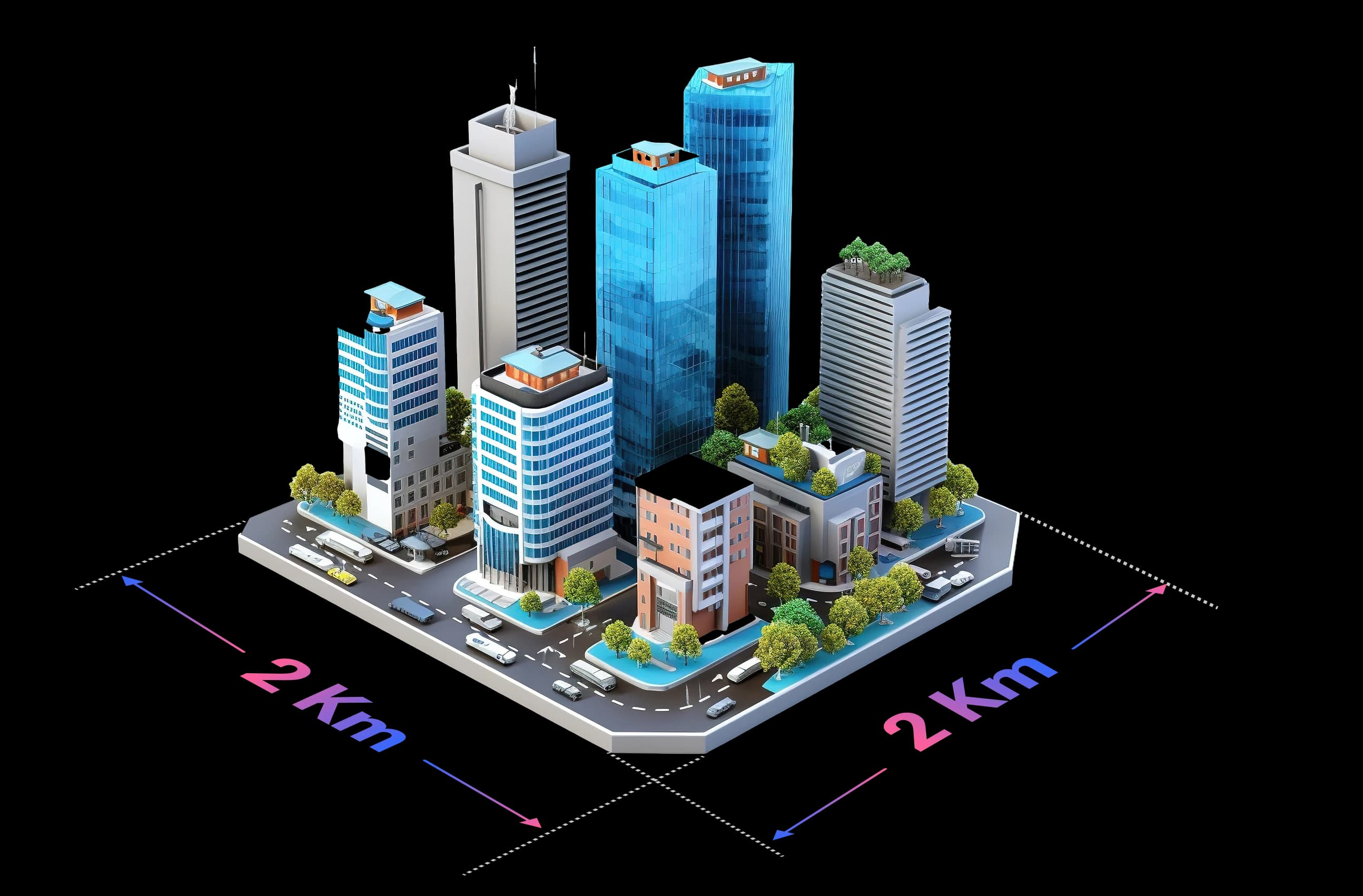
Typically up to about 1 km across a built-up area and about 2 km in the open, from a well-placed gateway
A sensor on the road surface, often with a car parked over it, is the hardest LoRaWAN® end point to reach, so the gateway position decides the range: high on a lamp post, a mast or a roof for street bays and open lots, and an indoor gateway per level in a basement. The gateway and coverage calculator on this site works out positions for a site.
Gateway planning
Placing Gateways for Sensors on the Ground: Four Rules
A bay sensor is the hardest LoRaWAN® end point on a site: on the road, under a car, sometimes under a slab. These rules come from deployments and from the physics of the link.
Gateway planning
A bay sensor is the hardest LoRaWAN® end point on a site: on the road, under a car, sometimes under a slab. These rules come from deployments and from the physics of the link.
Height beats distance
A gateway on a lamp post, a mast or a roof sees over parked cars; one at head height on a wall is shadowed by the first row. Mount high and central to the bays.
A parked car is part of the path
The sensor reports with a vehicle over it, so plan the link for the occupied case: test with a car on the bay, not an empty one, before fixing the gateway position.
A basement is its own network
Concrete slabs stop the signal; give each basement level an indoor gateway, such as the Setu X1, and let the outdoor gateway serve the surface bays.
Capacity is not the limit
A parking event is a few bytes; a gateway handles hundreds of bays. Plan for coverage with the gateway and coverage calculator, then add a gateway for the dead spot, not for the count.
Made in India
A LoRaWAN parking sensor made in Pune, India
Municipal corporations, smart city SPVs, mall operators and integrators in India get a sensor built for IN865 with a WPC compliant radio, and an engineer in Pune who answers during Indian hours. Projects abroad are supplied on the regional plan they need.
Made in India
Municipal corporations, smart city SPVs, mall operators and integrators in India get a sensor built for IN865 with a WPC compliant radio, and an engineer in Pune who answers during Indian hours. Projects abroad are supplied on the regional plan they need.
IN865 as standard
Supplied on the 865–867 MHz LoRaWAN® plan used in India; another regional plan is agreed at order time.
WPC compliant radio
The radio is WPC compliant for India and the hardware conforms to RoHS.
Built in Pune
The board, firmware and housing come from one site in Pune, and the engineers who answer support questions sit there too.
Which device
Which Macnman Device Do You Need: Bay Sensor, Entry Counter or Barrier Controller?
Three Macnman devices meet at a car park. Choose by what has to be known and what has to be switched.
| Criterion | ParkNode Gen-1 (bay occupancy) | MacRay LToF (counting and presence) | MacSet LX1 (barrier and bollard control) |
|---|---|---|---|
| What it does | Reports each bay as occupied or free | Counts vehicles or people passing a point, or detects presence in a zone, with a laser time-of-flight sensor | Switches a barrier, a bollard or a light with two 16 A relays on a schedule, a trigger or a command |
| Where it sits | In the bay, on the surface | At an entrance, a lane or above a zone, 4 to 400 cm | In a panel or on a pole by the gate |
| Network | LoRaWAN® through a gateway | LoRaWAN® through a gateway, or MacTalk | LoRaWAN® Class C, or MacTalk from a sensor |
| Power | Integrated battery, years | Battery or DC | 230 V AC or 9–36 V DC |
| Choose it for | Guidance, enforcement and occupancy records per bay | Counts at the gate and occupancy of a zone without a sensor per bay | Opening a barrier or lighting a bay on the occupancy event |
A full site uses all three: counts at the gate, occupancy in the bays and control at the barrier, on one gateway.
See also: Compare the X1 and X2 versions · MacRay LToF counting and presence sensor · MacSet LX1 controller for barriers and lights
Detection
Geomagnetic Detection Figures and What They Mean in a Car Park
The datasheet figures for the sensing, with what each one means for a bay on a street, in a mall or in a basement.
| Figure | Datasheet | What it means on site |
|---|---|---|
| Detection method | 3-axis geomagnetic field sensing | The sensor reads the change a vehicle's steel makes in the earth's field above the bay; no camera, no light, no line of sight needed |
| Magnetic sensitivity | ±200 to ±1000 µT dynamic range | Wide enough for the field under a basement slab or next to a transformer; the baseline is learned per bay |
| Detection accuracy | Above 98 % vehicle presence detection | Across a car park of 200 bays, a handful of bays may need a second look after installation; the rest report correctly from day one |
| Latency | Under 7 to 10 seconds, arrival and departure | A guidance display updates before the driver has walked away; an overstay is timed from the arrival event |
| Self-calibration | Automatic baseline calibration and drift compensation | Steel in the slab, a kerb or a sign post is learned as the empty-bay baseline; slow drift with temperature is tracked |
| Noise filtering | Resistant to EMI from motors, HVAC systems and power lines | Lifts, transformers and feeders beside a basement bay do not flicker the state |
| False-trigger prevention | Filters bicycles, carts, pedestrians and environmental magnetic noise | A trolley or a cyclist crossing the bay is not an occupied event |
| Multi-vehicle handling | Intelligent algorithms for sequential vehicle detection | A car leaving and the next arriving within seconds produce two clean events |
Figures are from the ParkNode Gen-1 datasheet. Detection relies on the ferrous mass of the vehicle; for bays used by vehicles with little steel, ask for a pilot in those bays before a large order.
Mounting
Surface Mount or In-Ground Flush Mount: Which Fixing for Which Surface
Both fixings are in the datasheet; the choice depends on the surface, the traffic and the sweepers.
| Criterion | Surface mount | Flush mount |
|---|---|---|
| How it is fixed | Fasteners through the housing into asphalt or concrete, over the rubber base sheet | Set into a recess cut in the surface so the top sits level with the road |
| Suits | Malls, offices, societies, basements and most street bays | Short-stay zones with sweepers and heavy traffic, and surfaces that must stay flat |
| Time per bay | Minutes: mark the centre, drill, fix | Longer: core the recess, set, fix |
| Moving it later | Unbolt and refix in a new bay | Recess stays; a new recess is needed in the new bay |
| Traffic | 33 mm profile, driven over daily | Level with the surface |
Mounting clip, fasteners, screws and the rubber base sheet are supplied according to the ordering configuration. Centre the sensor in the bay and keep it away from the kerb edge so a car parks over it.
Battery life
Battery Life of the LoRaWAN Parking Sensor by Parking Events per Day
Datasheet estimates at 25 °C. Each arrival and departure costs one uplink, so the number of movements a bay sees each day is the lever, not a reporting interval.
| Parking events per day | Datasheet estimate | Typical bay |
|---|---|---|
| 50 | About 7 years | A residential society, an office car park or a reserved bay, where a car comes and goes a few times a day |
| 100 | About 3.5 years | A mall, a hospital or a street bay with a one- or two-hour limit through the day |
| 250 | About 1 year | A short-stay bay at a railway station, an airport pick-up zone or a busy market street |
Estimates from the ParkNode Gen-1 datasheet; the X1 variant (19 Ah) is rated up to 10 years and the X2 (8 Ah) up to 5 years. Hot surfaces, confirmed uplinks and weak links shorten the figures; the typical-bay column is a guide to events per day, not a measured figure. Send us the bay types and we size the variant.
Application map
On-Street, Mall, Society, Basement, EV Bay and Truck Yard: How the Sensor Is Used
Each row is a bay type found on Indian city, commercial and residential sites, with what the sensor gives, how it is mounted and what acts on the event.
| Bay type | What the sensor gives | Mounting and network | What acts on the event |
|---|---|---|---|
| On-street and kerbside bay | Occupancy, dwell time and overstay against the limit | Surface or flush in each marked bay; gateway on a lamp post or a building | City parking platform, enforcement app, dynamic pricing |
| Mall or office lot | Free-bay count per zone and per floor | Surface mounted; gateway on the roof covers the open lot | Entrance display, guidance signs, mall app |
| Housing society | Allotted bay occupied by the right vehicle or a stranger; free visitor bays | Surface mounted in allotted and visitor bays; one indoor or outdoor gateway | Gate guard app, society app, resident alerts |
| Basement levels | Occupancy where cameras and GNSS fail | Surface mounted; an indoor gateway per level | Level-by-level guidance displays |
| EV charging bay | Bay taken, charging session length, non-EV blocking the charger | Surface mounted in front of the charger | Charging operator app, overstay fees |
| Airport or railway short-stay | Turnover and overstay in pick-up and drop zones | Flush mounted for sweepers and heavy traffic; X1 variant for battery life | Enforcement, pricing, queue management |
| Reserved, VIP or disabled bay | Misuse the moment it happens | Surface mounted; same gateway as the lot | Security alert, enforcement |
| Truck or logistics yard | Dock and holding bays occupied or free; fleet allocation | Surface mounted at the dock; gateway on the warehouse | Yard management system, dispatch |
Send us the bay count by type and we confirm the variant, the mounting and the gateway count.
Related: Smart city solutions · Smart building solutions · LoRaWAN street-light and barrier controller
Choosing a technology
Geomagnetic, Overhead Ultrasonic, Camera or Inductive Loop: Which Parking Sensor for Which Site?
Four ways to know whether a bay is taken, side by side, so the geomagnetic sensor is chosen for the sites it suits.
| Criterion | Geomagnetic bay sensor (ParkNode Gen-1) | Overhead ultrasonic bay indicator | Camera and number-plate recognition | Inductive loop |
|---|---|---|---|---|
| Where it works | Outdoors and indoors, street bays, open lots, basements | Indoor multi-storey car parks with a ceiling over each bay | Entrances, exits and lanes with a clear view | Lanes and bays with a loop cut into the surface |
| Power and wiring | None: internal battery, LoRaWAN® radio | Wired power and data to every bay | Wired power, data and lighting | Wired detector per loop |
| Installation | Fix one disc per bay in minutes; no trench | Cable tray and a unit above every bay | Poles, mounts, cabling and calibration | Saw-cut the road, lay the loop, resurface |
| What it gives | Occupied or free per bay, arrival and departure times, tamper | Occupied or free per bay, a light per bay | Plate, entry and exit times, counts per lane | Vehicle present over the loop |
| Weather and dirt | IP68, driven over; works in rain and dust | Indoor only | Affected by rain, glare, dirt and night | Unaffected once installed |
| Cost per bay | Low device cost, no civil work | Higher per bay plus cabling | High per lane; not per bay | Civil work per bay |
Many sites combine them: a camera at the gate for plates and counts, geomagnetic sensors in the bays for occupancy and guidance. The sensor on this page is not a reverse-parking sensor fitted to a car.
Budgeting
What Decides the Cost of a Parking Sensor Deployment: Four Lines
Buyers ask for a per-sensor figure; the deployment cost sits in four lines, and the sensor is only one of them. Send us the bay count and the site plan and we quote the whole picture.
Budgeting
Buyers ask for a per-sensor figure; the deployment cost sits in four lines, and the sensor is only one of them. Send us the bay count and the site plan and we quote the whole picture.
One sensor per bay
Every monitored bay takes its own sensor; the variant (X1 for busy bays, X2 for quiet ones) is chosen per zone, not per site.
Gateways by coverage
One outdoor gateway covers a street run or an open lot; each basement level adds an indoor gateway. Coverage, not bay count, sets the number.
Mounting per surface
Surface mounting is minutes per bay with fasteners; flush mounting adds a recess per bay and suits sweepers and heavy traffic.
Platform and integration
The network server and the parking platform or app that shows the bays, with MQTT or HTTPS between them; existing platforms are reused.
Compared
ParkNode Gen-1 vs MOKO LW009-SM Pro vs Nwave NPS405SM vs Bosch TPS110
The LoRaWAN® parking-bay sensors most often shortlisted together, on the figures each manufacturer publishes. Checked 11 October 2026; where a page does not state a figure, the cell says so.
| Criterion | Macnman ParkNode Gen-1 | MOKO LW009-SM Pro | Nwave NPS405SM | Bosch TPS110 |
|---|---|---|---|---|
| Detection | 3-axis geomagnetic, ±200 to ±1000 µT | 3-axis geomagnetic plus microwave radar, dual mode | Magnetometer with proximity and temperature sensors | Magnetometer plus radar, two independent sensors |
| Accuracy claim | Above 98 % vehicle presence detection | Over 99 % in dual mode | 99.7 % (device repository); 99.9 % on Nwave's FAQ | 96 % average state-change detection in field tests of over 2,000 sensors (2018 datasheet) |
| Latency | Under 7 to 10 s | Not on the page checked | 3 to 5 s | Within 35 s typical (2018 datasheet) |
| Battery | X1 19 Ah rated up to 10 years, X2 8 Ah up to 5; about 7 years at 50 events a day | 20 Ah lithium · 5 years under typical scenarios | 10,800 mAh AA Li-SOCl₂, replaceable · 10 years at 20 parking sessions a day | Li-SOCl₂ · up to 5 years (2018 datasheet) |
| LoRaWAN | OTAA · AES-128 · event uplinks with heartbeat | v1.0.3 · 21 dBm max · up to 7 km claimed | v1.0.3 · Class A · OTAA · 14 dBm | v1.0.2 · Class A · OTAA |
| IN865 for India | Standard, WPC compliant | Listed among its eleven regional plans | Not in the three plans supported | Not in the two plans supported |
| Enclosure | IP68 · 202 × 33 mm · ~290 g · −40 to +80 °C | IP68 · 202 × 30 mm · 600 g · −40 to +85 °C | IP68 · 205 × 20 mm · 412 g · −40 to +85 °C | IP67/IPx9K · 145.4 × 30.5 mm · 191 g · −30 to +65 °C |
| Mounting | Surface or flush, on asphalt or concrete | Surface-mounting type; 10 t load rating | Surface base or in-ground modification | Glued or screwed into the ground; snow-plough resistant |
| Setup | Factory configured · downlink; no app needed | App over Bluetooth 4.2 | Mapping and calibration mobile app (Nwave FAQ) | Wireless device management · self-learning over the first five parking events |
| Tamper | Tilt and displacement alerts | Strong magnetic disturbance, low voltage and hardware error alarms | Not on the page checked | Not on the page checked |
| Manufacturer | Macnman, Pune, India | MOKO, Shenzhen, China | Nwave, London, UK | Bosch, Germany; datasheet dated 2018 |
Figures for the other products are taken from their manufacturers' product pages, datasheets and The Things Network device repository, checked on 11 October 2026, and may change. MOKO, Nwave, Bosch and Nedap are trademarks of their respective owners. Nedap's SENSIT range, often searched alongside these, has been discontinued since 2021 according to Nedap.
FAQ
ParkNode Gen-1 LoRaWAN Parking Sensor: Frequently Asked Questions
It tells a parking platform whether a bay is taken or free, the moment that changes, without a camera, a cable or a loop cut into the road. Fixed in each bay, the ParkNode Gen-1 reports every arrival and departure over LoRaWAN® to a gateway that may be a kilometre away, for guidance displays, enforcement, society gate apps, EV charging bays and occupancy records.
It records the earth's magnetic field in the empty bay as a baseline. A vehicle's steel body bends that field; the 3-axis magnetometer reads the change across a ±200 to ±1000 µT range, the algorithm confirms it is a vehicle rather than a bicycle, a cart or a passing truck, and the sensor sends an occupied event. When the field returns to the baseline it sends a free event.
The datasheet states above 98 % vehicle presence detection accuracy and a detection latency under 7 to 10 seconds for arrival and departure. In practice that means a guidance display updates before the driver has left the bay, and a few bays in a large car park may need their position checked after installation.
The sensor is designed against that: the baseline is learned per bay, motors, HVAC plant and power lines are rejected as noise, bicycles, carts and pedestrians are filtered, and sequential arrivals are handled by the algorithm. Centre the sensor in the bay and keep it away from the lane edge, and a vehicle passing in the lane does not change the state.
No. Each sensor watches the bay it sits in; a neighbouring bay is outside its baseline and is filtered as passing traffic. Count one sensor per monitored bay, and leave bays that need no reporting without one.
Detection relies on the ferrous mass of the vehicle over the sensor. Cars, vans and trucks give a strong signature; bicycles are filtered by design. For bays used by scooters and motorcycles, or by vehicles with very little steel, ask for a pilot in those bays before a large order so the behaviour is confirmed on your site.
Yes; it is one of the places the datasheet lists, because cameras and GNSS fail there. The sensing is unaffected by the roof. What needs planning is the radio: a basement takes an indoor LoRaWAN® gateway per level, such as the Setu X1, so each floor's sensors have a path out.
Static steel such as reinforcement, a kerb or a sign post becomes part of the learned baseline, and drift compensation tracks slow changes. What matters is that the empty bay stays empty while the baseline is learned at installation and that the sensor is centred in the bay.
No manual step. The sensor learns the magnetic baseline of the empty bay automatically and compensates for drift afterwards, so it is fixed in an empty bay, registered on the server and left to work. Keep the bay empty while it is fixed so the baseline is the empty state.
Centre it in the bay on asphalt or concrete. Surface mount: fix it through the housing with fasteners over the rubber base sheet. Flush mount: cut a recess so the top sits level with the road and fix it in. There is no trench, no cable and no power at the bay, and the sensor is driven over from the first day. The mounting kit is supplied according to the ordering configuration.
Yes. The glass-filled nylon disc is 202 mm across and 33 mm high, sealed to IP68 and rated from −40 to +80 °C, and it sits under the parked car. For zones with heavy sweepers and short-stay traffic, flush mounting keeps the surface level.
The tilt and tamper detection reports displacement, tilting and unauthorised handling as an event, so the dashboard shows a tampered sensor rather than a free bay. The sensor keeps its keys and settings and reports again once it is refixed.
The X1 variant with its 19 Ah Li-SOCl₂ cell is rated up to 10 years and the X2 with 8 Ah up to 5 years. The datasheet's estimates by traffic at 25 °C are about 7 years at 50 parking events a day, 3.5 years at 100 and about a year at 250, because each arrival and departure costs one uplink. A residential or office bay therefore lasts far longer than a station short-stay bay.
The battery is integrated in the sealed IP68 housing. For a fleet nearing the end of its battery life, ask Macnman about replacement units or a service exchange; choose the X1 variant for bays with heavy traffic so the question arrives later.
A sensor on the road surface with a car over it is the hardest LoRaWAN® end point to reach: the parked car and the road itself sit inside the radio path, so the gateway position decides the range. From a gateway high on a lamp post, a mast or a roof, typically up to about 1 km across a built-up area and about 2 km in the open; test the link with a car parked on the bay, not an empty one. Basements take an indoor gateway per level. The gateway and coverage calculator on this site plans positions for a site.
Hundreds. A parking event is a few bytes, and even a busy bay sends a few hundred uplinks a day, so a street or a mall lot is limited by radio coverage, not by gateway capacity. The coverage calculator gives a count for an area.
Yes. Any standard LoRaWAN® gateway works: Macnman's MacLink Gen-2 on a post or a roof for streets and open lots, the Setu X1 indoors for basements and multi-storey floors, or a gateway you already run. A city-wide network can serve street lighting, waste bins and water sensors from the same gateways.
Any standard LoRaWAN® network server: ChirpStack, The Things Stack, LORIOT, Orbiwise, Netmore or a private server, joined by OTAA with AES-128 encryption. From the server the decoded events travel on by MQTT or HTTPS to guidance displays, enforcement apps, society apps and smart city platforms.
Yes. Macnman supplies codecs for The Things Stack, ChirpStack and Milesight gateways; the downloads section links the Macnman decoder repository, and support sends the ParkNode Gen-1 codec for your network server with the order if it is not yet listed there.
It ships factory configured with its LoRaWAN® keys and reporting settings, so there is nothing to set at the bay and no app is needed. Settings such as the heartbeat interval are changed later by downlink commands from the network server.
An occupied or free event each time the bay changes, within 7 to 10 seconds, plus a periodic heartbeat so the platform knows the sensor is alive, and a tamper event if it is lifted or moved. The heartbeat interval is set by downlink; the events themselves follow the traffic.
Not by itself; it reports. On the network, the server's rules act on the event, and a MacSet LX1 controller with two 16 A relays can open a barrier, raise a bollard or light a reserved bay on command. For a site with no network, the MacSet range also offers MacTalk device-to-device links.
Geomagnetic bay sensors suit outdoor and indoor bays where there is no power and no ceiling: streets, open lots, societies and basements. Overhead ultrasonic indicators suit indoor multi-storey car parks with a ceiling and power over each bay. Cameras with plate recognition suit entrances and exits for counts and billing, not per-bay occupancy. Inductive loops need the road cut. Many sites combine a camera at the gate with geomagnetic sensors in the bays.
NB-IoT sensors need a SIM and a data plan per bay and depend on operator coverage in basements; LoRaWAN® needs one gateway per street or lot and then carries every bay for years on a battery with no subscription per device, and the same gateways serve lighting, waste and water sensors. For a city or a large operator the network cost per bay is the deciding figure.
No. Reverse-parking sensors are fitted to a vehicle's bumper to warn the driver of obstacles. The ParkNode Gen-1 is fixed in a parking bay and tells a parking system whether the bay is occupied.
For the same job, yes. The Bosch parking lot sensor's public datasheet dates from 2018 and lists EU868 and AS923 plans, and Nedap states that it stopped making and selling the SENSIT range in 2021. The ParkNode Gen-1 is a current geomagnetic bay sensor supplied on IN865 with a WPC compliant radio, reports within 7 to 10 seconds, is configured by downlink with no app, and is made and supported from Pune. The comparison table on this page and the full comparison page give the figures.
The X1 (SKU 9305, 19 Ah, rated up to 10 years) for streets, stations, airports and any bay that sees many movements a day or where battery replacement must be rare. The X2 (SKU 9306, 8 Ah, rated up to 5 years) for commercial lots, campuses, societies and industrial sites where traffic per bay is lower and the budget per bay matters.
Four lines: one sensor per monitored bay in the X1 or X2 variant, gateways by coverage (one outdoor gateway for a street or a lot, an indoor gateway per basement level), the mounting method per surface, and the platform that shows the bays. Send the bay count by type and a site plan and we quote the whole deployment rather than a sensor in isolation.
It is supplied on IN865, the 865 to 867 MHz plan for LoRaWAN® in India, with a WPC compliant radio, and it is designed, built and tested by Macnman Technologies in Pune. RoHS conformant. For a project outside India, tell us the country and the sensors come on that region's plan.
The sensor, a user manual and a warranty card; the mounting clip, fasteners, screws and rubber base sheet are supplied according to the ordering configuration. Macnman hardware carries a two-year limited warranty against manufacturing defects from the invoice date; the battery is a consumable outside the warranty.
More from Macnman
What Else Do We Build at Macnman
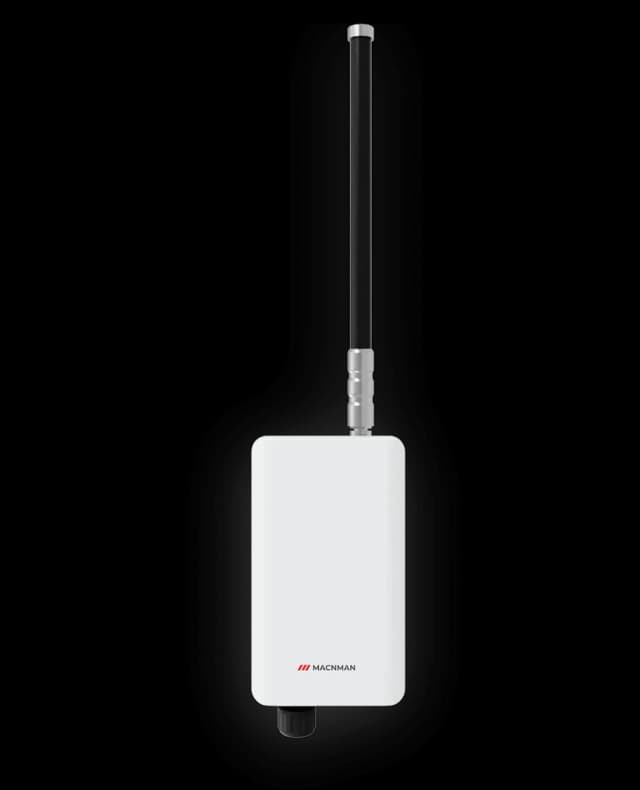 New
Maclink Gen-2
LoRaWAN Outdoor Gateways
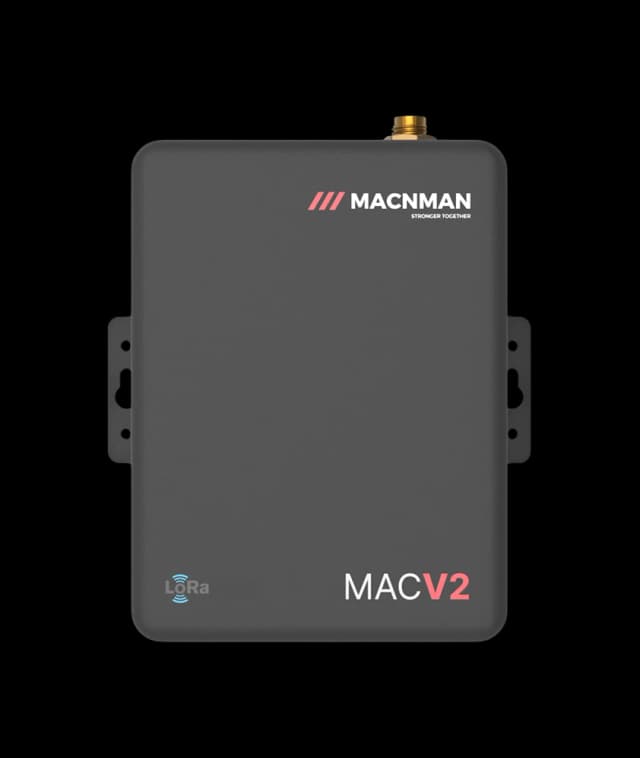
MacEge 4G Mini Gateway
4G Lte Gateways
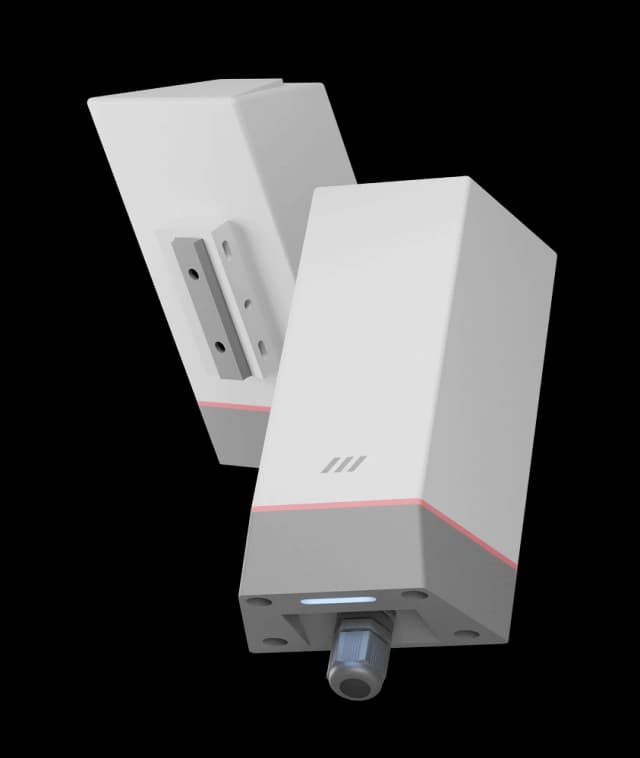 Hot Selling
MacSync LX1
RS485 Modbus to LoRaWAN Converter
MacSync LX1
Analog 4-20mA to LoRaWAN Converter
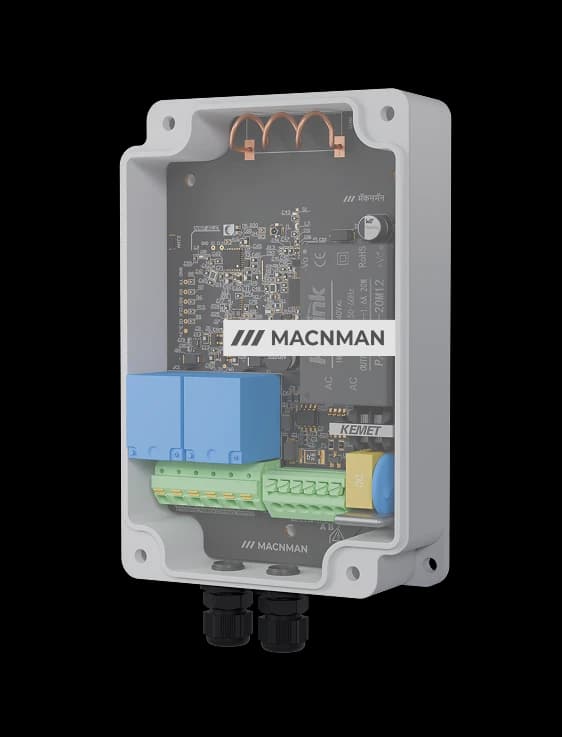 New
MacSet
RS485/Analog + Relay Output
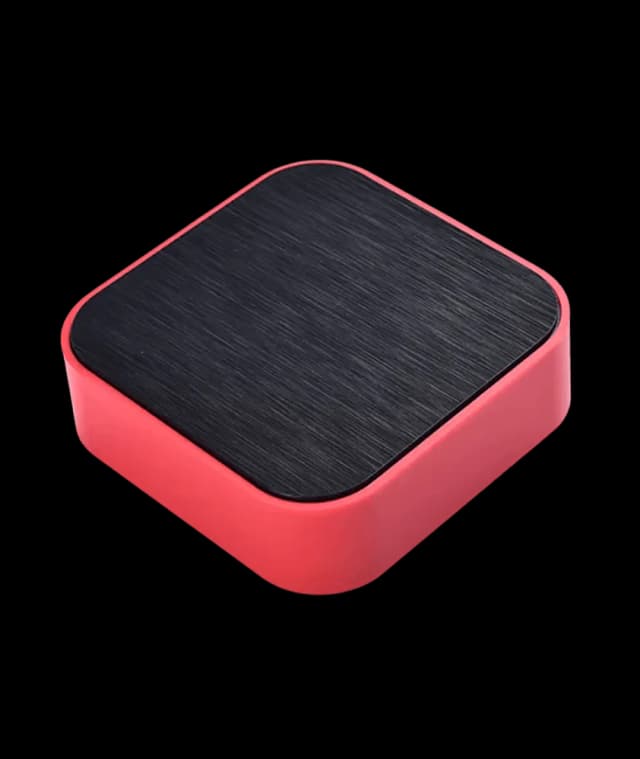 Hot Selling
Setu X
LoRaWAN Indoor Gateways
NewMaclink Gen-2
LoRaWAN Outdoor Gateways
MacEge 4G Mini Gateway
4G Lte Gateways
Hot SellingMacSync LX1
RS485 Modbus to LoRaWAN Converter
MacSync LX1
Analog 4-20mA to LoRaWAN Converter
NewMacSet
RS485/Analog + Relay Output
Hot SellingSetu X
LoRaWAN Indoor Gateways
Let‘s make it easy - reach out now!
Let’s bring it to life!
Let‘s Make it Easy
Reach Out Now


We are always ready
to help and
answer your
questions
Call
+91 7972856163
+91 9096830856
Location
Office-15 Bibwewadi, Pune, Maharashtra 411037
Get in Touch
Define your goals and all to value your time
Use of this website and purchase of Macnman products are subject to our Terms and Conditions.