
Overview
Smart Waste Bin IoT Case Study: Real-Time Fill Level Monitoring with LoRaWAN Ultrasonic Sensors in Maharashtra
A smart waste bin sensor is a small device mounted inside a bin that measures how full it is and reports that level wirelessly, so collection teams empty bins when they need it, not on a fixed timetable.
In a city as dense as Mumbai, waste builds up unevenly. A bin outside a railway station or vegetable market can fill within hours, while one on a residential lane takes days. Under a Government of Maharashtra project, [FILL: number] public waste bins across [FILL: number] wards of Mumbai were fitted with MacRay-LU4 LoRaWAN ultrasonic level sensors. Each sensor reports:
- Fill level (%)
- Distance to the waste surface (cm)
- Instant alerts when a bin crosses its threshold
- Battery health
- Last-seen time, so a silent sensor is noticed quickly
The result is a live, city-wide view of every bin, used to plan each day’s collection around actual need.
Who this case study is for: municipal corporations and councils, smart city SPVs, waste collection contractors, and bulk waste generators such as campuses, large housing societies, malls and industrial parks that must manage waste more accountably under the Solid Waste Management Rules, 2026.
The starting point
The Real Challenge: Knowing Which Waste Bins Are Full Before They Overflow
Fixed-route collection assumes every bin fills at the same rate. They don’t. In practice, the same route was too slow for the busiest bins and too frequent for the quietest ones.
The cost of that mismatch was paid twice. Overflowing bins meant litter on roads, stray animals, foul smell and citizen complaints, which are the most visible failures a city can have. Trips to half-empty bins meant fuel, driver hours and vehicle wear spent on work that didn’t need doing.
Underneath both problems sat one gap: nobody knew a bin’s status until someone physically looked at it.
01

Overflowing Public Bins
High-footfall bins filled before the scheduled pickup and spilled onto streets.
02

Wasted Collection Trips
Vehicles stopped at half-empty bins on fixed routes, burning fuel and driver time.
03

Status Known Only by Inspection
Bin levels came from site visits, phone calls and complaints, always after the problem had happened.
04

No Data to Plan or Report
There was no fill-rate history to redesign routes, resize bins or report collection performance digitally.
The approach
Our Solution: LoRaWAN Ultrasonic Fill Level Monitoring for Smart Waste Bins
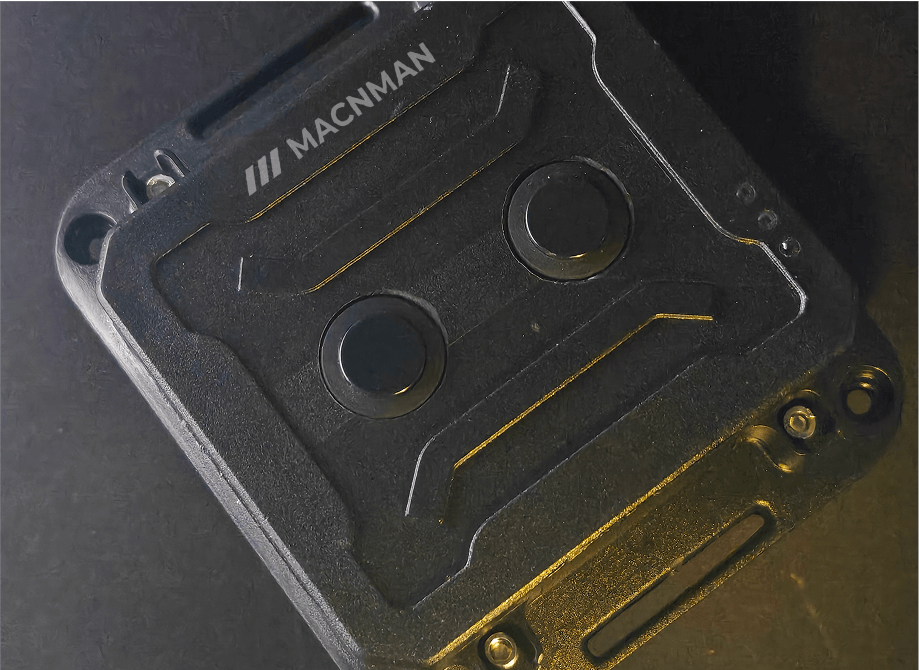
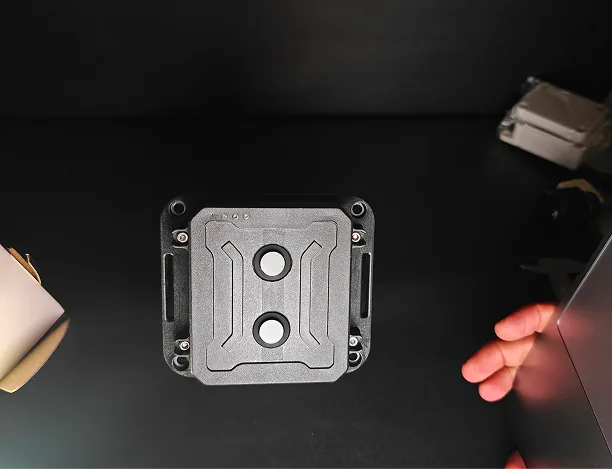
Each bin was fitted with a MacRay-LU4 LoRaWAN ultrasonic level sensor, mounted under the lid and pointing down at the waste. Here’s how it works:The sensor sends an ultrasonic pulse and times the echo from the waste surface to measure distance.
- It converts that distance into a fill percentage using the bin’s own depth.
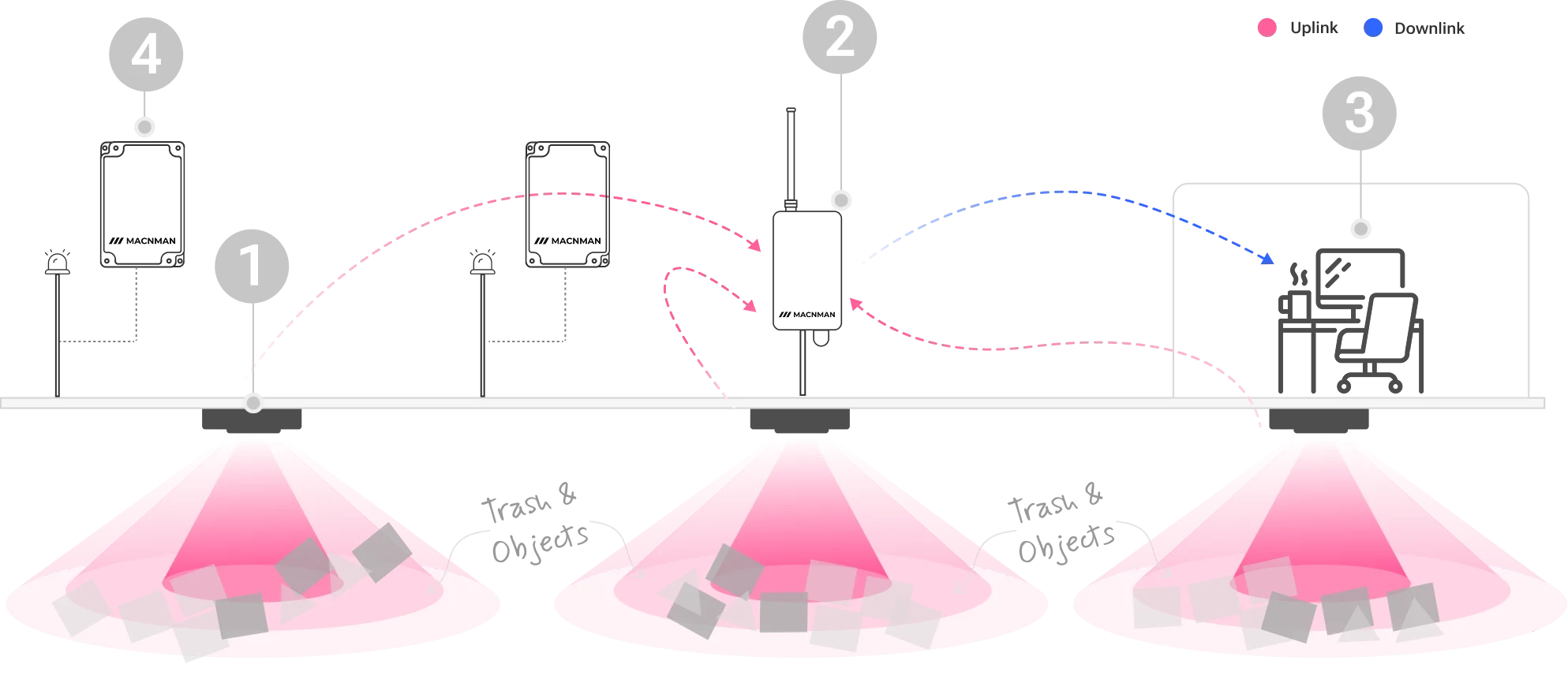
- It sends the reading over LoRaWAN, a long-range, low-power wireless network, to gateways covering the service area.
- The dashboard plots every bin on a map and alerts supervisors the moment a bin crosses its threshold.
Why LoRaWAN rather than GSM/4G sensors? A bin only needs to send a few bytes a few times a day. LoRaWAN does that on India’s licence-free IN865 band with no SIM card or data plan per bin, and it uses far less power than a cellular modem. That is what makes multi-year battery life, and therefore city-wide scale, practical.
How it fits together
LoRaWAN Smart Waste Bin Monitoring Architecture Diagram
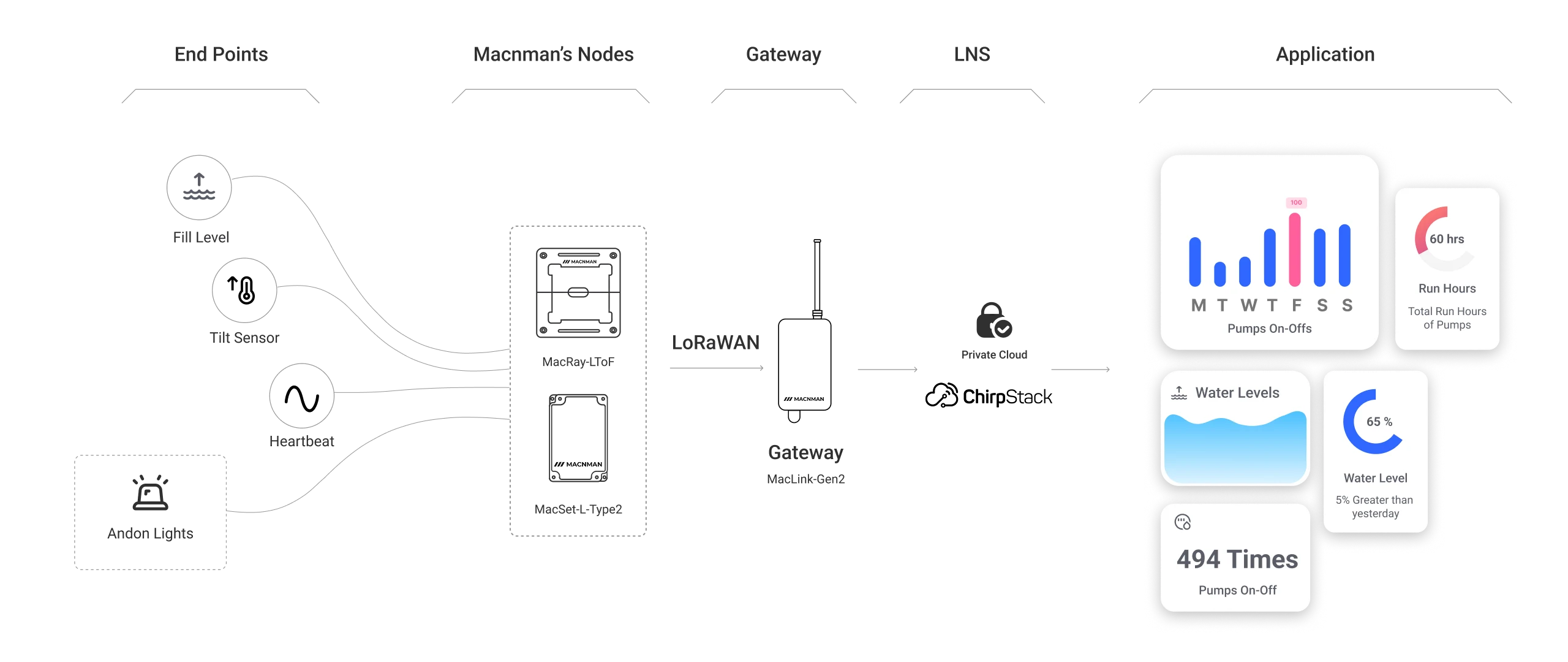
On site
Deployment Across Mumbai Wards: Installing Ultrasonic Sensors on Municipal Waste Bins
How reliable the readings are depends on three installation decisions.
1. Mount at the centre of the lid, pointing straight down.
An off-centre sensor sees the bin wall before it sees the waste, which gives falsely high readings.
2. Calibrate every bin type, not just one.
Fill level is calculated as:
Fill % = (Empty distance − Measured distance) ÷ (Empty distance − Full distance) × 100
- Empty distance is from the sensor to the bin floor.
- Full distance is the point you define as full. Set it a few centimetres below the lid, clear of the sensor’s 3 cm blind zone.
Each bin type was set up with its own values using the Macnman Maya app over Bluetooth.
3. Set the alert threshold by response time, not habit.
A bin should alert early enough for a crew to reach it before it overflows:
Alert threshold ≈ 100% − (fill rate per hour × crew response time in hours)
Example: a market bin that fills about 10% per hour, with a crew that needs 3 hours to arrive, should alert at about 70%. A residential bin filling 2% per hour can safely alert at 90%.
Why ultrasonic here, and ToF elsewhere? In our warehouse waste-room project we used an 8×8 Time-of-Flight sensor, because large open rooms fill very unevenly from corner to corner. A closed street bin is the opposite case: a small, fixed-size container exposed to monsoon rain, heat and dust. There, a rugged ultrasonic sensor with a wide 60° beam gives dependable readings at low cost per bin. Weight-based sensors were not used, because light, bulky waste such as packaging and thermocol can fill a bin while barely changing its weight.
In this deployment
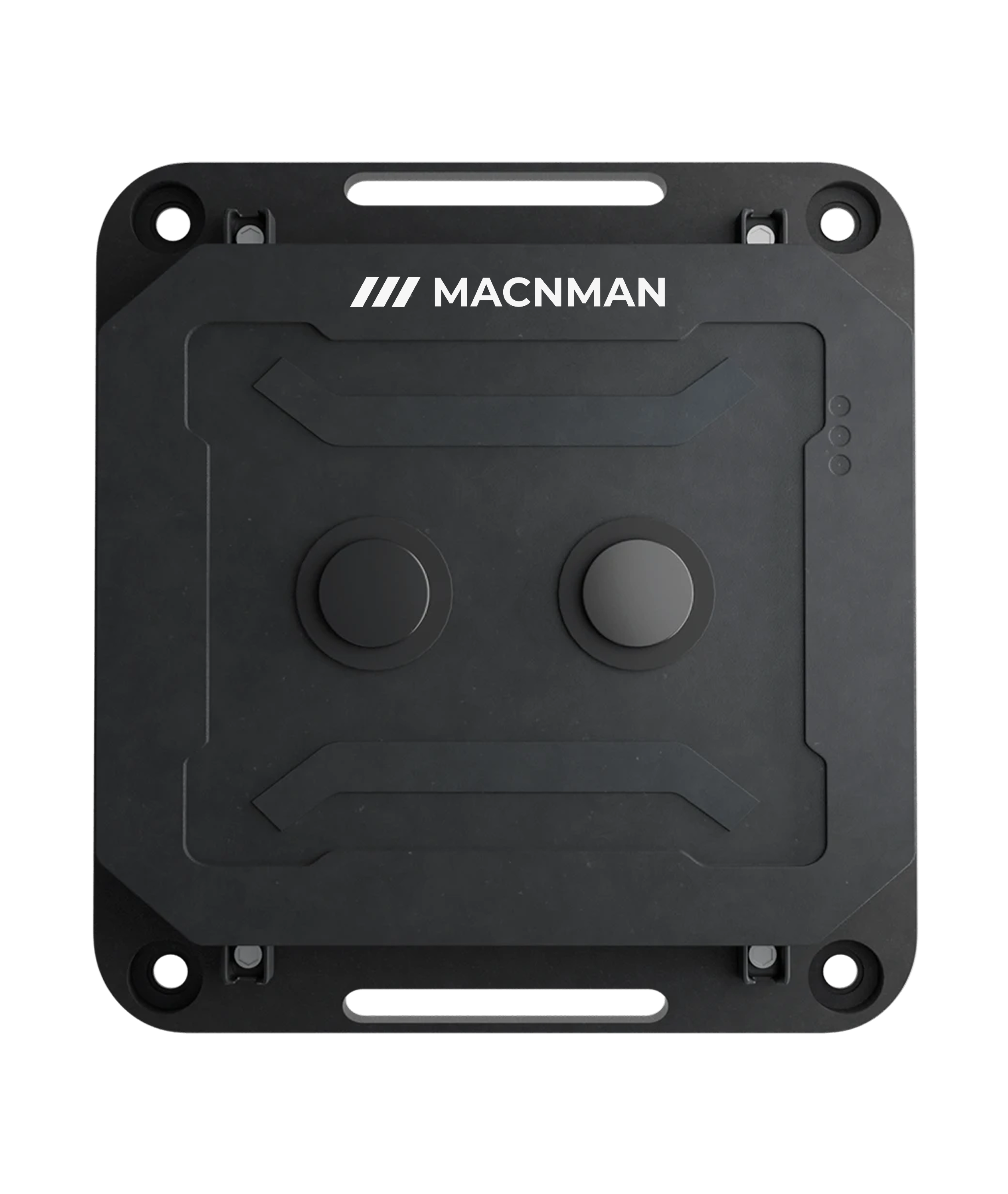
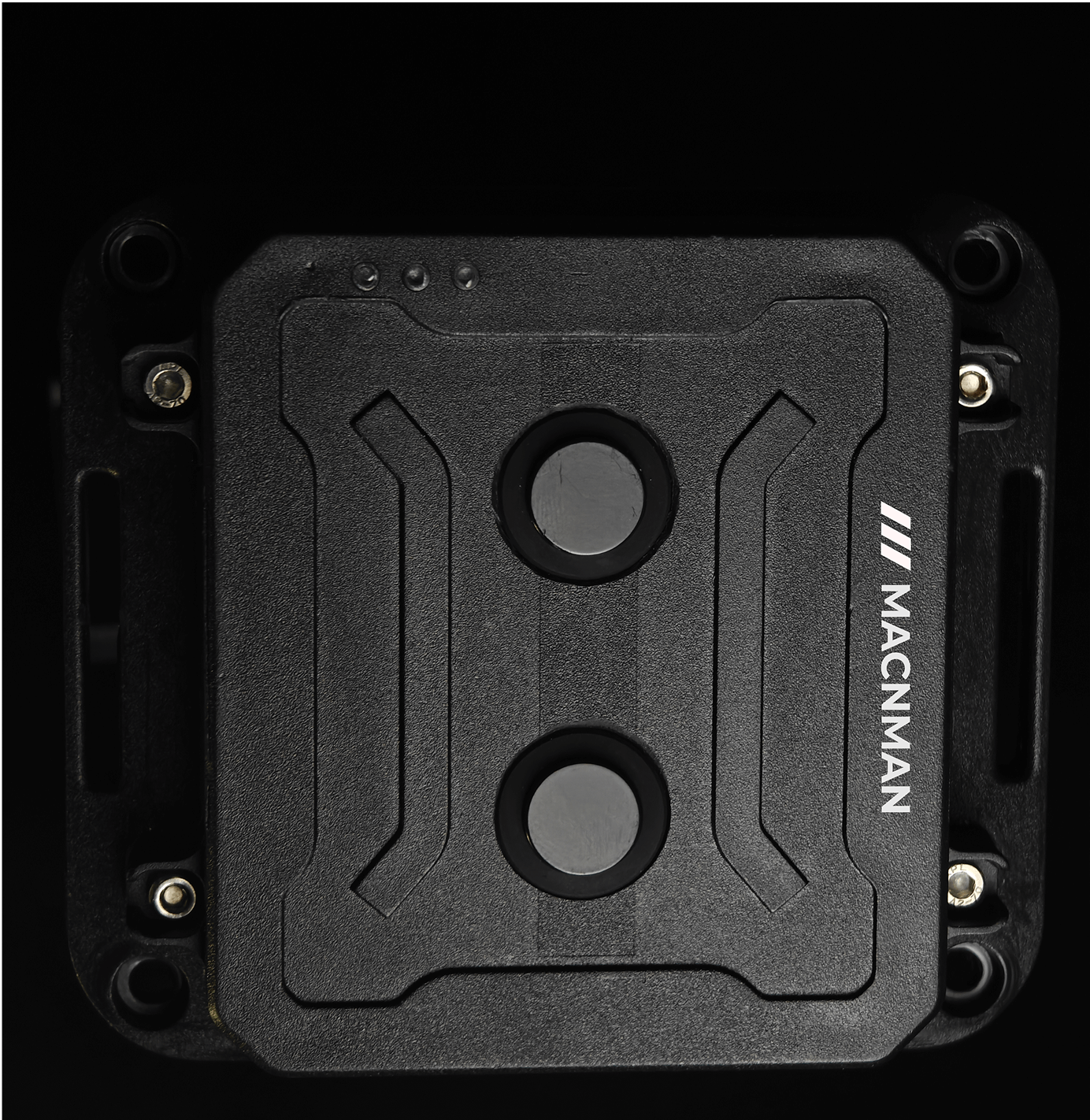
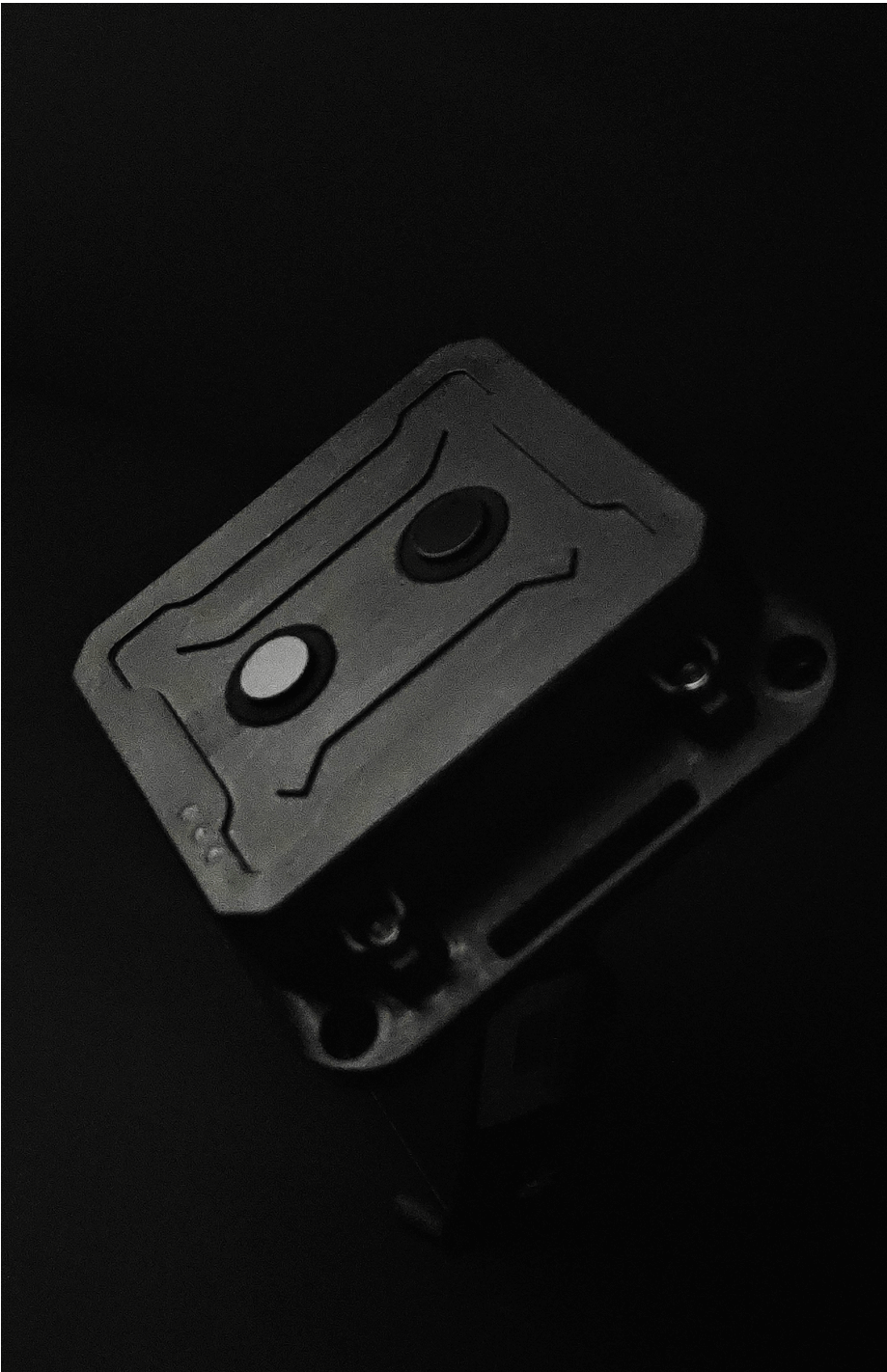
Mounted under each bin lid, measuring from 3 cm to 450 cm.
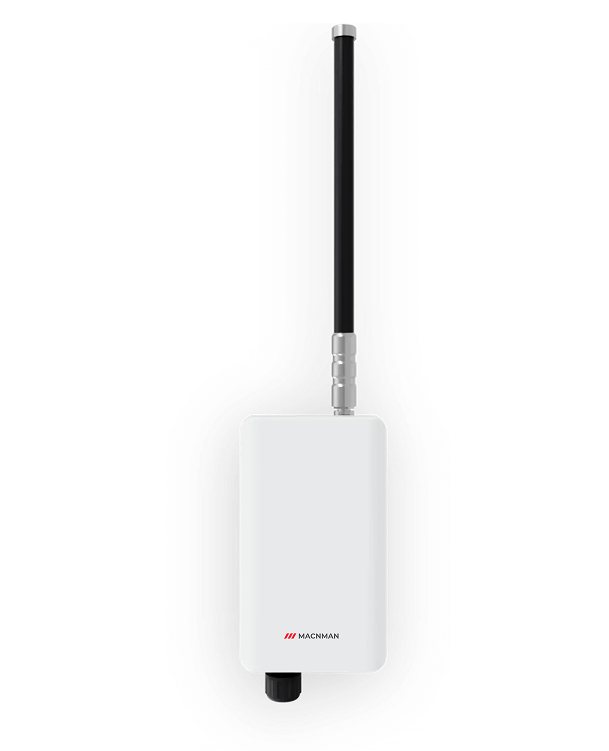
- Long-range, low-power data communication
- Reliable connectivity across large aquaculture farms
Shows the bin map, fill history, threshold alerts and battery health.

Used on site to set bin depth, full line, alert threshold and reporting interval.
What stood in the way
Challenges Faced During Smart Waste Bin Sensor Deployment in Mumbai
01
01. Monsoon Exposure
Mumbai’s heavy rains needed protected mounting, so sensors sit under the lid in an IP65 enclosure, away from direct rain.
02
02. Dense Urban Radio Conditions
High-rises and narrow lanes weaken signals, so gateway positions were confirmed with on-site LoRaWAN link checks at every bin location.
03
03. Mixed Bin Sizes
Each bin type was calibrated separately, so 80% means the same thing everywhere in the city.
04
04. Uneven, Bulky Waste
Bags and cartons pile up unevenly, so the wide 60° beam covers more of the surface and alert thresholds include a safety margin.
05
Reliable Power Availability
Ensuring gateways and edge controllers remain operational with a stable power supply for continuous system availability.
Put to the test
Validation: Making Sure Every Bin Reading Can Be Trusted
Fill Level Accuracy Verified
Sensor readings were checked against manual dipstick measurements at [FILL: number] bins, agreeing within [FILL: ±X]%.
Coverage Confirmed at Every Bin
RSSI and SNR were recorded from each bin location before go-live, with [FILL: X]% of uplinks received.
Alert Timing Tested
Test bins were filled past their threshold, and alerts reached the dashboard within [FILL: time].
Battery Life Projected from Real Data
Power use at the chosen reporting interval was measured to confirm expected battery life before city-wide rollout.
4 of 4 tests completed
What changed
Impact of IoT-Based Smart Waste Bin Monitoring in Mumbai
Fewer Overflowing Bins
Bins are cleared before they spill: [FILL: X]% fewer overflow incidents or complaints.
Shorter, Smarter Routes
Crews skip half-empty bins: [FILL: X]% fewer trips and lower fuel use.
Faster Response Where It Matters
High-footfall bins are now cleared [FILL: X] times faster after reaching their threshold.
Data That Plans the Next Year
Fill-rate history shows where to add bins, resize them or change pickup frequency, and supports digital reporting under the SWM Rules, 2026.
In closing
Conclusion: Turning Waste Bin Data Into Cleaner Streets
Bin data is valuable only when it is live, trusted and covers the whole city. By fitting MacRay-LU4 LoRaWAN ultrasonic sensors to its bins, the Mumbai deployment replaced fixed routes and manual checks with collection based on real fill levels. Bins are emptied before they overflow, crews stop making wasted trips, and the city now has a digital record of how its waste collection actually performs.
Planning a smart bin rollout? Start with these four steps.
- Pick one pilot ward that has both busy and quiet bins.
- Measure before you change routes. Run sensors for 2–4 weeks to learn real fill rates.
- Set thresholds by response time, using the formula above.
- Redesign routes around the data, then expand ward by ward on the same gateways.
Quick answers:
How accurate is an ultrasonic bin sensor?
The MacRay-LU4 is rated at up to ±1%, depending on installation and surface conditions. Centre mounting and per-bin calibration matter more than anything else.
How long does the battery last?
Up to 2 years on the 12 Ah internal battery, depending on reporting interval and mode.
Can it work with our existing LoRaWAN network?
Yes. It works with standard LoRaWAN gateways and network servers such as ChirpStack and The Things Stack.
Is it only for cities?
No. Campuses, housing societies, malls, hospitals and industrial parks use the same setup to manage their own bins.
Because the system runs on standard LoRaWAN, the same gateways can later carry air quality, water level and parking sensors, so a city can build a wider smart city network one layer at a time.


