







Terms and Conditions
Welcome to Macnman Technologies Pvt Ltd! These Terms and Conditions ("Terms") govern your access to and use of the Macnman's website (the "Website"). As an Original Equipment Manufacturer (OEM) of IoT products and solutions, this Website is designed primarily to provide information to potential business partners, integrators, and clients. By accessing or using our Website, you acknowledge that you have read, understood, and agree to be bound by these Terms. If you do not agree to these Terms, please do not use our Website.
1. Acceptance of Terms
By using our Website, you confirm that you are authorized to enter into a binding contract on behalf of your business or entity (if applicable) and that you accept these Terms. These Terms constitute a legally binding agreement between you and Macnman IoT regarding your use of the Website.
2. Website Content & Intellectual Property
Ownership: All content on this Website, including but not limited to text, graphics, logos, images, audio clips, video clips, data compilations, software, product descriptions, and technical information (collectively, "Content"), is the property of Macnman IoT or its licensors and is protected by Indian and international copyright, trademark, and other intellectual property laws.
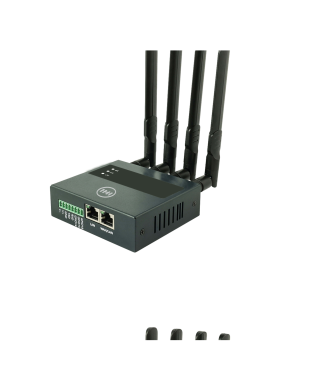
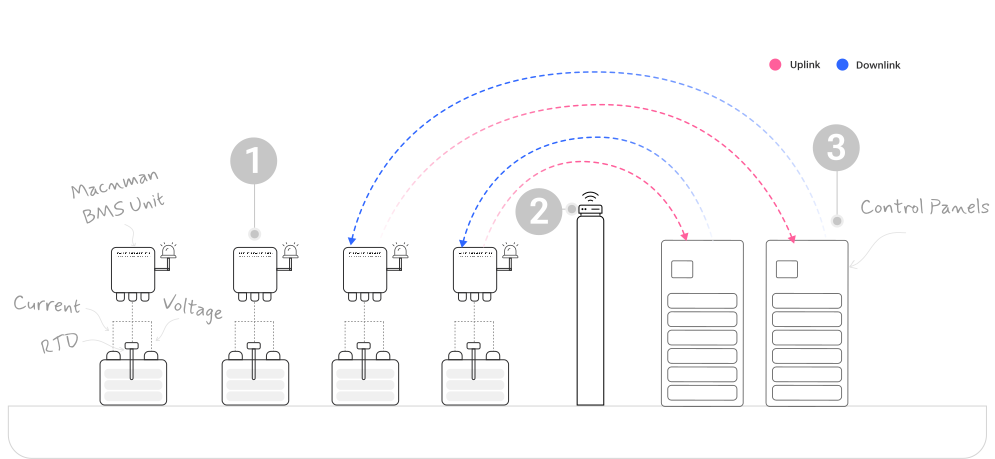
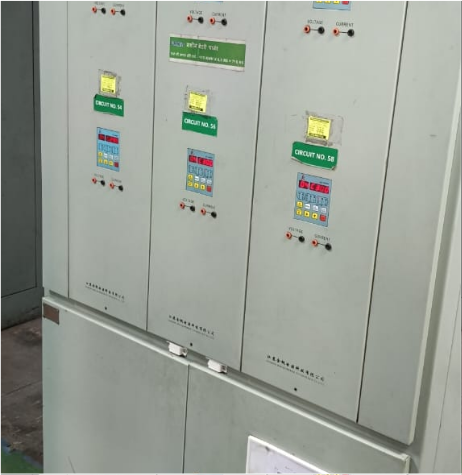
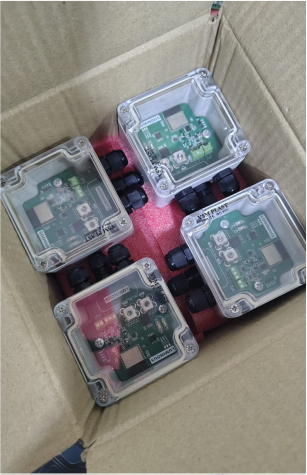
Informational & Marketing Purpose: All Content, including images, videos, illustrations, graphical representations, and textual descriptions of products and solutions, is provided for general informational, illustrative, and marketing purposes only. While we strive to present accurate and up-to-date information, this Content is intended to convey the general features, capabilities, and potential applications of our IoT products.
No Warranty from Website Content: The Content on this Website does not constitute a definitive specification, technical guarantee, or warranty for any specific product or solution. Actual product specifications, performance, features, and appearance are subject to change and are exclusively defined in official product datasheets, technical documentation, and specific commercial agreements (e.g., purchase orders, supply contracts) between Macnman IoT and its clients. You acknowledge that relying solely on Website Content for product suitability or performance is at your own risk.
Limited License: You are granted a limited, non-exclusive, non-transferable, revocable license to access and use the Website and its Content for your internal business informational purposes, such as evaluating potential OEM partnerships or product integration. You may not reproduce, distribute, modify, create derivative works of, publicly display, publicly perform, republish, download, store, or transmit any of the Content without the prior written consent of Macnman IoT.
3. Use of Website
You agree to use the Website only for lawful purposes consistent with its intended B2B/OEM informational nature and in a manner that does not infringe the rights of, or restrict or inhibit the use and enjoyment of this Website by any third party. Prohibited conduct includes, but is not limited to: Engaging in any activity that could harm, disable, overburden, or impair the Website or the servers and networks connected to the Website. Attempting to gain unauthorized access to any portion of the Website, other accounts, computer systems, or networks connected to the Website through hacking, password mining, or any other means. Using the Website to distribute any malicious software, viruses, or other harmful content. Collecting or storing personal data about other users or any commercial information without their express consent. Using the Website for direct sales or marketing of third-party products or services without explicit authorization.
4. Disclaimers
"As Is" and "As Available" Basis: The Website and all Content are provided on an "as is" and "as available" basis, without any warranties of any kind, either express or implied.
No Warranties of Performance or Suitability: Macnman IoT does not warrant that the Website or its Content will be error-free, uninterrupted, secure, or available at any particular time or location.
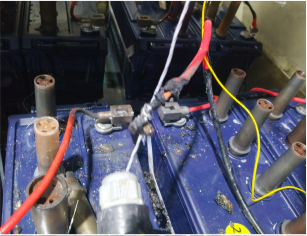
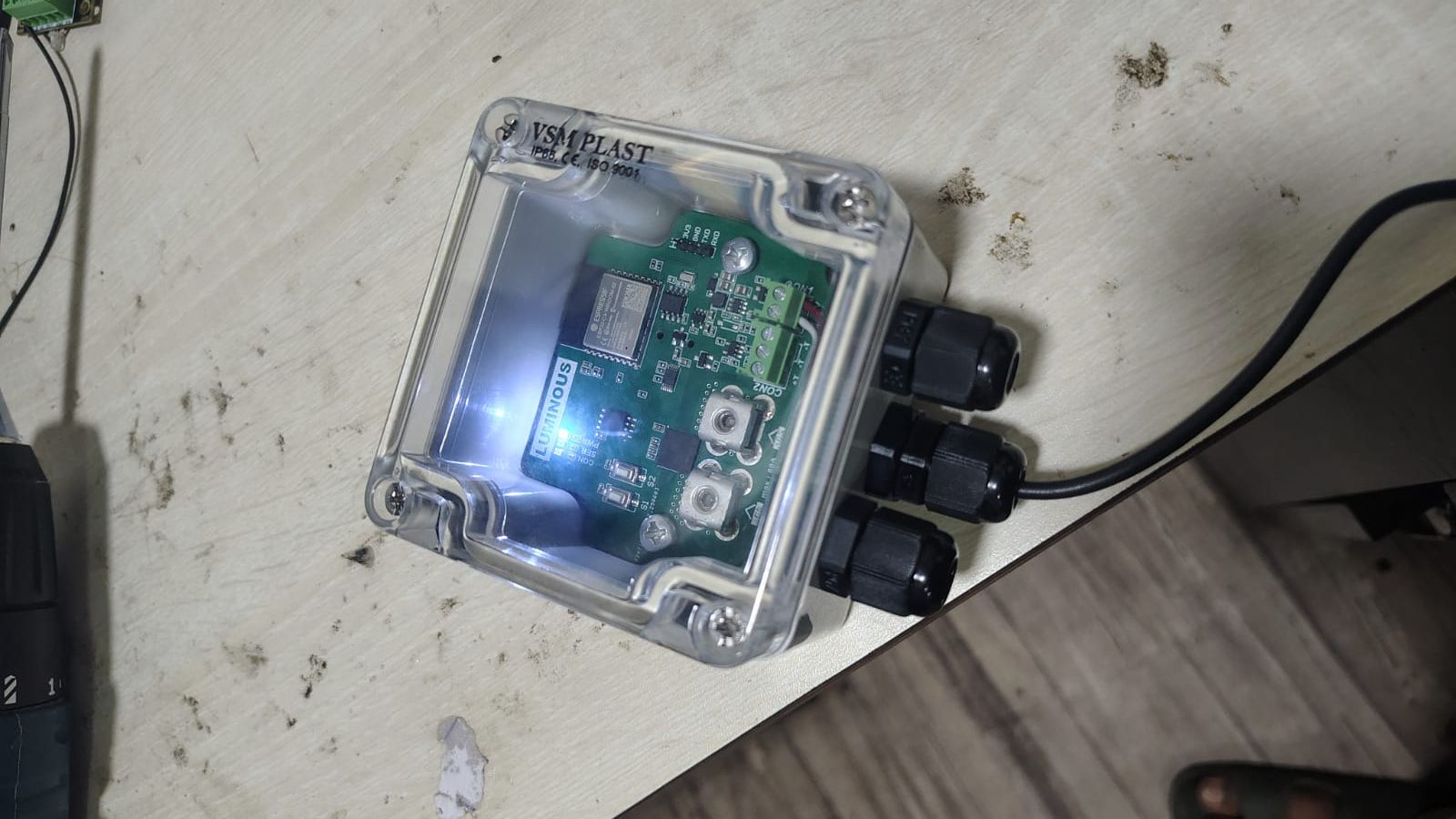
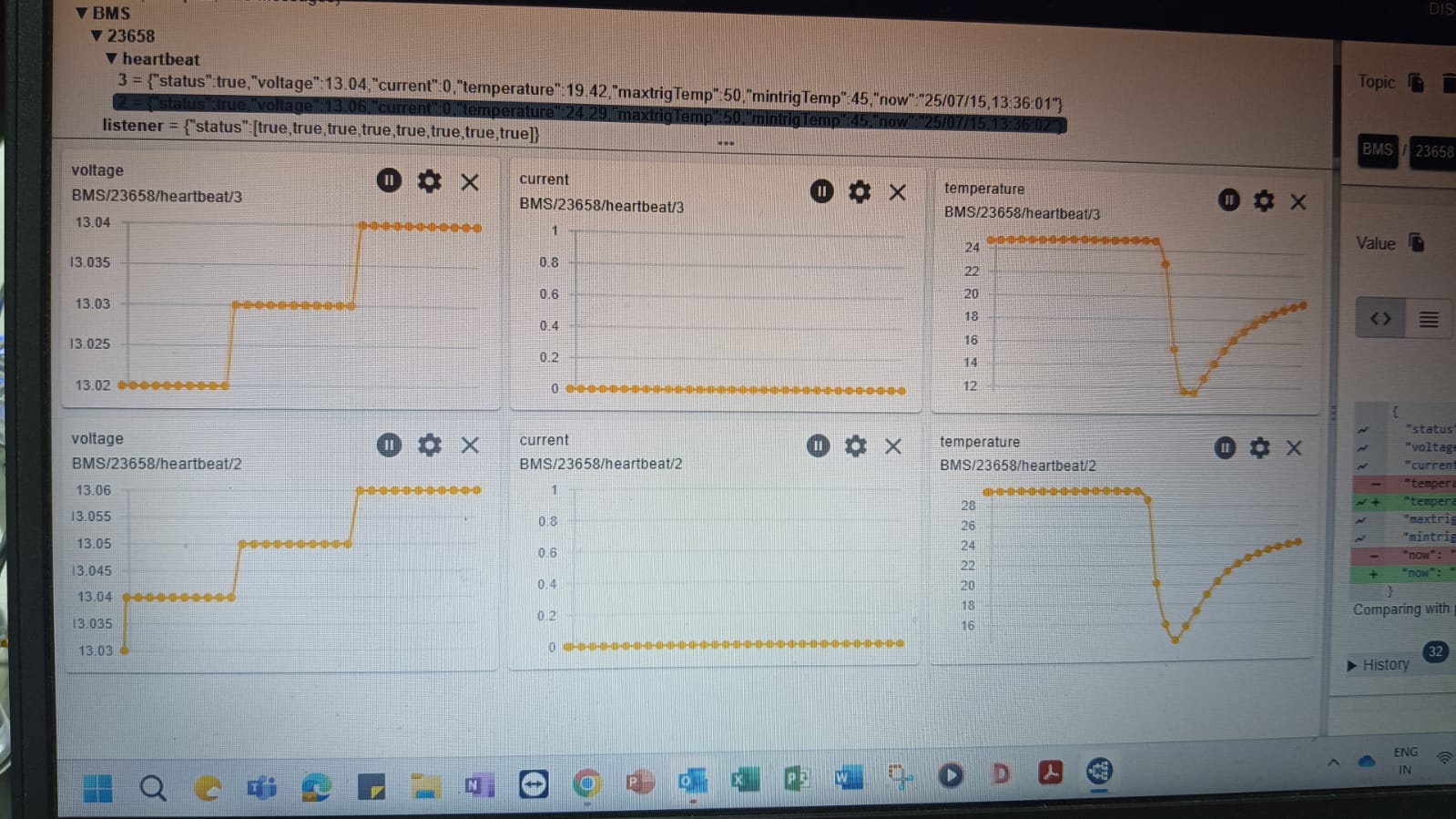
Product Development: Products and solutions mentioned on the Website may be under development or subject to change. At Macnman Technologies Pvt. Ltd. ("Macnman"), we take pride in our field success and may highlight it via case studies, client stories, and marketing materials. Unless otherwise agreed in writing, we consider ourselves to have full rights to share such information.
5. Limitation of Liability
To the fullest extent permitted by applicable law, in no event shall Macnman IoT, its affiliates, directors, officers, employees, agents, or suppliers be liable for any direct, indirect, incidental, special, consequential, punitive, or exemplary damages, including but not limited to, loss of profits, goodwill, data, or other intangible losses arising out of or in connection with your use of the Website or its Content.
6. Indemnification
You agree to defend, indemnify, and hold harmless Macnman IoT and all related entities from any claims, liabilities, damages, losses, or expenses arising from your violation of these Terms or your misuse of the Website.
7. Links to Third-Party Websites
The Website may contain links to third-party websites. We do not control or take responsibility for the content, privacy policies, or practices of any third-party websites. Inclusion of links does not imply endorsement.
8. Governing Law & Jurisdiction
These Terms shall be governed by Indian law. Any disputes shall be subject to the exclusive jurisdiction of the courts located in Pune, Maharashtra.
9. Changes to Terms
We reserve the right to update these Terms at any time. Continued use of the Website after changes have been posted constitutes acceptance of the new Terms. You should review these Terms regularly.
10. Returns & Replacement
Macnman Technologies Pvt Ltd accepts returns with a 100% payment refund within 7 days of delivery, provided the product is returned in its original condition with all accessories and packaging intact. No returns or refunds will be accepted after 7 days from the date of delivery if the product is found to be functional and free from manufacturing defects.
11. Warranty Policy
All Macnman IoT products are covered under a standard 12-month limited warranty from the date of delivery, against manufacturing defects only. The warranty does not cover damage caused by improper installation, mishandling, unauthorized modification, or operation outside the product’s specified conditions. Warranty claims will be processed only after product evaluation by Macnman’s technical team.
12. Product Modifications
Macnman Technologies Pvt Ltd reserves the right to modify the design, specifications, components, or features of its products without prior notice, in line with continuous improvement and technological upgrades.
13. Shipping & Delivery
All products are shipped through reliable courier or logistics partners. Macnman shall not be liable for any delay or damage occurring during transit once the shipment has been handed over to the carrier. Customers are advised to inspect packaging and report any visible damages immediately upon delivery.
14. Force Majeure
Macnman Technologies Pvt Ltd shall not be held responsible for any failure or delay in performance resulting from events beyond its reasonable control, including but not limited to natural disasters, war, strikes, government actions, network outages, or component shortages.
15. Limitation of Use
Macnman IoT products are designed for commercial and industrial use. They are not intended for life-support, safety-critical, or mission-critical systems where failure could lead to personal injury, death, or environmental harm. Customers assume all responsibility for use in such applications.
16. Confidentiality
Any non-public technical, business, or proprietary information shared between Macnman and its customers shall be treated as confidential and shall not be disclosed to third parties without prior written consent, except as required by law.
17. Export Compliance
Customers agree to comply with all applicable export control laws and regulations when purchasing or using Macnman products, including restrictions related to international transfers, re-exports, or use in sanctioned regions.
18. Dispute Resolution
In the event of any dispute arising out of or related to these Terms or any transaction with Macnman Technologies Pvt Ltd, both parties shall attempt to resolve the matter amicably through discussion. If unresolved, the dispute shall be subject to arbitration in Pune, Maharashtra, under the Arbitration and Conciliation Act, 1996, and governed by Indian law.